
Modular Yoto Mini Dock and Card Display
Print Profile(1)

Description
My two boys got Yoto mini players for Christmas, along with cards (lots of cards) from us and other family members who found out about it. After a few days of devices, headphones and cards being strewn around the house, lost, found, and lost again we began to look to see how we could help them keep their Yoto kit organized.
At the same time my 7 year old wanted to make a stand for his headphones, which turned into … why don't we make a stand for the whole thing. Designing the headphone stand and Yoto base module became a weekend project for him and I. At this point we came across the “Modular Yoto Card Display” by Anthony Hatswell (https://makerworld.com/en/models/1214794-modular-yoto-player-card-display#profileId-1230395). And the idea of having modular 5 card holders that could be added as they accumulated more cards, was inspired by this project. Thank you Anthony!
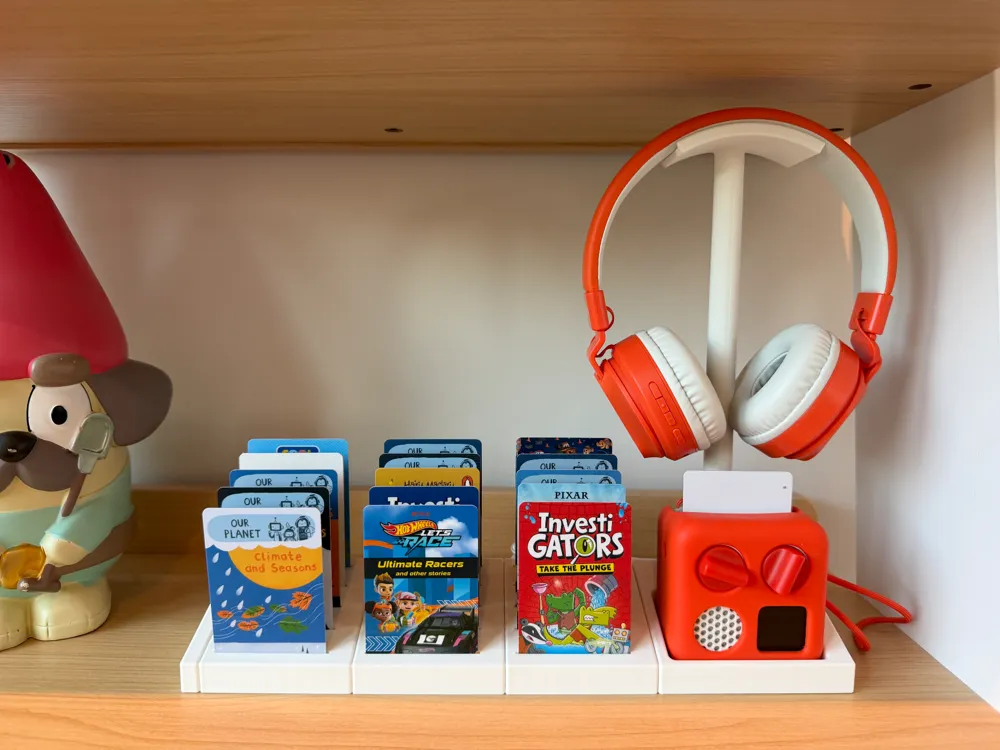
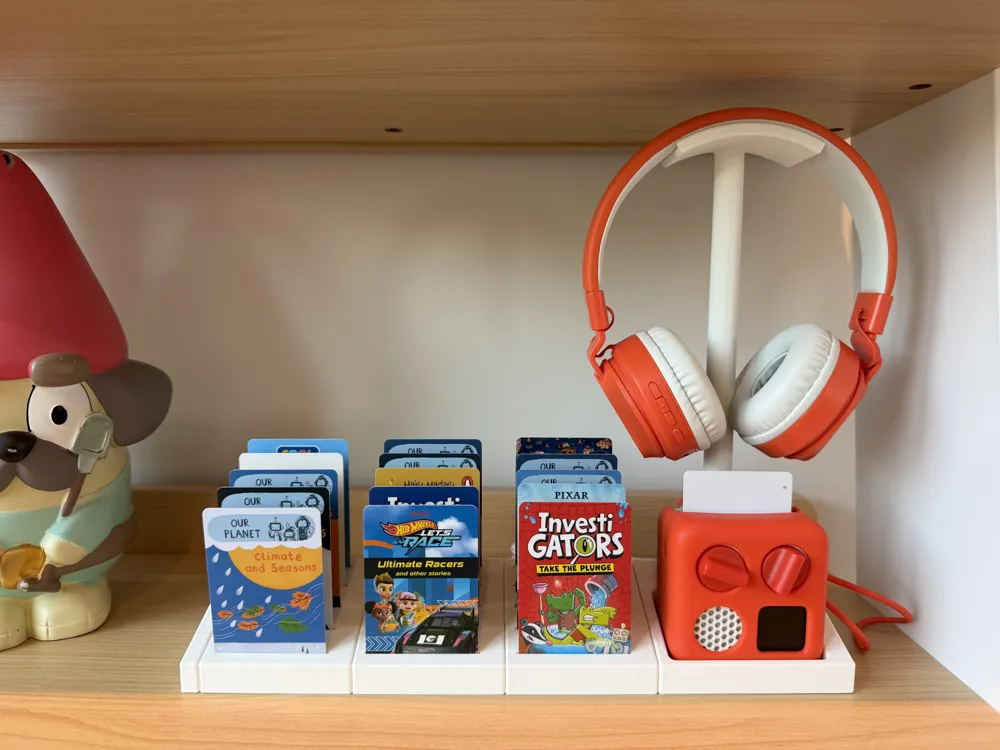
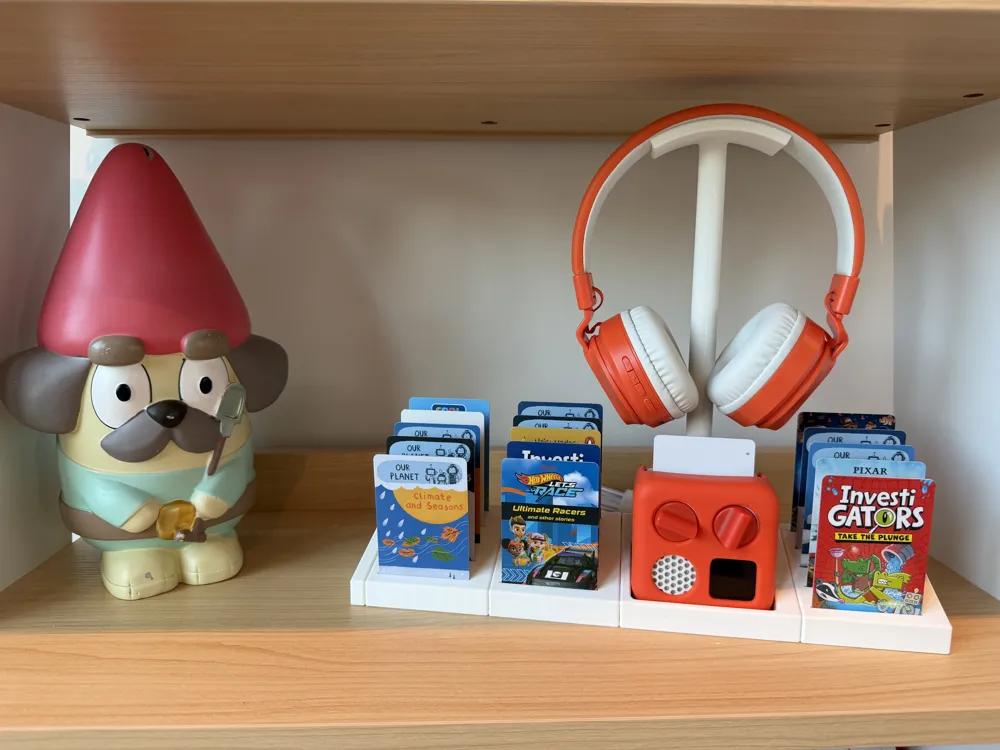
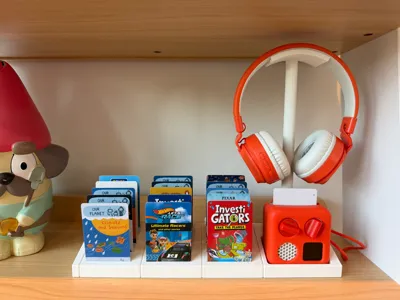
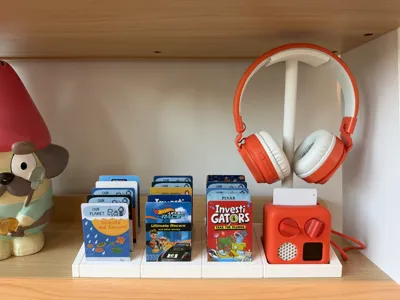
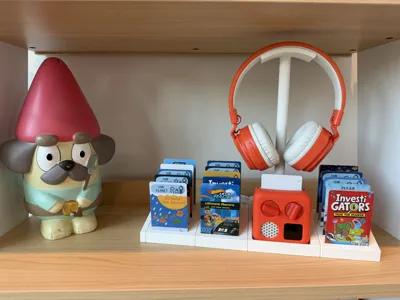
The system consists of 4 parts:
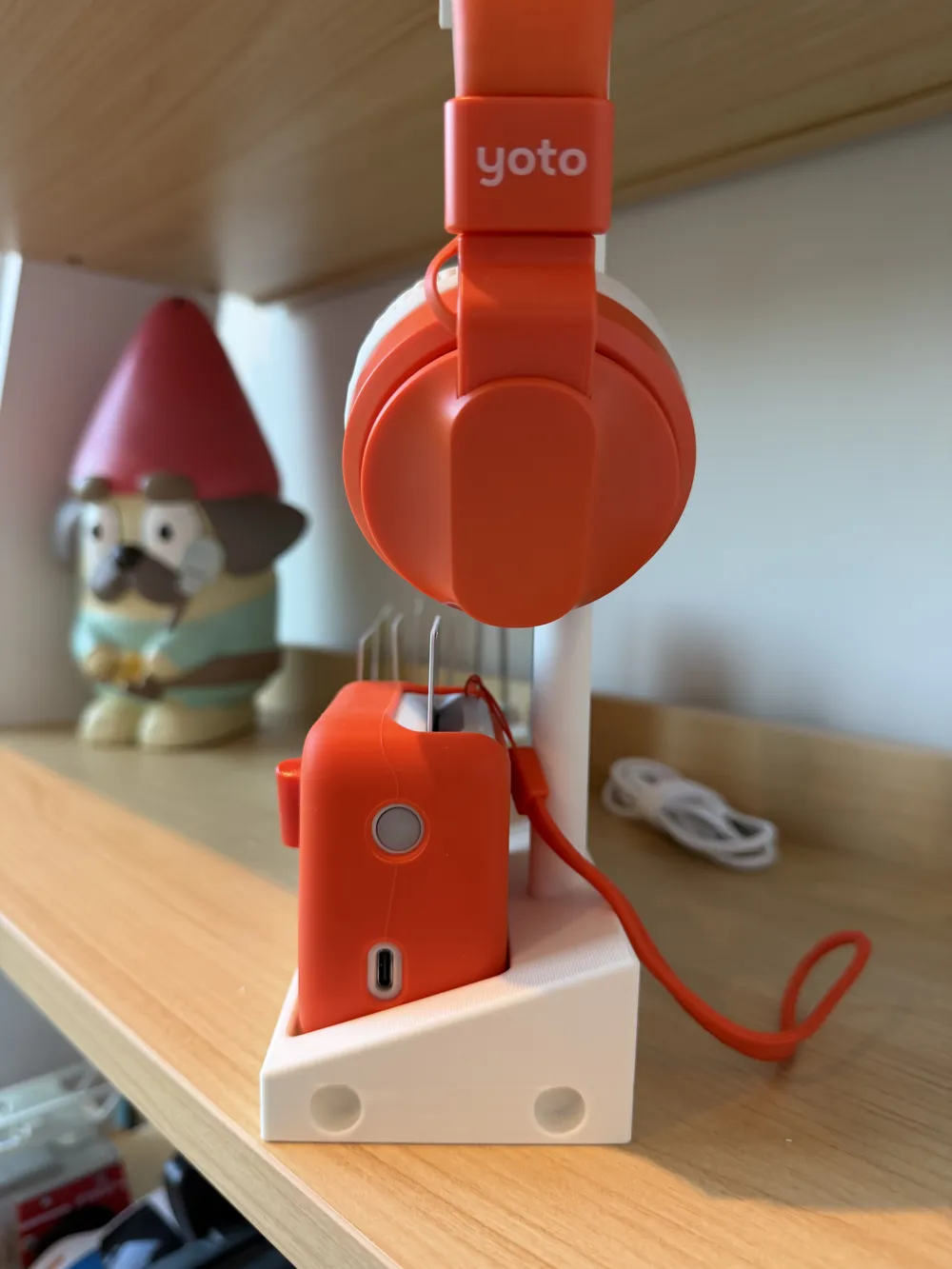
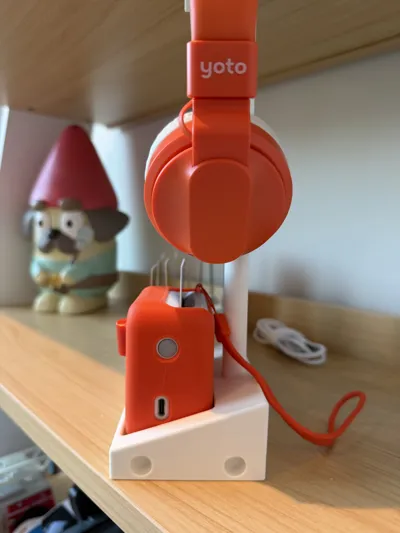
- The Yoto mini base module. This is a cradle for the Yoto mini. It fits a device in the original silicone case and provides a base for the optional headphone stand. Its designed to allow the charging cable to be connected while the device in on the base.
- The headphone stand. This is a stand that attaches to the base module providing a place for headphones to be stored.
- The 5 card module. This is a display / storage stand for up to 5 Yoto cards, as many of these as necessary can be added.
- The end module. This is a cover for the connector pins on the left side of the last module in the set to hide them and make the whole thing look nice.
All of the modules (except the end module) have docking pins on the left and docking sockets on the right. This allows them to be joined together in any configuration, or added to as card / device collections grow.
The modules are all friction fit, which provide a firm but separable connection when printed on my Bambu P2S.
We have a few ideas for future modules to add to the system so over time this may grow as we have the time. I hope this is useful to others, please feel free to provide feedback or make your own derivatives.
License



Comment & Rating (11)