
Laozi - Li Er
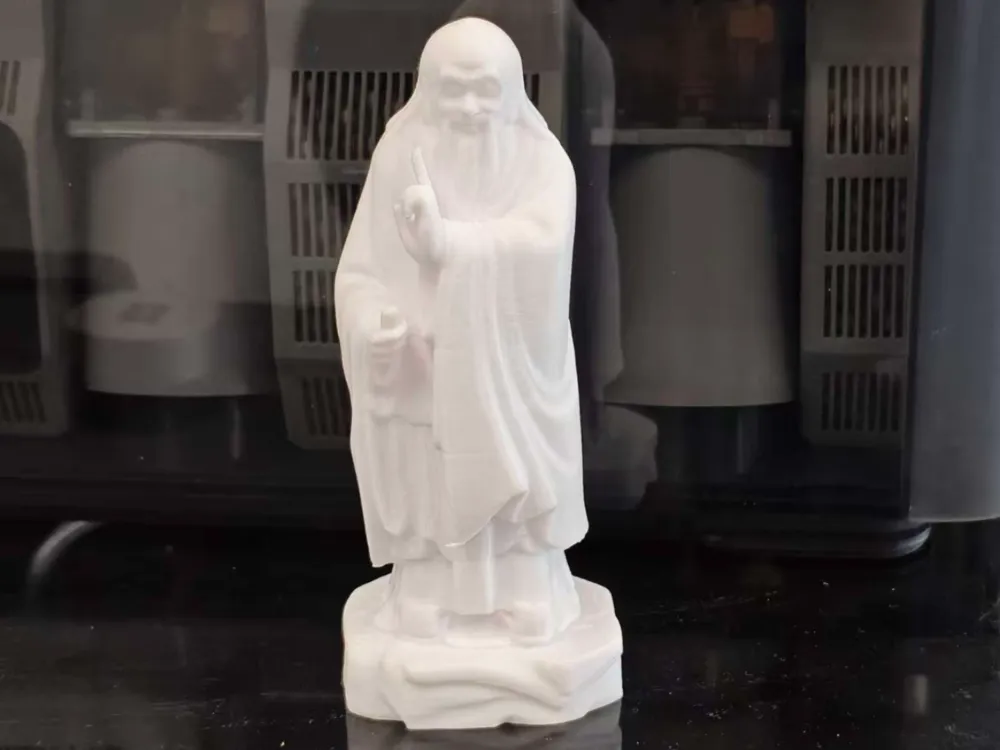
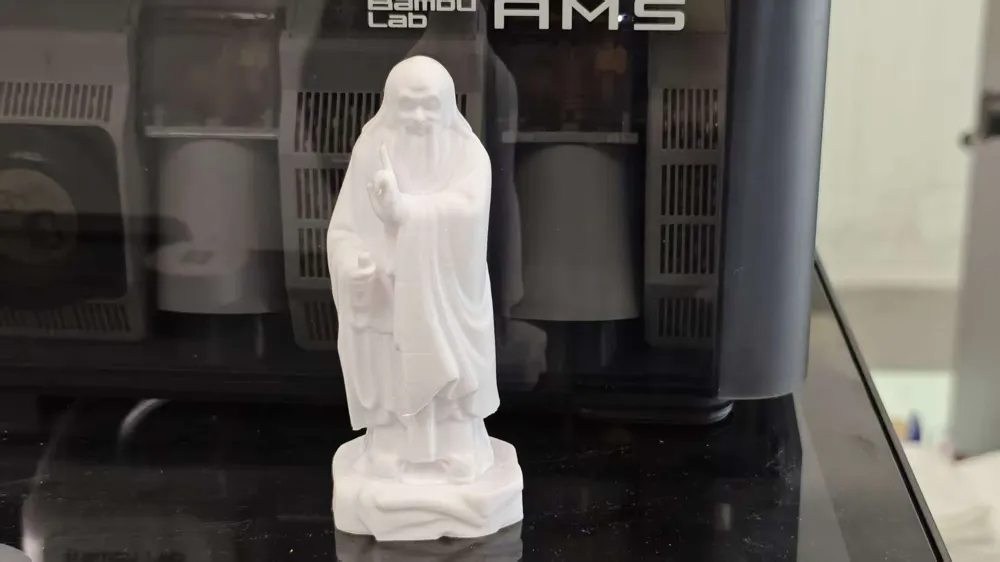
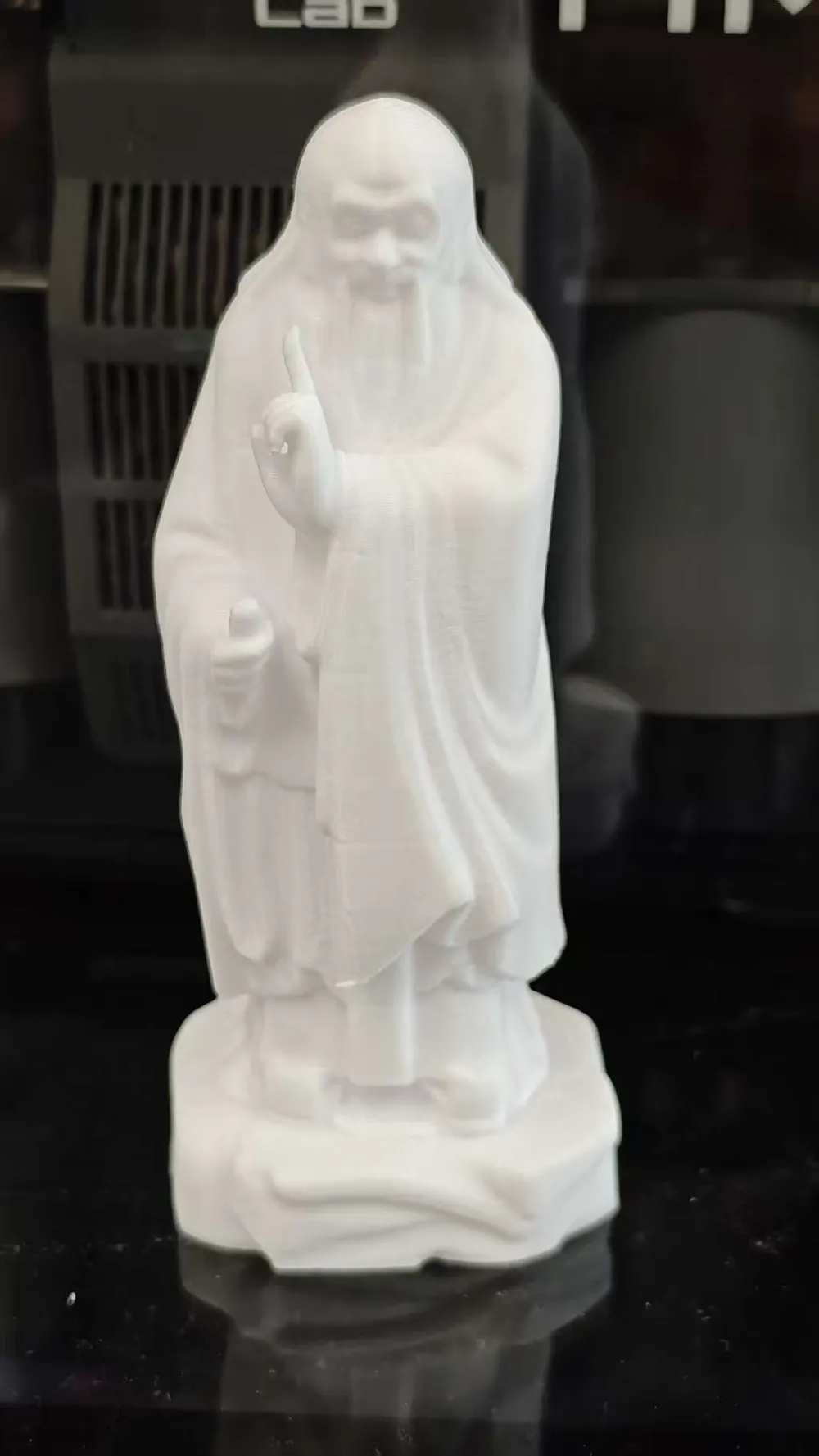

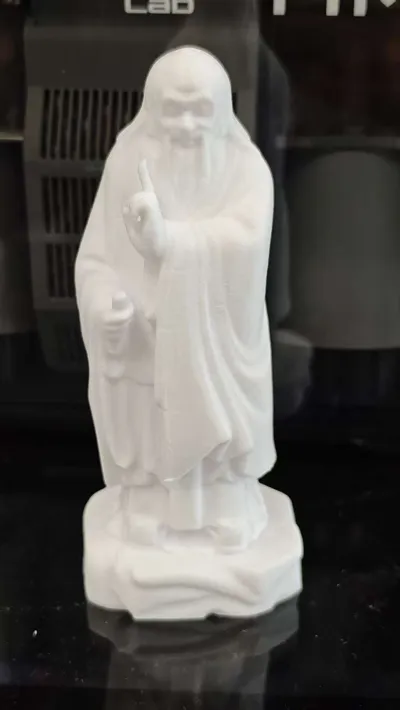
Print Profile(2)


Description
Boost Me (for free)
Your free boosts help me design and print new creations, so I'm very grateful for your support!
Introduction to Laozi: Founder of Taoism and a Giant of Eastern Philosophy
Laozi (c. 571 BCE — 471 BCE), whose surname was Li, given name Er, courtesy name Dan, also known as Lao Dan, was a native of Qu Renli, Lixiang, Kuxian, Chu State during the late Spring and Autumn period (now Luyi County, Henan Province, or Guoyang County, Anhui Province, both disputed). He was a great ancient Chinese thinker, philosopher, and founder of the Taoist school of thought, revered as "Taishang Laojun" (Ancestor of Taoism), and known alongside Confucius as "Lao Zhuang" (with Zhuangzi) and "Kong Lao" (with Confucius). His philosophy profoundly influenced Chinese and even world culture亳州市谯城区人民政府.
I. Biographical Overview
- Basic Information
- Name: Li Er, courtesy name Dan, honorific title Laozi (meaning "Old Master" or "Old Sage")
- Years of Birth and Death: c. 571 BCE — 471 BCE (historical records are unclear, but this period is widely accepted by academics)亳州市谯城区人民政府
- Birthplace: Qu Renli, Lixiang, Kuxian, Chu State (present-day Luyi, Henan, or Guoyang, Anhui, with both locations disputed)亳州市谯城区人民政府
- Occupation: Served as Shi Shoucang (or Zhuxiashi) in the Zhou Dynasty, responsible for managing royal books, archives, and classics, equivalent to a national librarian, and was highly learned
- Key Experiences
- Meeting with Confucius: According to Records of the Grand Historian, "Biography of Laozi and Han Fei", Confucius specifically sought Laozi's advice on rituals. Laozi admonished Confucius, "Rid yourself of your arrogant airs and many desires, your pompous appearance and lascivious ambitions; none of these are beneficial to your person." After returning, Confucius praised Laozi, saying, "He is like a dragon!" (implying unpredictability)
- Leaving through Hangu Pass: As the Zhou Dynasty declined, Laozi resigned from office and retired, riding a green ox westward out of Hangu Pass. The guardian of the pass, Yin Xi, asked him to leave behind a work. Laozi then wrote the 5,000-character Daodejing (also known as Laozi) before departing, after which he was never seen again
II. Core Work: The Daodejing
- Basic Information
- Also known as "Laozi" and "Wuqian Wen" (Five Thousand Characters), the book contains approximately 5,000 characters, divided into two parts: the Upper Part, Daode Jing (37 chapters), and the Lower Part, Dejing (44 chapters), totaling 81 chapters
- It is the core classic of the Taoist school and the first complete philosophical work in Chinese history
- World Influence: It is the most translated philosophical classic after the Bible, with a wide readership globally
- Versions and Transmission
- Main Versions: Mawangdui silk manuscripts (unearthed in 1973, with Dejing preceding Daodejing), Guodian Chu Slips (unearthed in 1993, the earliest version), He Shanggong's annotated version, Wang Bi's annotated version, etc.
III. Core Philosophical System
1. The Philosophy of "Dao": Ontology of the Universe
- "Dao" is the highest category in Laozi's philosophy, serving as the origin and operating principle of all things in the universe
- "The Dao that can be told is not the eternal Dao; the name that can be named is not the eternal Name" (Chapter 1): The true "Dao" cannot be fully described by language nor precisely defined by concepts
- "Dao produces one, one produces two, two produces three, and three produces all things" (Chapter 42): "Dao" is the starting point of the universe, producing chaos (one), then differentiating into yin and yang (two), the union of yin and yang produces harmony (three), which then generates all things in the universe亳州市谯城区人民政府
- "Humanity follows the Earth, Earth follows Heaven, Heaven follows Dao, and Dao follows its own nature" (Chapter 25): All things follow natural laws; "nature" here refers to the inherent state of things, not the natural world in the modern sense
2. The Concept of "De" (Virtue): Principles for Conduct
- "De" (virtue) is the inherent nature and quality that all things acquire from "Dao", representing "Dao" manifested in specific things
- It is argued that "Superior virtue is not virtuous; therefore, it has virtue. Inferior virtue does not lose virtue; therefore, it has no virtue" (Chapter 38): The highest virtue is not deliberately displayed but flows naturally
3. "Wu Wei Er Zhi" (Governing Through Non-Action): Political Philosophy
- Core tenet: "Wu wei" (non-action) does not mean complete inaction, but rather acting in accordance with nature, avoiding recklessness, and refraining from forceful intervention, allowing things to develop according to their own laws
- Ideal Society: "Let there be a small country with few people. Let them have tools for ten or a hundred men, but not use them. Let them value their lives and not migrate far. Though they have boats and carriages, they do not ride them. Though they have armor and weapons, they do not display them. Let them return to knotting ropes for records. Let them enjoy their food, beautify their clothing, find peace in their dwellings, and delight in their customs. Neighboring countries may be seen; the sound of cocks and dogs may be heard from them, yet the people will grow old and die without ever visiting one another." (Chapter 80)亳州市谯城区人民政府
- Rulers should "handle affairs through non-action and conduct teaching without words", reduce taxes and harsh governance, and allow the people to live in peace and contentment
4. Dialectical Thinking: The Wisdom of Unity of Opposites
- Revealing the universality and mutual transformation of contradictions: "Being and non-being create each other. Difficult and easy complete each other. Long and short define each other. High and low lean on each other. Voice and tone harmonize each other. Front and back follow each other" (Chapter 2)
- "Reversal is the movement of Dao" (Chapter 40): When things develop to an extreme, they transform into their opposite
- "Calamity is that upon which happiness depends; happiness is that in which calamity is latent" (Chapter 58): Misfortune contains the seeds of good fortune, and good fortune conceals the roots of misfortune
- "The soft overcomes the hard": Emphasizes the characteristics of water, stating, "Nothing in the world is softer and weaker than water, yet for attacking the hard and strong, nothing is superior" (Chapter 78), advocating overcoming hardness with softness and advancing by retreating
5. Self-Cultivation and Nurturing One's Nature: Life Wisdom
- Advocating "reaching the ultimate emptiness and maintaining profound tranquility" (Chapter 16): Pursuing mental emptiness and serenity, dispelling distractions, and achieving a state of unity with the Dao
- Promoting "manifesting plainness, embracing simplicity, reducing selfishness and desires" (Chapter 19): Maintaining a simple nature, reducing selfish motives and desires
- Emphasizing "contentment brings lasting joy": "He who knows contentment suffers no disgrace; he who knows when to stop incurs no danger; he can long endure" (Chapter 44)
- Advocating the "virtue of non-contention": "It is because he does not contend that no one in the world can contend with him" (Chapter 22), avoiding conflict with others and seeking inner peace
IV. Historical Status and Profound Influence
- Status in Chinese Culture
- Founder of the Taoist School: Together with Zhuangzi, he laid the foundation of Taoist thought, forming a significant school alongside Confucianism, Mohism, Legalism, and others
- Pillar of Chinese Traditional Culture: Complementing and influencing Confucian thought, it jointly shaped the Chinese way of thinking and values, known as "Rú Dào hù bǔ" (Confucianism and Taoism complementing each other)
- Ancestor of Taoism: In the late Eastern Han Dynasty, Laozi's thought combined with immortal beliefs and esoteric arts to form Taoism, and Laozi was revered as "Taishang Laojun," becoming one of the highest deities of Taoism
- Influence on World Culture
- Philosophical Influence: His dialectical thinking, cosmology, and philosophy of life have profoundly influenced Western philosophy, literature, and art, with German philosophers such as Hegel and Nietzsche having studied Laozi's thought
- Political Influence: The idea of "Wu Wei Er Zhi" (governing through non-action) provides insights for modern management and leadership, emphasizing respect for objective laws and reduced intervention
- Global Dissemination: The Daodejing has been translated into numerous languages and widely disseminated globally, becoming one of the world's most influential philosophical classics, listed in "The 100 Most Influential People in History"The State Council Information Office of the People's Republic of China
- Modern Value
- Ecological Wisdom: The idea of "Dao follows its own nature" provides a philosophical foundation for modern environmental protection and sustainable development
- Mental Health: The advocacy for "reaching the ultimate emptiness and maintaining profound tranquility" and "reducing selfishness and desires" has positive implications for alleviating anxiety and stress in modern society
- Management Philosophy: "Wu Wei Er Zhi" inspires modern managers to respect objective laws, focus on team self-management, and improve efficiency
V. Controversies and Research
- Biographical Controversies: Regarding Laozi's specific birth and death years, birthplace, and details of his meeting with Confucius, academic circles still hold differing views亳州市谯城区人民政府
- Authorship Controversies: Some scholars believe that the Daodejing was not written by Laozi alone but is the result of collective creation by the Taoist school during the Warring States period, later compiled by posterity
- Interpretation of Thought: The Daodejing's text is concise and profound in meaning. Scholars throughout history have offered various interpretations, forming a rich tradition of annotations that explain Laozi's thought from multiple perspectives, including philosophy, politics, military strategy, and health preservation
Laozi's thought has spanned over two millennia, still shining with the light of wisdom, providing humanity with a unique perspective and method for understanding the universe, society, and oneself.
License

You shall not share, sub-license, sell, rent, host, transfer, or distribute in any way the digital or 3D printed versions of this object, nor any other derivative work of this object in its digital or physical format (including - but not limited to - remixes of this object, and hosting on other digital platforms). The objects may not be used without permission in any way whatsoever in which you charge money, or collect fees.
Comment & Rating (0)