Search models, users, collections, and posts

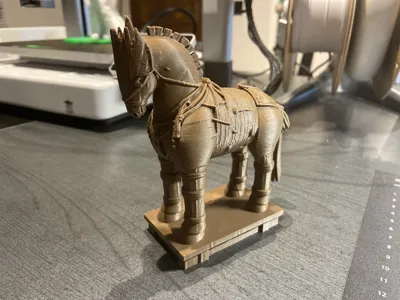
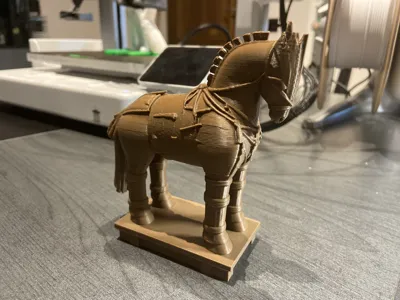
Trojan Horse
IP Report
Print Profile(1)

0.2mm layer, 3 walls, 10% infill
Designer
3.5 h
1 plate
Open in Bambu Studio
Boost
52
103
2
1
93
51
Released
Bill of Materials
Bambu Filaments
Select all


Description
Content has been automatically translated.
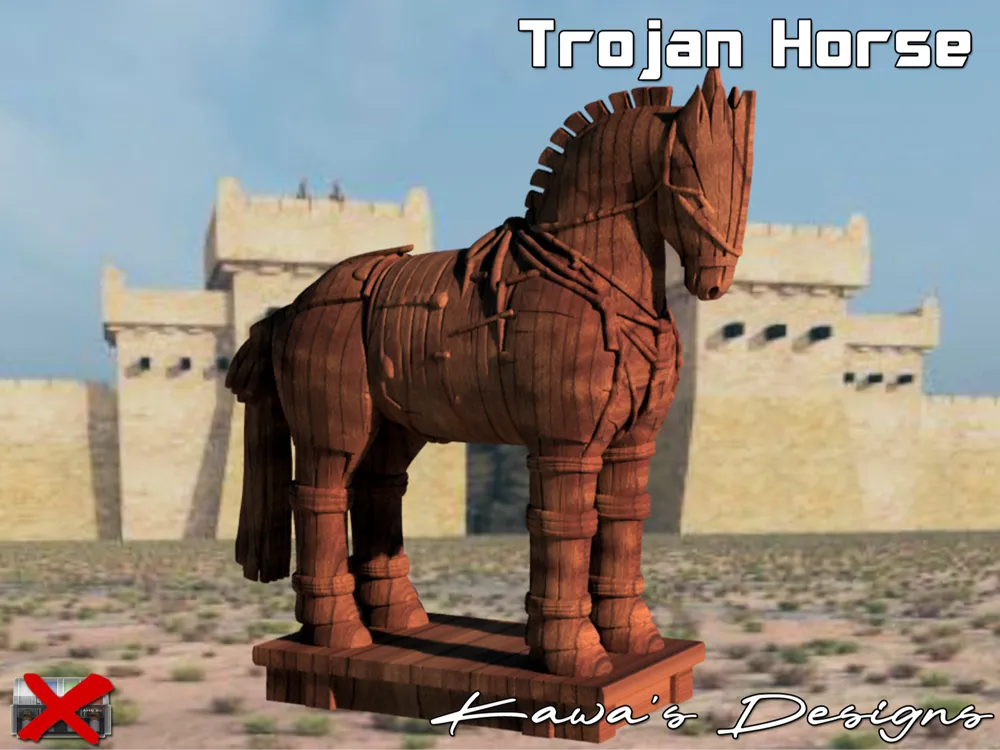
The myth of the Trojan Horse represents one of the most famous stratagems in classical mythology, marking the final act of the decade-long war between Greeks and Trojans
According to epic tradition, after years of unsuccessful siege, the cunning Odysseus conceived the idea of building an imposing wooden structure in the shape of a horse, leaving it before the city gates as an apparent votive offering to ensure a safe return home
While the Greek fleet feigned retreat by hiding behind the island of Tenedos, a select group of warriors remained hidden inside the belly of the wooden animal, waiting for the Trojans, convinced of victory and the gift's sacredness, to drag it within their walls In the 2004 film "Troy," directed by Wolfgang Petersen, this sequence is re-envisioned with particular attention to historical realism, while taking some narrative liberties compared to the Odyssey or the Aeneid
In the film, the idea of the horse occurs to Odysseus, played by Sean Bean, when he observes a Greek soldier carving a small wooden horse for his son
Unlike the classical myth, where the horse is often described as an almost magical monumental construction, in the film it appears as a crude and imposing structure, assembled using timber salvaged from dismantled Greek ships, which gives the deception a more pragmatic and visceral dimension
And it is precisely from these sequences that my model is derived The tension in the film reaches its climax when the Trojans, led by a tired King Priam, trusting in divine signs, ignore the doubts of the more cautious and bring the structure into the city, initiating celebrations for the presumed end of the conflict
During the night, while the Trojans sleep after their revelry, the Greek soldiers emerge from the belly of the horse
Among them is the protagonist Achilles, played by Brad Pitt, whose participation inside the horse is a significant divergence from the original myth, in which the hero dies before the city's fall
In the cinematic version, Achilles uses the stratagem not only for military victory but above all for a personal objective: to find and rescue Briseis amidst the flames of a Troy now resigned to plunder and ruin This horse is not only a fantastic ornament for any of your spaces, but it is also a personal tribute to that magnificent film that never ceases to captivate me
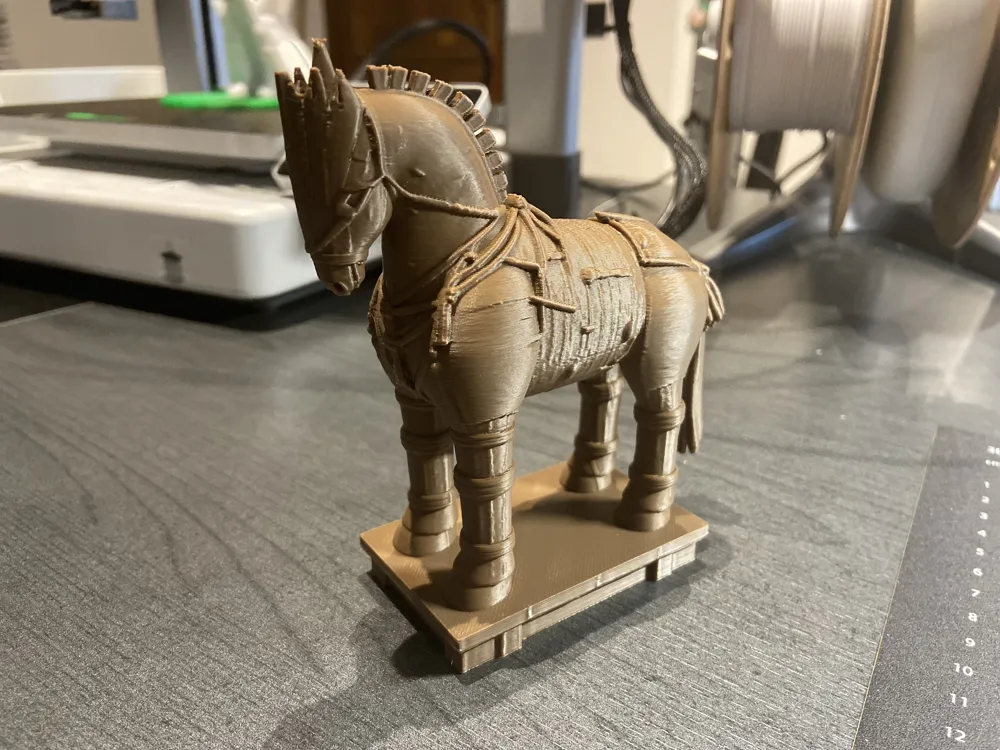
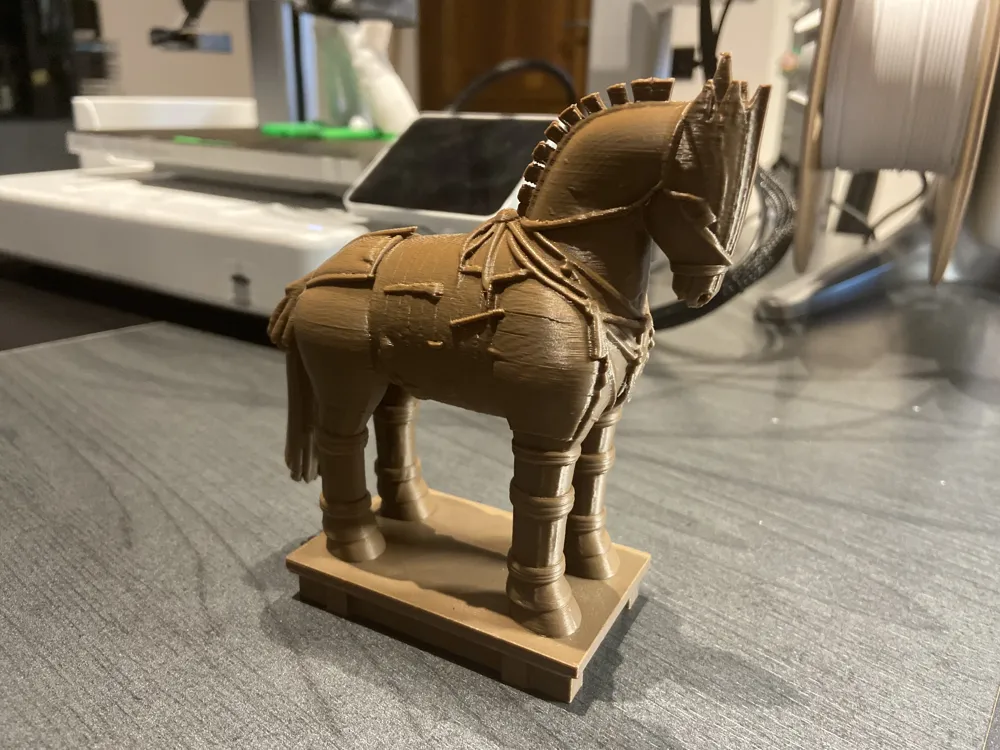
It is a very simple, single-color print (wood is fantastic, by the way) with extremely easy support removal
One caveat: be careful when removing the tail supports, as they are the only ones connected to a delicate part
Happy printing, then
According to epic tradition, after years of unsuccessful siege, the cunning Odysseus conceived the idea of building an imposing wooden structure in the shape of a horse, leaving it before the city gates as an apparent votive offering to ensure a safe return home
While the Greek fleet feigned retreat by hiding behind the island of Tenedos, a select group of warriors remained hidden inside the belly of the wooden animal, waiting for the Trojans, convinced of victory and the gift's sacredness, to drag it within their walls In the 2004 film "Troy," directed by Wolfgang Petersen, this sequence is re-envisioned with particular attention to historical realism, while taking some narrative liberties compared to the Odyssey or the Aeneid
In the film, the idea of the horse occurs to Odysseus, played by Sean Bean, when he observes a Greek soldier carving a small wooden horse for his son
Unlike the classical myth, where the horse is often described as an almost magical monumental construction, in the film it appears as a crude and imposing structure, assembled using timber salvaged from dismantled Greek ships, which gives the deception a more pragmatic and visceral dimension
And it is precisely from these sequences that my model is derived The tension in the film reaches its climax when the Trojans, led by a tired King Priam, trusting in divine signs, ignore the doubts of the more cautious and bring the structure into the city, initiating celebrations for the presumed end of the conflict
During the night, while the Trojans sleep after their revelry, the Greek soldiers emerge from the belly of the horse
Among them is the protagonist Achilles, played by Brad Pitt, whose participation inside the horse is a significant divergence from the original myth, in which the hero dies before the city's fall
In the cinematic version, Achilles uses the stratagem not only for military victory but above all for a personal objective: to find and rescue Briseis amidst the flames of a Troy now resigned to plunder and ruin This horse is not only a fantastic ornament for any of your spaces, but it is also a personal tribute to that magnificent film that never ceases to captivate me
It is a very simple, single-color print (wood is fantastic, by the way) with extremely easy support removal
One caveat: be careful when removing the tail supports, as they are the only ones connected to a delicate part
Happy printing, then
Boost Me (for free)
Did you like it? It's free for you, but it's important for me! I'll can continue to make your next free project!
License

This user content is licensed under a Standard Digital File License.
You shall not share, sub-license, sell, rent, host, transfer, or distribute in any way the digital or 3D printed versions of this object, nor any other derivative work of this object in its digital or physical format (including - but not limited to - remixes of this object, and hosting on other digital platforms). The objects may not be used without permission in any way whatsoever in which you charge money, or collect fees.


Comment & Rating (2)