
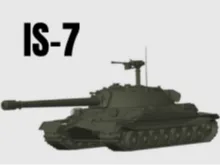
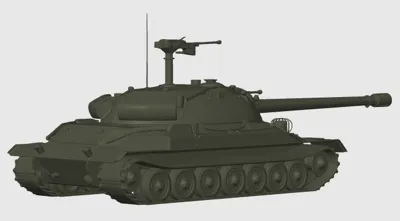
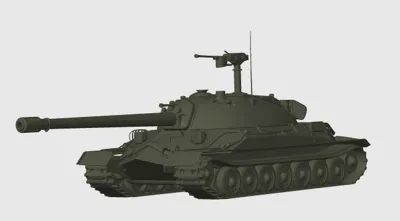
Heavy Tank IS-7
Print Profile(1)

Description
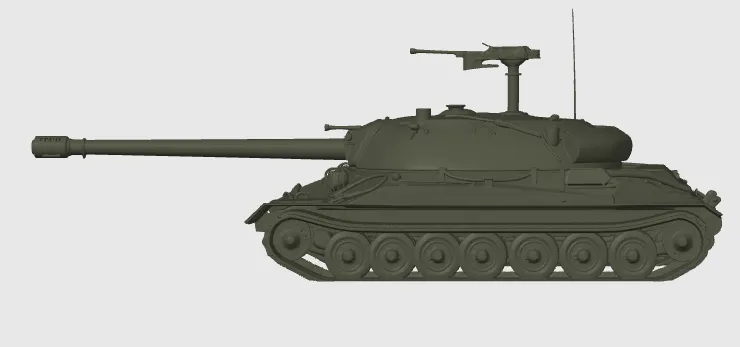
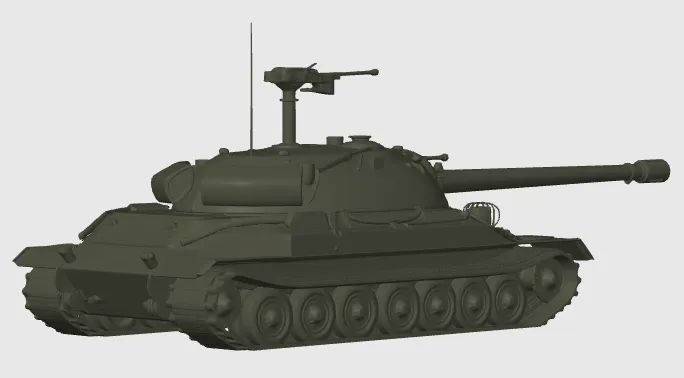
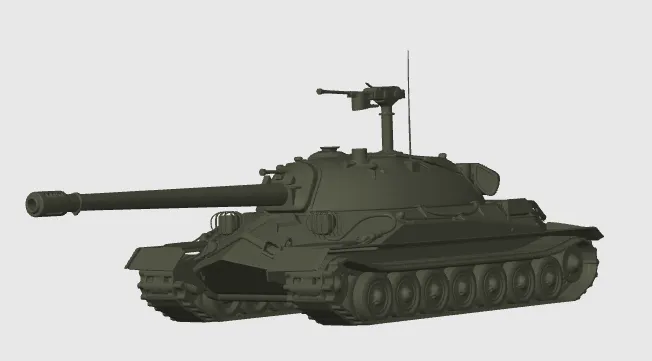
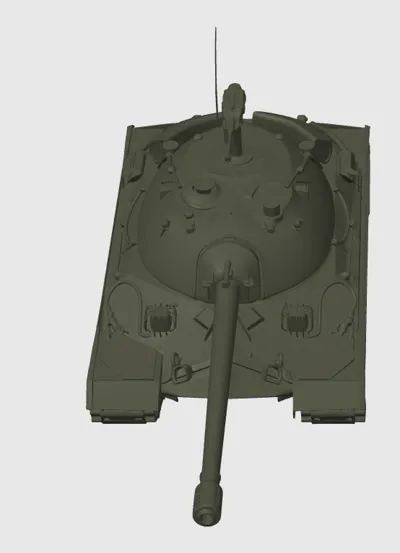
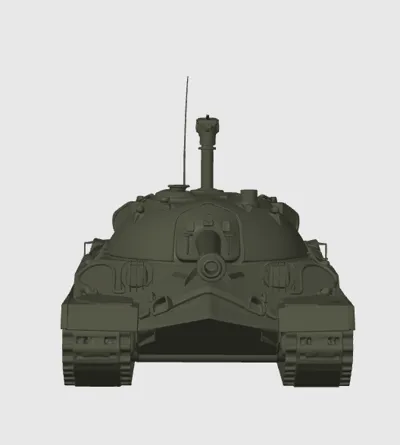
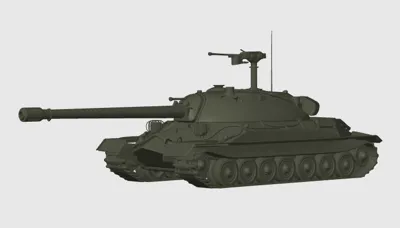
The IS-7, known as Object 260 during its development, was a prototype heavy tank developed by the Soviet Union in the late 1940s. Its excessive weight for most bridges and the resulting logistical complexity, its prohibitive manufacturing cost, and its engine problems put an end to the project.
History and design
In February 1945, the People's Commissariat for Armored Industry ordered SKB-2 to develop a new heavy tank to succeed the IS-4, then still known as Object 701 as it was still under development. In this context, the development of Object 703 or Kirovets-1, based on the IS-2, was prioritized. This heavy tank was accepted into service at the end of March 1945 under the designation IS-3.
The IS-7 project began in 1945 and was carried out under the supervision of Nikolai Federovich Sachmurin.
Like its predecessors, -IS-4 and others- it was designed to break through enemy lines. It was one of the best-designed and armored tanks of its era.
The 1946 prototypes were produced by Factories N°100 and Leningrad-Kirov (LKZ), while the 1948 prototypes were manufactured by the Leningrad-Kirov Factory.
Nevertheless, in 1948, all Object 260 and variant projects were halted, in favor of the T-10, which was cheaper to produce and lighter.
Technical descriptions
Hull and turret
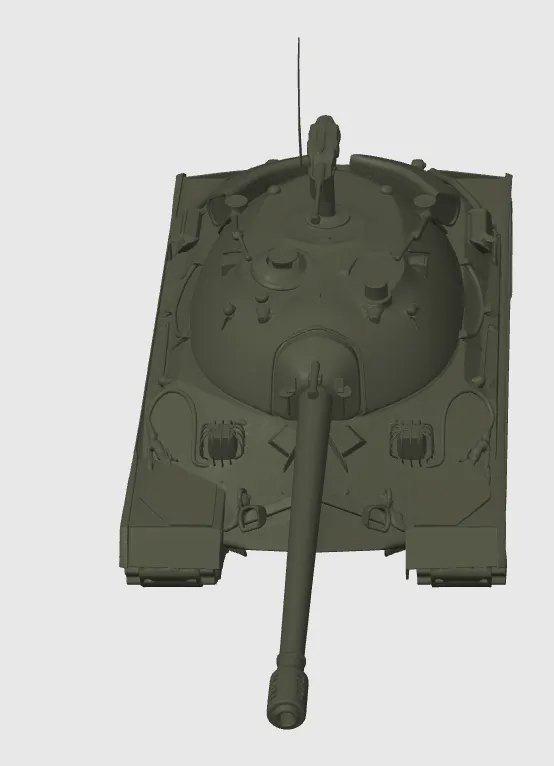
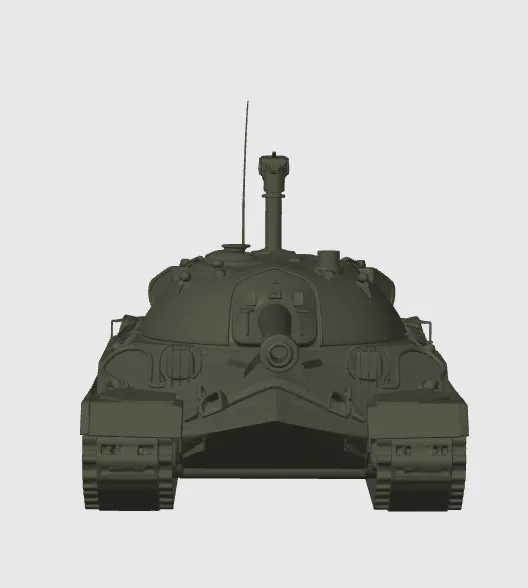
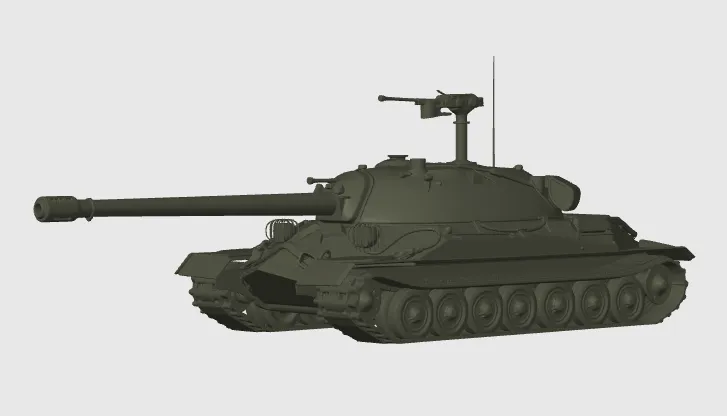
The IS-7 consists of cast and rolled armor. There were two types of different hulls and turrets, Object 260 (full-scale wooden model [archive]) and the IS-7, produced in 6 units according to estimates.
The IS-7's turret is cast, its hull is constructed from welded rolled steel plates. Its armor ranges from a minimum of 20 mm (tank floor) up to 350 mm at 0° for the mantlet; the maximum angled armor is 150 mm at 65° for the hull front. Some areas of the hull feature spaced armor (15 mm outer plates). It could be used for storage and inflatable fuel tanks.
Armament
The IS-7 has a very high survivability, due to its armor, as well as its numerous machine guns arranged around the tank, but especially due to its main gun, a 130 mm, 54-groove S-70 rifled gun - it was initially a 130 mm S-26 gun, suggested by Joseph Kotine - it was developed based on a naval gun. Its shells were the OF-482F, BR-482M, BR-482B, and BR-482; their speed was 900 m/s and their mass was 33.4 kg. Its elevation and depression angles are +11° and -6° respectively.
It featured a "mesh" muzzle brake, initially with 7 cavities per row, later reduced to 5; it was also one of the first to be equipped with one. Ventilation is installed in the turret to evacuate fumes generated by firing.
It featured a new type of ammunition rack, a semi-automatic [archive] one placed behind the breech; it contained 6 shells and 6 charges, offering a more sustained firing capability, but once empty, the reloading time by the two loaders was long. The rest of the shells were scattered throughout the tank. It could carry 31 shells: one in the chamber, 24 in various racks, and 6 in the carousel.
Its secondary armament consists of 6 machine guns arranged around the tank: 2 KPVT 14.5 mm machine guns, one coaxial above the main gun, the other on a foldable arm on the roof for AA (anti-aircraft) defense. 2 coaxial 7.62 mm SGS 43 machine guns on the hull sides, facing forward, and 2 other coaxial SGS 43 machine guns on the turret sides, facing rearward. The probable number of rounds carried is 1000 for the KPVT machine guns and 6000 for the SGS 43.
Mobility
Engine
The IS-7 was equipped with an M-50T 4-stroke Diesel engine with 12 V-cylinders, liquid-cooled. It developed 1,050 hp at 1,850 rpm. This allowed it to reach 60 km/h on road and 32 km/h on rough terrain; these performances are more than decent for a 68-ton tank.
Transmission
The transmission consisted of a 10-speed gearbox, 8 forward and 2 reverse. The transmission is managed by a two-stage reduction planetary epicyclic gear train.
Suspension
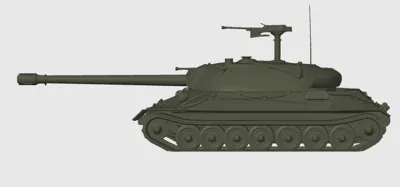
The suspension is of the torsion bar type, mounted on 7 double road wheels on each side with hydraulic shock absorbers on all road wheels. The rear sprocketed wheels are the drive wheels. For the first time on Soviet tanks, rubber bushings are used between the bolts that hold the track pieces together.
One of the peculiarities of this suspension is the absence of return rollers, a suspension not found on the IS-3 or IS-4, for example.
Its ground pressure is 0.97 kg/cm2.
License

You shall not share, sub-license, sell, rent, host, transfer, or distribute in any way the digital or 3D printed versions of this object, nor any other derivative work of this object in its digital or physical format (including - but not limited to - remixes of this object, and hosting on other digital platforms). The objects may not be used without permission in any way whatsoever in which you charge money, or collect fees.


Comment & Rating (0)