
Tesseract “Support-Forest” Sculpture
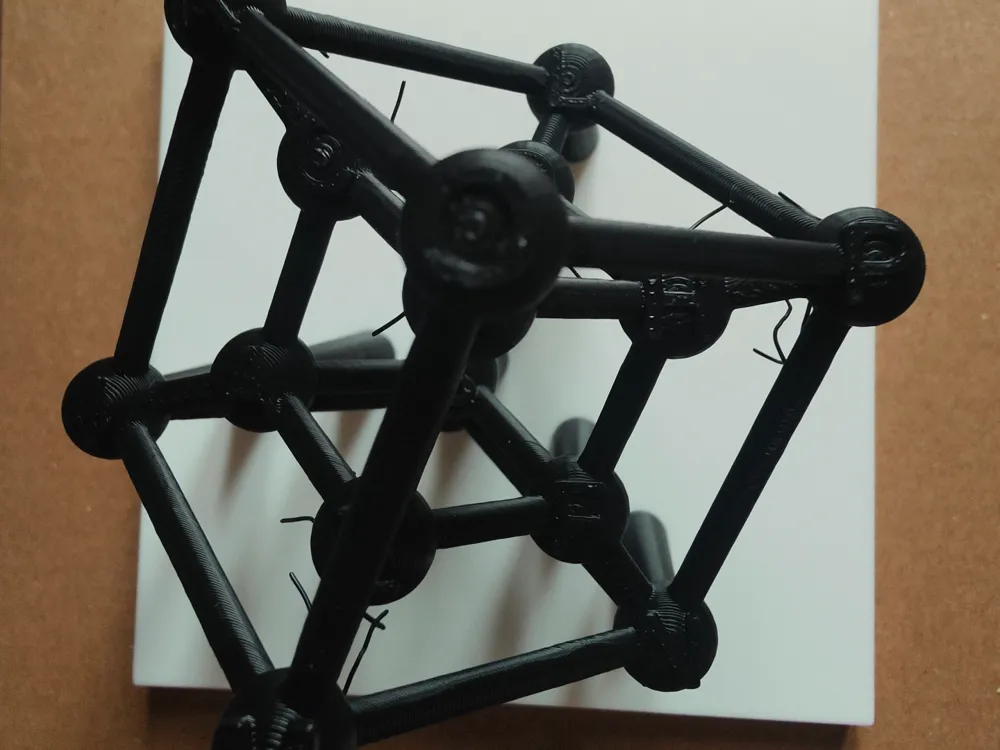
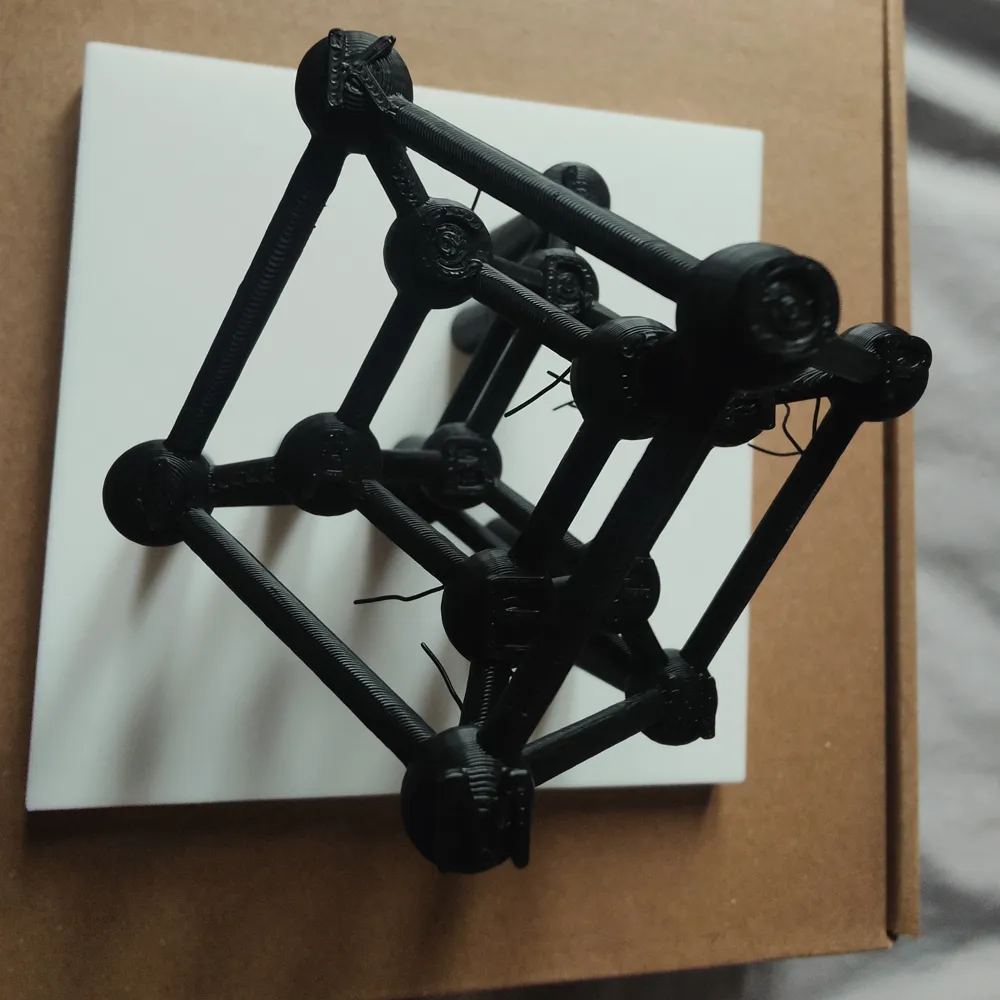
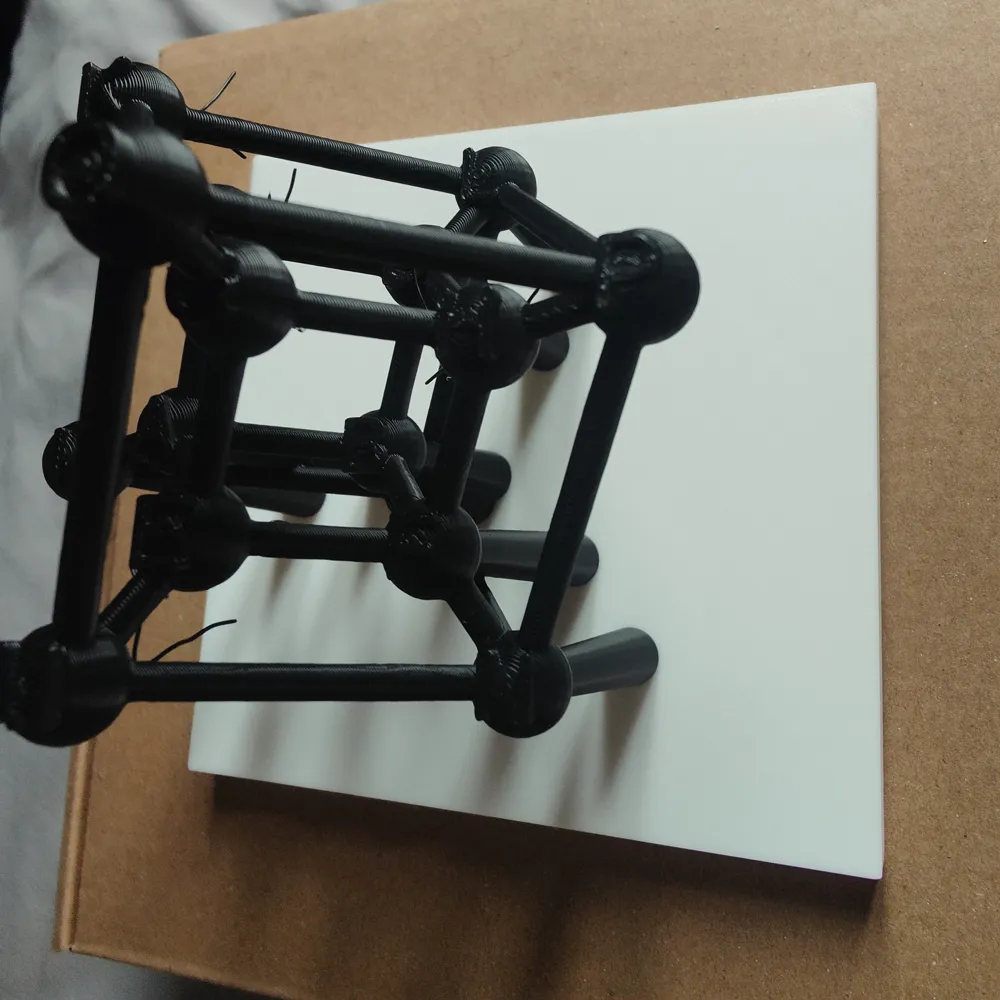
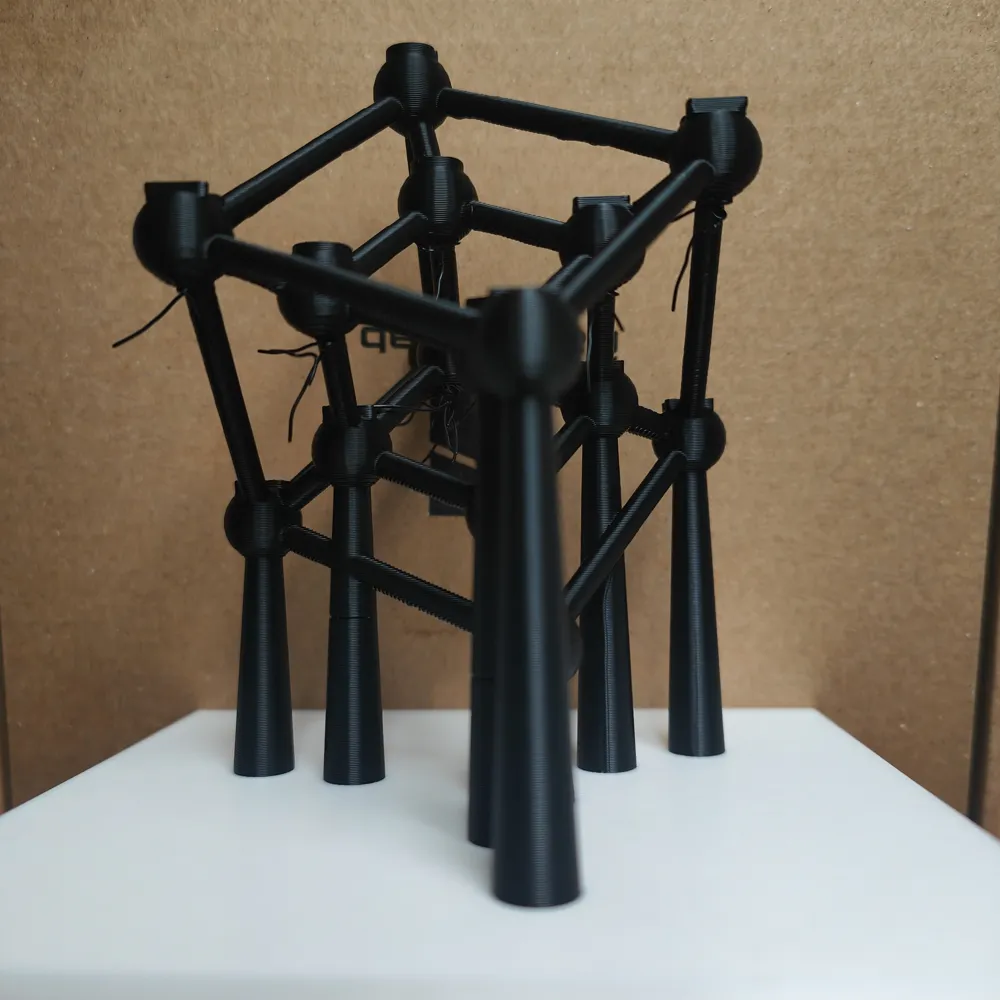
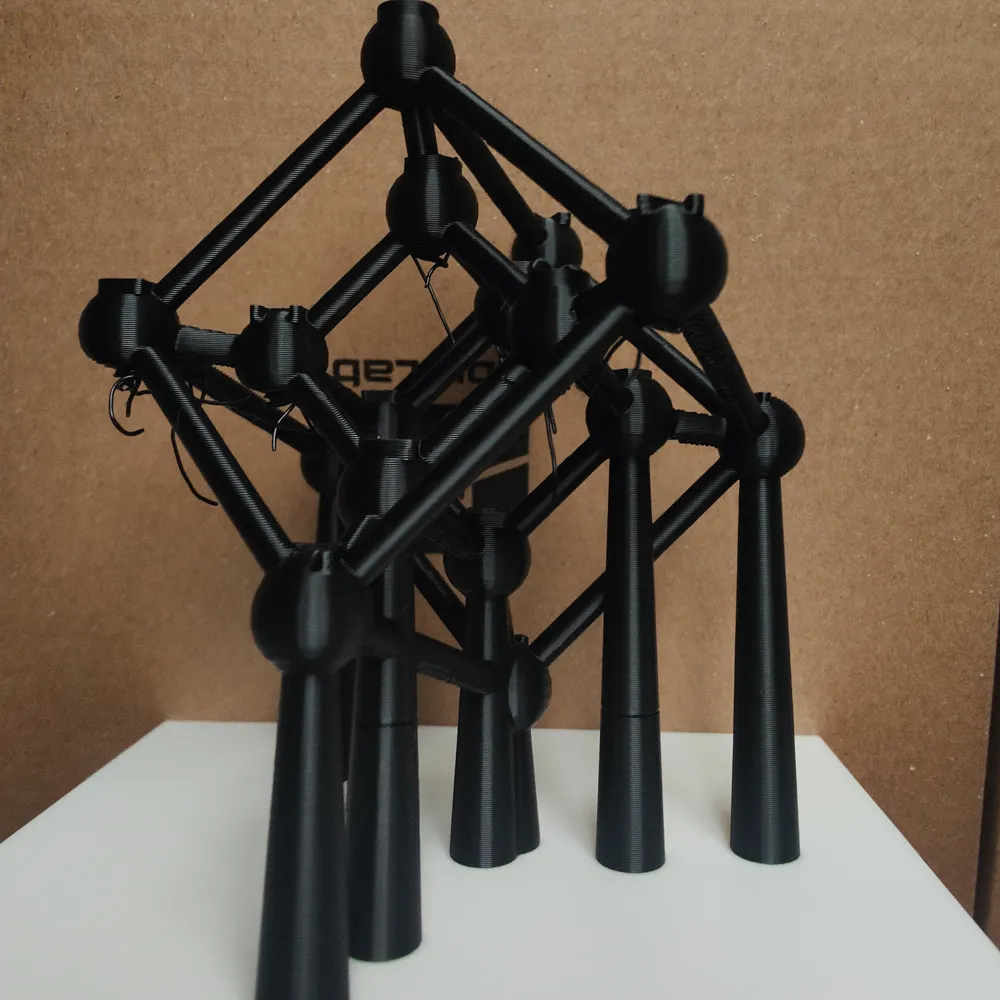
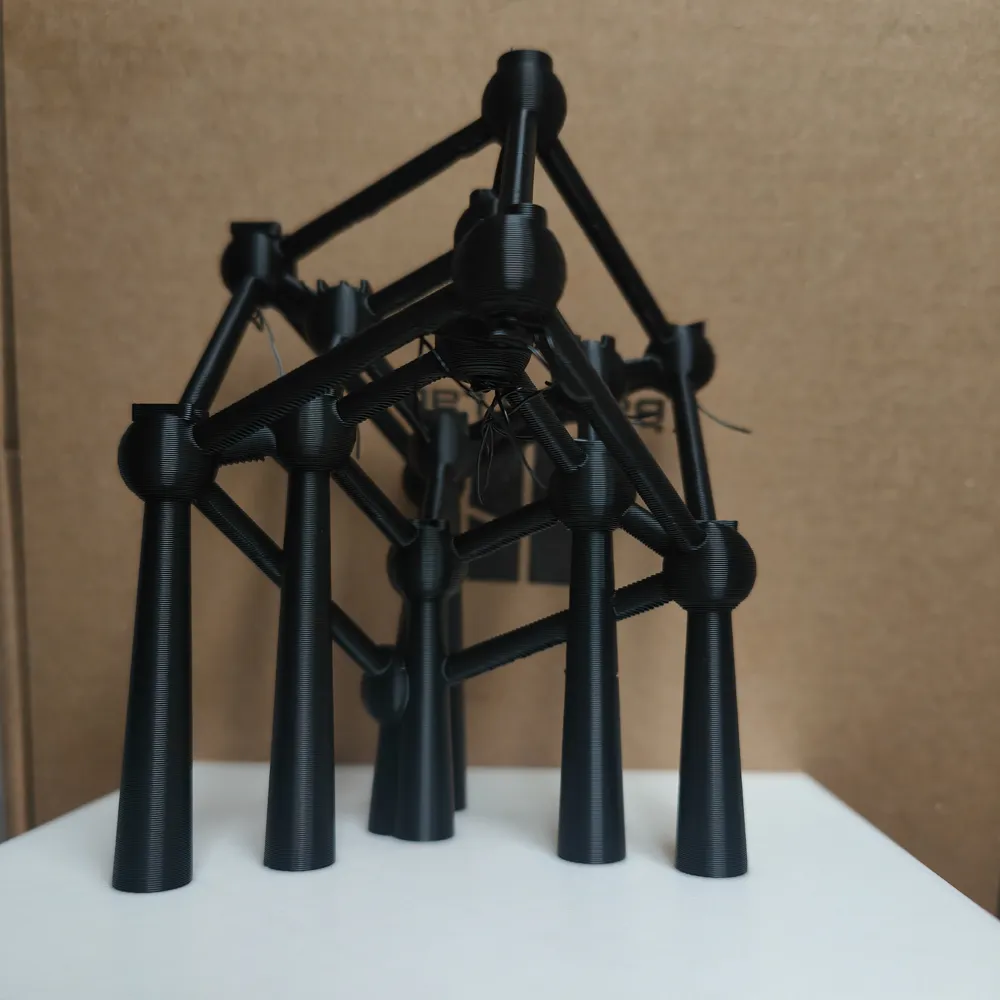
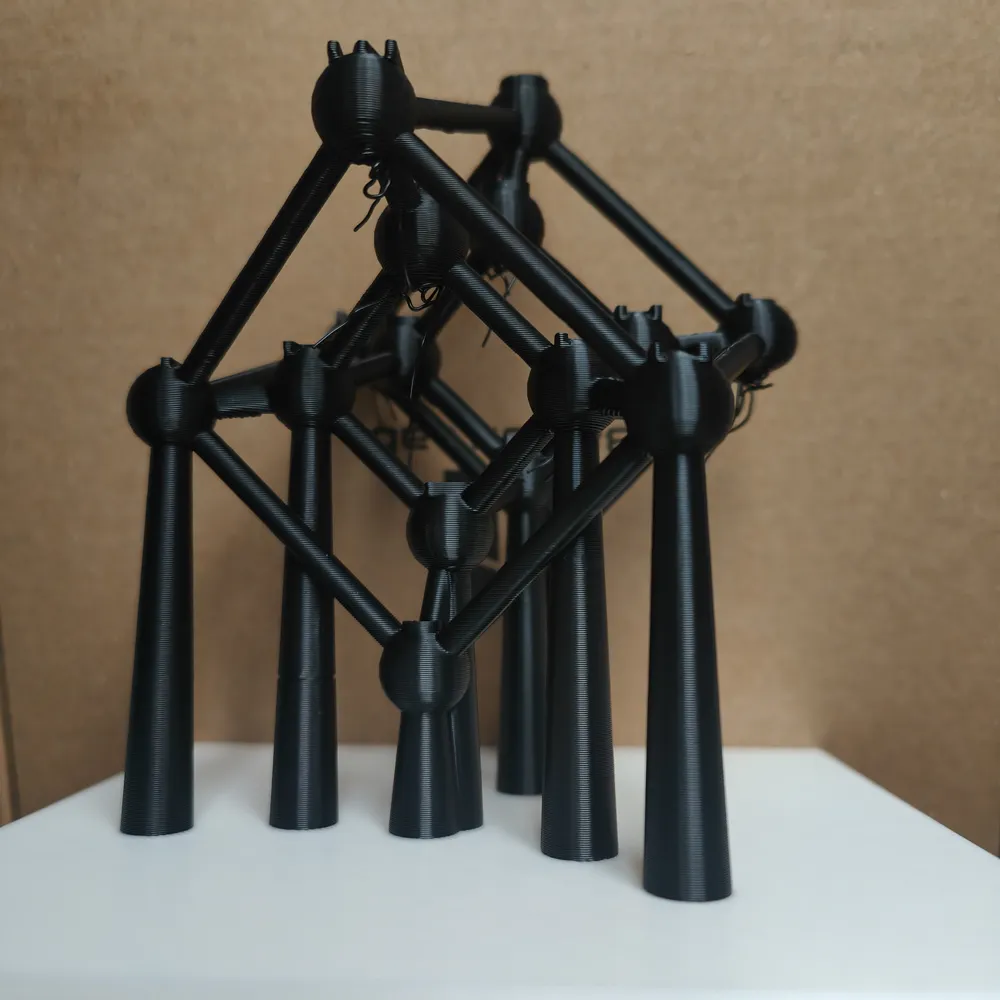
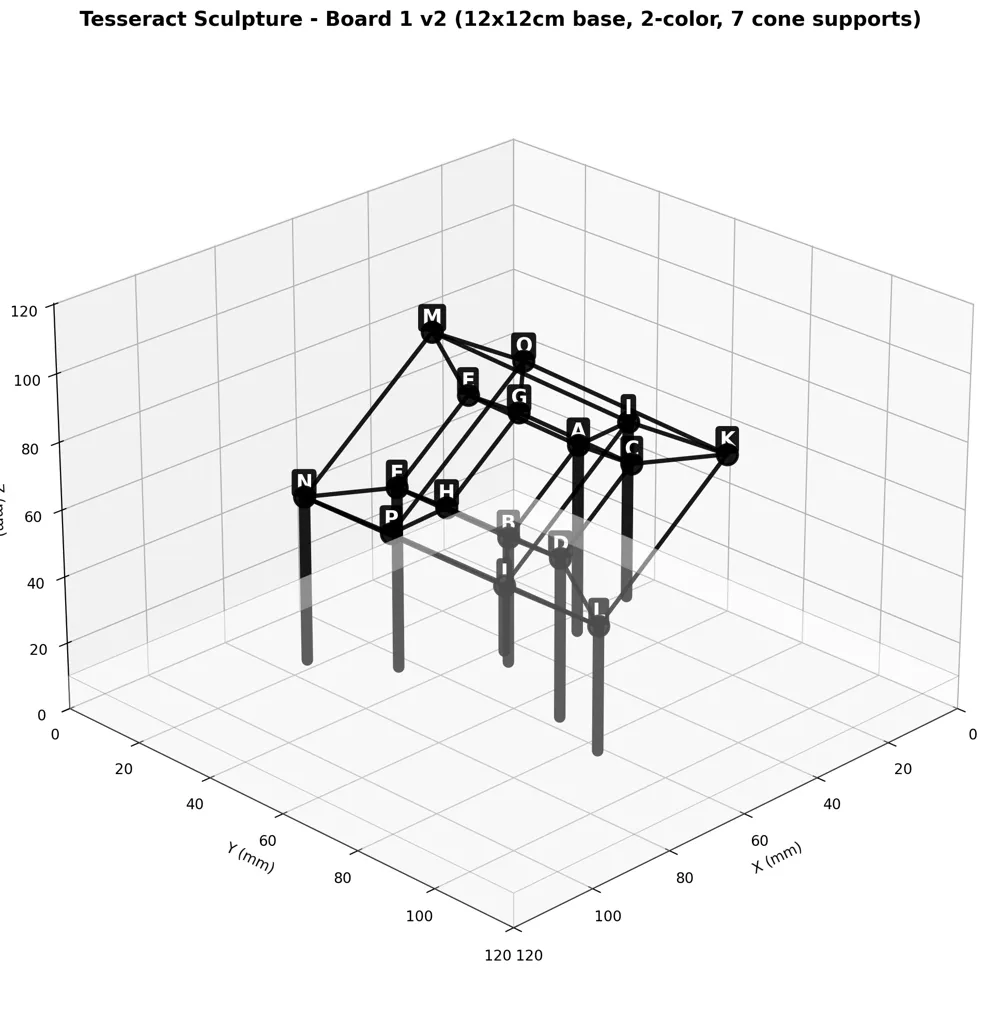
Print Profile(1)

Description
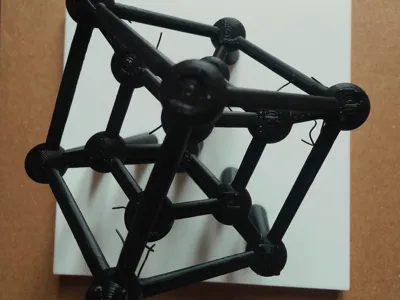
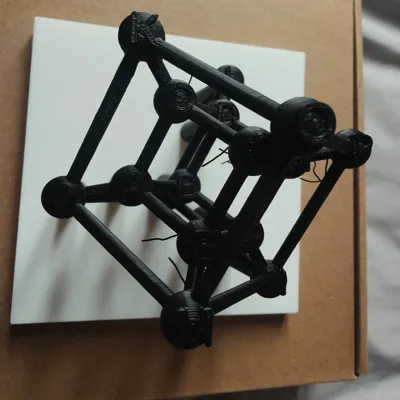
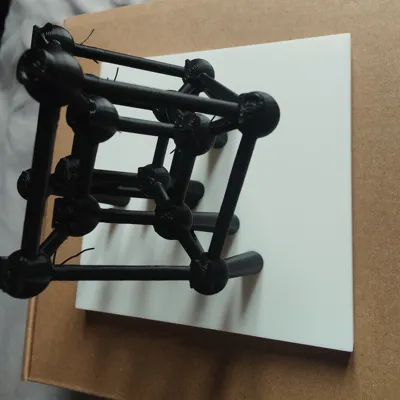
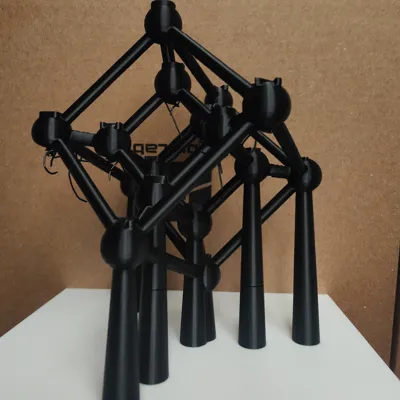
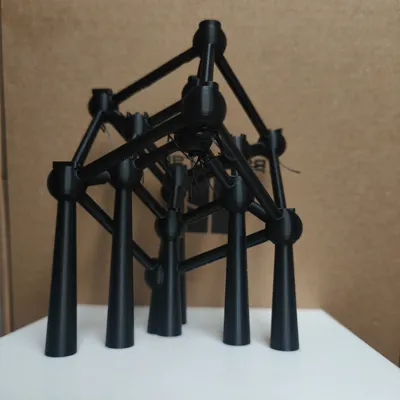
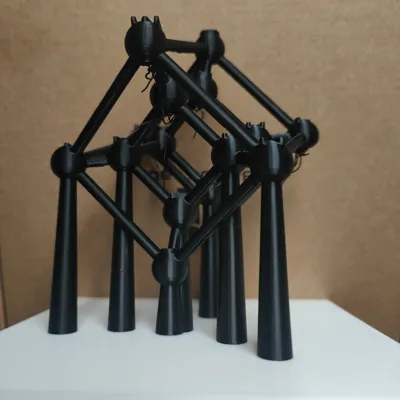
A 3D-printed tesseract (4D hypercube) sculpture designed to print cleanly and reliably without slicer supports.
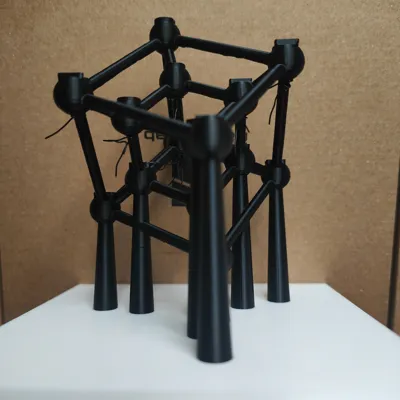
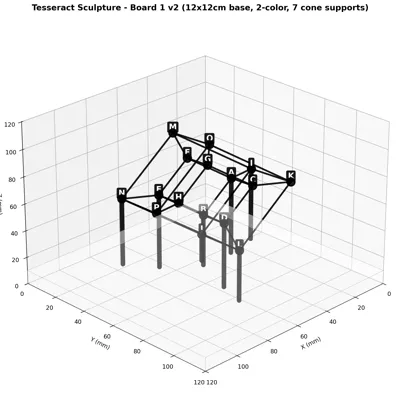
The “support forest” isn’t generated by the slicer — it’s part of the design: tapered cone columns rise from the base and fuse into the lowest vertices, keeping everything stiff and avoiding sag-prone horizontal branches.
✅ No AMS needed
✅ One filament change only (white base → black structure)
✅ Default settings work
✅ Letters are raised and can be painted for clarity (optional)
Printing (what I used)
- Printer: Bambu Lab P2S
- Filament: Bambu Lab PLA (White + Black)
- Settings: Default profile
- Supports: OFF (the model includes its own support geometry)
Color / filament swap
This model is meant to be a simple two-color print:
- White: base plate
- Black: everything above (tesseract + cone columns + letters)
If you use the provided project/profile, it should already be set up as a single color change.
The Hypercube (4D Cube): A hypercube is to a cube what a cube is to a square. Just as a cube has length, width, and height, a hypercube adds a fourth spatial dimension we'll call W. It exists in 4D space with coordinates (x, y, z, w).
Structure of a hypercube:
- 16 vertices (every combination of ±1 in four dimensions)
- 32 edges (connecting adjacent vertices)
- 24 square faces
- 8 cubic cells (this is key!)
The 8 cubic "faces" in 4D: Just as a 3D cube has 6 square faces, a 4D hypercube has 8 cubic faces. Here's where they are:
- 2 cubes at w = -1 and w = +1 (the "front" and "back" in the 4th dimension)
- 6 more cubes formed by the connecting edges (imagine how a cube's edges form squares when viewed from different angles - in 4D, these connections form entire cubes)
Why "tesseract" and projection: We can't see 4D objects directly - we're 3D beings. But we can see their shadows (projections) into 3D space, just as a 3D cube casts a 2D shadow on paper.
When you project a hypercube into 3D:
- You see two nested cubes (the w=-1 and w=+1 cubic faces)
- Connected by 8 diagonal edges (one from each vertex of the inner cube to the corresponding vertex of the outer cube)
- This nested-cube structure IS the tesseract - it's the 3D shadow of the 4D hypercube
The 8 different projections: As you rotate a hypercube in 4D space, different cubic faces become "visible" in the projection. It's exactly like rotating a 3D cube - sometimes you see one face head-on, sometimes you see an edge, sometimes a corner. But in 4D, there are 8 cubic faces that can be "primary" in the projection.
License



Comment & Rating (0)