
WWII F61 130cm


Print Profile(1)

Description
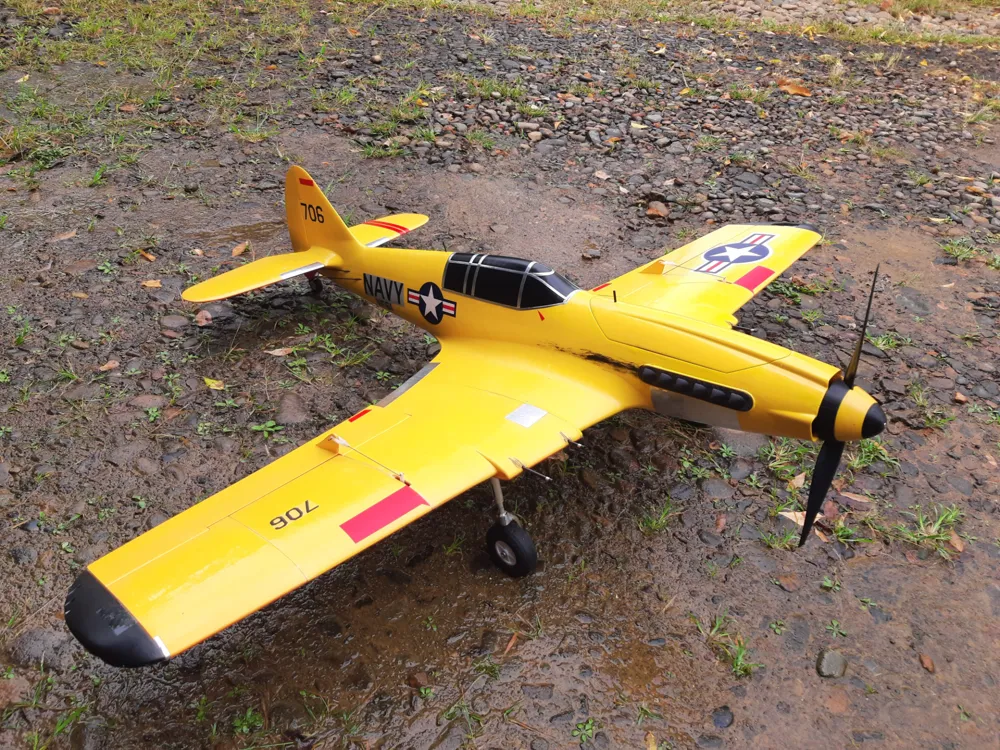
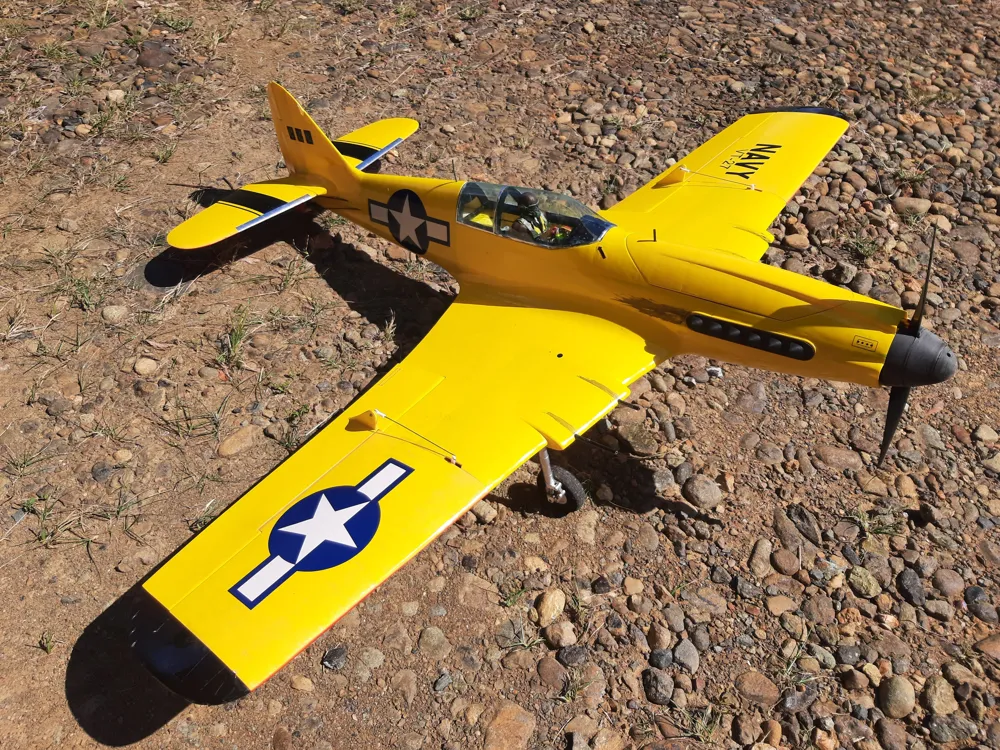
The Secret Saga of the Mustang-Schmidt
A Clandestine Birth:
In the very late 1930s, as Europe slowly ignited under a wave of geopolitical tensions, a—or rather, a secret group of German and American engineers, refugees in a strictly controlled Germany—gathered in the shadows. Their objective: to create an aircraft capable of changing the game in the sky, but without leaving any official trace or alerting the Allies.
Helmut Schmidt, a German engineer with revolutionary ideas, merged his skills with spies and engineers from the United States who wanted to see their expertise operate outside the law. Together, they secretly designed a fighter jet freed from conventional standards: a hybrid machine, fast, maneuverable, concealed under a facade of lightness and finesse.
The aircraft, code-named "Blaumeiser", then manufactured in clandestine workshops, blended the silhouette of the Mustang with the robustness of the Focke-Wulf 190, featuring a deluxe cowl and a fin reminiscent of the Bf 109. It was intended for a single mission: to counter-attack the Allies, defend Germany's secret interests while avoiding all detection.
A High-Tension Design:
The program, kept secret, operated in absolute shadow. The Merlin engine, secretly modified in hidden facilities, gave the aircraft formidable power. The fuselage, made of an illegally imported light alloy, was reinforced using materials prohibited by the conventions of the time. Its armament, discreet but deadly, was designed for rapid attacks both at high altitude and in energetic dives.
The pilots, mostly volunteers or recruited from among the regime's most loyal, participated in clandestine training at airfields buried deep within German forests. Their objective: to strike quickly, then disappear into the fog, avoiding the slightest trace. The aircraft, at the time, was considered an ultra-secret myth, an alloy of raw power and clandestine ingenuity.
A Shadow Operation in 1944:
In 1944, as the war was in full swing, the **"Blaumeiser"** entered the scene during a monumental secret operation. An elite squadron, composed of desperate but dedicated pilots, was parachuted behind Allied lines in Normandy, equipped with these legendary aircraft. Their mission: to disrupt supply lines, sabotage convoys, and create chaos in the enemy's sky.
These aircraft, flying under the cover of shadows, attacked in the dead of night or during storms, their silhouettes almost unreal in the fog. Their speed, maneuverability, and secrecy ultimately sowed confusion among Allied aviators: no one knew where they came from or who they were. The rumor of a mysterious German fighter flying like a ghost in the European sky spread among the clandestine resistance.
3 x 8mm carbon tubes, 1 x 4mm, 1 x 5mm, and 1 x 6mm tube for wing keys and cannons, 1mm carbon rods for hinges, 4 x 2.5mm carbon tubes for the fuselage, 1.5mm carbon rod for controls. For high speeds, I recommend ball-joint clevises.
Sanding, a thin layer of epoxy applied with a cloth, filler, paint. Flight weight: 2500g without battery, 3330g with 12S Li-Ion 21700 (EVE 40 PL), 2900g in 6S.
Center of gravity aligned with the front of the windshield. (it can be 1 or 2 cm further forward but definitely not further back)
MAX speed 240 km/h with 12S Li-Ion 21700 (Tmotor AM480 or Velox 3120 motor, SEQURE 12100 Brushless ESC Electric Speed Controller 5-12S) (180 km/h with 6S), 2 x 17g servos for elevator, 2 x 10g servos for ailerons, 1 x 10g for rudder.
License



Comment & Rating (18)