
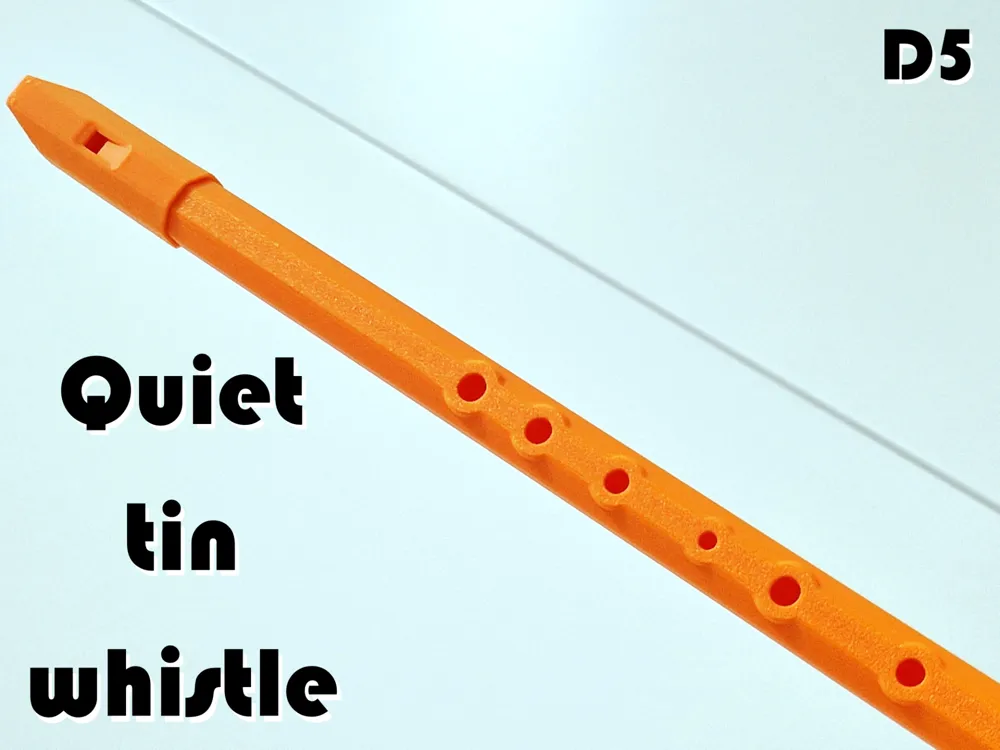
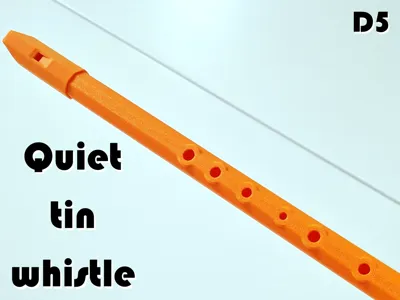
Quiet Tin Whistle (D5)
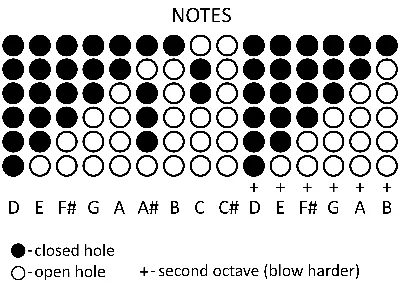
Print Profile(1)

Bill of Materials


Description
Link to the video of the whistle in action –
If you have A1 mini use this model - https://makerworld.com/models/2099264
This is a tin whistle made for practice and playing without annoying your neighbors to much :)
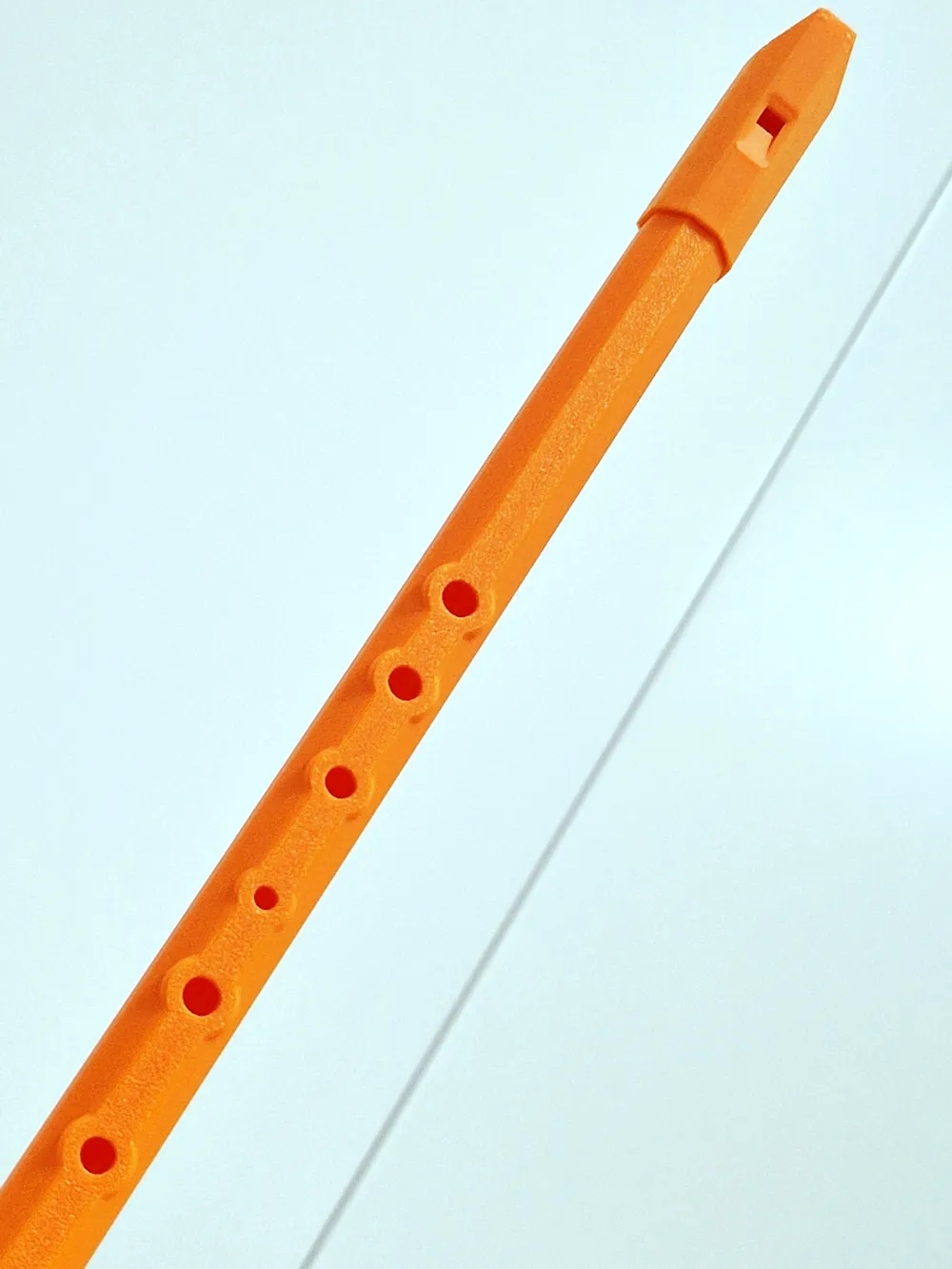
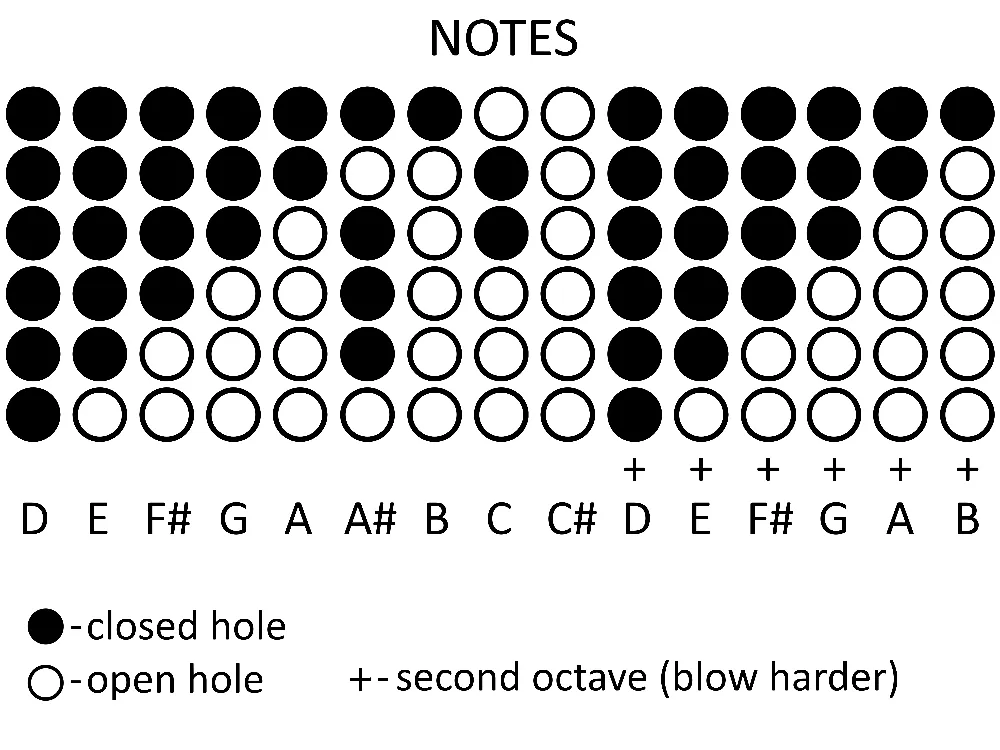
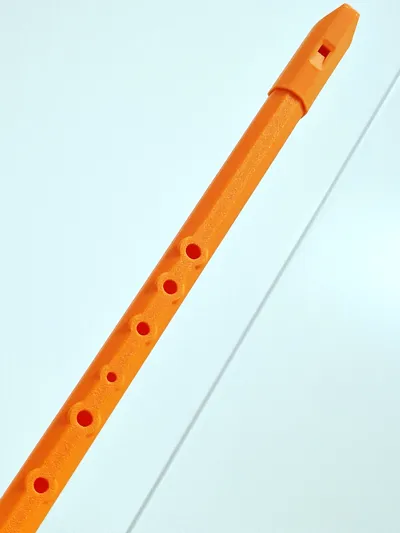
Instrument has easy to cover small flat holes and takes very little air to play. Note that this whistle does require breath control, which takes a bit of time to get used to.
Lower octave is balanced between sound, playability and quietness, while second octave is much quieter than usual
INSTRUCTIONS:
- Print profile is tuned for this model to print well, so using it is highly advised
- Model has very small features, so it's better to print with filament that you know prints well to avoid problems like over extrusion
- It's better to use filaments with good layer adhesion like PLA basic instead of PLA matte, but all filaments can work
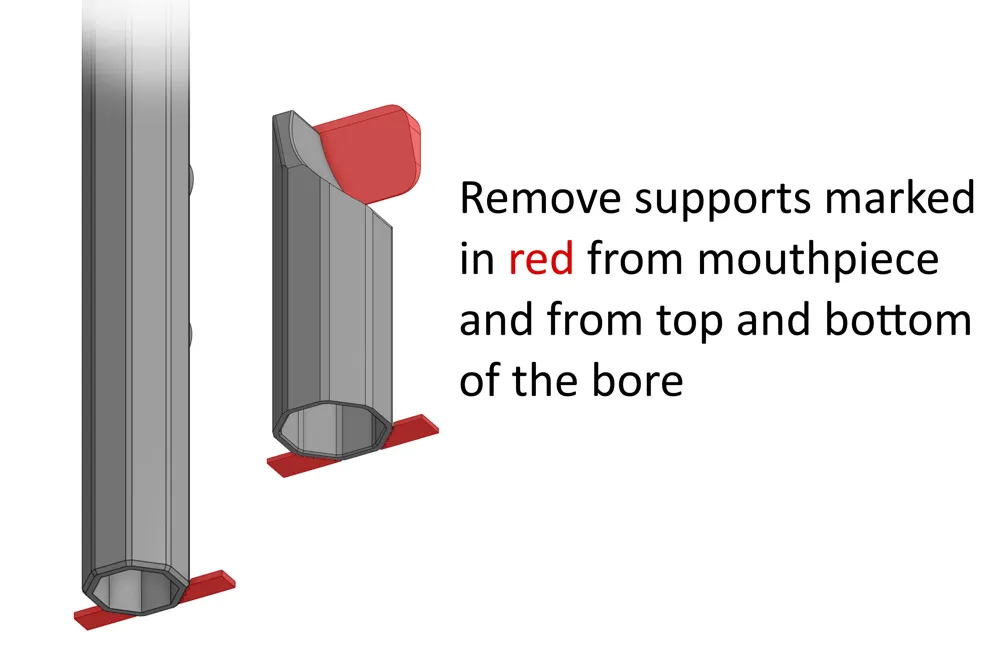
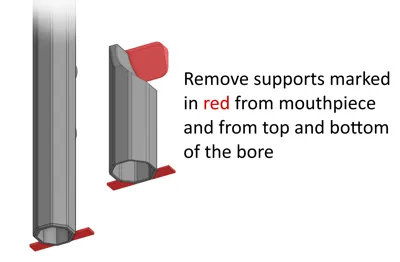
- After printing remove supports shown in the diagram below
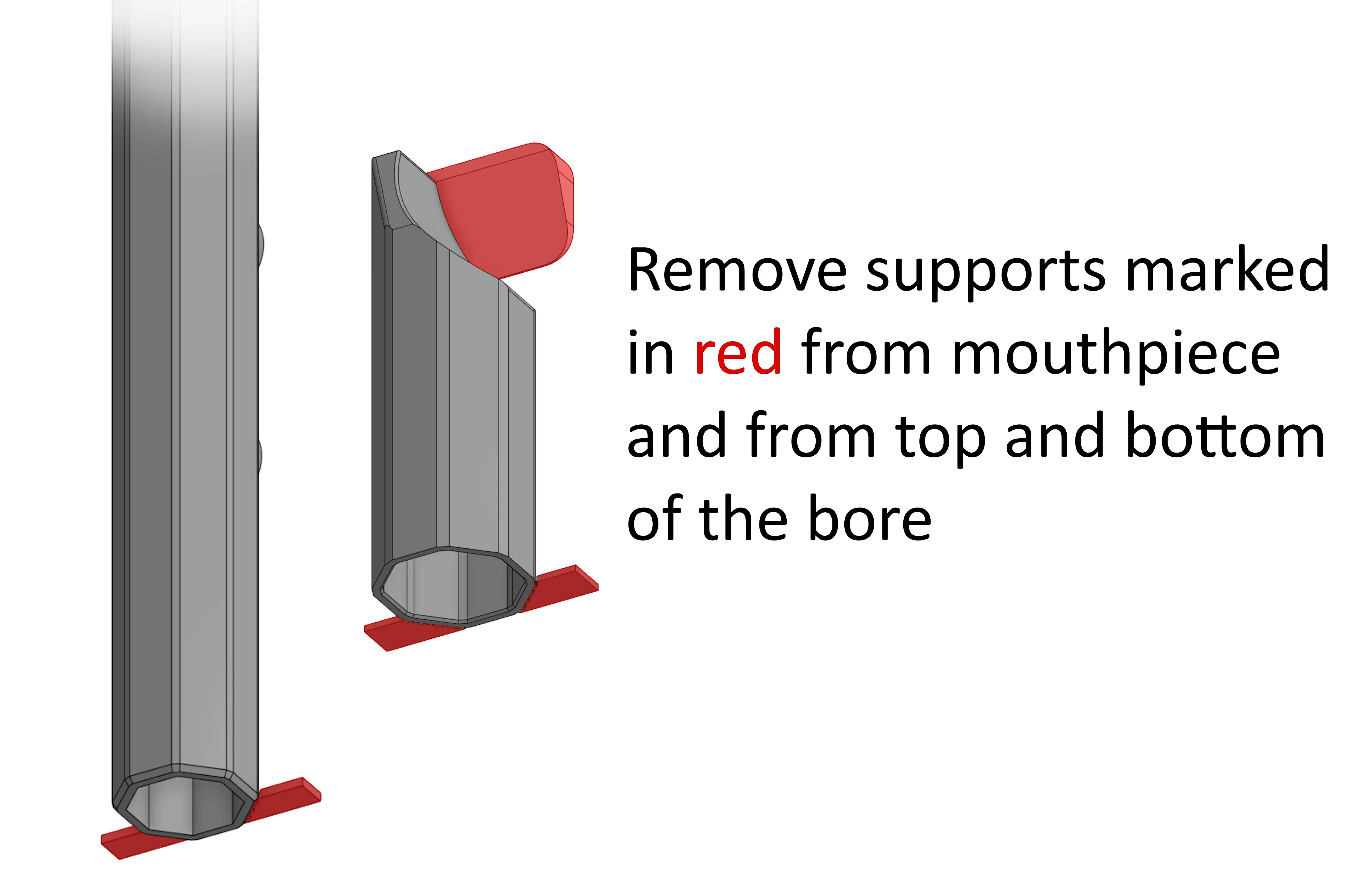
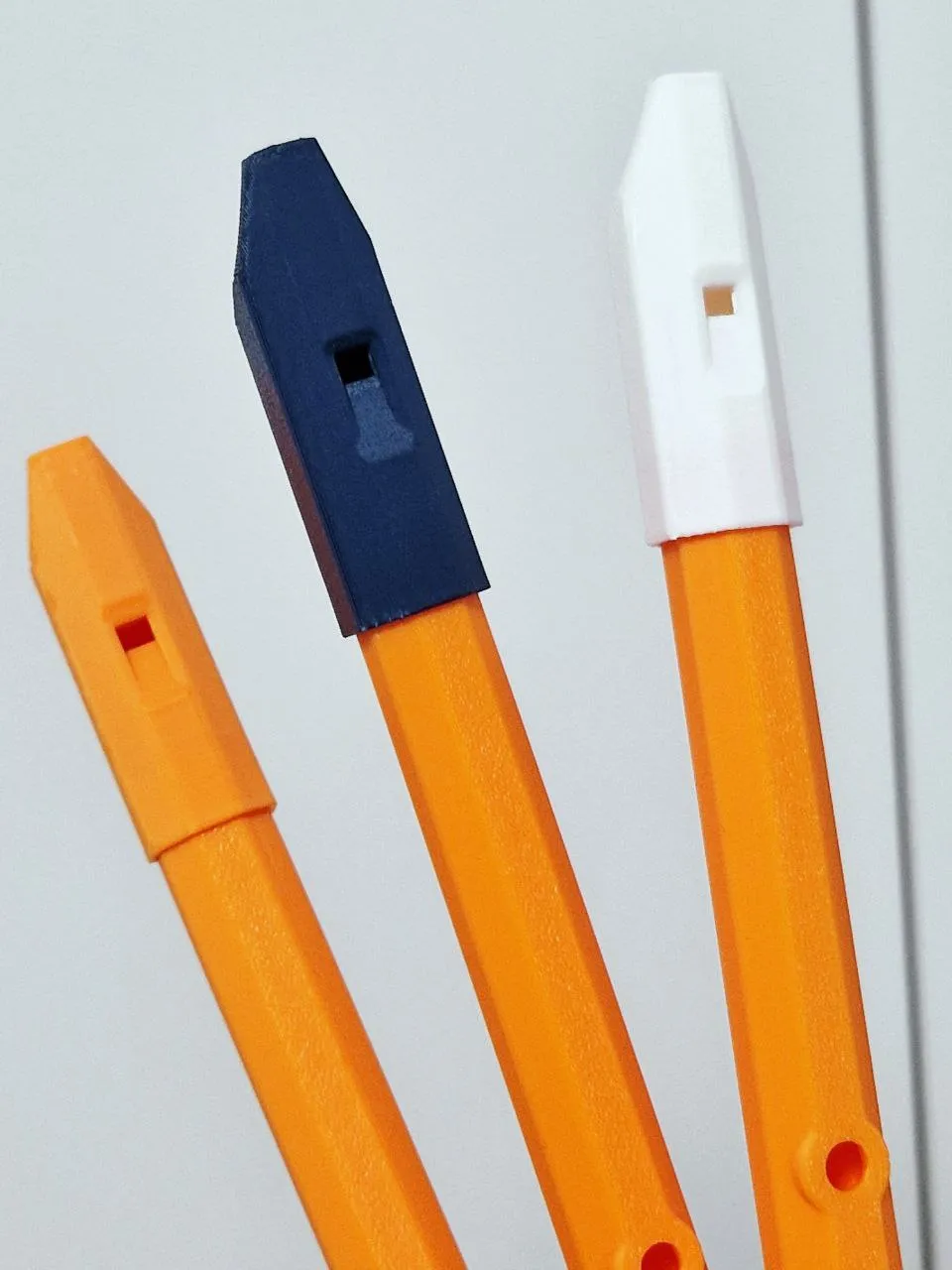
- Insert top of the bore into the mouthpice. Bottom of the bore is marked by letter D printed on the back
- Check if the whistle plays
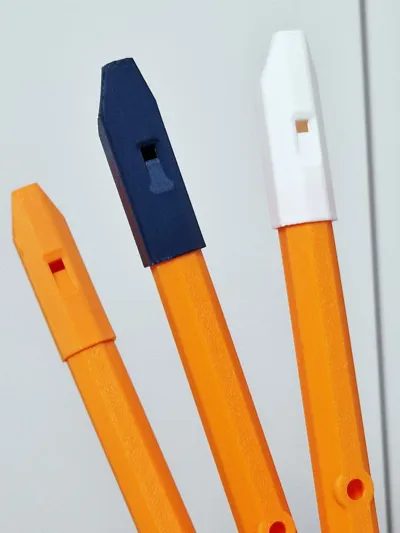
- Tape outside of the joint with any type of tape (like shown in the picture) to check if sound changes/ becomes better
- If sound does improve, then it's recommended to glue both sides together (or you can keep the joint taped)
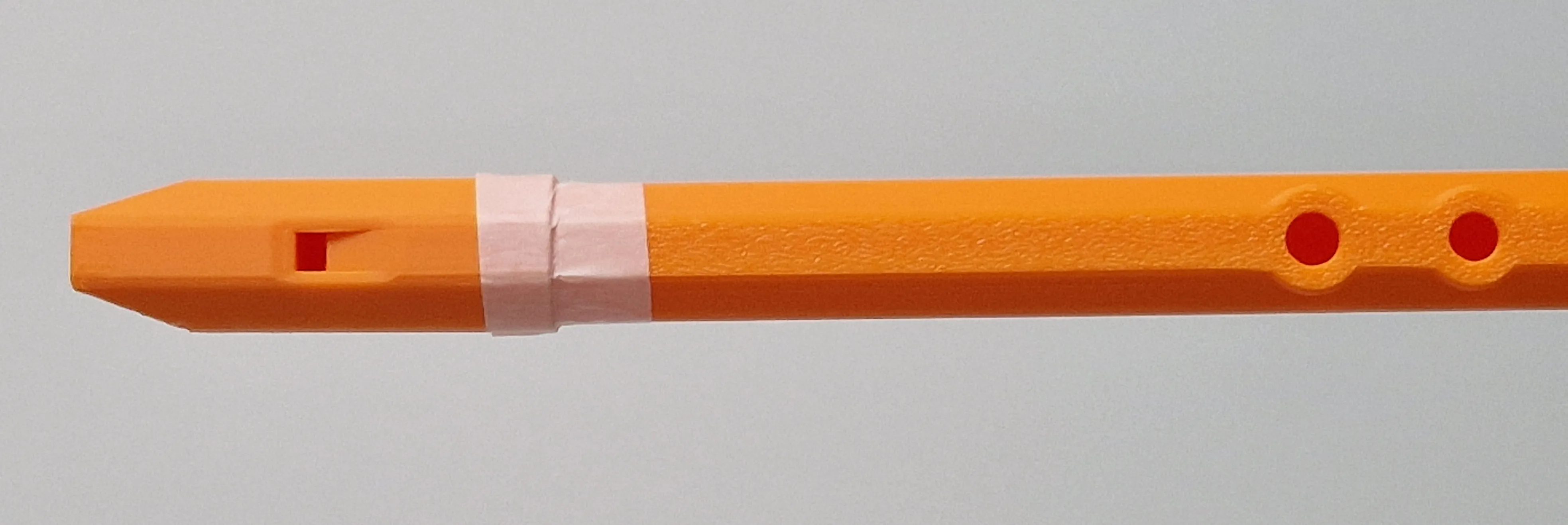
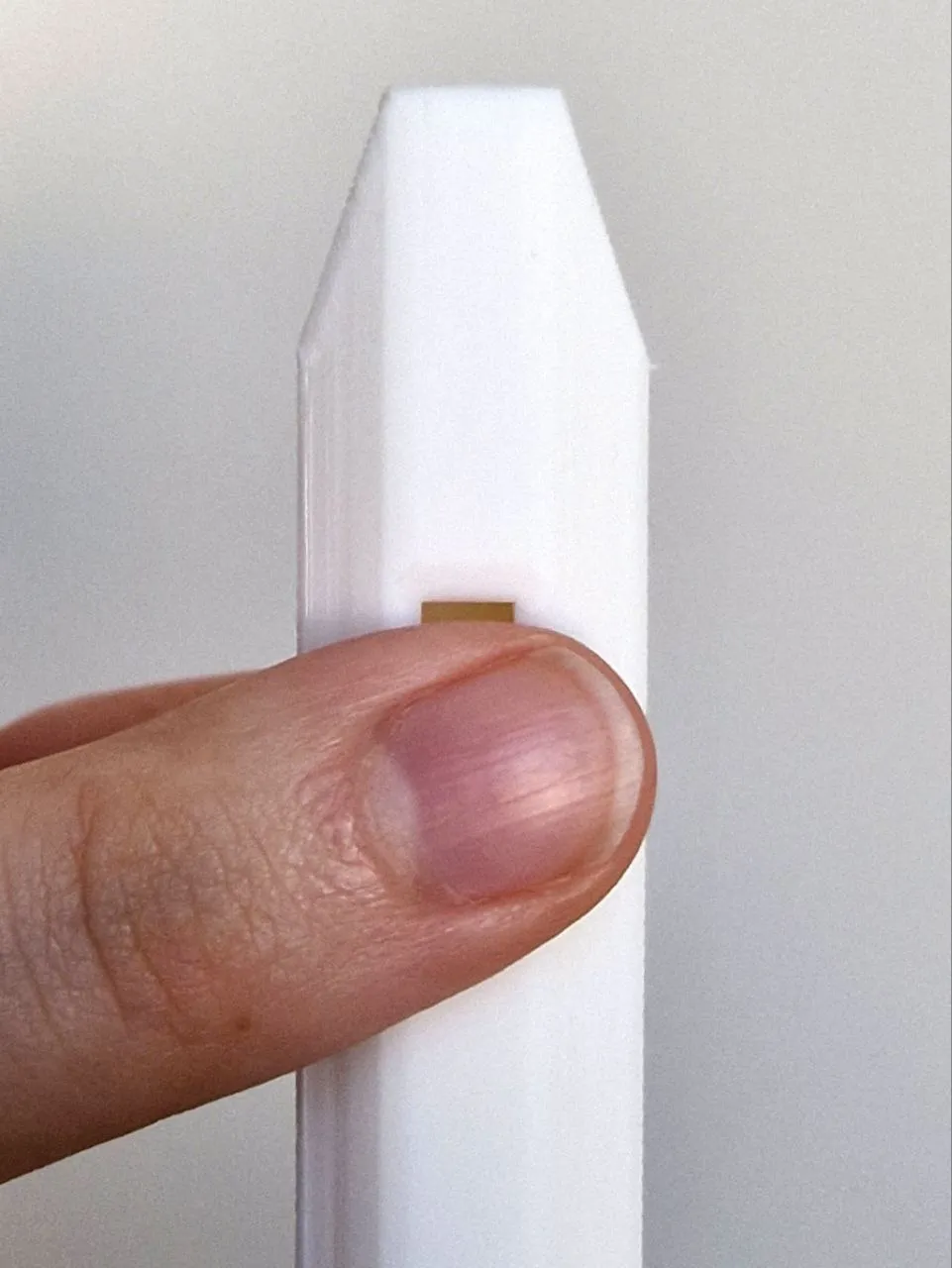
During playing, whistle can have moisture buildup affecting how it plays. If this happens cover the window with you finger leaving about 1mm of space on top (as shown in the picture below) and do blow hard, to blow away any moisture. After that you can continue paying as normal. Covering window with a finger is needed to prevent it from making loud high pitched sound from blowing into it hard
Feel free to ask me any questions in the comments, I will try my best to help
Boost Me (for free)
It takes a while to design and tune flutes, so a boost would be greatly appreciated :)
Happy playing! :)
License

You shall not share, sub-license, sell, rent, host, transfer, or distribute in any way the digital or 3D printed versions of this object, nor any other derivative work of this object in its digital or physical format (including - but not limited to - remixes of this object, and hosting on other digital platforms). The objects may not be used without permission in any way whatsoever in which you charge money, or collect fees.


Comment & Rating (76)