
AIDA Illuminated Sign
Print Profile(1)

Description
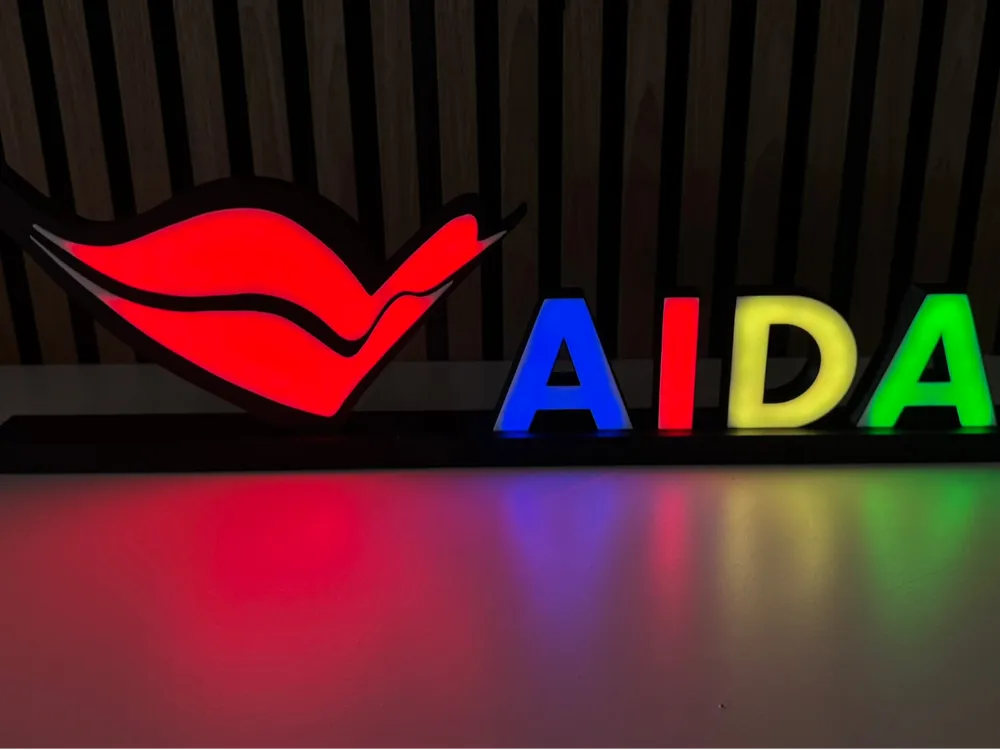
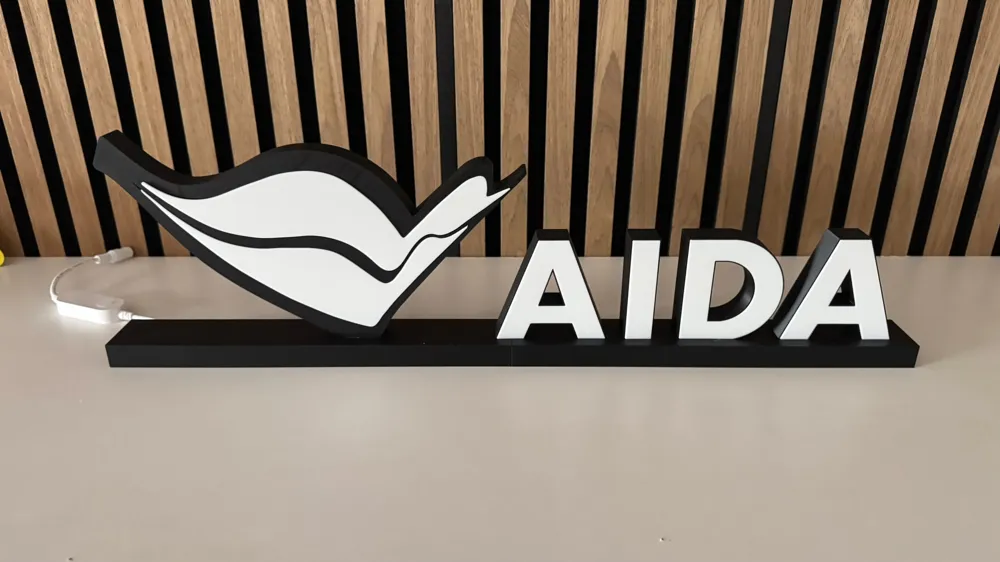
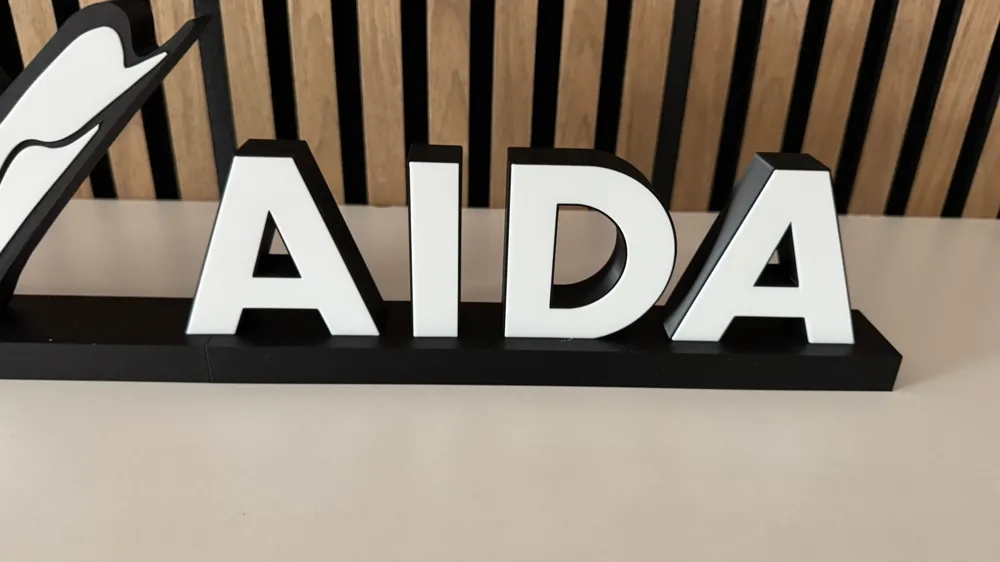
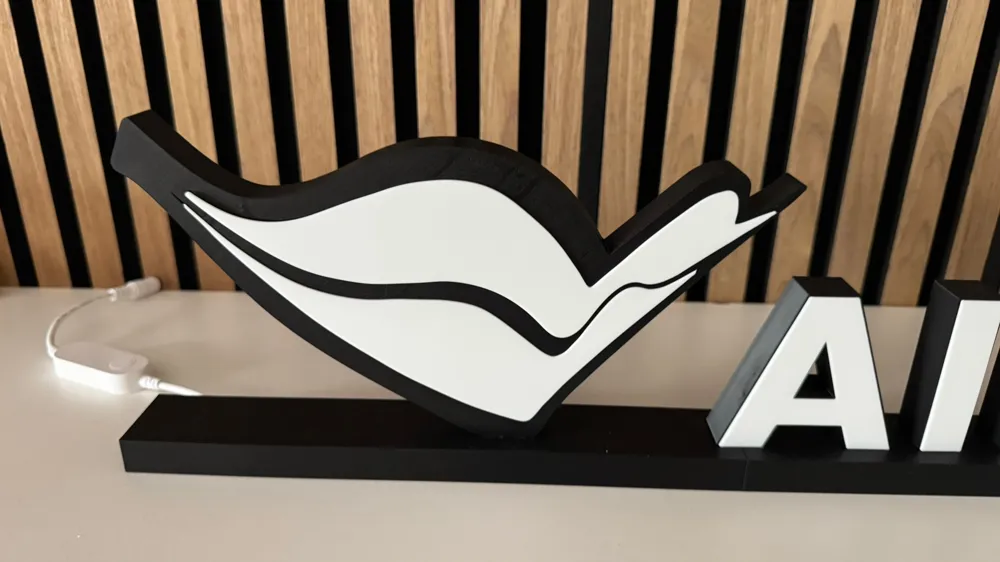
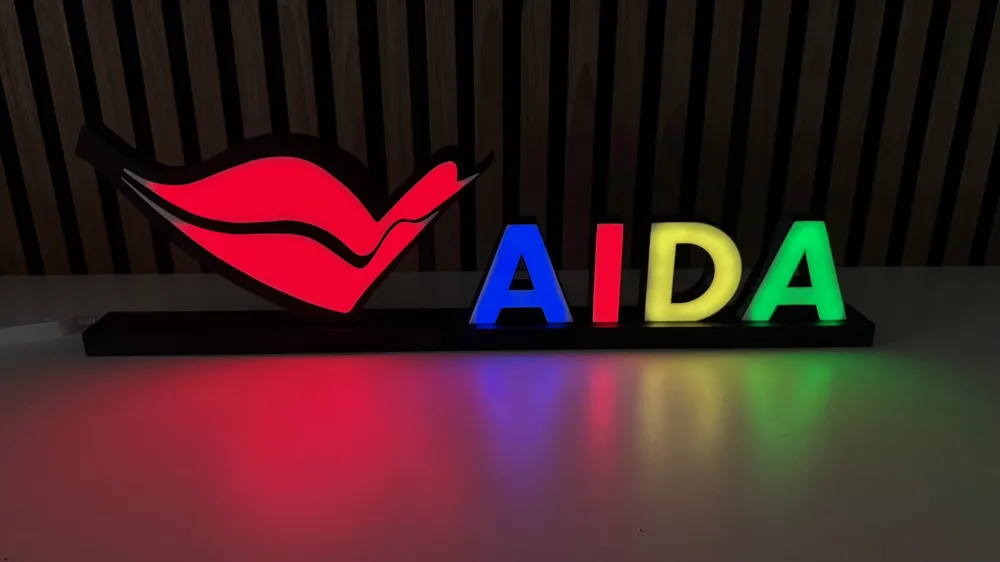
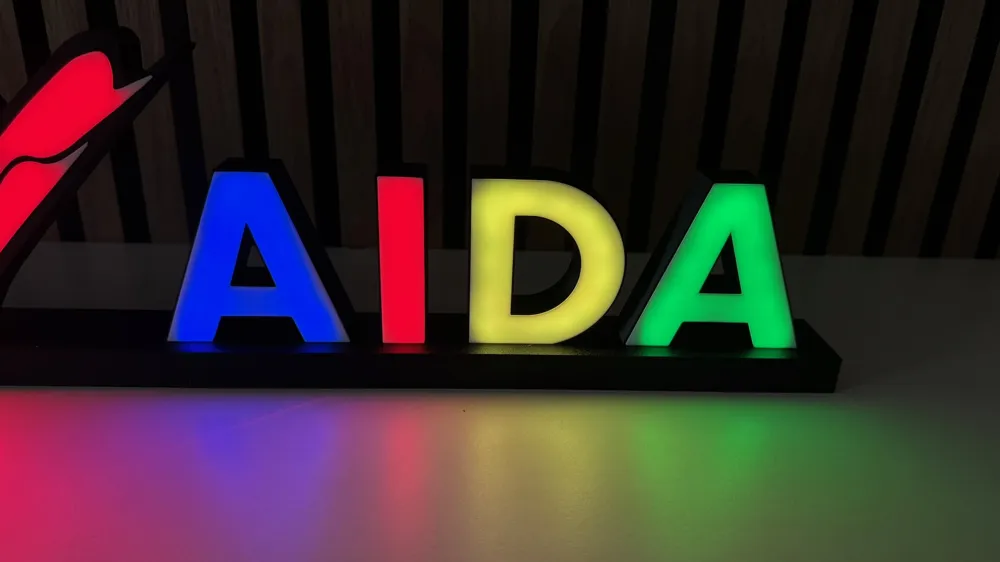
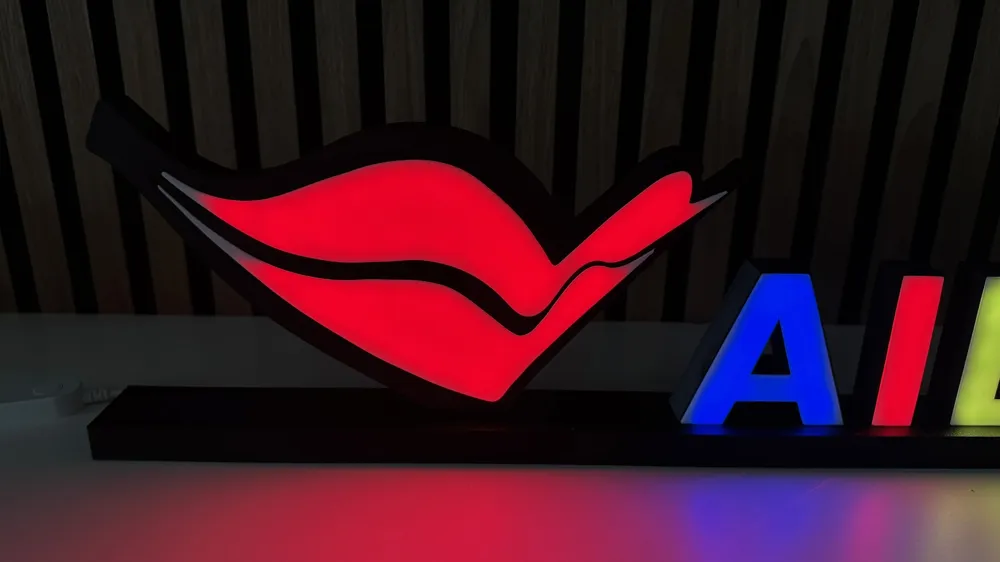
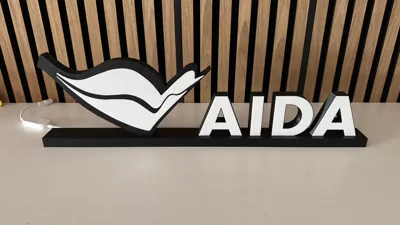
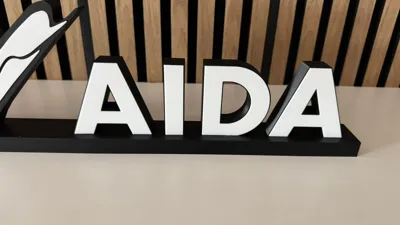
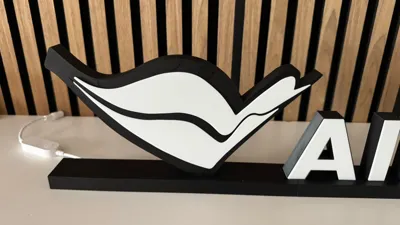
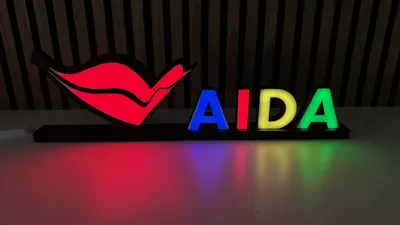
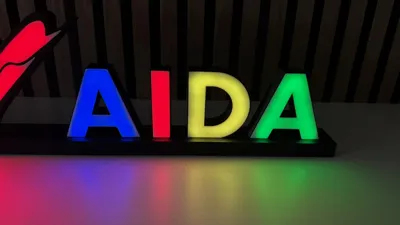
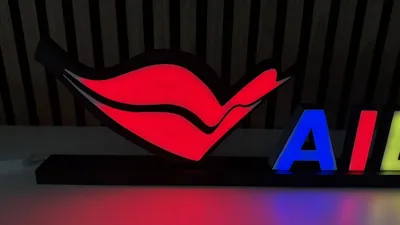
I am providing an AIDA illuminated sign for you here. The sign was designed from the AIDA logo itself and made available to you. The sign consists of several individual parts that are glued together at the end. The covers for the individual letters are simply clipped onto the sign at the end. The WLED controller gives you all options on how you want to illuminate the sign.
Material Links:
WLED Controller (GL-MC-002WL)
Link : https://www.gledopto.eu/gledopto-wled-mini-controller-esp32-digital
I have installed the 12V controller here, but it must be said that if you use 5 volt LED's, you absolutely must use a 5 volt power supply. The 5 volt controller is only available with a USB connection. So you can also buy the USB variant and then buy the appropriate USB adapter.
LED Light Strip - IP30-60L-3M
I achieved the best result with 60 LED's per meter. Of course, all variants are also open here, but care must be taken that the 3A of the controller is not exceeded. In the WLED controller, I limited the output current to 2.8A.
Power Supply - 5V / 3A
Link : https://www.amazon.de/AC-DC-Netzteil-Stecker-Plug
Any power supply with the voltage and current specifications given above can be used here. The prerequisite is that the power supply fits the connection of the WLED controller.
The links are exclusively from the manufacturer or German shop's, of course you can also buy the goods in other shops. I also bought them where it was cheapest in the end.
Number of LEDs:
Mouth = 50 LED's
A = 10 LED's
I = 9 LED's
D = 13 LED's
A = 10 LED's
WLED:
You can find everything about WLED here : https://kno.wled.ge/
A WLED controller is a compact, Wi-Fi-enabled control module for addressable LED strips, based on an ESP32 or ESP8266 microcontroller. It enables easy setup, control, and automation of LED effects via a modern web interface or smart home integrations.
Function:
- A WLED controller can directly control LED strips such as WS2812B, SK6812, or APA102. The software offers over 100 effects, color palettes, and segment controls.
Hardware:
- An ESP32 is usually used because it supports multiple LED outputs and operates stably. The controllers are designed for voltages from 5V to 24V.
Operation:
- Control is via Wi-Fi – either via smartphone, PC, or integration into systems like Home Assistant.
Features:
- Storage of up to 250 presets for colors and effects
- Support for RGBW strips and various LED chipsets
- Modularly expandable with microphones or line-in for audio-reactive effects
English Description:
I'm posting an AIDA illuminated sign here for you. The sign was custom-made using the AIDA logo and provided for your convenience. It consists of several individual parts that are glued together. The covers for the individual letters are simply clipped onto the sign. The WLED controller gives you complete freedom in how you illuminate the sign.
Material Links:
WLED Controller (GL-MC-002WL)
Link : https://www.gledopto.eu/gledopto-wled-mini-controller-esp32-digital
I've installed the 12V controller here, but it's important to note that if you're using 5V LEDs, you absolutely must use a 5V power supply. The 5V controller is only available with a USB connection. So, you can also buy the USB version and then purchase the appropriate USB adapter.
LED Light Strip - IP30-60L-3M
I achieved the best results with 60 LEDs per meter. Of course, all variations are possible, but you must ensure that the controller's 3A output is not exceeded. I limited the output current on the WLED controller to 2.8A.
Power Supply - 5V / 3A
Link : https://www.amazon.de/AC-DC-Netzteil-Stecker-Plug
Any power supply with the voltage and current specifications mentioned above can be used. The only requirement is that the power supply is compatible with the WLED controller's connector.
The links are exclusively from the manufacturer or the German shop; of course, you can also purchase the product from other shops. I bought mine wherever it was cheapest in the end.
Number of LEDs:
Mouth = 50 LEDs
A = 10 LEDs
I = 9 LEDs
D = 13 LEDs
A = 10 LEDs
WLED:
You can find everything about WLED here: https://kno.wled.ge/
A WLED controller is a compact, Wi-Fi-enabled control module for addressable LED strips, based on an ESP32 or ESP8266 microcontroller. It enables easy setup, control, and automation of LED effects via a modern web interface or smart home integrations.
Function:
- A WLED controller can directly control LED strips such as WS2812B, SK6812, or APA102. The software offers over 100 effects, color palettes, and segment controls.
Hardware:
- An ESP32 is typically used, as it supports multiple LED outputs and operates reliably. The controllers are designed for voltages from 5V to 24V.
Operation:
- Control is via Wi-Fi – either via smartphone, PC, or integration into systems like Home Assistant.
Features:
- Storage of up to 250 presets for colors and effects
- Support for RGBW strips and various LED chipsets
- Modularly expandable with microphones or line-in for audio-reactive effects
English Description:
I'm posting an AIDA illuminated sign here for you. The sign was custom-made using the AIDA logo and provided for your convenience. It consists of several individual parts that are glued together. The covers for the individual letters are simply clipped onto the sign. The WLED controller gives you complete freedom in how you illuminate the sign.
Material Links:
WLED Controller (GL-MC-002WL)
Link : https://www.gledopto.eu/gledopto-wled-mini-controller-esp32-digital
I've installed the 12V controller here, but it's important to note that if you're using 5V LEDs, you absolutely must use a 5V power supply. The 5V controller is only available with a USB connection. So, you can also buy the USB version and then purchase the appropriate USB adapter.
LED Light Strip - IP30-60L-3M
I achieved the best results with 60 LEDs per meter. Of course, all variations are possible, but you must ensure that the controller's 3A output is not exceeded. I limited the output current on the WLED controller to 2.8A.
Power Supply - 5V / 3A
Link : https://www.amazon.de/AC-DC-Netzteil-Stecker-Plug
Any power supply with the voltage and current specifications mentioned above can be used. The only requirement is that the power supply is compatible with the WLED controller's connector.
The links are exclusively from the manufacturer or the German shop; of course, you can also purchase the product from other shops. I bought mine wherever it was cheapest in the end.
Number of LEDs:
Mouth = 50 LEDs
A = 10 LEDs
I = 9 LEDs
D = 13 LEDs
A = 10 LEDs
WLED:
You can find everything about WLED here: https://kno.wled.ge/
A WLED controller is a compact, Wi-Fi-enabled control module for addressable LED strips, based on an ESP32 or ESP8266 microcontroller. It enables easy setup, control, and automation of LED effects via a modern web interface or smart home integrations.
Function:
- A WLED controller can directly control LED strips such as WS2812B, SK6812, or APA102. The software offers over 100 effects, color palettes, and segment controls.
Hardware:
- An ESP32 is typically used, as it supports multiple LED outputs and operates reliably. The controllers are designed for voltages from 5V to 24V.
Operation:
- Control is via Wi-Fi – either via smartphone, PC, or integration into systems like Home Assistant.
Features:
- Storage of up to 250 presets for colors and effects
- Support for RGBW strips and various LED chipsets
- Modularly expandable with microphones or line-in for audio-reactive effects
License

You shall not share, sub-license, sell, rent, host, transfer, or distribute in any way the digital or 3D printed versions of this object, nor any other derivative work of this object in its digital or physical format (including - but not limited to - remixes of this object, and hosting on other digital platforms). The objects may not be used without permission in any way whatsoever in which you charge money, or collect fees.


Comment & Rating (13)