
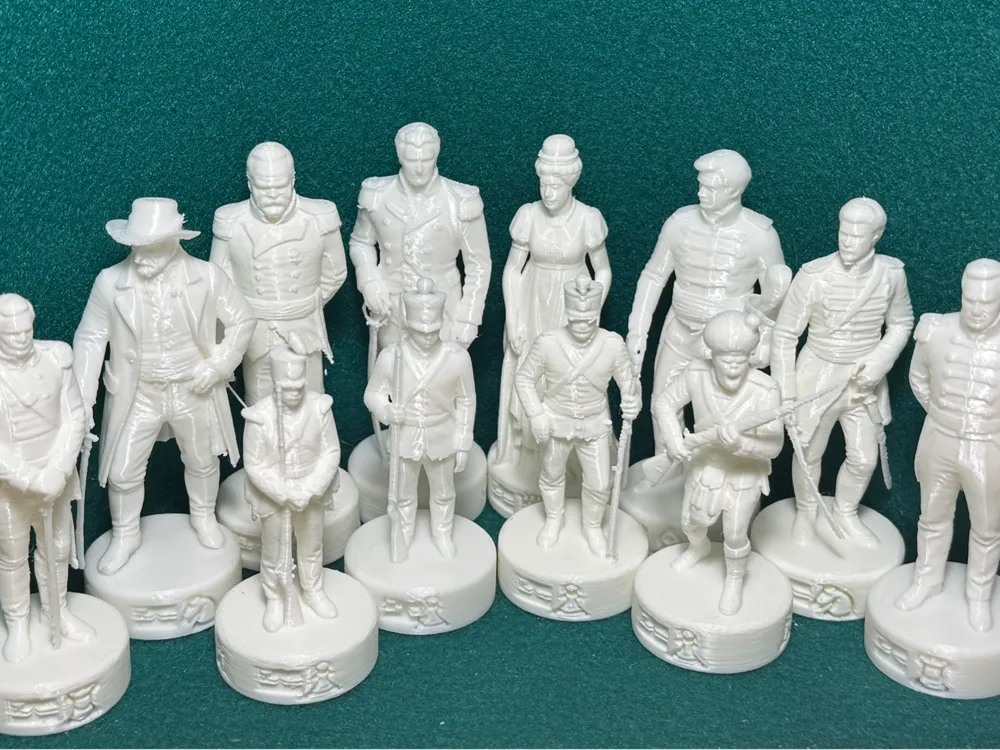
Waterloo Battle of ~ Allied Forces ~ FULL figures
Print Profile(1)

Description
Artist’s Commentary — “Real History, Real People”
When I began this project, I promised myself I’d stay away from fantasy for a while — no myths, no legends, no imagined worlds. I wanted to build something rooted in real people who once stood on the same ground we walk today.
The Real History Chess Set is my way of honoring them — the leaders, the foot soldiers, and everyone in between who shaped the world we inherited.
Combat, soldiers, and battles are close to me. I’m a Vietnam Army Combat Infantryman veteran, and war… well, unless you’ve lived it, you can’t truly imagine it. For those who have — you know exactly what I mean. Creating these military-themed chess sets is my way of showing respect for my Brothers in Arms. These pieces remind us of what once was, and of the people who carried the weight of history on their backs.
Yes — I used AI tools again, unapologetically. Not to replace imagination, but to extend what’s possible. Every piece still begins with human intent: proportion, gesture, dignity. The machine just helps me reach the destination a little faster.
These models are meant to be printed, handled, and enjoyed. The figures aren’t perfect — and neither was history — but both, I believe, are worth studying closely.
Annealing & Material Care — Preserving the Past
Though these figures honor empires long gone, their strength is very much modern.
Annealing your printed pieces will improve durability by 10–20%, making them less brittle and better suited for regular play. Simply heat-treat your PLA models using the gentle oven method (95–110°C / 203–230°F for 30–60 minutes), allowing them to cool slowly to prevent warping.
For collectors who prefer their pieces purely for display, consider finishing them with a soft patina effect — light brushing with metallic or chalk paints over a matte base. It enhances depth and gives that “museum marble” quality reminiscent of aged stone.
Avoid direct sunlight and high humidity to preserve tonal consistency and layer adhesion over time. Treat them as you would historical miniatures — with respect for the craft, and the story they carry.
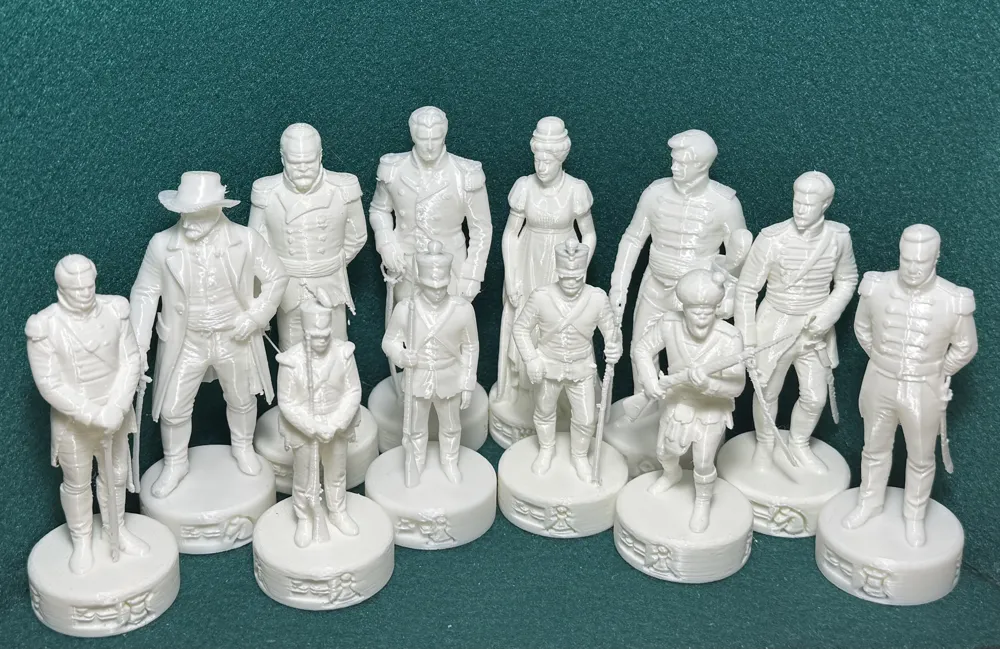
WATERLOO — ALLIED ARMY
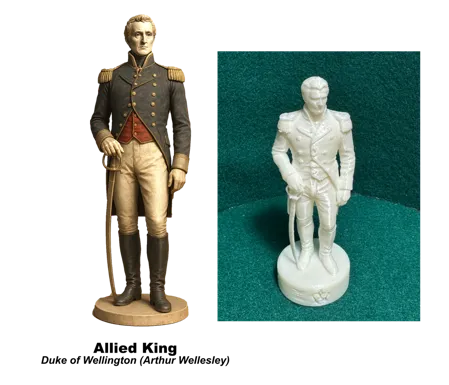
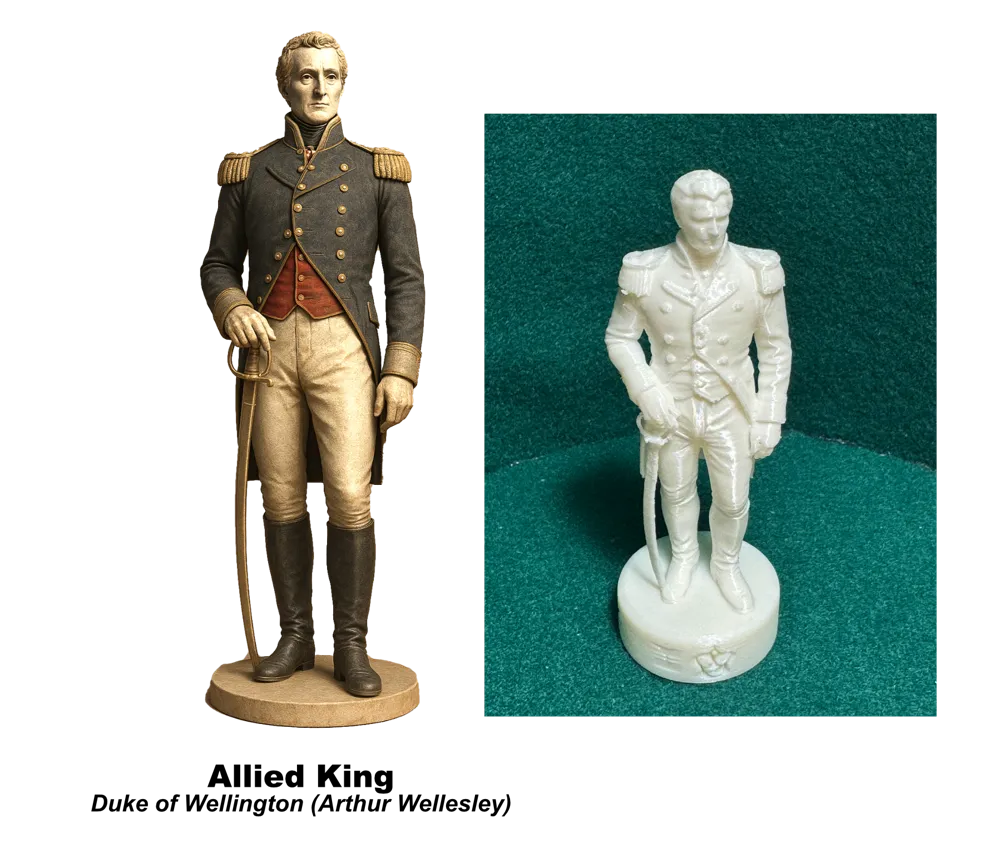
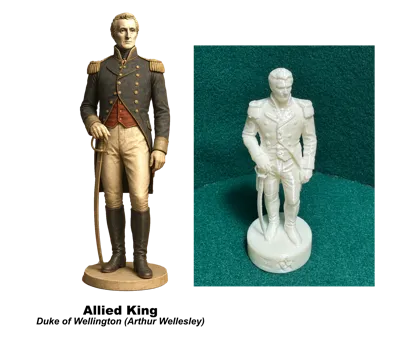
Allied King — Duke of Wellington
Title: “The Iron Duke – Strategist of Nations”
Calm, calculating, and resolute, the Duke of Wellington stands as the embodiment of measured command.
Where Napoleon’s fire burns, Wellington’s resolve cools the field. His gaze surveys the board as he once did the ridges of Waterloo — always weighing, never wavering.
Represents: Discipline, strategy, steadfast courage.
Historical Note: Arthur Wellesley (1769–1852) — Britain’s undefeated commander; master of defense and coalition warfare.
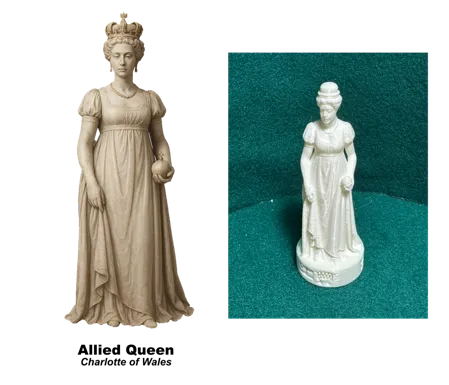
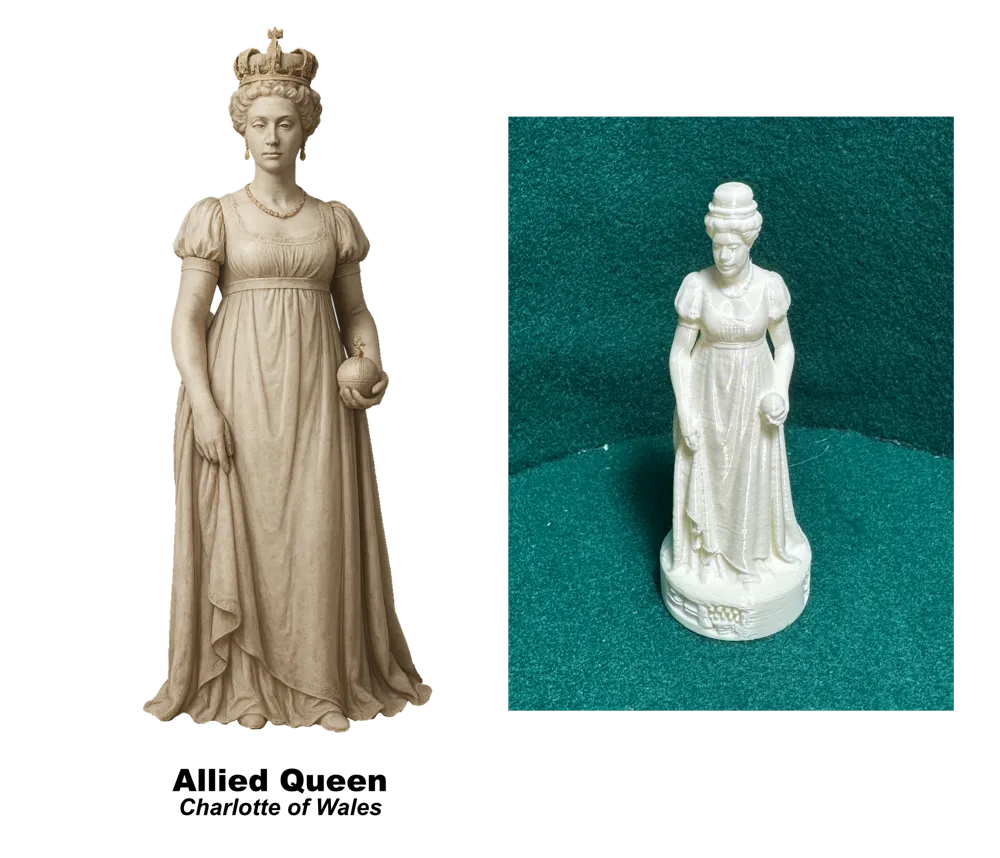
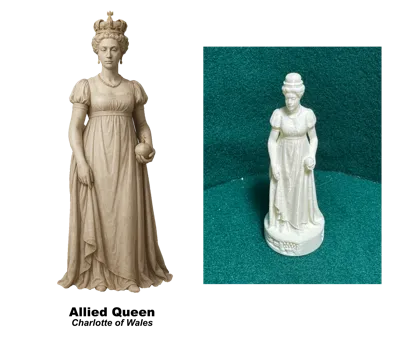
Allied Queen — Queen Charlotte of Wales
Title: “The Noble Heart – Pillar of Regency Grace”
Queen Charlotte embodies the stabilizing force behind the nation — dignity without rigidity, elegance without fragility. Her presence on the board mirrors the quiet influence monarchies held in shaping morale and unity during an era of upheaval.
Represents: Duty, heritage, national unity.
Historical Note: Though not a battlefield figure, Charlotte symbolized the cultural and moral backbone of Britain during the Napoleonic age.
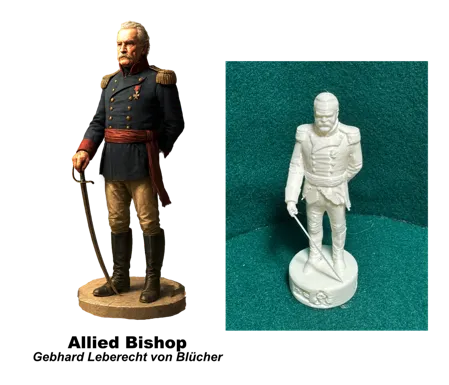
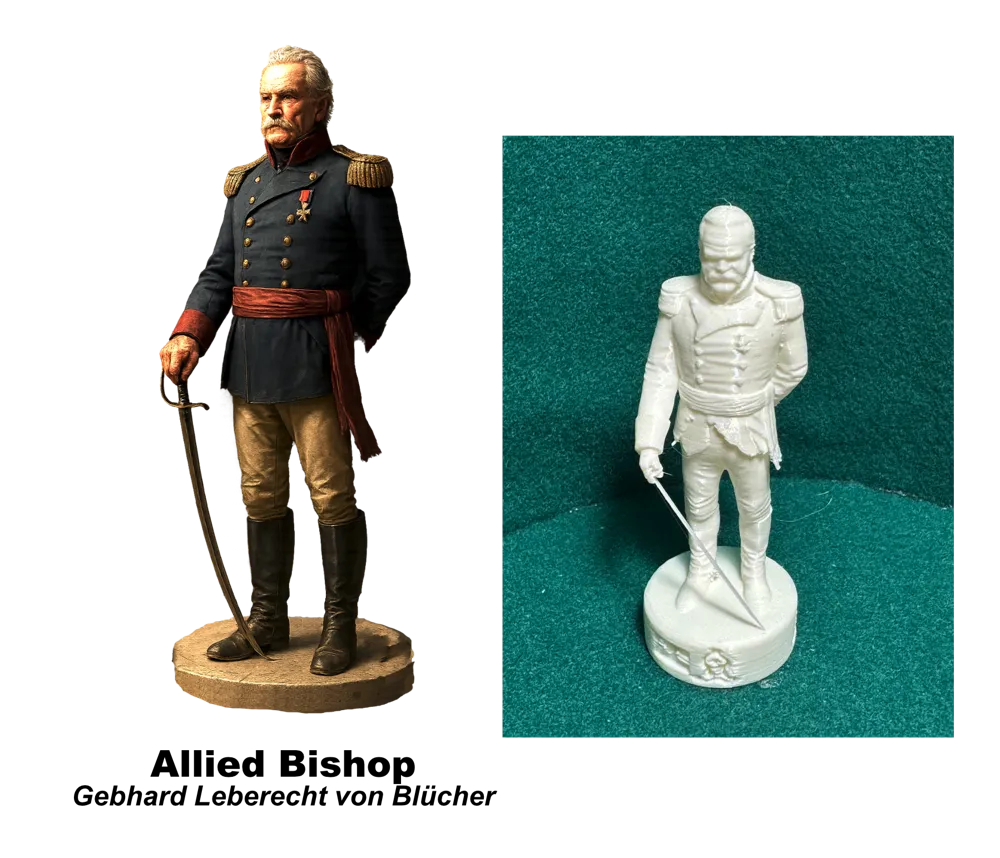
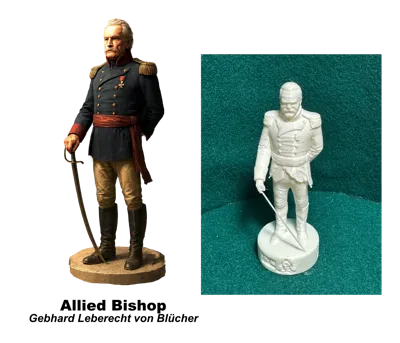
Allied Bishop I — Gebhard Leberecht von Blücher
Title: “Marshal Forward – The Relentless Hammer of Prussia”
Blücher radiates the force of a man impossible to break. His stance conveys momentum — the continual forward surge that saved the day at Waterloo. Weathered and unyielding, he represents the will to stand, rise, and charge again.
Represents: Tenacity, resolve, battlefield aggression.
Historical Note: Prussian Field Marshal Blücher (1742–1819); his late-day counterattack crushed Napoleon’s flank and sealed Allied victory.
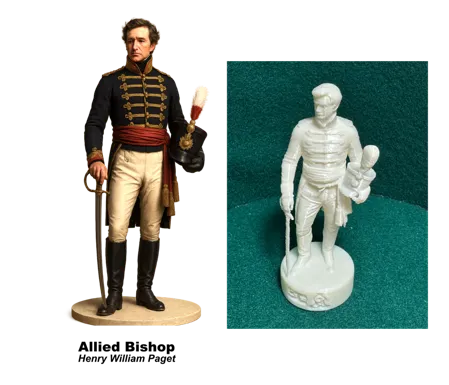
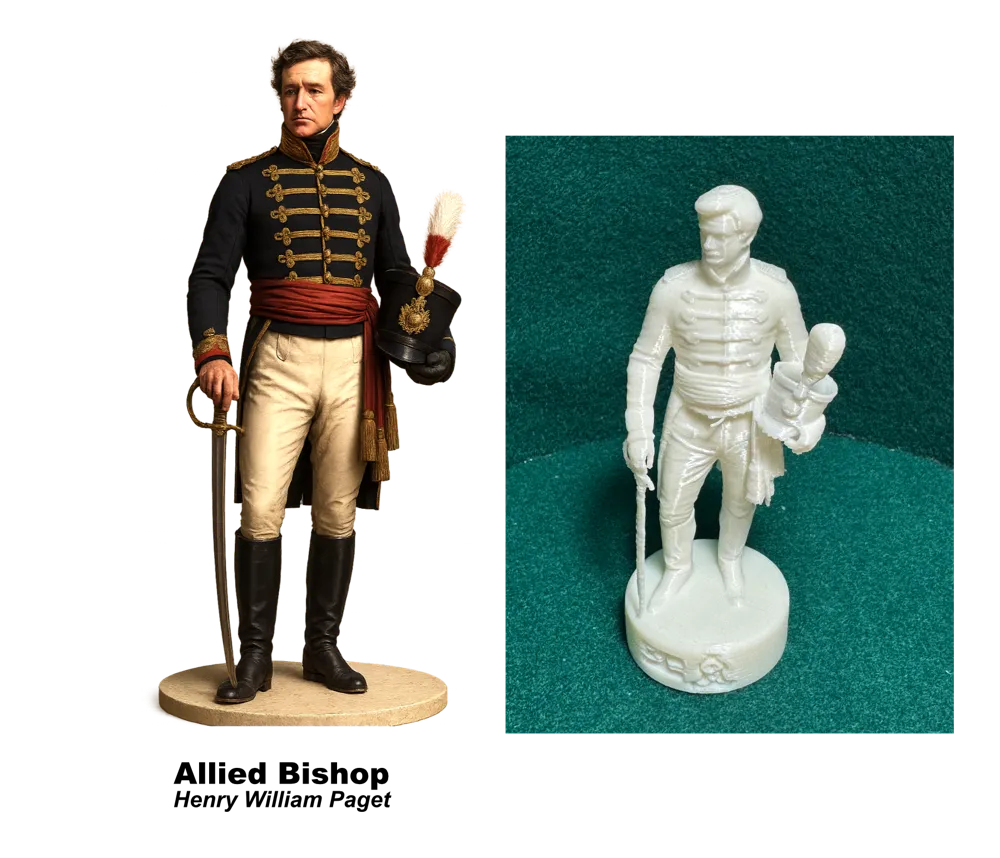
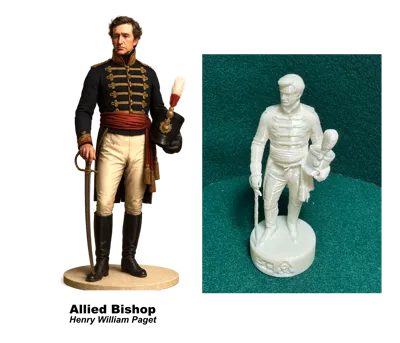
Allied Bishop II — Henry William Paget (Lord Uxbridge)
Title: “The Gallant Horseman – Cavalry Spirit Incarnate”
Paget is poise turned into motion. Even at rest he conveys the energy of a cavalry charge — elegant, dangerous, and precise. His loss of a leg at Waterloo only deepened the legend of his courage.
Represents: Bravery, mobility, decisive strike power.
Historical Note: Lord Uxbridge (1768–1854), commander of the British cavalry; led one of history’s most famous charges.
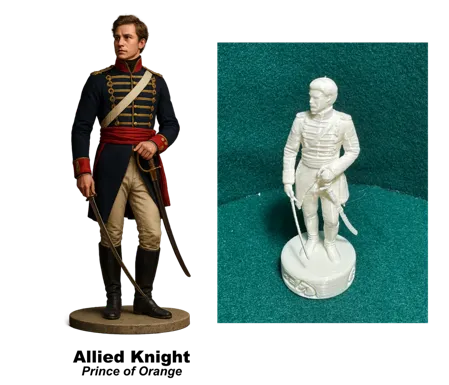
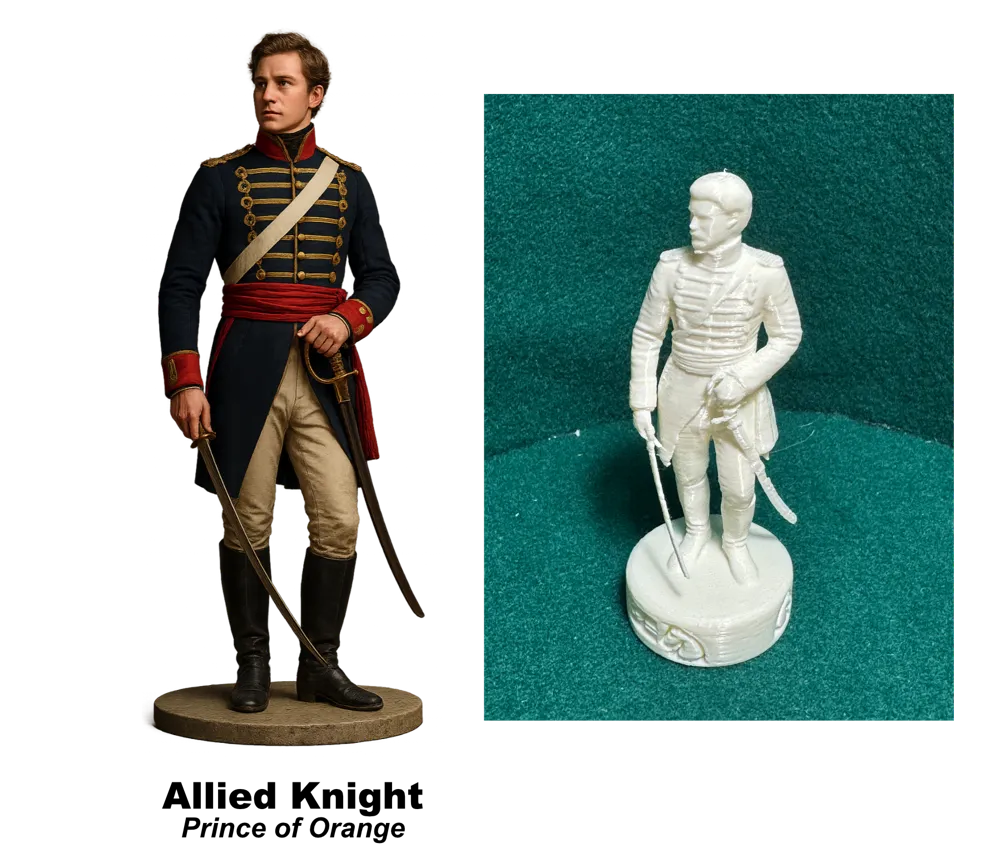
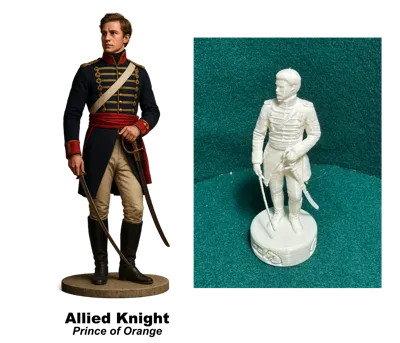
Allied Knight I — Prince of Orange (William II of the Netherlands)
Title: “The Young Lion – Courage Tempered by Duty”
Youthful, bold, and earnest, the Prince of Orange stands as the idealistic face of the Allied cavalry. His posture reflects both pride and vulnerability — the young commander learning leadership in the furnace of war.
Represents: Honor, youthful zeal, noble ambition.
Historical Note: William II (1792–1849); fought at Waterloo and later became King of the Netherlands.
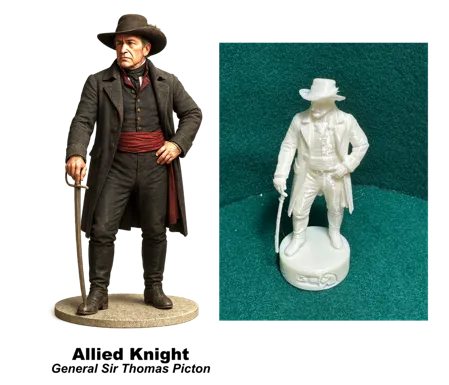
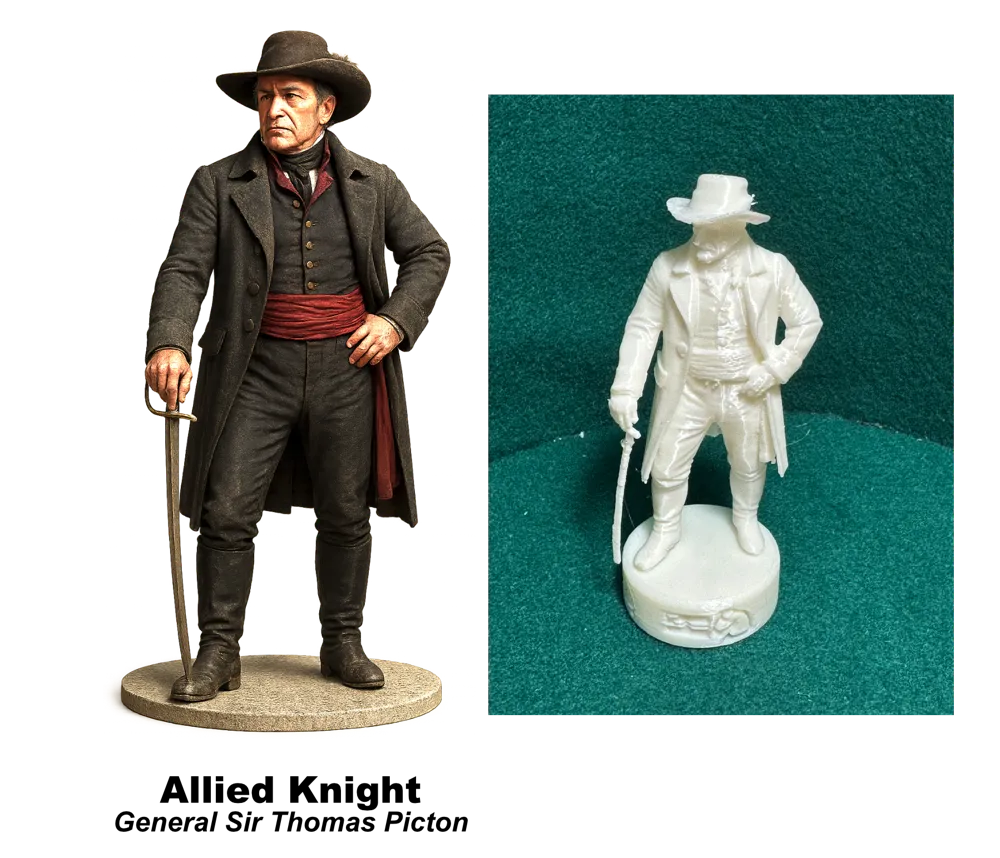
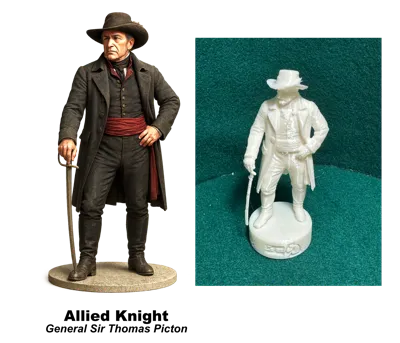
Allied Knight II — General Sir Thomas Picton
Title: “The Iron General – Unbowed Keeper of the Line”
Picton stands with stoic intensity — hat brim low, jaw set, posture immovable. His presence anchors the flank like stone. Gruff, uncompromising, and fearless, he was the embodiment of stubborn determination.
Represents: Grit, discipline, immovable will.
Historical Note: Sir Thomas Picton (1758–1815); mortally wounded at Waterloo while leading the 5th Division.
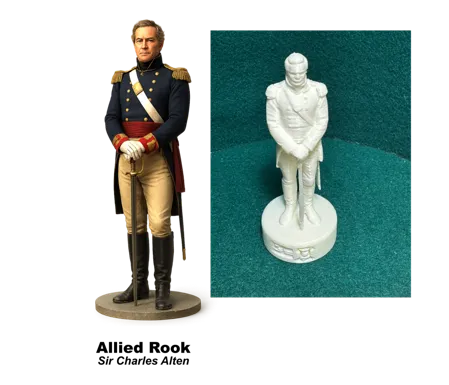
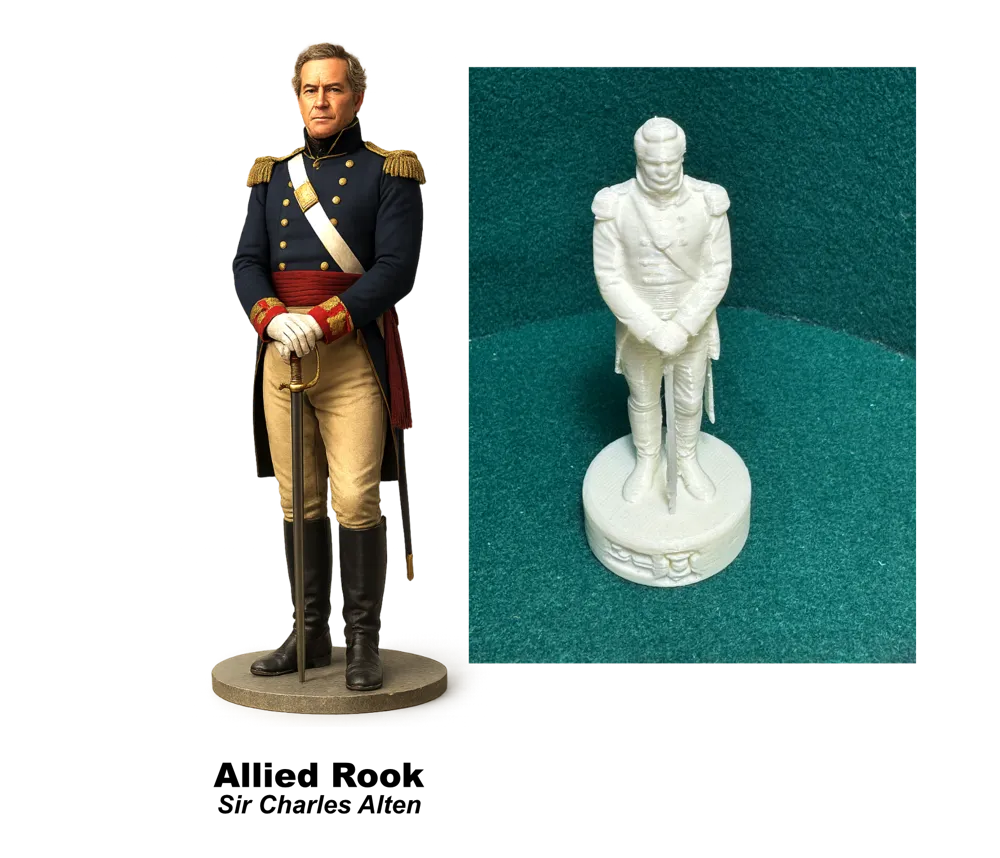
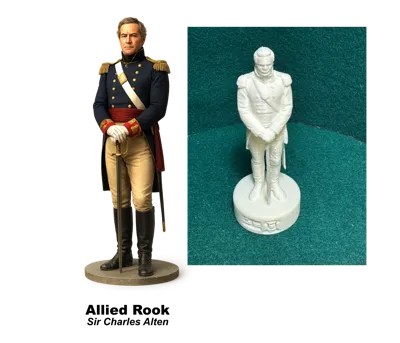
Allied Rook I — Sir Charles Alten
Title: “The Hanoverian Shield – Guardian of the Center”
Alten’s calm posture and folded arms mirror the line he held: steady, disciplined, enduring. His grounded presence makes him the perfect rook — an unshakable pillar around which order is built.
Represents: Stability, discipline, anchored defense.
Historical Note: Sir Charles Alten (1764–1840), commander of the Light Division, famed for discipline and resilience.
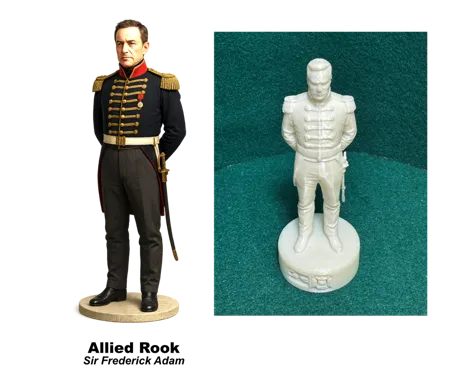
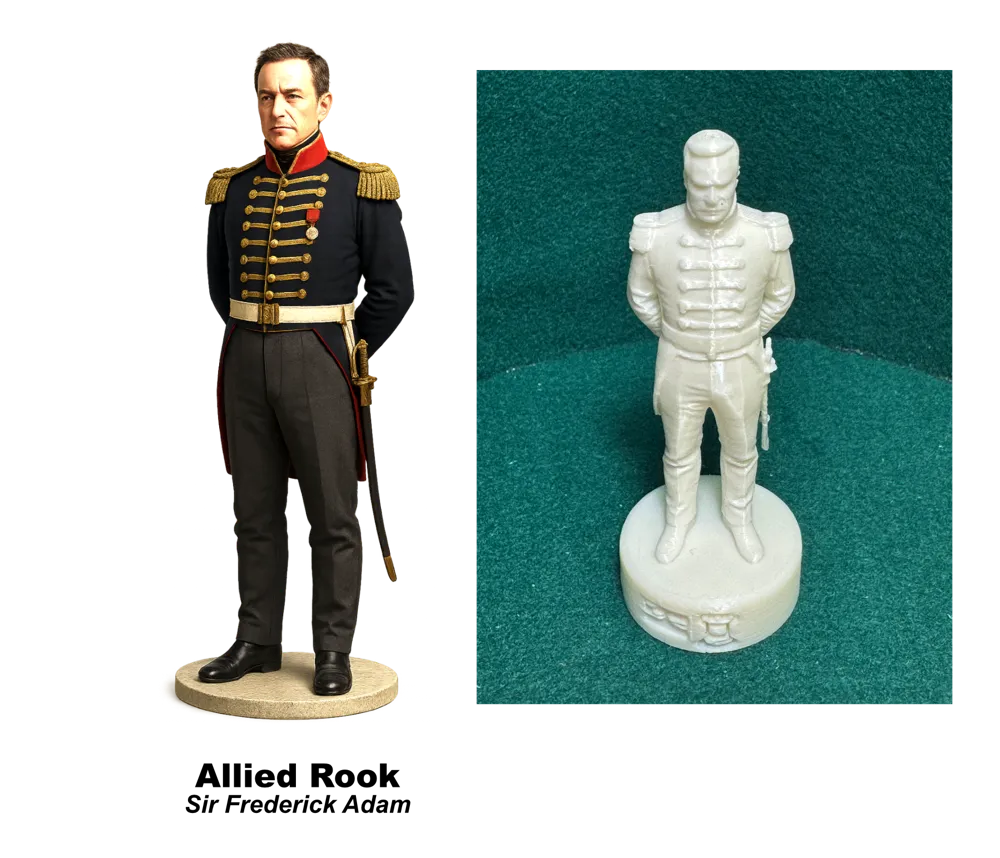
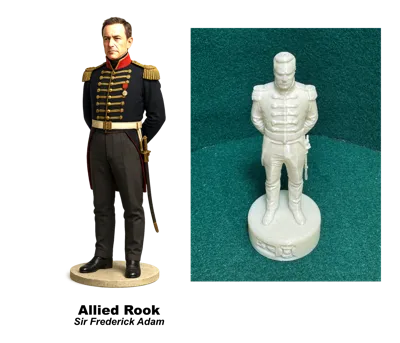
Allied Rook II — Sir Frederick Adam
Title: “The Line Commander – Steadfast Under Fire”
Adam radiates methodical calm — the officer who refuses panic, even in the teeth of musket fire. His stance is upright and prepared, projecting the quiet confidence of a seasoned line commander.
Represents: Structure, order, tactical clarity.
Historical Note: Sir Frederick Adam (1784–1853); led brigades during Waterloo with exceptional steadiness.
Allied Pawns — The Four Nations
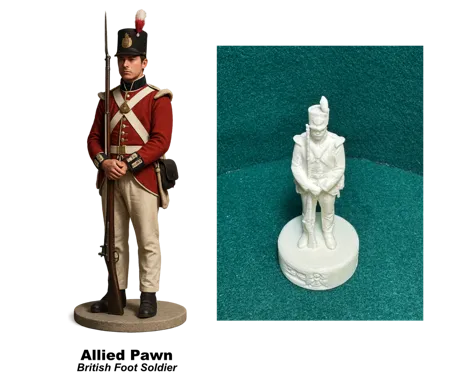
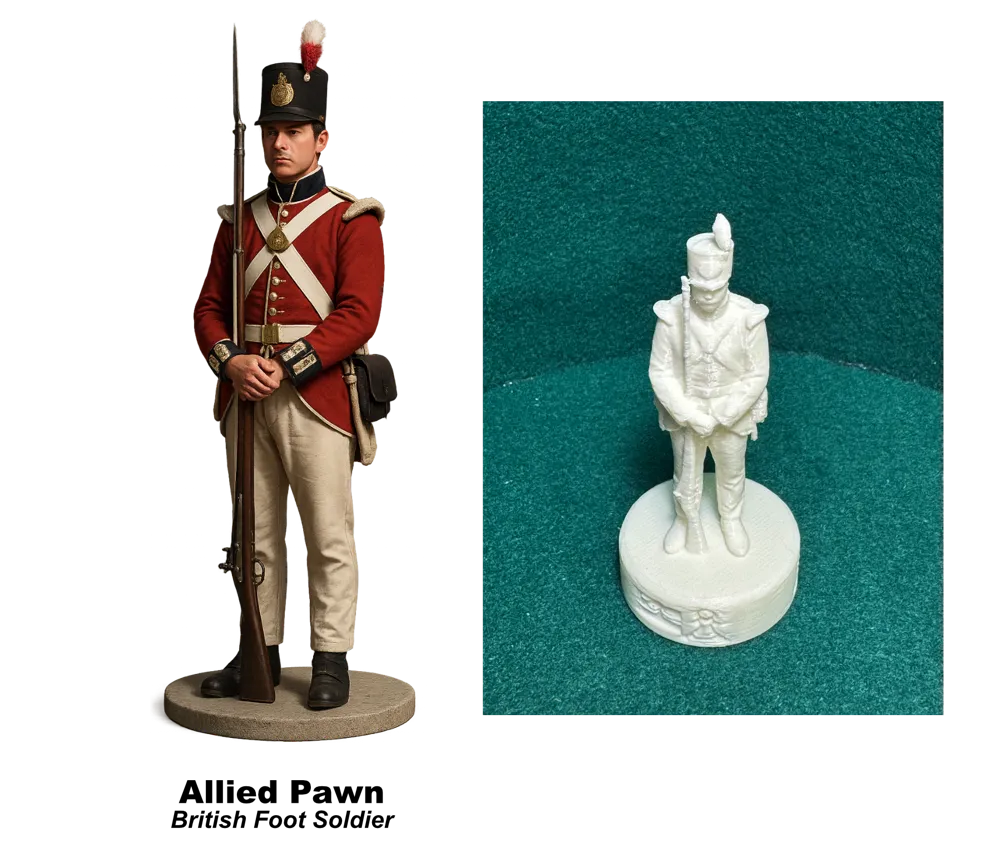
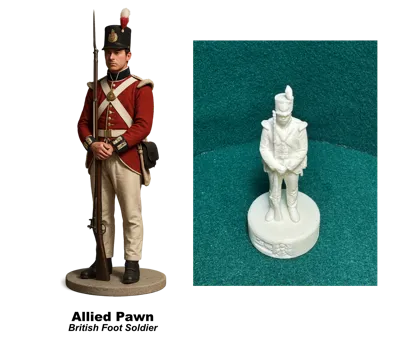
Allied Pawn I — British Foot Soldier
Title: “The Red Line – Backbone of the Army”
The calm, disciplined infantryman stands as the embodiment of steadiness under fire — the heart of British resolve.
Represents: Discipline, formation, reliability.
Historical Note: The British line infantry were famed for holding firm against repeated French assaults.
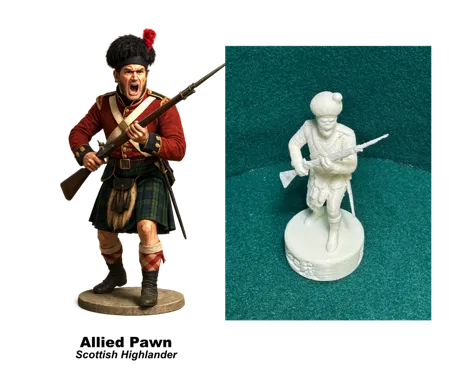
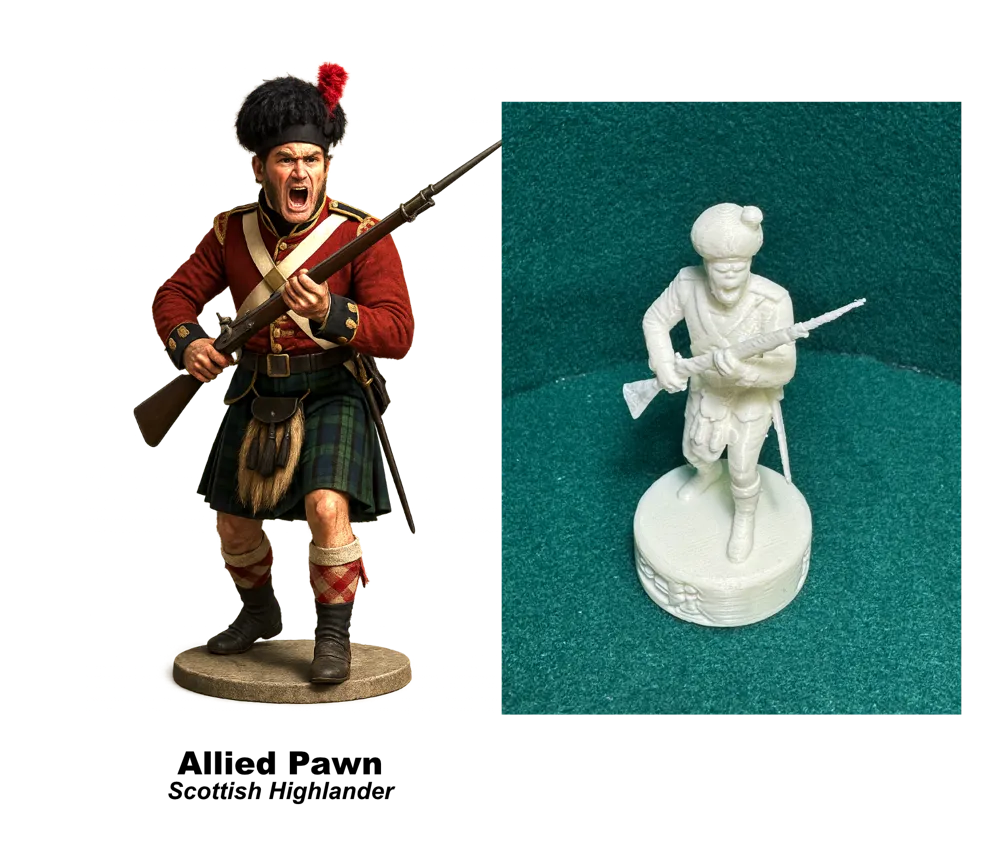
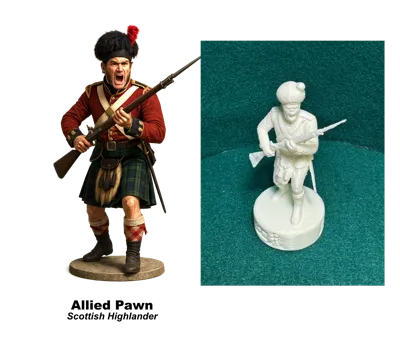
Allied Pawn II — Scottish Highlander
Title: “The Highland Fury – Courage in the Charge”
Muscles tensed, expression fierce, the Highlander channels the raw battle-cry spirit of Scotland’s regiments.
Represents: Ferocity, morale, shock power.
Historical Note: Highland battalions were feared for their charges and unbreakable morale.
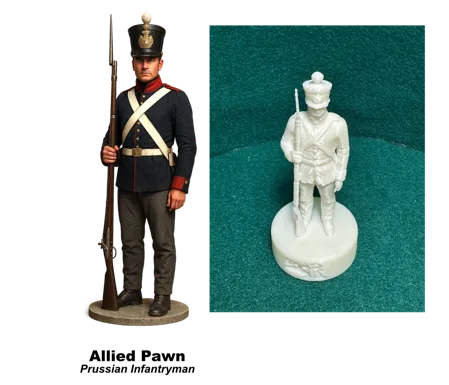
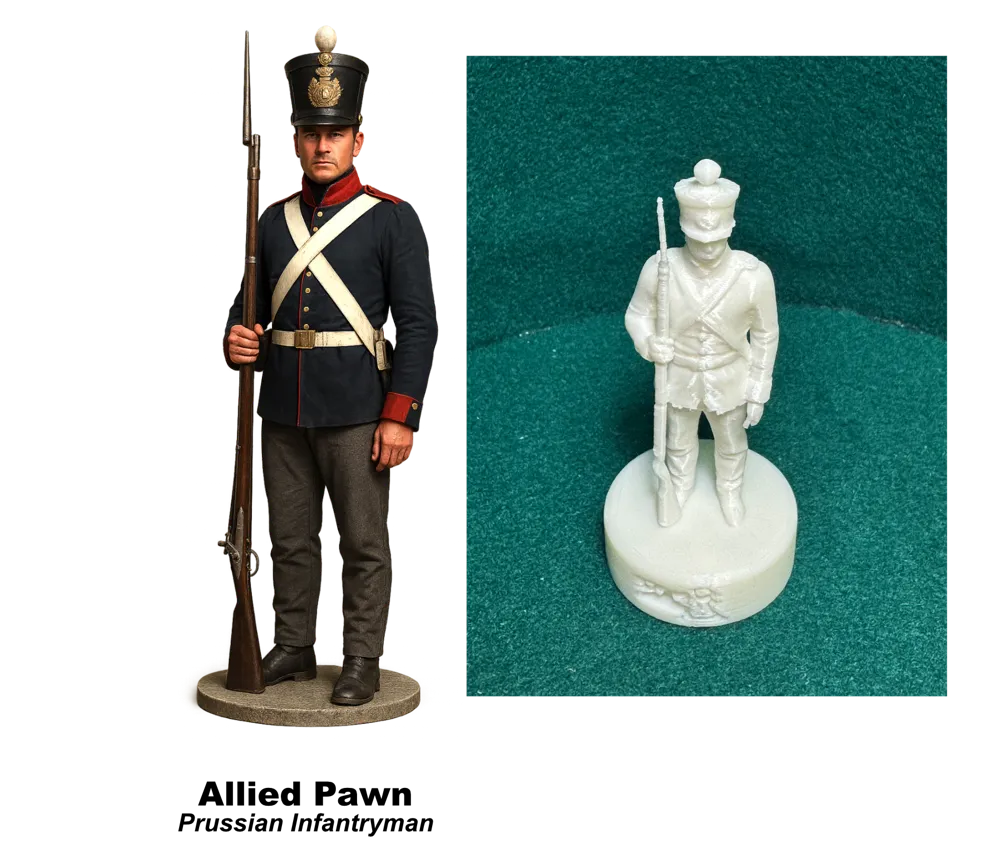
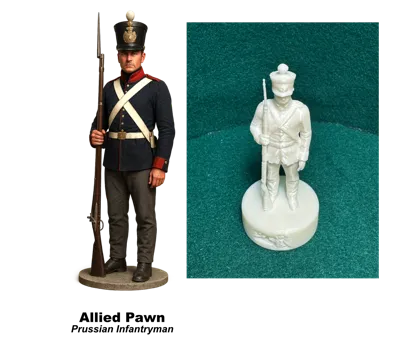
Allied Pawn III — Prussian Line Infantryman
Title: “The Iron March – Discipline in Motion”
The Prussian infantryman stands impeccably aligned — a portrait of drilled precision and unwavering endurance.
Represents: Order, endurance, discipline.
Historical Note: Prussian infantry reinforcements were crucial to turning the tide at Waterloo.
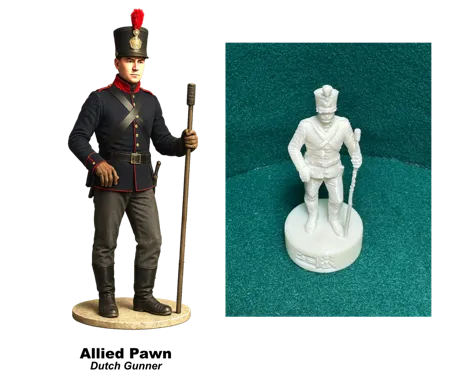
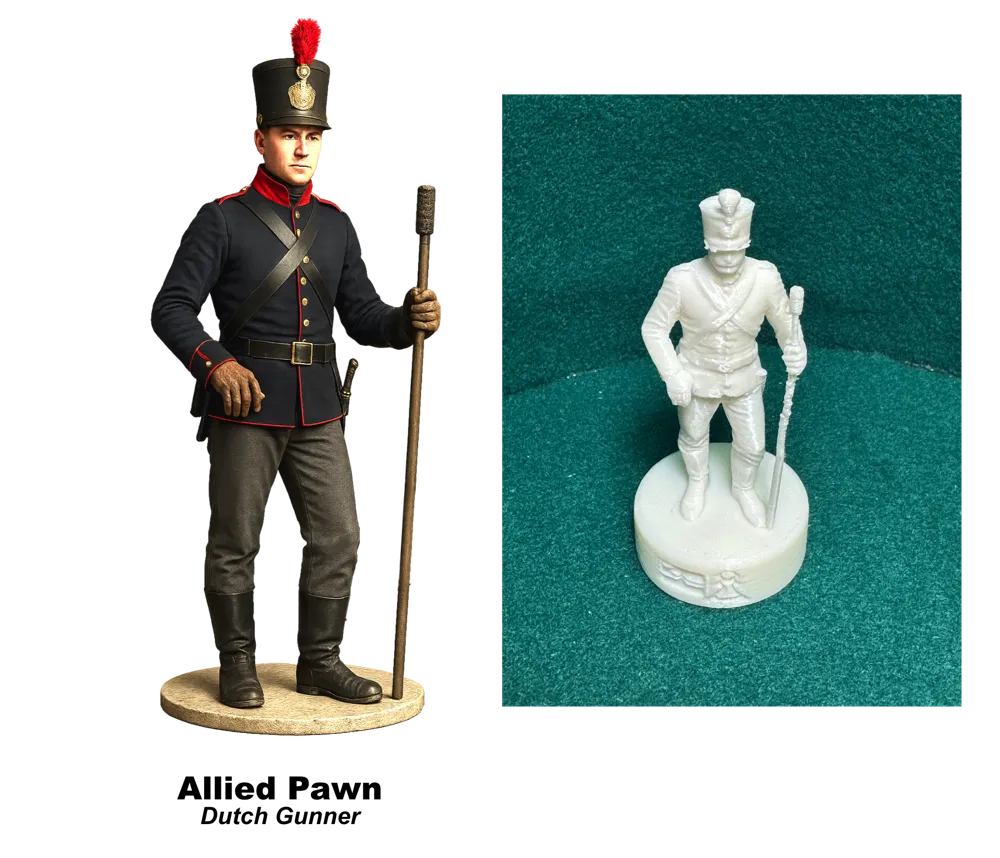
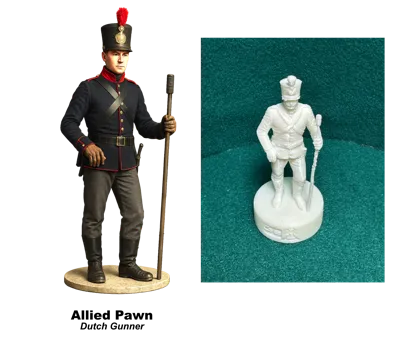
Allied Pawn IV — Dutch Gunner
Title: “The Silent Engine – Precision Through Patience”
A meticulous artilleryman, calm and focused. His work turns math and timing into battlefield impact.
Represents: Precision, mechanics, focus.
Historical Note: Dutch-Belgian artillery units played vital roles in counter-battery and defensive fire.


License

You shall not share, sub-license, sell, rent, host, transfer, or distribute in any way the digital or 3D printed versions of this object, nor any other derivative work of this object in its digital or physical format (including - but not limited to - remixes of this object, and hosting on other digital platforms). The objects may not be used without permission in any way whatsoever in which you charge money, or collect fees.


Comment & Rating (7)