
Egyptian Themed Chess Set 2025 ~ Series 2
Print Profile(1)

Description
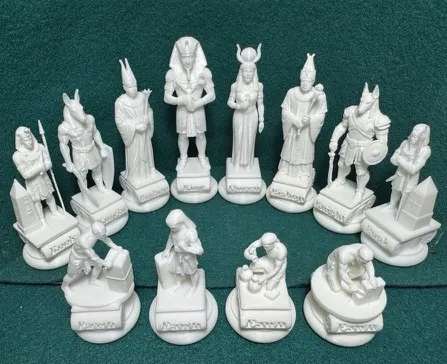
The Egyptian Chess Set — Guardians of the Pharaoh’s Realm
A 3D-Printed Tribute to the Builders, Gods, and Legends of Ancient Egypt
This Egyptian Chess Set was conceived as both an artistic study and a historical homage — a sculptural reconstruction of the ancient world’s balance between power, devotion, and craftsmanship. Each piece symbolizes a figure or role central to Egypt’s enduring legacy — from the humble stoneworker laying the foundation of eternity to the divine protectors who stand sentinel over the pharaoh’s soul.
The goal was not to merely recreate a chess set, but to design a playable pantheon — where each move across the board echoes the eternal struggle between order (Ma’at) and chaos (Isfet). Every model was designed with symbolic purpose, unified by the motif of stone, turquoise, and gold, evoking the timeless beauty of temple sculpture.
This collection invites players, makers, and historians alike to step back into the golden sands of antiquity — to hold, in miniature, the guardians of the Nile’s eternal game. (Written by ChatGPT 5. There is no way I could write like this! 🤪)
Here is my attempt;
I pondered for a while about what the next chess set I was going to work on and thought; "I enjoyed the previous Egyptian Themed Chess Set, and got some nice kudos for it. So, I'm going to ‘make’ (actually ‘do’. trying to be cool. ((didn't work))) another.
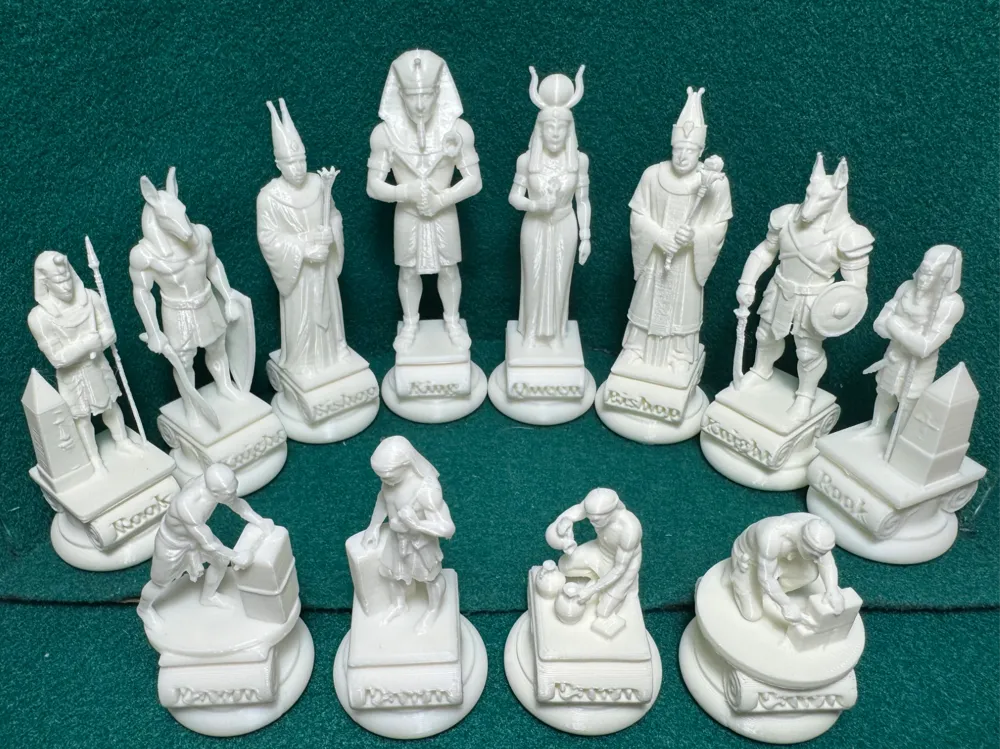
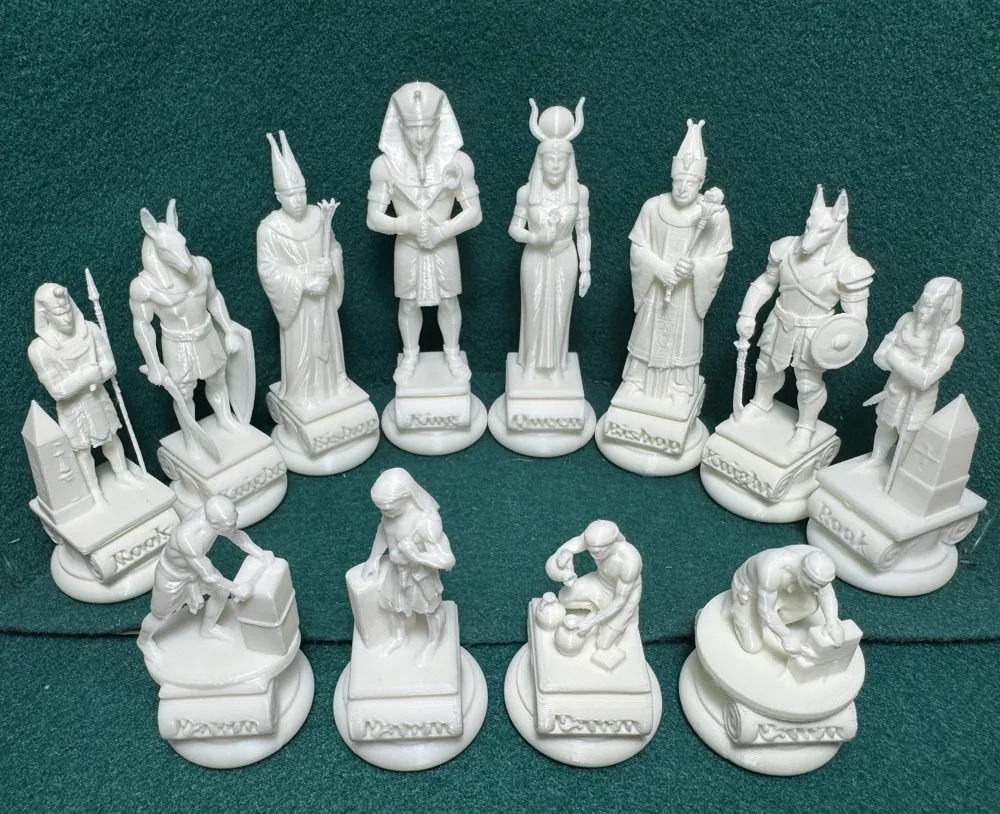
Here is Series 2. I hope you enjoy it.
Not so ‘hot’ huh. I agree. 😊
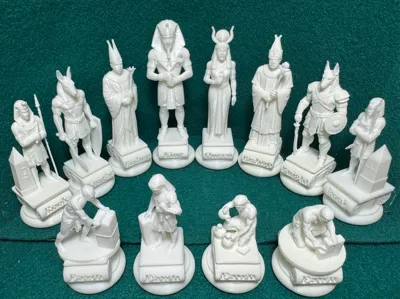
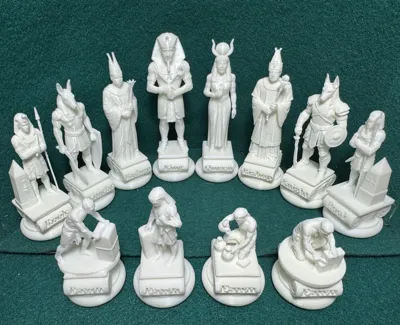
Here's what is inside the .3mf
Egyptian Chess Set: “Sands of Eternity”
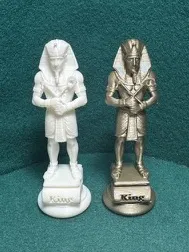
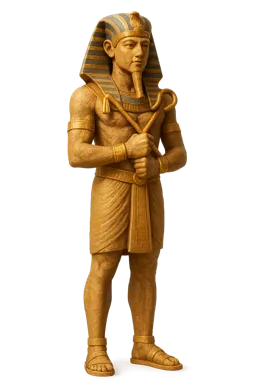
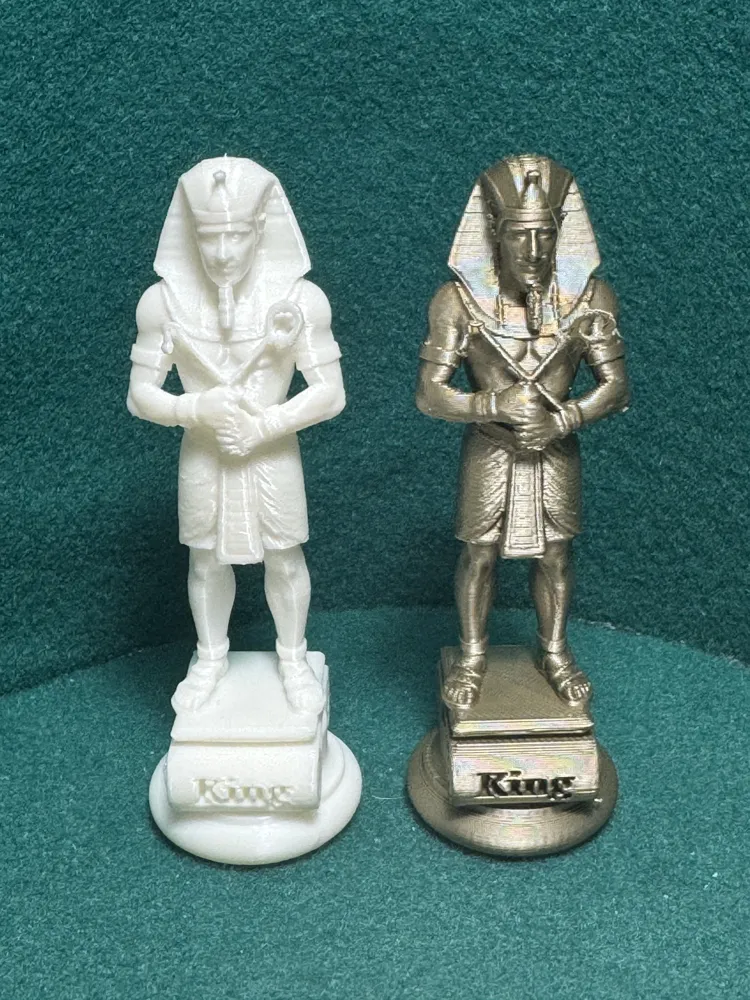
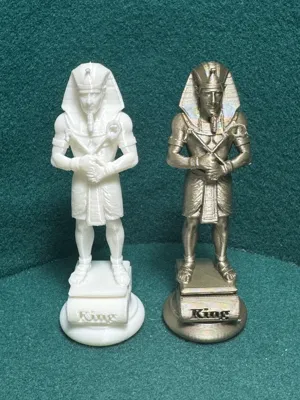
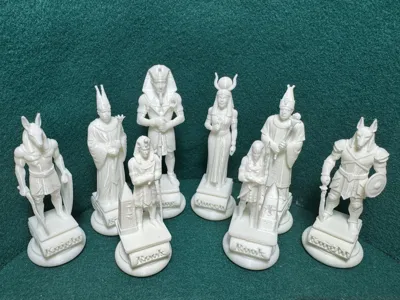
King — Pharaoh Ramses II (“The Eternal Sovereign”)
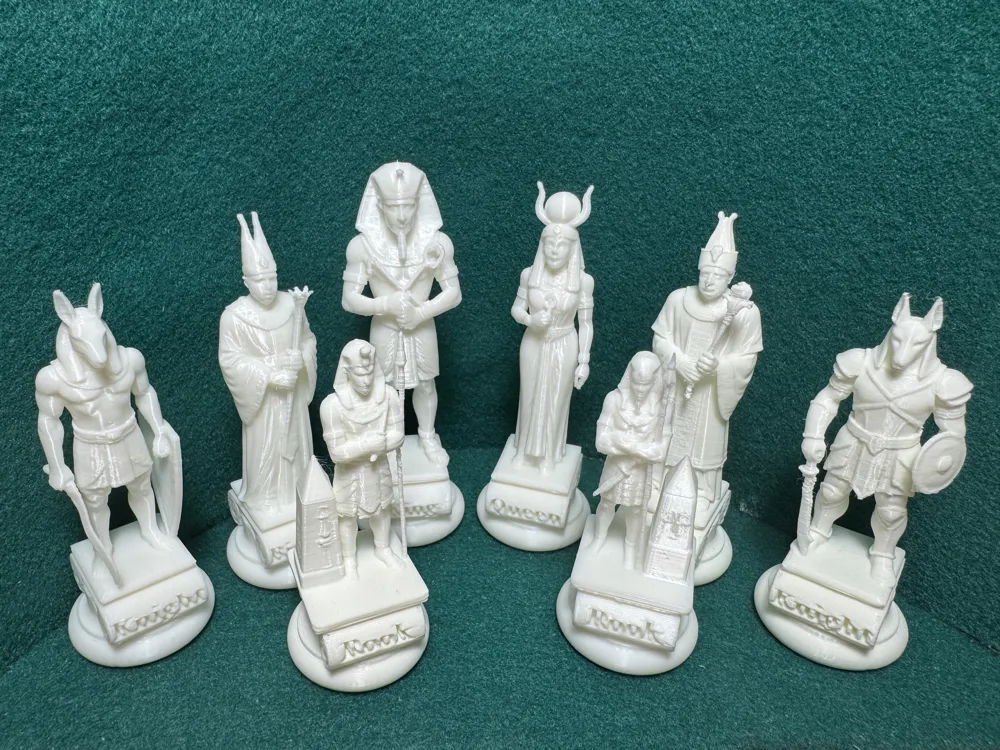
The Pharaoh stands as both ruler and divine protector of the realm — his authority absolute, his legacy eternal. Modeled on Ramses II, one of the most powerful and celebrated of Egypt’s kings, this figure symbolizes dominion over both the mortal and spiritual worlds. His crossed arms and regal posture reference Osirian iconography — death, rebirth, and timeless order.
Represents: Command, continuity, and unbroken legacy.
Historical Note: Ramses II’s reign (1279–1213 BCE) marked an age of monumental construction — fitting that he anchors this monumental chess set.
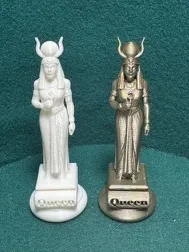
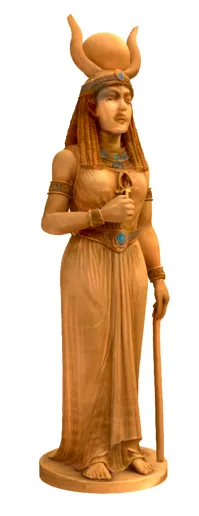
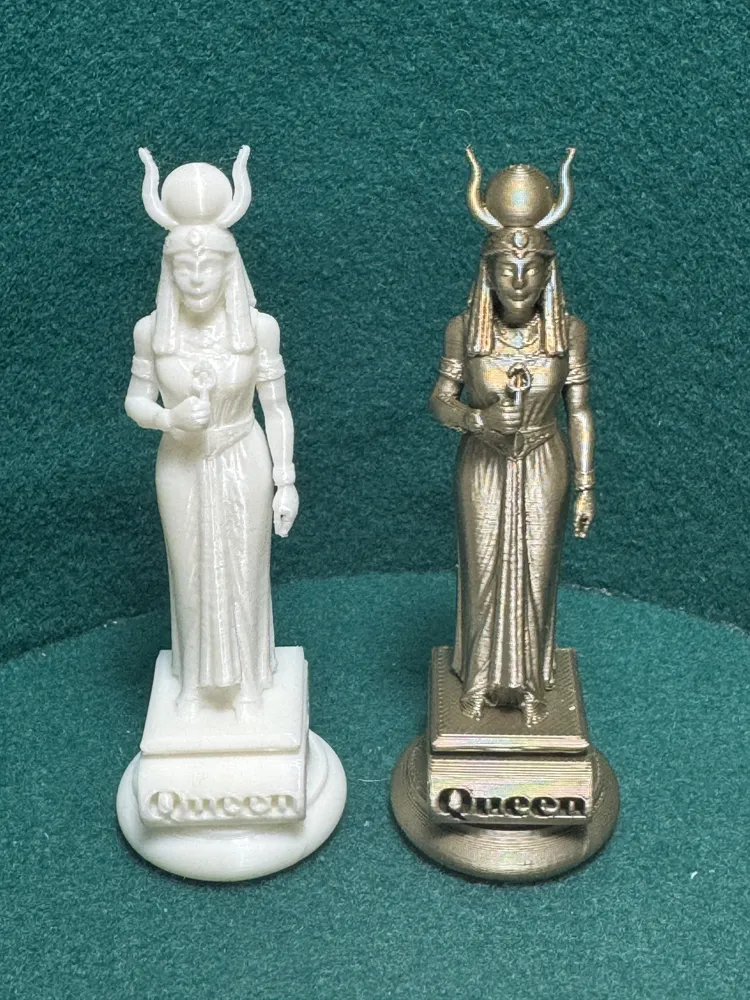
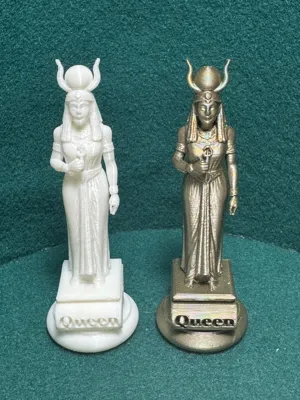
Queen — Hathor (“The Lady of Joy and Renewal”)
Graceful yet commanding, Hathor stands as the heart of divine balance — the embodiment of beauty, love, and rebirth within the Egyptian pantheon. Adorned with her sun disk and cow-horn crown, she holds the ankh of life close to her heart, a reminder that compassion is strength and nurturing is power. Her calm gaze and measured poise contrast the might of the pharaoh beside her, for where he rules through decree, she reigns through harmony.
Represents: Compassion, renewal, and the sustaining energy of creation.
Historical Note: Hathor was among Egypt’s oldest and most beloved deities — patroness of music, motherhood, and joy. Worshiped from the Old Kingdom onward, her temples at Dendera and Thebes stood as sanctuaries of celebration and fertility, where song and offering bound heaven to earth.
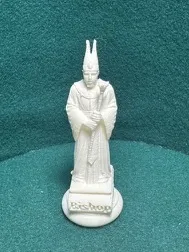
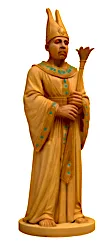
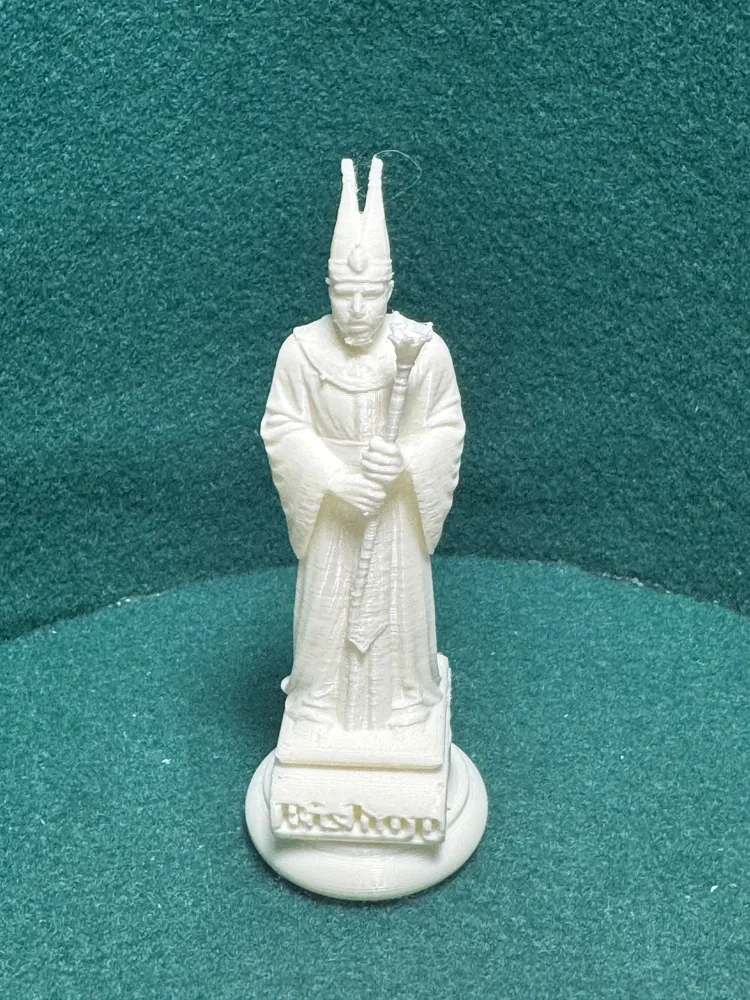
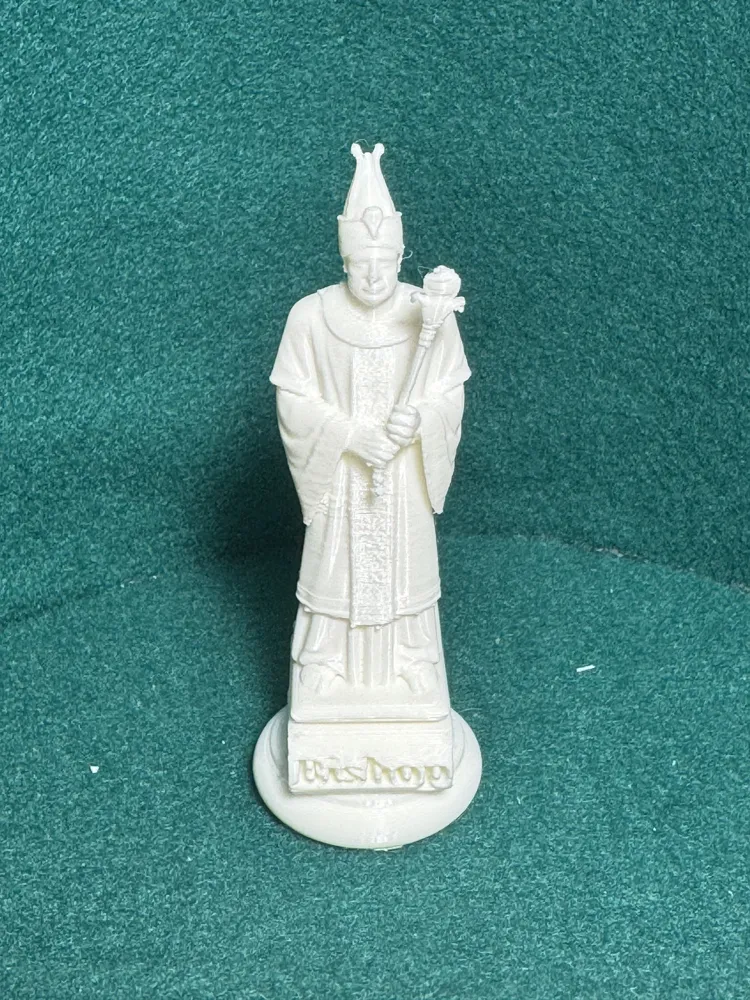
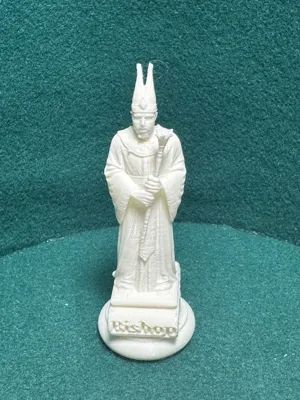
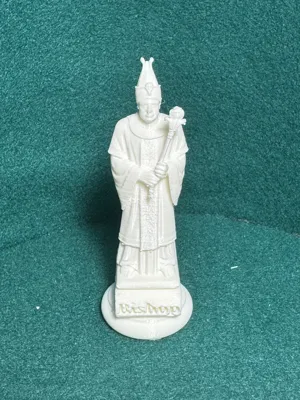
Bishop I — High Priest of Amun (“The Voice of the Gods”) Version 1
Standing tall in layered robes, staff crowned with the solar disk, this priest channels divine will to the mortal world. His role on the board mirrors his historical role — advisor, seer, and spiritual guide. Every move is sanctified, every counsel given to protect Maat — the cosmic balance.
Represents: Faith, wisdom, and spiritual alignment.
Historical Note: The High Priest of Amun held power rivaling that of Pharaoh, particularly in Thebes during the New Kingdom.
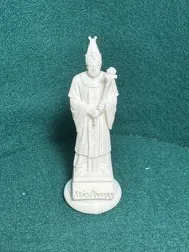
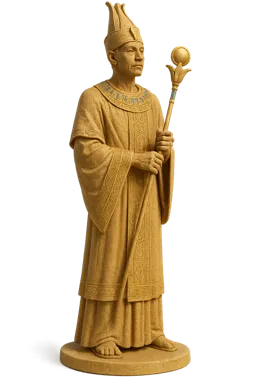
Bishop II — High Priest of Amun (“The Voice of the Gods”) Version 2
Standing tall in layered robes, staff crowned with the solar disk, this priest channels divine will to the mortal world. His role on the board mirrors his historical role — advisor, seer, and spiritual guide. Every move is sanctified, every counsel given to protect Maat — the cosmic balance.
Represents: Faith, wisdom, and spiritual alignment.
Historical Note: The High Priest of Amun held power rivaling that of Pharaoh, particularly in Thebes during the New Kingdom.
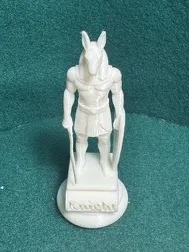
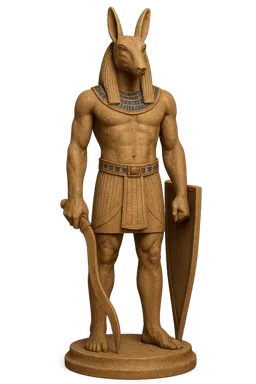
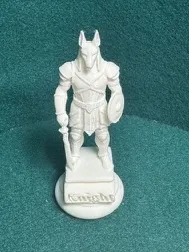
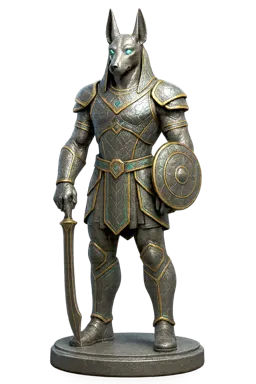
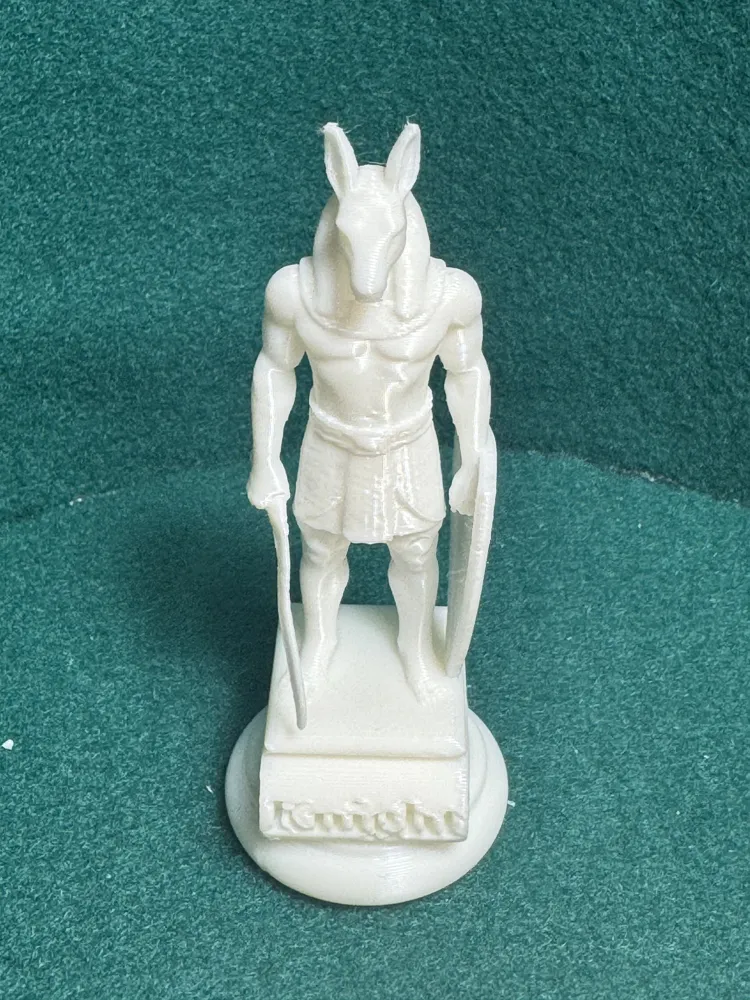
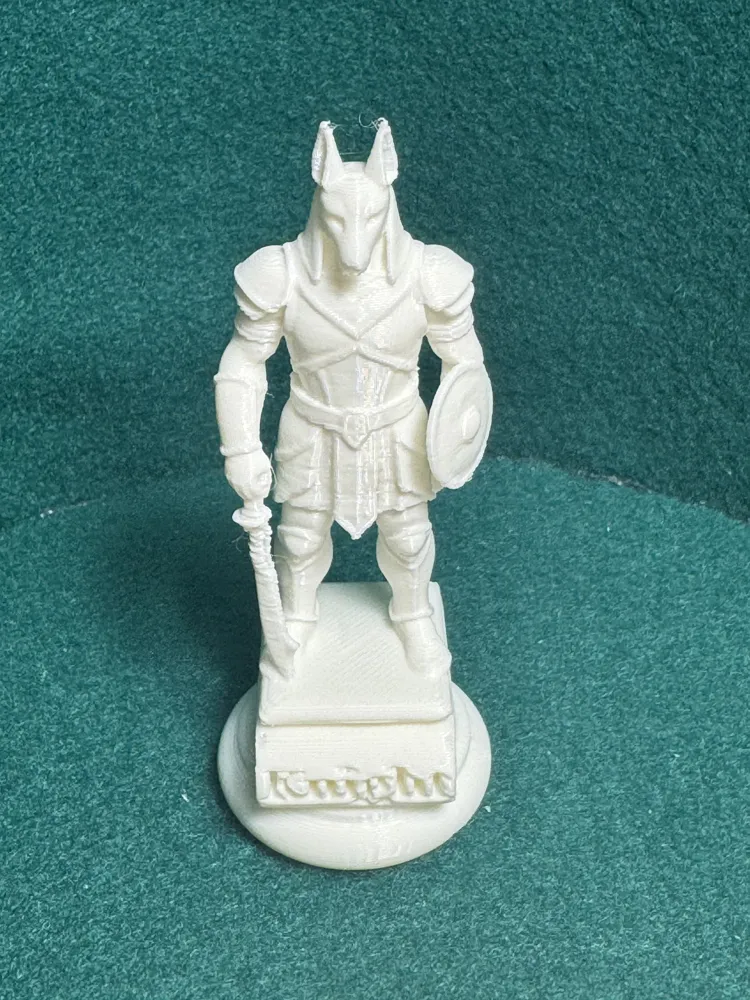
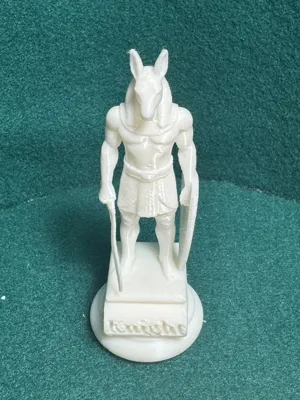
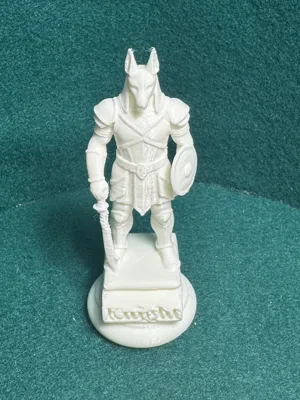
Knight — Anubis Warrior (“The Jackal of Judgment”) Two versions
In onyx-black armor traced with gold, the jackal-headed Anubis warrior stands beside his curved khopesh blade and shield. He is both guardian of the realm and ferryman of souls — the enforcer who allows none to pass untested. The glowing turquoise eyes echo his domain over the threshold between life and death.
Represents: Protection, loyalty, and decisive defense.
Historical Note: Anubis, ancient god of embalming and the afterlife, predates Osiris in early Egyptian myth and symbolizes eternal vigilance.
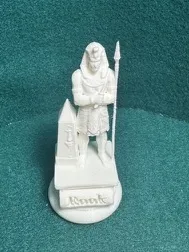
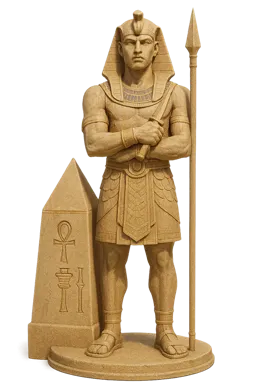
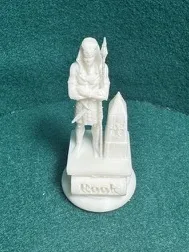
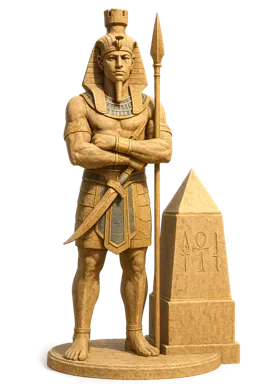
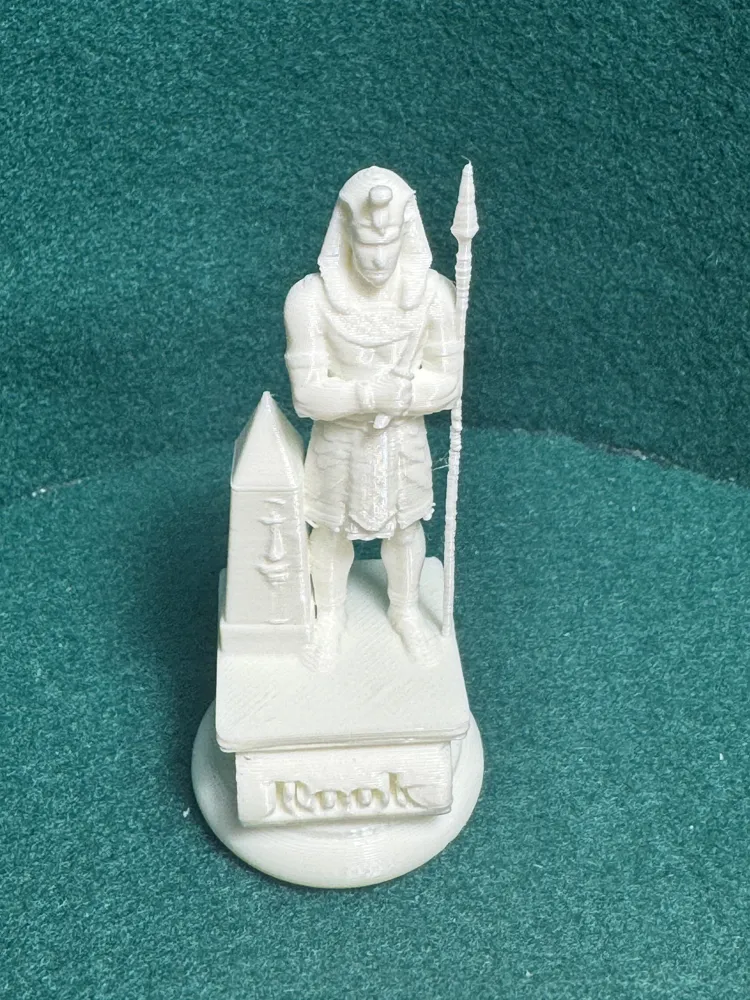
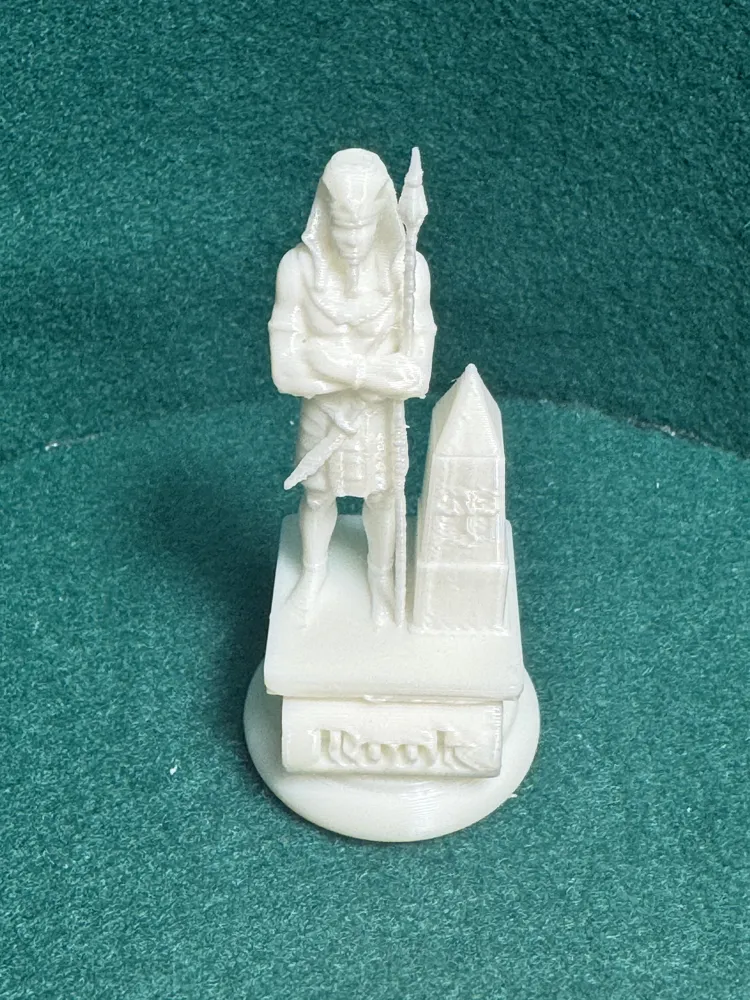
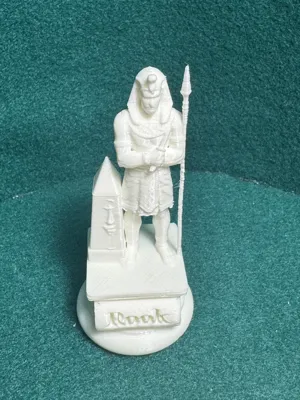
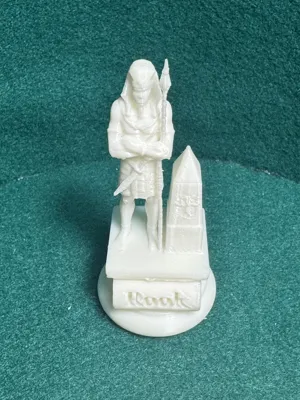
Rook — Guardian of the Pyramidion (“The Cornerstone Sentinel”) Two versions
Rigid, unyielding, and resolute — the Rook stands beside a pyramidion etched with hieroglyphs of protection. With crossed arms and spear at rest, he declares, “None shall pass.” His form evokes the eternal guardians at temple gates, serving both as protector and monument.
Represents: Stability, fortification, and loyal defense.
Historical Note: The pyramidion — the capstone of the pyramid — was believed to channel divine energy from Ra, the sun god, into the structure below.
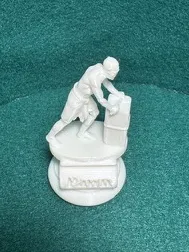
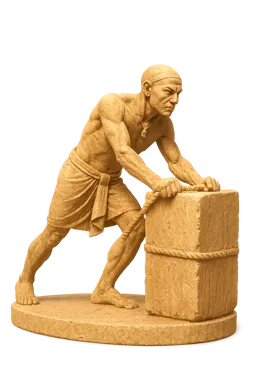
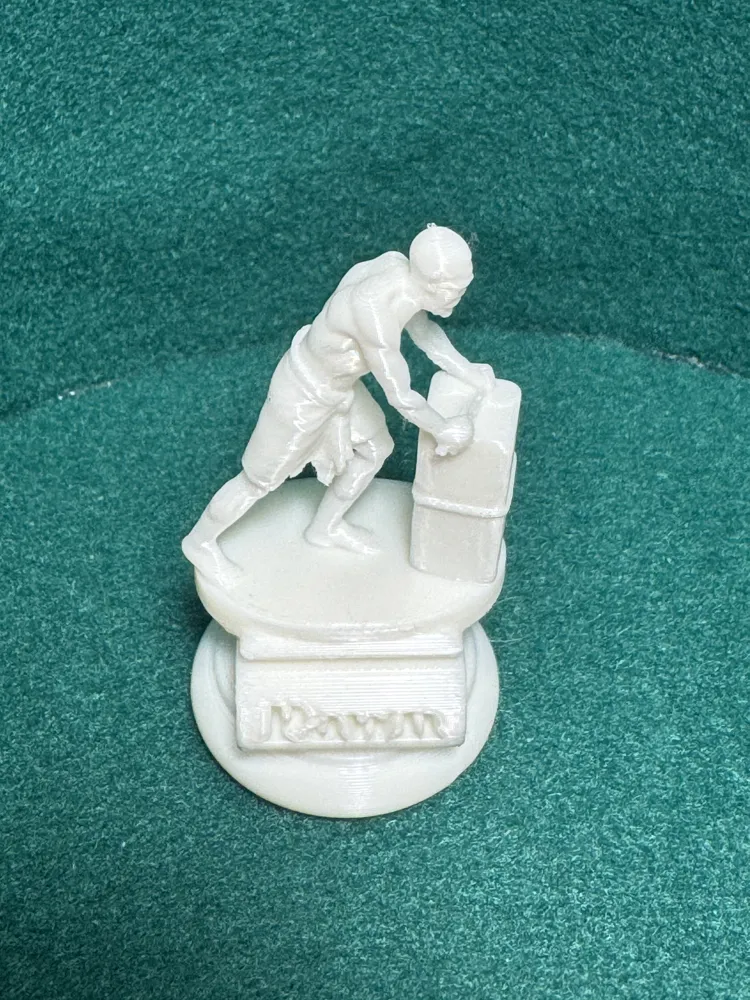
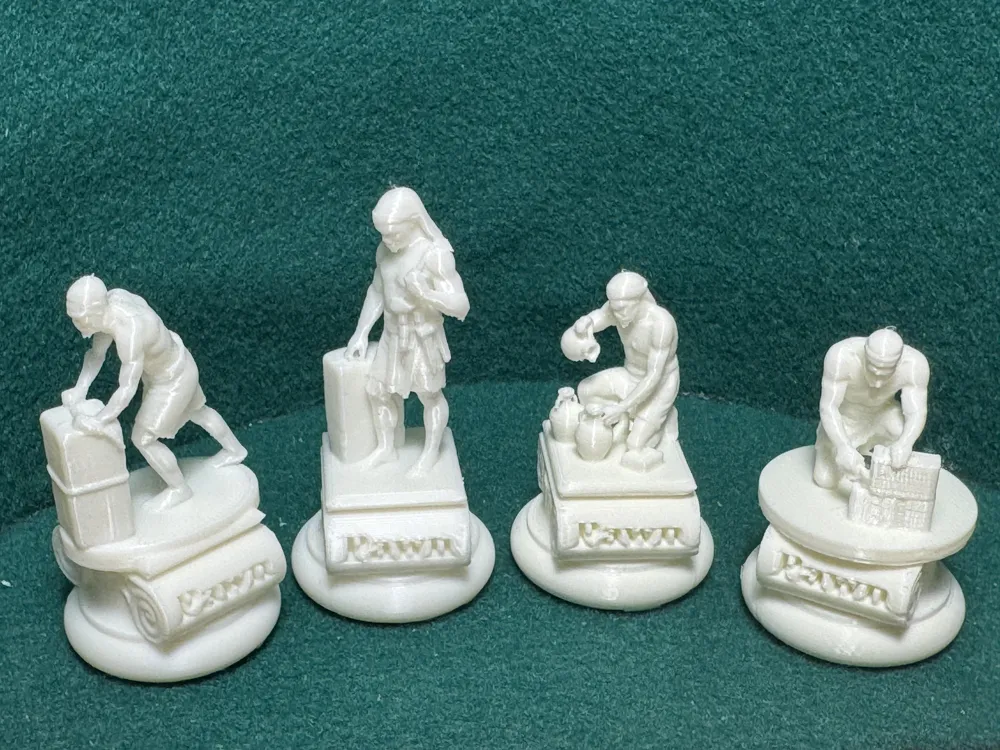
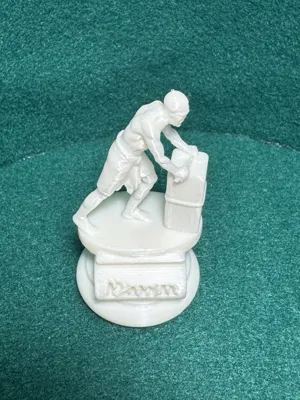
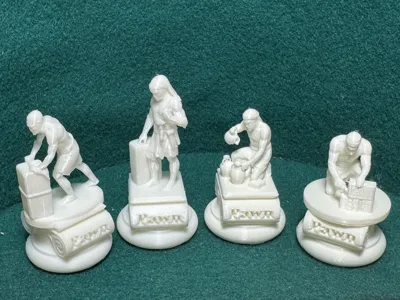
Pawn I — The Stone Mover (“The Laborer of Motion”) Print Twice
Back bent, rope taut, this worker strains forward, moving the foundation of empires. The Stone Mover represents raw human effort — the power that moves civilizations one block at a time. His posture tells of endurance, perseverance, and the dignity of labor.
Represents: Endurance and foundational strength.
Historical Note: Recent archaeological findings reveal pyramid builders were skilled, paid laborers, not slaves — craftsmen proud of their work.
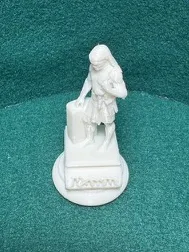
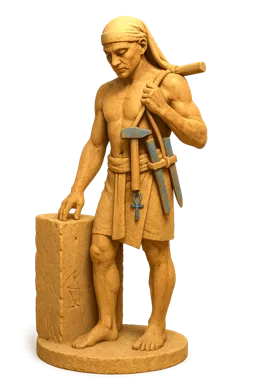
Pawn II — The Tool Bearer (“The Mason of Progress”) Print Twice
Carrying hammer, chisel, and plumb line, this figure embodies the craftsman’s precision. He is the mind within the muscle, ensuring each cut serves purpose. The ankh at his waist reminds us that creation and life are one.
Represents: Skill, creation, and structure.
Historical Note: Egyptian builders worked in hierarchical teams of stonecutters, polishers, and toolmakers — specialists in their sacred art.
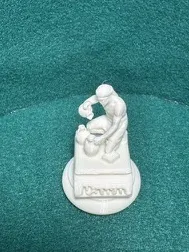
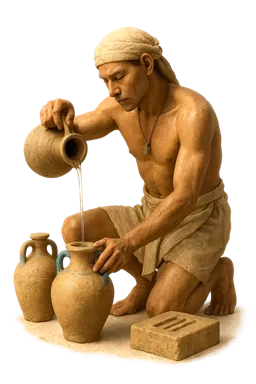
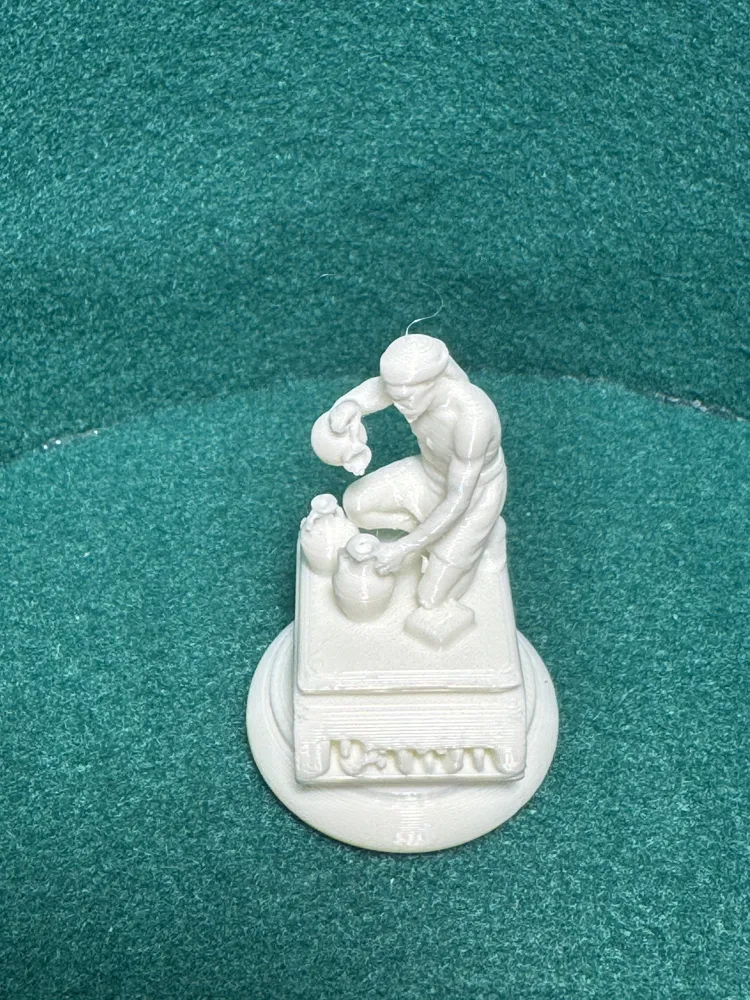
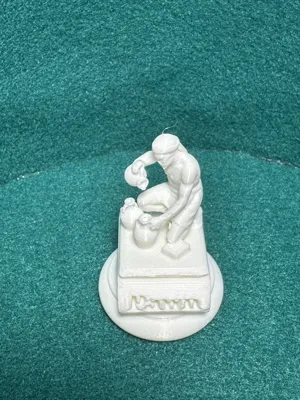
Pawn III — The Water Bearer (“The Sustainer of Effort”) Print Twice
Kneeling to pour water from one jug into another, the Water Bearer maintains the flow of life. His act is both literal and spiritual — hydration for workers, purification for stone, and offering to the gods.
Represents: Sustenance, balance, and renewal.
Historical Note: Workers used water to reduce friction on sledges — an ingenious method that made the impossible possible.
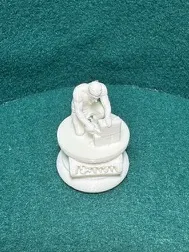
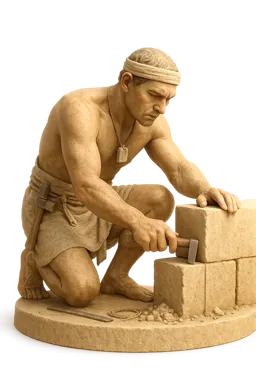
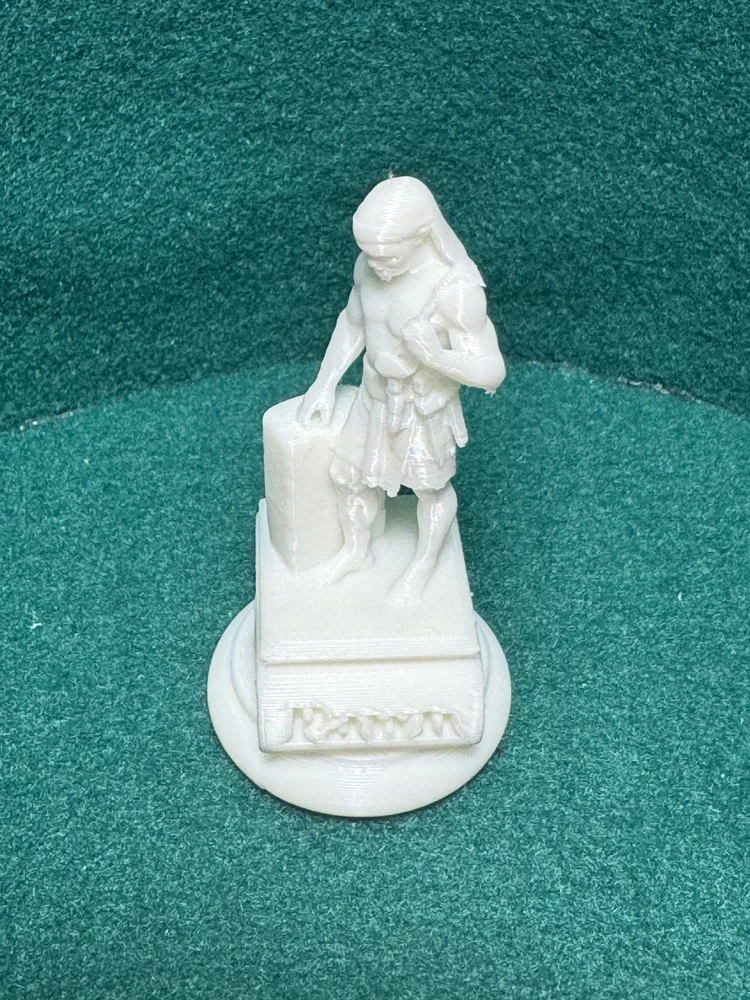
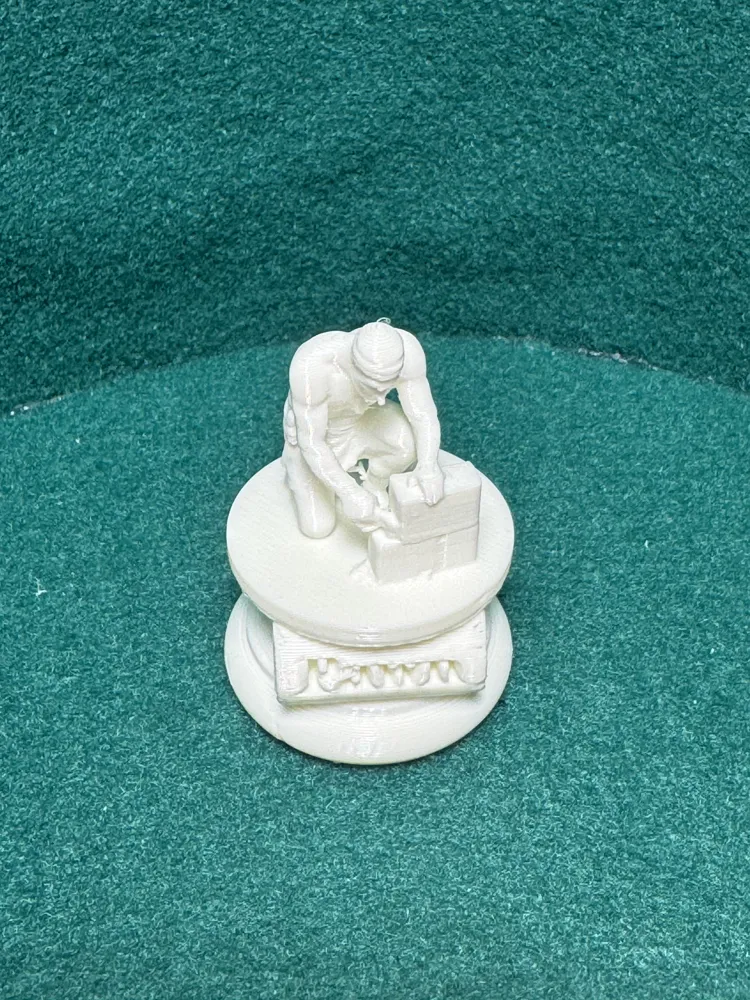
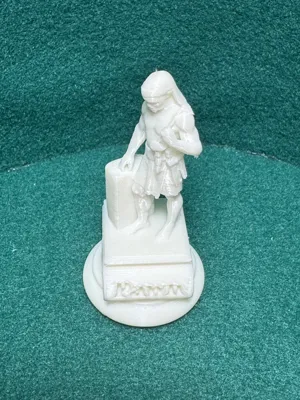
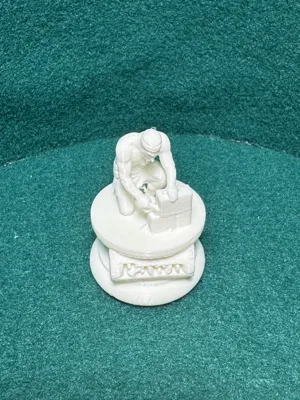
Pawn IV — The Stone Layer (“The Finisher of Foundations”) Print Twice
Focused and calm, the Stone Layer sets the final block with precision. His hands, rough yet sure, symbolize humanity’s greatest strength — discipline. The last gesture in the pyramid’s creation, his act closes the labor cycle.
Represents: Completion, order, and enduring purpose.
Historical Note: Ancient masons inscribed their names and team symbols inside hidden chambers — signatures of pride that endure to this day.
Summary — “The Builders of Immortality”
This set reflects Egypt not through war or conquest, but through creation, reverence, and balance. Each piece embodies a principle of civilization itself: leadership, wisdom, labor, and the divine order of Maat. Together, they form a spiritual architecture of eternity — a chess set that tells the story of humankind’s first monument to thought and time. (Clyde note: “Tells the story of what mankind THINKS was the first”)
As you probably guessed, I used ChatGPT 5 quite a bit. I consider it a tool, just like when I pick up a pencil, pen, or paint brush. I be foolish not to use AI. After all, WE do move from “Finger Painting” to more sophisticated means of creativity. Those of us who have a desire to express ourselves through our art.
ANNEALING ~ Hardening your chess pieces.
Annealing your models gains 10 to 20% MORE strength. I highly recommend this treatment IF you plan on playing chess with these PLA models. If you are just a collector and plan on only displaying the Chess Set (Playing carefully 'once-in-awhile') there is no need to anneal the PLA model.
More information here:
https://all3dp.com/2/annealing-pla-prints-for-strength-easy-ways/


License

You shall not share, sub-license, sell, rent, host, transfer, or distribute in any way the digital or 3D printed versions of this object, nor any other derivative work of this object in its digital or physical format (including - but not limited to - remixes of this object, and hosting on other digital platforms). The objects may not be used without permission in any way whatsoever in which you charge money, or collect fees.


Comment & Rating (16)