
Tormek T-4 to Festool MFT/3 Drop Table
Print Profile(1)

Description
GENERAL
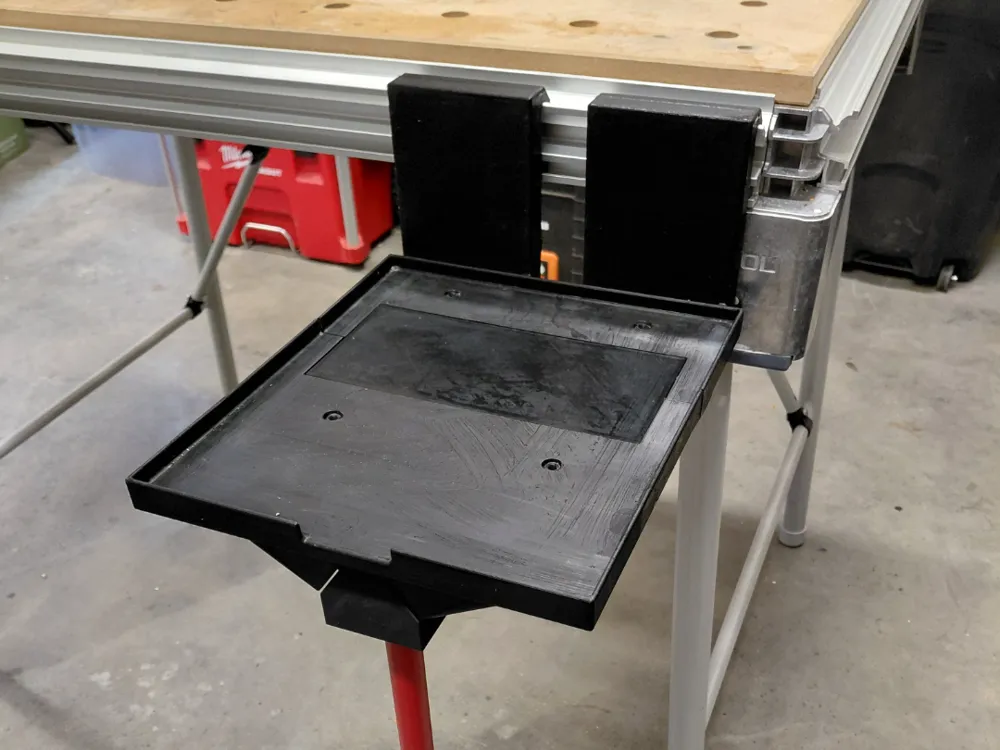
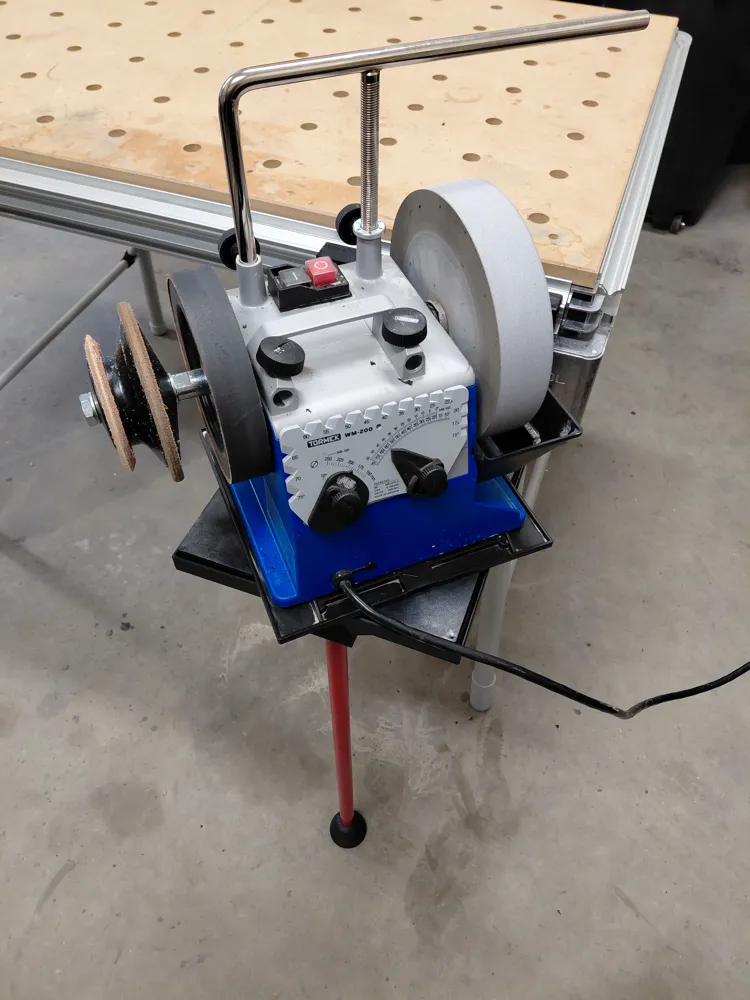
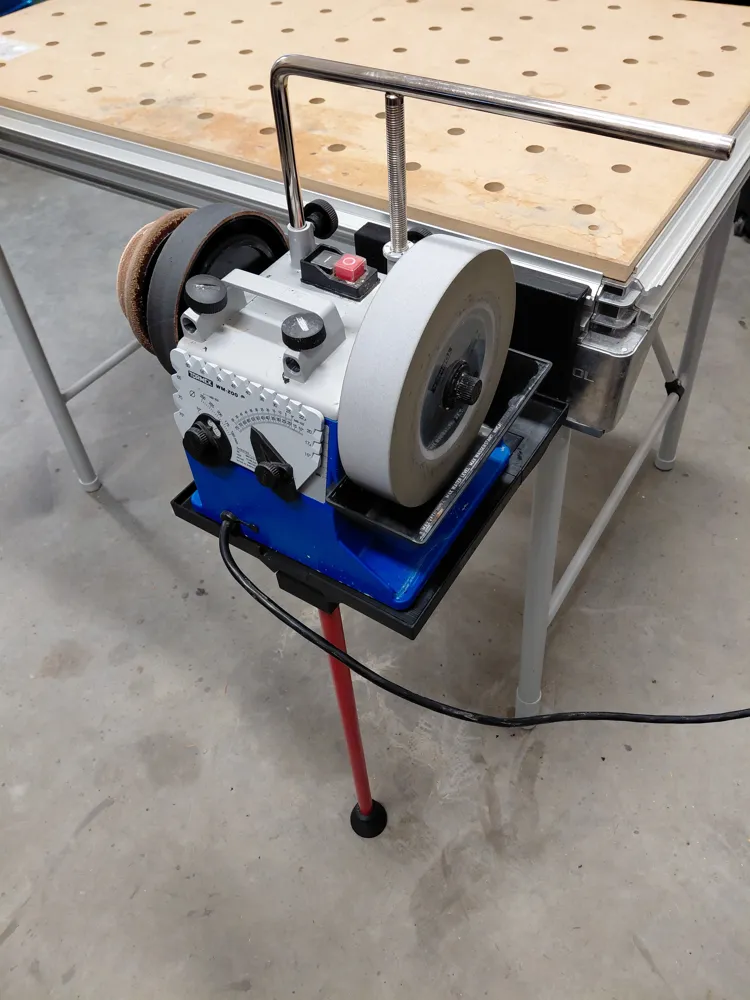
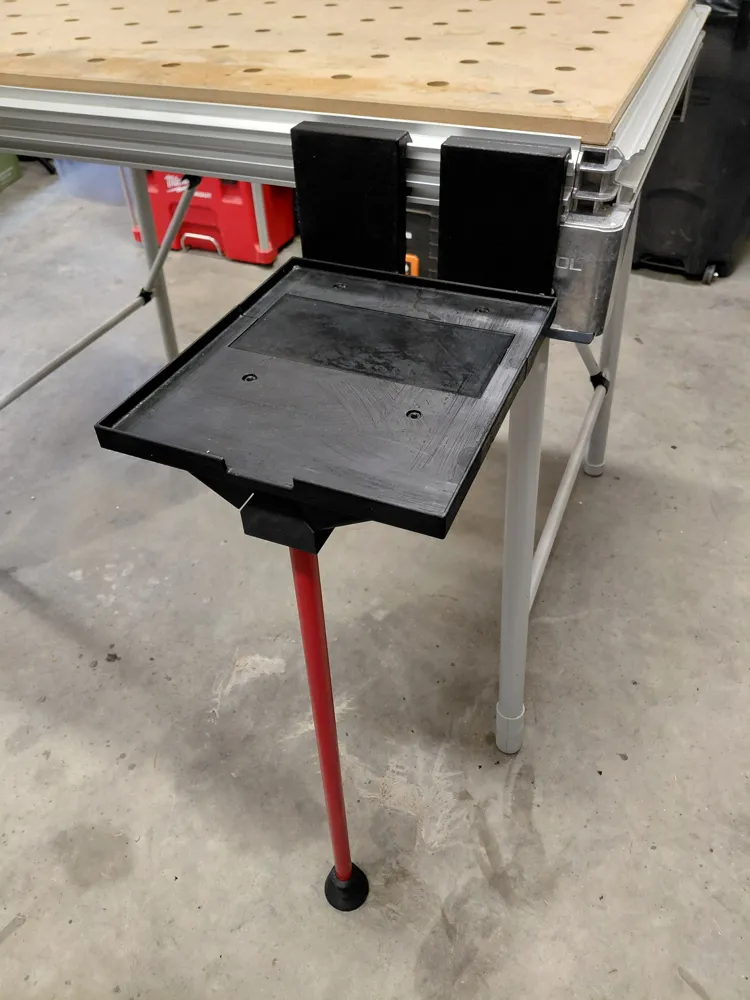
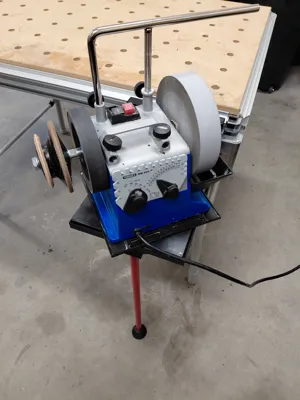
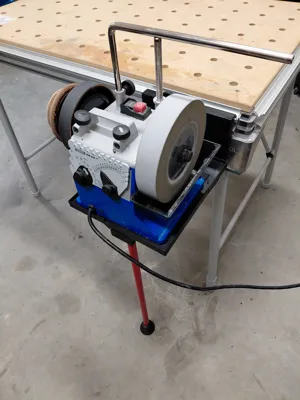
This is a highly specific niche model to enable mounting of a Tormek T-4 sharpening system on a Festool MFT/3 worktable.
Rather than just placing the Tormek on the top of the table, this drops it below it to the height above the floor recommended by Tormek. The designer has found this to be a more comfortable height from which to sharpen from a standing position, particularly if using the system for a prolonged period (eg. for a new set of wood turning gouges/skews/scrapers etc.). It has the additional advantage that inevitable cooling water spill-over falls onto the Drop Table or floor rather than the composite wood surface of the worktable.
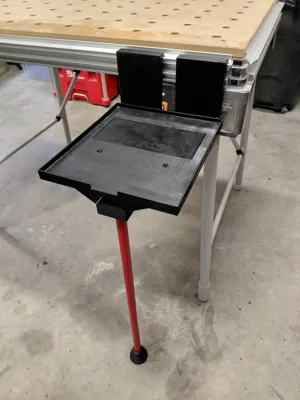
This model uses the Festool MFT/3’s side rails as its primary fixture. Due to there being some flexibility in the side rails, an additional removable support leg was added. There is still some movement, but not enough to cause any use problems.
DESCRIPTION
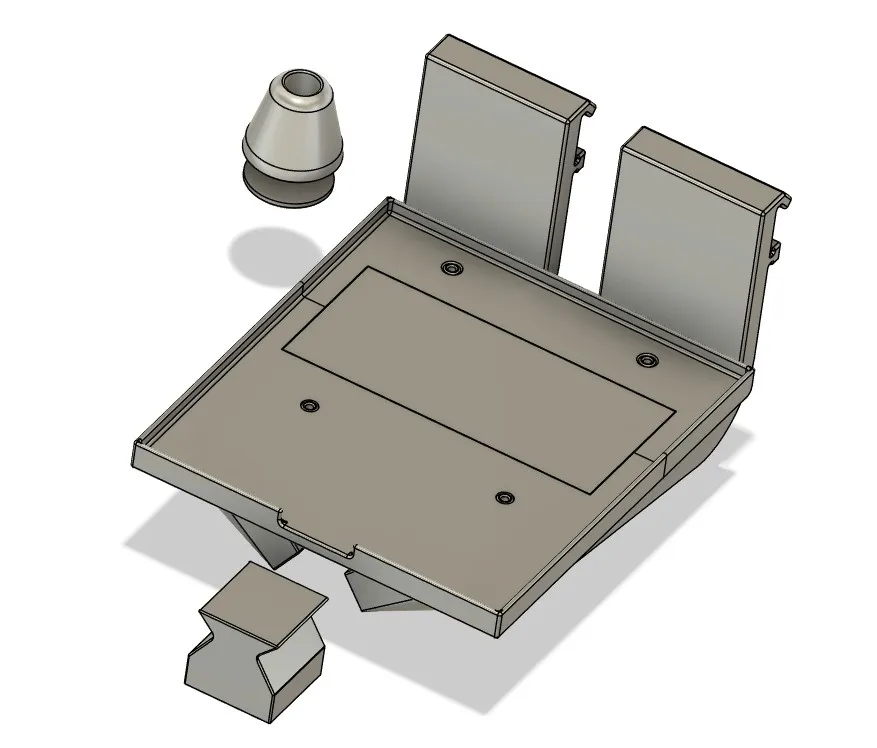
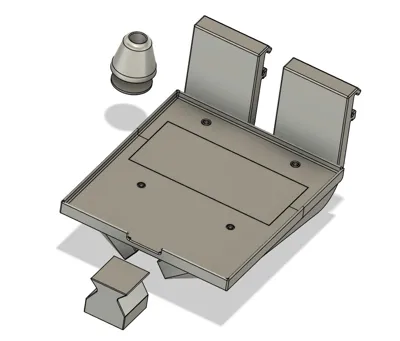
Mostly driven by the print size availability, on the X1 Carbon, The Drop Table is comprised of 5 parts: two identical slide-on hangers, two tray base sections, and a splice plate (plus four locating pins). Additionally, there are three parts associated with the support leg: a support top lock, a support bottom foot and a support bottom foot grip.
Printing the model should all be done in the equivalent of Bambu PLA Tough+ (designer used inexpensive Duramic PLA+ available on Amazon Canada) or stronger, with the exception of the bottom foot grip which should be in a flexible material like TPU. The designer’s print settings included in the 3MF/print files are much stronger (both thickness and infill) than standard settings.
The raw Fusion 360 model is included for makers to remix this model more easily.
ASSEMBLY
Assembly is simple and obvious as shown in the pictures. It is recommended that the 5 parts (and 4 pins) that make up the Drop Table be glued together to maximize stability. It is recommended that the support leg parts not be glued to the Drop Table, to enable easy installation, removal and storage; however, it is recommended that the four parts of the support leg be glued together.
The adhesive used by the designer for PLA was plastic solvent-based to ensure a permanent and strong bond (for example the designer used SCIGRIP 16 Fast Set from IPS Corporation www.weldon.com). Gorilla contact cement was used to attach the TPU foot bottom to the support foot.
NON-PRINTED COMPONENT
The only non-printed component of this model is the support leg shaft for which the designer used an available broom handle (hollow metal in this case). The diameter of the broom handle used is 21.5 mm with corresponding 22.0 mm holes in the support top lock and foot.
The length of the leg is up to the user and their specific worktable setup. For the designer it worked out to be ~74 cm (including the amounts inserted into the top lock and bottom foot – it is recommended to start with a leg over 80 cm long and cut it down after test insertions to the top lock and foot and installation into the Drop Table.
*** PENDING RAW MODEL APPROVAL BY BAMBU LABS: The included Fusion 360 model includes an adjustable parameter for this measurement as “SupportLegDia” that can be changed to match the user’s selected support shaft. ***
The Drop Table can be used directly with the Tormek T-4, or with the additional RB-180 Rotating Base. In the latter case, depending upon the length of the support leg, there may be a small amount of interference with the Drop Table supports when rotating, but a bit of pressure will move them past the support legs without damage. The designer uses the RB-180 without problems.
ACKNOWLEDGEMENT
While this model is entirely original, credit must go to Ian McFetridge who generated the template for the FESTOOL MFT/3 edge rail extrusion (GrabCAD) used in its design.
DISCLAIMER
THIS MODEL/DESIGN IS NOT ENDORSED/TESTED/CERTIFIED BY FESTOOL, TORMEK OR ANY OTHER ENTITY. IT IS PROVIDED FREE OF CHARGE, AT THE USER’S RISK. IT IS IMPORANT THAT USERS/MAKERS BE SURE THAT A GOOD QUALITY PRINT IS PRODUCED, PARTICULARLY THE INTER-LAYER ADHESION. IT IS RECOMMENDED THAT USERS INSPECT THE MODEL BEFORE EACH USE SINCE PRINTED FILAMENT CAN DETERIORATE OVER TIME, ACCELERTED BY EXTREME TEMPERATURES AND MOISTURE LEVELS.
License



Comment & Rating (0)