
Nanolightv1.0 Star Tracker Equatorial Mount (Adapted for New Motor Version)
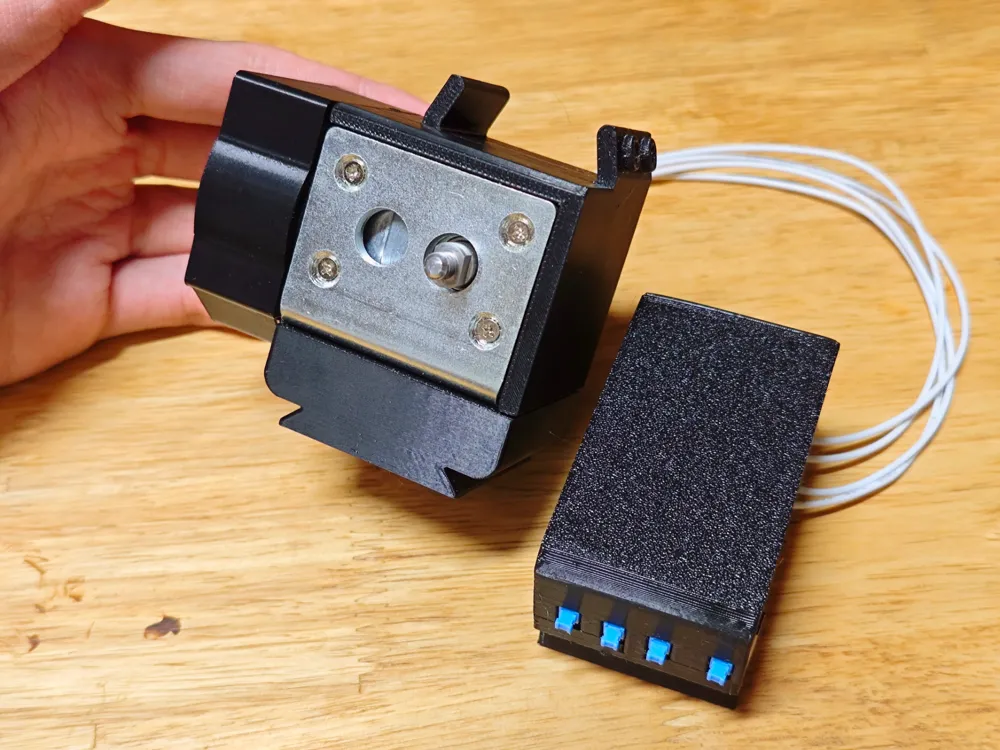
Print Profile(1)

Description
Original author's video and project links:
【【Open Source | DIY | Nanolightv1.0】DIY Astronomical Equatorial Mount for 150 Yuan? The Uploader is Getting Creative】 https://www.bilibili.com/video/BV1gi4y1R7HK/
Project linkhttps://gitee.com/wnova/nano-light/
Since the stepper motor model provided by the original author is no longer available, I replaced it with an easily available one and re-adapted the model (Motor purchase search keywords: NMB35 Stepper Motor 7.5° Minebea Permanent Magnet Stepper Motor PM35S-048) The assembly method is largely consistent with the original author's video, but the following points must be changed:
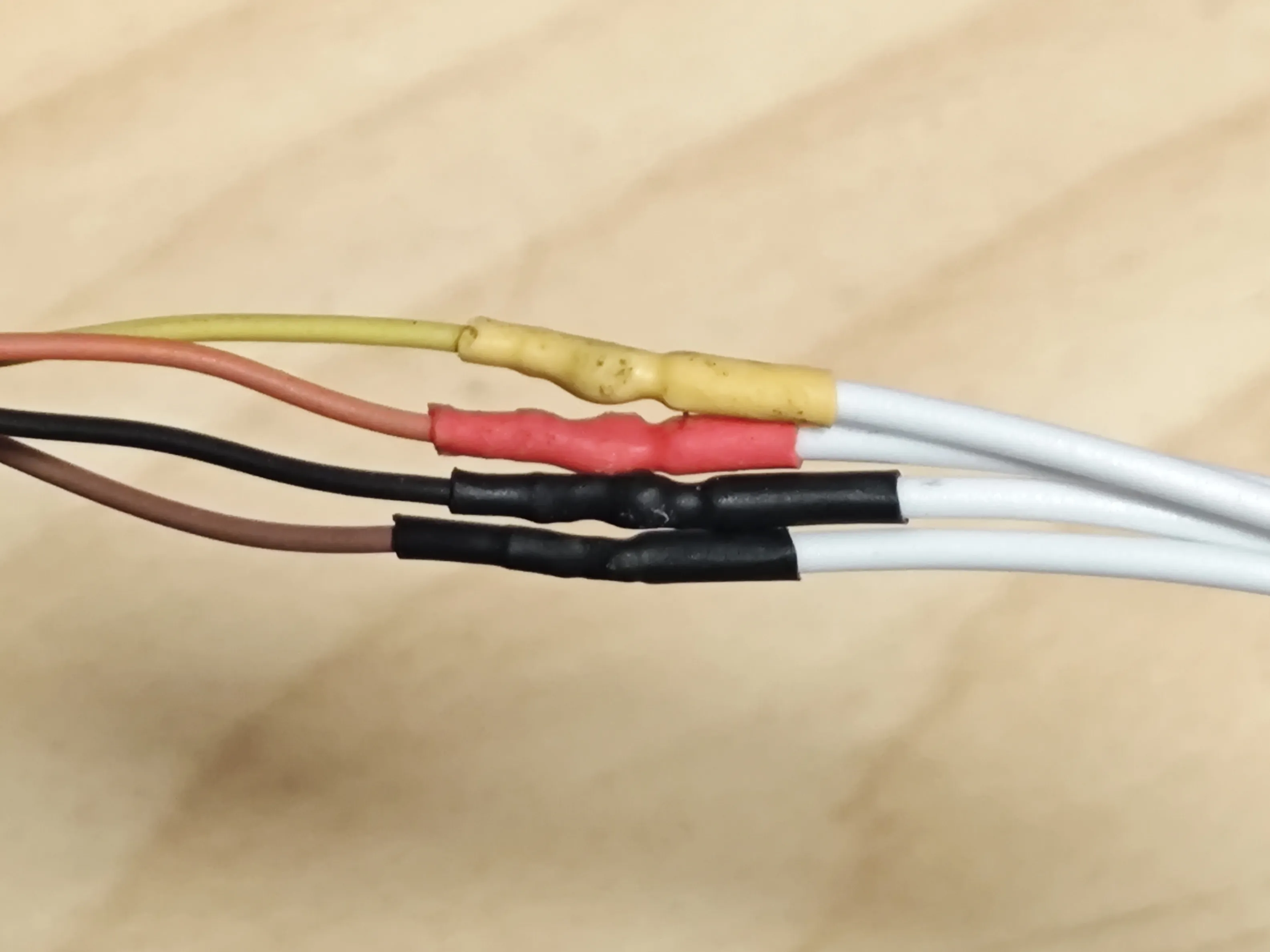
1. Stepper motor wire handling
This stepper motor comes with a plug cable, but the plug is incompatible with the original design, so the plug should be cut off or the pins removed with tweezers, then new cables soldered on and wrapped with electrical tape or heat shrink tubing
2. Code delay section
The original author used a 3.5° step angle motor, but I purchased a 7.5° step angle one here, and this type of motor does not seem to have a 3.5° option, so it must be modified
If you, like me, bought a 7.5° step angle motor and are using a 3000 reduction ratio gearbox, simply replace the number in the code here with what is shown in the image

For a 1000 reduction ratio, use this

If you are using a motor with a different step angle, please calculate using the following formula:
The first line in the code is milliseconds (ms), the second line is microseconds (us), and each value corresponds to:
Sidereal speed | 5x speed | Fastest | 1h per revolution | 2h per revolution | 3h per revolution | 5h per revolution | 12h per revolution
Sidereal speed calculation: (taking 7.5° step angle as an example)
86164s /2916 (3000 reduction ratio) or 972 (1000 reduction ratio) /48 (360/step angle 7.5) /2*1000 ~ 307.799ms/step (keep three decimal places for calculation result)
Fill 307 from the calculation result into the first position of the first line, and 799 into the first position of the second line, and so on
5x speed: Sidereal speed/5
Fastest: No modification needed
1h per revolution: Sidereal speed/24
2h per revolution: Sidereal speed/12
3h per revolution: Sidereal speed/8
5h per revolution: Sidereal speed/4.8
12h per revolution: Sidereal speed/2
Once the above steps are completed, the assembly method can follow the original author's video
Some rambling thoughts:
The laser pointer has a fairly large error for polar alignment, and the original project's built-in laser version is no different, although as the author commented, 3D printing accuracy is now very high, the problem is that the laser pointer's accuracy is not high, usually within 2° Therefore, it is recommended to add two calibration knobs in the direction perpendicular to the laser for the laser pointer placement (referencing a sniper scope), but does anyone really use a small astronomical equatorial mount for such long exposures ( )
The design of placing the controller in the laser pointer slot is very good, but for extreme budget-savers like me (actually, I'm just lazy), I'm unwilling to tap threads into the casing, so it can't be fixed I just insert a thin iron rod to hold it in place However, fixing it with a thumbscrew has a disadvantage: tightening it inevitably causes shaking, which might misalign the newly adjusted polar axis The more recommended approach is to hang it behind the main body for convenience and speed
This remix is based on

License



Comment & Rating (0)