
Mine Signs
Print Profile(1)

Description
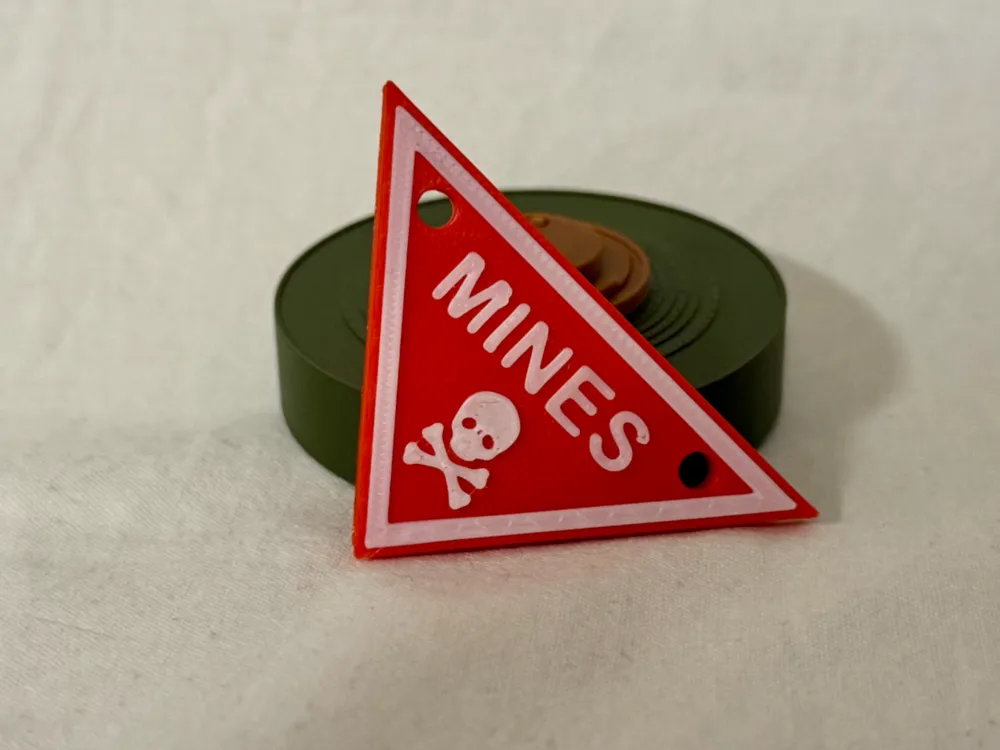
Landmine warning signs evolved out of post-WWII clearance work and later standardized humanitarian practice. As modern mine action matured, international guidelines encouraged consistent colors, symbols, and legible text to reduce risk for civilians and responders. Countries then localized those patterns—preserving the same core visual signals (red for danger, skull iconography, simple wording) while adapting language, shapes, and mounting to local terrain and weather.
Why signs matter
Marking saves lives. Clear, durable signage:
- alerts civilians to contaminated areas;
- guides deminers and emergency services;
- supports systematic survey, fencing, and eventual clearance;
The global landmine problem
Antipersonnel mines and other explosive remnants of war remain in dozens of countries. They cause thousands of casualties each year, most of them civilians—and many are children. Beyond the human toll, contamination blocks safe access to farmland, roads, schools, and healthcare, slowing recovery for years after fighting ends. Marking, community education, and professional clearance are the proven trio that reduce accidents and restore safe use of land.
About EODynamics
EODynamics is a veteran-owned, Sweden-based company building AR/VR training systems, 3D ordnance libraries, and digital tools for Explosive Ordnance Disposal (EOD) and Humanitarian Mine Action. We design field-ready, offline-capable solutions aligned with IMAS/NMAS—used for skills training, risk education (EORE), and mission rehearsal. Our products (including EHART) help agencies, NGOs, and educators standardize best practice, reduce risk, and scale training affordably. We also provide 3D modeling, data integration, and advisory support to accelerate safe, evidence-based EOD and HMA capability development.
License


Comment & Rating (0)