
Dancing Skeletons Decorations
Print Profile(2)


Description
What Is This?
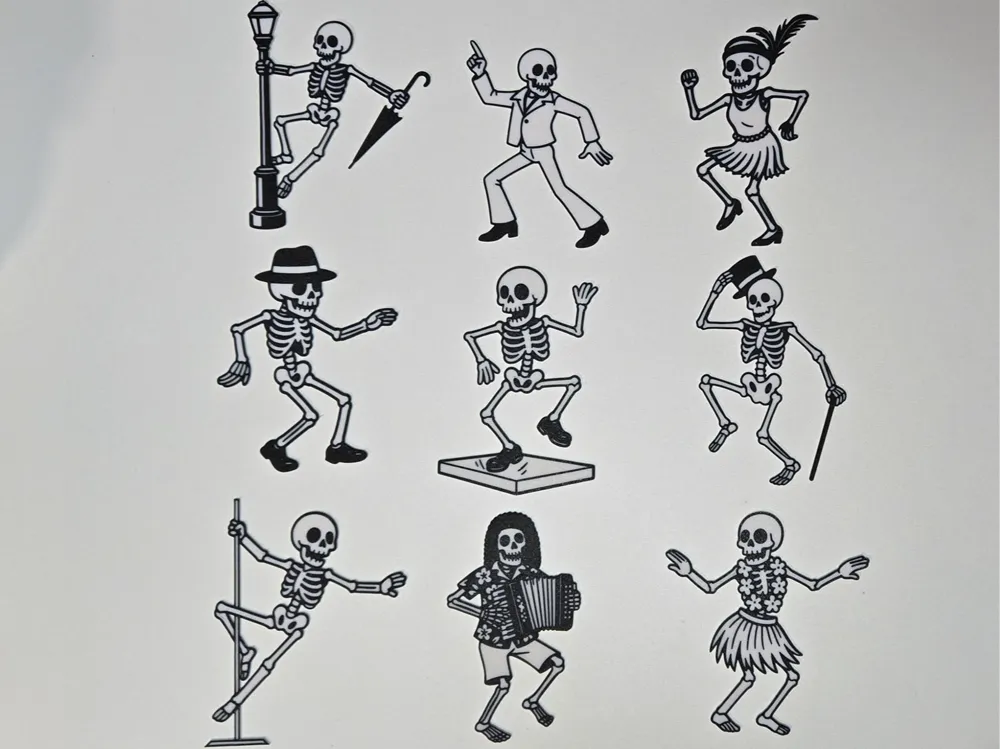
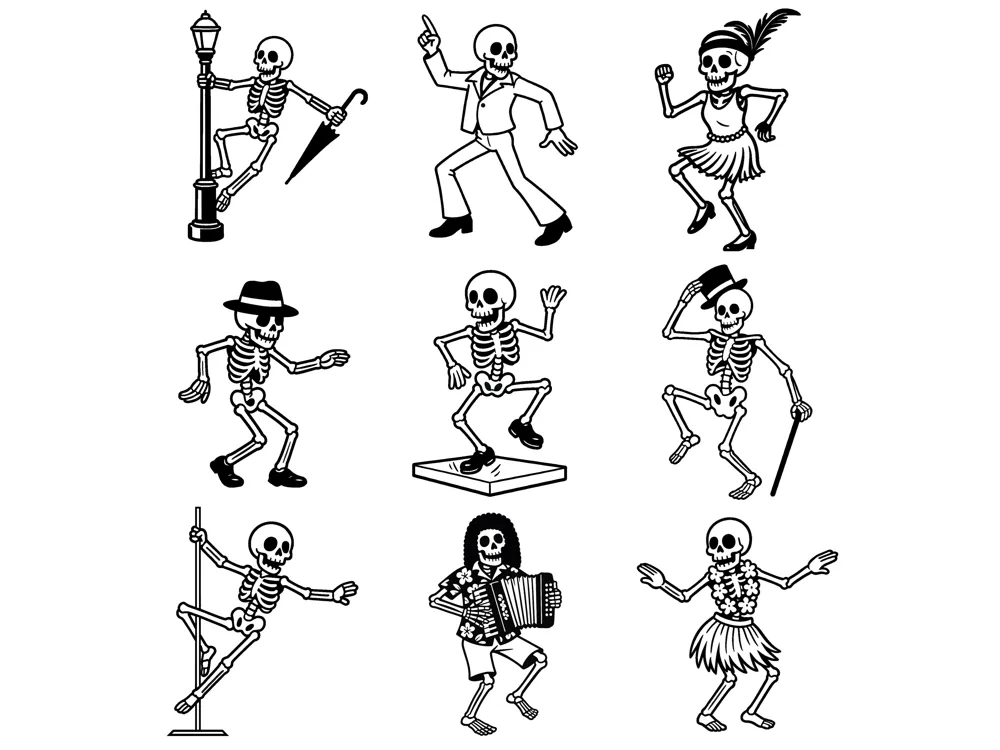
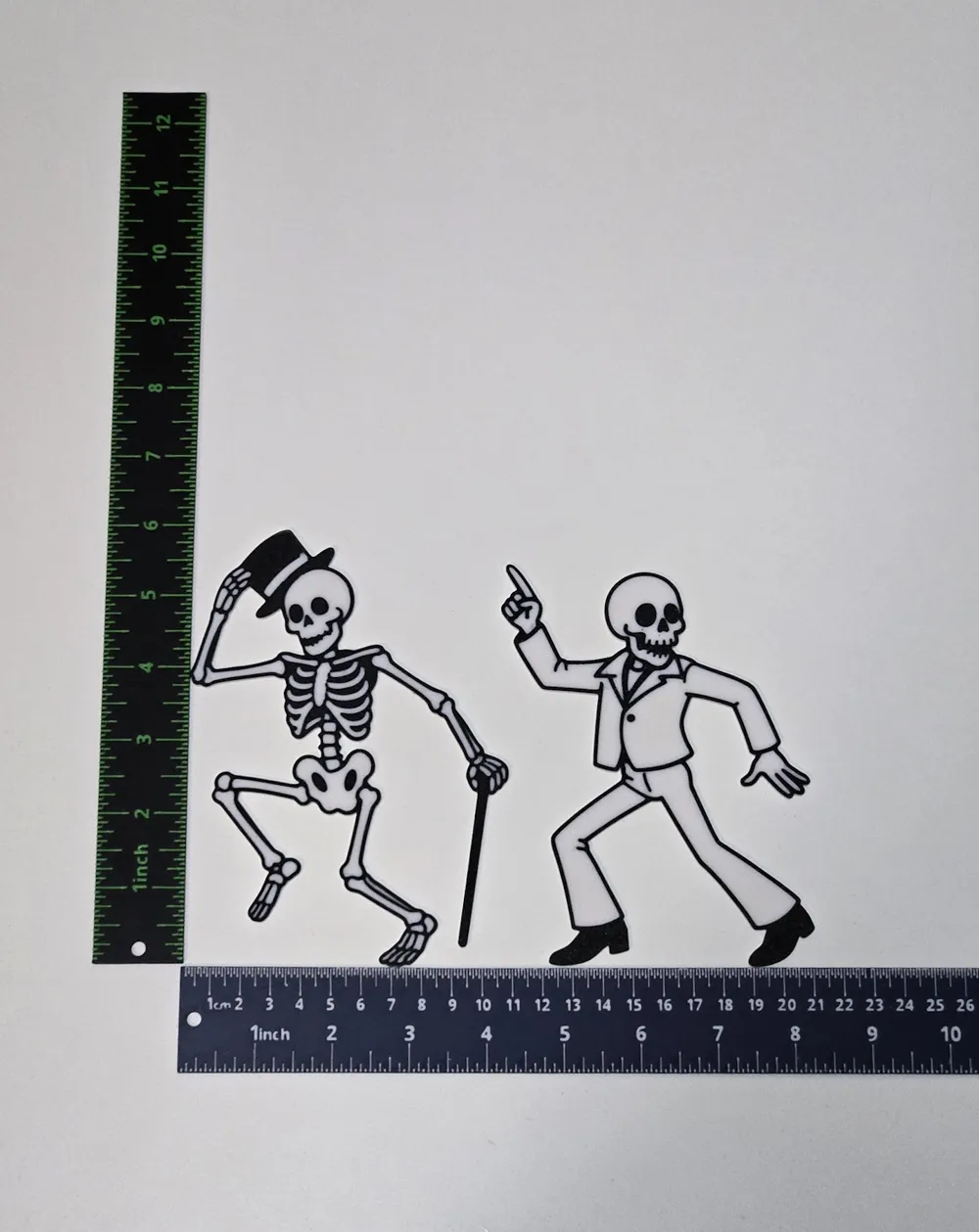
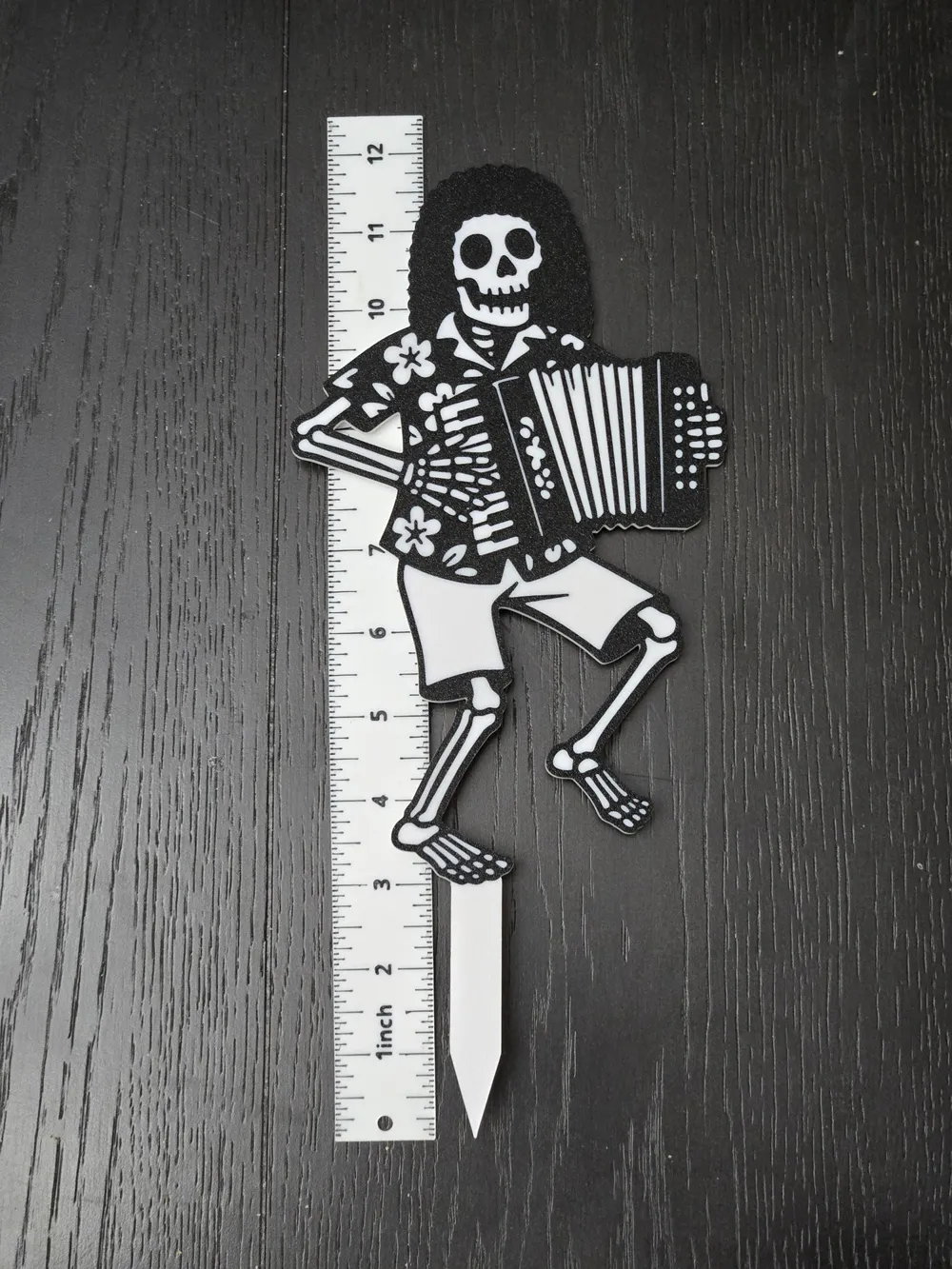
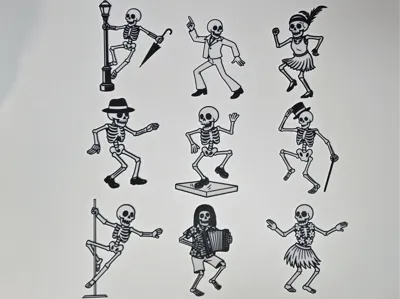
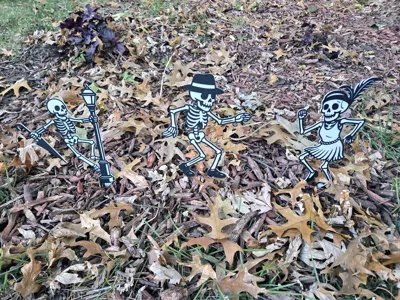
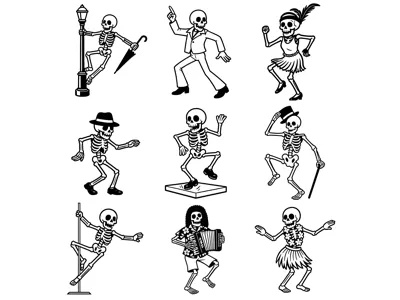
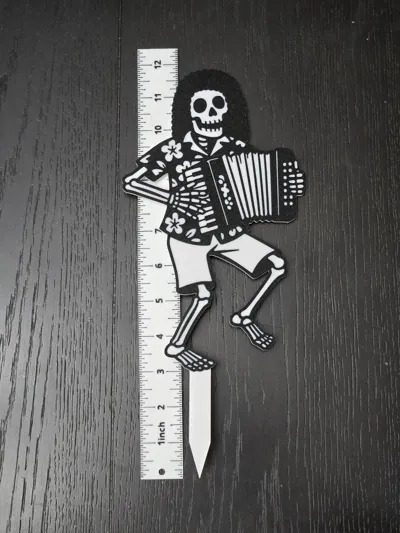
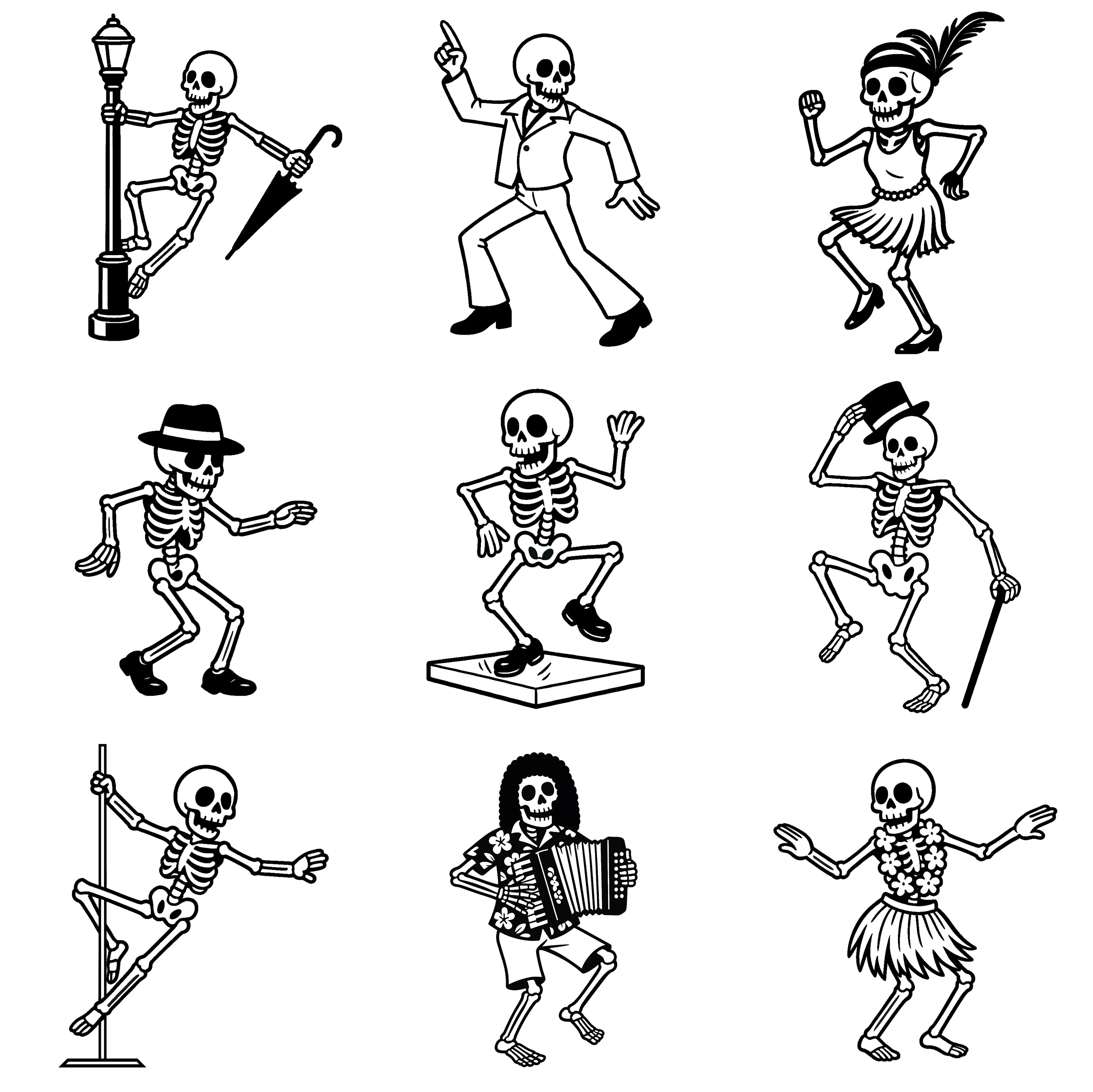
These dancing skeletons come in an assortment of poses and styles, ranging from generic dances (tap, disco, luau,) to specific pastiches of individuals (one who sings in the rain, one who moonwalks, a weird one who plays accordion).
Types & Uses
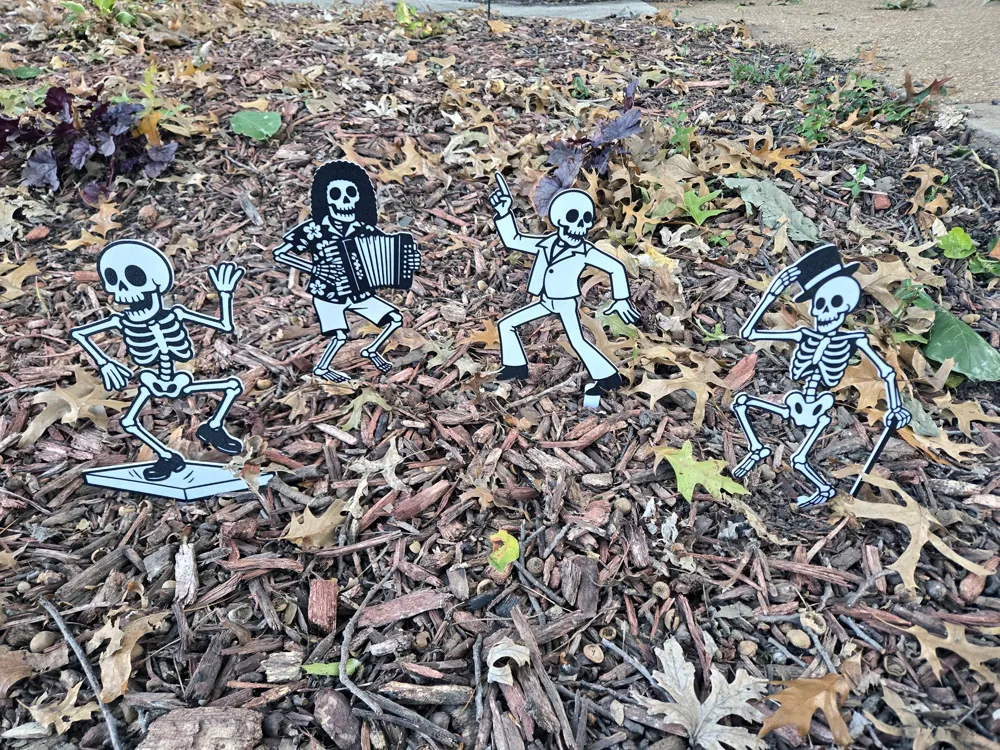
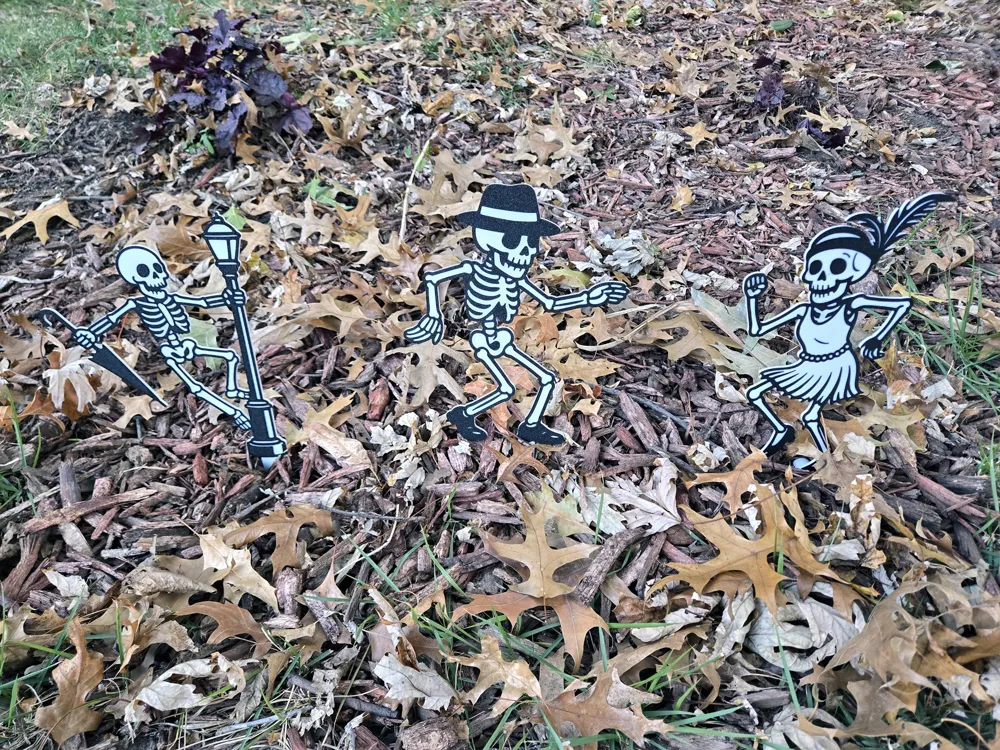
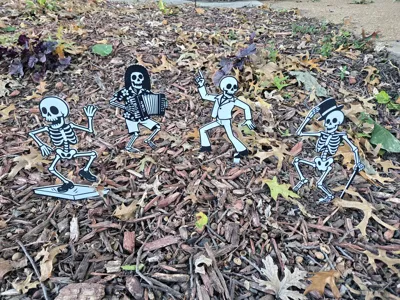
All are available as small indoor figures or larger yard decorations.
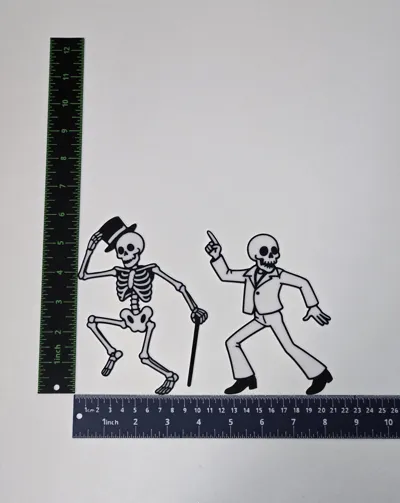
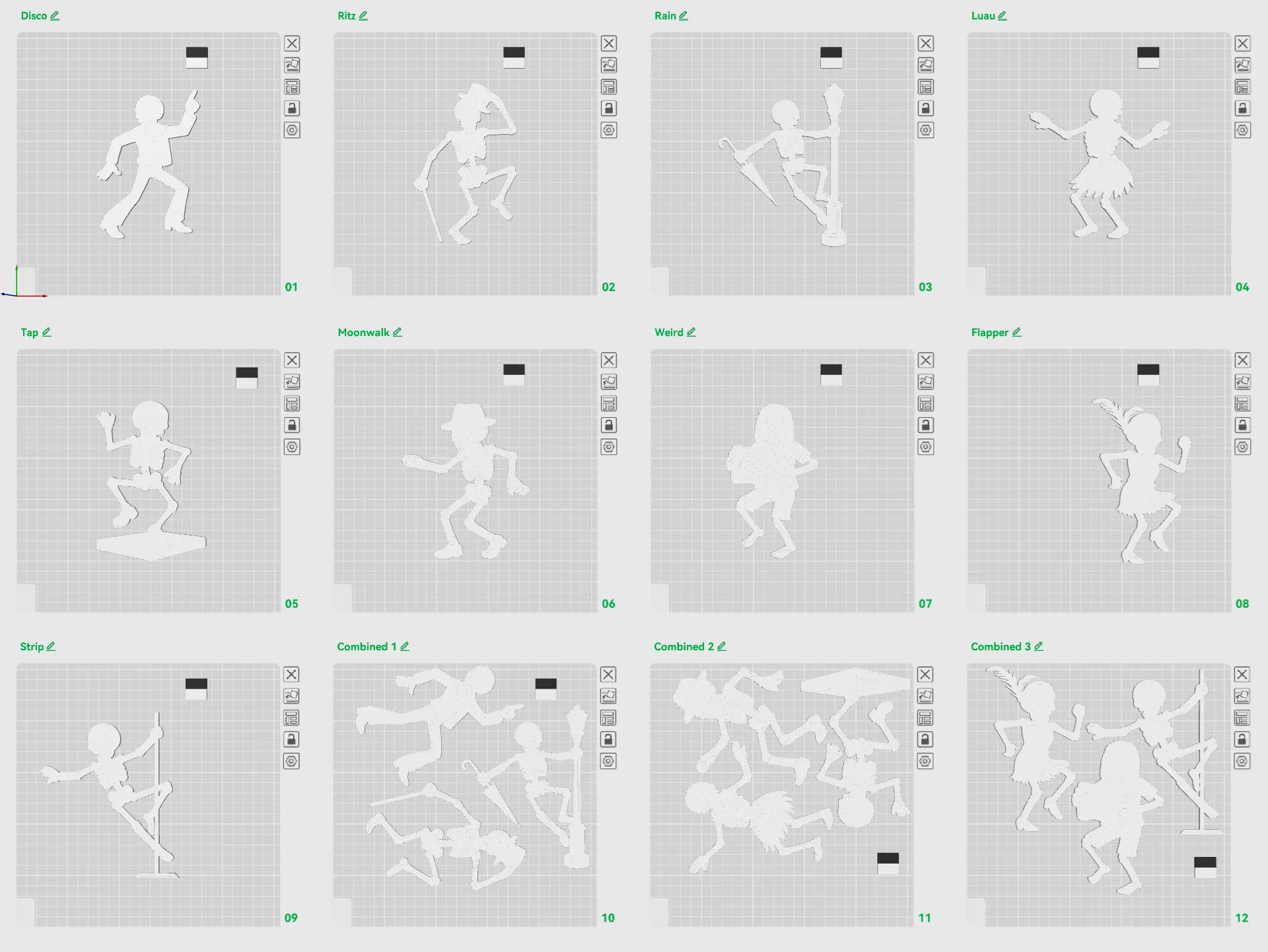
- Small Indoor Decorations
- These are 145 - 160mm (5.7 - 6.3”) tall and 2mm thick.
- They could be placed with tape or magnets (+superglue), or you could even use the “Add Negative Part > Cylinder” option to put small holes in them to hang from string.
In the print profile, each models has its own plate, plus there are 3 combo plates at the end to speed up printing all of them.
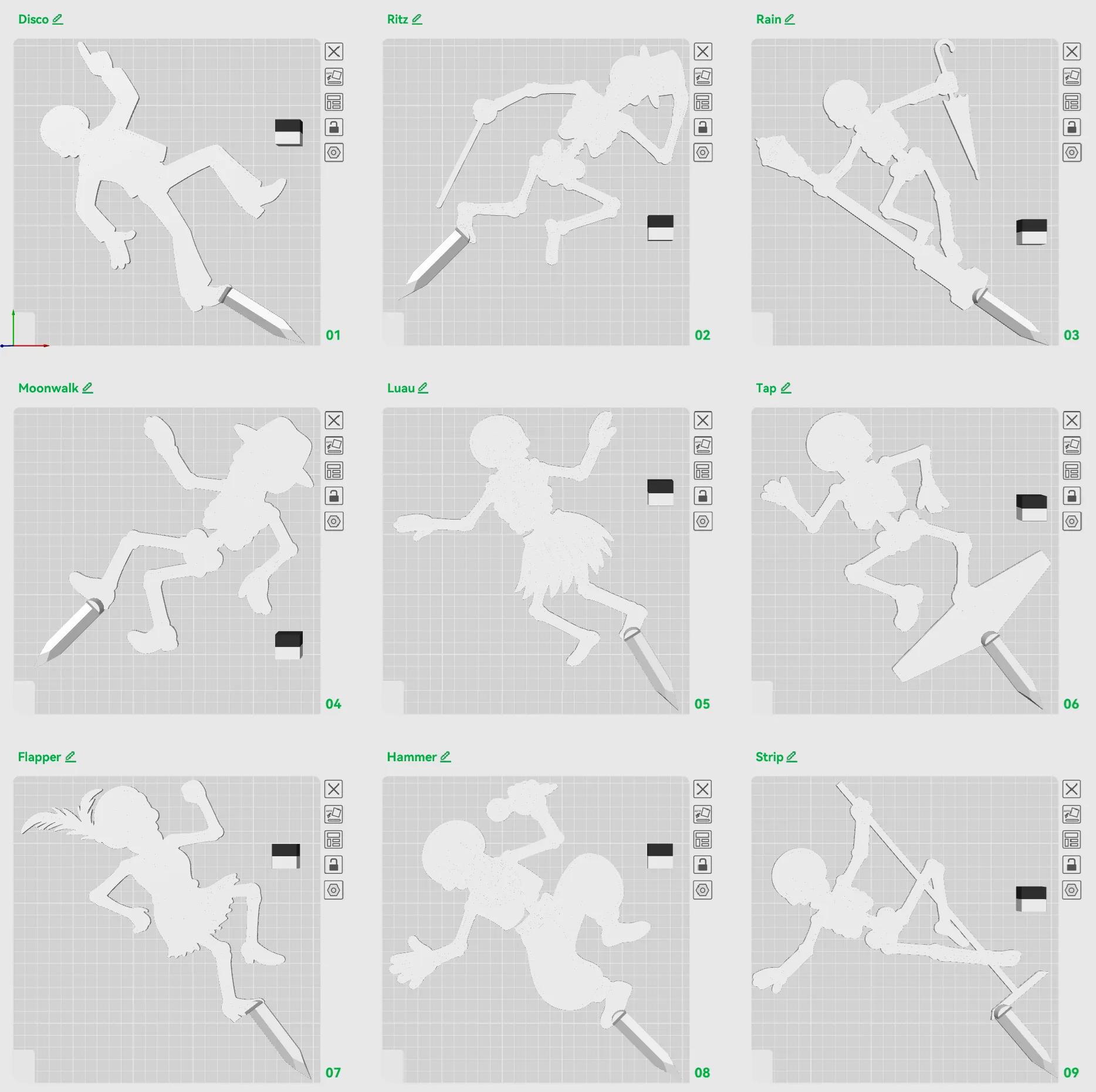
- Larger Yard/Lawn Decorations
- They are 215 - 240mm (8.5 - 9.4”) tall and 3mm thick.
They have an additional 75mm (3”) stake on the bottom that sticks into the ground.
Notes / Warnings
AMS Required: These print flat, face-down with a filament change on each of the first few layers, so an AMS is needed.
A1 Mini: The Yard Stakes versions are too large by default to fit on the A1 Mini bed. They should scale down to 60-70% or so with no problem, however.
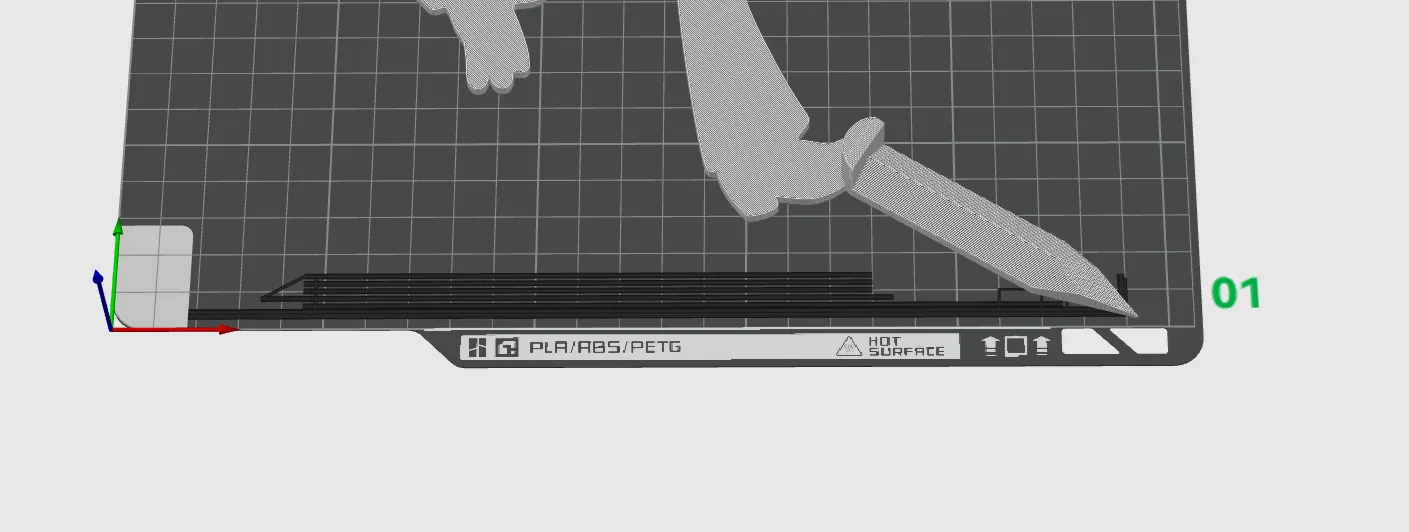
P/X/A Series: A few of the Yard Stakes models go corner-to-corner on the 256mm build plate of the P1, P2, X1, and A1 (non-mini). The stake may then overlap with the initial purge test lines at the beginning of each print. It may be helpful to peel off the test line(s) early in the print, but the good news is that the overlapping part is the stake, which will be hidden in the ground – the decorative part of the model is unaffected.
Print Material: I’ve used PLA, but my front yard does not get a lot of direct sunlight, and it’s cool in October. If you plan to use these outdoors in direct sunlight or hot temperatures, I’d recommend ASA.
Print Settings
The included profiles are mostly using Bambu’s default 0.20mm Standard preset, with 2 small changes: 5 bottom shell layers and rectilinear infill.
They all print face down and look good when using the gold Textured PEI plate. You can print face up if you prefer, but if you use ironing to smooth the top, the end result looks slightly “aliased” (like an old video game) because ironing doesn’t seem to handle fine details as smoothly as the regular printing (at least with a 0.4mm nozzle – perhaps the 0.2mm works better).
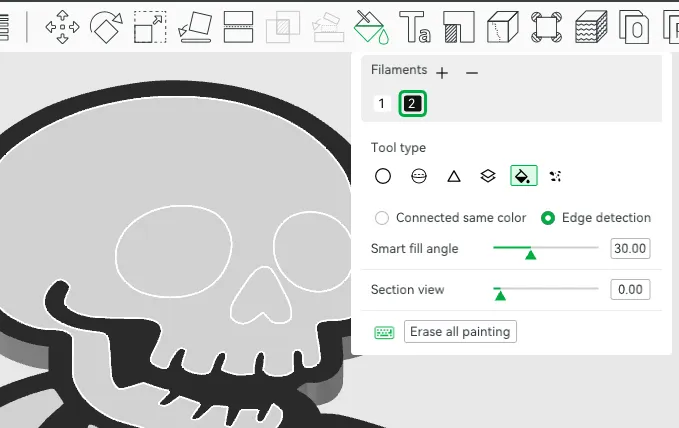
If you download the plain STL files, painting them is easy using the Color Painting > Fill > Edge Detection setting in Bambu Studio.
Credit
It pains me to have done this, but as my username implies, I can’t draw to save my life. So, the original base images were designed with generative AI image creation, then manually photo edited to suit my preferences. Finally, they were uploaded to MakerWorld’s Image To Keychain feature to turn the JPGs into STL files.
License



Comment & Rating (3)