
Demonstration of the Pythagorean Theorem
Print Profile(1)





Description
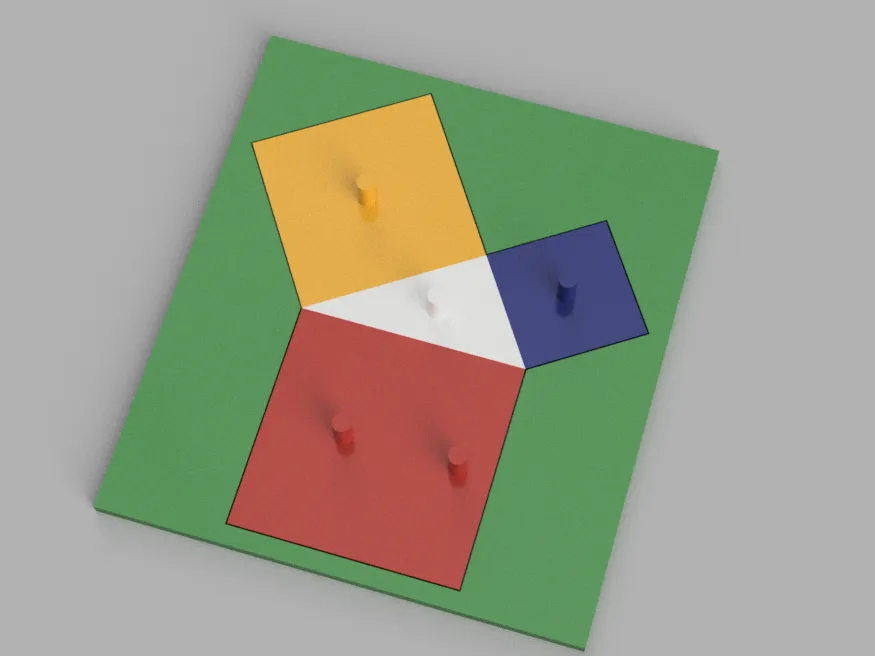
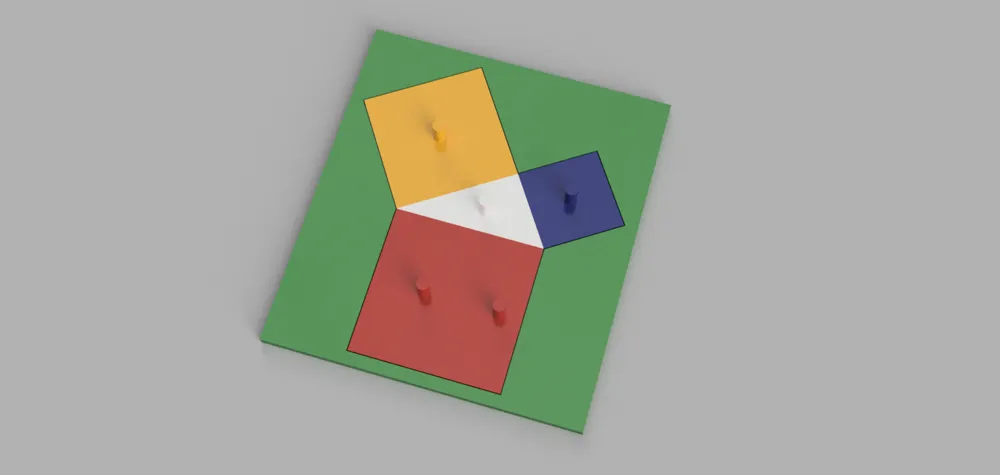
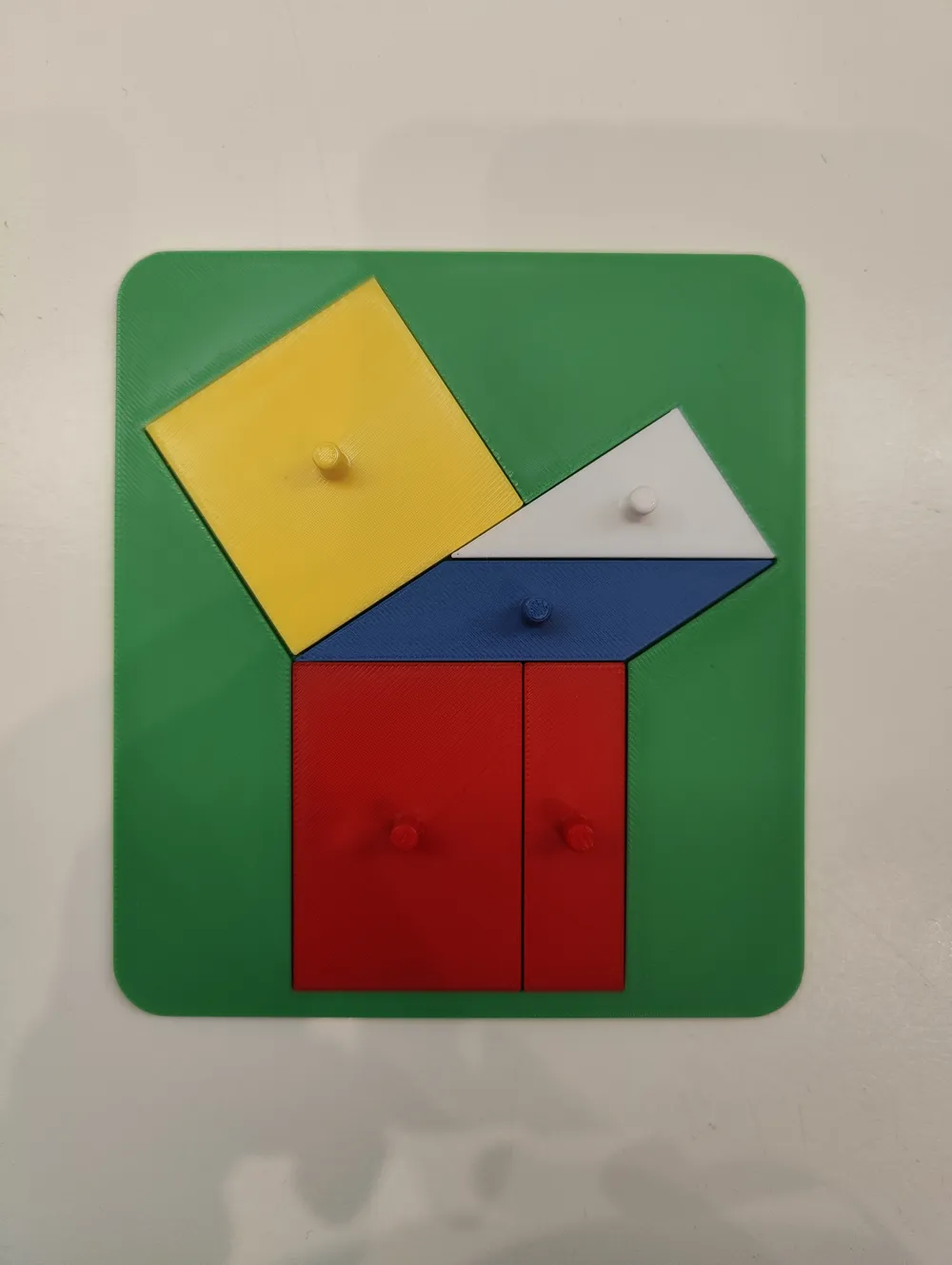
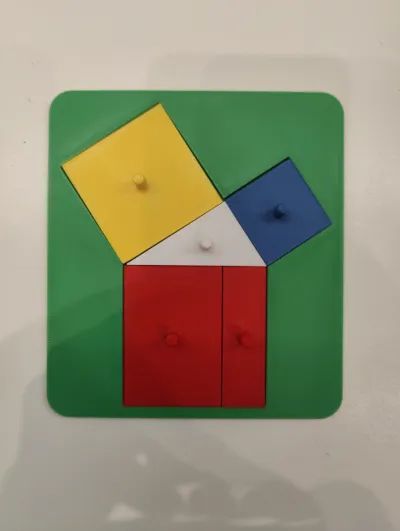
This model is an interactive teaching tool, freely inspired by the work of Maria Montessori1, to visually and manipulatively demonstrate the Pythagorean Theorem.
Instead of passively memorizing the formula a^2 + b^2 = c^2, this puzzle allows you to see and touch why it works, through an elegant method based on the equivalence of areas. It is a perfect tool for students, teachers, and anyone fascinated by the beauty of geometry.
Model Components:
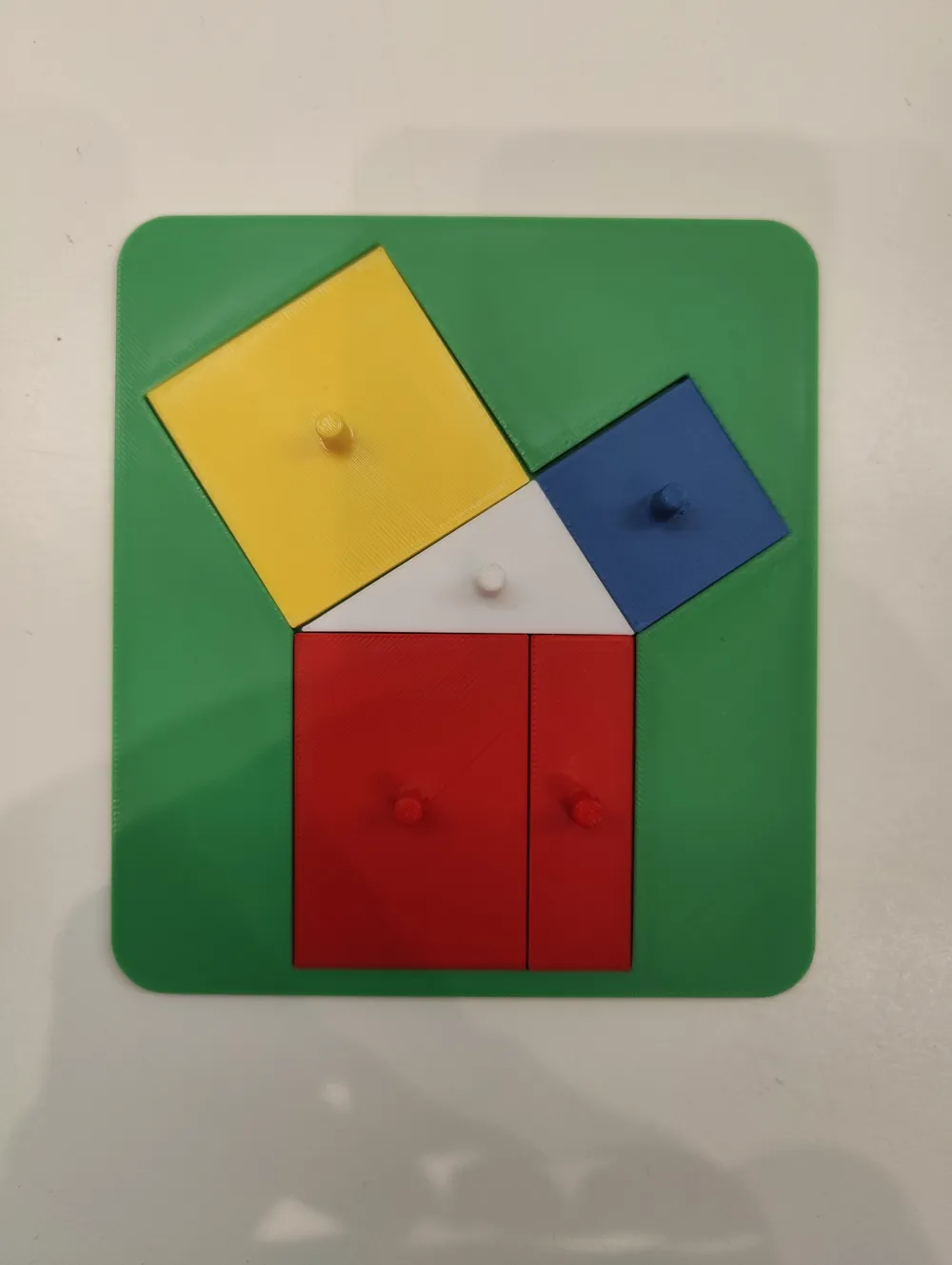
The puzzle consists of:
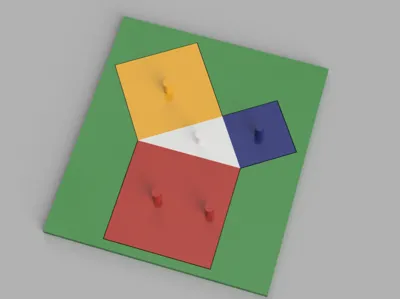
- A green frame that serves as the base for the demonstration.
- A white right-angled triangle.
A blue square and a yellow square, built on the two legs of the triangle.
Two red rectangles, which together form the square built on the hypotenuse.
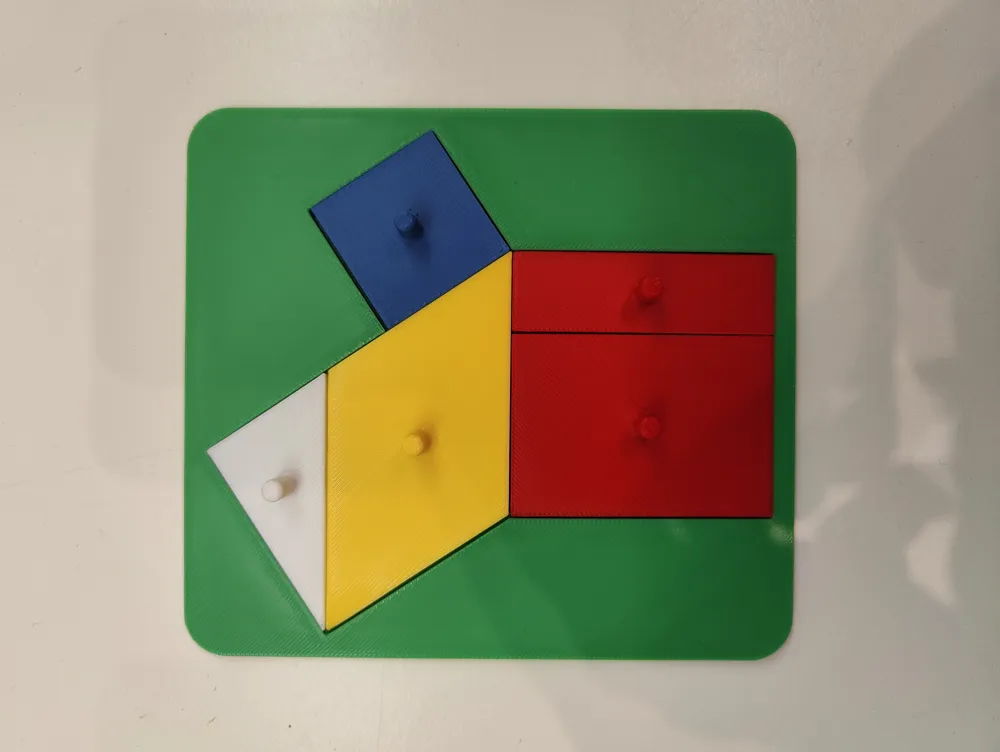
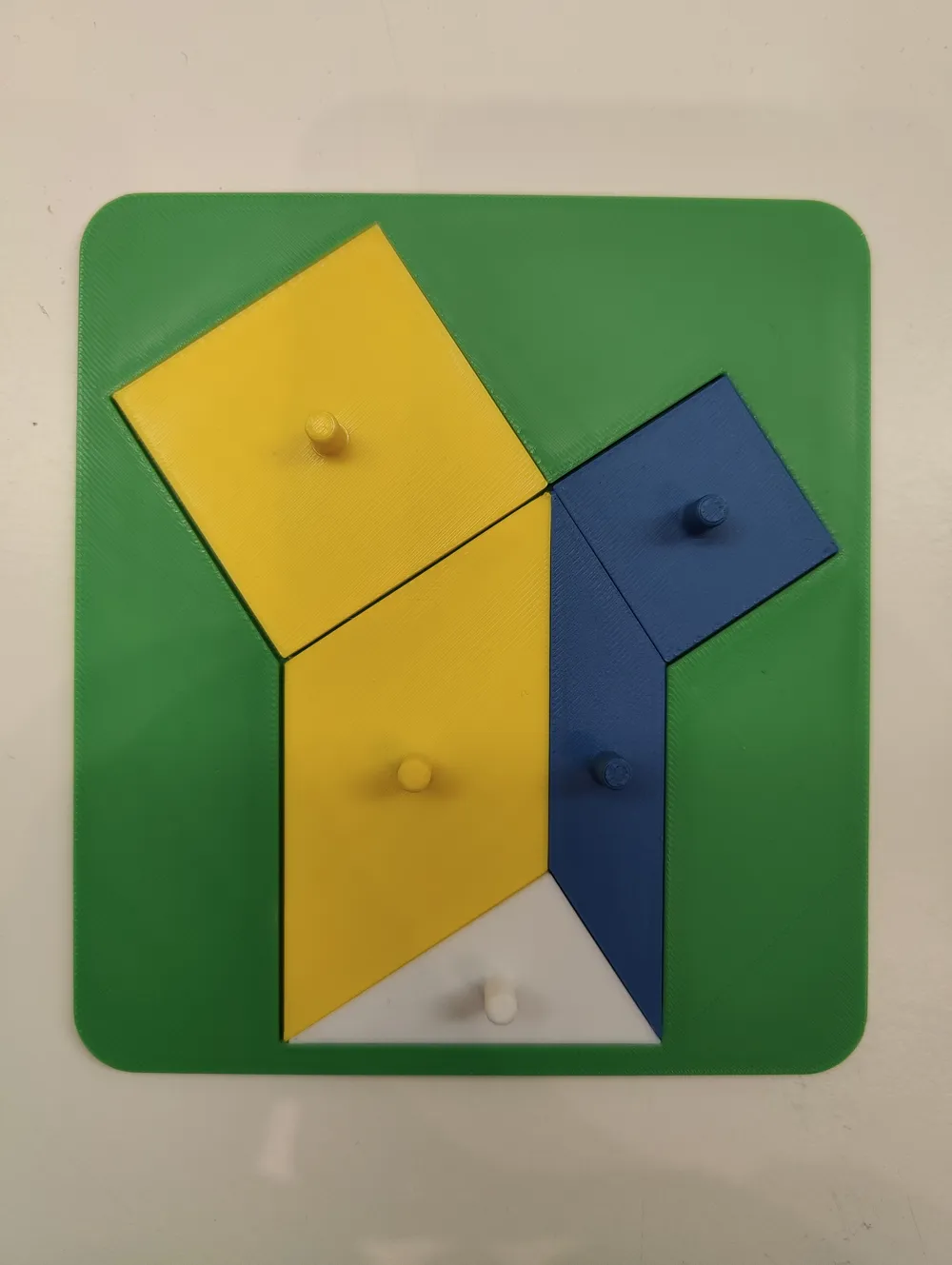
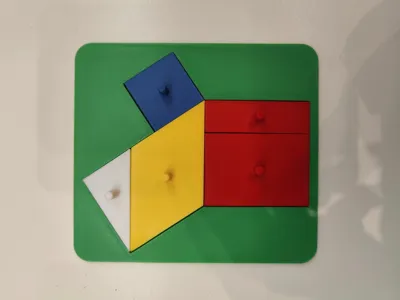
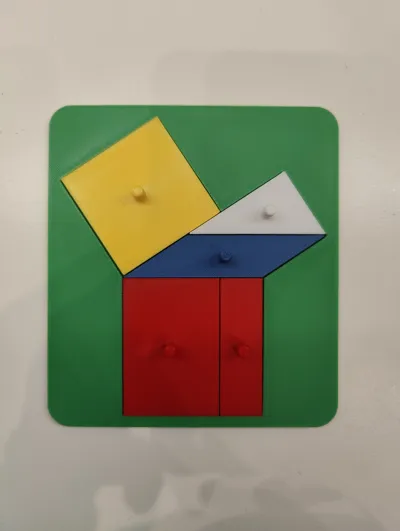
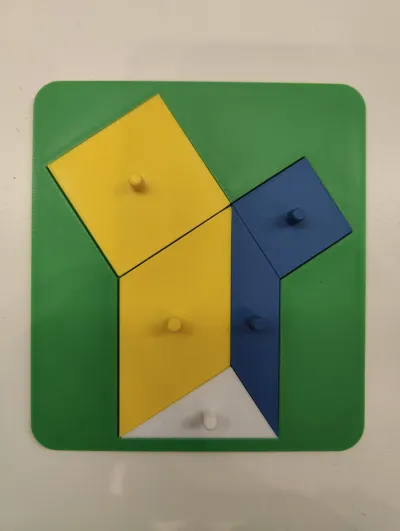
Two parallelograms (one blue and one yellow) that are the key to the demonstration.
How the demonstration works:
The activity unfolds in a few intuitive steps, guiding the discovery of the theorem.
Area Equivalence: First, it is demonstrated that the square built on each leg (e.g., the blue one) is equivalent (has the same area) to its respective parallelogram of the same color. This is done simply by sliding the white triangle inside the frame.
The Proof: Next, the two red rectangles are removed, leaving the space of the square on the hypotenuse empty.
The Solution: It will be discovered that the empty space can be perfectly filled by the two parallelograms (the yellow and the blue one) put together.
Conclusion:
Since the two parallelograms have the same area as the squares on the legs and, at the same time, exactly fill the space of the square on the hypotenuse, it has been tangibly demonstrated that:
Area of the square on the hypotenuse = Area of the square on leg 1 + Area of the square on leg 2
This method not only teaches the formula but also builds a deep intuition for why the theorem is true, strengthening logical and spatial reasoning.
Documentation (1)
License

You shall not share, sub-license, sell, rent, host, transfer, or distribute in any way the digital or 3D printed versions of this object, nor any other derivative work of this object in its digital or physical format (including - but not limited to - remixes of this object, and hosting on other digital platforms). The objects may not be used without permission in any way whatsoever in which you charge money, or collect fees.


Comment & Rating (1)