
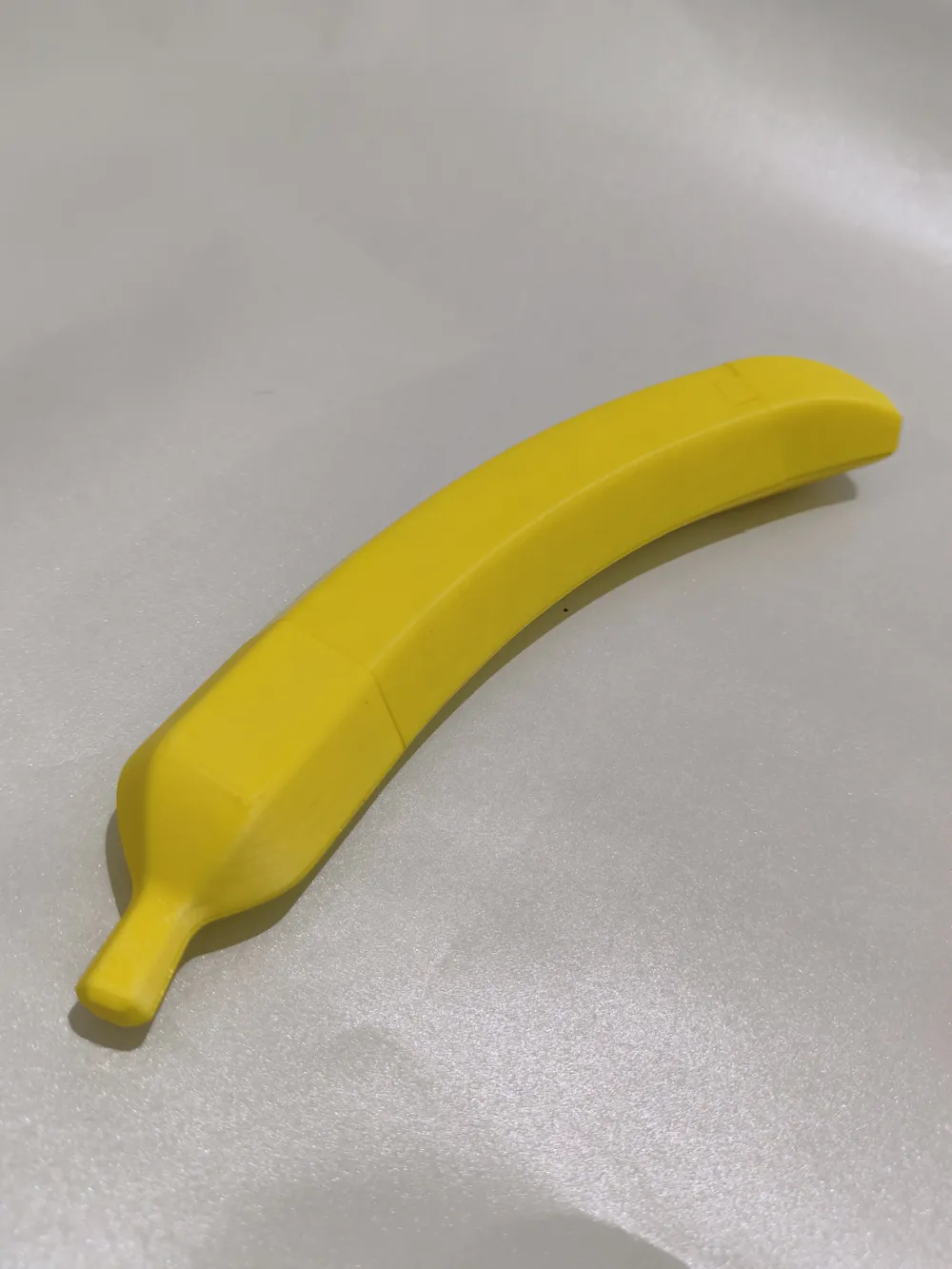
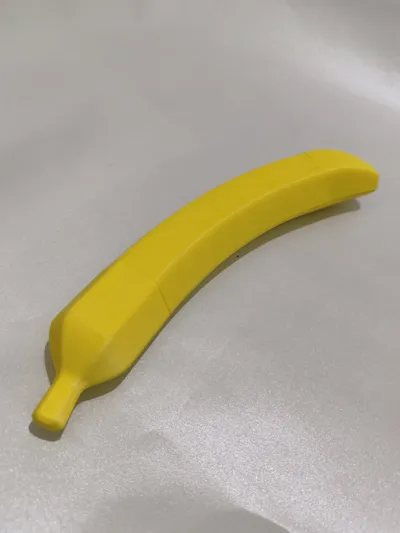
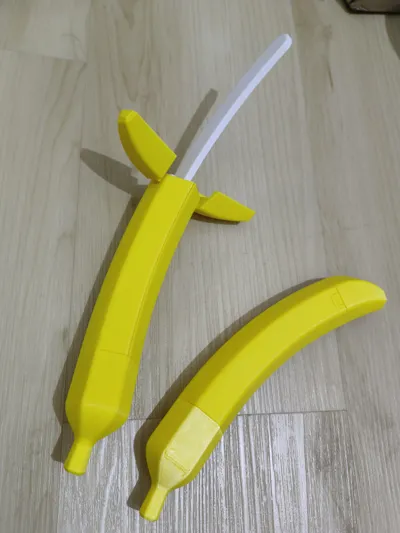
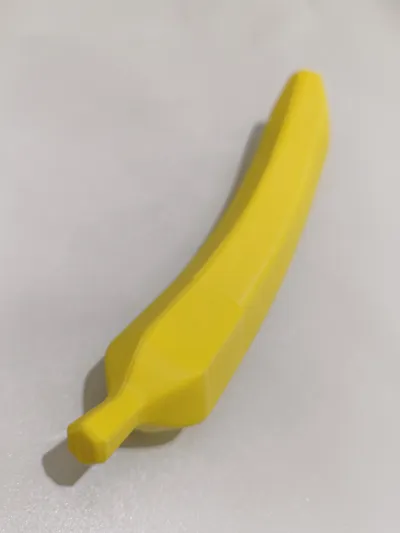
Banananife — Over-engineered OTF knife in banana
Print Profile(2)


Bill of Materials





Description
Before Banananife V2,
this was the original design.
V2 is now available with a redesigned mechanism
and full PLA compatibility.

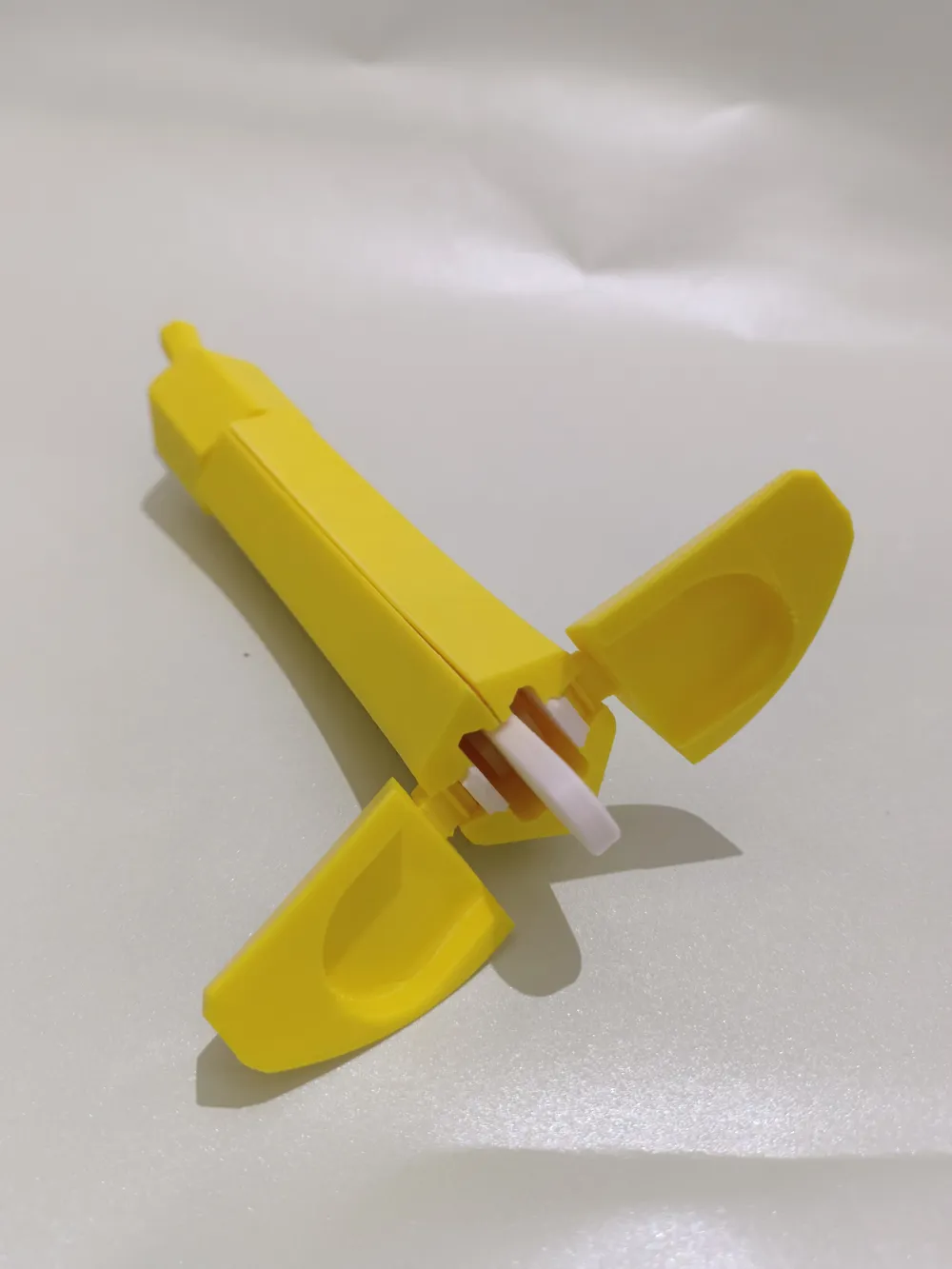
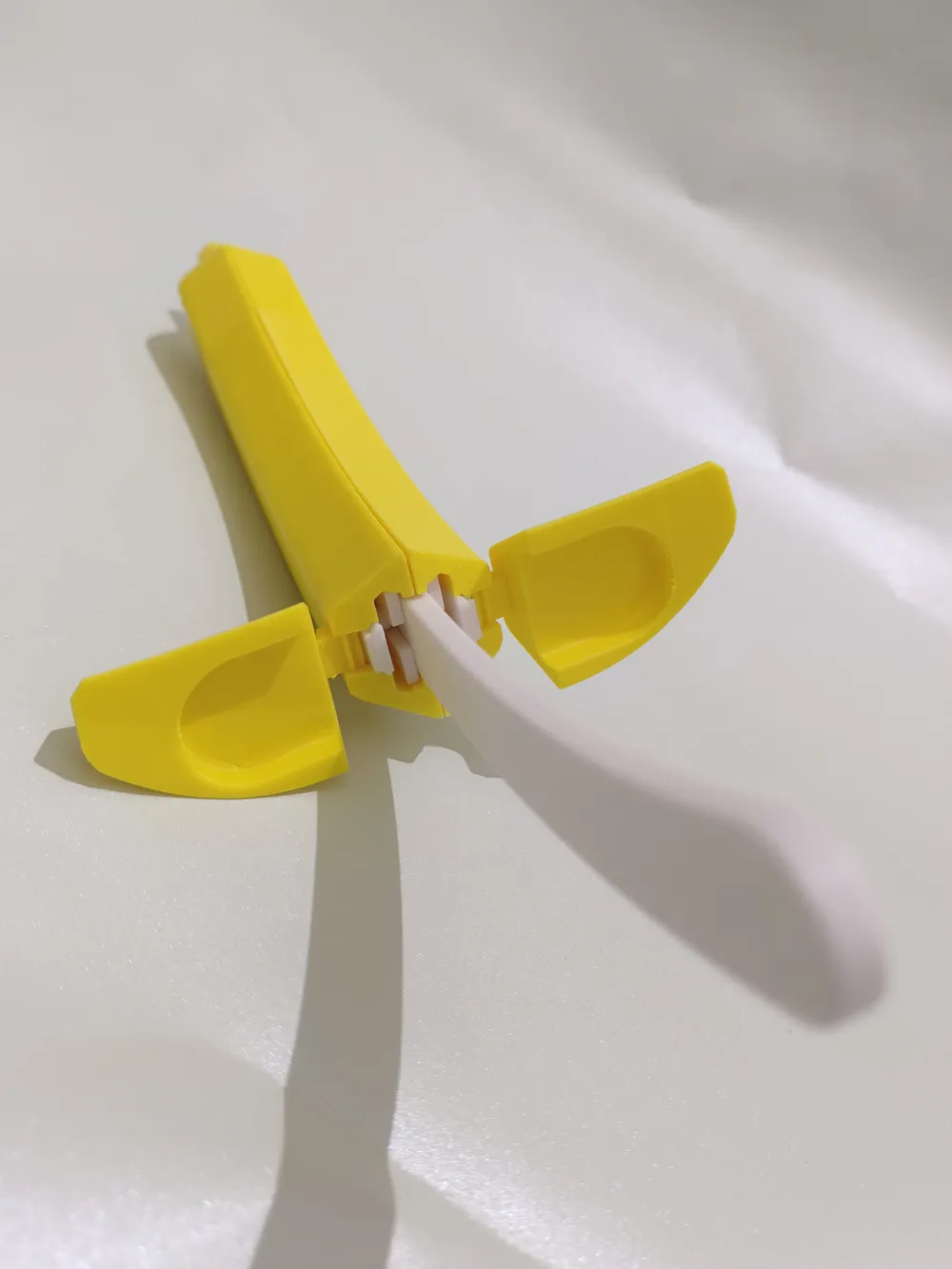
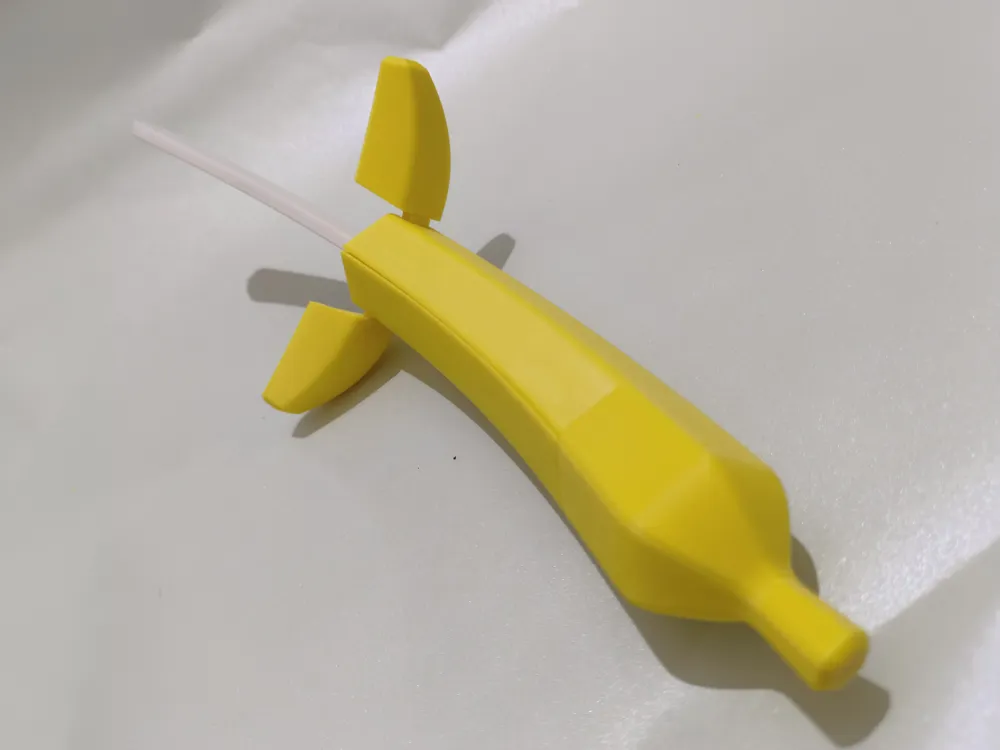
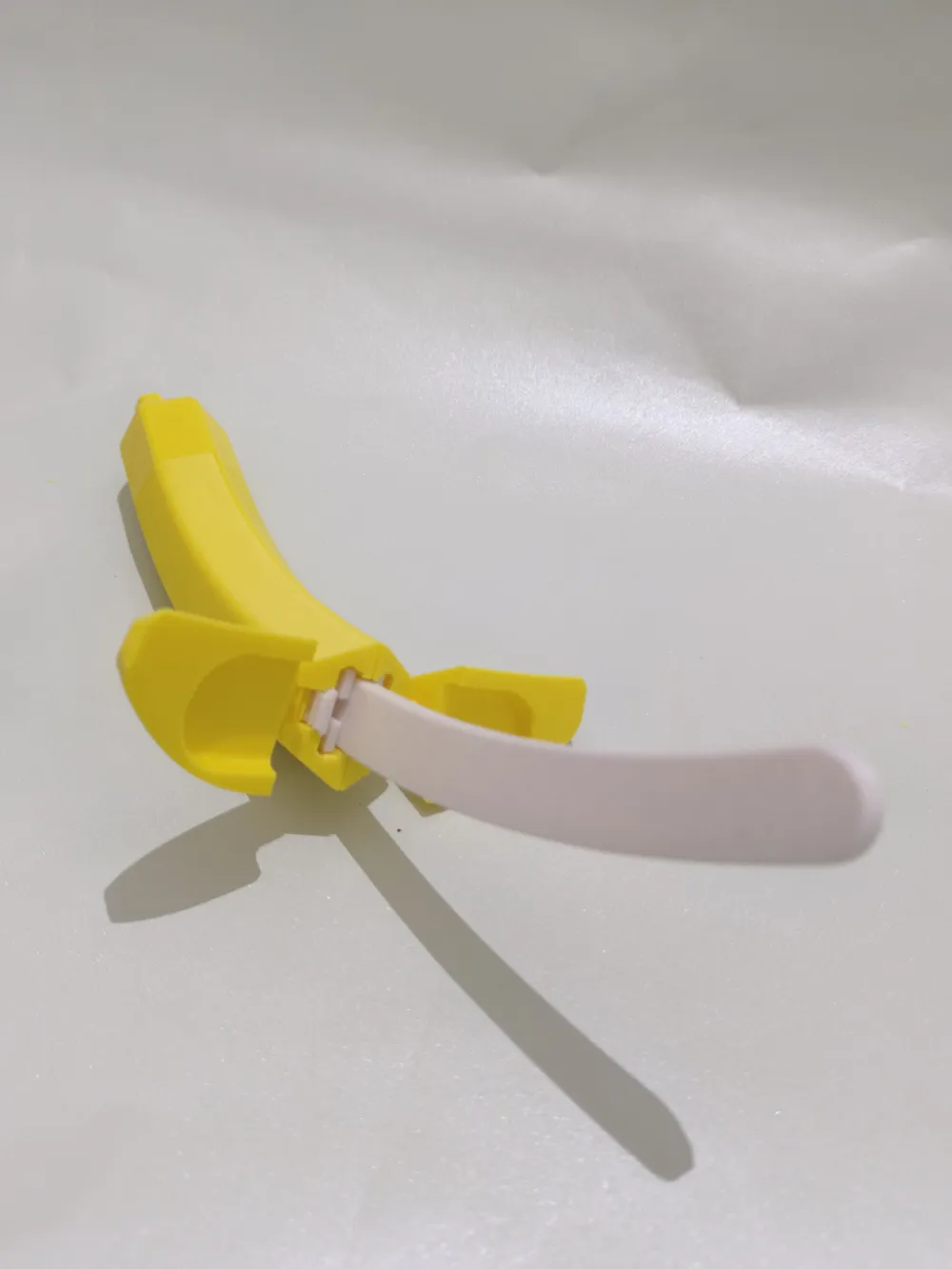
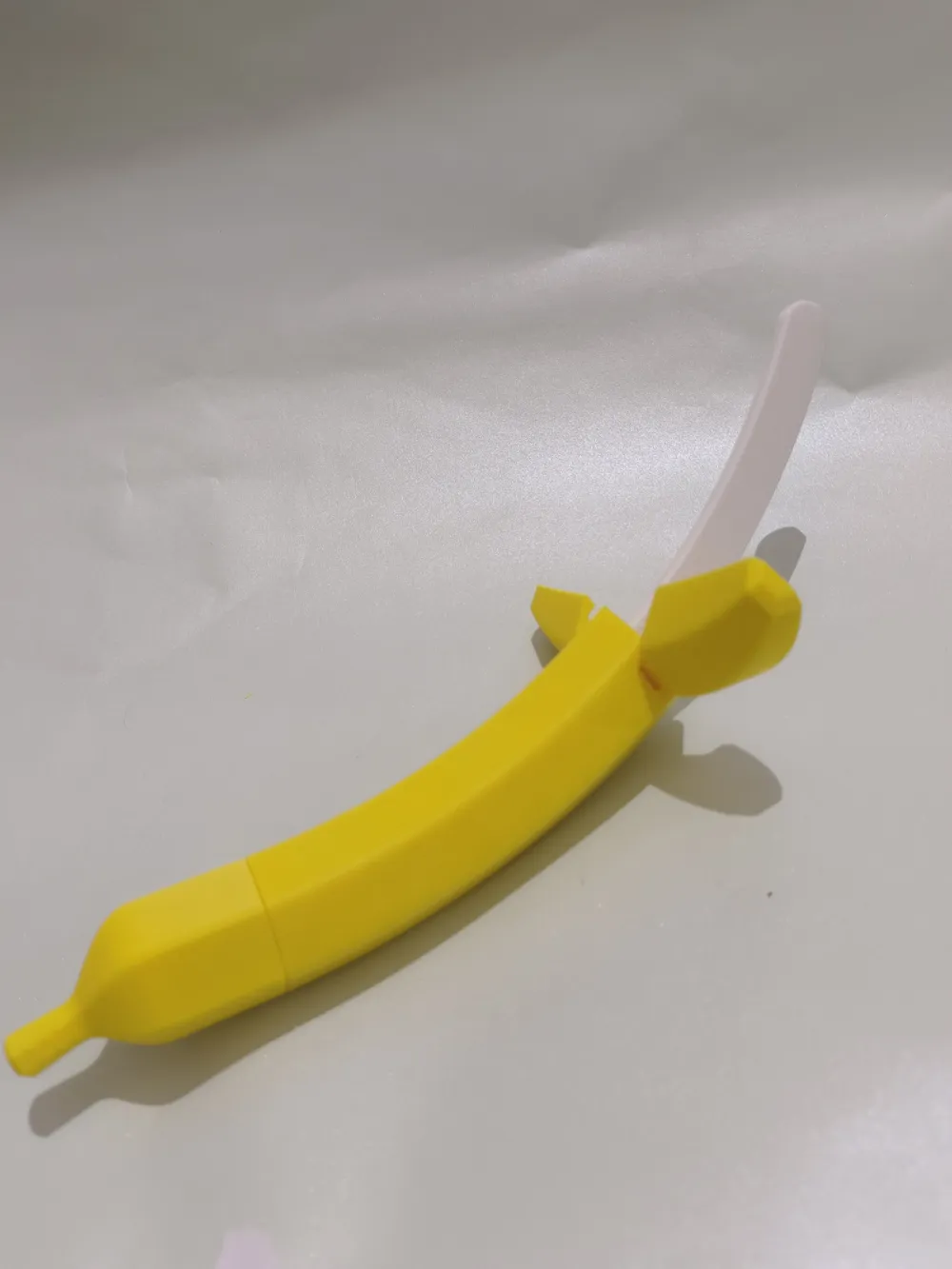
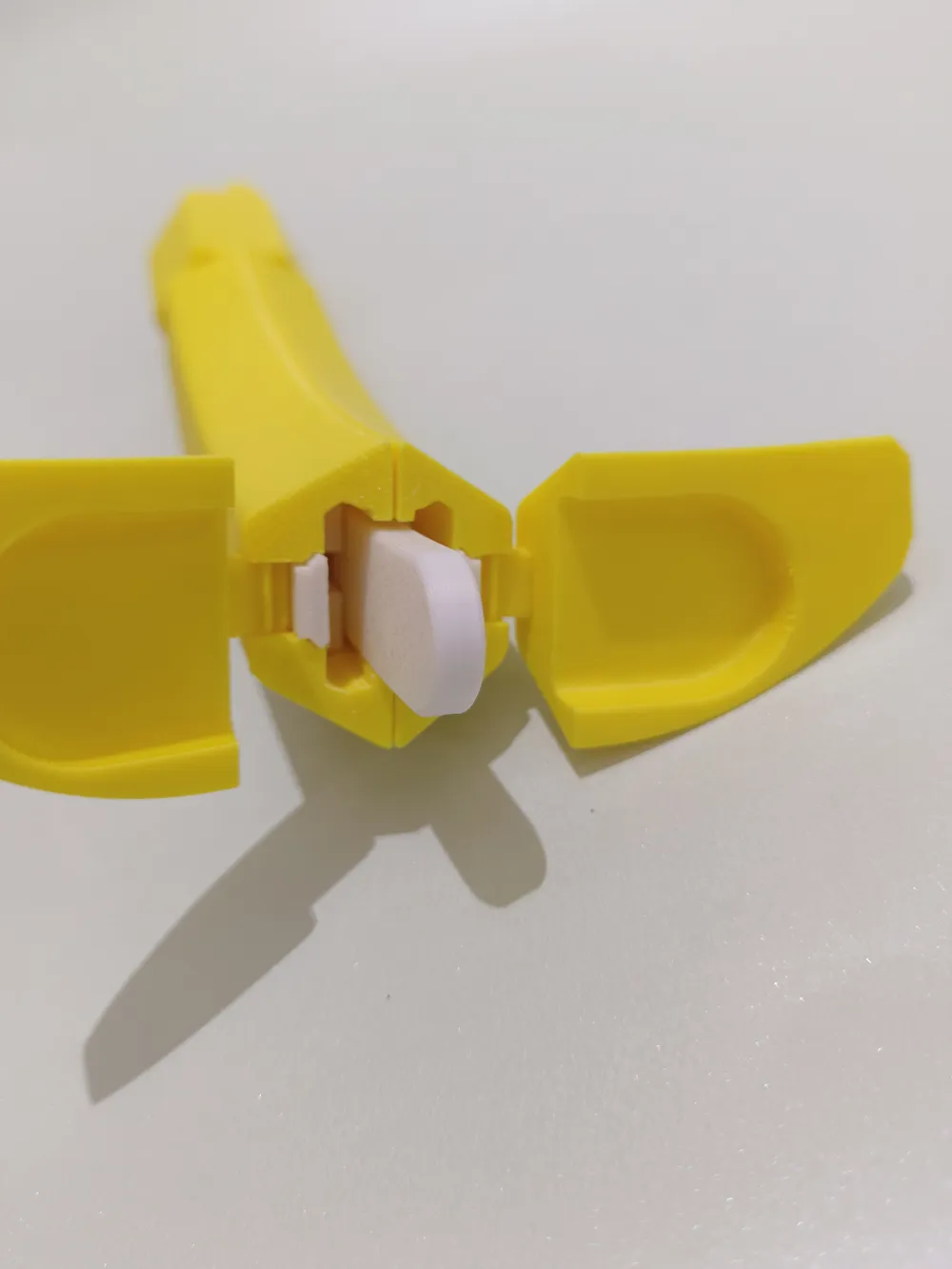
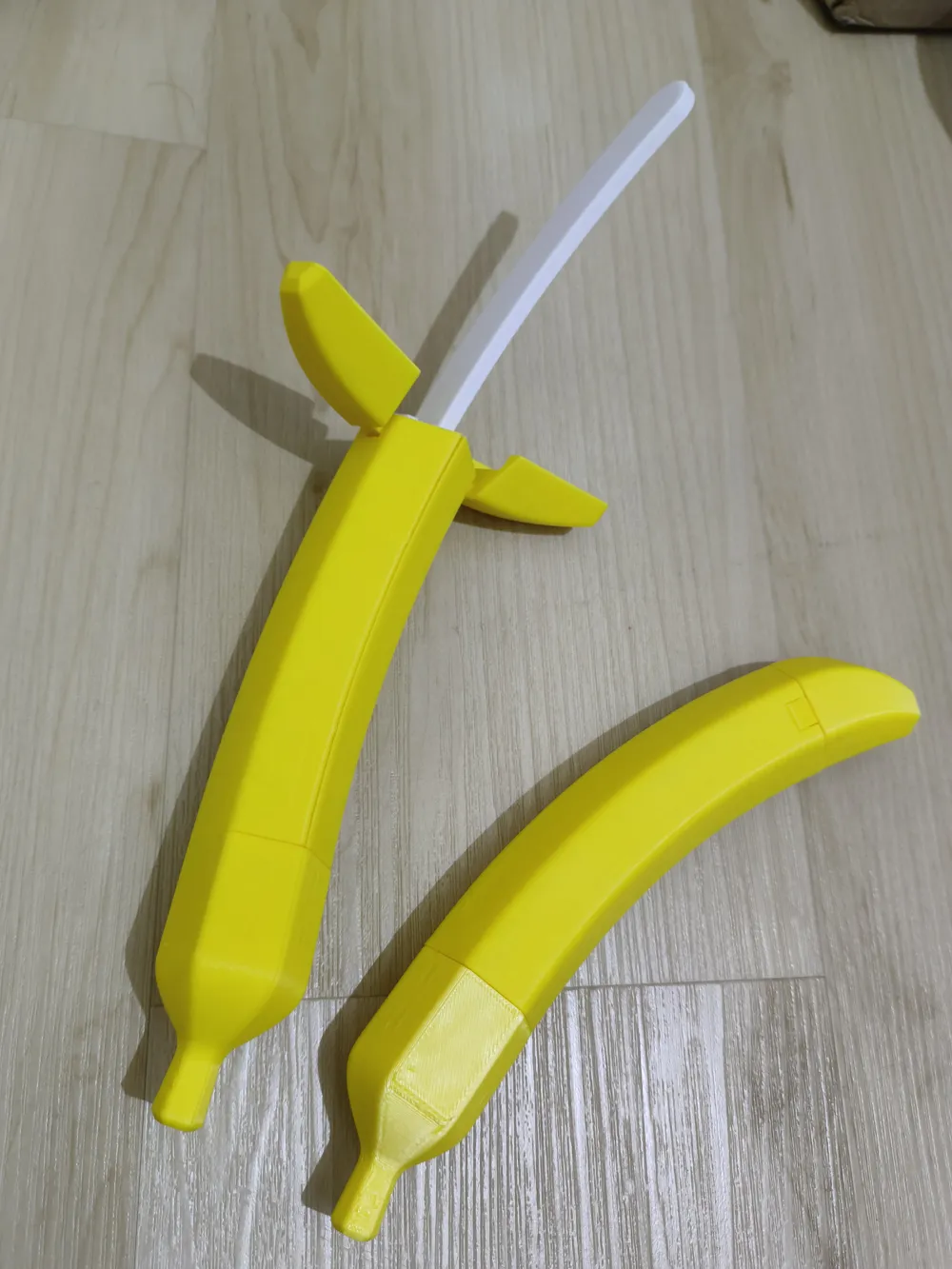
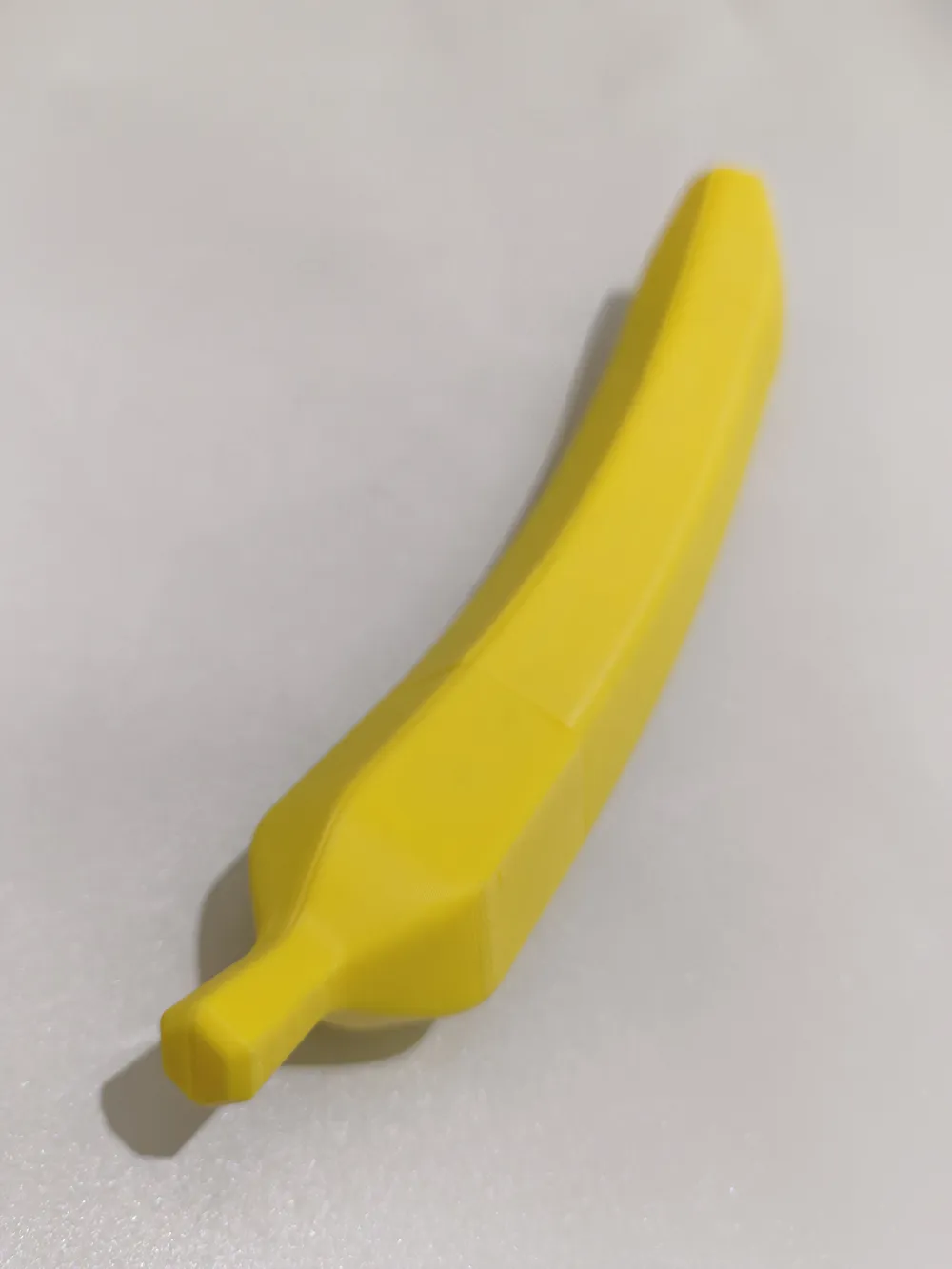
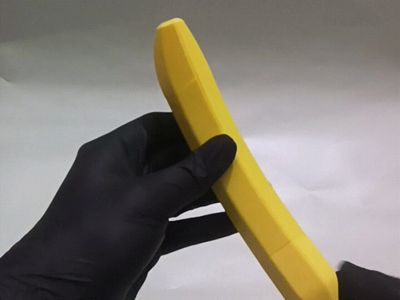
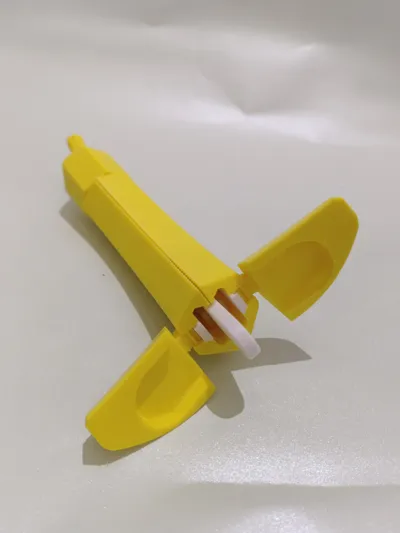
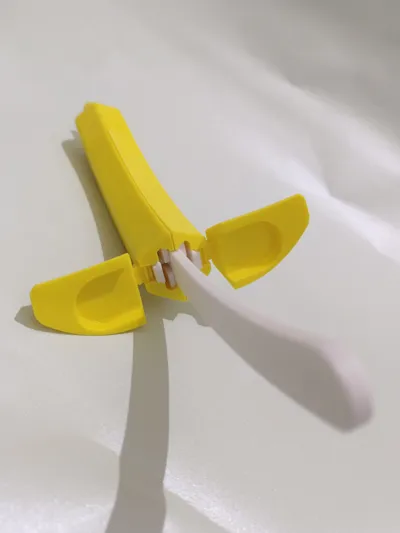
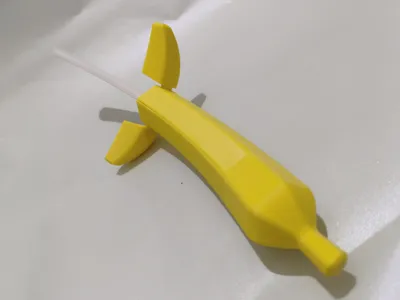
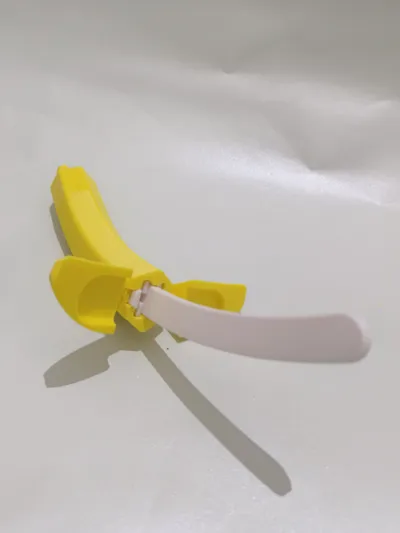
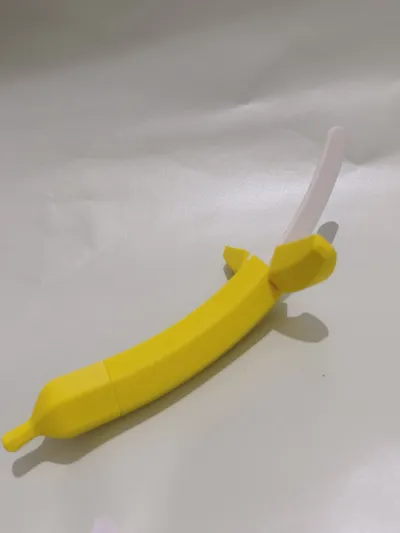
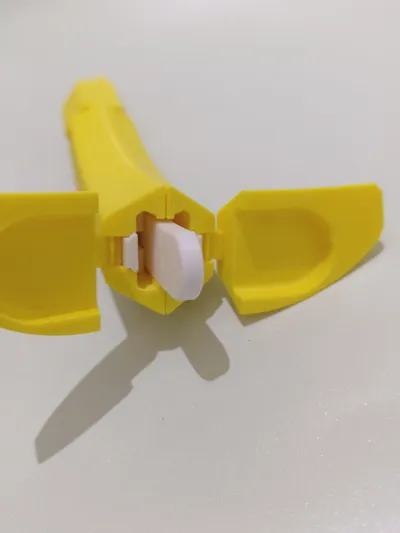




This is a banana that hides an over-engineered OTF knife inside 🍌🔪 Twist the stem 90° to open peel, another 90° to deploy the blade. A silly but serious fidget toy from the Nanachaku universe.
⚙️ Note: This model includes several tight-fitting parts with precise clearance tolerances.
Please make sure your printer is well-calibrated for extrusion, flow rate, and dimensional accuracy before printing — a small deviation may affect the smoothness of the mechanism.
🔧 Update – Durability Improvement (Spring Stress Relief 20260130)
What’s updated
In the original Banananife design, the upper spring remained under compression when the banana peel was fully closed.
Over time, this constant preload caused spring fatigue, which could lead to unintended blade deployment or failure to hold the blade in the extended position.
What’s changed
I’ve added a stress-relief chamfer to the spring housing latch area.
This creates a small clearance zone that allows the spring to fully relax when the knife is closed, instead of staying under continuous compression.
Why this matters
- Eliminates long-term spring fatigue
- Greatly improves durability when the model is stored and not in use
- Prevents spontaneous blade ejection caused by spring creep
- No change to assembly process or external appearance
This update is specifically aimed at play durability and long-term reliability, not just “it works once”.
What’s updated
In the original Banananife design, the upper spring remained under compression when the banana peel was fully closed.
Over time, this constant preload caused spring fatigue, which could lead to unintended blade deployment or failure to hold the blade in the extended position.
What’s changed
I’ve added a stress-relief chamfer to the spring housing latch area.
This creates a small clearance zone that allows the spring to fully relax when the knife is closed, instead of staying under continuous compression.
Why this matters
- Eliminates long-term spring fatigue
- Greatly improves durability when the model is stored and not in use
- Prevents spontaneous blade ejection caused by spring creep
- No change to assembly process or external appearance
This update is specifically aimed at play durability and long-term reliability, not just “it works once”.
🆕 Update Notice (20251029)
This is an improved revision of Bananife based on community feedback 🧩
Several parts have been dimensionally fine-tuned for smoother action and easier assembly:
- Banana body
- Banana peel stick
- Peel stick stopper
- Spring housing
- Main spring
- Banana blade
If you’ve printed the previous version, I recommend reprinting these updated parts for better fit and smoother operation.
The changes mainly improve track alignment, spring response, and clearance control, making the overall mechanism more reliable and less sensitive to printer tolerance differences.
Bananife – Improved Revision (Defect Feedback Update)
🛠️ Improvements
- Banana peel stick falling off track
– Adjusted the track geometry and added proper clearance to prevent it from jumping out during motion. - Blade running rough in spring housing track
– The upper face of the track was an overhung bridging area that caused friction.
– Increased the bottom clearance and slightly reduced the blade thickness for smoother sliding. - Small stopper difficult to assemble
– The stopper part was too tiny to handle. It’s now enlarged as much as possible,
but you may still need a tweezer to insert it easily.
🔧 Troubleshooting Guide
- Blade not popping out when launched
– Check the smoothness of the track inside the spring housing.
Rough surfaces may block the blade. Polish the sliding face lightly to restore free movement. - Banana peel difficult to open or close
– The peel stick may be too tight in its track.
Repeat Step 2 of the assembly guide: slide the peel stick in and out manually several times.
PLA will gradually wear in and become smooth.
You should be able to move the peel stick easily with your pinky once it’s properly fitted. - Blade deploys but cannot retract after a day or two
– PETG leaf springs can deform slightly when left compressed for a long time (material curing).
To fix this, swap two of the four springs — move one from top → bottom and one from bottom → top.
⚠️ Do not interchange all four, or the mechanism may stop deploying.
Behind the design
It’s been over a month since my last upload — feels like ages since I last dropped by to say hi to the MakerWorld community 😄
I’ve always wanted to extend the banana weapon series after Nanachaku, but couldn’t quite decide what kind of weapon would fit next. Then one day, while exploring the Creator Center (yes, after half a year on MakerWorld — I only just discovered it 😅), I stumbled upon the OTF knife section.
That moment changed everything. The designs there were amazing — clever, functional, and surprisingly popular. I studied how real OTF knives work, compared them with the MakerWorld versions, and felt instantly inspired. I wanted to make something uniquely mine, something curved, complex, and just the right amount of over-engineered.
Most OTFs are straight. Curved ones exist, but they’re notoriously difficult — even small deviations can jam the blade. So I thought:
“What if I make a curved OTF knife that’s still smooth and reliable, and hide it inside a banana?” 🍌
From there came months of experiments — figuring out how to make the peel open first, then the blade deploy, all while keeping no loose parts, short print time (<5 hrs), The most challenging part was creating a spiral sliding guide that lets one twist motion control everything from peel → blade → retract.
And yes, I could have made it simpler. But as an industrial designer, I just can’t resist giving myself extra problems 🤣
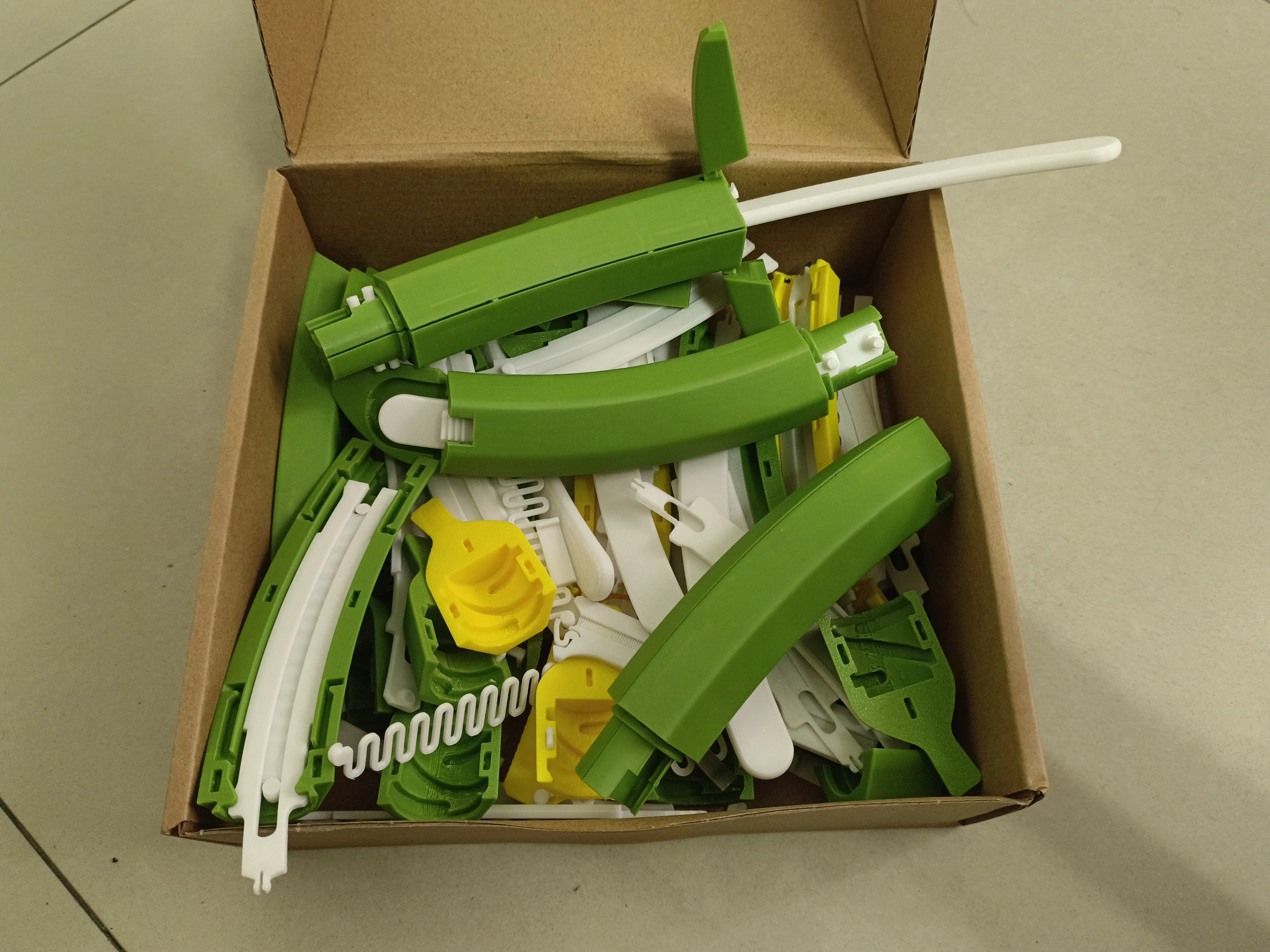
LOOK AT ALL THESE RAW BANANASSSS.
Design for makers (AMS or not)
While preparing my print profiles, I noticed something interesting — most downloads on MakerWorld actually come from non-AMS users. Even the same model tends to get way more downloads if it’s easy to print without AMS.
So I made sure Bananife works great even on a single-color printer. The gear and motion parts were intentionally split into separate pieces for better printability and cleaner tolerances. That way, anyone can print it reliably without tuning complicated slicer parameters — just drag, drop, and print.
I wanted this to be a model that’s fun to assemble, smooth to operate, and frustration-free to print, whether you own an AMS or not.
How it works
- Rotate the banana stem 90° → the peel opens.
- Rotate another 90° → the blade slides out automatically.
- Reverse to retract and close.
No screws, 2 drop of glue, just geometry, gravity, and over-engineering spirit.
Printing guide
- Nozzle: 0.4 mm
- Layer height: 0.2 mm
Material:
Yellow parts: PLAWhite parts: PETG
- The slicer settings are already fine-tuned in the included .3mf file, just load and print directly.
- Print time: ~4 hours
Tips
- If the blade jams:
Check the inner track area — it’s printed as a bridge over support, so the dimension there may be slightly off.
Lightly sand or scrape that surface until it feels smooth; the blade should then slide freely. - I also experimented with using Bambu support filament for the raft interface, and it gave me much more consistent results on those bridging sections.
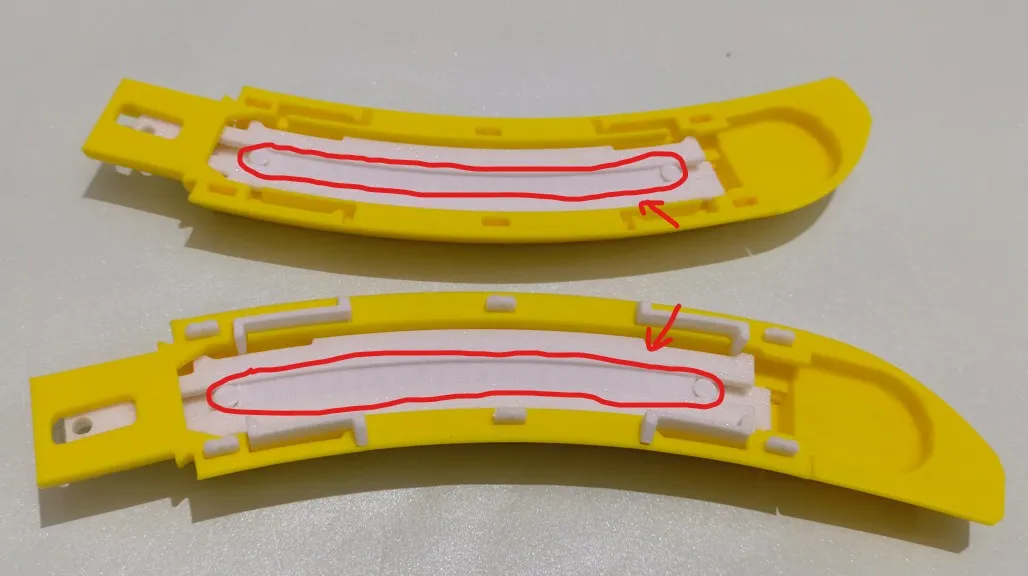
Make sure the blade slides smoothly along the track.
If you feel any roughness while moving the blade, check for uneven spots and polish them carefully to prevent the blade from getting stuck during movement.


This is the result when everything is well-polished. There might be slight differences between each 3D printer, but with a bit of patience and effort, you can achieve this same smooth and satisfying OTF banana action 🍌✨
It’s been a while — glad to be back with Bananife 🍌🔪
If you liked Nanachaku, this is its over-engineered cousin.
This one’s designed to print well even without AMS, so give it a go !
Post your photos or GIFs; I’d love to see your print in action!
If anything sticks, drop a comment with your photo and settings — We will solve it together.
A Maker from Xiaohongshu kindly shared a beautiful assembly video of the Bananife.
I’ve received permission from the creator to include the link here — you can check it out for an easy visual guide:
👉 [http://xhslink.com/o/7NqtpsTnuVJ]
Sorry that I didn’t make an assembly video myself this time 😅
His video explains the steps really well and should help you put everything together smoothly.
Big thanks to him for letting me share it with everyone! 🙏🍌
Boost Me (for free)
And if you enjoyed this design, please give it a BOOST ⚡ — it really helps this banana get noticed in the jungle of MakerWorld! 🙏🍌
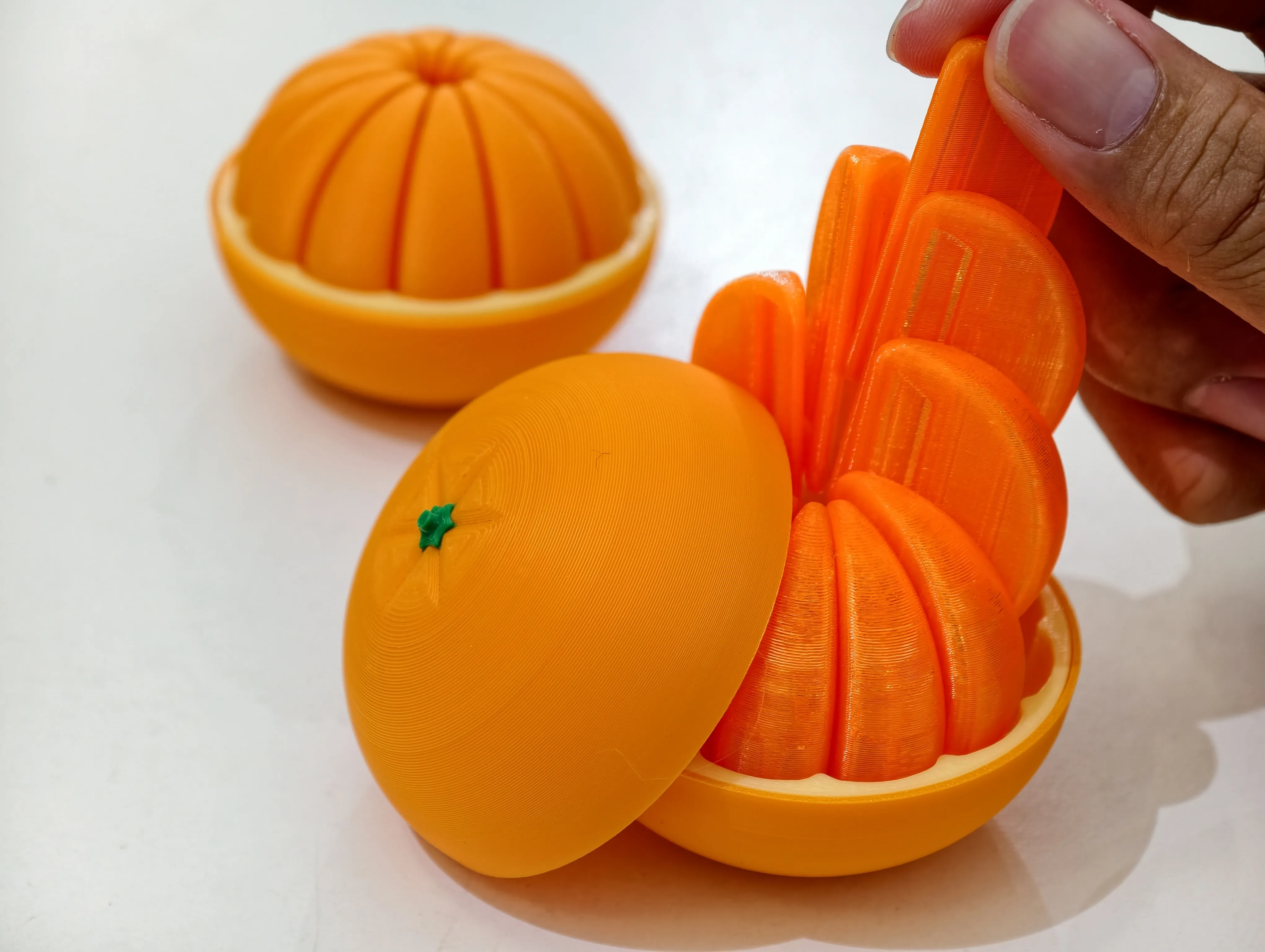
Built a chained mechanical citrus.
Drop test approved.
Click the Limau Link image above to explore. 🍊
Documentation (1)
License

You shall not share, sub-license, sell, rent, host, transfer, or distribute in any way the digital or 3D printed versions of this object, nor any other derivative work of this object in its digital or physical format (including - but not limited to - remixes of this object, and hosting on other digital platforms). The objects may not be used without permission in any way whatsoever in which you charge money, or collect fees.


Comment & Rating (412)