
Automatic Waste Sorting System
Print Profile(1)

Description
Smart Sorting Conveyor
🚀 Project Overview



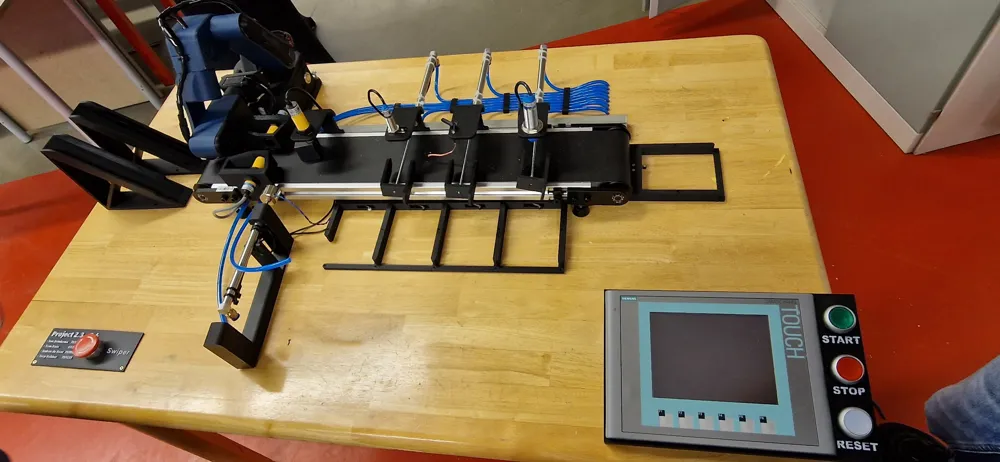
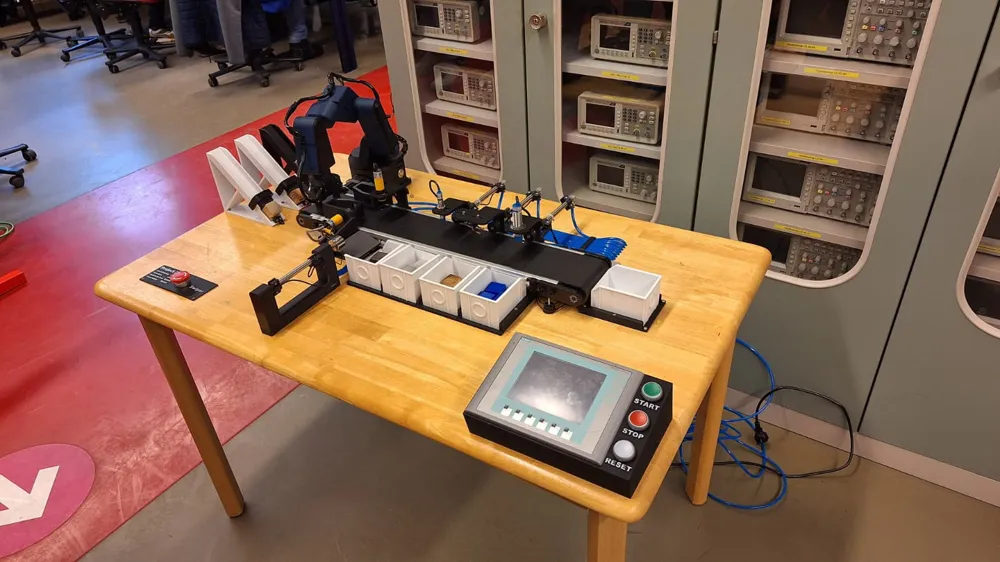
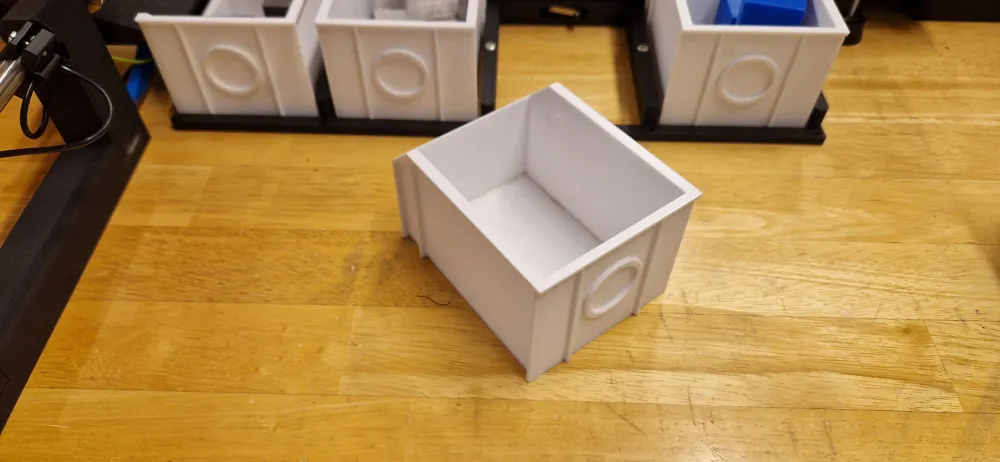
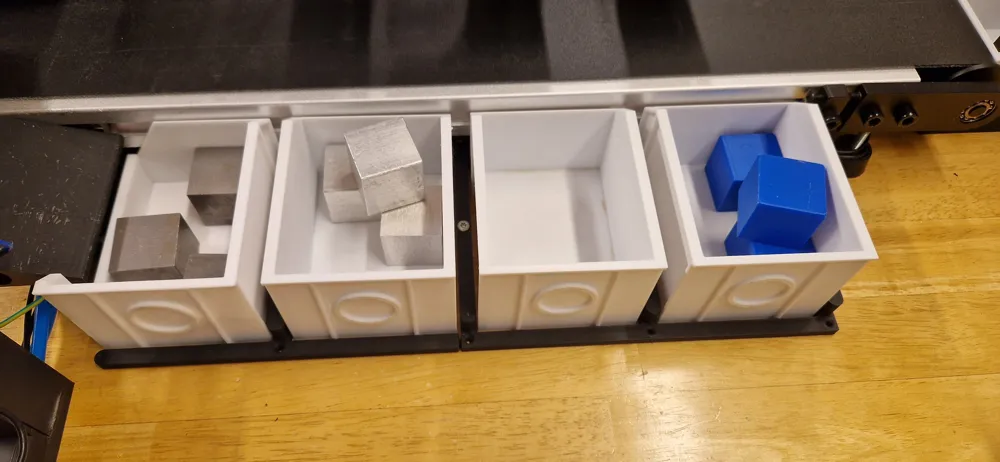
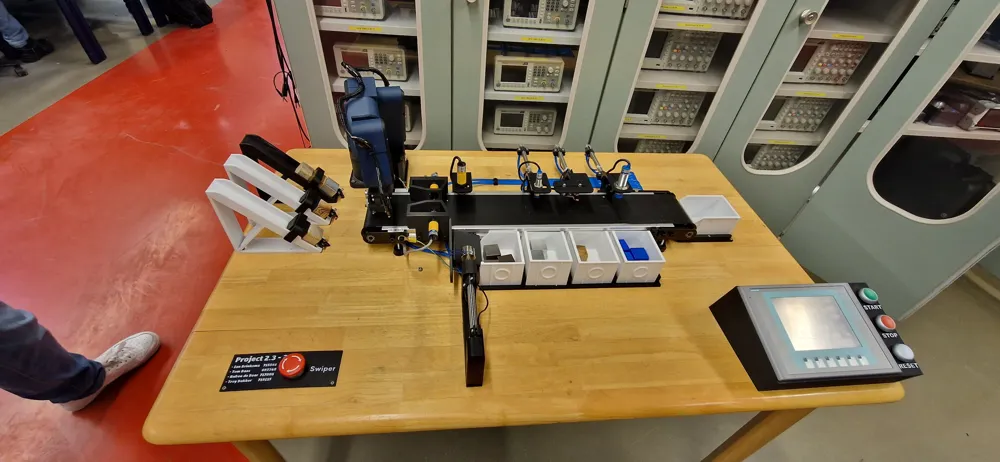
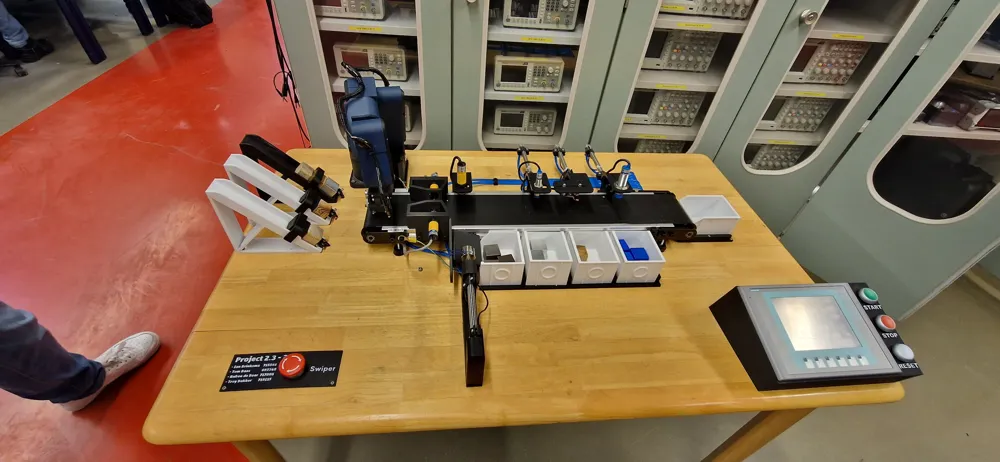
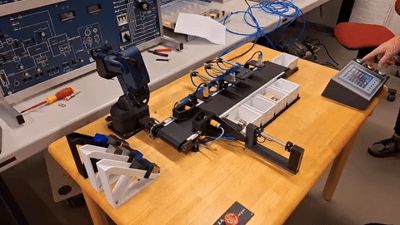
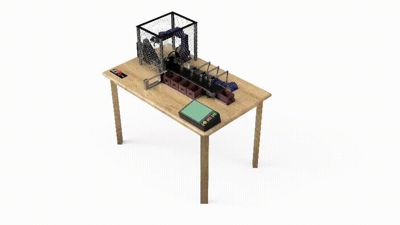
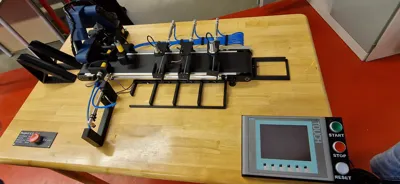
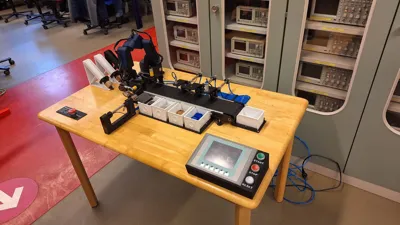
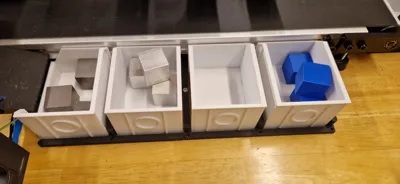
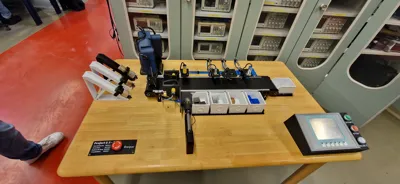
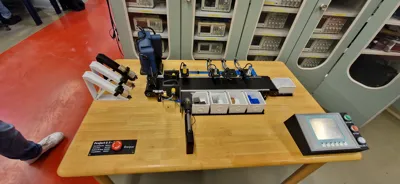
The Smart Sorting Conveyor is a fully functional sorting machine capable of automatically identifying and separating five different materials into dedicated containers.
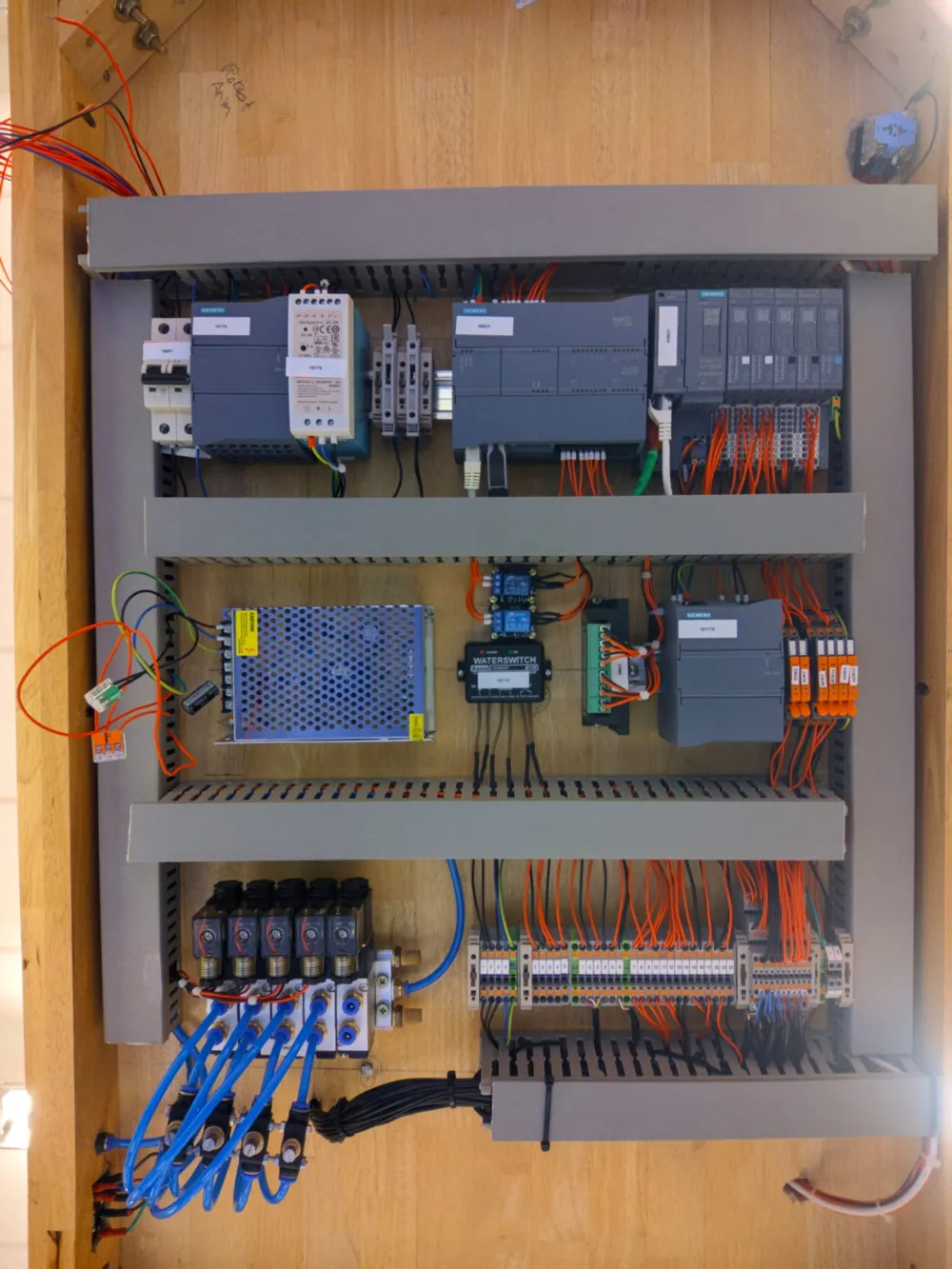
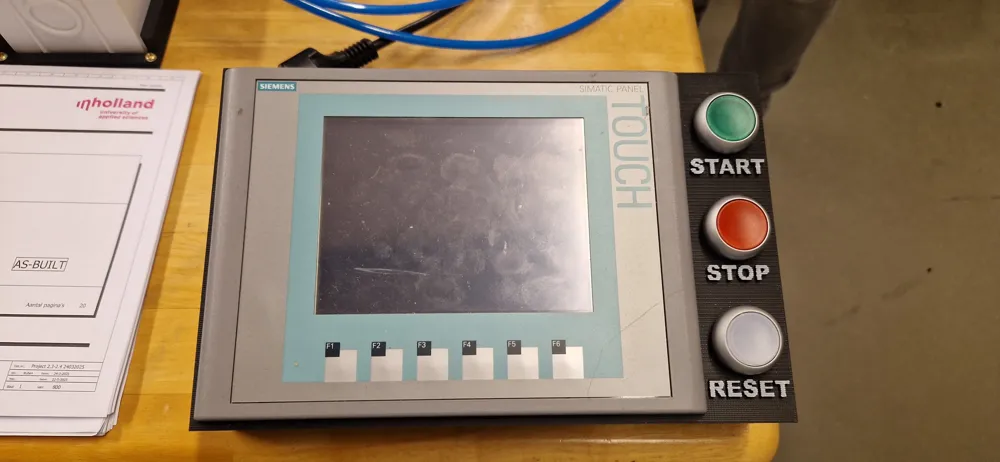
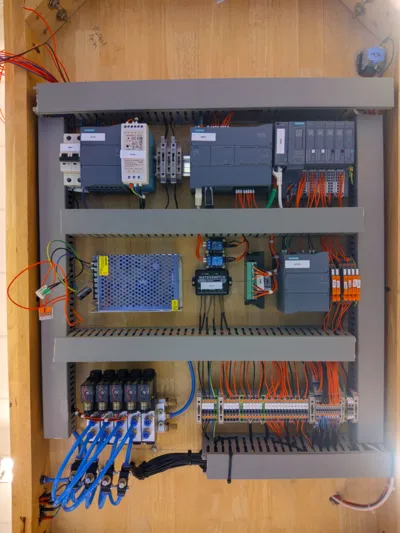
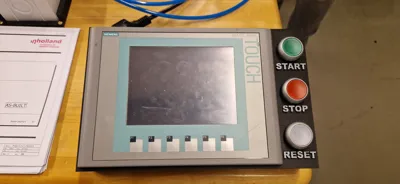
It brings together mechanical engineering and electronics in one intelligent system, powered by a Siemens S7-1200 PLC and a sleek Human Machine Interface (HMI) that keeps the operator informed at every step.
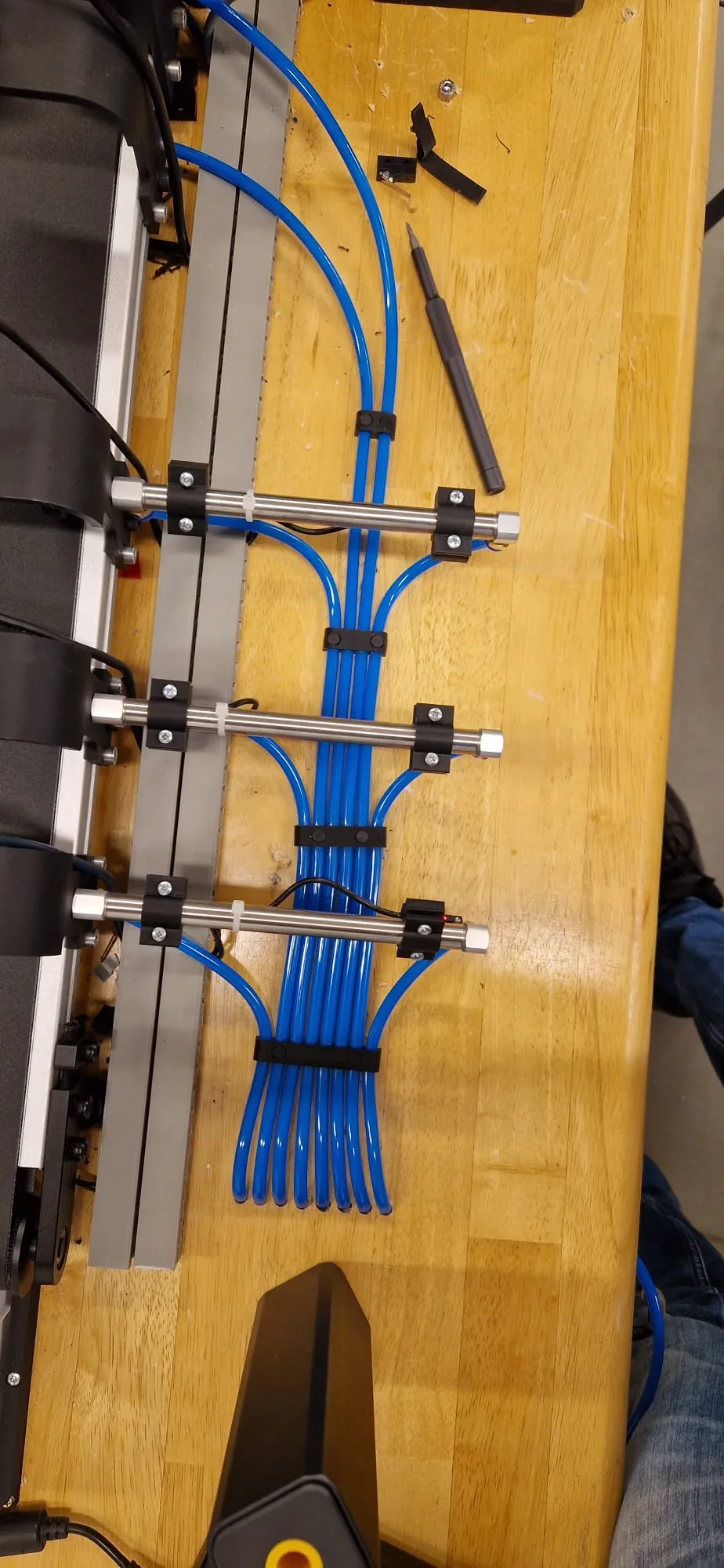
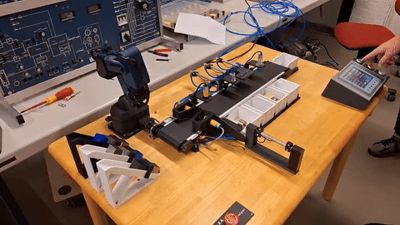
With just a single push of the green button, the system comes to life — materials travel along the conveyor, sensors detect their type, and pneumatic actuators swiftly guide each item into its proper bin.
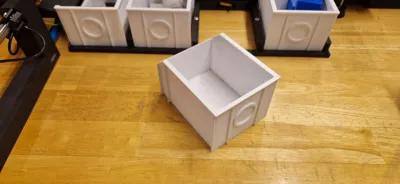
If a container fills up or a fault occurs, the machine immediately halts and highlights the issue on the HMI display, ensuring safety and reliability.
🔩 Key Features
- Smart Control: Siemens S7-1200 PLC with custom ladder logic
- Interactive HMI: Real-time progress tracking and alarm visualization
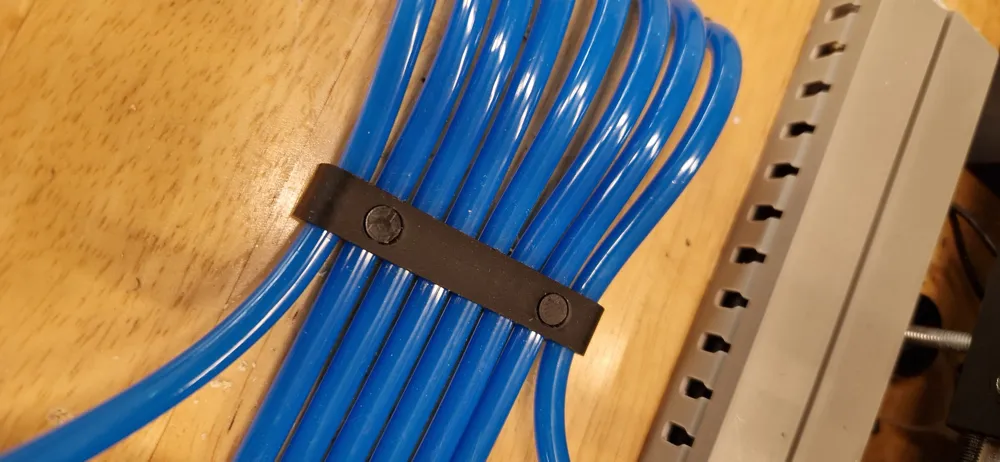
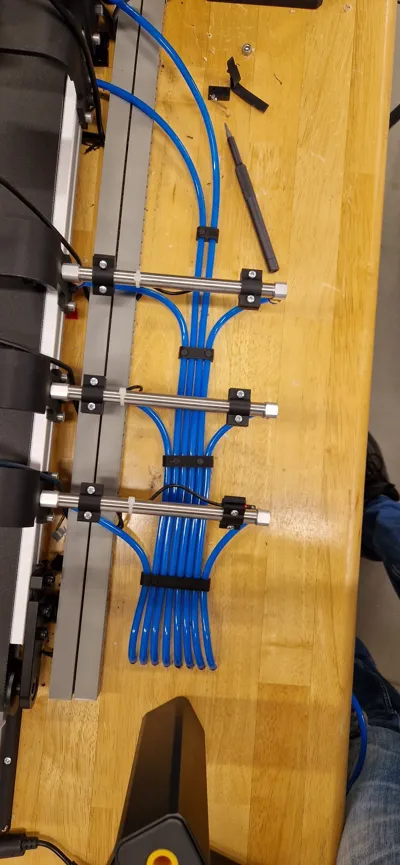
- Robust Mechanics: Aluminum frame, modular conveyor, pneumatic pushers
- Precise Detection: Optimized sensor positioning for accurate sorting
🧠 Development Journey
The project was developed in three clear phases:
- Concept & Requirements – defining goals and system functions
- Detail Design – refining the frame, sensors, and pneumatic layout
- Realization & Testing – assembly, programming, and troubleshooting
Major challenges included fine-tuning the sensor timing and synchronizing pneumatic movement with the control logic. After iterative testing and debugging, the result is a smooth, efficient sorting process with a professional-grade interface.
🌍 The Result
A compact, functional, and scalable automated sorting system that demonstrates how mechanics, electronics, and software can work seamlessly together.
Designed for learning, teaching, or prototyping — the Smart Sorting Conveyor captures the essence of automation in motion.
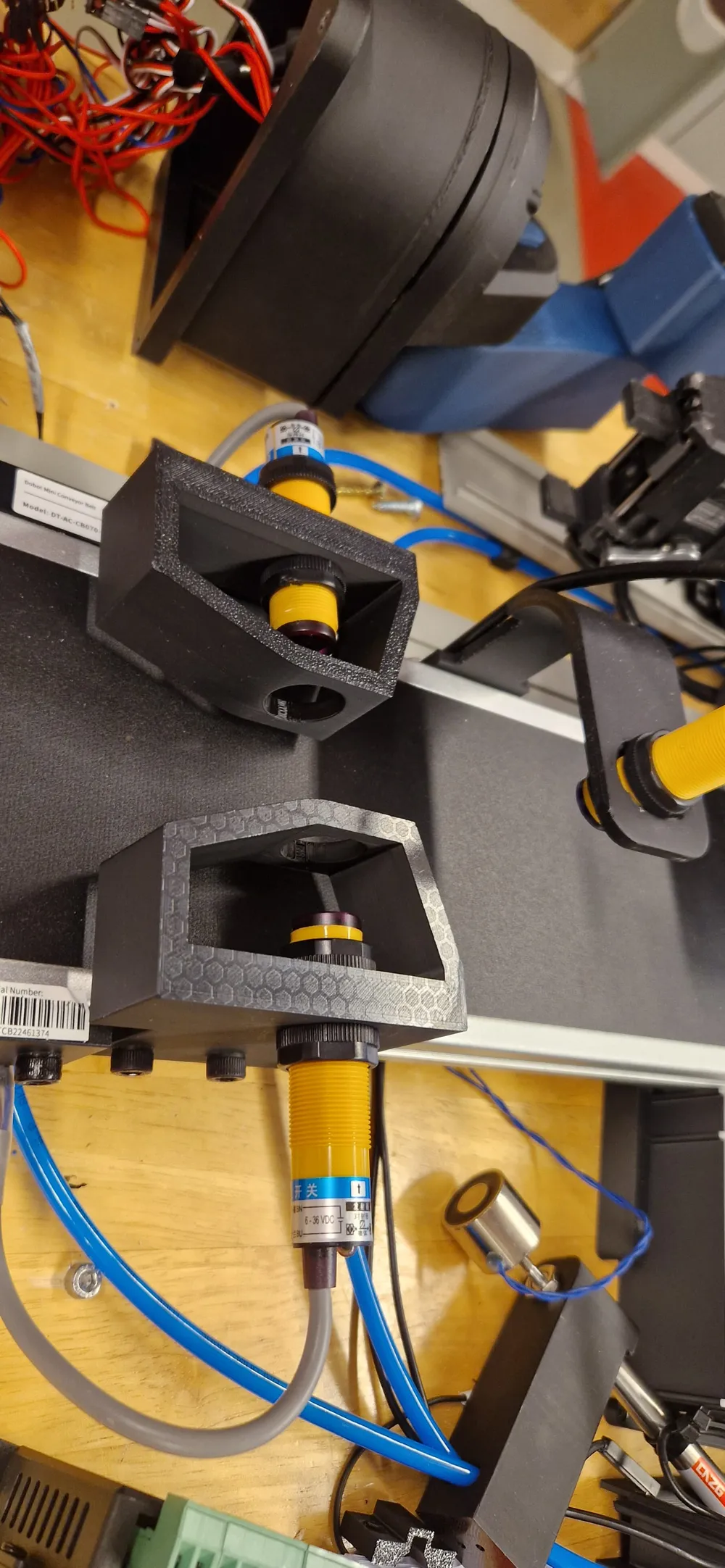
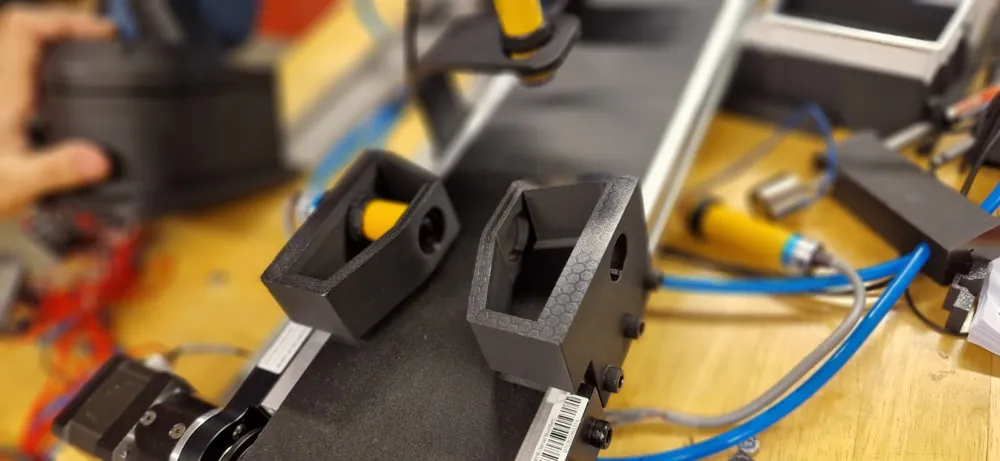
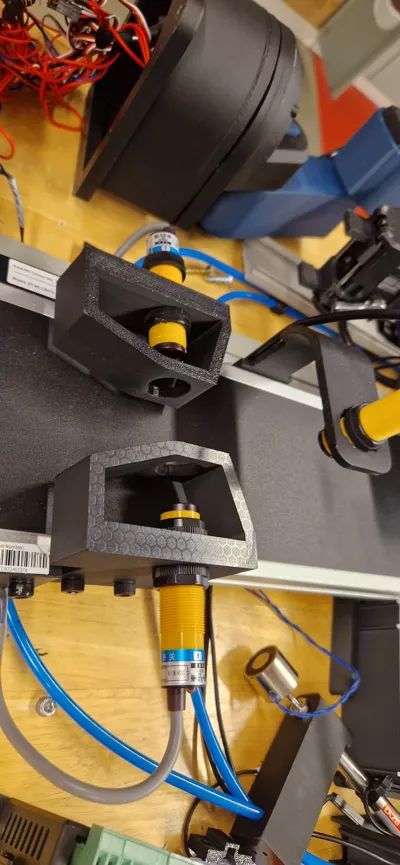
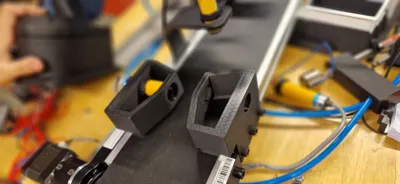
Once the material is placed, it is guided into the correct position via a centering guide. Two IR sensors are integrated into this guide: one functions as a transmitter, the other as a receiver.
When the material interrupts the IR beam, the receiver detects this and the sensor stops outputting the signal. Because the IR sensor operates on 12V, this cannot be read as input by the PLC; a relay is used for this purpose. When the IR sensor detects something, the sensor switches, and the relay becomes active. This causes the NO contact (connected to 24V) to switch on, which then reads an input to the PLC.
Ferrous metals: Metals are measured with an inductive sensor, but because non-ferrous and ferrous metals must be sorted, a separation must be made between them. One characteristic of ferrous metals is their magnetic properties; an electromagnet is used for this. The attached metal will be detected by the IR sensor above, as the ferrous metal remains attached to the magnet. And so the cylinder will slide inward.
Non-ferrous metals: Because the ferrous metals are already separated, we can use the inductive sensor. If the inductive sensor detects a metal, the cylinder will extend. This also has the advantage of picking up any ferrous metals that haven't been separated by the magnet.
Organic material: Organic material (wood) has the property of retaining water well. To detect the presence of moisture in this material, a water switch powered by 12VDC was chosen. This sensor works with two electrodes that are in contact with the material through two copper rails. When the organic material is moist, a small electric current can flow between the electrodes. The sensor detects this conduction, which then switches the built-in, potential-free relay. This relay is connected to the input of the PLC.
Capacitive material: The capacitive material influences the sensor's electric field due to its dielectric constant. In this case, blocks filled with water are used. These blocks are detected by the capacitive sensor and send a signal to the PLC.
Boost Me (for free)
License

You shall not share, sub-license, sell, rent, host, transfer, or distribute in any way the digital or 3D printed versions of this object, nor any other derivative work of this object in its digital or physical format (including - but not limited to - remixes of this object, and hosting on other digital platforms). The objects may not be used without permission in any way whatsoever in which you charge money, or collect fees.


Comment & Rating (20)