
Insulated Chapstick Case
Print Profile(2)
Description
Boost Me (for free)
Did you know? MakerWorld gives out free Boost tokens to active users! These tokens can be used to support any model you love -- at no cost to you. You may not even know that you have Boost tokens. But they are a big help to creators. Please show your appreciation by boosting the models that you like.
Insulated Chapstick Case
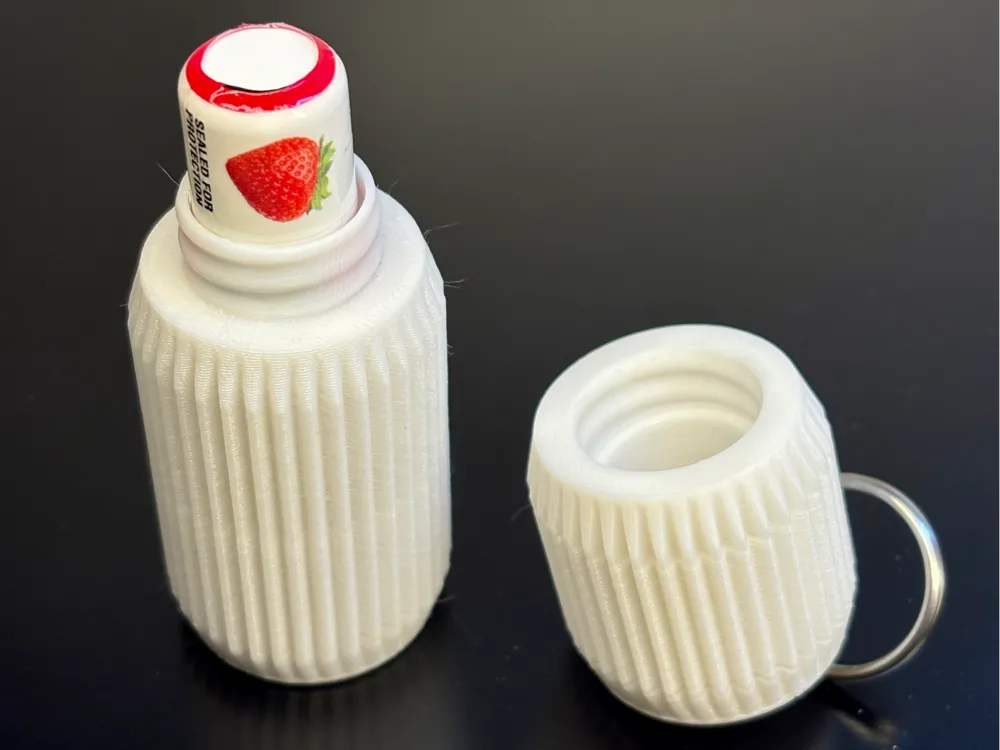
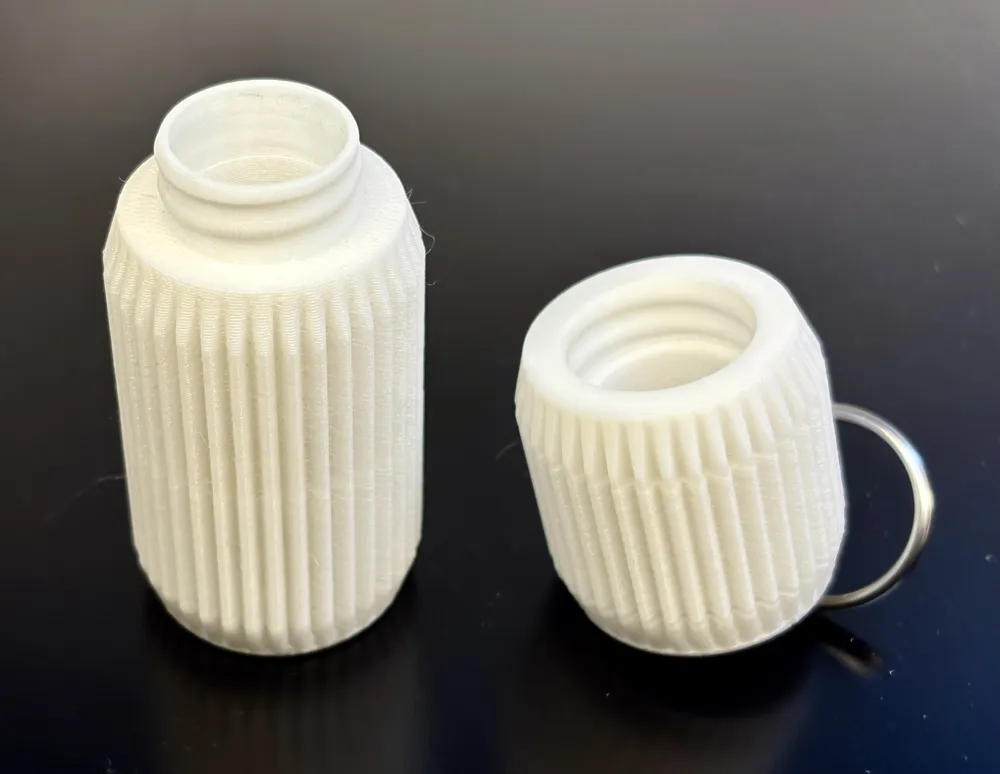
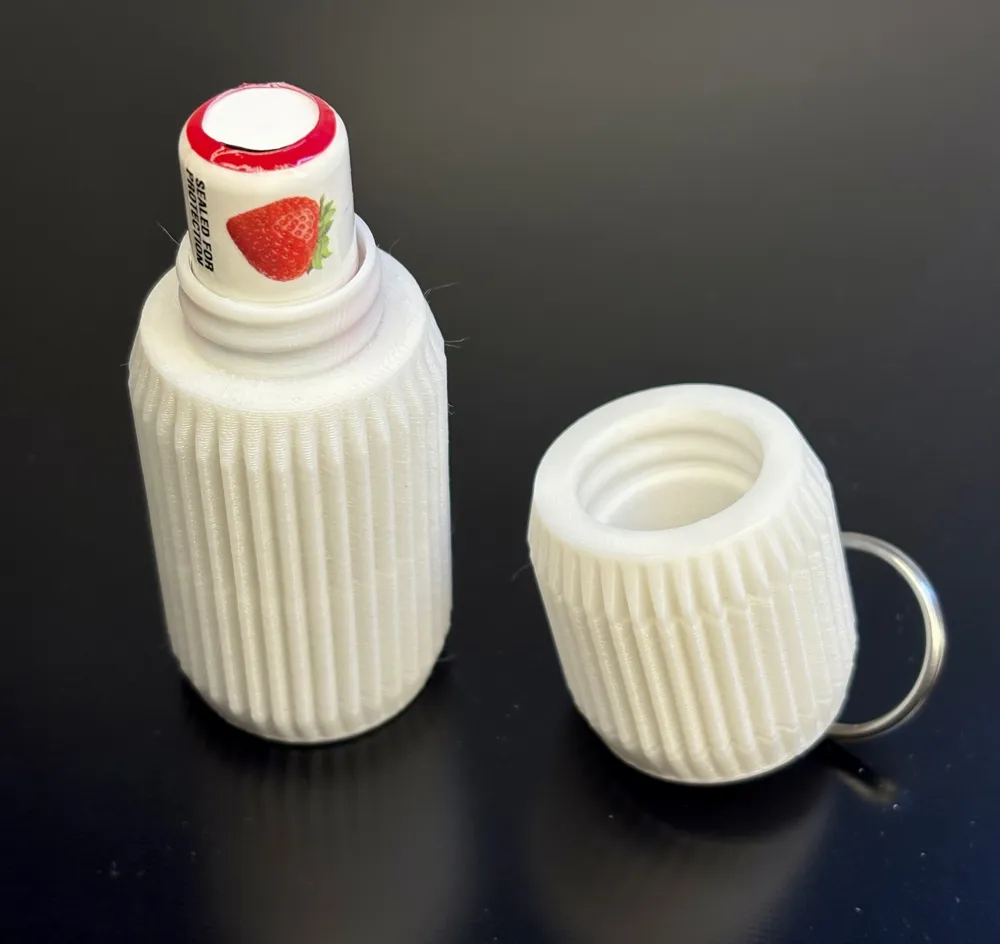
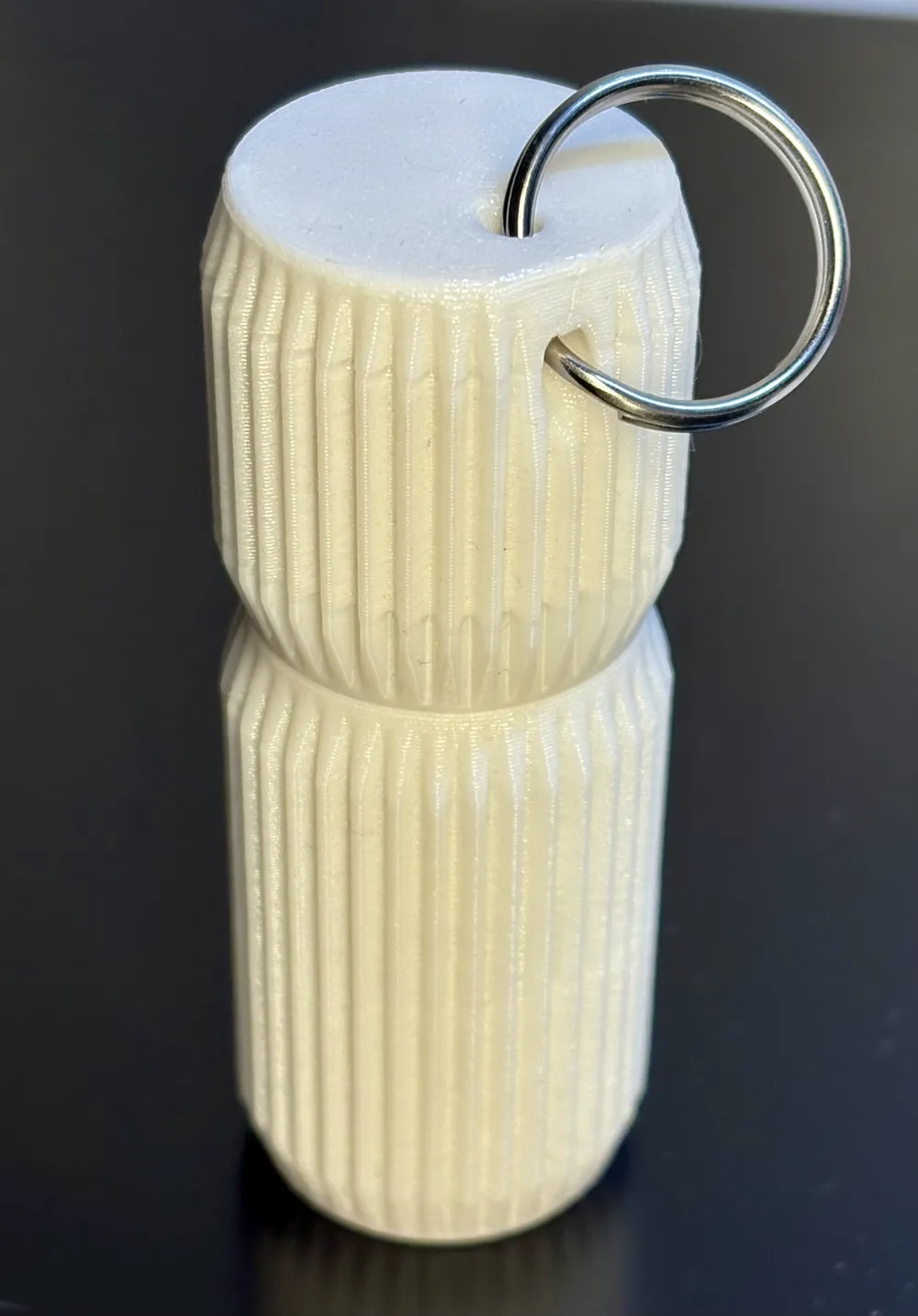
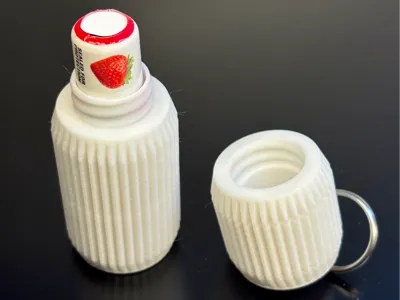
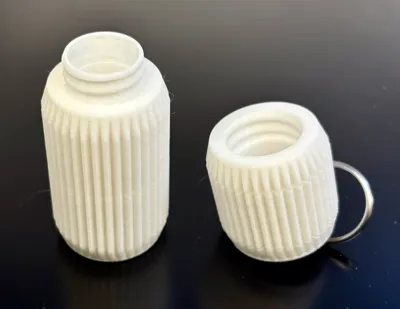
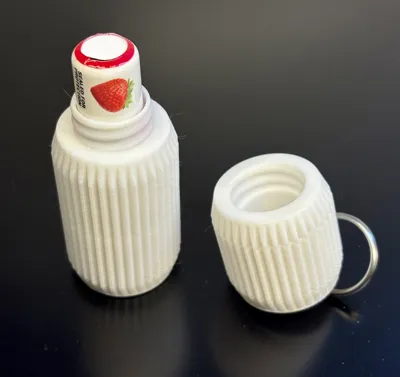
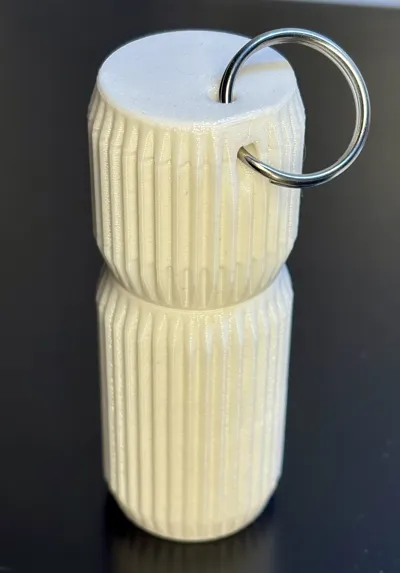
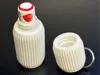
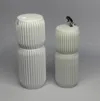
Meet the tiny fortress your chapstick deserves—double walls, air gap, and heat‑dumping fins that laugh at summer dashboards. It won’t stop the sun, but it’ll stall it long enough to keep your balm solid instead of soup.
This double‑wall design traps a 4 mm layer of still air that slows heat transfer by replacing solid plastic with a low‑conductivity gap. External fins increase surface area so the outer shell sheds incoming heat to the surrounding air before it reaches the cavity.
Print in white, or another light colored/reflective material, to decrease the amount of heat absorbed, and keep your chapstick cool. Try to keep it away from sunlight.
It was designed for chapstick, but it should work well with lip balms, or other things, that are less than about 66 mm long and 16 mm in diameter.
************
UPDATE: I uploaded a new larger version with a print profile called “For Larger Tubes.” I recognize that there are lots of lip balms that are bigger than Chapstick. This newer version should work for most larger tubes.
Guidance for using the new version For Larger Tubes:
- Maximum Diameter: Up to 18.7mm.
- Maximum Height: Up to 78mm (ensures the screw-cap clears the top of the tube).
If your lip balm tube is smaller than those dimensions, this new larger version should work fine.
************
Details
This insulated chapstick case uses three deliberate thermal strategies: a low-conductivity plastic shell, a narrow trapped-air cavity, and external fins that increase convective heat rejection. These three elements work together to slow heat flow into the chapstick compartment rather than stop it, producing a useful time delay before the internal temperature approaches the exterior temperature.
Double-wall and 4 mm air gap
The 4 mm air gap functions as the primary insulating element. Air has very low thermal conductivity compared with solid plastic, so replacing solid plastic with a trapped air layer raises the overall thermal resistance of the wall assembly. A narrow gap of about 4 mm suppresses bulk convective circulation inside the cavity, forcing heat transfer across the gap to occur mainly by conduction through the air and by radiation across the cavity. Both conduction through still air and radiation are much slower than conduction through a continuous solid, so the air gap reduces instantaneous heat flux into the inner sleeve.
Infill connections and thermal bridging
The cubic infill at 5% introduces small solid connections between inner and outer walls that behave as thermal bridges. Each bridge provides a short, relatively high-conductance path for heat to bypass the insulating air. The net thermal resistance of the assembly is therefore the parallel combination of (a) the resistance through the air gap and shells and (b) the resistances through the bridges. Low-density, small-feature infill reduces the number and cross-sectional area of those bridges, increasing overall resistance, but any continuous solid connection still increases heat transfer relative to a perfectly isolated sleeve. The practical effect is a modest reduction in insulating performance compared with a fully separated inner sleeve, but the tradeoff gives mechanical support and easier printing.
External fins and surface-area cooling
External fins increase surface area and change the heat transfer process from primarily radiative absorption of sunlight to convective rejection of heat to ambient air. Increased surface area lowers the effective temperature rise of the outer shell for a given incoming heat flux by distributing heat into a larger convective boundary layer and increasing convective heat transfer coefficients at the fin tips. Fins therefore act to delay and reduce the heat that actually reaches the outer wall, which in turn reduces the heat available to cross the air gap and via the bridges. Light-colored or reflective outer surfaces enhance this effect by reducing absorbed radiant heat.
Time-delay behavior and eventual equilibrium
Insulation changes the rate of heat flow, not the final outcome. Heat flows from the hot exterior into the cooler interior until temperatures equalize. This design increases the thermal time constant of the system by raising thermal resistance and adding thermal mass, which buys a finite delay before the chapstick temperature rises. Quantitatively, the time constant scales with the product of thermal resistance and the heat capacity of the inner region and chapstick. In plain terms, the holder makes the chapstick heat up more slowly; on very long timescales or under extreme, sustained exposure the interior will still approach the outside temperature.
Membership
My models are always available for personal use here, for free. But if you would like to sell physical prints of my models, you can do that if you subscribe to my commercial licensing membership. Thanks for your support!
License

You shall not share, sub-license, sell, rent, host, transfer, or distribute in any way the digital or 3D printed versions of this object, nor any other derivative work of this object in its digital or physical format (including - but not limited to - remixes of this object, and hosting on other digital platforms). The objects may not be used without permission in any way whatsoever in which you charge money, or collect fees.


Comment & Rating (26)