
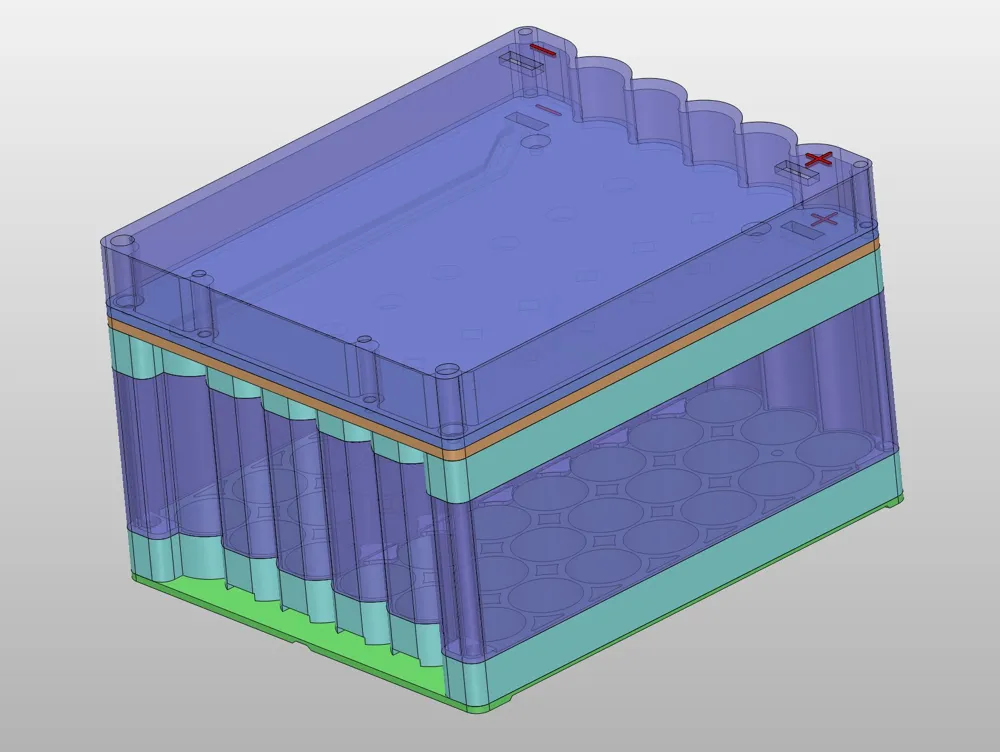
Case for 7S5P 24V li-ion battery, size 2x 7Ah 12v
Print Profile(1)

Description
AGM/gel batteries have a very short lifespan, even if they're never used – after 2-3 years, they dry out, losing their performance completely, and need to be replaced. This is both unsustainable and uneconomical!
Bigger UPSs typically use two 7Ah 12V batteries (connected in series, 24V).
While smaller UPSs (using a single 7Ah battery) don't have a good voltage match with Li-ion batteries (usually 18650 size) (3S is too low, and 4S is too high; the only good solution is to use a 4S LifePo4 replacement), larger UPSs—at 24V—use a 7S Li-ion system, which operates in almost the same voltage range as the original two 12V AGM batteries, are ideally suited.
| Min | Nominal | Max | |
| Li-ion 7S | 21.0v | 25.9v | 29.4v |
| AGM 24V | 21.6v | 24.0v | 28.8v |
As you can see in the table: a Li-ion battery treated by the UPS (charging and discharging) like a regular AGM battery will operate in a slightly smaller voltage range. It won't be charged to full capacity (good! and safer), and it won't be discharged to zero (even better!). This results in a slightly smaller usable battery capacity, but it provides significantly longer life, greater operational safety, reduced wear, and less impact from poor cell balance. All advantages.
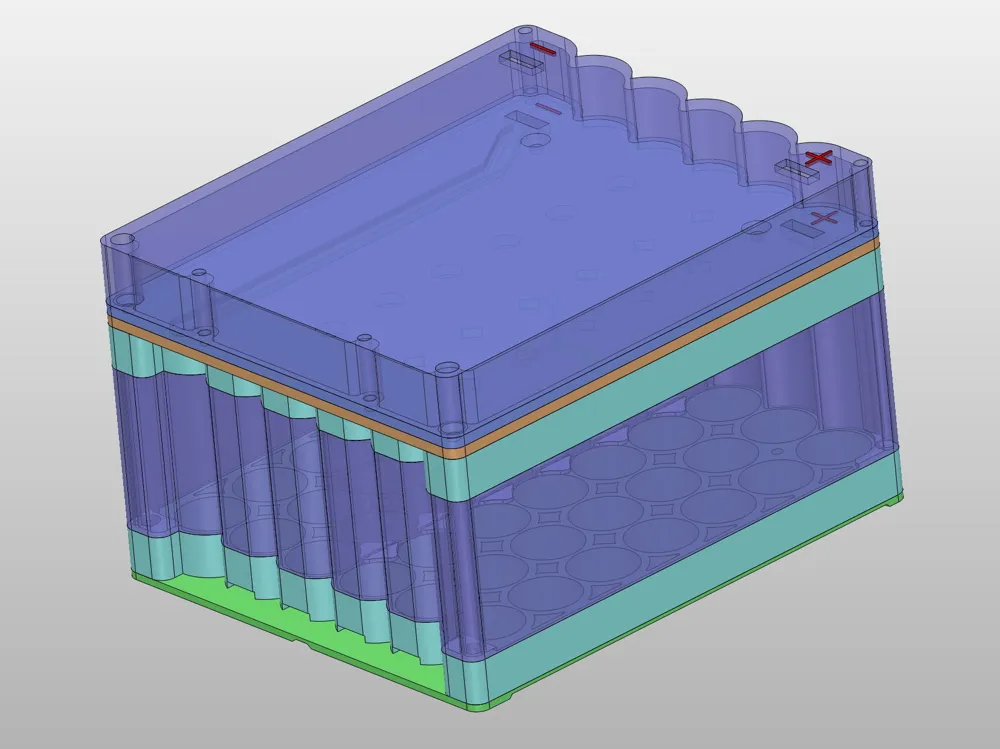
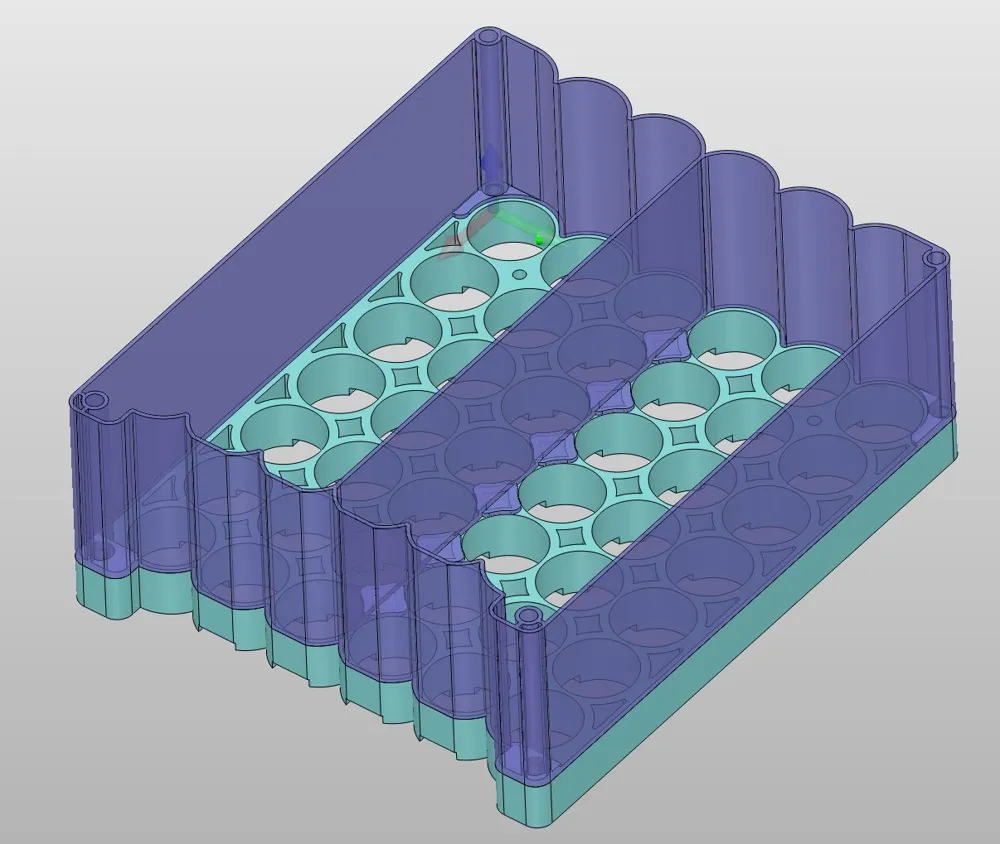
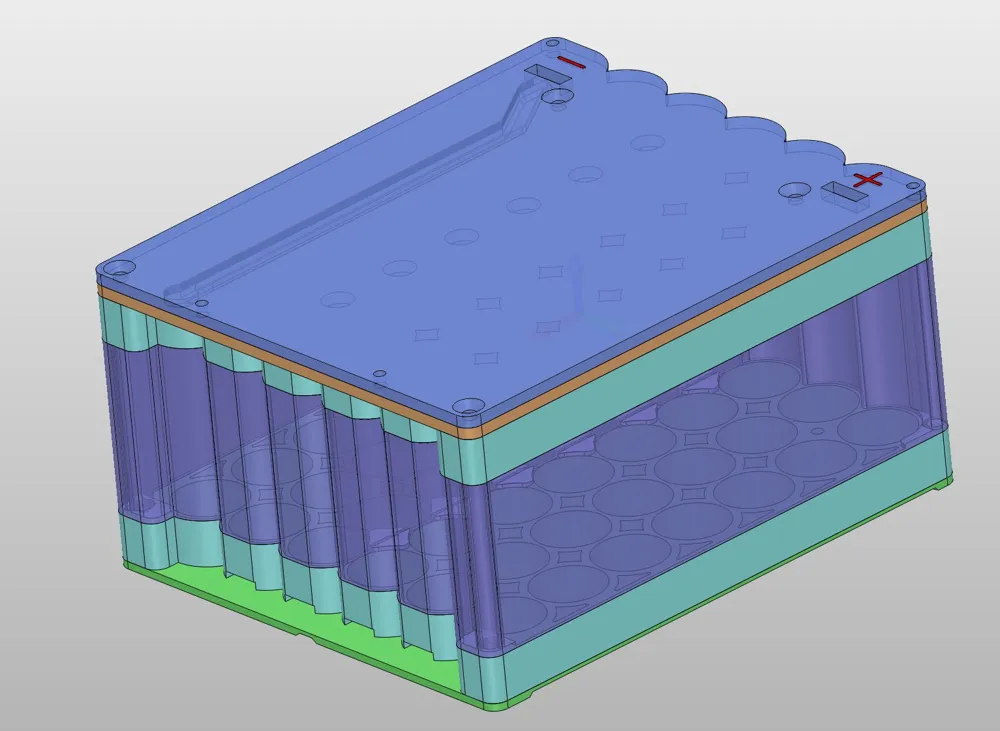
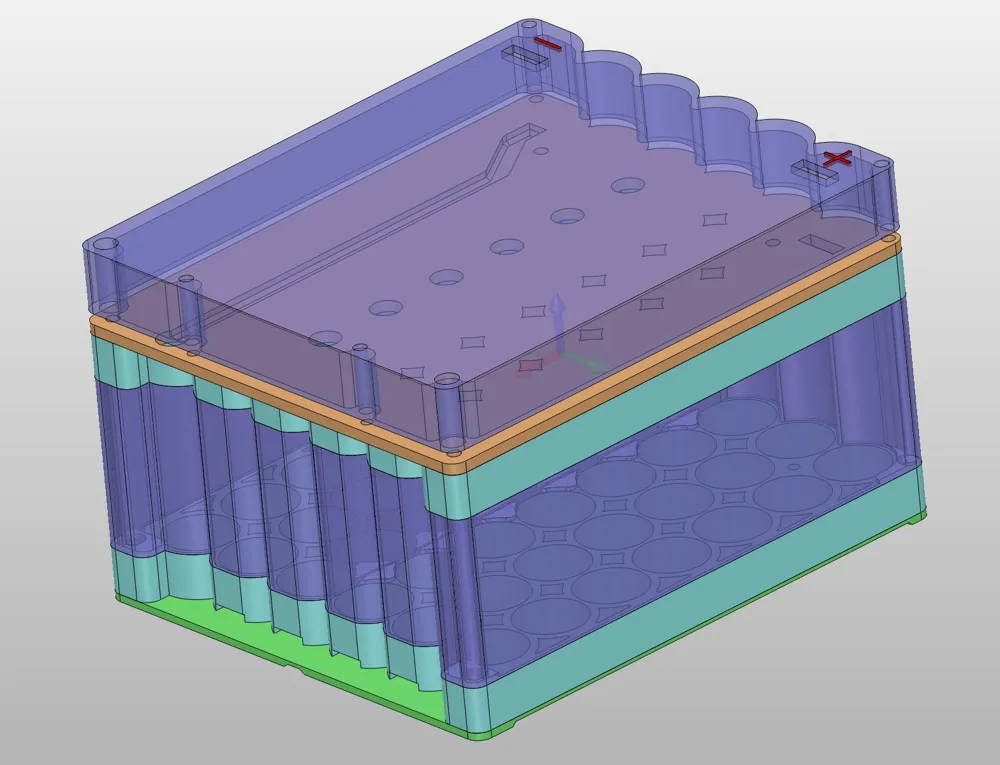
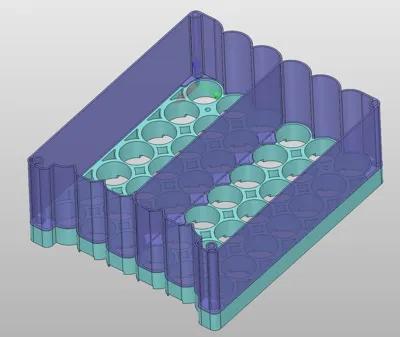
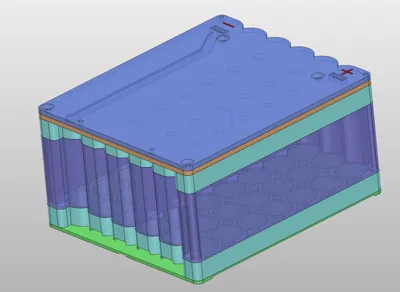
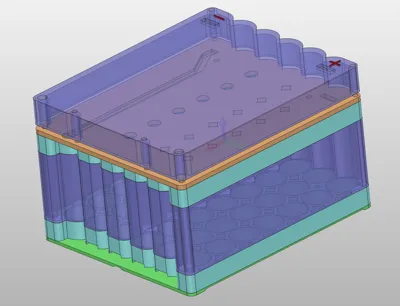
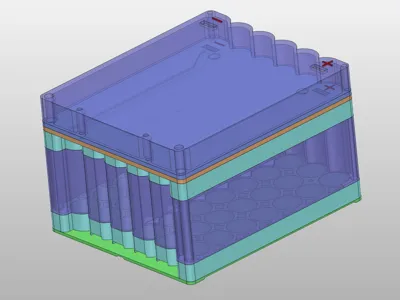
Here's my solution for housing an 18650 in a 7S6P configuration, perfectly sized to fit two standard batteries. This allows the entire unit to fit inside the UPS like original batteries, without the risk of short circuits (like with bare cells).
You can (and should) add a 7S BMS+balancing board (there's plenty of space for it), with a current output adequate to the UPS power (or - the highest you can buy, 60A should be more than enough)
You don't always need to use a 7S6P battery. If your UPS doesn't have much power or you have high-current cells, sometimes a 7S5P or 7S4P battery will suffice. The number of cells in parallel (and their maximum current) determines the maximum current of the entire battery, i.e., the maximum power.
For example, if your UPS has a maximum power of only 800VA (which you probably won't reach anyway), meaning it will draw a maximum of 33A from 24V (35A for safety), then 35A/4 cells in parallel = 8A per cell. For high-current cells, this isn't a problem. But if you have weak, low-current cells that can only deliver up to 3A, then use a 6P battery, and the maximum current is still only 18A, which is a little over 400W/400VA. If you have a UPS >1200VA, use a 6P battery and high-current cells, along with a 60A+ BMS, and you'll have no problem drawing 1400W from the battery!
Of course, the more cells you use, the greater the total capacity you'll achieve, which also means longer backup time (especially at lower loads). But this isn't always important; sometimes just providing backup power during system shutdown is enough. So, it's a waste to build an expensive battery that (we hope) will never need to be used.
License



Comment & Rating (0)