
FlushFit Corner Bracket (No Gaps! No Wobble!)
Print Profile(4)


Bill of Materials


Description
TLDR: A strong, 3-way bracket for building frames without panel gaps. Perfect for wood, acrylic, or hybrid enclosures.
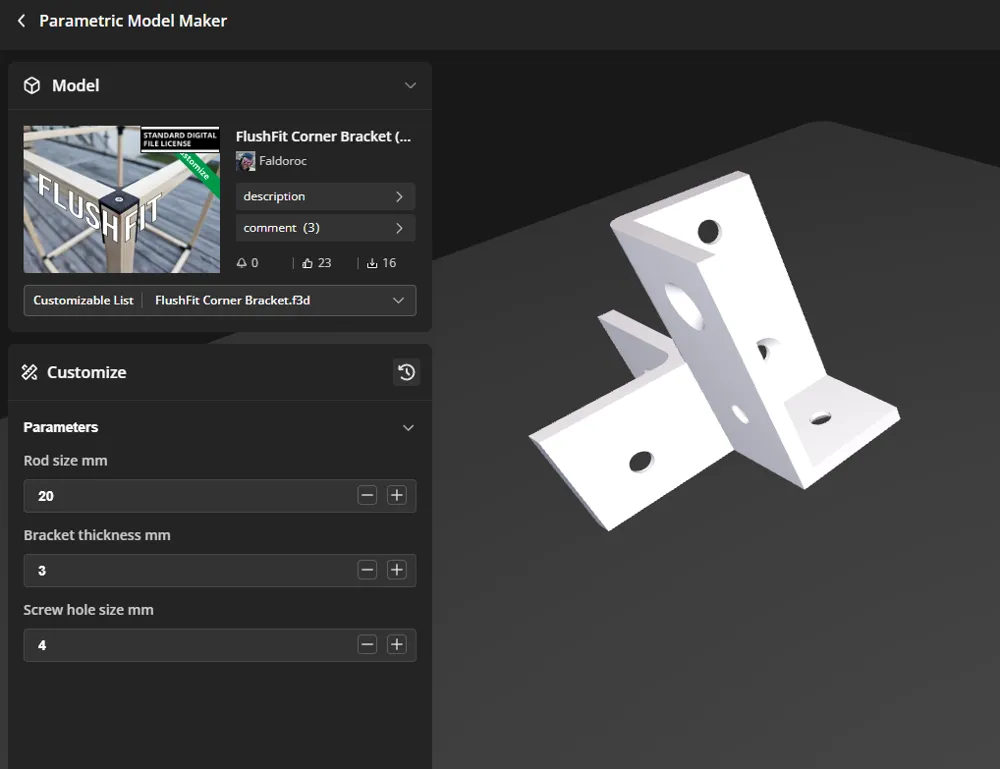
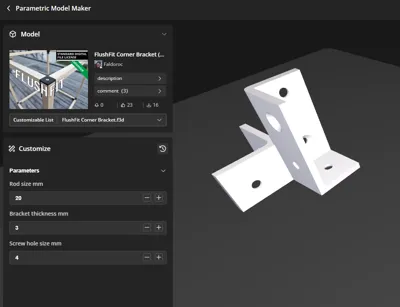
Note: This model is customizable (parametric), this means you can change its characteristics to fit your needs.
The background
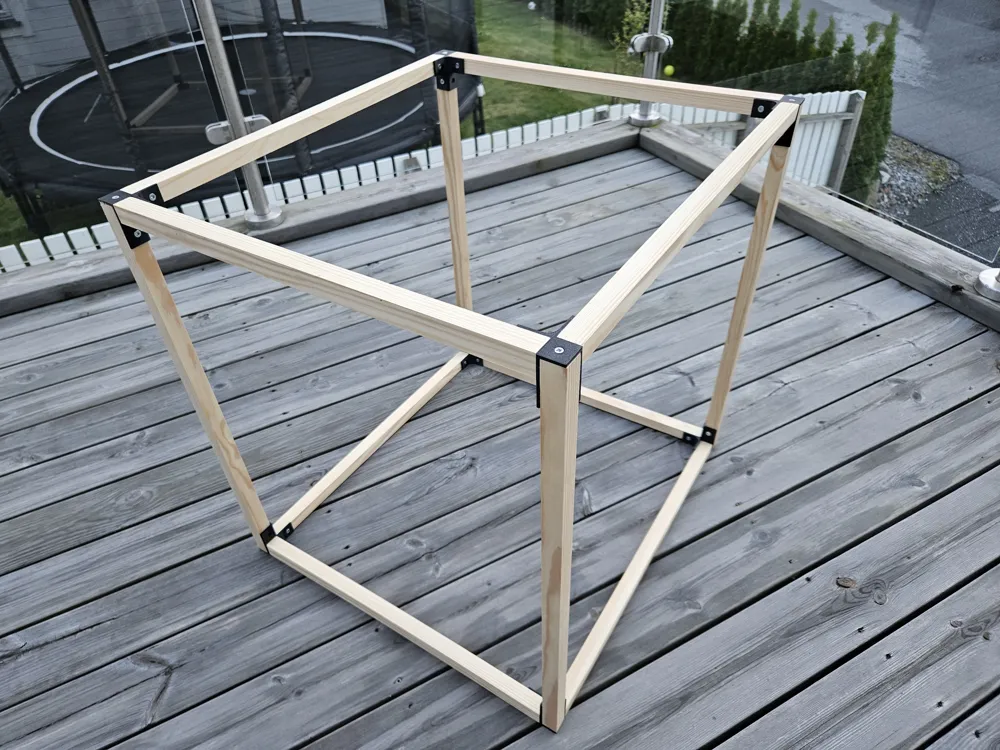
I wanted to build a custom size enclosure for my Bambu Lab A1 to reduce ASA plastic warping and improve layer adhesion. I saw some “fully plastic” versions on Makerworld, but I decided to repurpose some leftover wood I had instead since wood does not suffer from heat deformation.
The problem
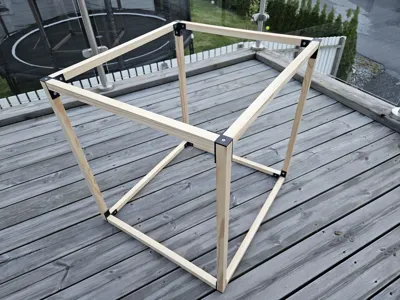
I needed a bracket that could connect eight wooden square dowels to form a cuboid frame with acrylic panels.
Most options I found were either:
- Connector joints that let you slide square dowels in at 90 degree angles.
or
- Simple L-brackets that provides very little torsional strength and does not force the dowels at a 90 degree angle.
...neither option met all my needs.
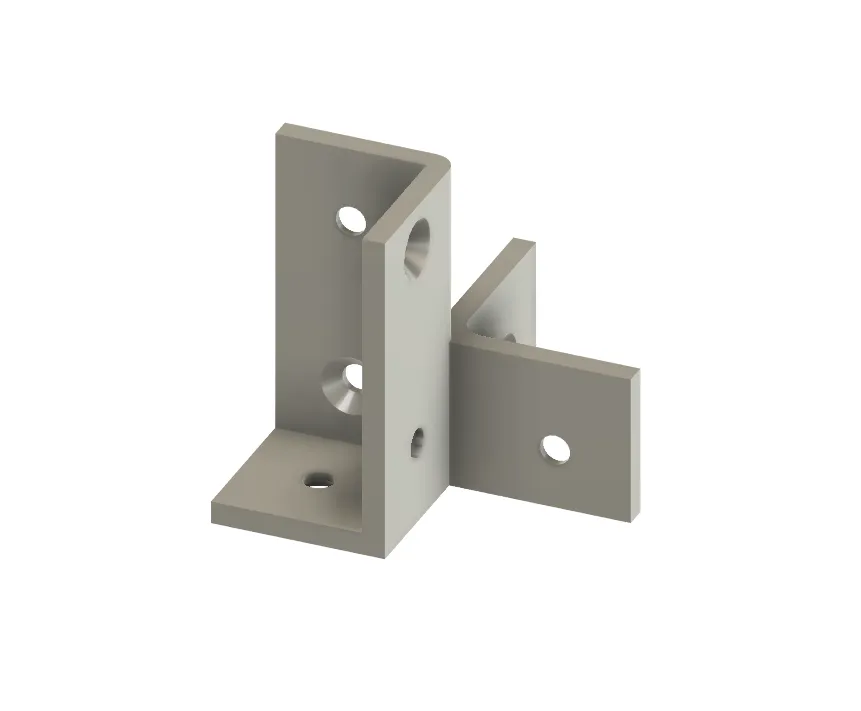
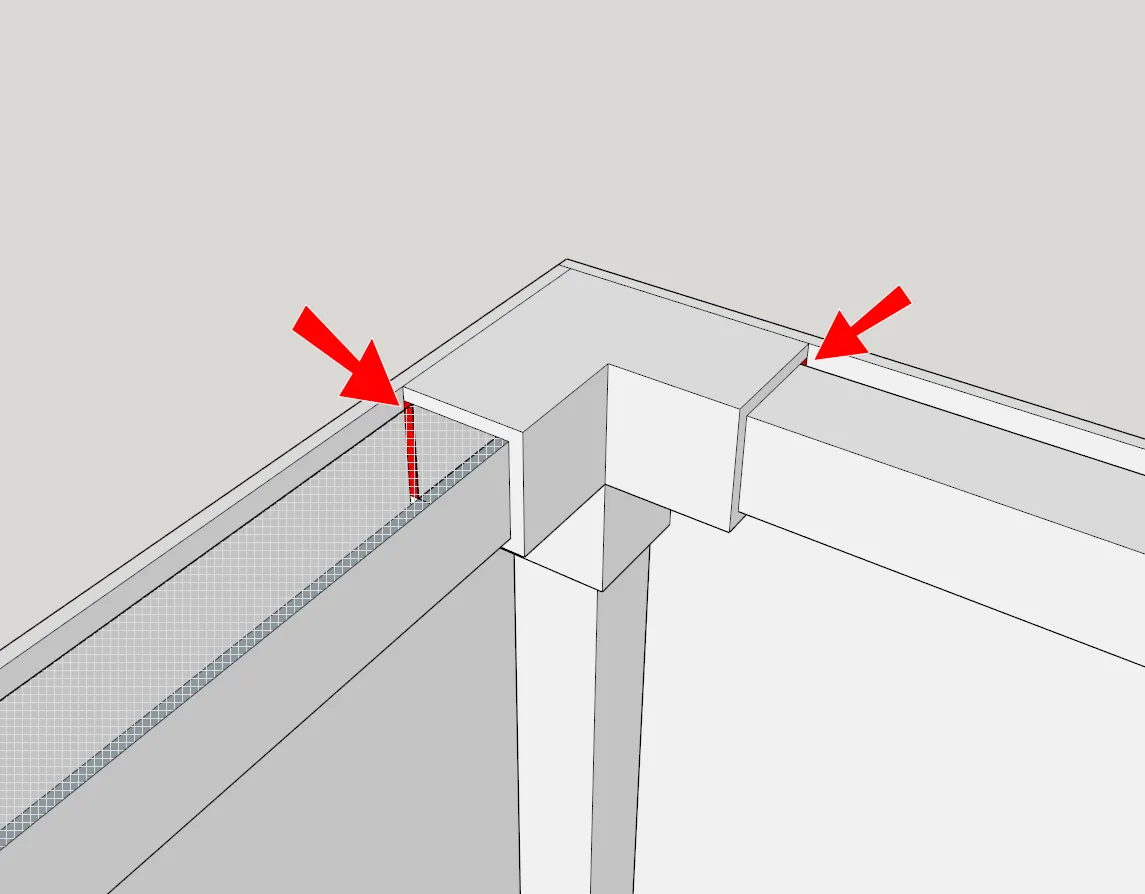
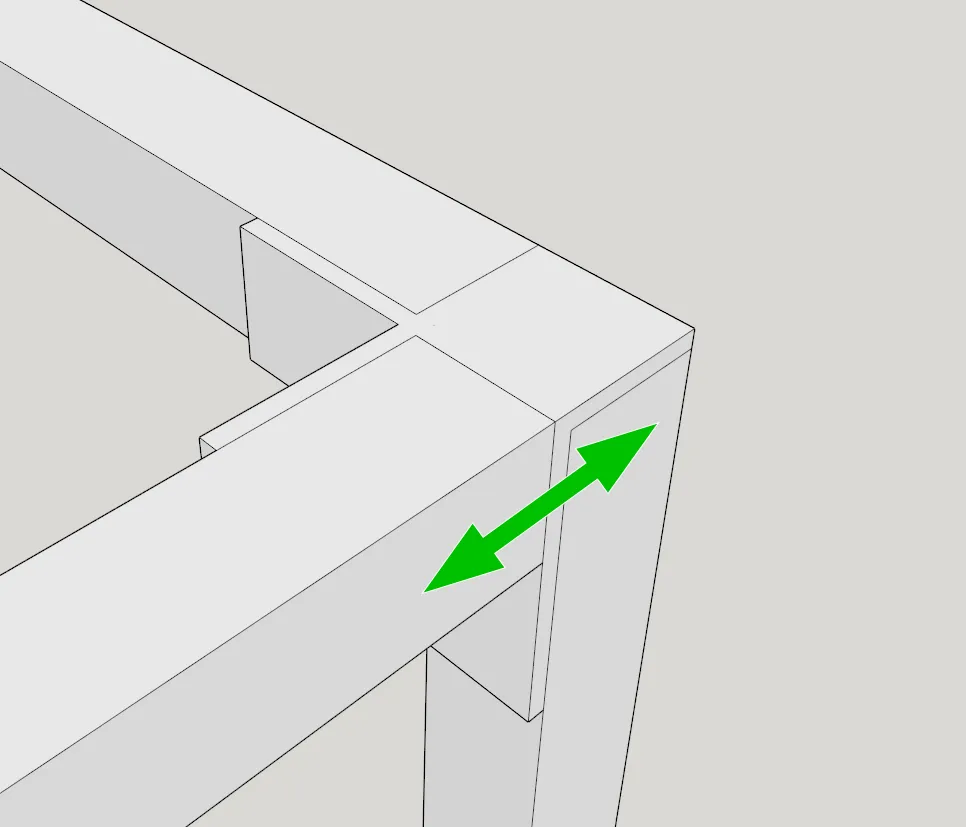
As shown, a connector joint leaves a gap between the square dowel and the pannel and makes it hard to insulate and attach the panel.
The solution
A hybrid design:
- The angular strength of connector joints
- The flush design of L-brackets
…
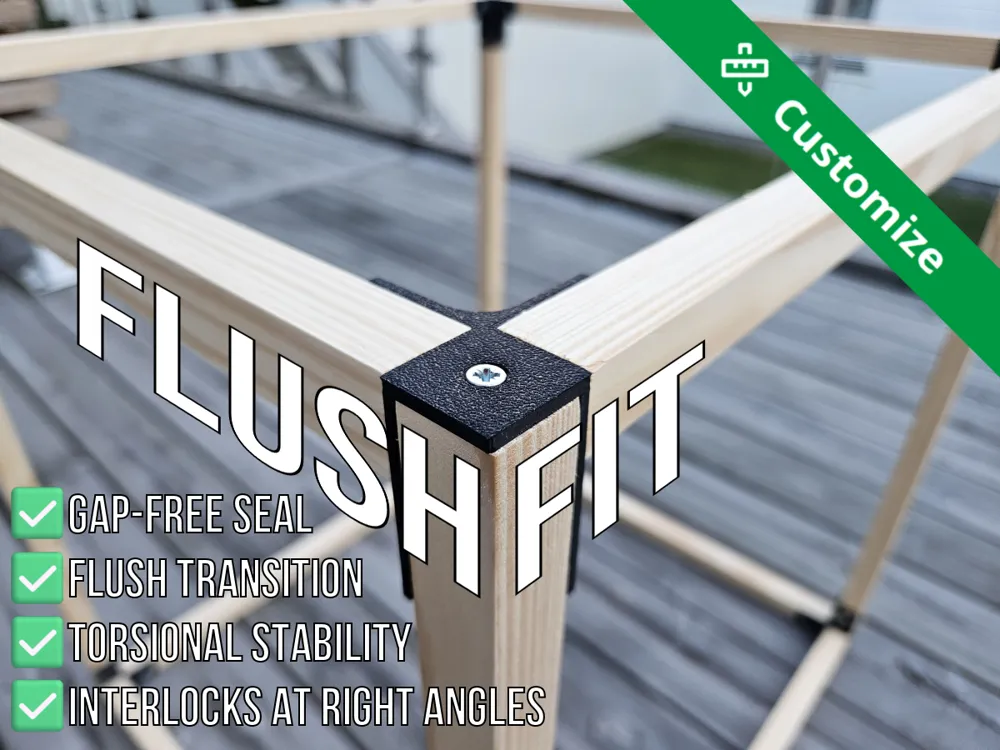
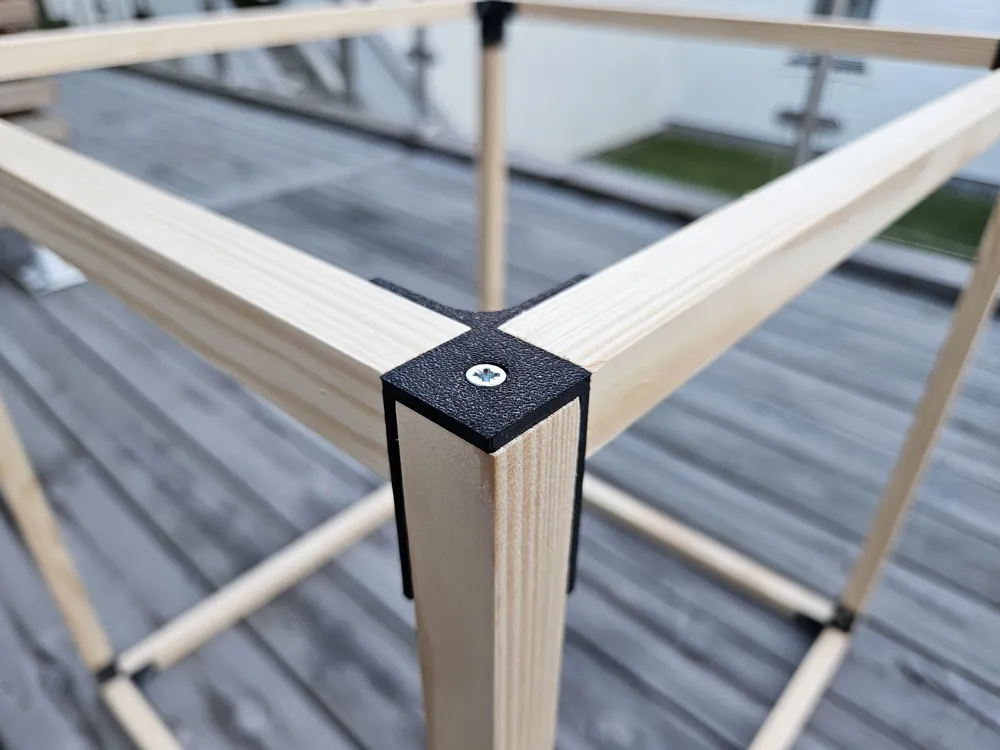
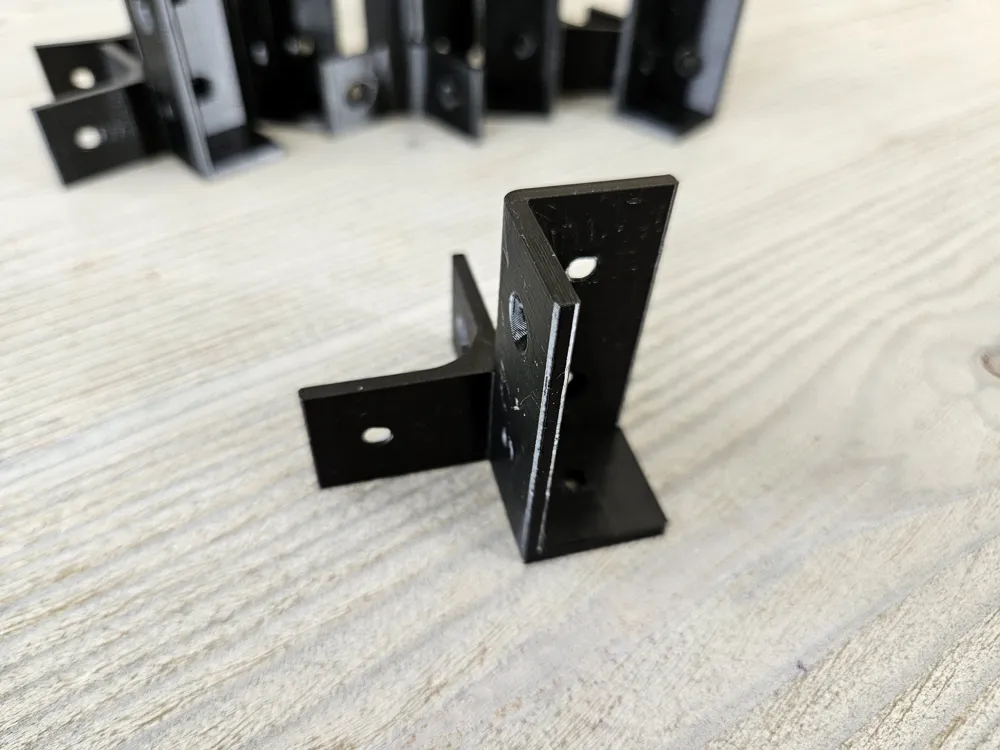
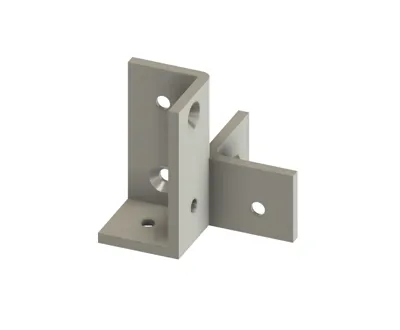
The FlushFit Corner Bracket
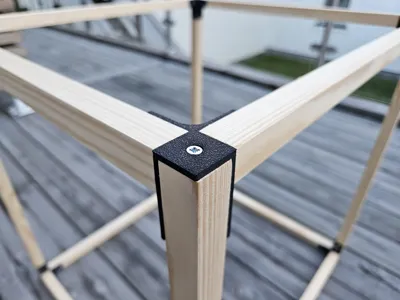
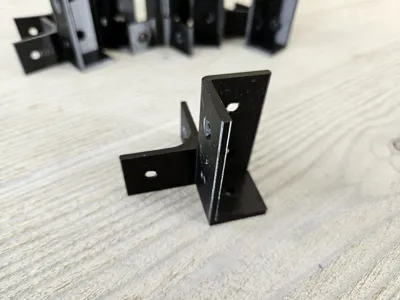
✅ It interconnects three square dowels at right angles.
✅ It provides torsional stability thanks to screws on different axes.
✅ It forces the dowels at a 90 degree angle from eatch other.
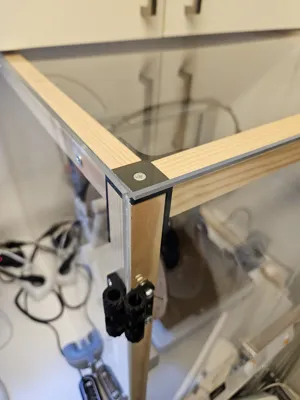
✅ It creates a smooth transition between the dowel ends, creating a flush connection.
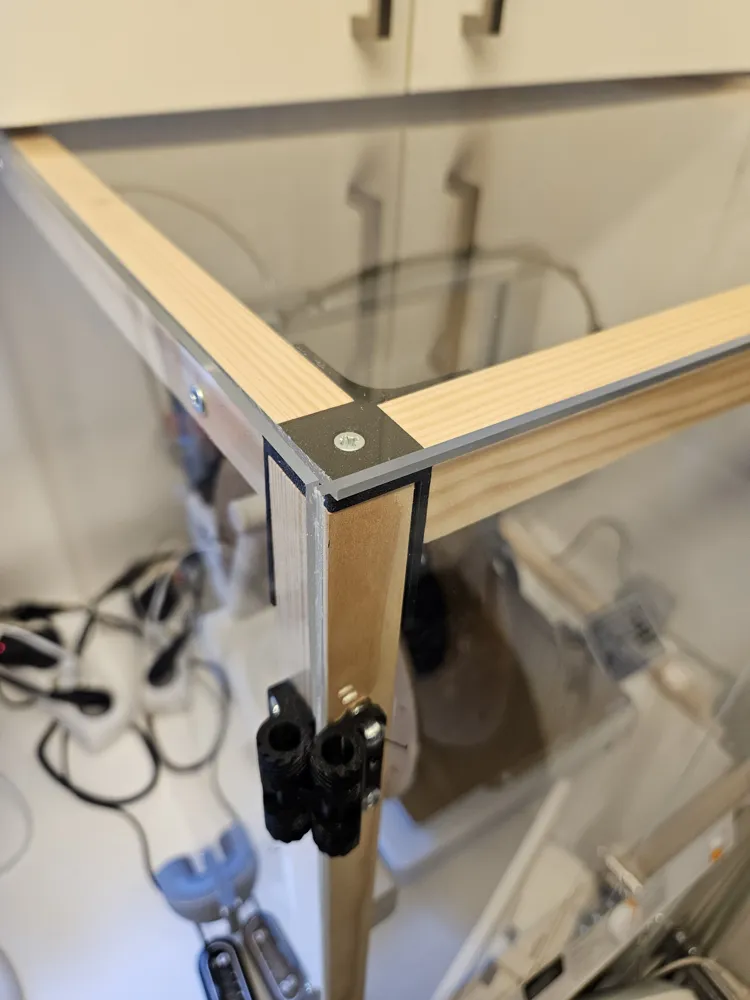
✅ It enables attaching sheets on the outside with a gap-free seal.
I’ve now assembled the acrylic enclosure, added a motherboard cooling duct and installed a ‘Chitu 3D Printer Mini Heater’ inside. The setup now holds about 50 degrees celcius, so I can finally print ASA! :)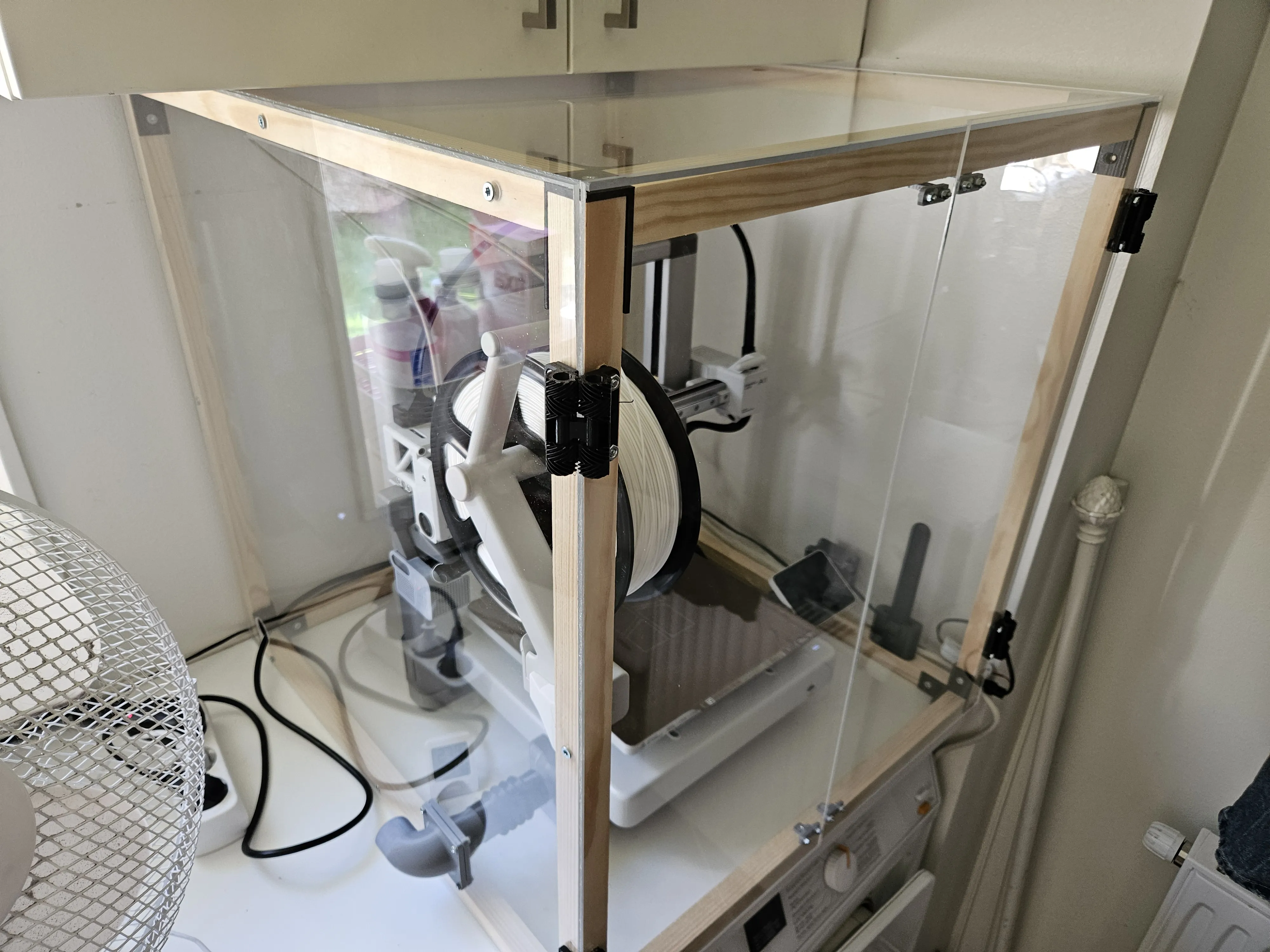
My enclosure
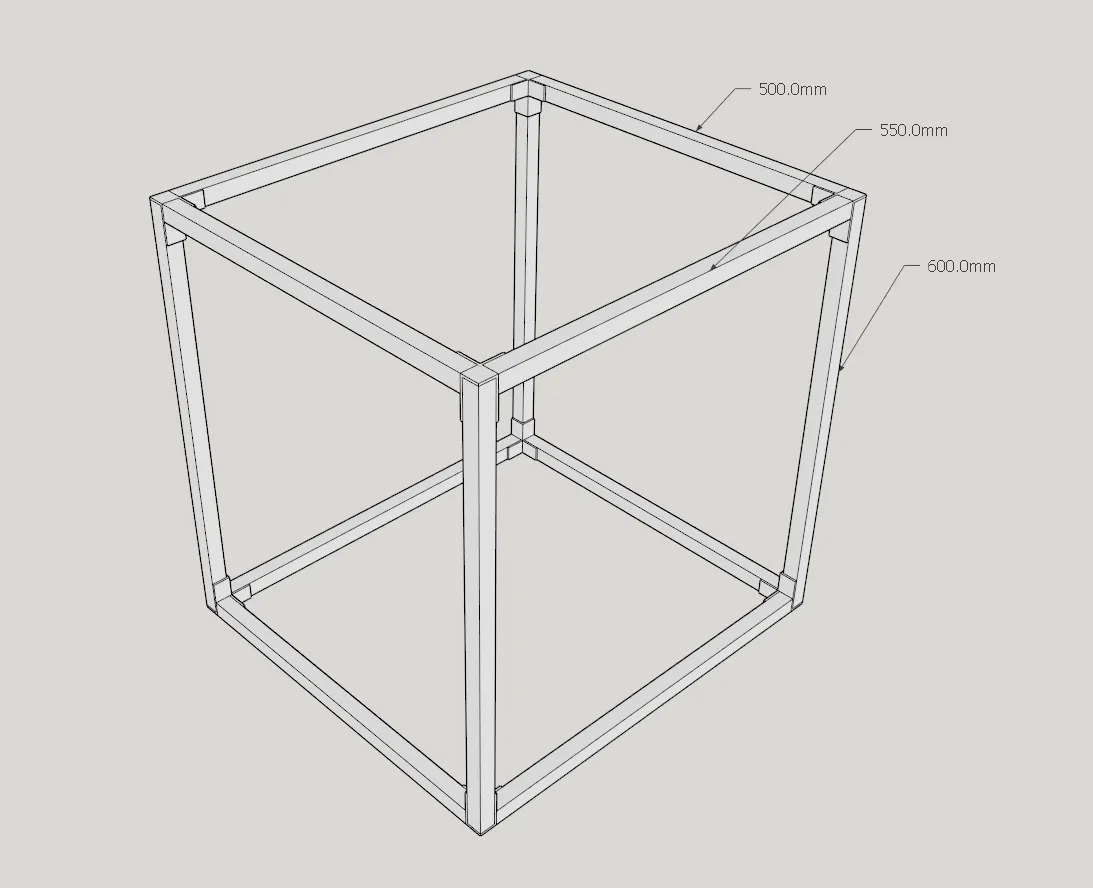
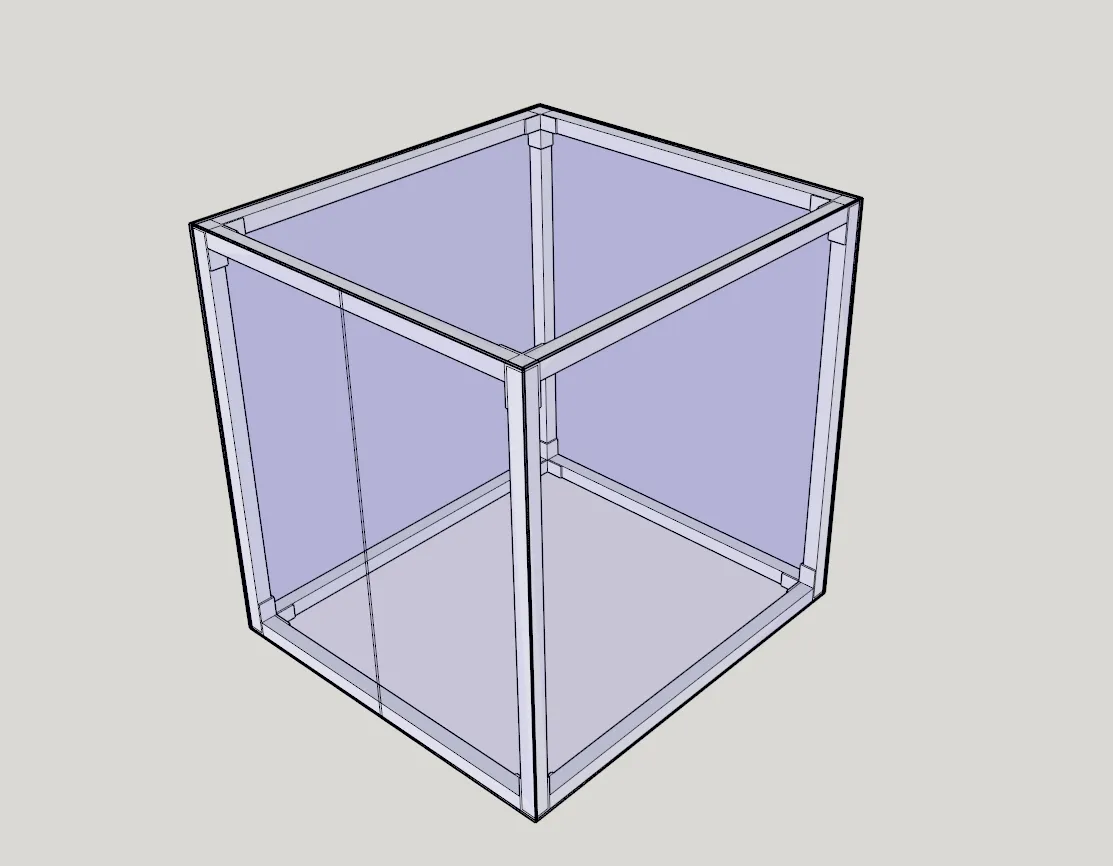
My enclosure uses 3 mm acrylic sheets and withstands 60 degrees celsius without deforming. The square dowels are 21x21x500, 550 and 600mm. The sheet surfaces are:
Sides: 598x609mm
Back: 554x609mm
Top: 548x598mm
Doors: 277x609mm x2
If you're interested in building en enclusure, have a look at my A1 cooling kit:
https://makerworld.com/sv/models/1858551-a1-enclusure-cooling-kit#profileId-1987510
Membership
Support a designer who creates practical, high-quality models and receive a commercial license!
License

You shall not share, sub-license, sell, rent, host, transfer, or distribute in any way the digital or 3D printed versions of this object, nor any other derivative work of this object in its digital or physical format (including - but not limited to - remixes of this object, and hosting on other digital platforms). The objects may not be used without permission in any way whatsoever in which you charge money, or collect fees.


Comment & Rating (79)