
Duomo di Cremona Low Poly
Print Profile(1)

Bill of Materials

Description
If you enjoyed this model, remember to like, follow, and support my work with a nice
Boost Me (for free)
Boooost!
If you're interested in using my models, several membership plans are available, even if you just want to buy me a coffee to show appreciation for my work :D
Membership
Join me or buy me a coffèèè
If you have any requests, don't hesitate to ask in the comments or personal messages!
For anything, don't hesitate to contact me; every request will be fulfilled promptly!


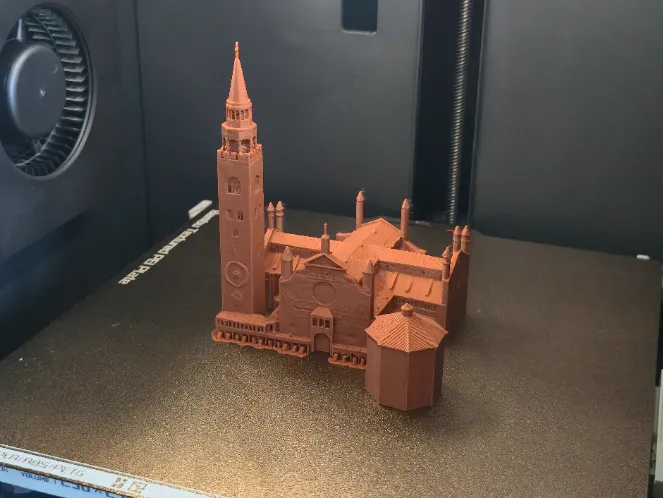
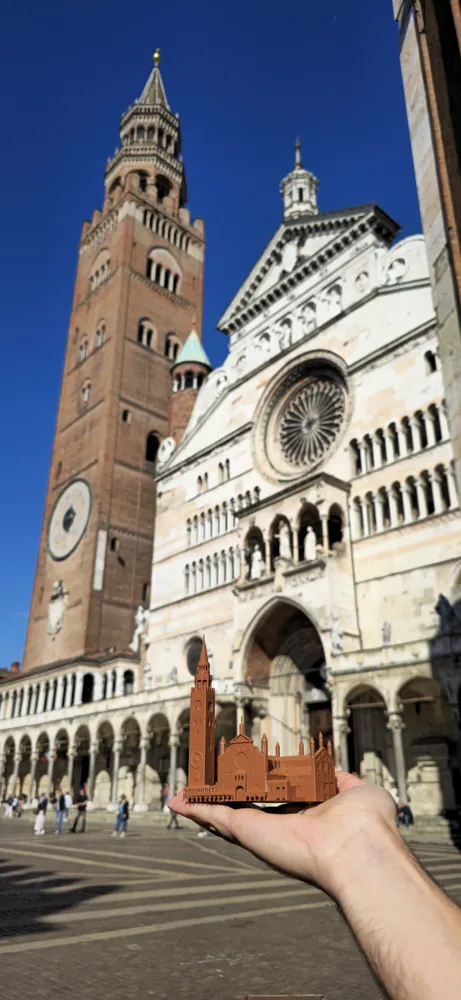
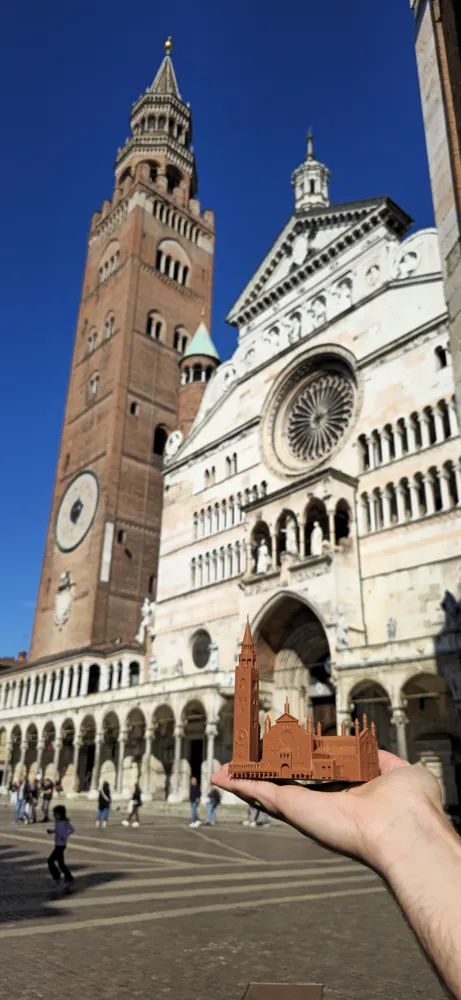
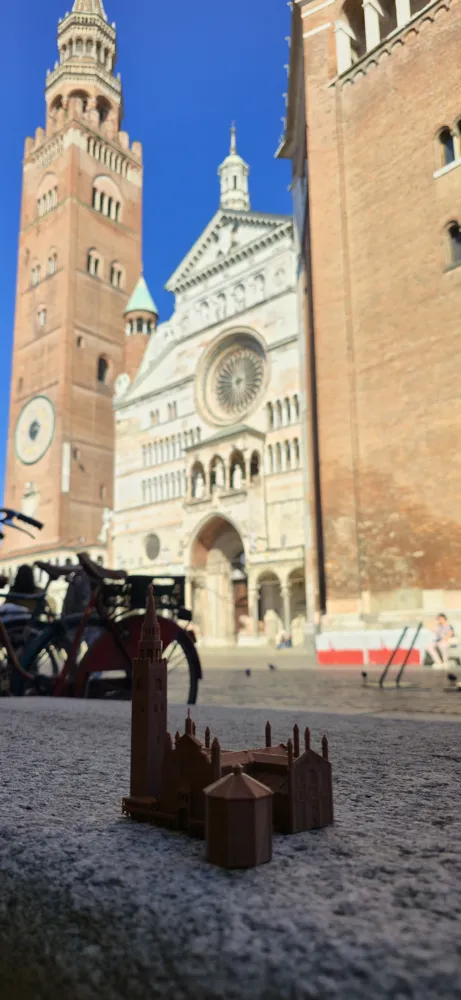
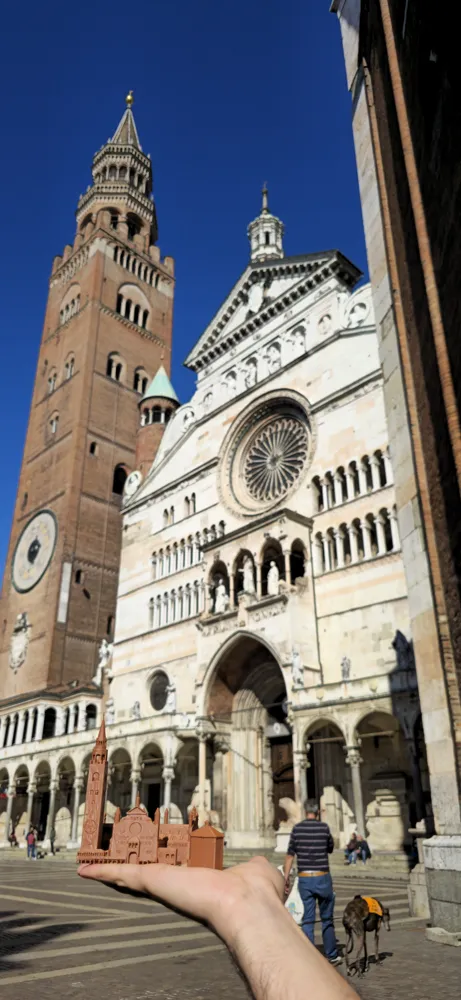
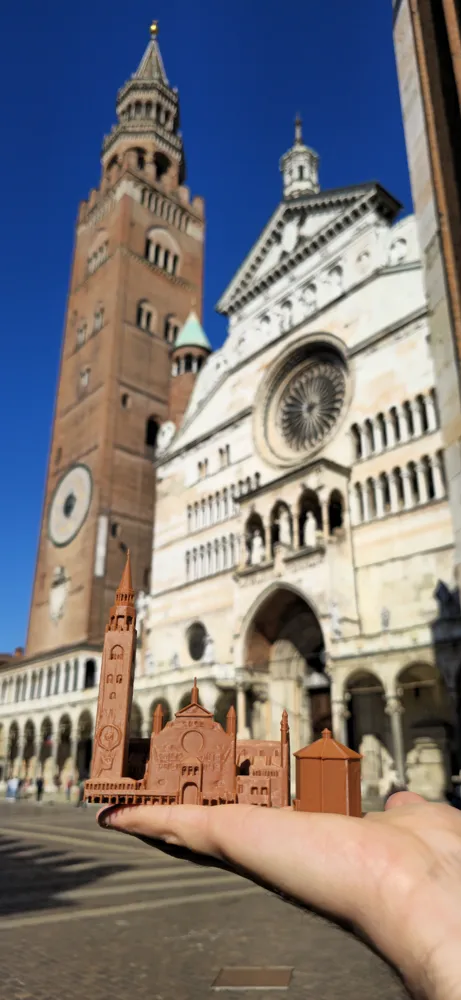
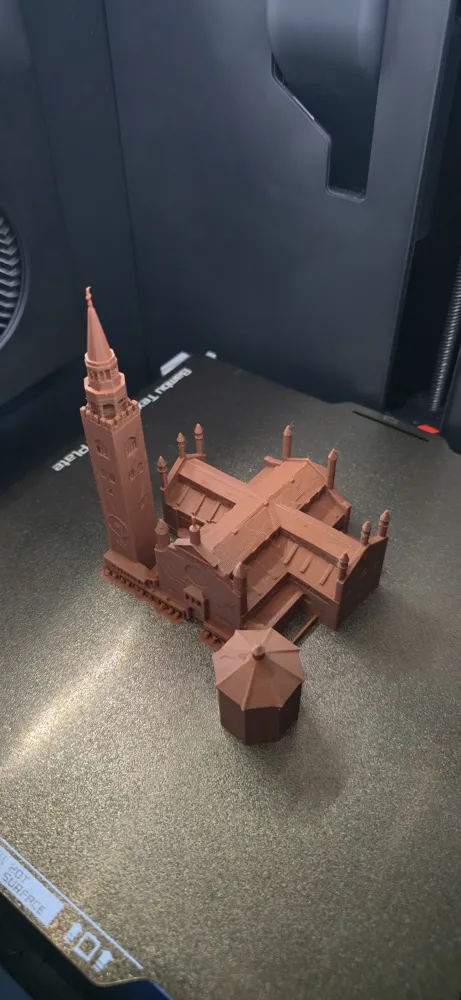
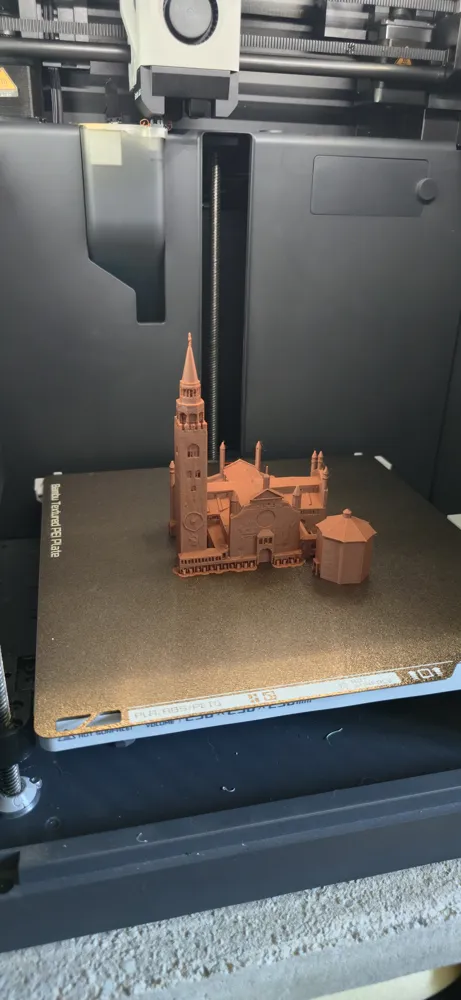
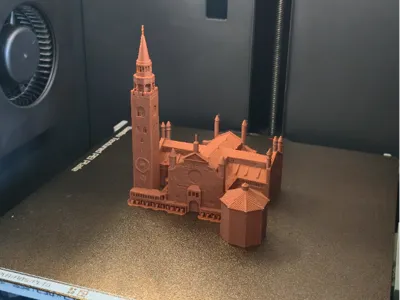
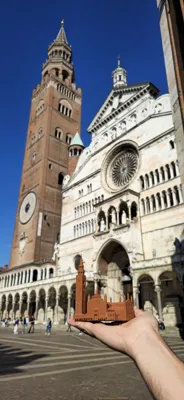
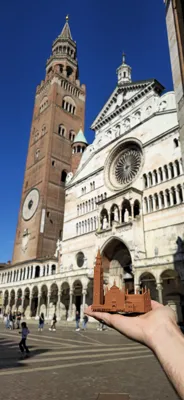
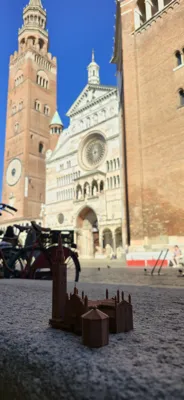
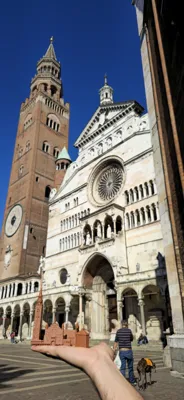
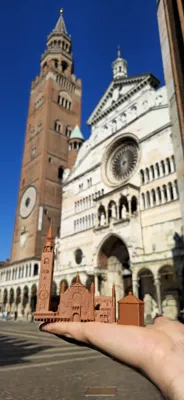
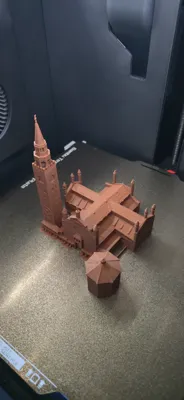
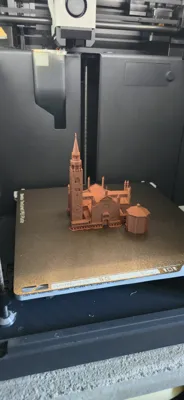
This is a miniature reproduction of the cathedral of my city, Cremona!
I tried to retain as much detail as possible, while still aiming for a low-poly result.
Also, the reason why I call myself 3T_Printers → 3 "T" of Cremona, Torrazzo, Torrone and Tognazzi
…even if the Rated version is with "Tette" (T*ts) :P
Here's the story of this splendid building, accompanied by the tallest bell tower in Europe, the Torrazzo!
Cremona Cathedral (Italian: Duomo di Cremona, Cattedrale di Santa Maria Assunta), dedicated to the Assumption of the Blessed Virgin Mary, is a Catholic cathedral in Cremona, Lombardy, northern Italy. It is the seat of the Bishop of Cremona. Its bell tower is the famous Torrazzo, symbol of the city and tallest pre-modern tower in Italy.
Also adjoining is the baptistery, another important medieval monument.
Originally built in Romanesque style, the cathedral has been restored and extended several times, with Gothic, Renaissance and Baroque elements. Construction began in 1107, but the works were damaged and halted after an earthquake in 1117. Construction resumed in 1129, and the building was probably finished in 1160–1170. The main altar, dedicated to the city's patron saints Archelaus and Himerius, was consecrated in 1196.
The current façade was probably built in the 13th and the early 14th century. In the same period the arms of the transept were also added: the northern in 1288 and the southern in 1348.
The main façade, together with the adjoining baptistery, is one of the most important monuments of Romanesque art in Europe. It has a portico with a narthex in the middle, to which a Renaissance loggia with three niches was added in 1491. This is surmounted by a large rose window, flanked by two orders of loggette ("small loggias").
The portal is probably from the early 12th century. On its side are the figures of the Four Major Prophets, each bearing a roll with the text of their prophecies. The narthex was made by masters from Campione in the following century: it incorporates an older frieze portraying the Labours of the Months (late 12th century, inspired by that in the Baptistery of Parma). The four statues on the upper loggia, portraying the Madonna with Child and two bishops, are of the Tuscan school (1310). The columns of the narthex stand on two lions in Verona marble. The left one is holding a dragon, symbol of Evil, in his paws, while the right one is holding a bear, which in turn is biting a bird's neck.
On the façade are also two tombs: the more recent one (mid-14th century) is by Bonino da Campione.
The façade of the northern arm of the transept (late 13th century) also has a narthex; and its columns also have two lions at the base. It is characterized by a sequence of mullioned windows and rose windows. The façade of the southern arm of the transept dates from 1342, and is in brickwork, as is typical in Lombard Gothic architecture. Its structure is similar to the northern arm, but has slightly more detailed decoration.
The three apses are all surmounted by loggias with small columns, each having a human face stretching out from the capital. The central apse is much higher than the flanking ones.
The Torrazzo is the bell tower of the Cathedral of Cremona, Lombardy, in northern Italy.
The Torrazzo measures 112.54 metres (369+1⁄4 ft),[1] and it is known as the third tallest brickwork bell tower in the world, the first being the tower of St. Martin's Church in Landshut, Bavaria, and the second at the Church of Our Lady in Bruges, Belgium. However, the Torrazzo (completed in 1309) is older than the Landshut tower (completed in 1500) and the Bruges tower (completed in 1465), and it is the oldest brick structure taller than 100 m that is still standing.
According to popular tradition, construction on the tower began in 754. In reality, it was built in four phases: a first dating back to the 1230s, up to the third dripstone, a second, between 1250 and 1267, up to the dripstone under the quadriphore, a third around 1284, and the completion of the marble spire in 1309.
Its height is announced by a plaque embedded in the wall at the base of the Torrazzo itself, stating 250 arms and 2 ounces, which in the ancient measuring system of the Lombard towns translates to approximately 111 metres.
Archaeological excavations made in the 1980s have discovered the presence of underlying structures which are supposed to be the remains of a more ancient churchyard (or a cemetery associated to it), or even previous Roman buildings.
TL;DR: The churc of my city is COOL!
If you liked the reproduction of this model or you are simply from Cremona (Ciao!), remember to follow me and give a nice
Boost Me (for free)

Every model is PIP; the wheels are actually working.
I used AMS to achieve optimal multicolor results.
The model requires no assembly; you just need to carefully remove the tree supports already set in the print profile.
Better results can be achieved using the 0.2 mm printhead, at the expense of increased print times.
It's recommended NOT to change the print profile settings to avoid having problems with the final result.
I invite you to use tweezers and small pliers to remove the supports.
In more recent models, I've used smaller tolerances for the wheel alignment, to ensure a higher level of detail and fewer supports to remove in that area.
For this reason, it's necessary to "break in" the car once the supports have been removed (trying a couple of times) :D
License

You shall not share, sub-license, sell, rent, host, transfer, or distribute in any way the digital or 3D printed versions of this object, nor any other derivative work of this object in its digital or physical format (including - but not limited to - remixes of this object, and hosting on other digital platforms). The objects may not be used without permission in any way whatsoever in which you charge money, or collect fees.


Comment & Rating (1)