
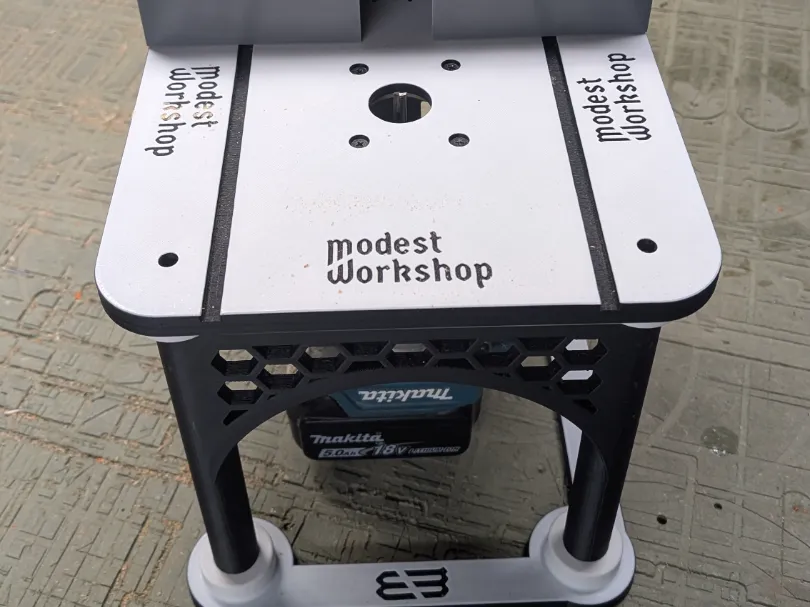
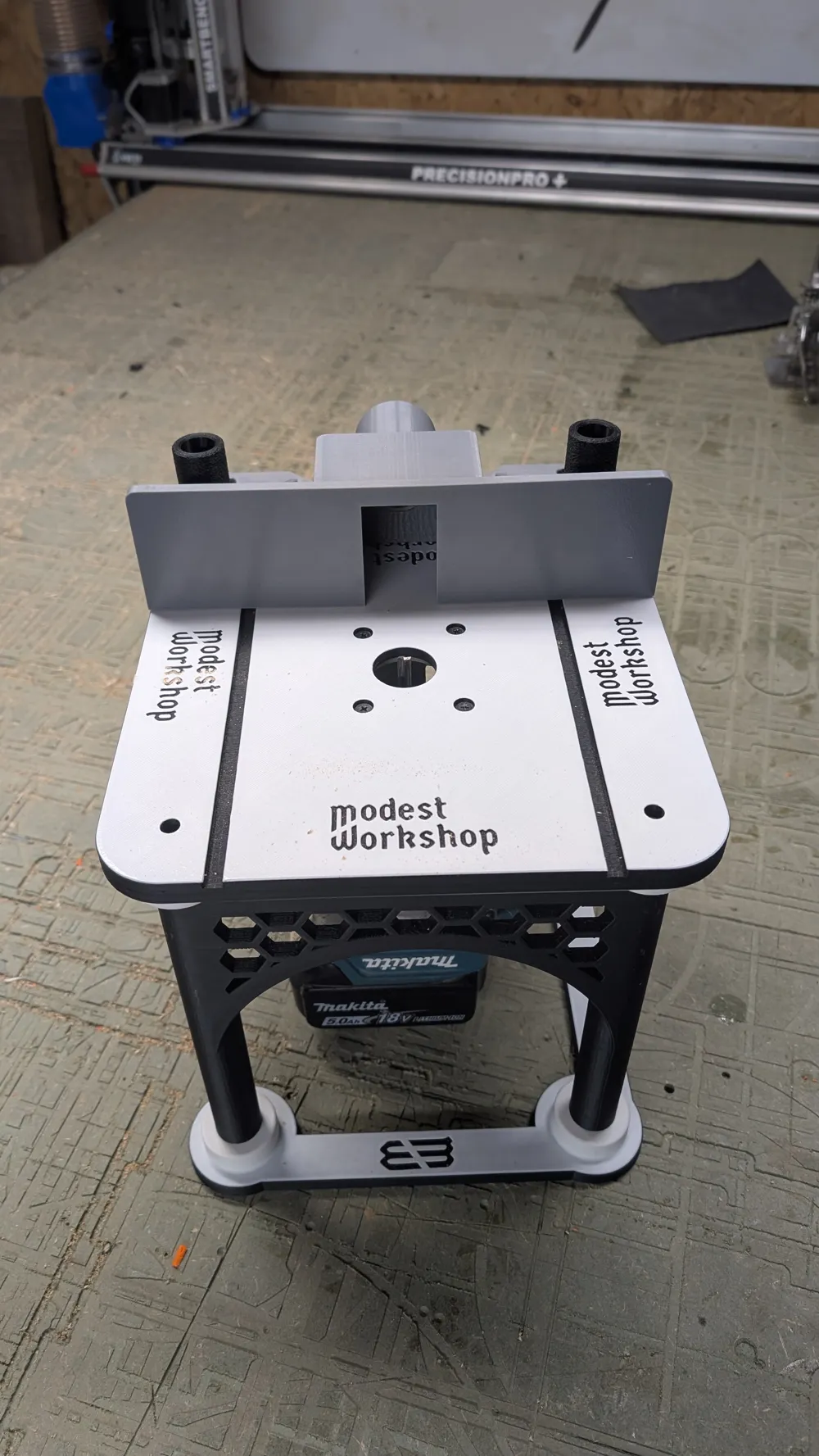
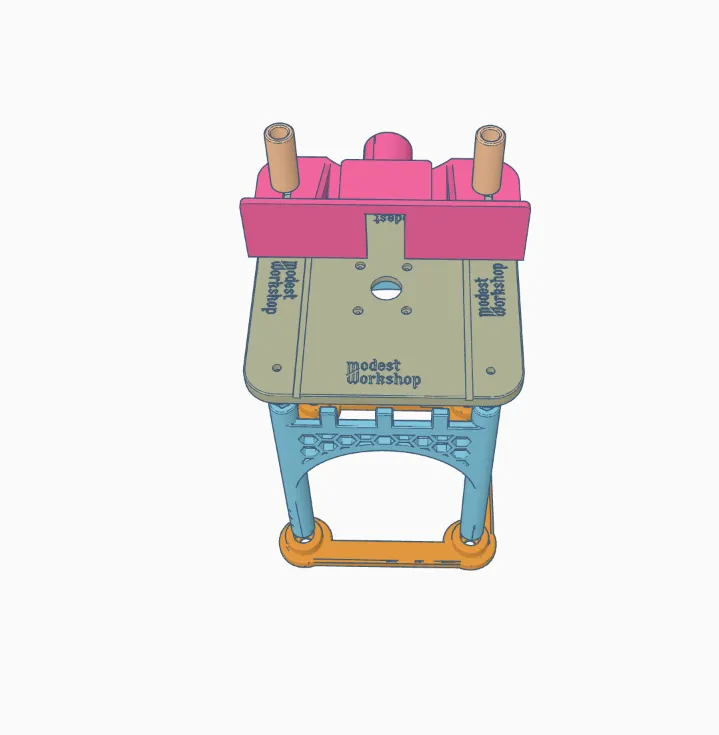
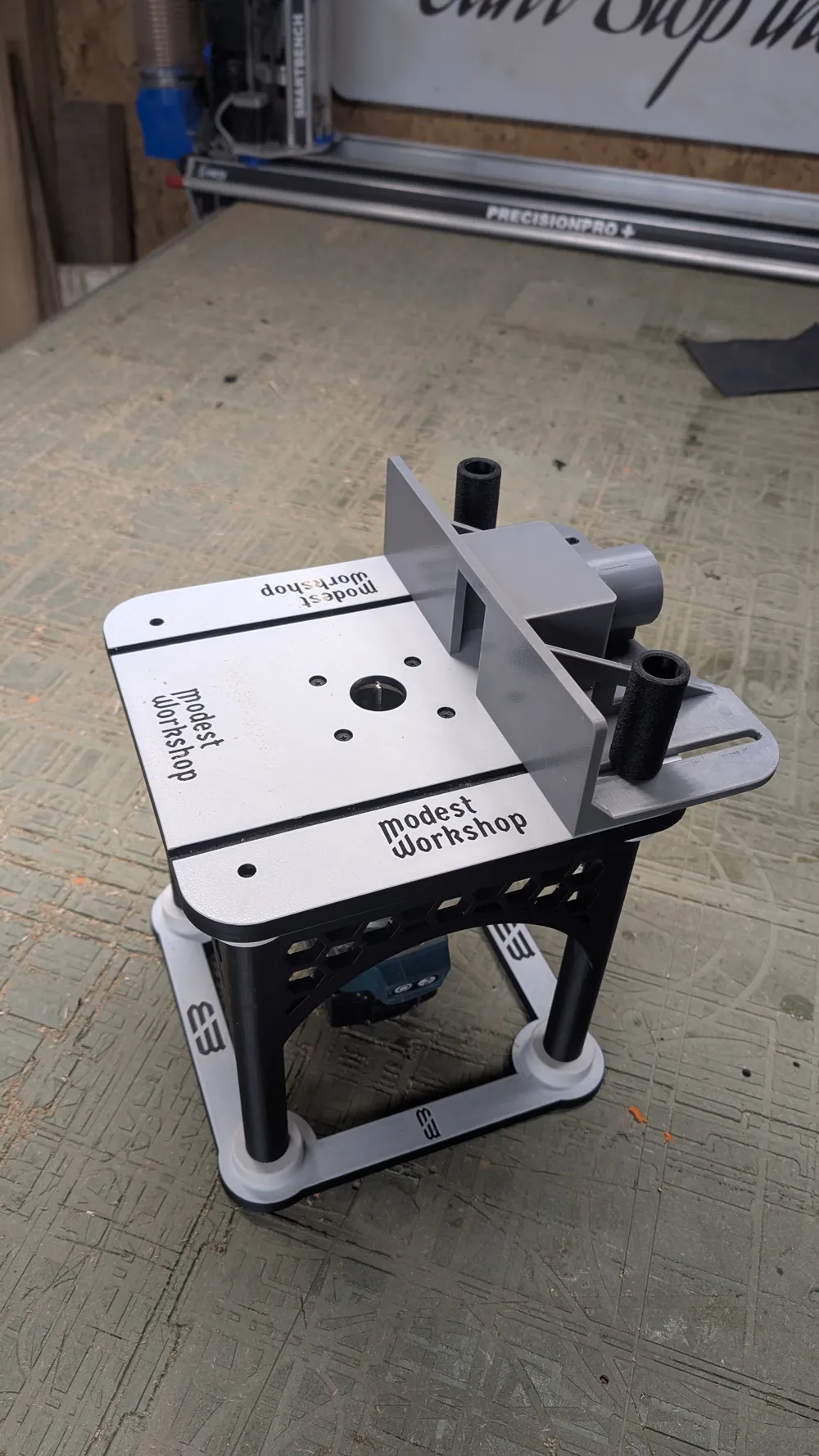
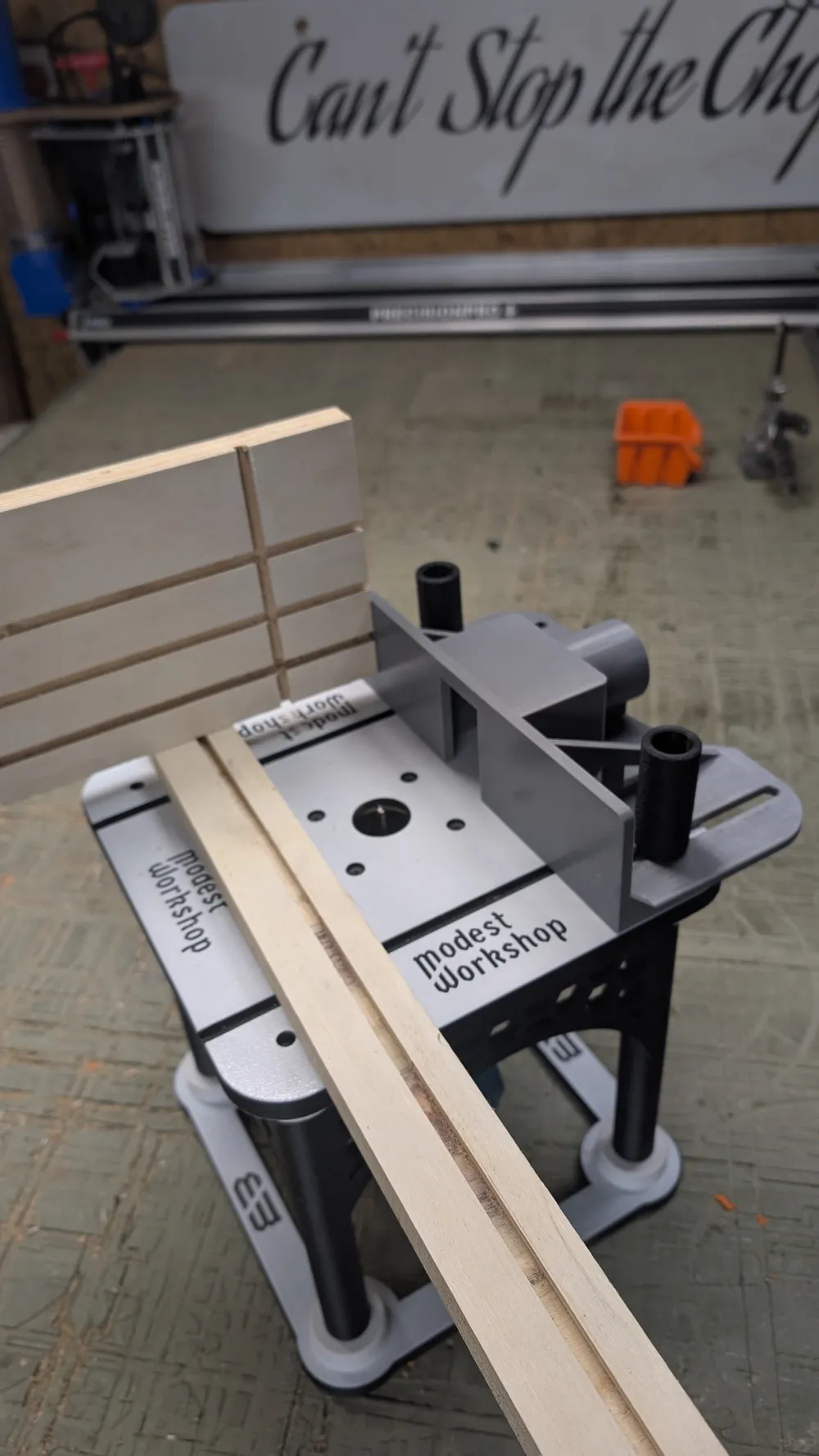
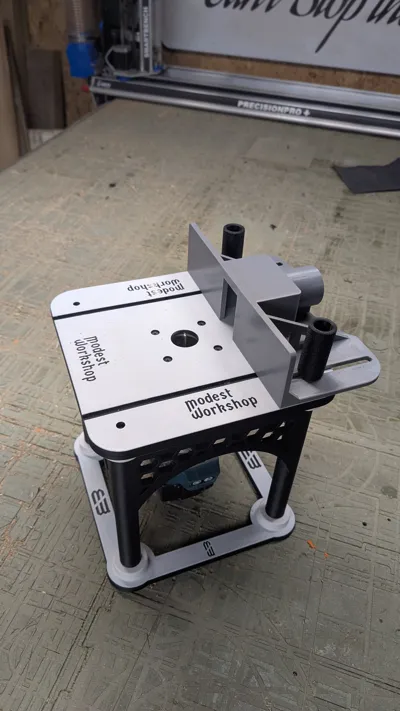
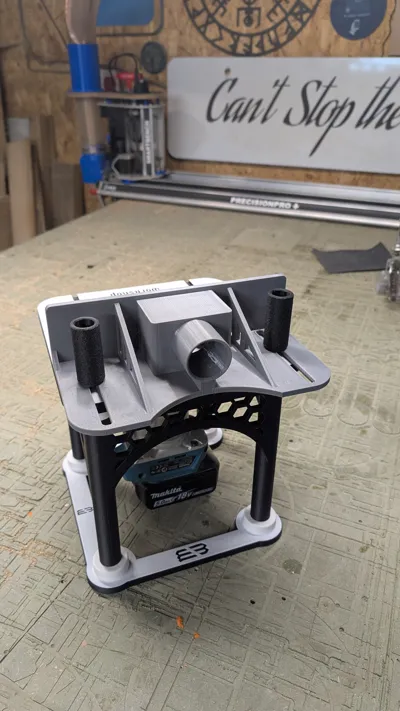
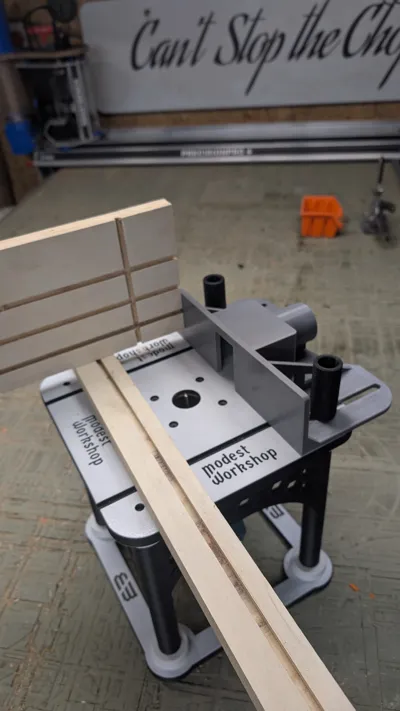
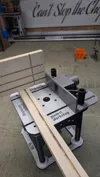
1/4" router table. suitable for many brands.
Print Profile(14)

Bill of Materials



Description
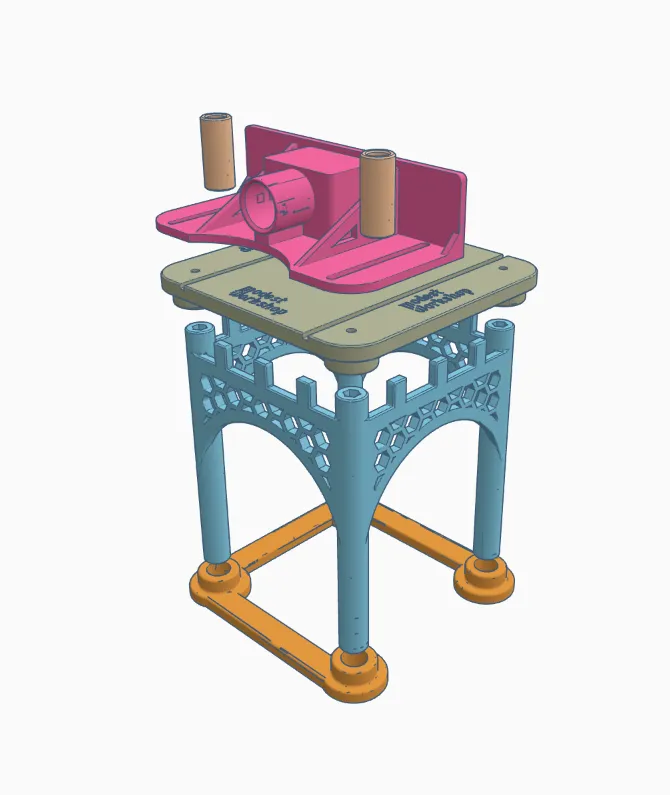
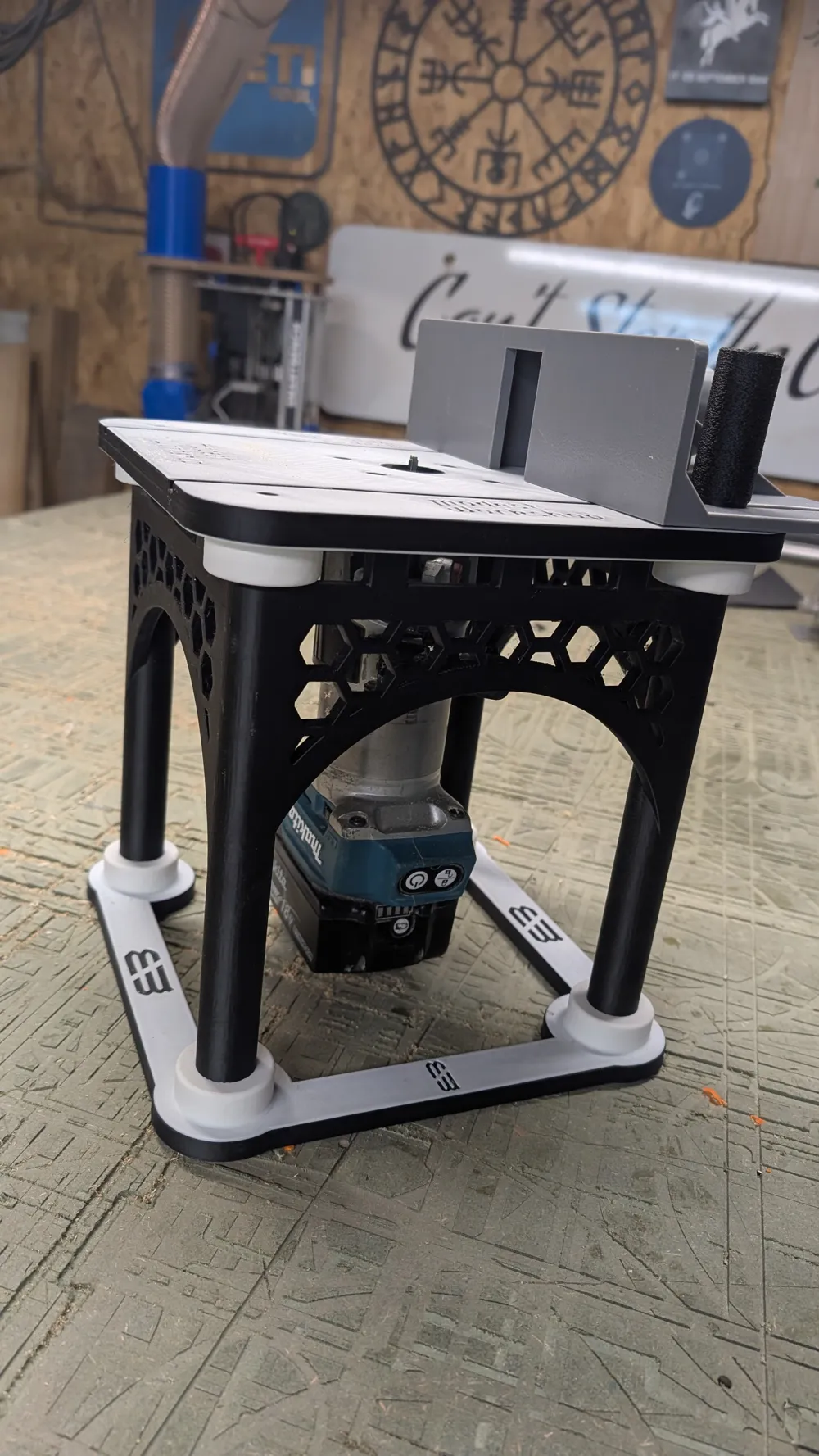
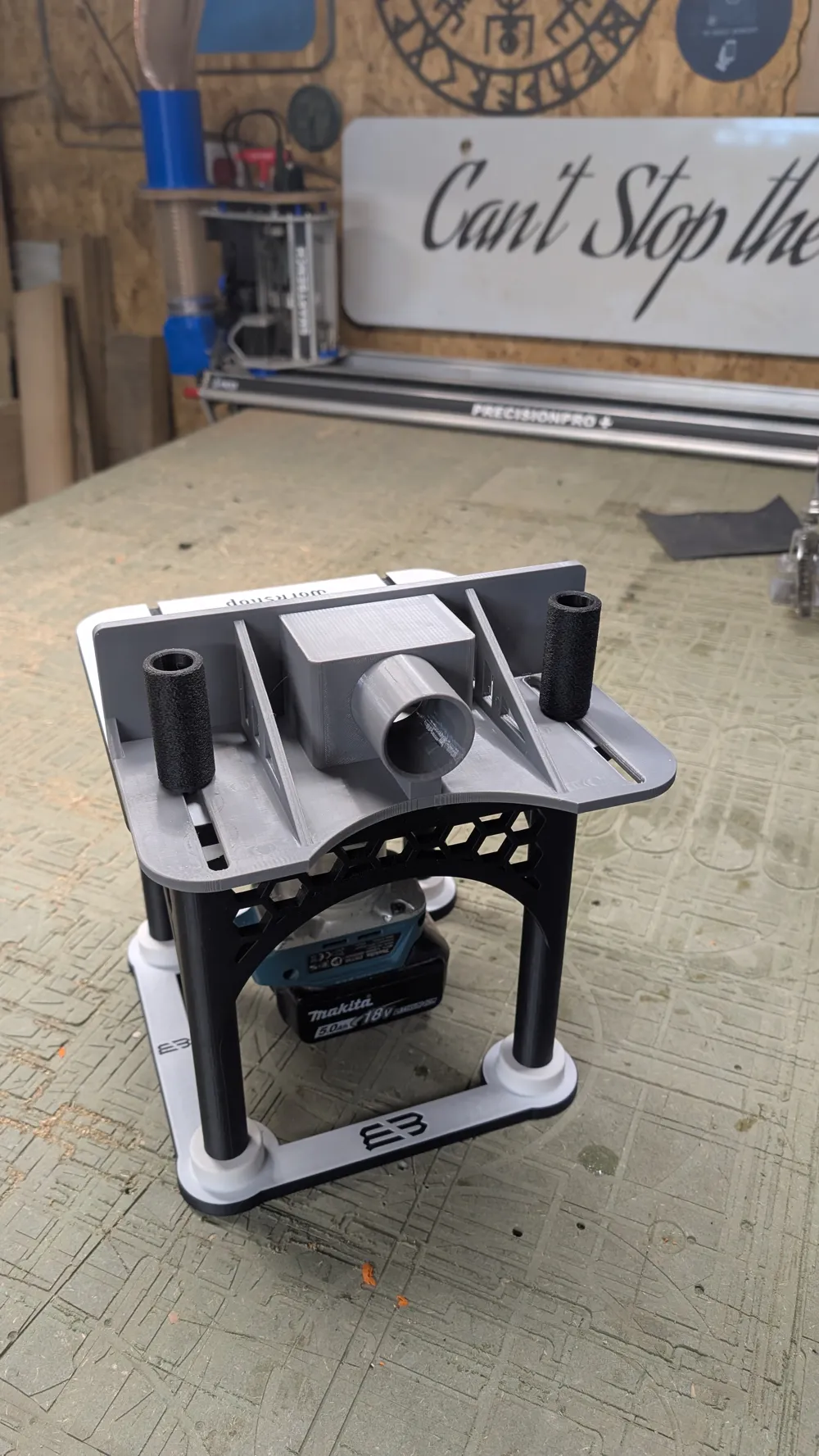
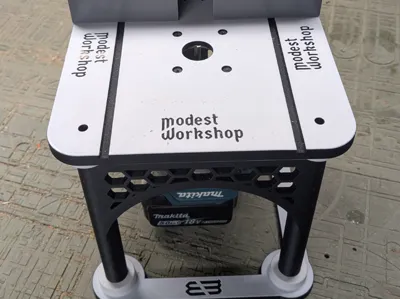
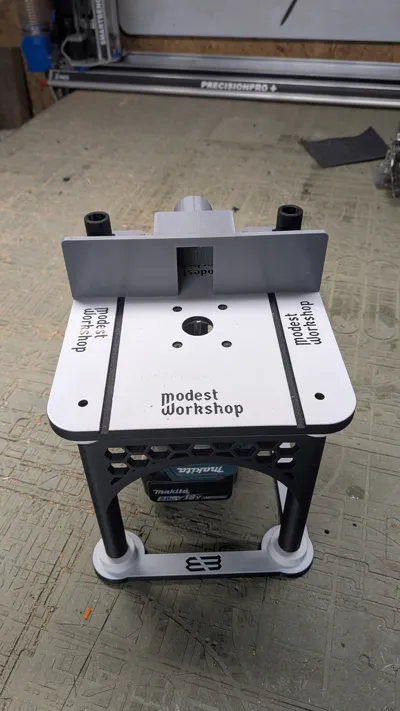
Router table adaptation for Makita, Katsu, Milwaukee, DeWalt, Ridgid, Hikoki palm routers.
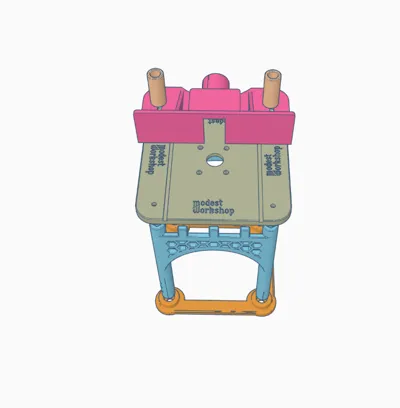
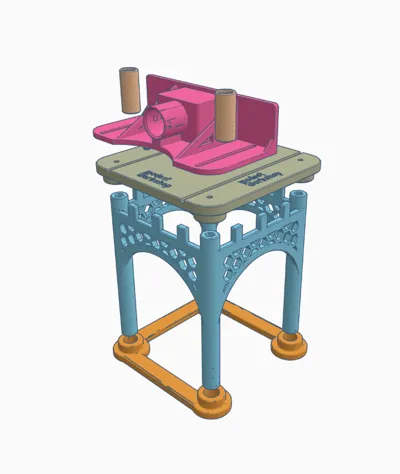
Main file for MK2 router has the Makita/Katsu table top. There are separate print profiles for the Milwaukee & DeWalt table tops.
When working with small parts it can be difficult to work safe even with a small hand held palm router.
I designed this as I cut a lot of parts out on my CNC and some times have great fun trying to remove tabs from small parts and chamfer edges at times, I have designed other router bases for better stability but a router table was by far the best way to go. I wanted something small, light, easy to store and small footprint. I decided to make this model all from 3d print as this would be a great community share model that will help anybody get into woodworking and hopefully inspire other to make something even better.
The real shame with this design is It will easily print on an A1, H2D, H2S but for P1S & X1C you will need for go through a couple more steps first.
the official Bambu Lab Wiki is below which will show you have to deactivate the filament cutter and exclusion zone on the bed for these printers.
Print volume limitations, and how to use the full build volume 256x256x256mm³ | Bambu Lab Wiki
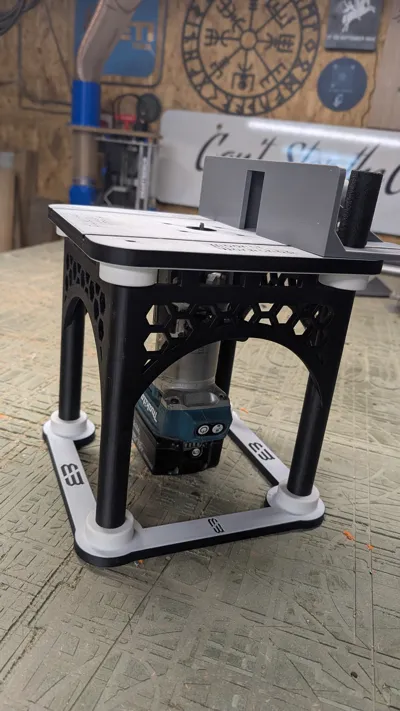
I have used PLA for mine and it is nice and ridged. I have stopped the table sliding by using small stick on rubber feet which work well so far.
If you position the battery to side out of the open side it will make battery changes so much easier. All slicing for this model was performed in Bambu Studio so STL source files will not be sliced and will not have any dowels. *If you intend to work form these files and import into another software you will need to consider this*
Preparation.
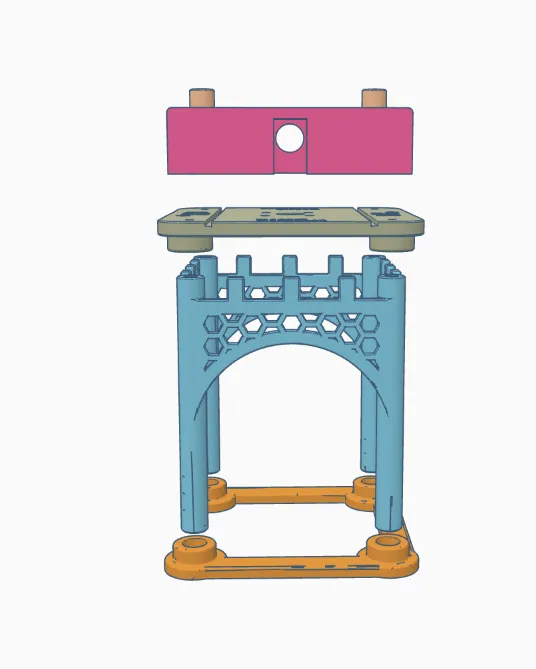
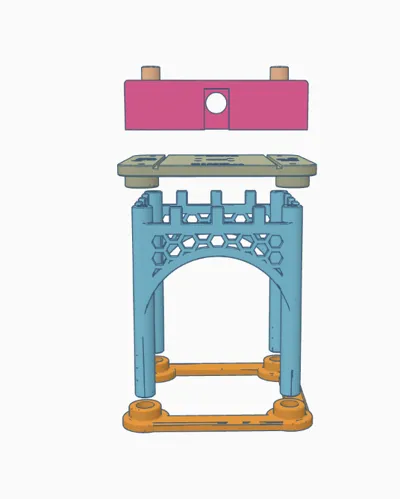
Before assembly I went around all the surfaces that touched the bed with a small file and a bit of sand paper and just eased the edges slightly which made assembly so much easier. I also aligned all the legs and made small pencil marks on the inside of each leg to remember which way round they need to be orientated for correct alignment before super gluing the leg ends on with the dowels fitted. I used CA glue with spray activator but I didn't spray the activator until the part was fully assembled as I am mad about correct alignment.
As the to the top and the base they are only knocked into place ad there was no glue necessary, Mine were a good snug fit without having to bash the model about. I have added in a 0.1mm tolerance which seemed to work really well.
My print recipe for this model is.
one wall on first layer.
4 wall loops.
3 top layers.
4 bottom layers.
15% Cubic infill.
normal support (snug)
License

You shall not share, sub-license, sell, rent, host, transfer, or distribute in any way the digital or 3D printed versions of this object, nor any other derivative work of this object in its digital or physical format (including - but not limited to - remixes of this object, and hosting on other digital platforms). The objects may not be used without permission in any way whatsoever in which you charge money, or collect fees.


Comment & Rating (176)