
RMS Britannic WW1 Hospital Ship
Print Profile(1)

Description
Boost Me (for free)
Love this model and want to help inspire us to create more and cover the costs of developing new print files for you to enjoy, then please consider giving us a little boost. Such a simple thing can make all the difference to covering our filament costs. Thank you
Boost Me (for free)
Like this model why not support the work we do by hitting that boost button. Many Thanks and Happy printing
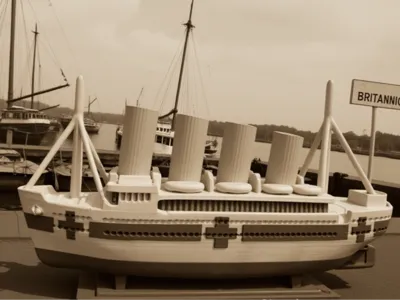
Hello and welcome to my latest share - so I actually wasn't planning to do another entry for the battleship contest due to a number of factors mainly that the other two took an awful lot of time to complete, but then I remembered the history of RMS Britannic, the full sister ship to the ill-fated Titanic and I felt compelled to create some work in her honour.
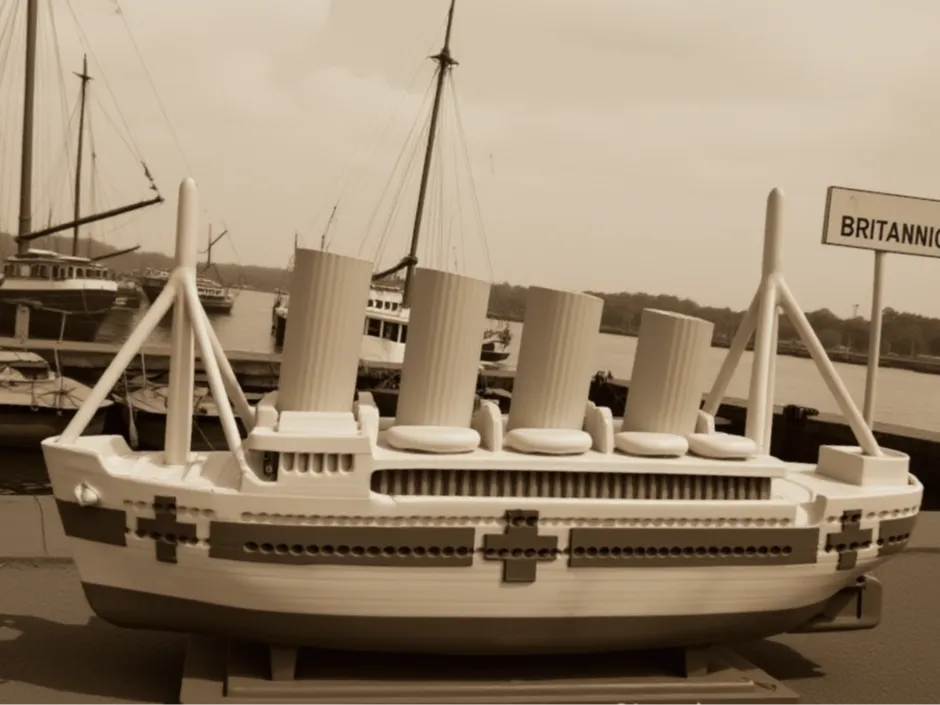
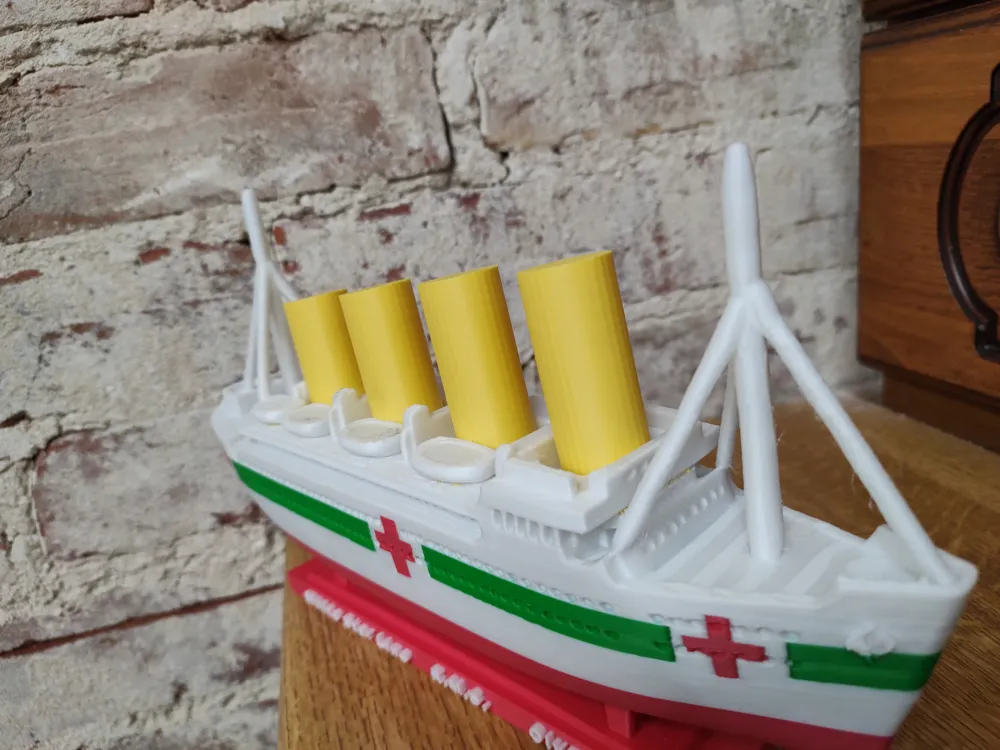
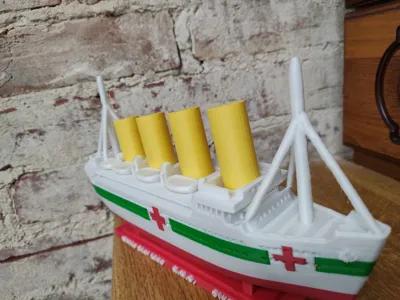
This model is that of Britannic the last in the Olympic class liners built by the famous White Star Line and full sister ship to her more well known sister the Titanic. Her story differs as she never made it into civilian life as she was only just completed at the outbreak of the first world war and so she was acquisitioned by the admiralty. Little known fact a lady called Violet Jessop who was a steward on the Titanic and one of the few survivors of the disaster, became a nurse and was stationed on the Britannic she also was aboard when the Britannic struck a mine and sank just off the Aegean coast Violet later became know as “Miss Unsinkable”.
I will also be shortly be sharing a 3d model of her Sister Olympic in her early troopship colours. I will expanding this to include her well known sister ship The Titanic very soon, so follow us for more.
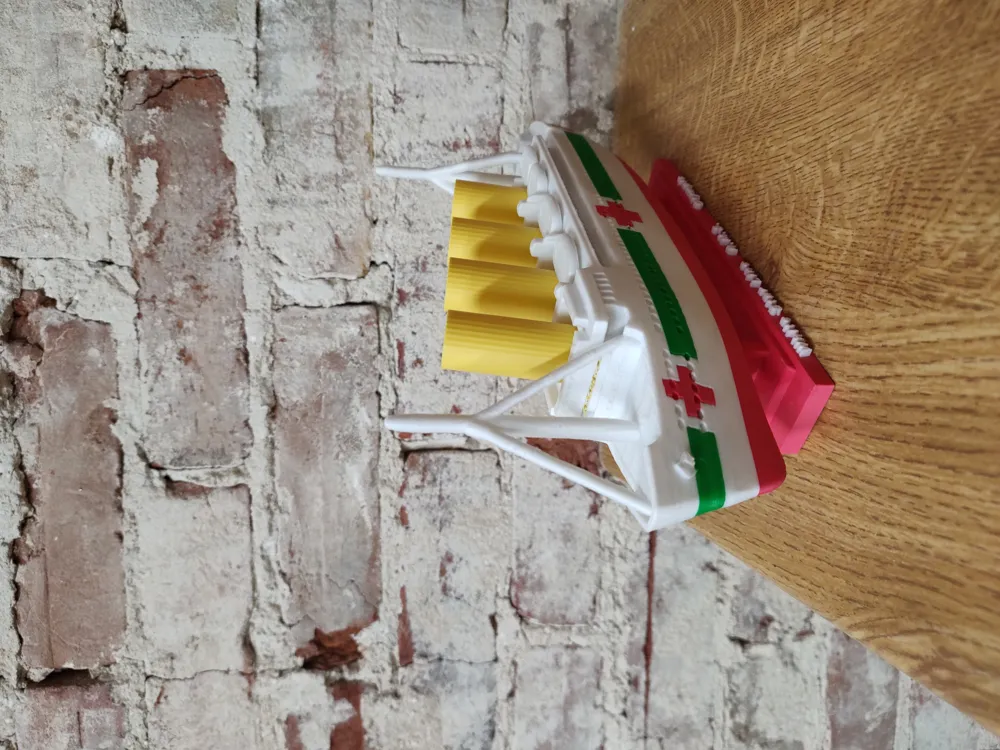
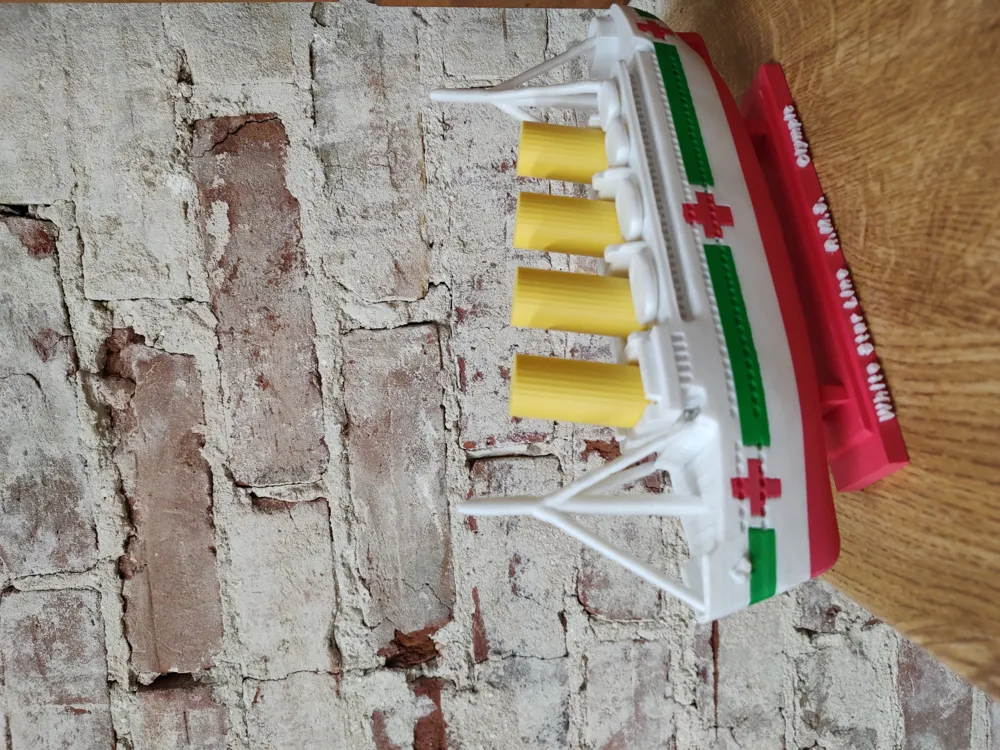
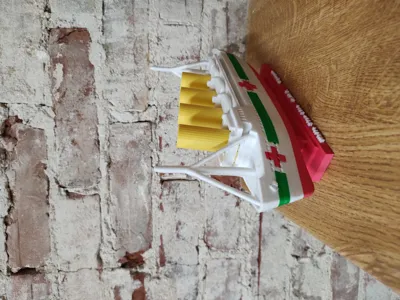
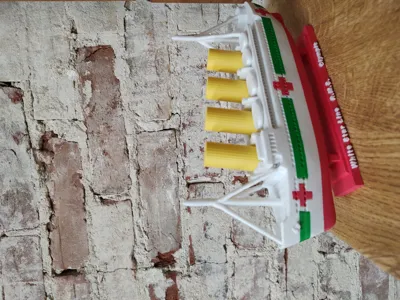
I really hope you love “Britannic in her Geneva Convention hospital ship colours” as much as we do and as always Happy Printing.
RMS Britannic: The True Story of the Giant Hospital Ship
Birth of a Giant
From the slips of Harland & Wolff in Belfast, the third of the White Star Line's Olympic-class liners began to take shape. Conceived alongside Olympic and Titanic, Britannic was laid down in November 1911 and launched on 26 February 1914. At 882 feet long, she was the largest of her class, boasting subtle improvements inspired by the tragedy of Titanic: stronger watertight bulkheads, reinforced hull plating, and upgraded lifeboat arrangements.
She was to be named Britannic, a title meant to evoke national pride and strength. In peacetime, she would have been the grandest of the trio, fitted with lavish interiors designed to eclipse her sisters. Yet fate had other plans. Britannic never carried a paying passenger in her short career.
Into the Great War
Before her fitting-out was complete, the outbreak of the First World War changed her destiny. In 1915, the Admiralty requisitioned Britannic and converted her into a hospital ship. Her hull was painted white, marked with vast green stripes and red crosses, and her decks were filled not with tourists but with doctors, nurses, and wards for the wounded.
As His Majesty's Hospital Ship Britannic (HMHS Britannic), she served in the Mediterranean, ferrying casualties from the battlefields of Gallipoli and Salonika back to safety. With her immense size, speed, and modern facilities, she was hailed as the finest hospital ship afloat—a floating sanctuary for the broken of war.
Tragedy in the Aegean
On the morning of 21 November 1916, while sailing through the Kea Channel in the Aegean Sea, disaster struck. At approximately 8:15 a.m., an enormous explosion tore through her starboard side. It was a mine, laid by the Imperial German Navy. The effect was catastrophic. Water surged in, and though her watertight doors closed, portholes left open for ventilation allowed the sea to spread rapidly.
The great liner began to list. Within minutes, her bow dipped, and lifeboats launched prematurely were pulled into her massive propellers, adding to the tragedy. Yet unlike Titanic, the crew had time to act, and nearby vessels rushed to assist. Of the 1,066 aboard, 1,036 survived—a testament to improved safety and the training of her crew. Still, thirty lives were lost.
At 9:07 a.m., less than an hour after the explosion, the largest hospital ship in the world rolled onto her starboard side and vanished beneath the Aegean.
The End of an Era
Britannic's loss marked the second White Star sister gone in just four years. For the Admiralty, it was another bitter reminder of the perils of modern naval warfare. For White Star, it was the end of their grand Olympic-class dream.
She was intended to be the crown jewel of the fleet, but instead, Britannic's career lasted less than a year in active service. The largest liner ever lost in war, she never carried the luxury and glamour for which she was built.
Legacy of the Giant Hospital Ship
Though her life was short, Britannic left a legacy as profound as that of her sisters. She bore witness to the horrors of the Great War, saving thousands of wounded soldiers before her final voyage.
For decades she lay silent on the seabed, until Jacques Cousteau located her wreck in 1975. Today, she rests in remarkable preservation in the clear waters of the Aegean, her hull still vast, her name still legible on the bow.
Together, Titanic, Olympic, and Britannic form a story of ambition, triumph, and tragedy—three giants born of the same dream, yet fated to three very different ends.
Where Olympic earned the name "Old Reliable," Britannic is remembered as the noble giant who gave her short life in service, not to luxury, but to healing—the great hospital ship of the White Star Line.
We really hope you love this model as much as we have designing and creating it and as always Happy Printing.
License

You shall not share, sub-license, sell, rent, host, transfer, or distribute in any way the digital or 3D printed versions of this object, nor any other derivative work of this object in its digital or physical format (including - but not limited to - remixes of this object, and hosting on other digital platforms). The objects may not be used without permission in any way whatsoever in which you charge money, or collect fees.


Comment & Rating (4)