
Medieval Row Houses Miniature 058
Print Profile(1)

Bill of Materials

Description
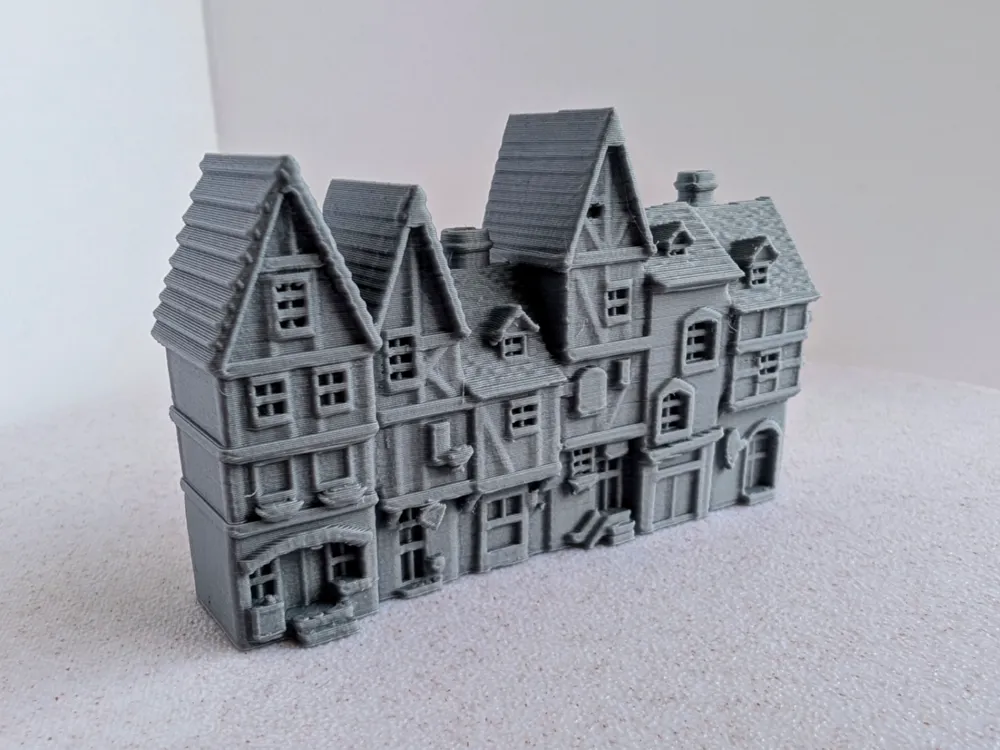

Medieval Row Houses Miniature - Tightly Packed Urban Buildings for Diorama Streets
This meticulously crafted 3D model showcases a spectacular array of German-style Fachwerk townhouses, representing the pinnacle of late medieval and early Renaissance urban architecture from the 15th and 16th centuries. These half-timbered burgher houses exemplify the sophisticated timber-framed construction techniques that transformed European town centers into vibrant commercial districts, where prosperous merchants and craftsmen displayed their wealth through elaborate architectural details.
Model Features
The model captures the essential characteristics of Germanic medieval urban architecture with extraordinary detail:
Structural Elements:
- Fachwerk timber-frame construction with exposed wooden skeletal framework filled with wattle and daub infill panels
- Dramatic overhanging upper stories (jettying) that project beyond lower floors, maximizing living space while creating distinctive stepped silhouettes
- Steep-pitched gabled roofs with individual dormer windows, designed for efficient water drainage and optimal use of attic space
- Multi-story construction ranging from 3-5 levels, reflecting the medieval urban practice of vertical expansion within constrained city plots
- Varied architectural decorations including carved brackets, ornamental timber patterns, and distinctive window arrangements
Historical Authenticity:
This model represents the "Great Rebuilding" period of the late 15th and early 16th centuries, when Europe's growing prosperity enabled burgher families to construct impressive timber-framed houses that served both commercial and residential purposes. Each narrow house typically featured workshops and shops on ground level with living quarters above, demonstrating the integrated work-life arrangements of medieval urban communities.
Architectural Innovation:
The prominent jettied construction visible throughout this row served multiple practical purposes: increasing floor space without expanding the ground footprint, providing weather protection for lower levels, demonstrating structural engineering mastery, and displaying economic status through elaborate carpentry skills. This technique was so successful it became the standard for urban construction across Northern Europe.
Urban Planning Context
These structures represent the burgher class housing that formed the economic backbone of medieval European cities. The continuous façade with varied rooflines reflects the guild regulations and building codes that governed medieval urban development, while the narrow frontages (typically 5-10 meters wide) maximized the number of valuable street-facing properties.
The elaborate gabled designs and decorative timber patterns visible in this model showcase regional variations in Fachwerk artistry, particularly the German tradition of creating geometric and symbolic patterns in the exposed timber framework.
Construction Techniques
The half-timbered construction method (German: Fachwerkbauweise) involved creating a wooden skeleton using carefully fitted and joined heavy timbers secured with wooden pegs, with the spaces between timbers (Fächer) filled with wattle and daub, brick, or stone rubble. The oldest surviving examples of such construction in Germany date from 1262, making this architectural tradition nearly 800 years old.
This model serves as an authentic representation of medieval Germanic urban prosperity, perfect for historical dioramas, educational displays, tabletop gaming, or architectural studies showcasing the remarkable engineering innovations and artistic craftsmanship that characterized Europe's most successful medieval commercial centers.
Prints well with standard Tree(auto) supports
The colored picture is just a visualization to suggest how the model could be painted. The actual print comes unpainted
Membership
Tip jar or license to sell? Click ‘Join’ and see what’s waiting
License

You shall not share, sub-license, sell, rent, host, transfer, or distribute in any way the digital or 3D printed versions of this object, nor any other derivative work of this object in its digital or physical format (including - but not limited to - remixes of this object, and hosting on other digital platforms). The objects may not be used without permission in any way whatsoever in which you charge money, or collect fees.


Comment & Rating (16)