
Medieval Row Houses Miniature 057
Print Profile(1)
Bill of Materials

Description
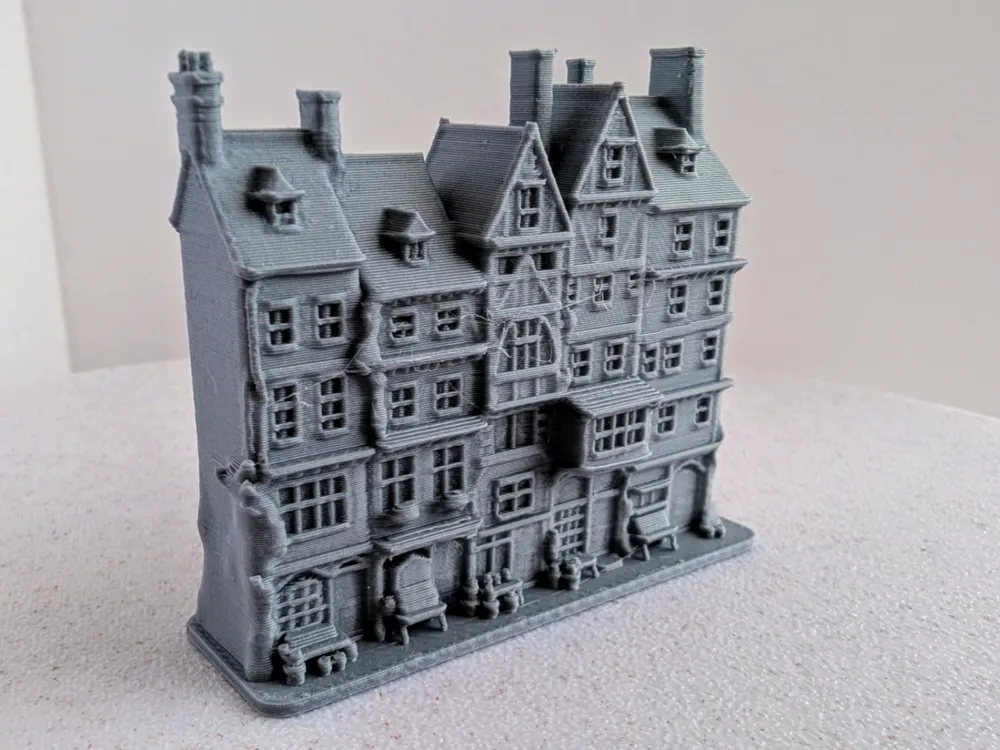

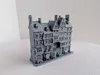
Medieval Row Houses Miniature - Tightly Packed Urban Buildings for Diorama Streets
This exquisite 3D model depicts a Tudor-Elizabethan terrace of gabled townhouses, representing the pinnacle of 16th century English urban architecture. These multi-story merchant houses showcase the sophisticated building techniques and architectural innovations that transformed medieval towns into prosperous commercial centers during England's golden age of trade and exploration.
Model Features
The model captures the quintessential elements of Tudor-Elizabethan urban architecture with remarkable detail:
Structural Elements:
- Steep gabled roofs with pronounced triangular forms, characteristic of Tudor design principles for efficient water shedding and dramatic appearance
- Prominent dormer windows with individual gabled projections, providing light and space to upper-level chambers
- Multi-story construction ranging from 3-4 levels, reflecting the Tudor practice of vertical urban development
- Elaborate chimney stacks featuring decorative brick designs and multiple flues, symbolizing wealth and domestic comfort
- Continuous façade arrangement with varied rooflines creating visual rhythm while maintaining structural unity
Architectural Innovation:
This model represents the "Great Rebuilding" period of the late 16th century, when prosperity from maritime trade enabled merchants to construct impressive urban residences. The stepped gable variations and asymmetrical compositions reflect the Tudor preference for picturesque irregularity over strict Classical symmetry.
Historical Authenticity:
These structures embody the merchant house tradition that flourished in England's thriving port towns like Southampton, York, and Tenby. Each narrow townhouse typically served dual commercial and residential purposes, with shops on ground level and living quarters above, demonstrating the integrated work-life arrangements of Tudor merchant families.
Domestic Architecture Evolution
The prominent chimney stacks visible on each house represent a revolutionary advancement in domestic comfort - by the late 16th century, multiple fireplaces per dwelling had become standard in prosperous homes, with elaborate chimney designs serving as status symbols. The ornate brick chimneys often featured decorative caps, twisted forms, and grouped flues that created dramatic roofscapes.
The gabled dormers emerging from the steep roofs provided essential light and headroom for upper-story chambers, transforming previously unusable attic spaces into comfortable living areas. This innovation allowed urban builders to maximize living space within constrained city plots.
Urban Planning Context
These terraced houses reflect the medieval-to-Tudor transition in urban planning, where narrow street frontages necessitated vertical expansion and creative space utilization. The continuous building line created efficient use of expensive urban land while maintaining the guild regulations that governed building standards and architectural consistency.
This model serves as an authentic representation of Tudor-Elizabethan urban prosperity, perfect for historical dioramas, period gaming, architectural education, or heritage displays showcasing England's transformation during the Renaissance era when maritime commerce created unprecedented urban wealth and architectural innovation.
Prints well with standard Tree(auto) supports
The colored picture is just a visualization to suggest how the model could be painted. The actual print comes unpainted
🔧 Scaling:
Designed as a miniature, but fully scalable in the desktop slicer if you prefer a larger print.
Membership
Tip jar or license to sell? Click ‘Join’ and see what’s waiting
License

You shall not share, sub-license, sell, rent, host, transfer, or distribute in any way the digital or 3D printed versions of this object, nor any other derivative work of this object in its digital or physical format (including - but not limited to - remixes of this object, and hosting on other digital platforms). The objects may not be used without permission in any way whatsoever in which you charge money, or collect fees.


Comment & Rating (11)