
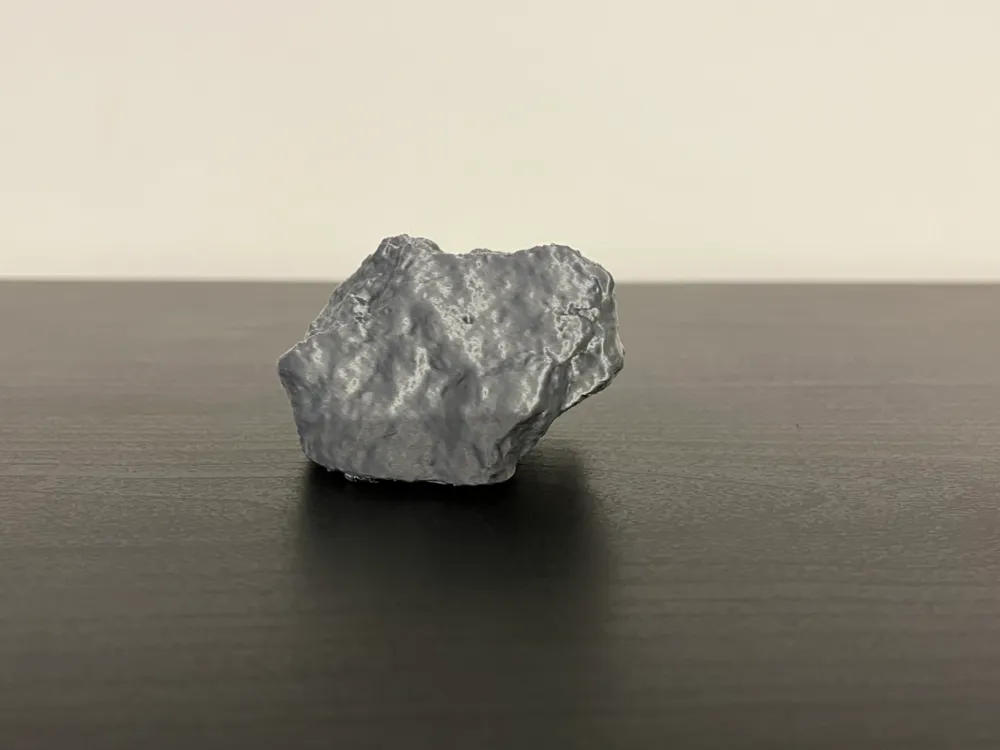
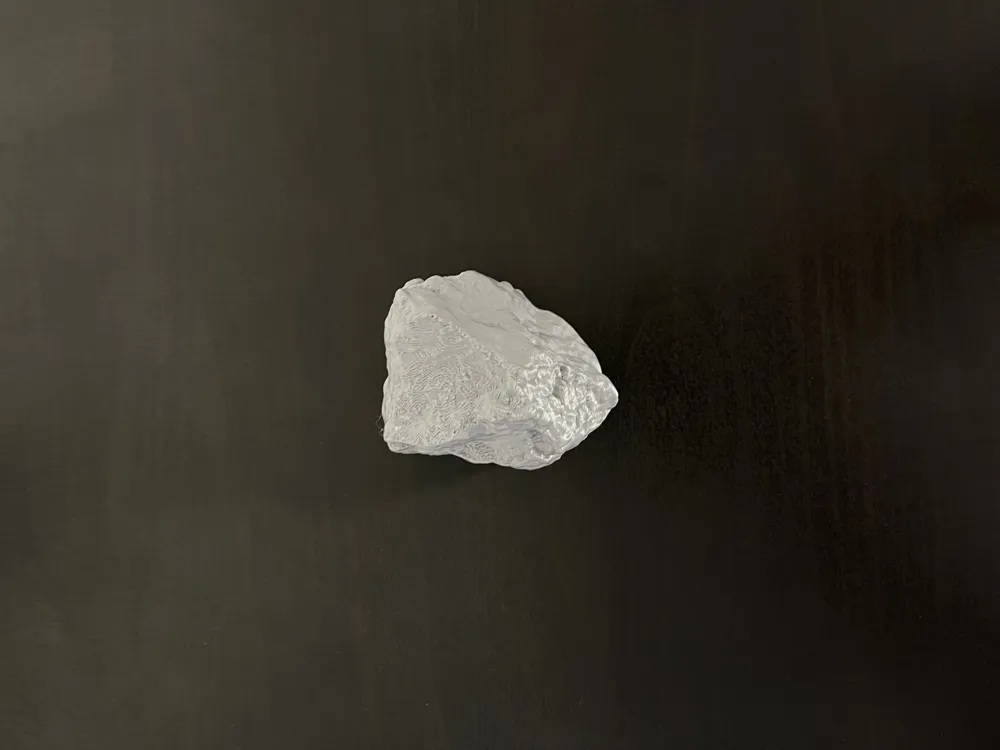
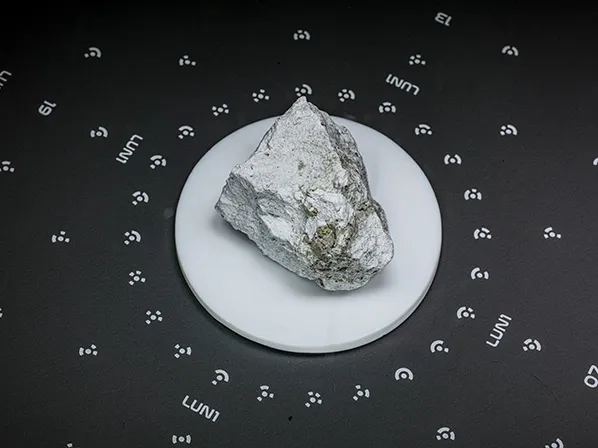
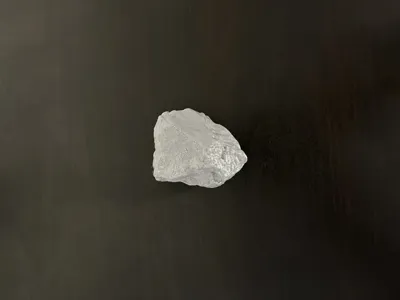
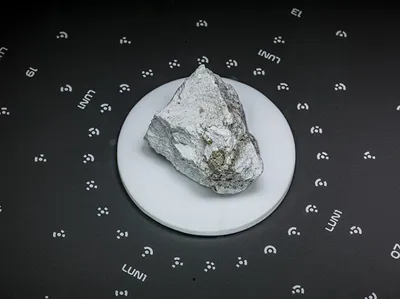
Lunar Sample n°60025.241
Print Profile(1)

Description
Lunar Sample 60025 is truly an elder amongst the Apollo Lunar Sample Collection.
Classified as a Ferroan Anorthosite and dated to be around 4.4 billion years old, it is one of the oldest rocks brought back from the Moon. 60025 was collected during the Apollo 16 surface mission, which intended to study both the Descartes and Cayley Formations and was found just 15 meters from the Lunar Module.
The formation story of this incredible piece of our Moon is as wondrous as it is ancient.
When you look up at the Moon at night, the highlands are the lighter areas you see on the lunar surface and they are compositionally different than the large darker areas you see, which are the mare basins. The highlands are much older features and primarily anorthositic in composition, anorthite plagioclase being one of the primary minerals to have crystalized out of the magma ocean that covered the Moon in its infancy. Being less dense than the magma, this light-colored mineral floated to the top of the magma ocean, forming the Moon's first crust around 4.4 billion years ago.
Lunar Sample 60025 is a piece of this first crust.
Studies estimate that 60025 formed at a depth of around 21 kilometers, and additional calculations tell the story of a very prolonged cooling rate of about 18-degrees Celsius every million years. The ferroan anorthosite suite of Apollo Lunar Samples, which includes plutonic rock 60025, has provided significant understanding of the chronology of lunar crust formation, and many studies have included this Moon rock in assessing the timeline.
Most of the plutonic rocks that formed from ancient lunar magmatism in the Apollo collection were crystalized directly out of the fledgling Moon's magma ocean, which itself formed through the Moon's cataclysmic impact-origin. Lunar Sample 60025 also tells the story of continued impacts on the lunar surface. While most of the large impact events can be dated between 3.5 and 4.1 billion years ago, thought by some to represent a Late Heavy Bombardment period, the impact event that originally excavated 60025 from its depth below the surface is thought to have occurred 4.3 billion years ago, indicating that large impact events may still have been occurring during the Moon's earliest formation.
60025 became re-emplaced within the lunar crust after its initial ejection from the ancient impact event but was more recently freed again by another impact. Cosmogenic dating indicates that 60025 thereafter lay on the lunar surface for about 2 million years before being picked up by Apollo 16 astronauts. The remarkable story of lunar crustal formation may yet reveal new insight with the future study of samples that will be returned from the Artemis surface missions.
License



Comment & Rating (0)