
Young Chimpanzee Cranium and Mandible
Print Profile(1)

Description
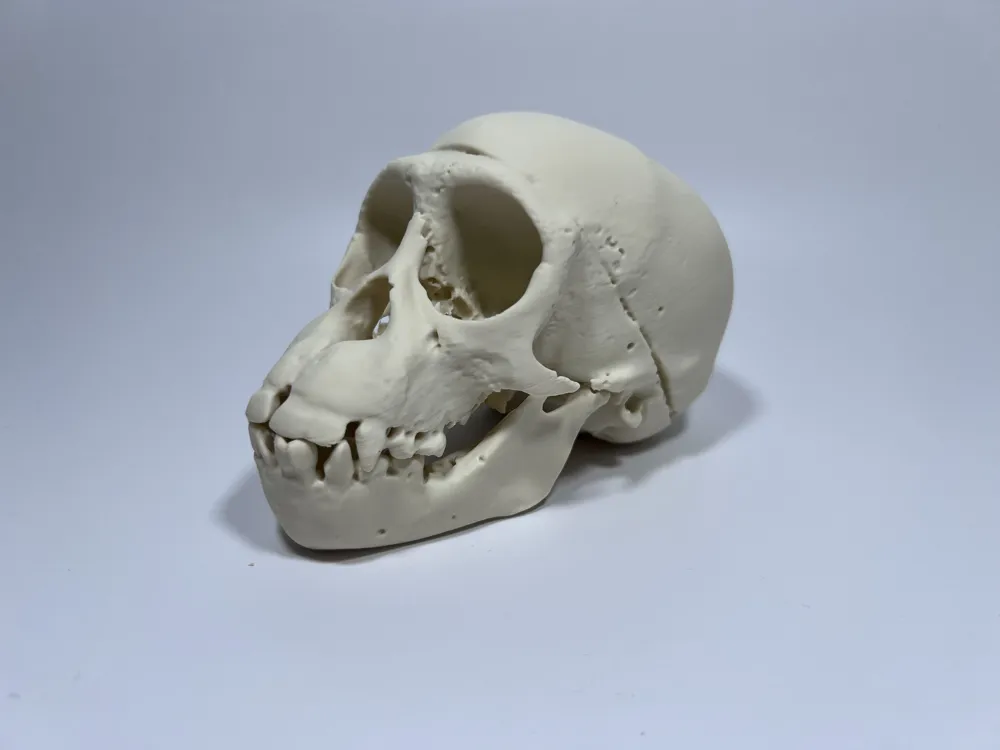
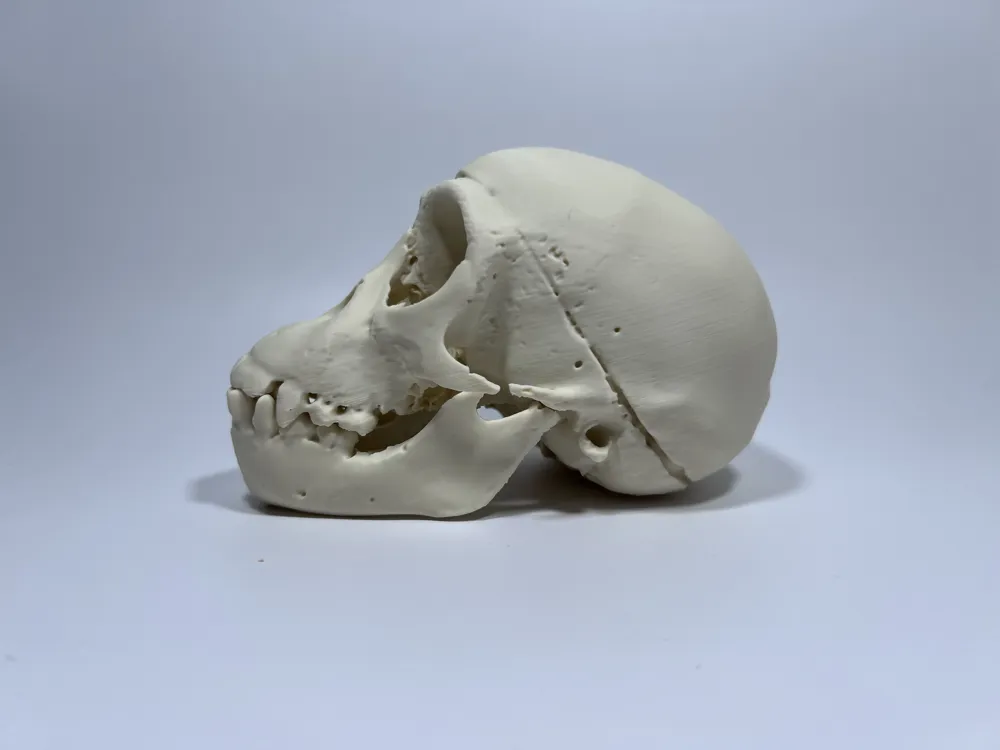
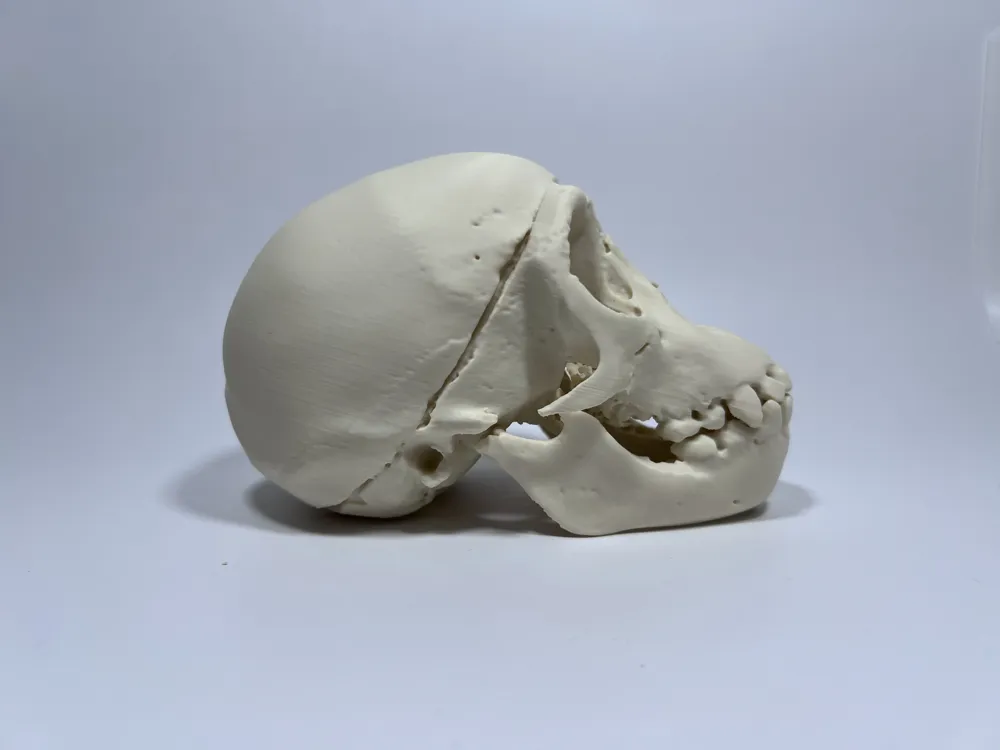
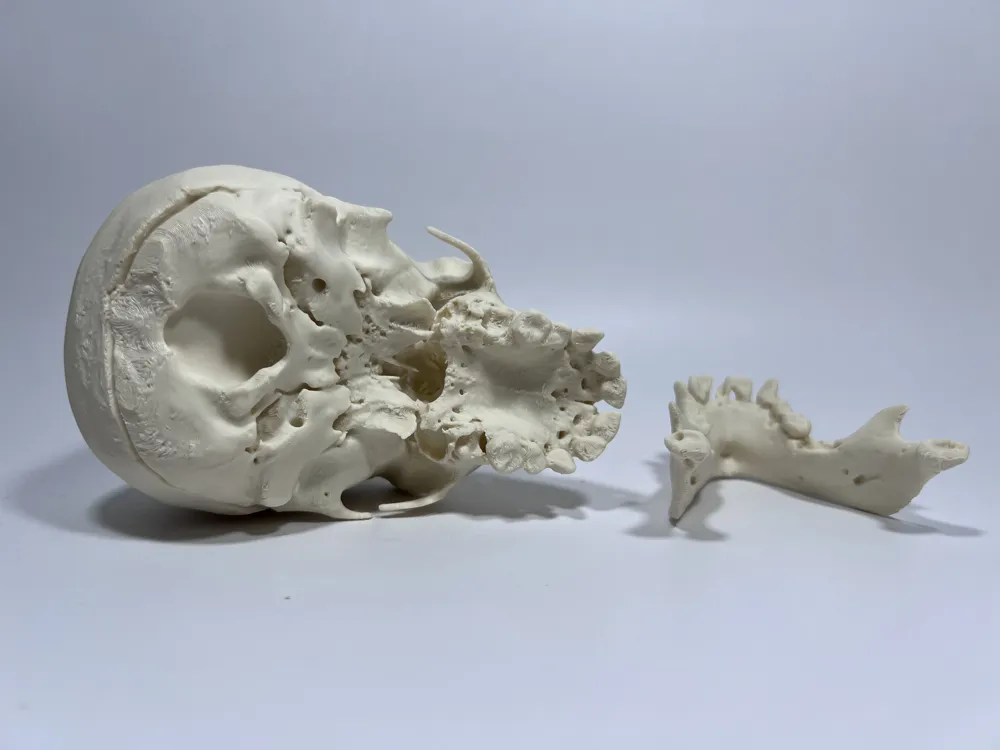
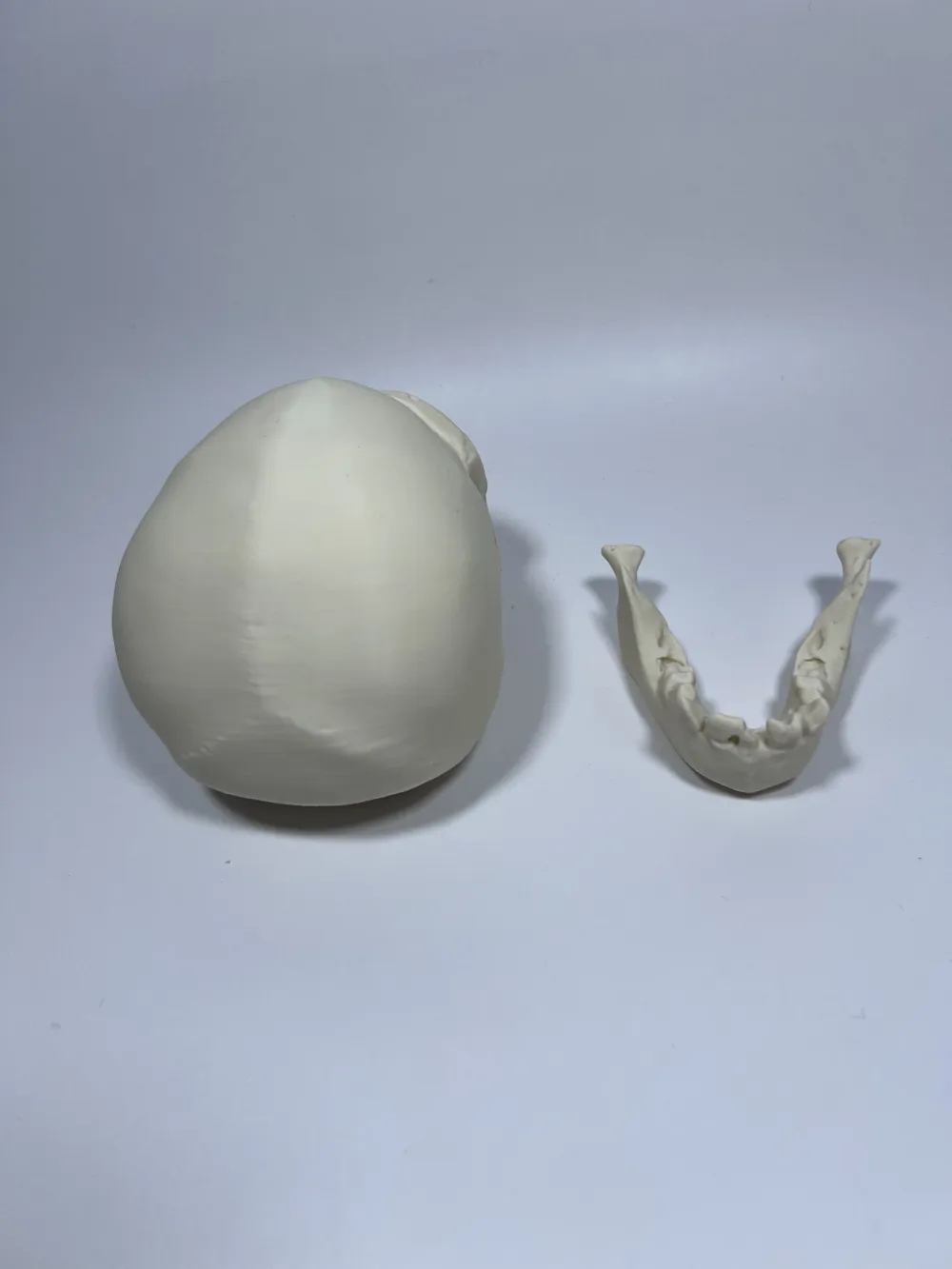
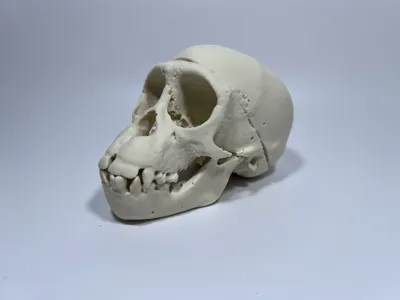
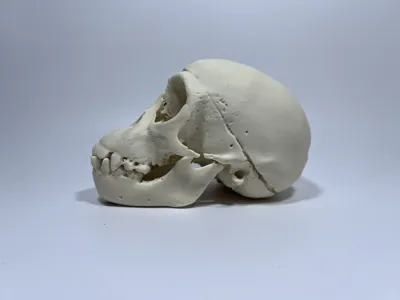
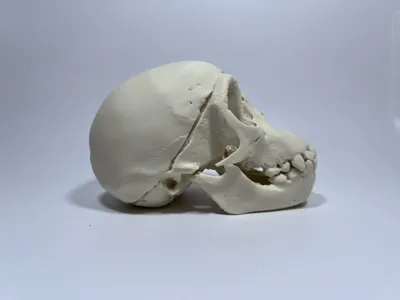
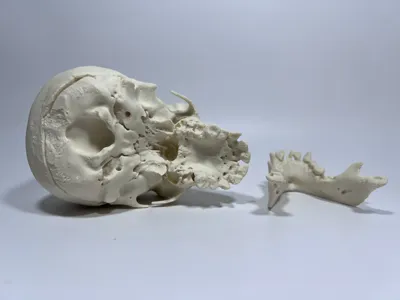
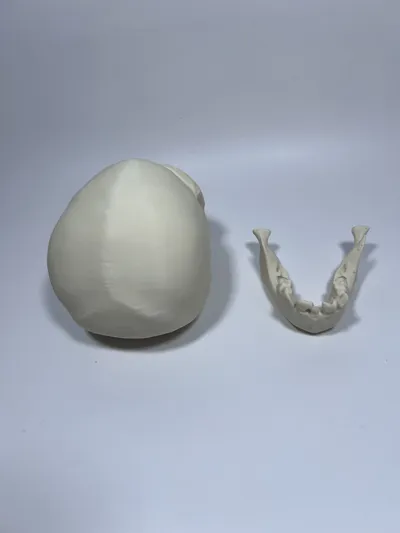
Young chimpanzee cranium and mandible remixed from the D’Arcy Thompson Zoology Museum at the University of Dundee. From their Sketchfab post:
“Pan sp. - Chimpanzee. DUNUC 2404 & 2404/1. Length=15cm. Acquired by D’Arcy Thompson from William Cross of Liverpool in 1886. Writing to his grandfather, D’Arcy noted: “I yesterday received a chimpanzee, one of the most manlike of apes; it is the rarest and most valuable specimen I have yet had… One of the young Doctors came and helped me to remove its brain at 11 o’clock at night. It was in beautiful condition. I shall be able to make a whole series of preparations besides cleaning the skeleton and stuffing the skin.” The stuffed skin and the brain are also still in the museum.Pan sp. - Chimpanzee. DUNUC 2404 & 2404/1. Length=15cm. Acquired by D’Arcy Thompson from William Cross of Liverpool in 1886. Writing to his grandfather, D’Arcy noted: “I yesterday received a chimpanzee, one of the most manlike of apes; it is the rarest and most valuable specimen I have yet had… One of the young Doctors came and helped me to remove its brain at 11 o’clock at night. It was in beautiful condition. I shall be able to make a whole series of preparations besides cleaning the skeleton and stuffing the skin.” The stuffed skin and the brain are also still in the museum.”
My changes to the original:
Because this was from a microCT scan, the original model contains internal surfaces. I removed these internal surfaces, filling holes and making each part “solid” to make 3D printing easier. My workflow is in this video. There is some damage and missing thin areas (orbits, maxilla) that I chose to leave in place. The cranium is still “solid” and printable--just be careful removing supports from these areas.
Print Settings:
I printed this with 0.12 mm layers on the Bambu a1 mini with Sunlu matte PLA in bone white. My support settings are tree, 2mm tip diameter, 0.20mm Top Z Distance, Top Interface Spacing = 0 (this makes a solid top surface which is easier to remove), Top Interface Layers = 2. You will still need to do a little cleanup on the occipital, but a kitchen torch should be enough to smooth it out.
High detail is still visible, including sutures and teeth--the sutures are a little subtle but still visible. This would be a great model to add to your osteology collections if you teach primatology, zoology, or paleoanthropology. Since this is a juvenile, I am working on a model that exposes the unerupted dentition--stay tuned!
Generic 3mf on Printables.
This remix is based on

License

You shall not share, sub-license, sell, rent, host, transfer, or distribute in any way the digital or 3D printed versions of this object, nor any other derivative work of this object in its digital or physical format (including - but not limited to - remixes of this object, and hosting on other digital platforms). The objects may not be used without permission in any way whatsoever in which you charge money, or collect fees.


Comment & Rating (6)