
Backscatter HF-1 Strobe Reduction Ring & Macro Set
Print Profile(2)

Description
Boost Me (for free)
Please Boost this design if you find it useful. Thank you for supporting my 3D printing hobby and sharing your enthusiasm.
[Update Dec 2025: Revised the base ring to make it a bit more robust. Macro rings are unchanged.]
[Added a slim version of the base ring that can accept a custom filter rather than sit on top of the OEM filters]
[Snugged up the 60mm macro ring for a better, tighter fit. ]
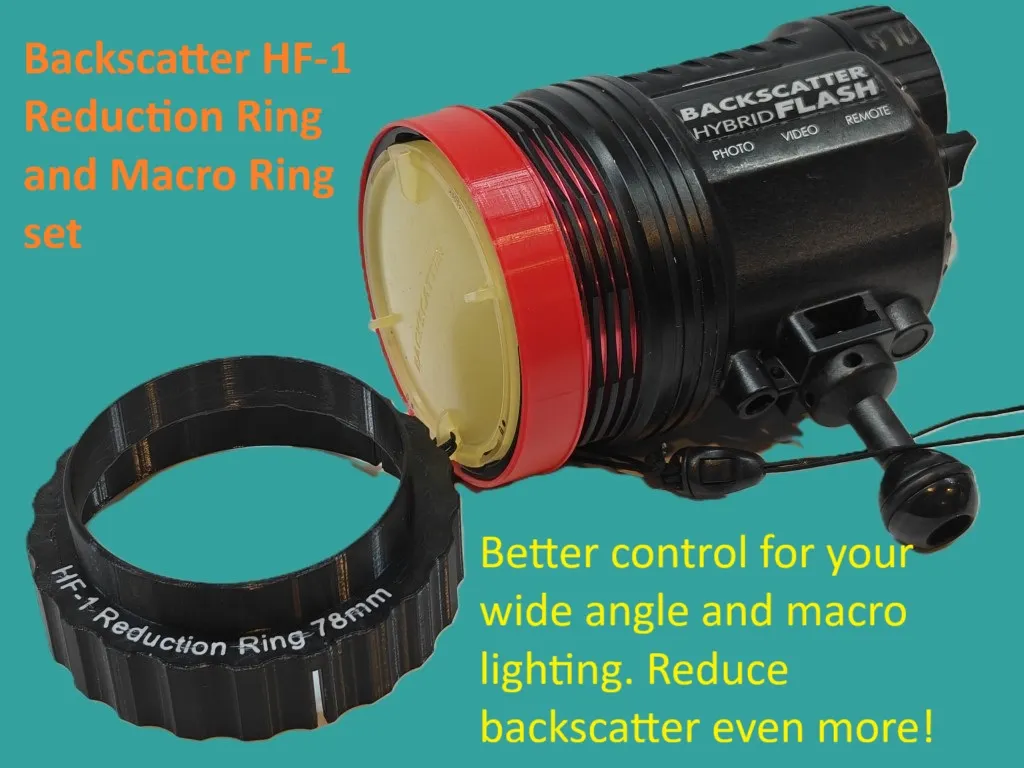
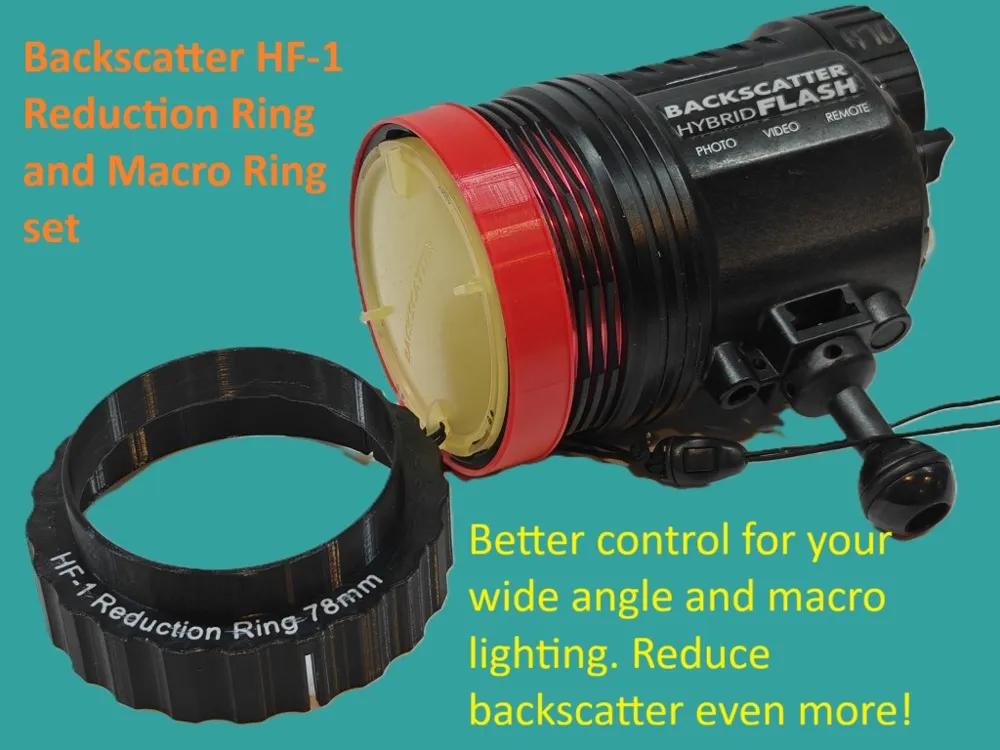
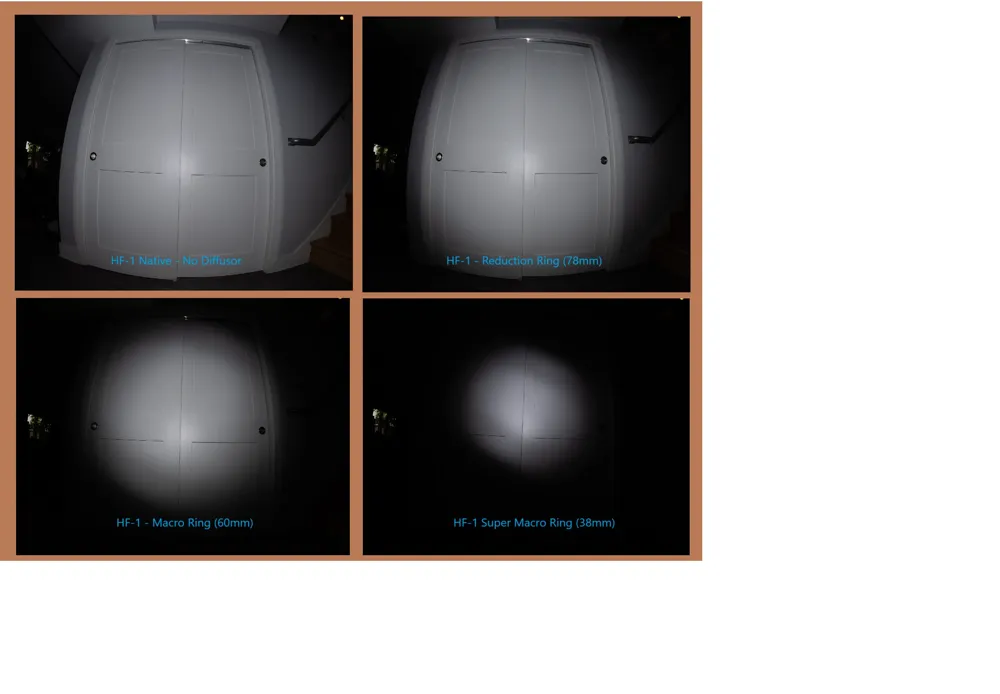
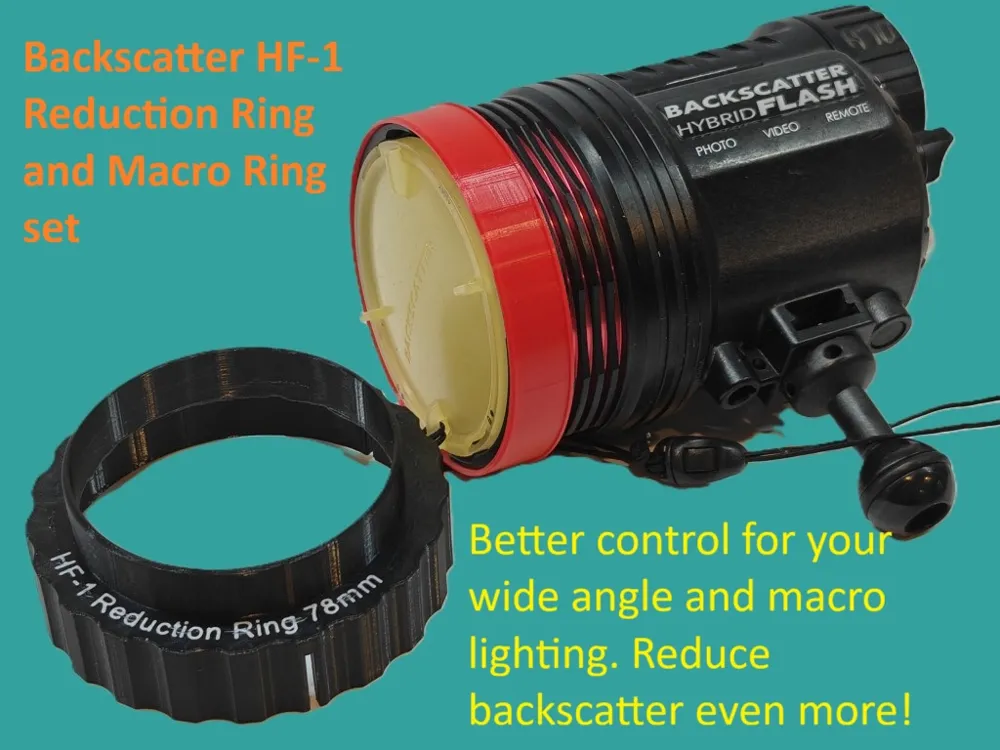
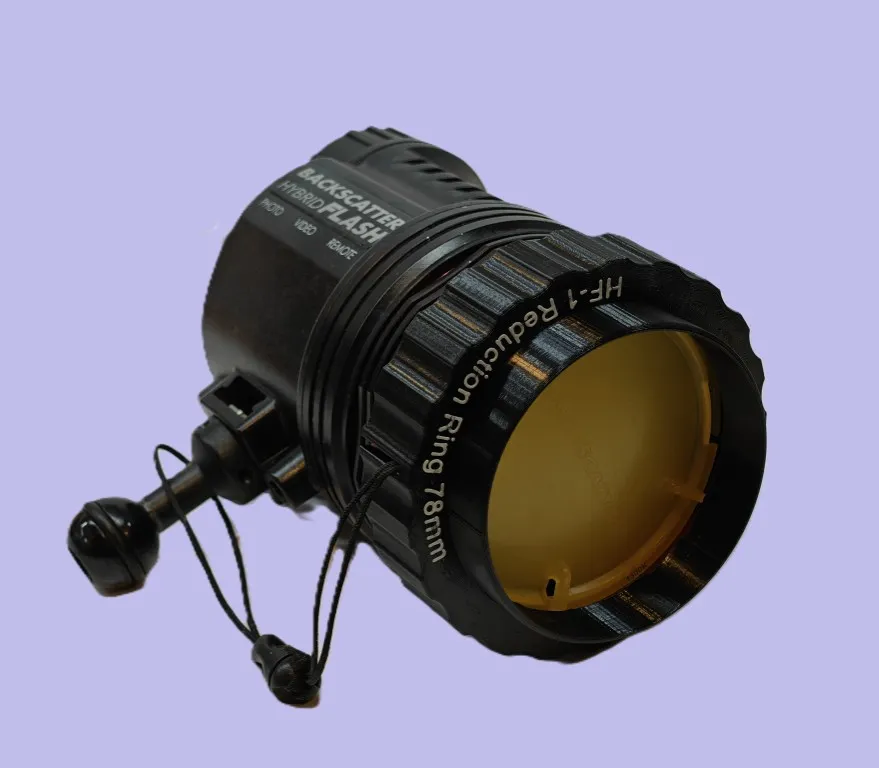
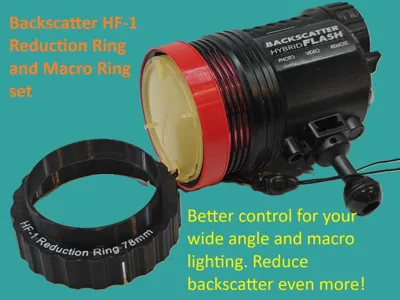
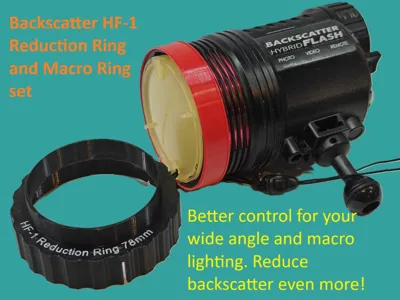
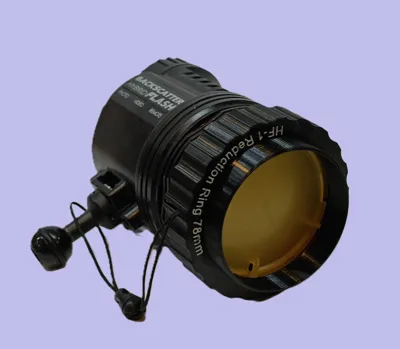
Reduction Rings are useful to reduce and narrow the spread of light from a strobe. In underwater photography you often want to narrow the beam to reduce backscatter in a wide-angle photo, or limit how much of the background is illuminated in a macro photo scene.
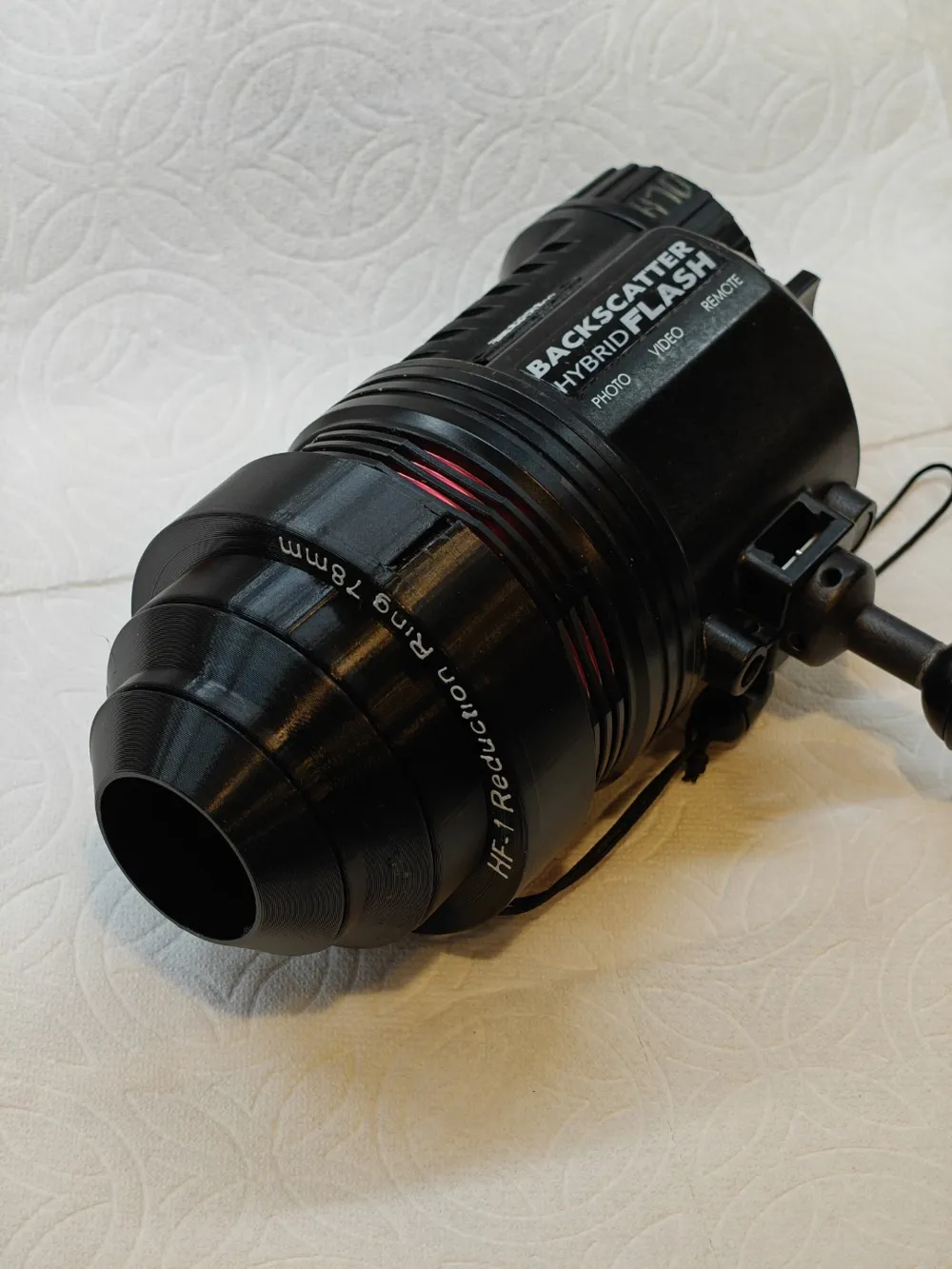
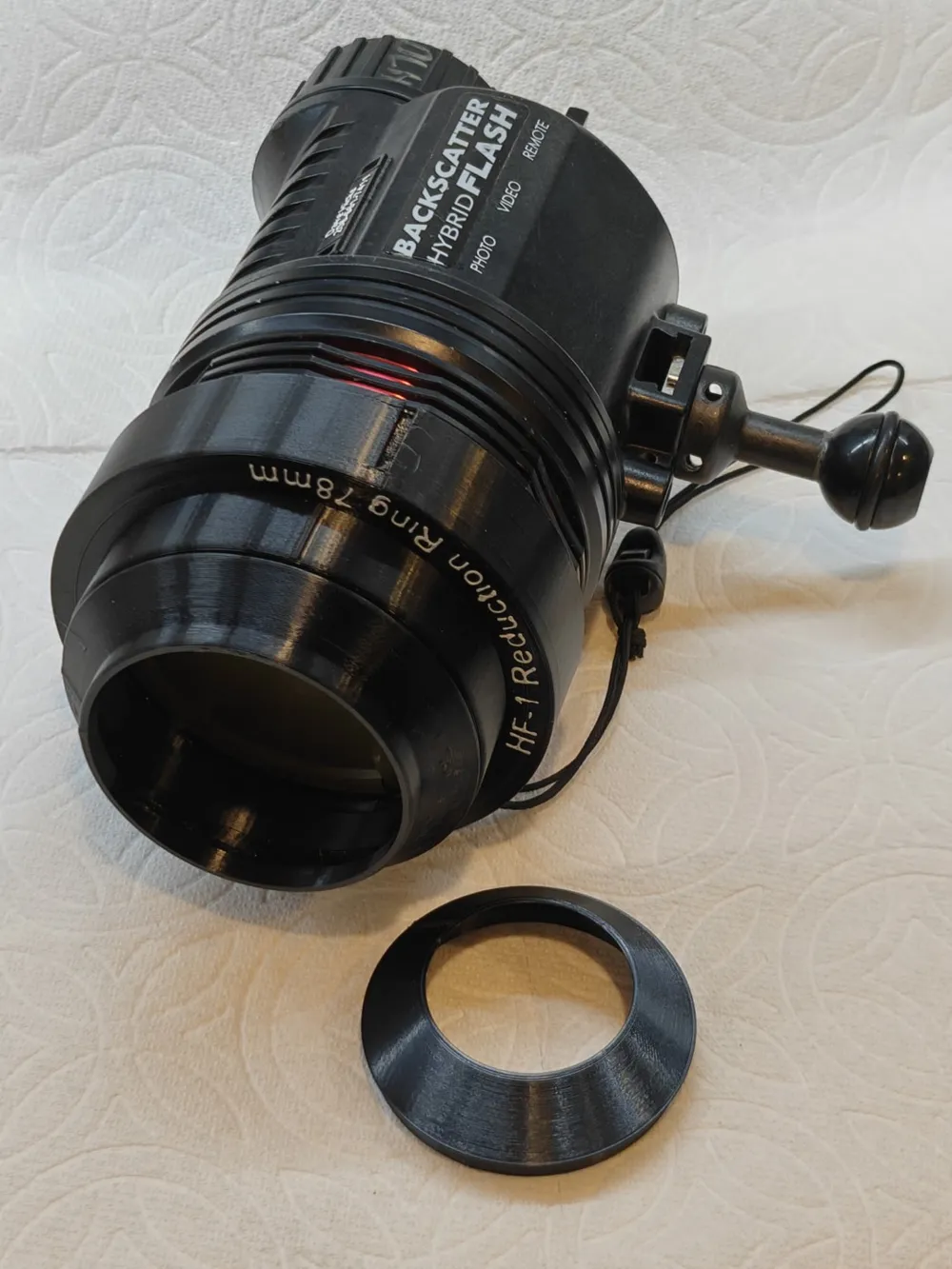
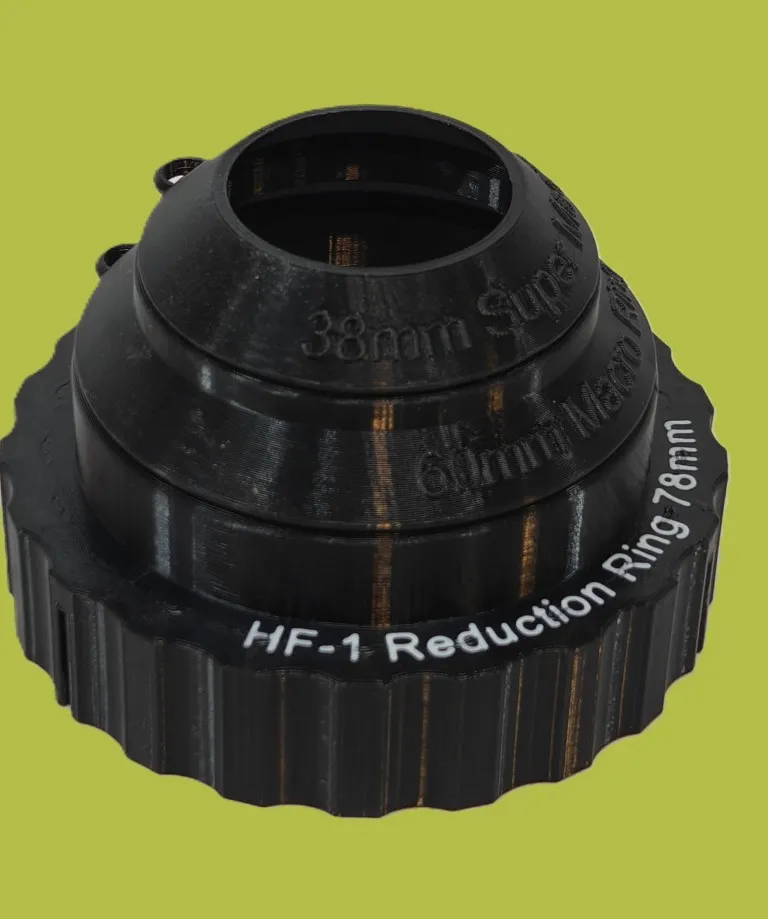
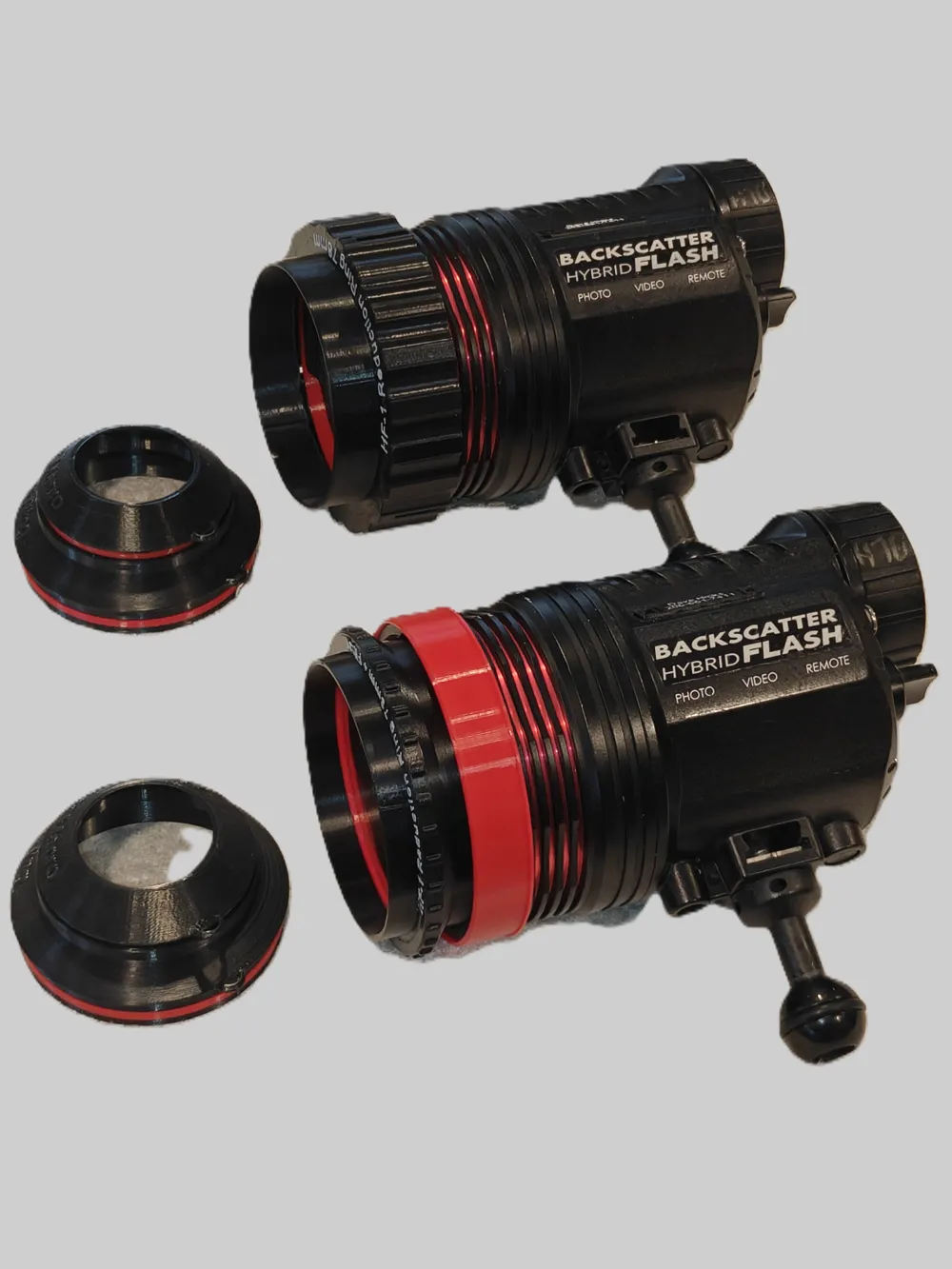
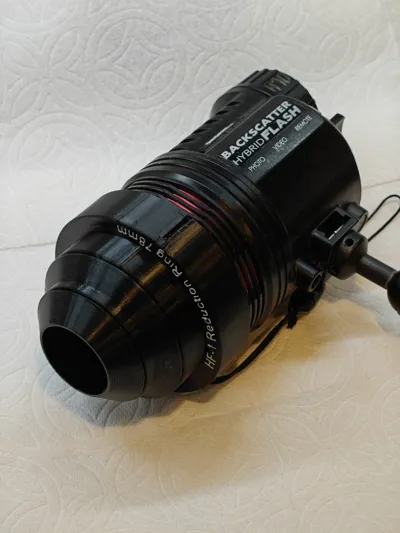
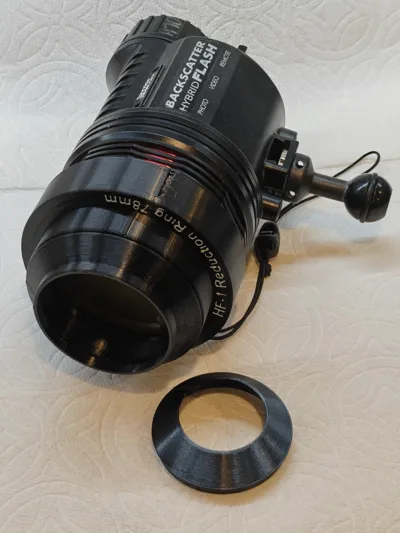
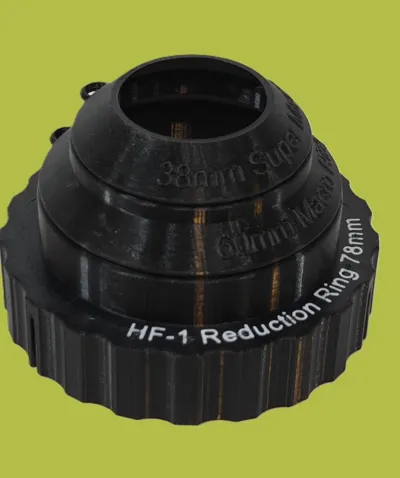
You can stack the parts of this set depending on your needs for the dive. Leave the base Rubber Bumper Ring installed all of the time. It will provide some added protection to your strobe from scrapes and scratches during normal use. Add the Large reduction ring to held reduce backscatter in Wide Angle photography and create a harder edge. If you are shooting the macro scenes, the two Macro rings will restrict the spread of the light cone to better control what parts of the scene are illuminated and further limit backscatter.
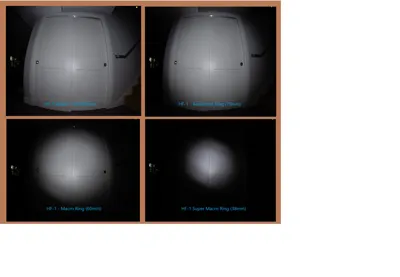
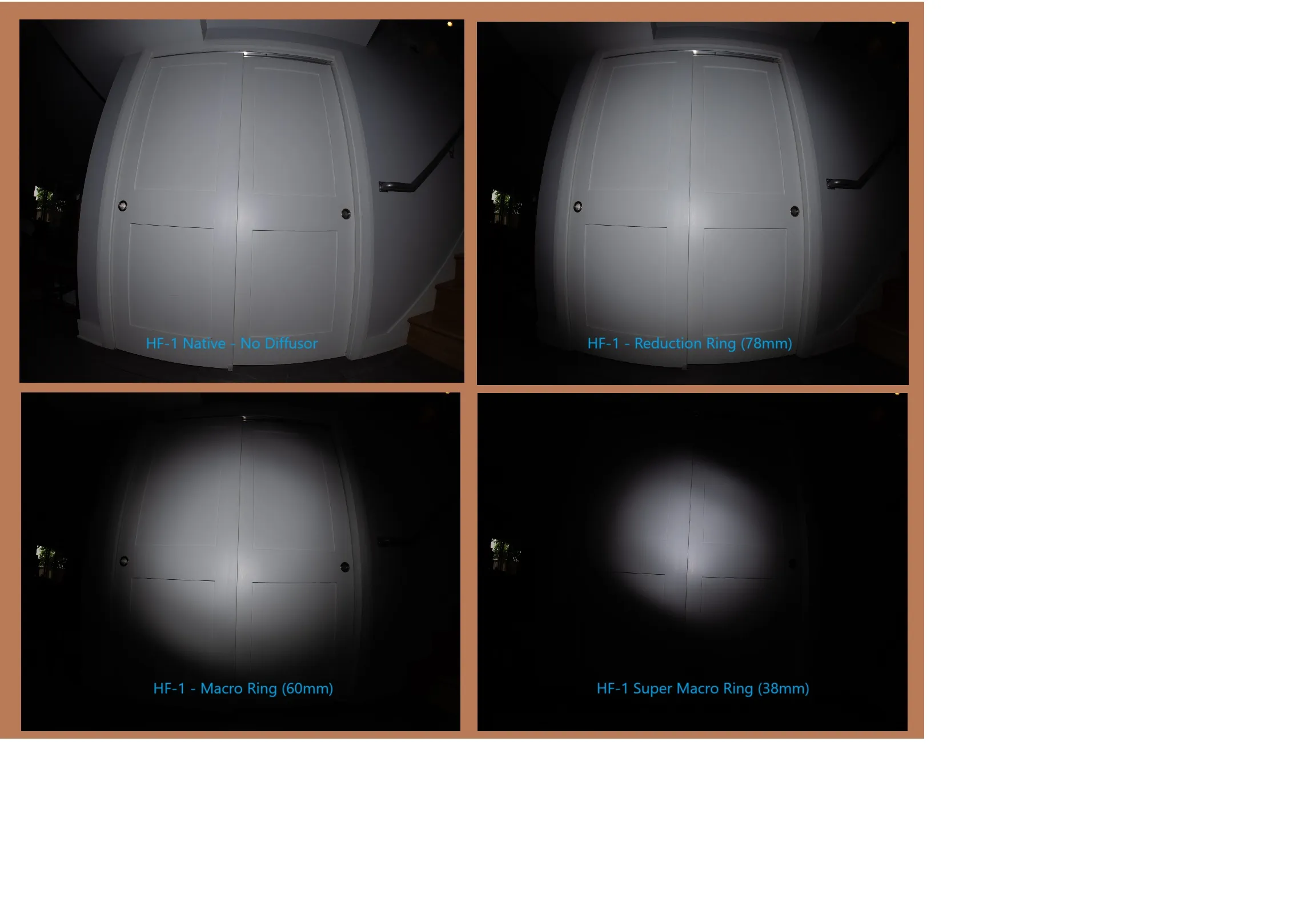
You can see below the impact of the various rings on the spread of the flash:
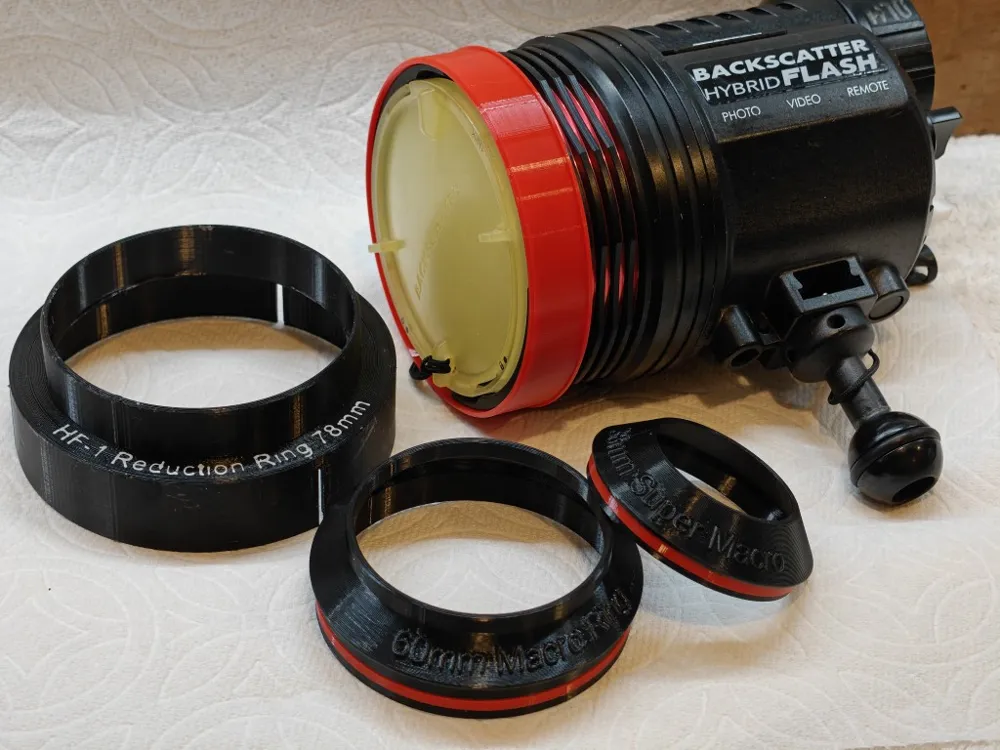
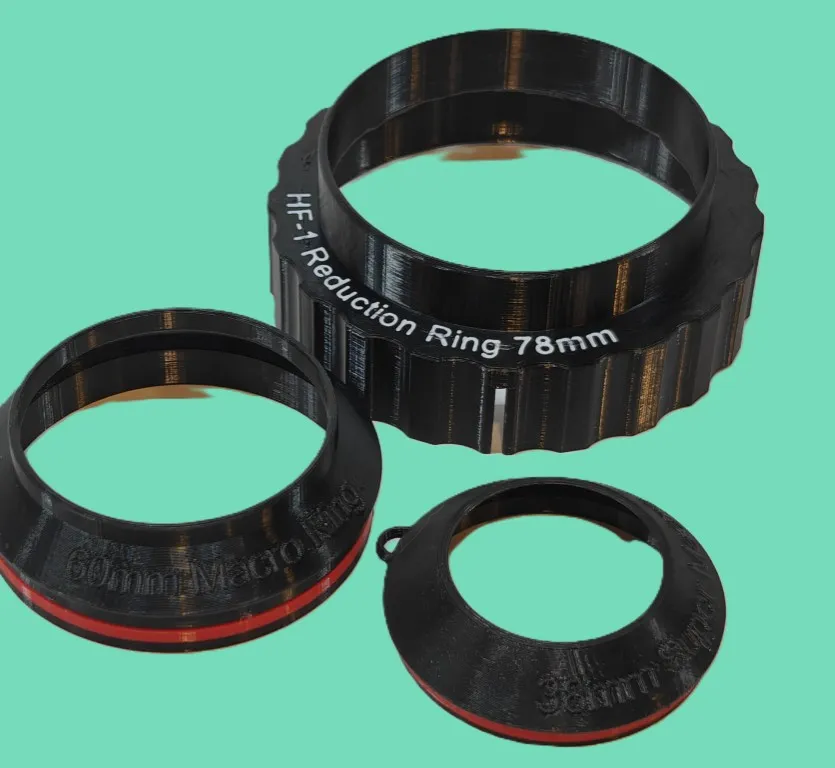
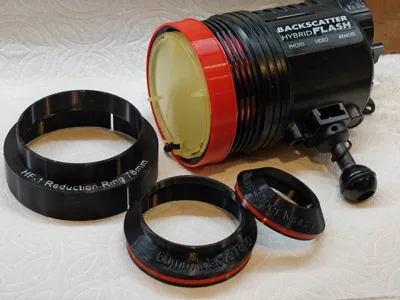
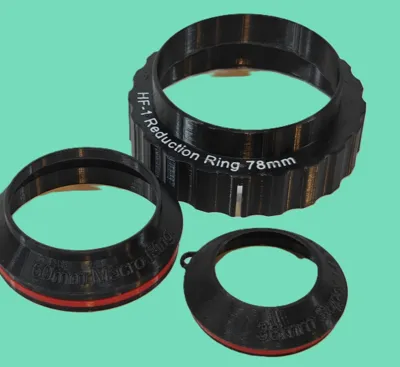
There are Four Plates with different components:
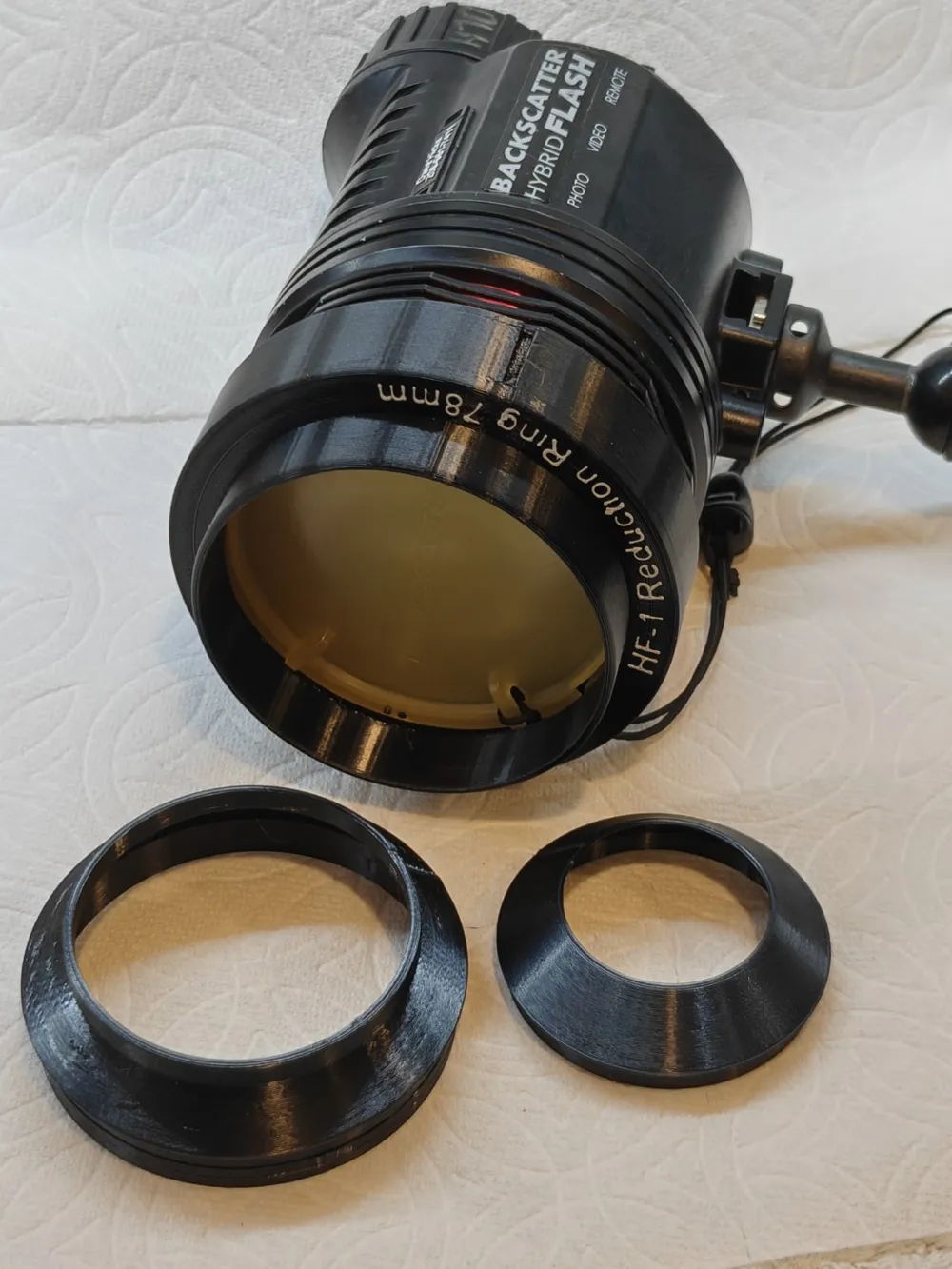
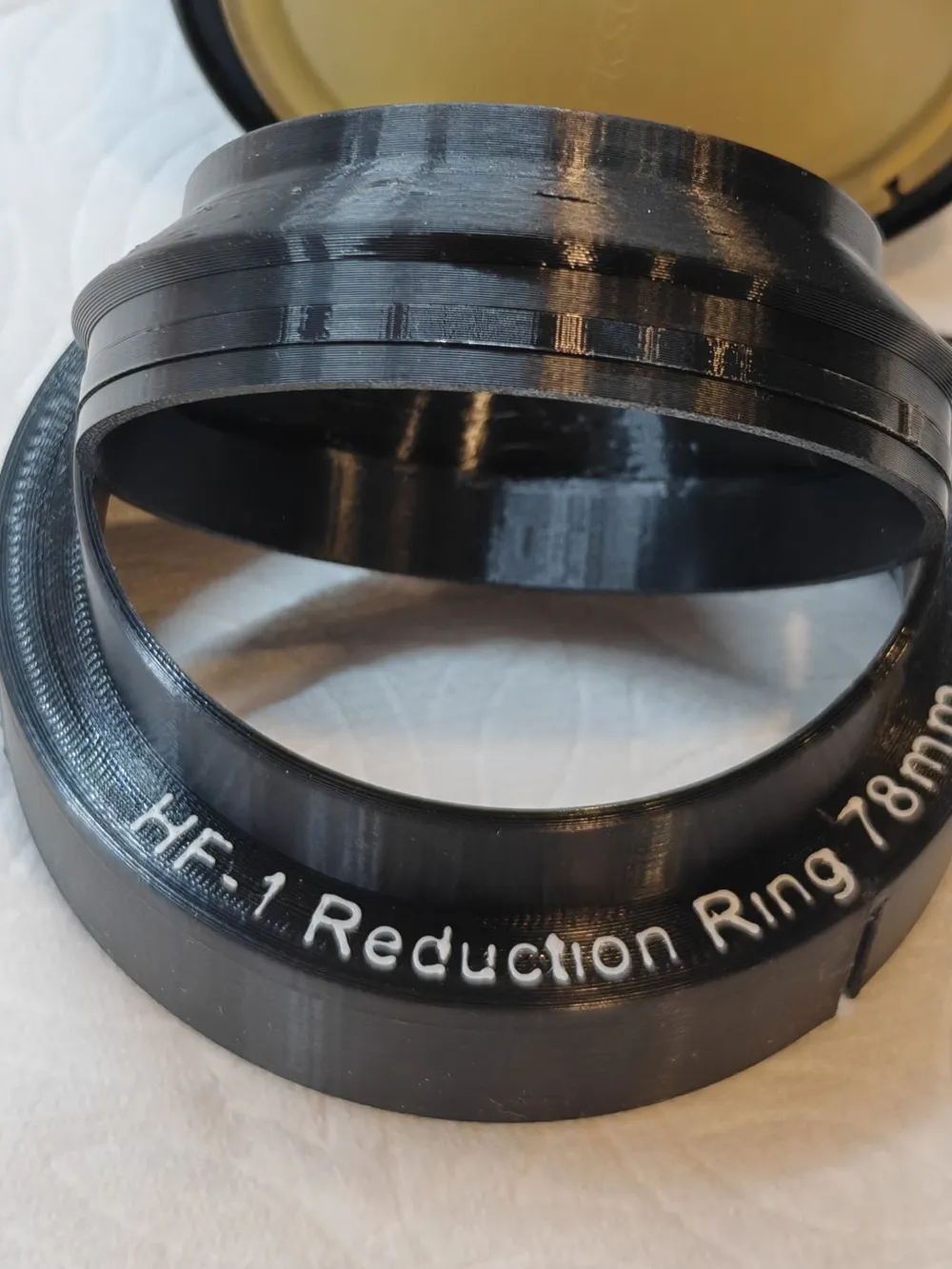
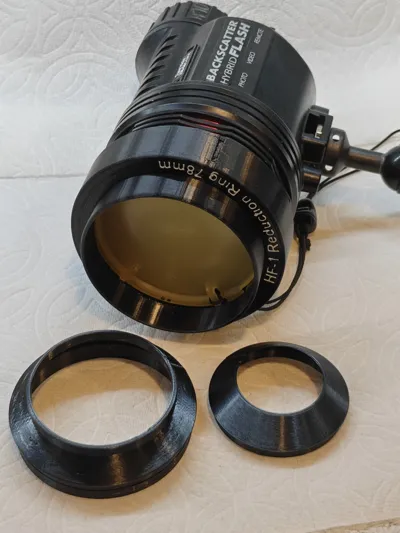
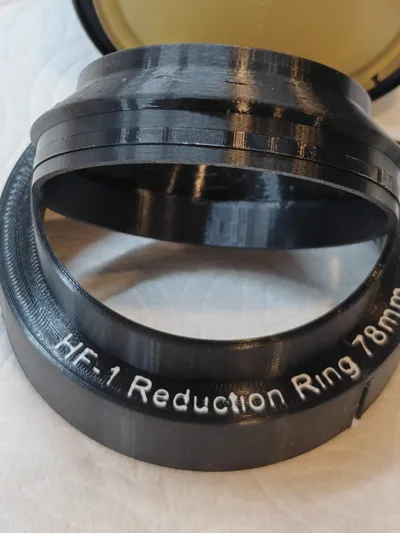
The Reduction Ring base slips over the “bumper ring” from Plate 2. It will slide over the strobe and rubber bumber with enough friction to hold it in place during a dive. It won't come off accidentally. The Reduction Ring reduces the width of the cone of light from the strobe only slightly. It is very good to use in water that is less than crystal clear in order to reduce backscatter.
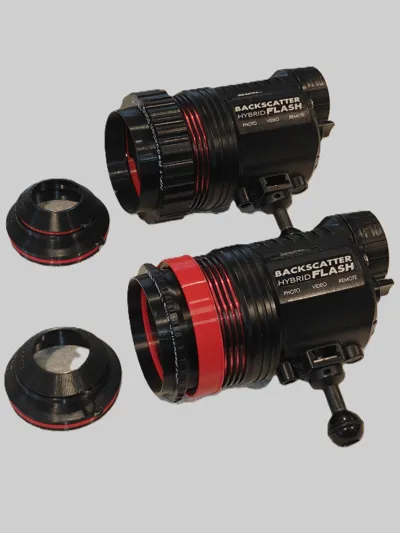
- The TPU rubber “bumper ring” is put over the front rim of the strobe. The six flanges should slot into the first row of heat spreader rings on the side of the strobe. You can leave this in place all the time, even when not using the reduction ring itself. It may help to protect your strobe from bumps and scratches.
Two TPU rubber gaskets that stretch over the base of the Macro and SuperMacro rings
The 60 mm Macro Ring - This is the larger of the two conical rings. Place the larger of the two slim gaskets around the base of the ring so that it slips into the groove. If your TPU ring has some bumps or strings trim this off carefully. The gasket needs a precise fit so use some sandpaper or a fine file to reduce any bumps. With the gasket installed, the Macro Ring will fit snugly on the large base 78mm reduction ring.
- The 38mm Super Macro Ring - This is the smaller of the two conical rings. Place the smaller of the two slim gaskets around the base of the ring so that it slips into the groove. If your TPU gasket has some bumps or strings trim this off carefully. The gasket needs a precise fit so use some sandpaper or a fine file to reduce any bumps. With the gasket installed, the Macro Ring will fit snugly onto the 60mm Macro ring.
Older Version 1 Design:
License

You shall not share, sub-license, sell, rent, host, transfer, or distribute in any way the digital or 3D printed versions of this object, nor any other derivative work of this object in its digital or physical format (including - but not limited to - remixes of this object, and hosting on other digital platforms). The objects may not be used without permission in any way whatsoever in which you charge money, or collect fees.


Comment & Rating (7)