
Dexa – the Shepherd's Sling (Sphendone) and Ammo
Print Profile(3)


Bill of Materials





- Paracord x 1: 4 mm width, about 2 m total
- Cement or plaster x 1: for casting glandes
Description
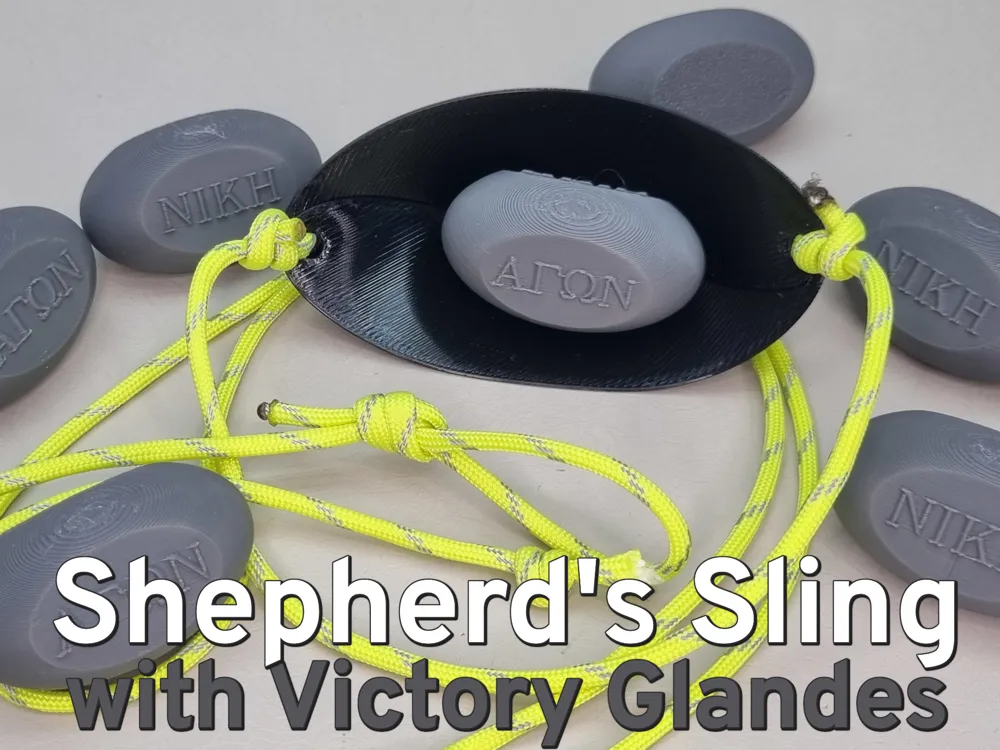
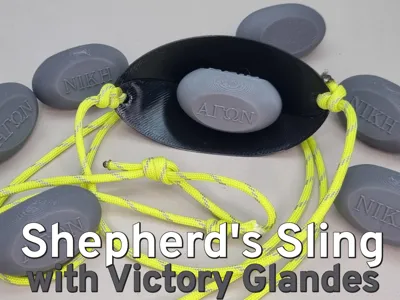
A true piece of ancient warfare from Greek mythology brought back to life: the reimagined Shepherd's Sling with authentic ammo.
In an age when gods and demigods walked among mortals, men did not fall to thunderbolts or tridents but to the humble weapons forged by human hands. Among them none was more feared than the sling of the shepherd, simple, silent, deadly. A strip of leather and two cords, yet strong enough to pierce armor, fell kings, and terrify whole armies.
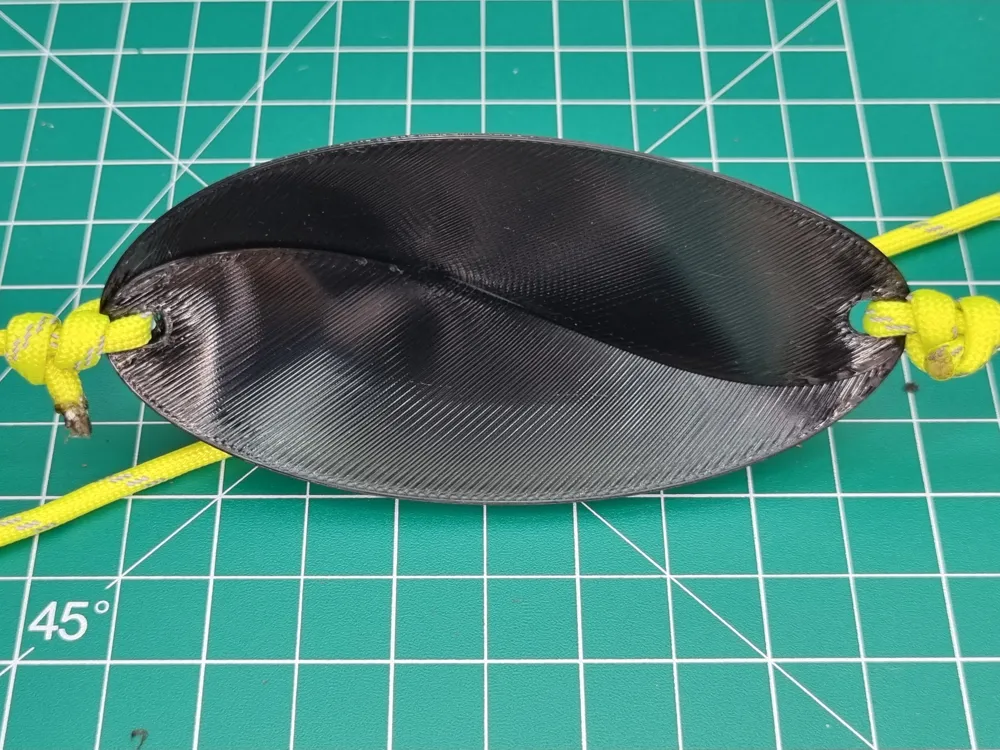
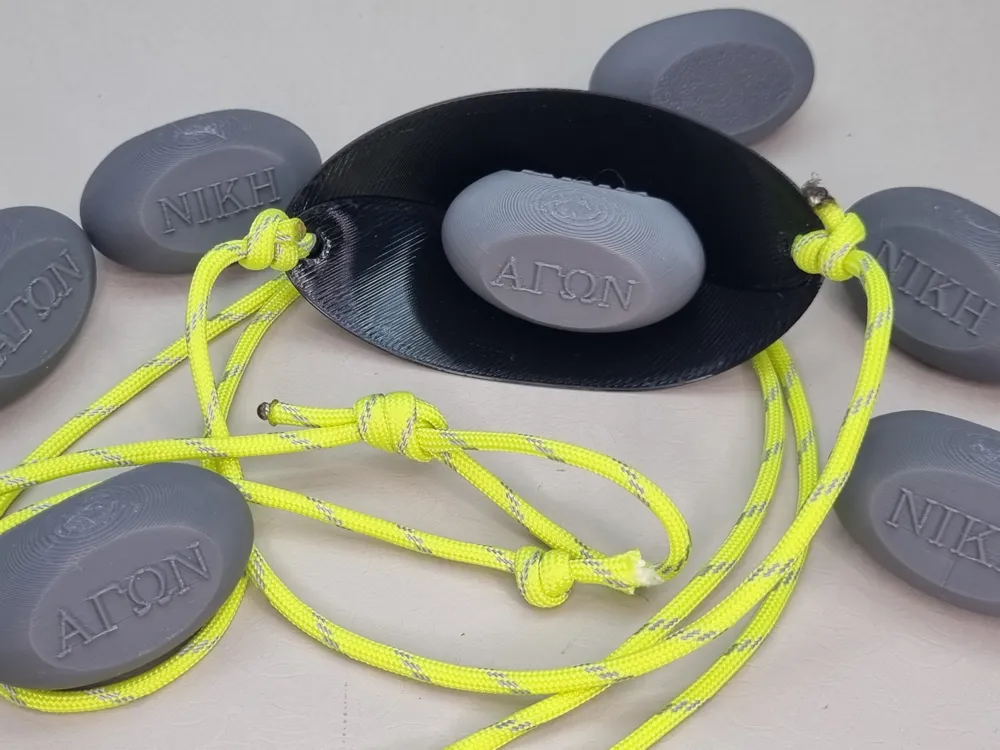
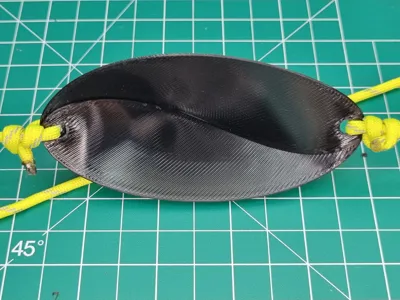
This model revives the Sphendone in its truest form. Printed in TPU, the pouch ties with two cords into a fully functional sling. A rigid print turns into a cutting template for real leather, while the included laser and plotter files allow you to mark or cut leather directly with modern tools such as the Bambu Lab H2D.
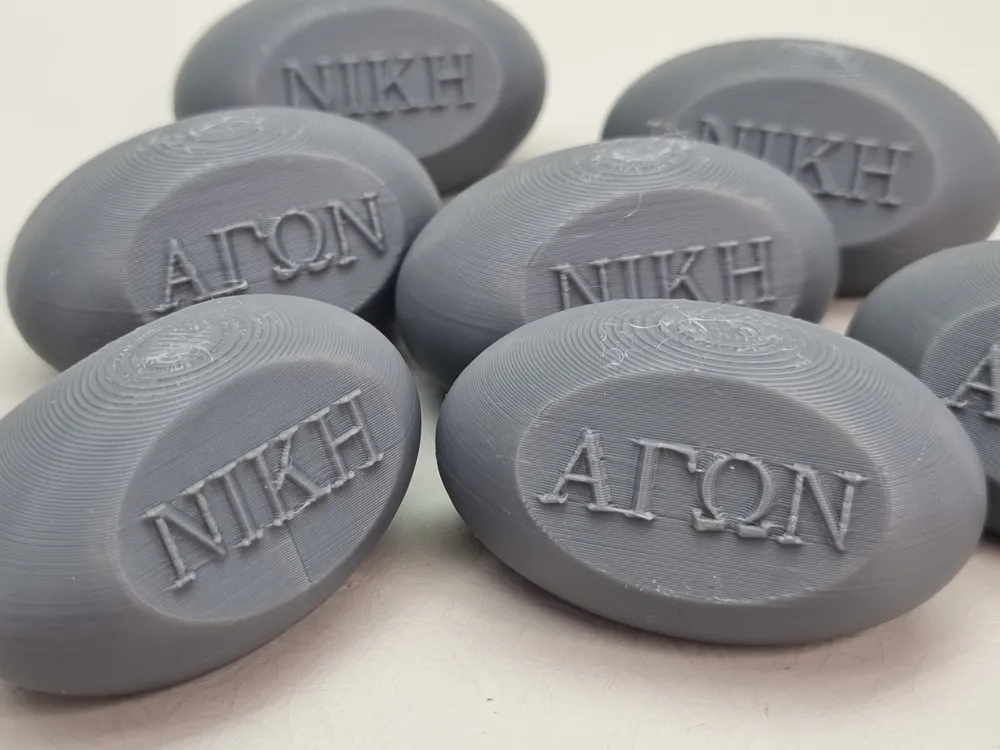
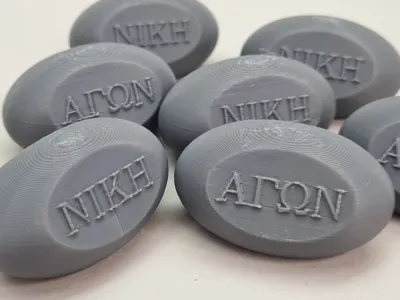
To complete the weapon of antiquity, directly 3D printed glandes are included. They follow the classic almond shape of ancient sling bullets and can be tuned by infill to match the historic average weight of about 28 g. Each model carries the inscriptions ΝΙΚΗ and ΑΓΩΝ, echoing the spirit of victory and contest, just as warriors once carved them in clay and lead. A flexible TPU mold for casting plaster or concrete glandes is already in development and will be released later, offering another authentic way to arm the sling.
With Dexa the sling of shepherds and soldiers alike returns from Greek mythology into your hands.
Versatility of the Shepherd's Sling
The shepherd's sling was never limited to shaped projectiles alone. In daily life it could launch anything that fit into the pouch: clumps of dirt, loose stones, nuts, fresh or rotten fruits, or whatever else was at hand. The Dexa pouch works the same way, whether you use authentic cast glandes or improvised ammunition found in nature.
Safety notes
Handle the sling as you would the bow of Odysseus: with care, respect, and discipline.
Do not turn it against man or beast, nor against the treasures of your own household.
Seek the open field or the quiet hillside, where no unwary traveler may cross the path of your stone.
Remember that the cast of a sling may fly farther than the eye dares to measure.
Guard your own sight with protection, for even the smith may be struck by a spark of his own forge.
And know this: the Dexa sling is reborn for sport, remembrance, and contest, not for the downfall of tyrants or the unmaking of kingdoms.
How to assemble the Dexa Shepherd’s Sling
Step 1 – The pouch
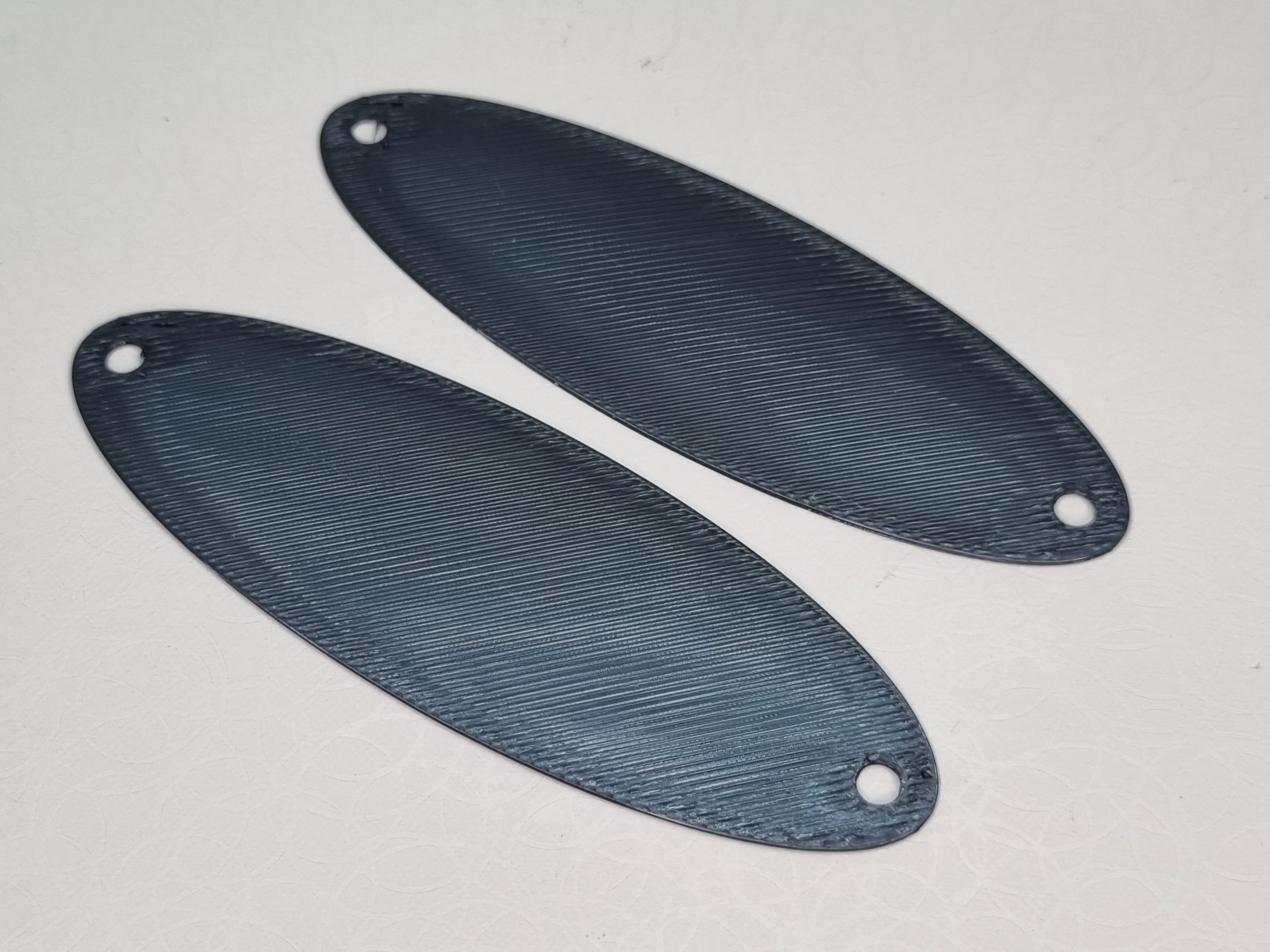
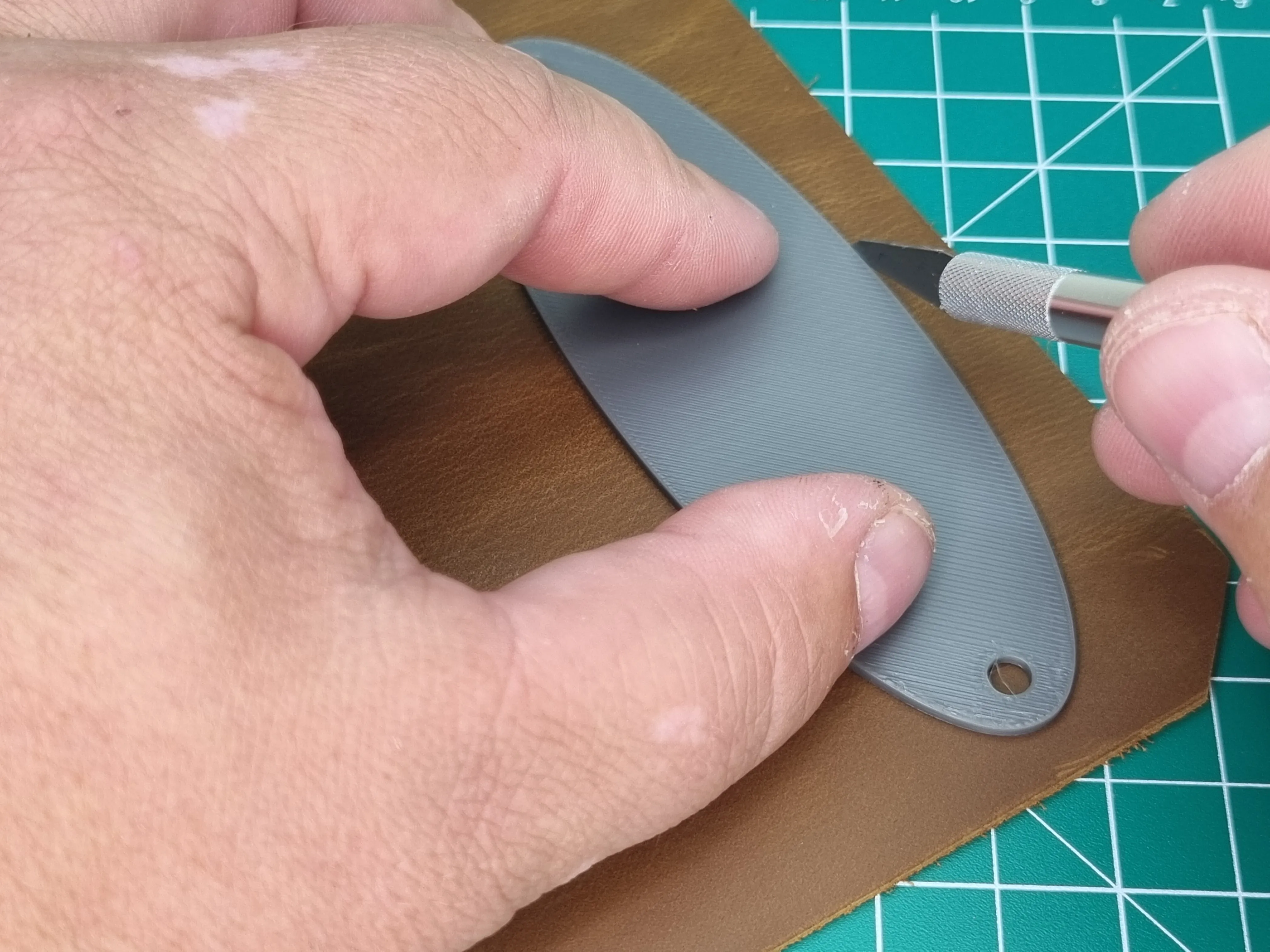
Print the pouch in TPU for flexibility so it wraps around the projectile when thrown. Alternatively, print it in rigid material as a cutting template for real leather. You can also use the included laser or plotter file (.dxf for example with a Bambu Lab H2D) to cut or mark leather or other materials directly.
Step 2 – The cords
Cut two cords of about 100 cm (3.3 feet) length each. Paracord, leather straps, or even sturdy shoelaces work well.
Step 3 – Attachment
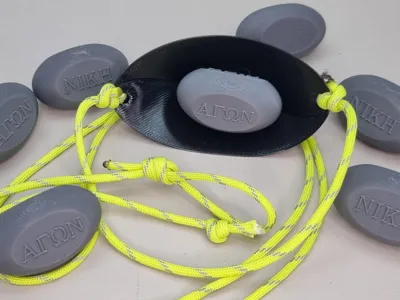
Thread each cord through the holes at the ends of the pouch. The two halves of the pouch should cross each other as shown. This crossing keeps the pouch balanced and ensures that it closes evenly around the projectile when you throw.
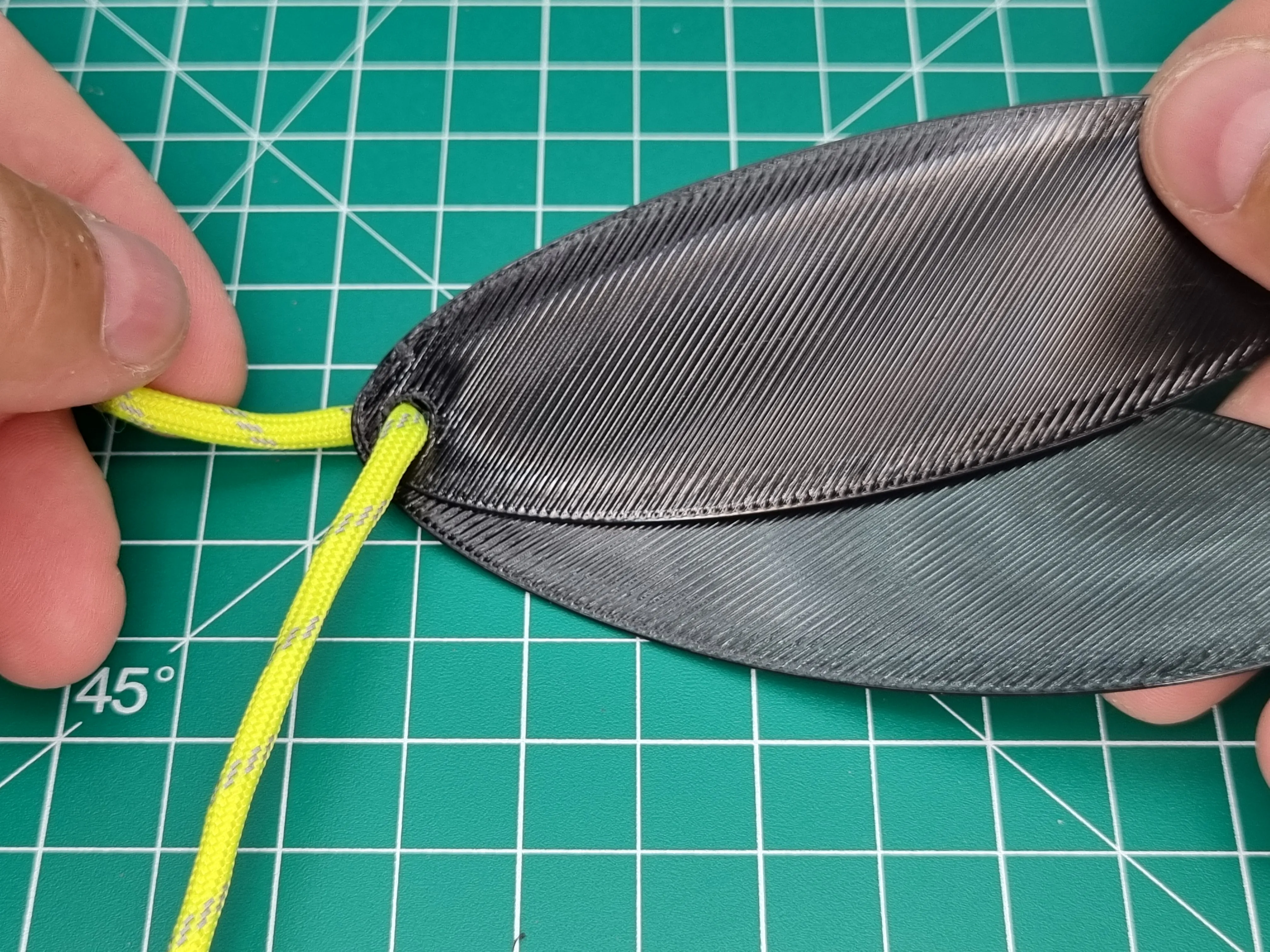
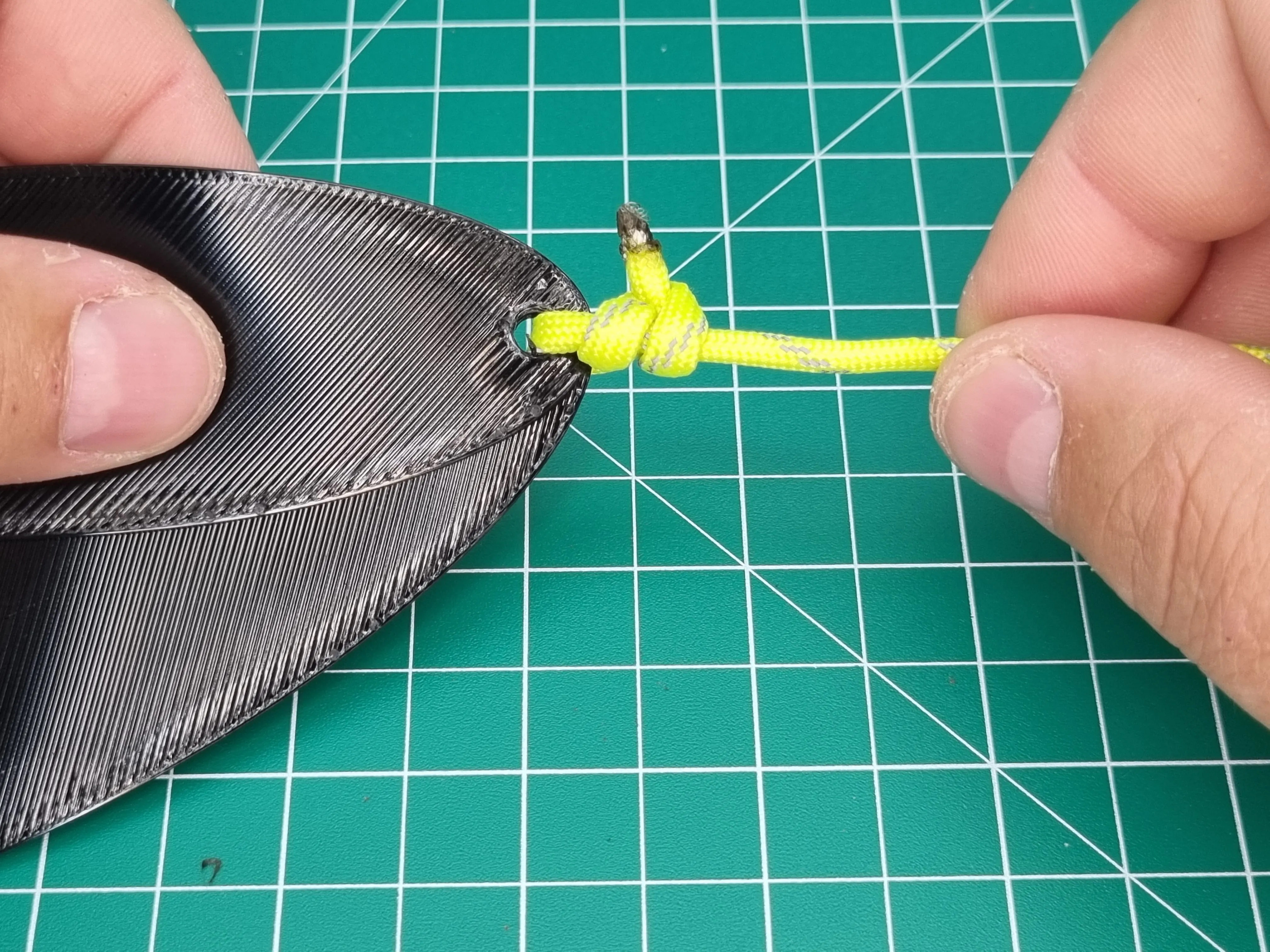
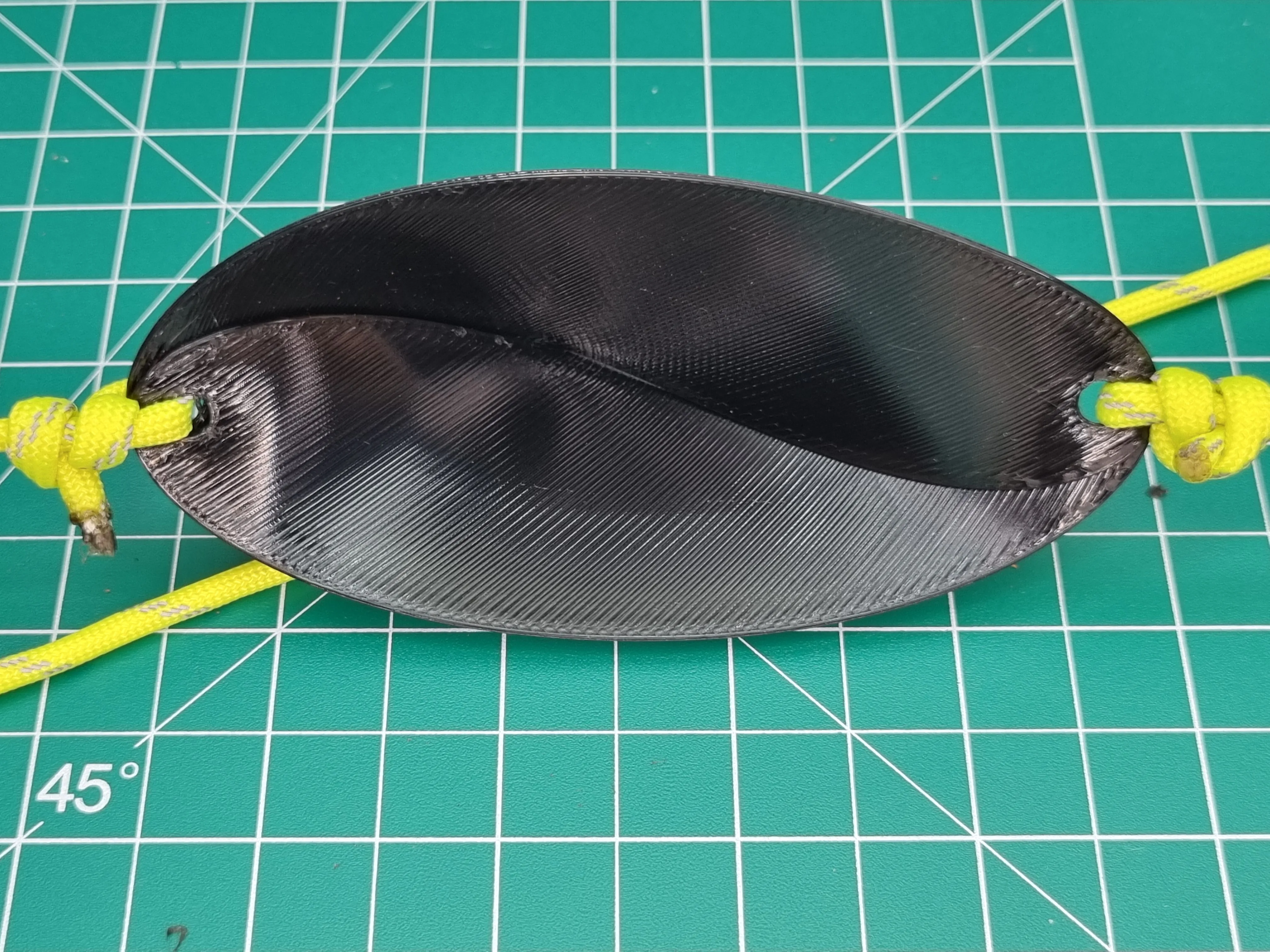
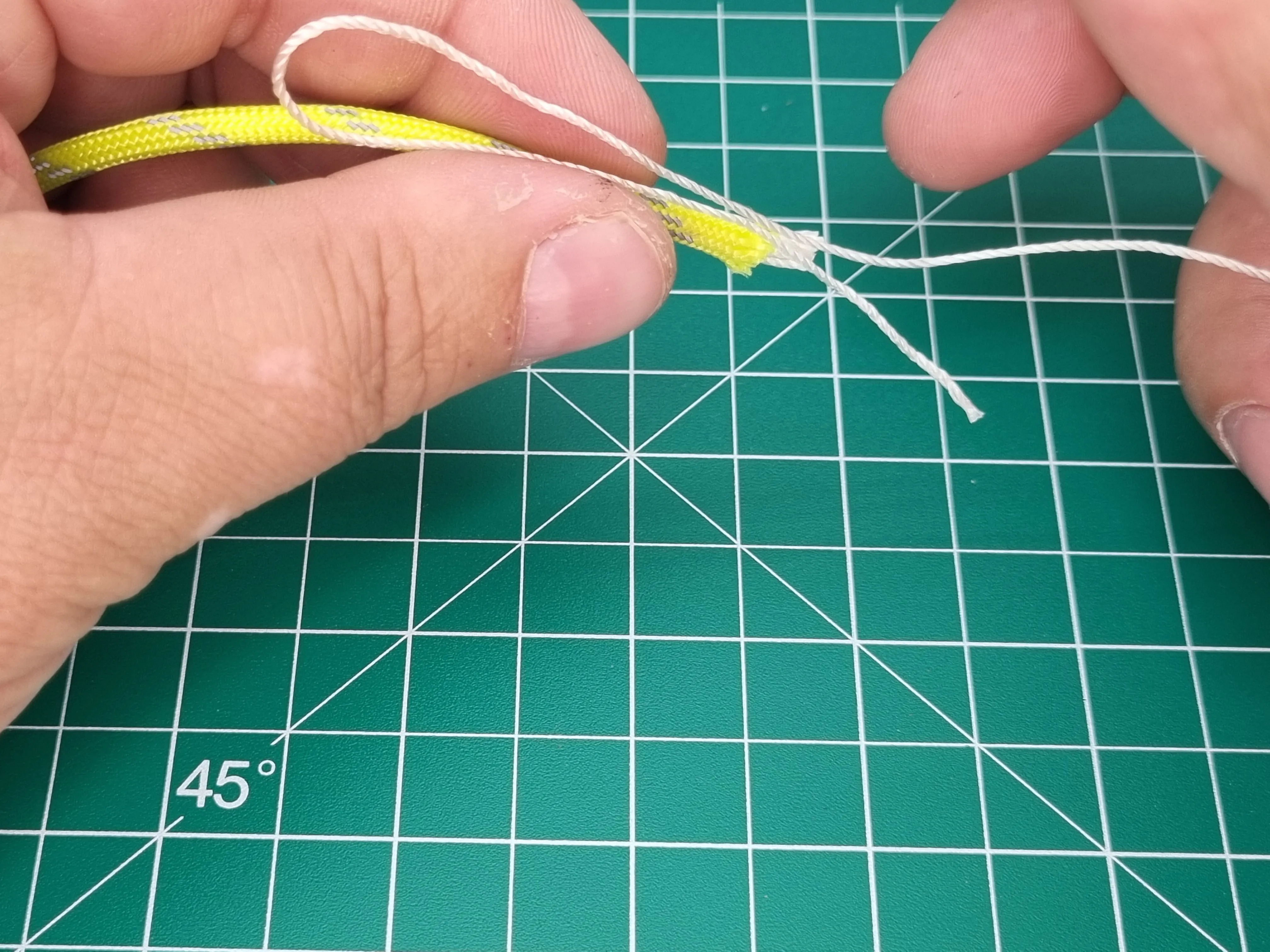
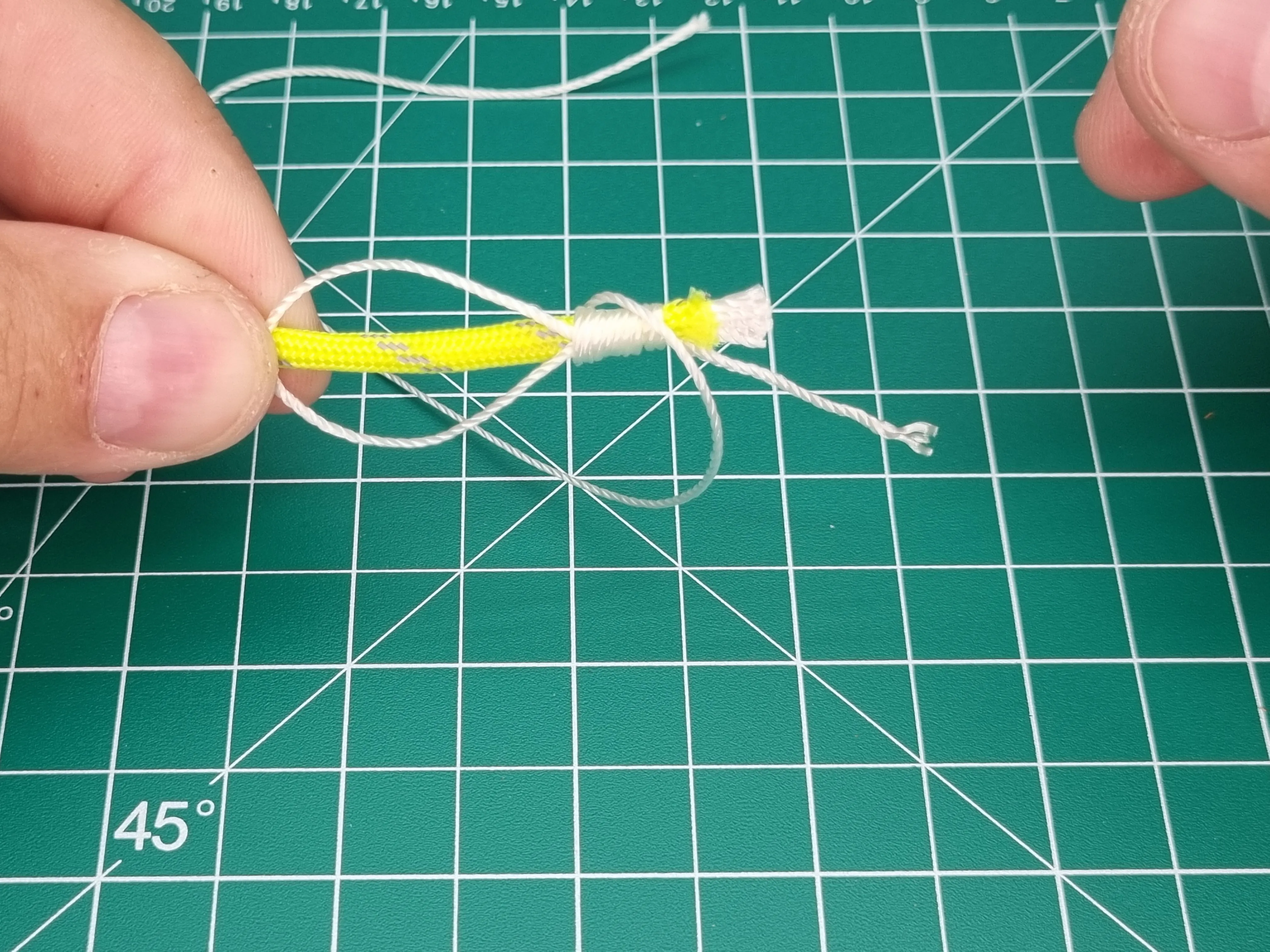
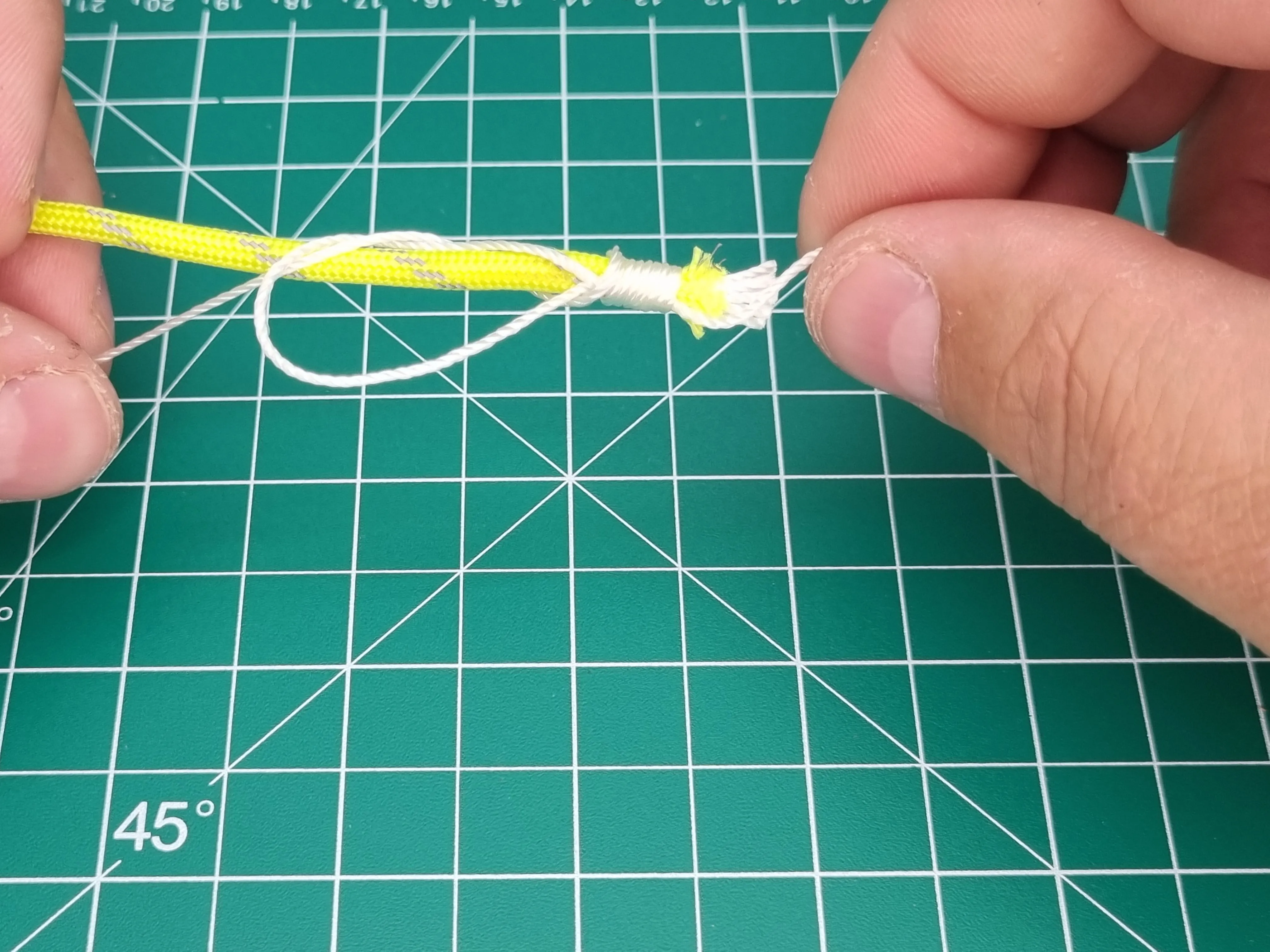
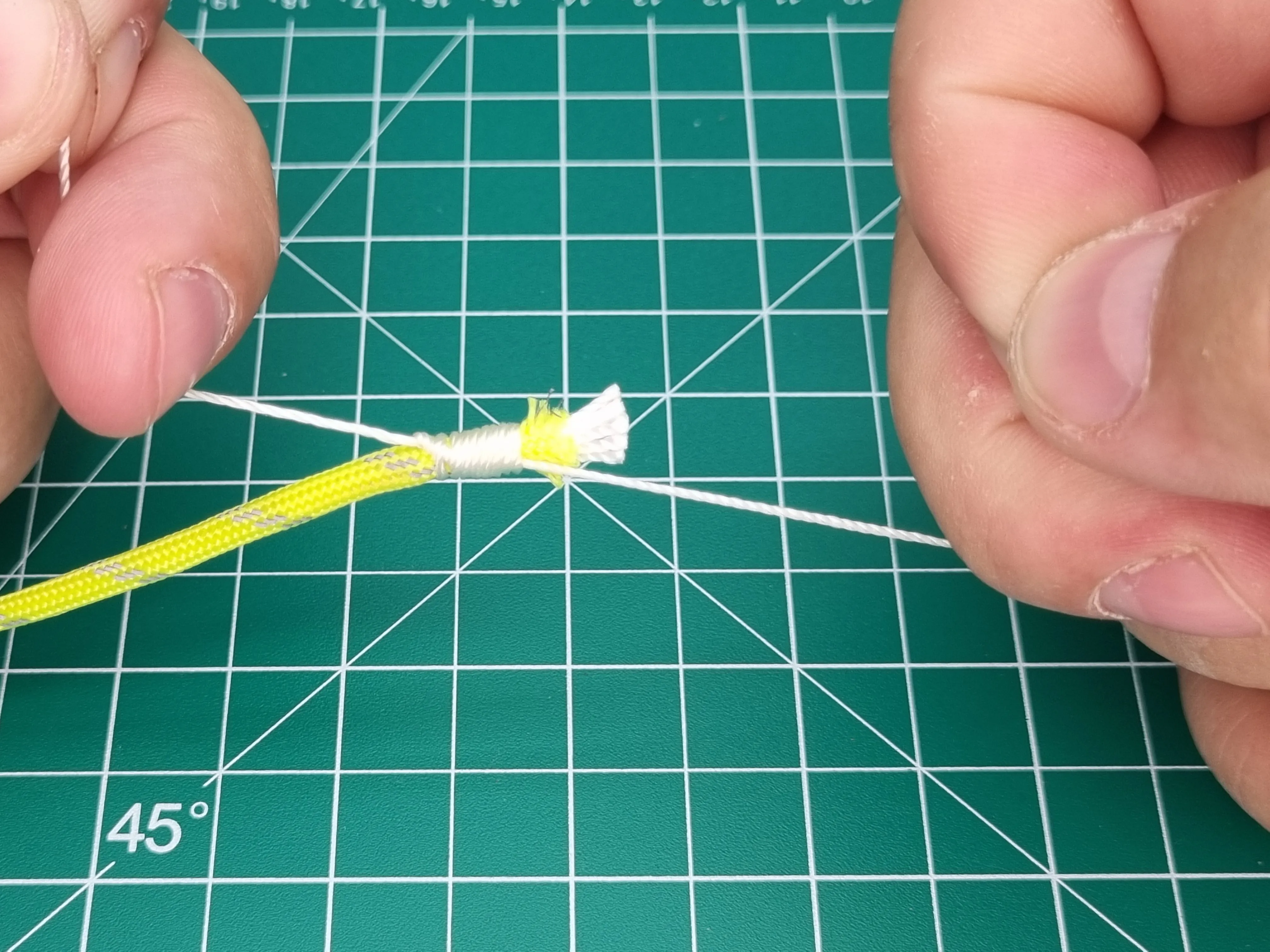
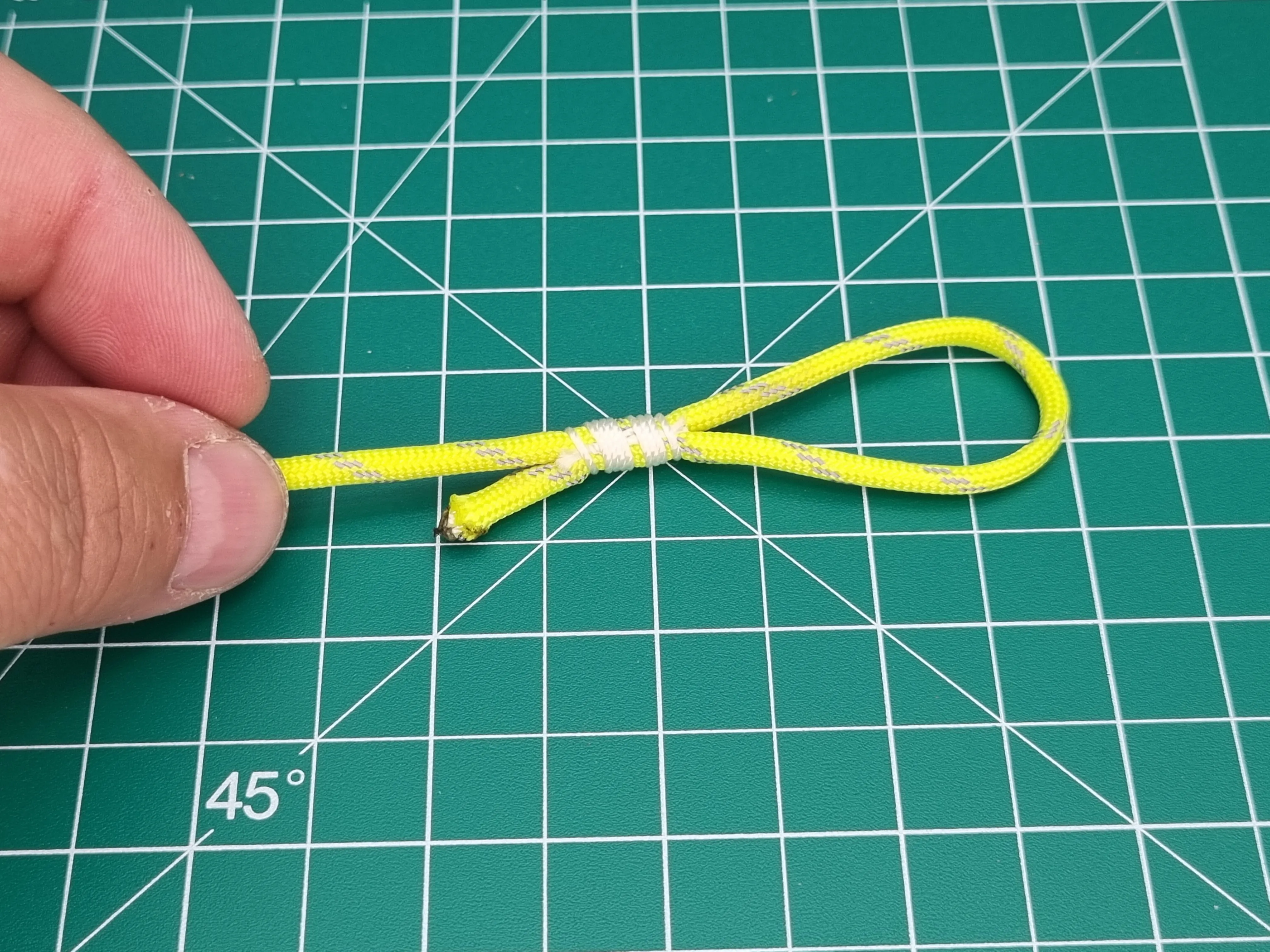
Secure the cords with strong knots such as a double overhand knot. For a more traditional and durable solution you can also replace the knots with a whipping (takling). To make a whipping, bend the end of the paracord back alongside the main strand to form a loop. Instead of tying a bulky knot, bind the overlapping section tightly with thin thread or one of the inner cores. Sailors call this a “whipped eye.” It is very flat, durable, and neat in appearance.
Step 4 – The retention loop
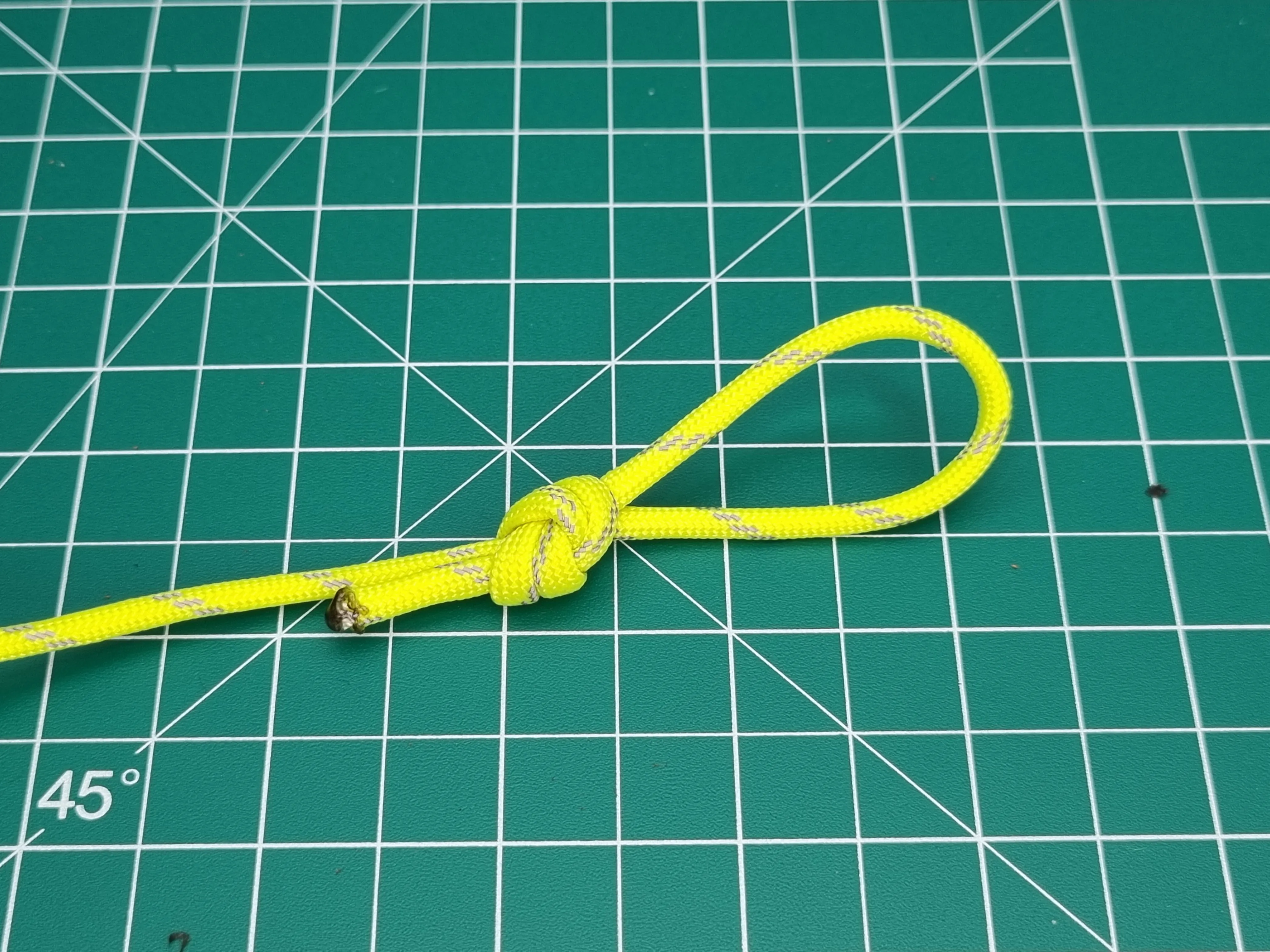
At the end of one cord, tie a loop that fits comfortably over your middle finger or index finger. Adjust the cord length so the sling hangs about 3 feet (roughly arm length) when relaxed at your side. Instead of finishing the loop with a knot you can also form the eye with a whipping.
Step 5 – The release knot
At the end of the other cord, tie a simple knot a few inches from the tip. This release knot rests between thumb and forefinger and is let go during the throw. Position the knot so that when you hold the sling ready in your hand, the pouch forms the lowest point of the cords and hangs straight. This ensures that the pouch sits balanced and releases the projectile cleanly.
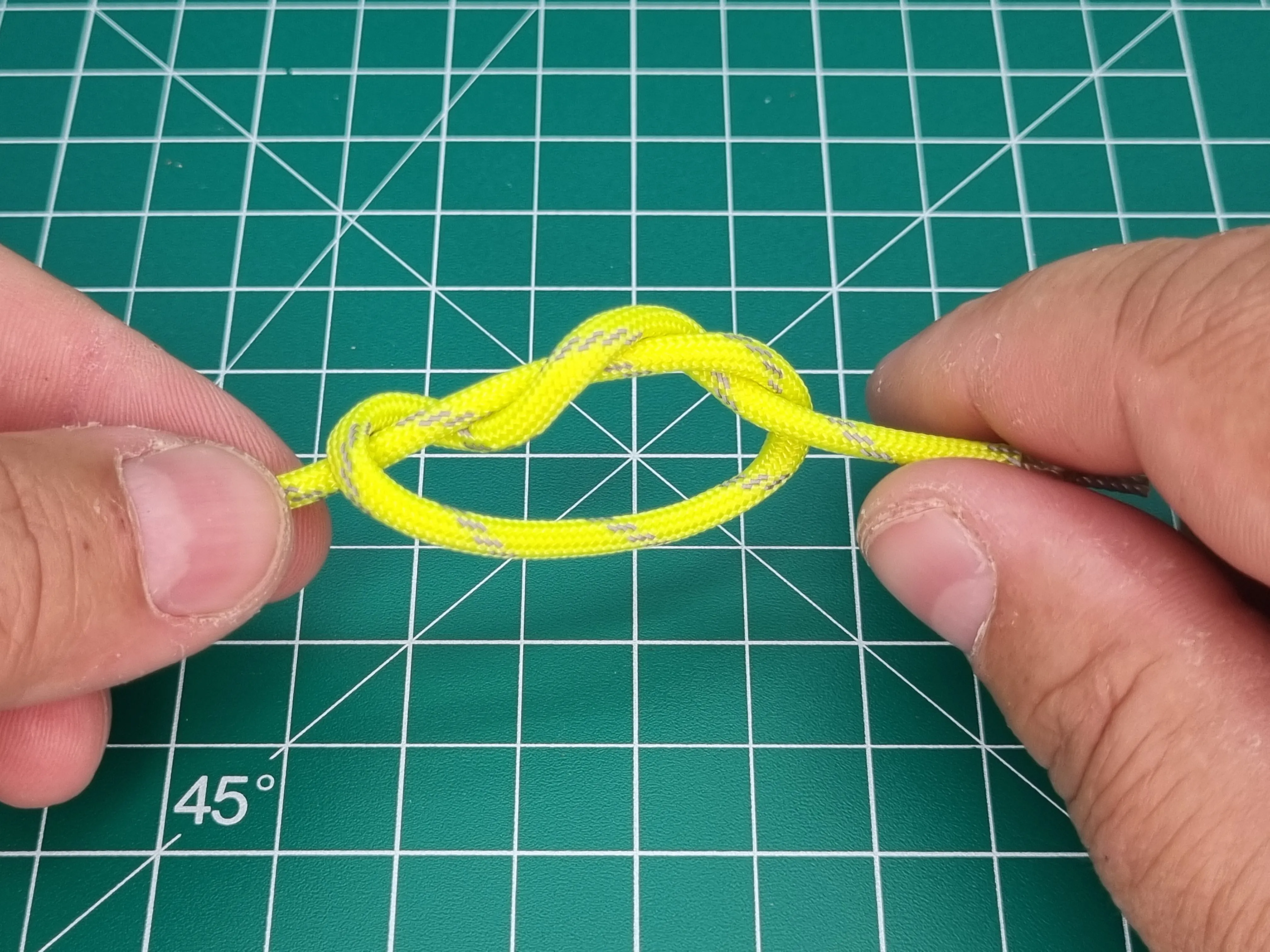
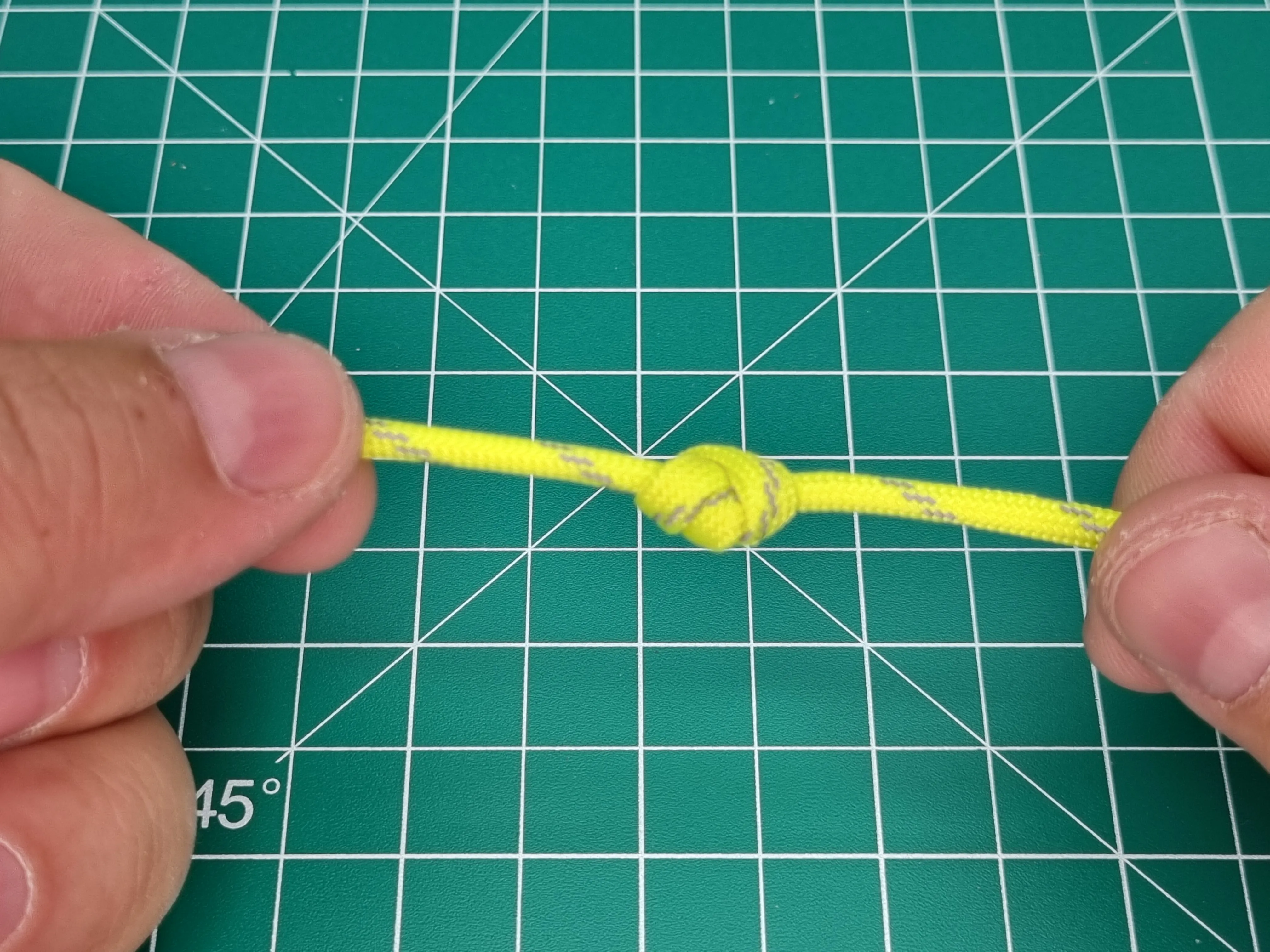
Finished
Your sling is ready. Load it with stones, 3D printed practice ammo, or cast glandes. You now hold in your hands the weapon of shepherds, soldiers, and heroes of antiquity.
How to 3D print Dexa sling bullets directly
The glandes can also be printed directly in PLA or other filamets instead of being cast. Simply place the bullet model on the build plate and duplicate it as many times as needed. Print them with standard settings for your filament.
If you choose a different material than PLA, adjust the infill percentage (85 % for PLAwork good) until each projectile reaches about 28 g. This matches the weight of a cast plaster bullet and is very close to the historical average of ancient sling ammunition.
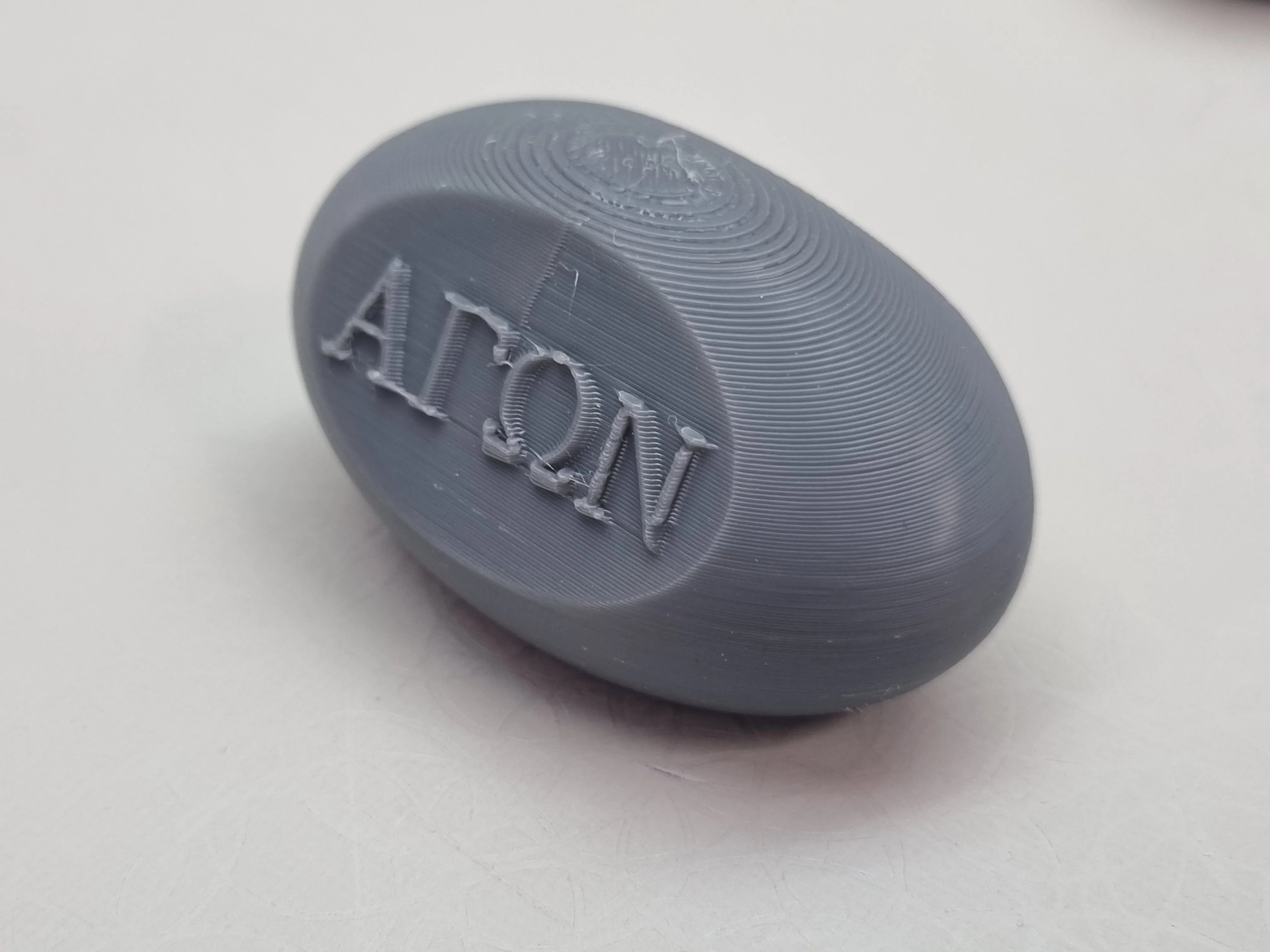
Tip: Everyone has a few meters of filament scraps lying around. This is the perfect way to use them up, and the color does not matter.
Whats next?
The Dexa Shepherd’s Sling is only the beginning. A dedicated ammo mold printed in TPU for casting historically accurate glandes from plaster or concrete is in development. In addition, a staff sling adapter is being modeled to extend the range and power of the Sphendone. Both models will be released later, and since their detailed planning is already complete, the full descriptions can be found directly below.
The staff sling
The Sphendone can also be turned into a staff sling, a variant that was widely used in antiquity for heavier projectiles. The principle is simple: the pouch and cords are attached to the end of a wooden staff, turning the sling into a powerful lever that throws much farther with the same pouch. With the Dexa design this conversion is straightforward.
How to use the Dexa staff sling adapter
Step 1 – Print the adapter
Print the staff sling adapter in PETG or another strong filament for durability. A layer height of 0.2 mm and at least 4 wall lines are recommended. No supports are required.
Step 2 – Prepare the staff
Choose a wooden staff about the length of your own body. The diameter should be slightly larger than the inner diameter of the adapter. Whittle the end of the staff until it fits snugly, then push the adapter on and secure it with a screw or nail.
Step 3 – Attach the cords
Tie the plain cord end (without the loop) firmly to the fixed point of the adapter. The other cord with the finger loop is used for release and is simply laid over the hook of the adapter. When you swing and throw, this release cord will slip off the hook at the right moment.
Step 4 – Practice
Hold the staff near its end, swing it in a vertical or diagonal arc, and release as the free cord slips. The leverage of the staff multiplies your power, allowing much greater range with the same projectiles.
Finished
With the staff sling adapter the Sphendone transforms into a lever weapon once feared on ancient battlefields, simple in design yet powerful enough to hurl heavy glandes far beyond the reach of a hand sling.
The Dexa ammo mold
Alongside the sling pouch comes the Dexa ammo mold, designed to recreate the ancient sling bullets known as glandes. Printed in TPU, the mold is flexible and durable, making it easy to cast and demold projectiles. With it you can produce historically accurate ammunition from plaster or concrete, matching the typical size and weight of ancient finds. Each bullet carries the inscriptions ΝΙΚΗ (victory) and ΑΓΩΝ (contest), echoing the words once carved into sling stones in antiquity.
How to use the Dexa ammo mold
Step 1 – Print the mold
A layer height of 0.2 mm and a 0.6 mm nozzle are recommended for easy TPU printing and a smooth inner surface. Use at least three wall lines for strength.
Step 2 – Prepare the mold
Clean the inside of the mold and lightly coat it with cooking oil, release spray, or silicone spray. This helps the cast come out more easily.
Step 3 – Mix the casting material
For practice ammo, plaster or cement works well. Mix according to the instructions on the package until you have a smooth, pourable consistency. Sand or small gravel can be added for extra weight.
Step 4 – Fill the mold
Assemble the two halves and secure them with tape, clamps, or rubber bands. Pour the mixture slowly into the fill opening until the mold is completely filled. Tap it gently to release air bubbles.
Step 5 – Let it cure
Allow the cast to harden fully. Depending on the material, this can take a few hours to overnight. Do not remove the cast too early, or it may crack.
Step 6 – Demold
Carefully open the mold. The flexibility of TPU makes this easy. Remove the projectile and smooth any edges with sandpaper if desired.
Finished
You now have an authentic sling bullet shaped like the ancient glandes, complete with the inscriptions ΝΙΚΗ (victory) and ΑΓΩΝ (contest). In antiquity they were first made from clay and later from lead. With your mold you bring this tradition back into your hands, safely and practically.
Join in
If you print the Dexa sling or cast your own ammo, share your results. Upload photos or short videos of your build, your ammo, or even a safe test throw. Seeing how others bring this piece of history back to life helps the whole community and this contest entry.
Boost Me (for free)
Support for this model helps fund 3D printing in a local school in Lower Saxony, Germany. Contributions go toward printers and filament for student maker and robotics clubs, including preparation for "Jugend forscht" competitions. Likes, follows, and boosts help increase visibility and indirectly support hands-on technical education.
Translation Notice: I am not a native English speaker. I write all descriptions in English to ensure the best automated translation into other languages. To make the text smoother and more readable, I use language tools to refine my wording.
Bill of Materials Notice: Hero Shot models are usually printed in Bambu Lab PLA Basic, primarily Pumpkin Orange, Purple and Matte Charcoal Black. The Bill of Materials contains the recommended filament for the model, which may differ from the filament used for the photos.
Purchases made via the BOM support my work through the Maker World Commission Incentive at no extra cost to you.
License

You shall not share, sub-license, sell, rent, host, transfer, or distribute in any way the digital or 3D printed versions of this object, nor any other derivative work of this object in its digital or physical format (including - but not limited to - remixes of this object, and hosting on other digital platforms). The objects may not be used without permission in any way whatsoever in which you charge money, or collect fees.


Comment & Rating (2)