
I-16 [1:72 Scale]
Print Profile(1)

Description
Overview
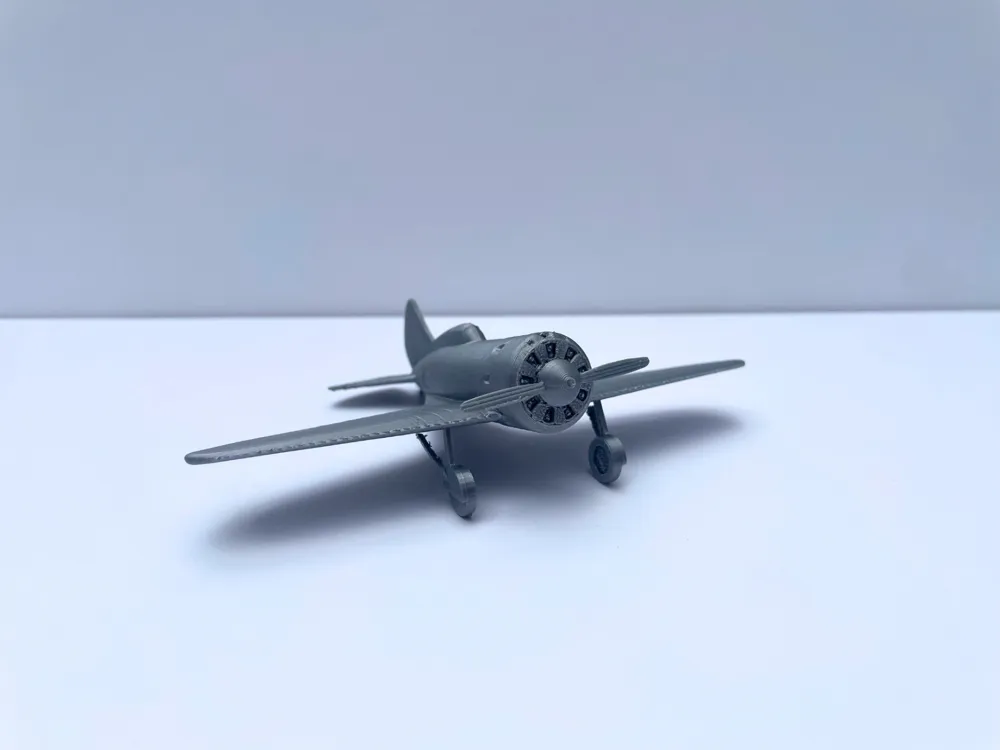
The Polikarpov I-16 was a Soviet monoplane fighter introduced in the early 1930s. Nicknamed “Ishak” (little donkey) by Soviet pilots, it featured a stubby fuselage, open cockpit, and a radial engine. Though innovative for its time, the I-16 became outdated by the late 1930s, struggling against more modern German fighters during WWII. It saw combat in the Spanish Civil War, the Second Sino-Japanese War, and early stages of the Eastern Front.
Model and assembly
The model should not require any glue to assemble, although sandpaper and a knife may be required for assembly.
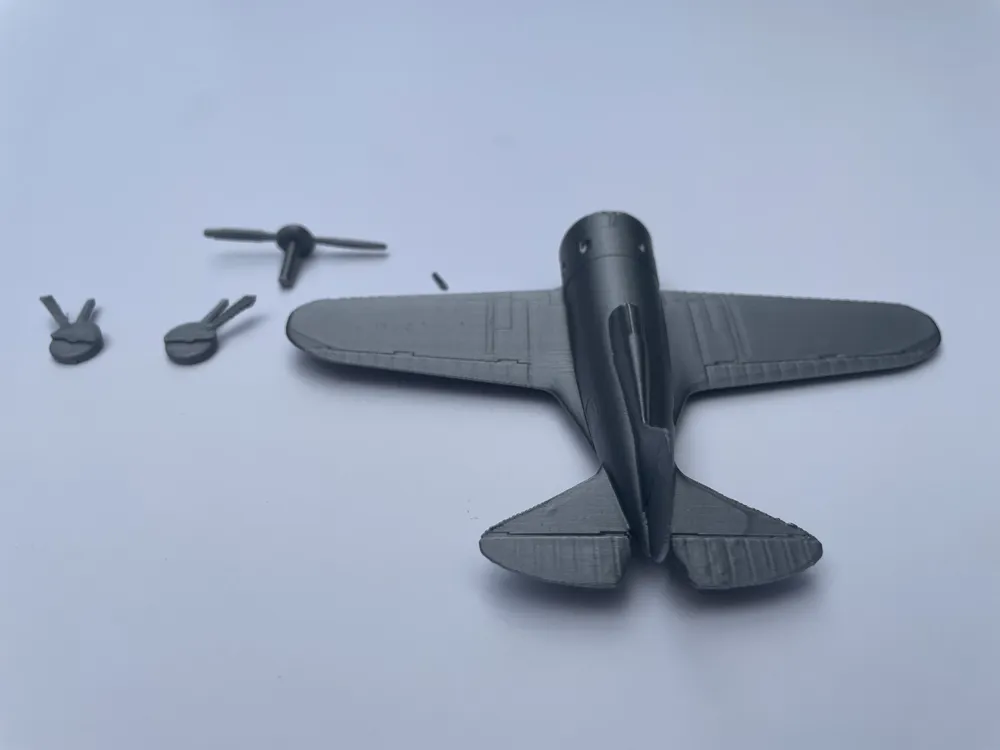
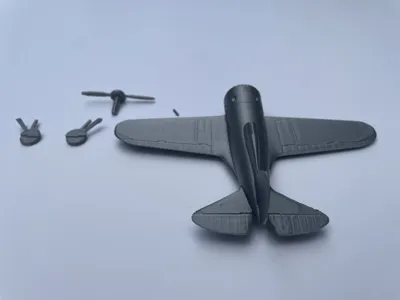
First, remove all supports, and exercise caution with the small components. Use a knife to remove the brim from the tail strut, and the supports from the propeller. If surfaces on the plane are rough, use the sandpaper to sand down and smooth them.
Next, push the propeller into the front of the plane, ensuring you push from the center of it and not on the more fragile blades. This will be a tight fit, but if you want it to spin more freely, simply hold at the centermost parts of the blades and rotate it until it becomes loose.
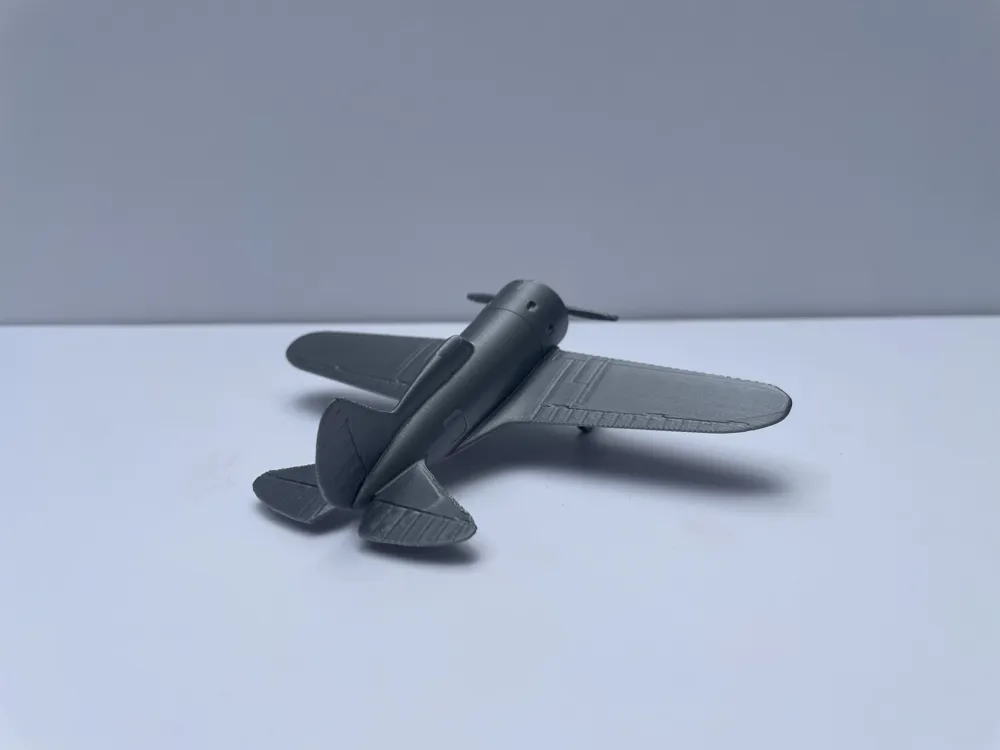
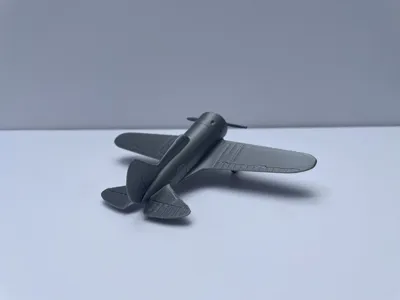
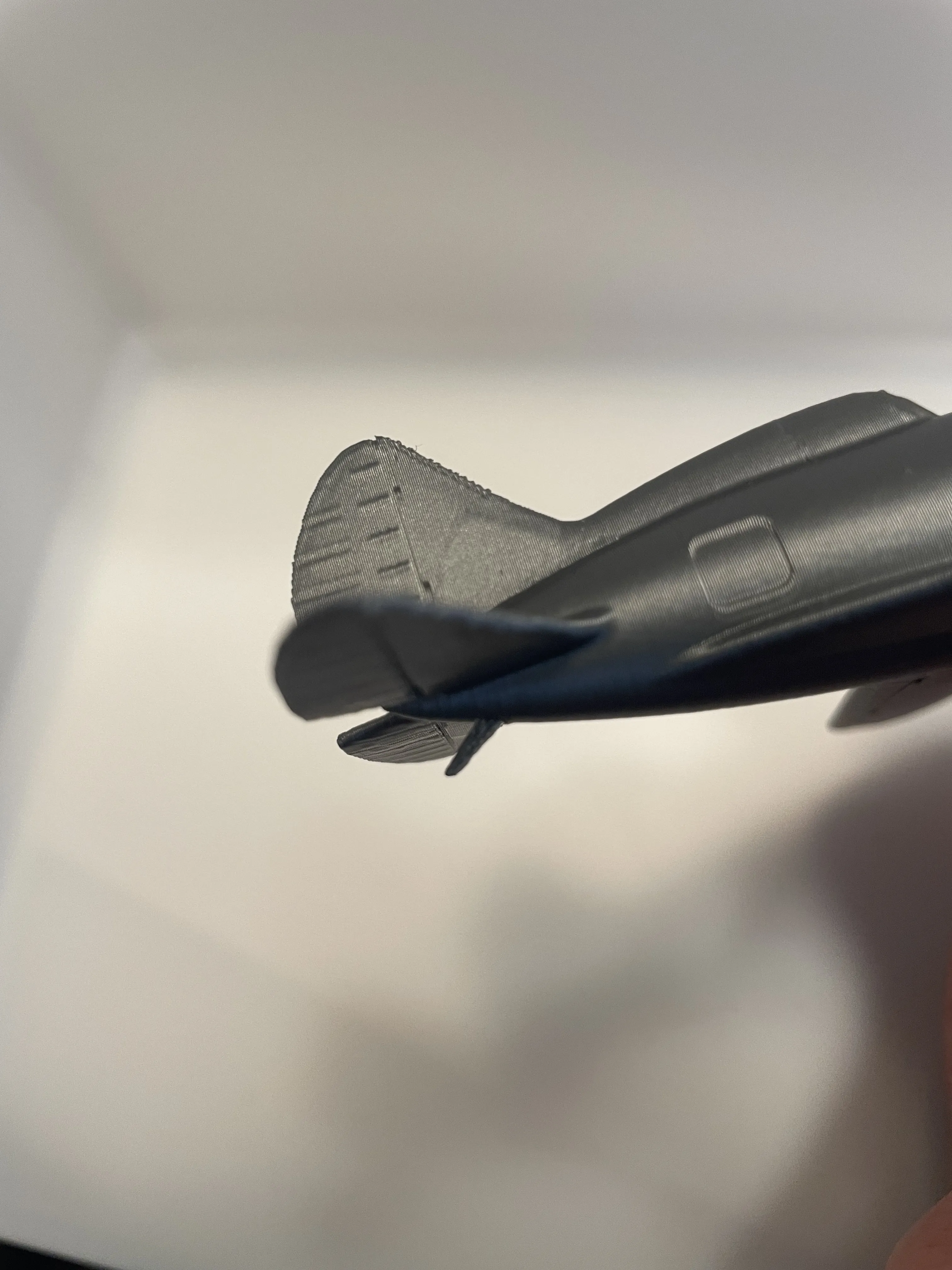
Finally, insert the main landing gear into the slots under the wings. Refer to the above images for correct placement. The tail strut may be difficult to insert and should be oriented so that when it is being inserted, the side that touches the plate should be facing to the right, as shown below.
Boost Me (for free)
YOUR boost: = 45 grams of filament
License

You shall not share, sub-license, sell, rent, host, transfer, or distribute in any way the digital or 3D printed versions of this object, nor any other derivative work of this object in its digital or physical format (including - but not limited to - remixes of this object, and hosting on other digital platforms). The objects may not be used without permission in any way whatsoever in which you charge money, or collect fees.


Comment & Rating (10)