
Ancient Warfare Weapon of Mass Destruction—Gravity Trebuchet
Print Profile(4)



Description
Boost Me (for free)
Every like, collection, follow, and boost from you is a great encouragement for me to persevere in creating original models, thank you!
For more interesting models, please visit my homepage: CuriousAnt | Home - MakerWorld
♦ ♦ ♦ ♦ ♦ ♦ ♦ ♦ ♦ ♦ ♦ ♦ ♦ ♦ ♦ ♦ ♦ ♦ ♦ ♦

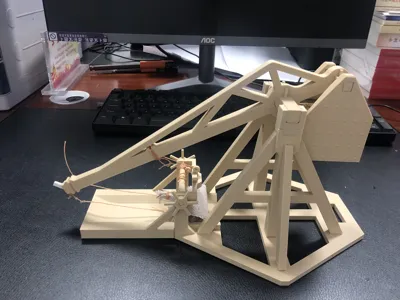
The gravity trebuchet stands as a highly iconic siege weaponry from the era of cold weapons, its structural design embodying fundamental physical principles, and historically playing a pivotal role in numerous campaigns
I. Structural Principles: The Perfect Confluence of Lever and Gravity
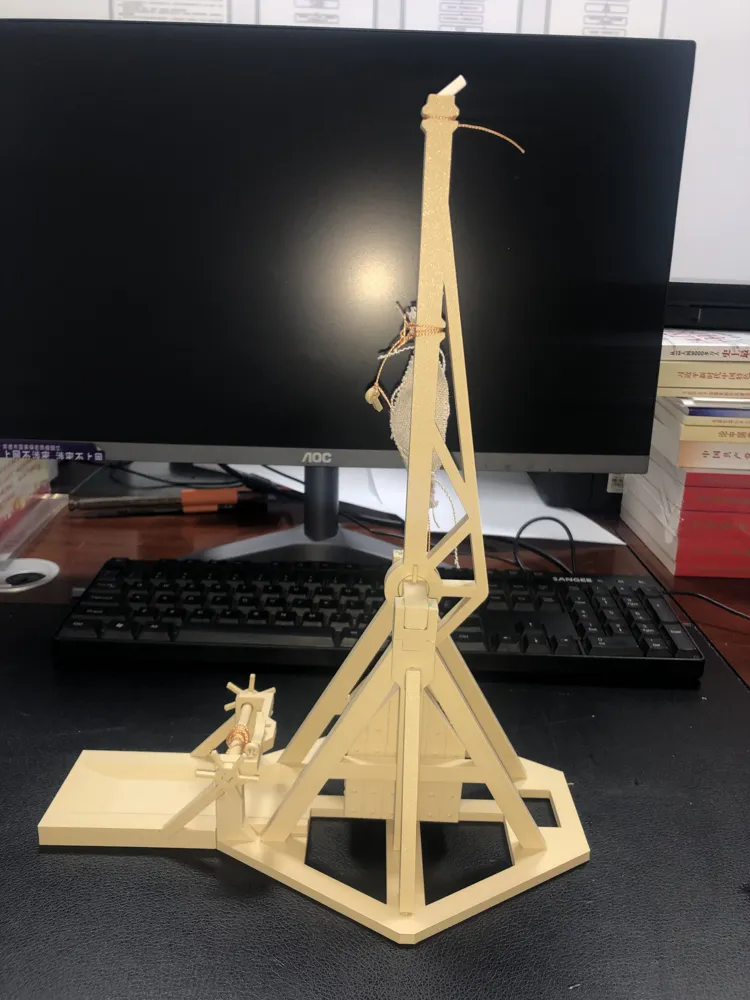
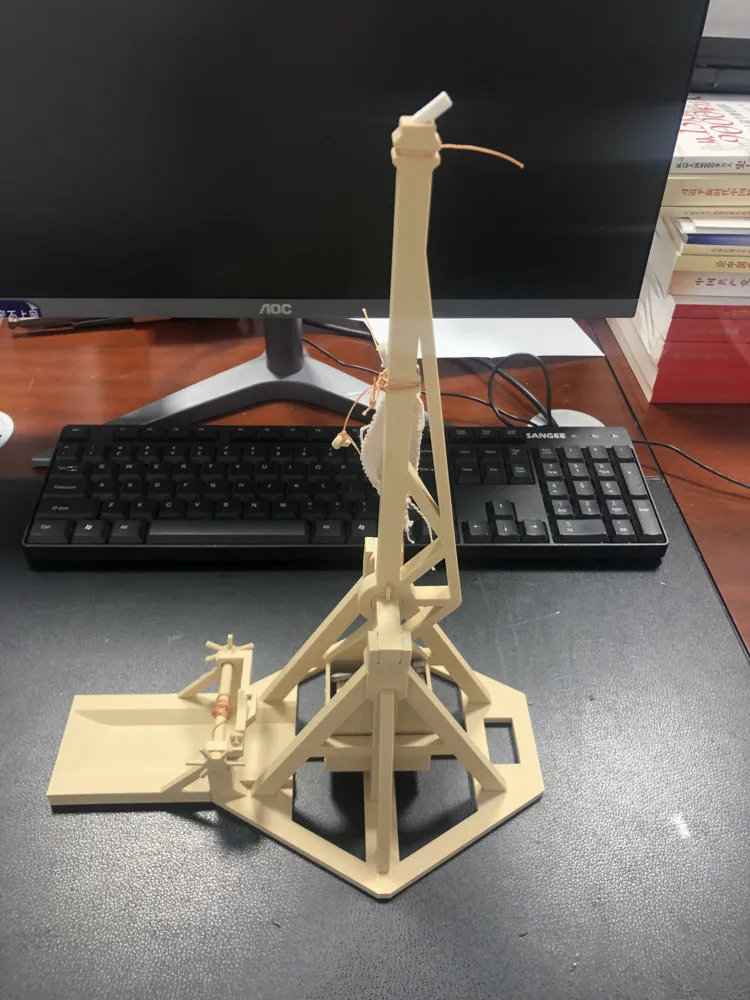
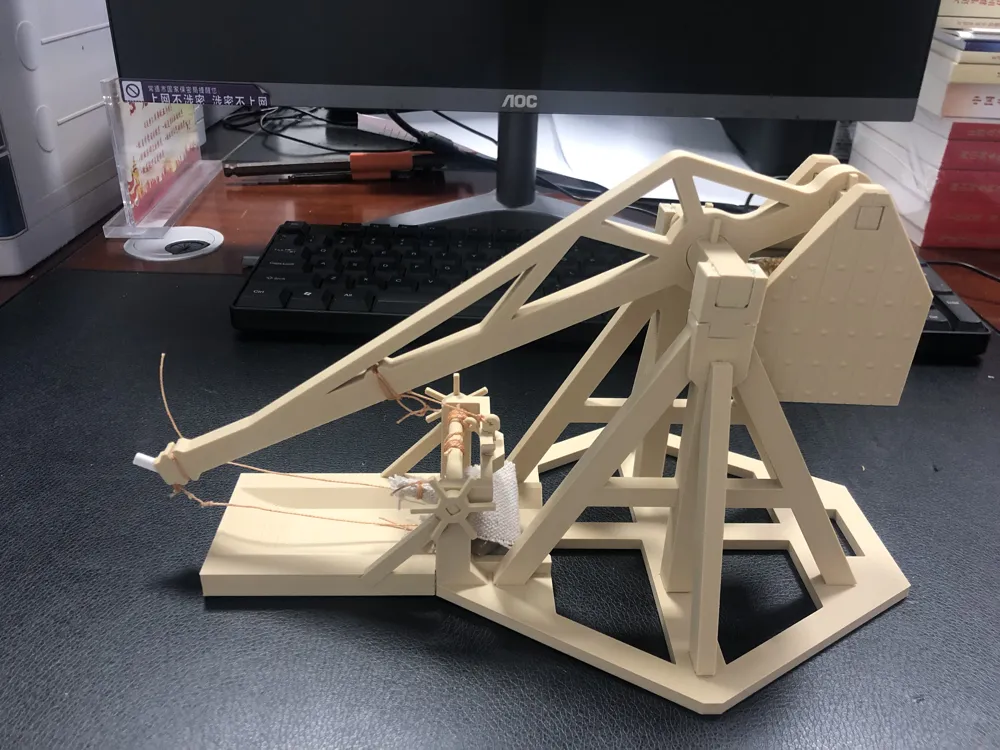
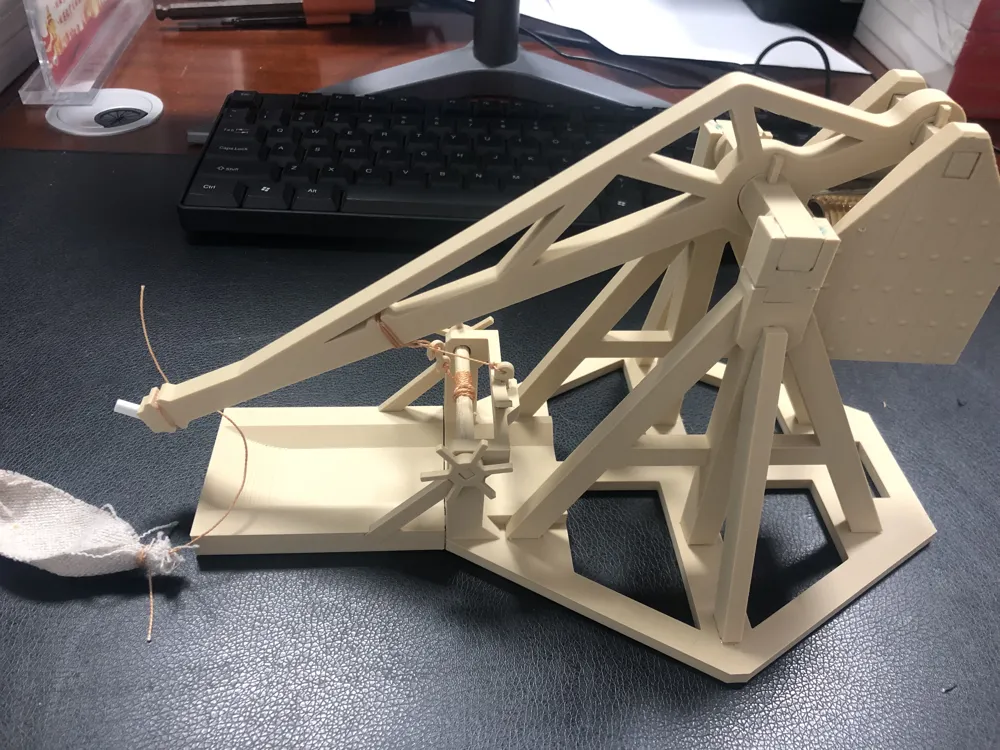
The gravity trebuchet (also known as a "counterweight trebuchet" or "balanced weight trebuchet") at its core lies the application of the **lever principle** and **gravitational potential energy conversion**, and its structure can be disassembled into the following essential components
- **Base Frame**
constructed from robust timber, serving as the primary support for the entire apparatus, requiring ample stability to withstand the immense forces generated during launch The base of the frame is typically anchored to the ground (or buried within the earth) larger trebuchets may incorporate metal reinforcements to enhance structural integrity - **Lever (Throwing Arm)**
a lengthy timber beam, extending up to 10-20 meters in length, with its fulcrum positioned near one end (the fulcrum's placement dictates the arm ratio, typically with a shorter counterweight arm and a longer throwing arm to amplify projectile velocity) The throwing arm material must be resilient, often hardwooods such as oak or pine are selected - **Counterweight Box**
situated at the shorter arm of the lever, serving as the "power source" of the gravity trebuchet, filled with heavy materials such as stones or metal blocks, weighing hundreds or even thousands of kilograms (a heavier counterweight yields greater throwing force) Some designs rigidly connect the counterweight box to the lever, ensuring full conversion of gravitational force into kinetic energy **Sling Pouch**
affixed to the extremity of the lever's longer arm, designed for loading projectiles (such as stones, fireballs, or even decaying carcasses), typically fashioned from durable leather or canvas
- **Launch Control System**
comprising a winch, ropes, and a release hook The throwing arm of the lever is drawn down using a winch (thereby elevating the counterweight box and storing gravitational potential energy), secured with a hook Upon release, the hook is disengaged, the counterweight box descends, converting gravitational potential energy into the lever's kinetic energy, ultimately propelling the projectile forward
Boost Me (for free)
Your likes, saves, and boosts are an immense encouragement to me, thank you!
Model Dimensions
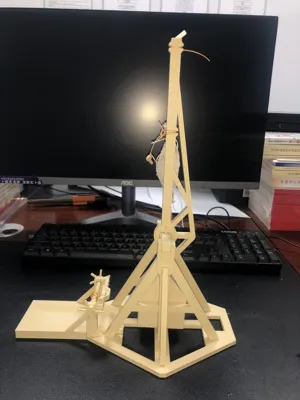
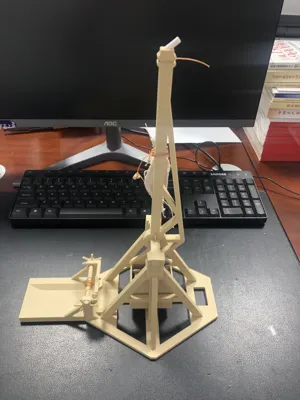
- When the throwing arm is at rest: Length 300mm, Height 154mm, Width 162mm
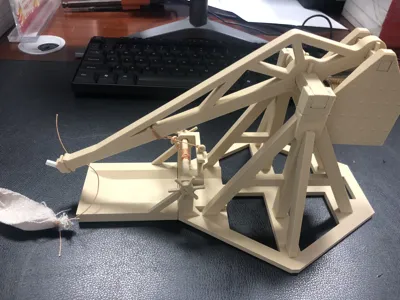
- When the throwing arm is naturally released: Length 254mm, Height 330mm, Width 162mm
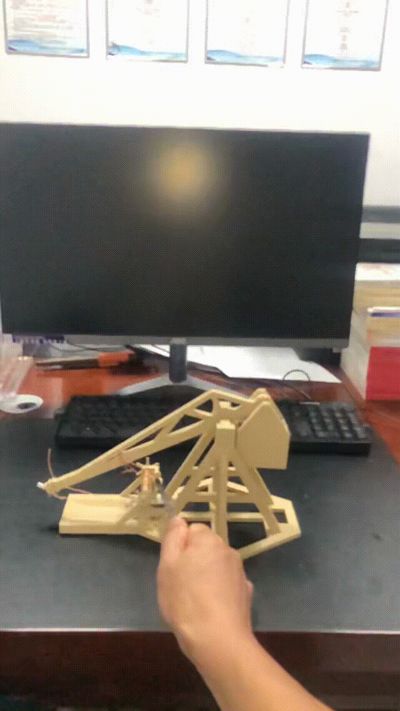
This model is both convenient to print and enjoyable, offering an engaging way to learn, guiding children to understand the principle of the lever and the whipping effect
The sling pouch requires self-preparation, fabric or leather is recommended
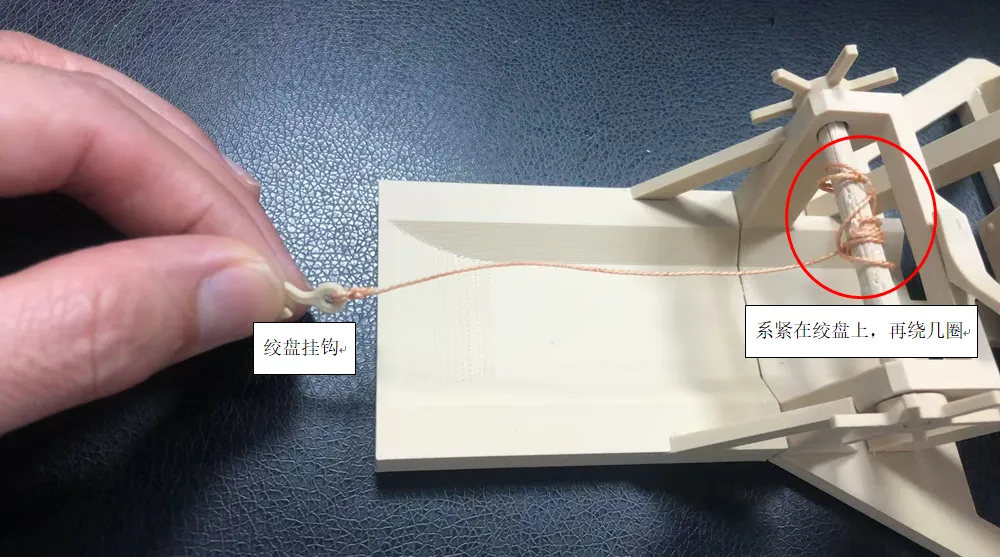
The string requires self-preparation The knot is shown below
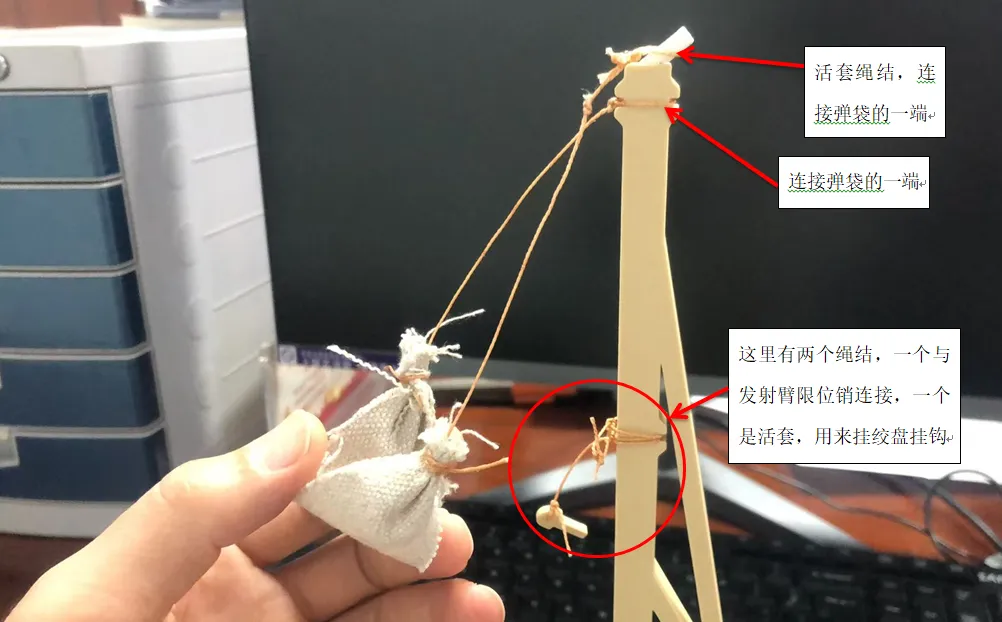
Clarifications on Potentially Misunderstood Parts:
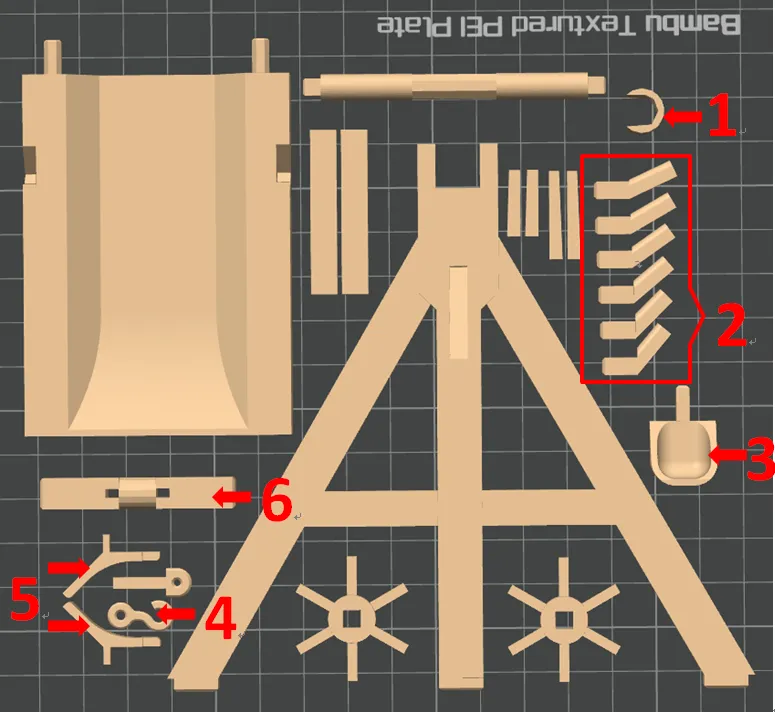
- Counterweight Axle Bushing—To facilitate the printing and installation of the counterweight axle (item 6 in the diagram), the central rotating part is square, and it must be passed through the counterweight box, then part 1 is fitted onto the square section in the middle of the axle to form a rotating circular shaft, the installation process is demonstrated in the video
- Release Hook—The optimal angle of the release hook may vary slightly depending on the counterweight and projectile weight, requiring self-testing to determine the most suitable position, then securely glue it in place
- Bowl-shaped Release Hook—This is an alternative method for loading projectiles onto the trebuchet, thereby eliminating the need for a sling pouch however, it does not leverage the whipping effect, resulting in a shorter throwing distance compared to using a sling pouch You may experiment to compare the two
- Pull-Down Hook—This is used to attach a rope and employ a winch to pull down the throwing arm It is an essential component for operational trebuchets While this model's smaller scale allows for the throwing arm to be pulled down by hand, rendering this part optional, its installation is still recommended for enhanced realism
- Trigger—These two triggers are symmetrical, and can be installed on either side of the base, choose the side that is more convenient for operation, but they cannot be installed simultaneously.
License

You shall not share, sub-license, sell, rent, host, transfer, or distribute in any way the digital or 3D printed versions of this object, nor any other derivative work of this object in its digital or physical format (including - but not limited to - remixes of this object, and hosting on other digital platforms). The objects may not be used without permission in any way whatsoever in which you charge money, or collect fees.


Comment & Rating (31)