
Stack-Tac-Toe|Travel Game|Strategy Thinking!
Print Profile(3)


Description
Stack Tac Toe – Game Rules
Overview
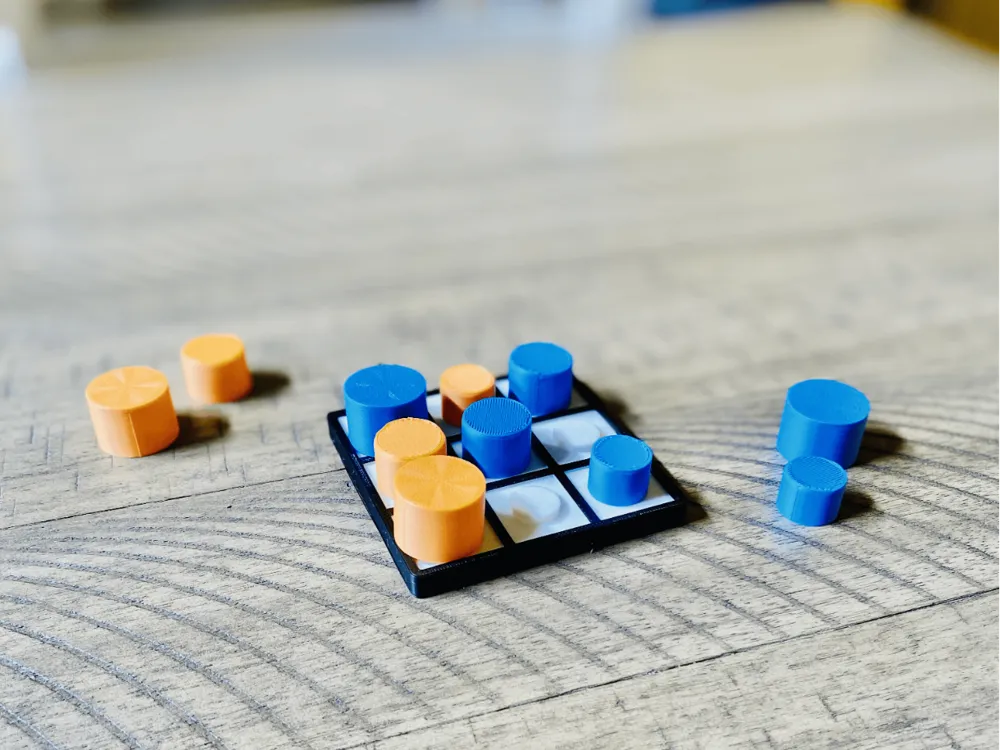
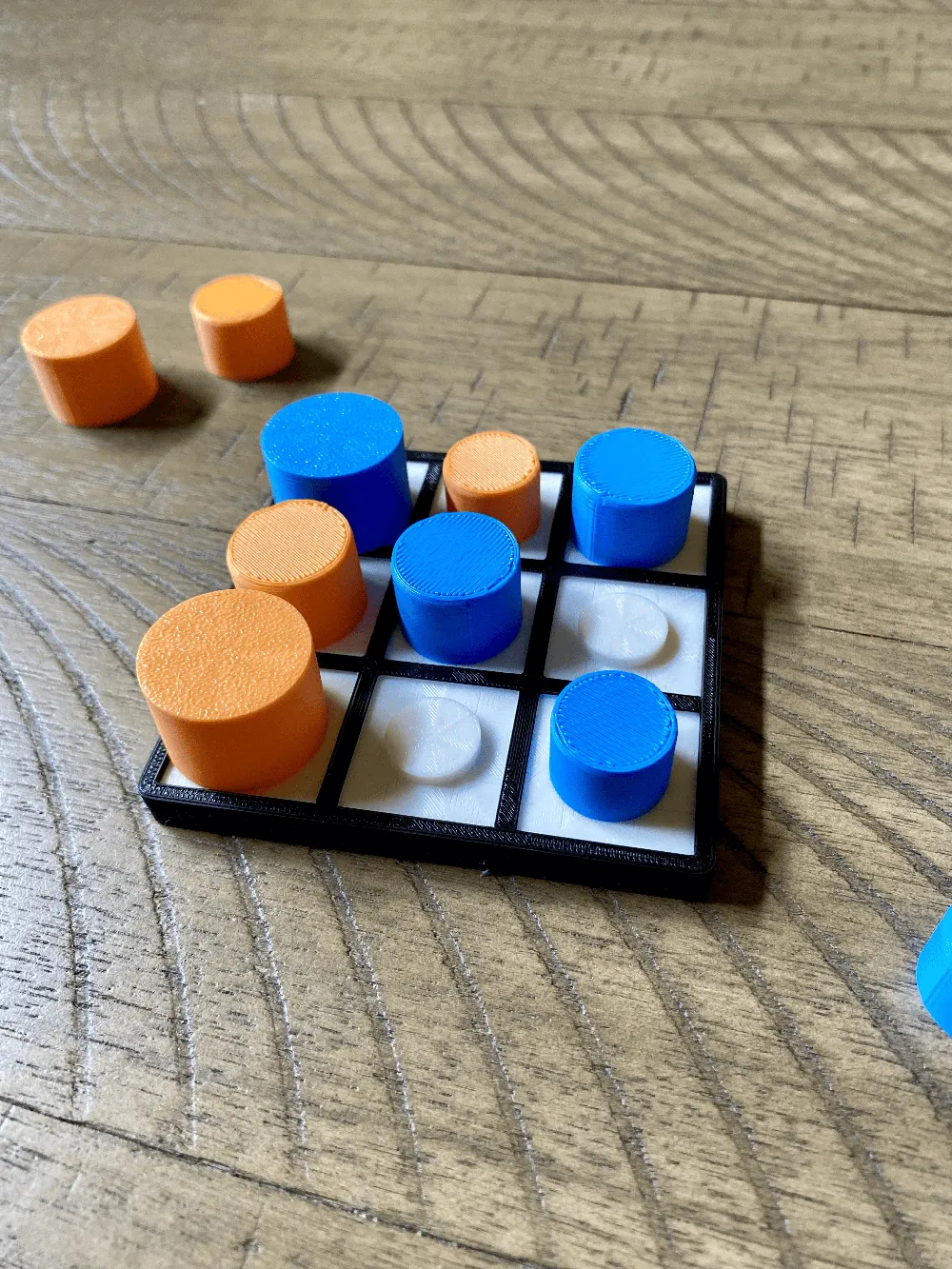
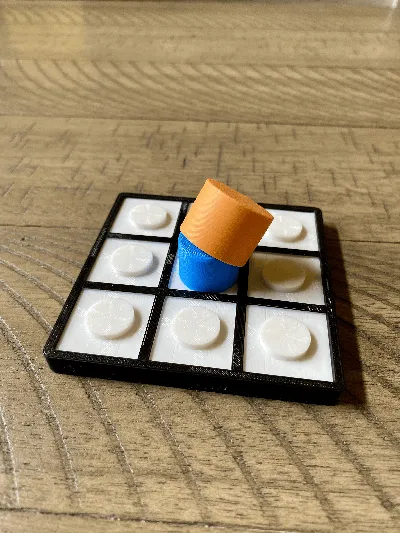
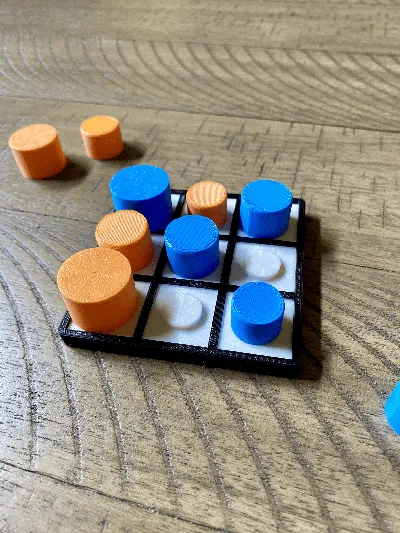
Stack Tac Toe is a two-player strategy game inspired by classic Tic Tac Toe, but with a twist: players can stack their pieces on top of others to take control of spaces. The goal is still three in a row—but only the top pieces count.
Components
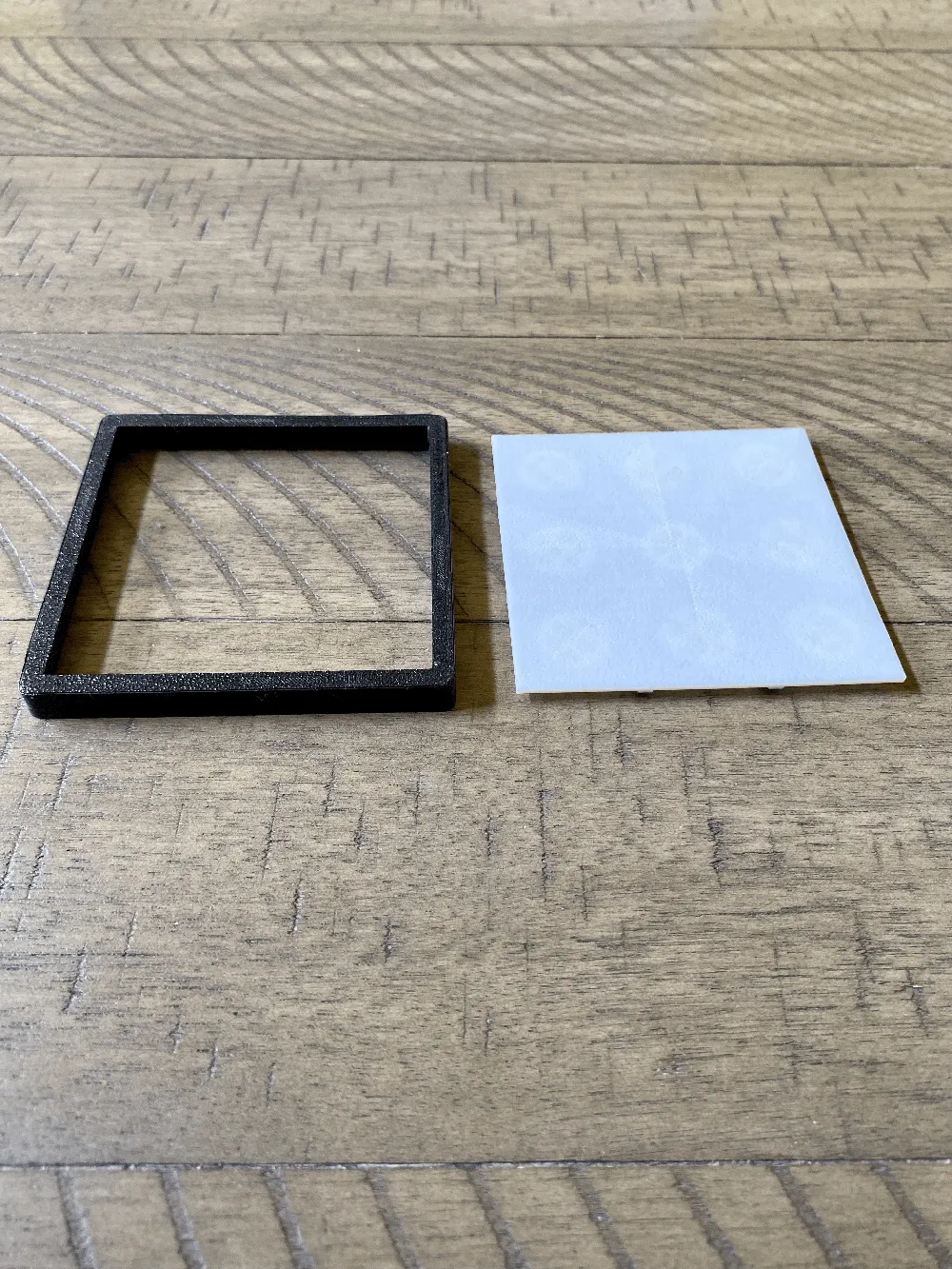
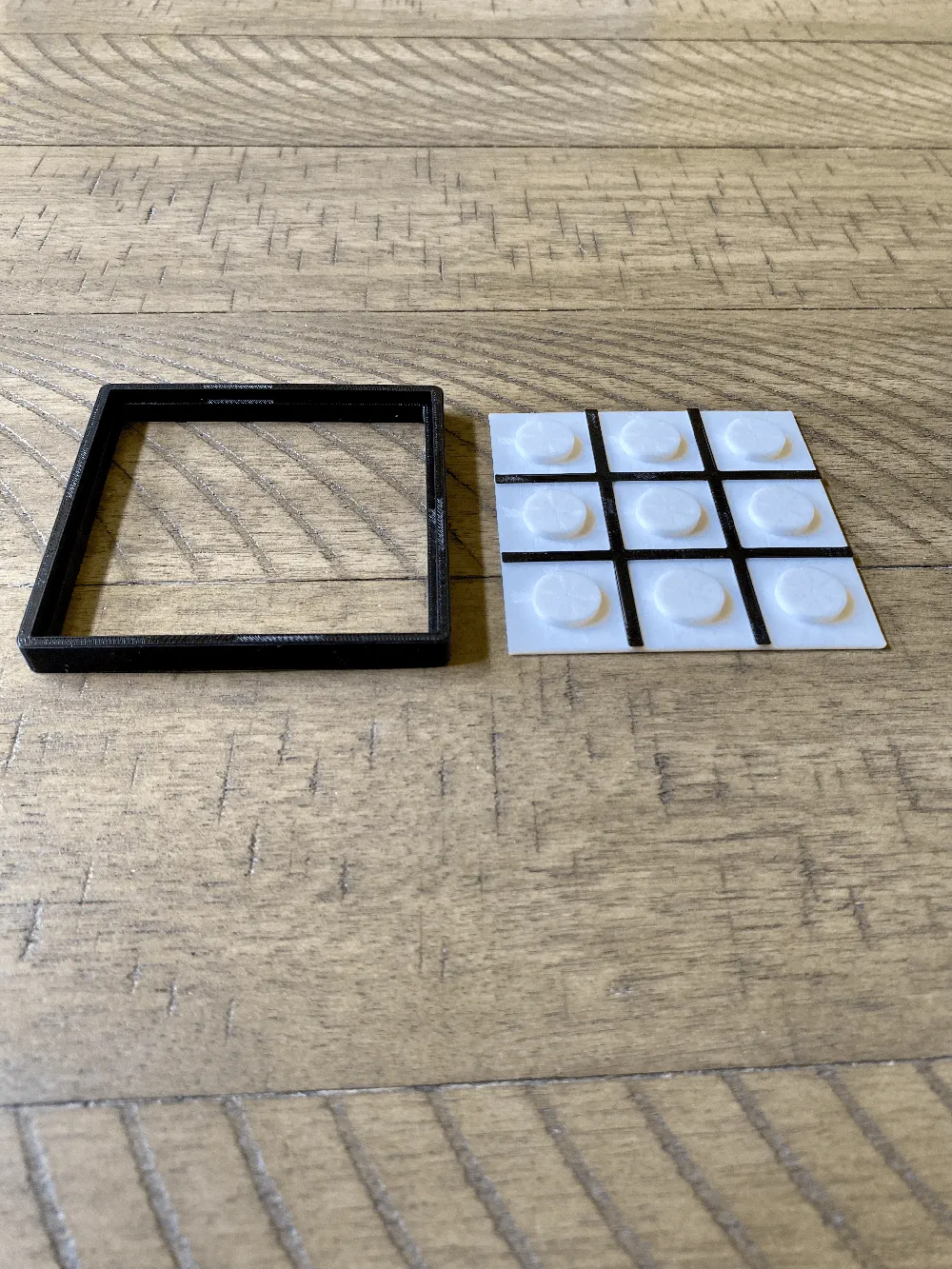
- 1 game board: a standard 3×3 grid
- 6 pieces per player, in three sizes:
- 2 small
- 2 medium
- 2 large
(Each piece clearly shows its size and color.)
Objective
Be the first player to get three of your pieces on top in a row—horizontally, vertically, or diagonally.
Setup
- Each player chooses a color (e.g., Red or Blue).
- Take your 6 pieces (2 of each size).
- The board starts empty.
Gameplay
Players alternate turns. On your turn:
- Place a piece on an empty square,
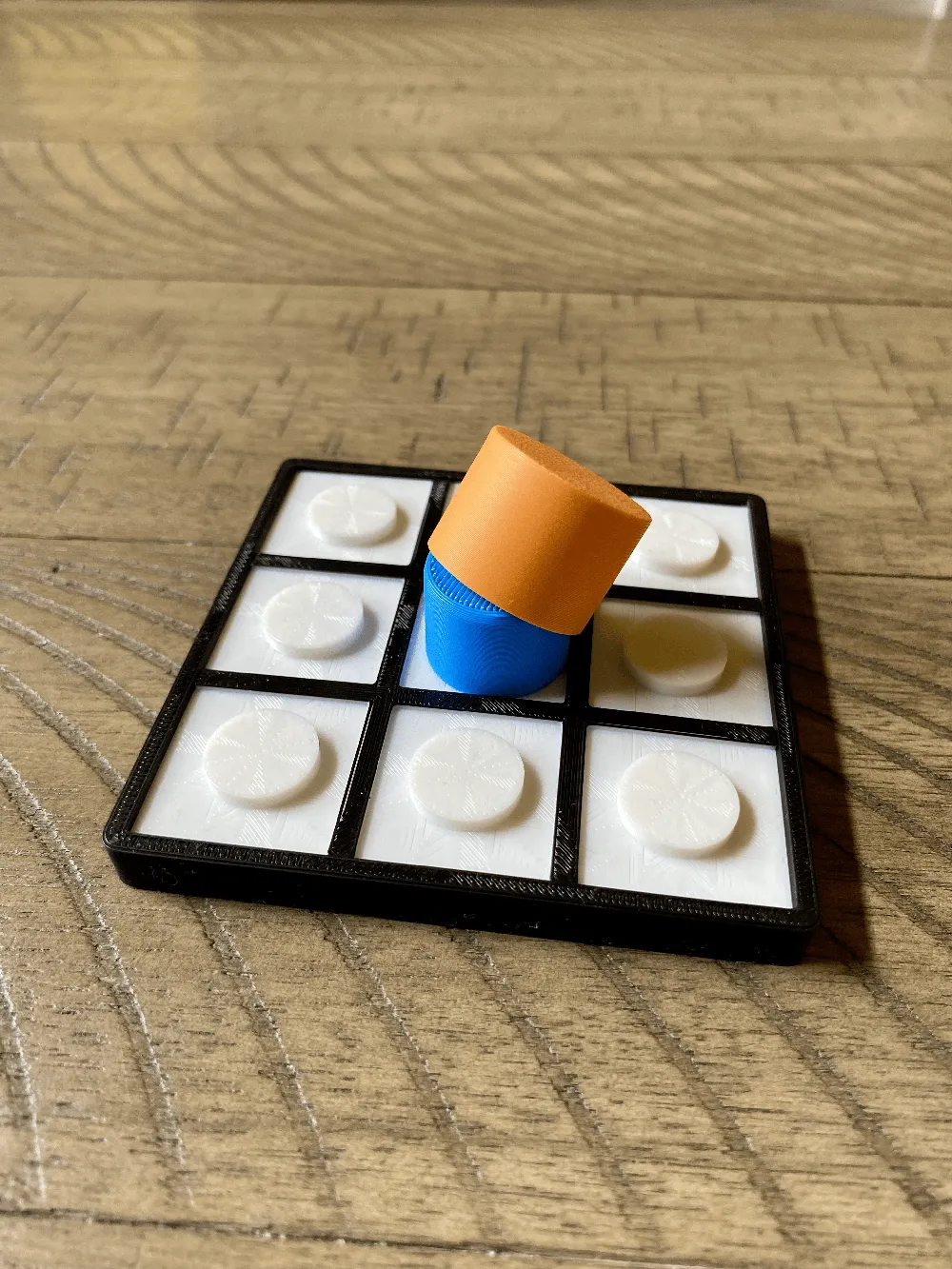
OR - Stack a larger piece on top of an existing smaller piece (only your opponent’s).
Stacking Rules
- You may only place a larger piece over a smaller one (e.g., large > medium > small).
- You cannot place a piece on one of equal or larger size.
- A square may have no more than one piece of each size (maximum height = 3).
- Once placed, pieces cannot be moved or removed.
Winning
The first player to have three of their color on top of any three aligned squares (row, column, or diagonal) wins.
If all pieces are used and no one wins, the game is a draw.
Strategic Notes
- Timing matters: Use your large pieces carefully—they’re powerful but limited.
- Blocking works: You can cover your opponent’s top piece with a larger one to stop a winning line.
- Center control is often key—just like in classic Tic Tac Toe.
Any rule changes you think are necessary let me know. And most importantly remember to have fun!
License

You shall not share, sub-license, sell, rent, host, transfer, or distribute in any way the digital or 3D printed versions of this object, nor any other derivative work of this object in its digital or physical format (including - but not limited to - remixes of this object, and hosting on other digital platforms). The objects may not be used without permission in any way whatsoever in which you charge money, or collect fees.


Comment & Rating (0)