
de Havilland Vampire [1:72 Scale]
Print Profile(1)

Description
Overview
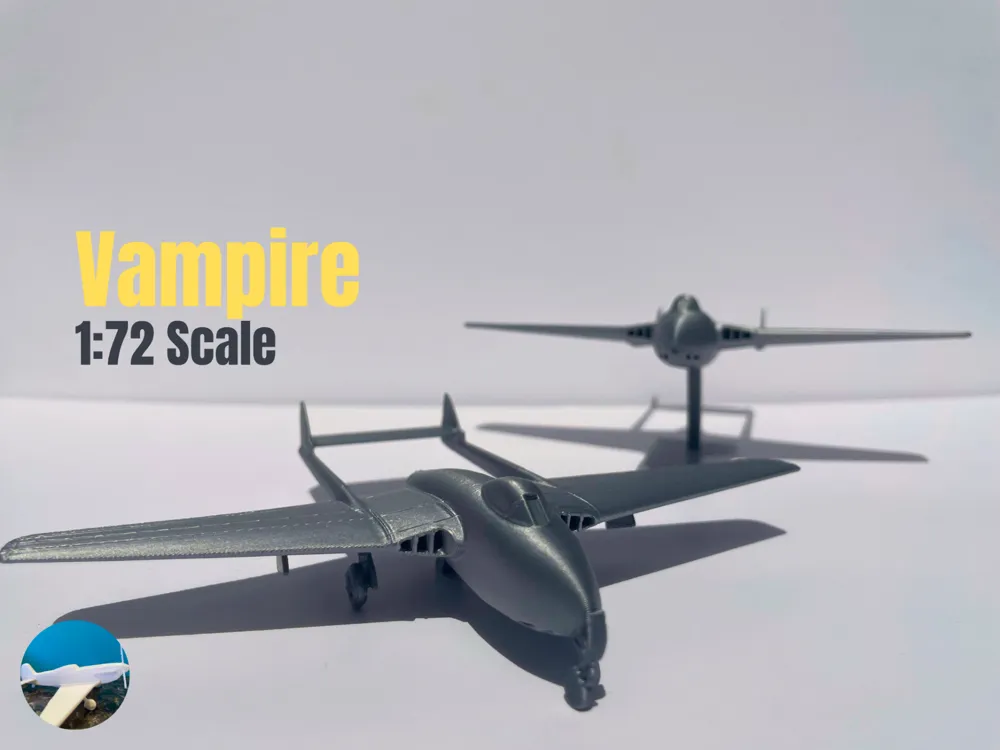
The de Havilland vampire was a British first-generation jet fighter that was first flown on 20 September 1943, and entered service with the RAF in 1946. It was primarily used as a fighter, but was later used for training and ground attack. The plane featured a de Havilland goblin turbojet, as well as an airframe constructed mainly from wood, which allowed vampires to be cheaply manufactured and repaired. The vampire was a single-engine, mid-wing jet, and had tricycle landing gear. The cockpit seated one pilot, but later versions were modified for 2 seat trainers. The Vampire had a max speed of 882 km/h, operating with a range of around 1,200 km, and was armed with 4 20mm Hispano cannons mounted under the nose of the aircraft. The vampire was Britain's second operational jet, after the meteor, with some trainer variants remaining in use until the 1970's. The vampire was extensively used by the RAF in conflicts throughout the 40's and 50's, as well as being exported to over 30 countries such as Sweden, Switzerland, and India.
Model Features and Assembly
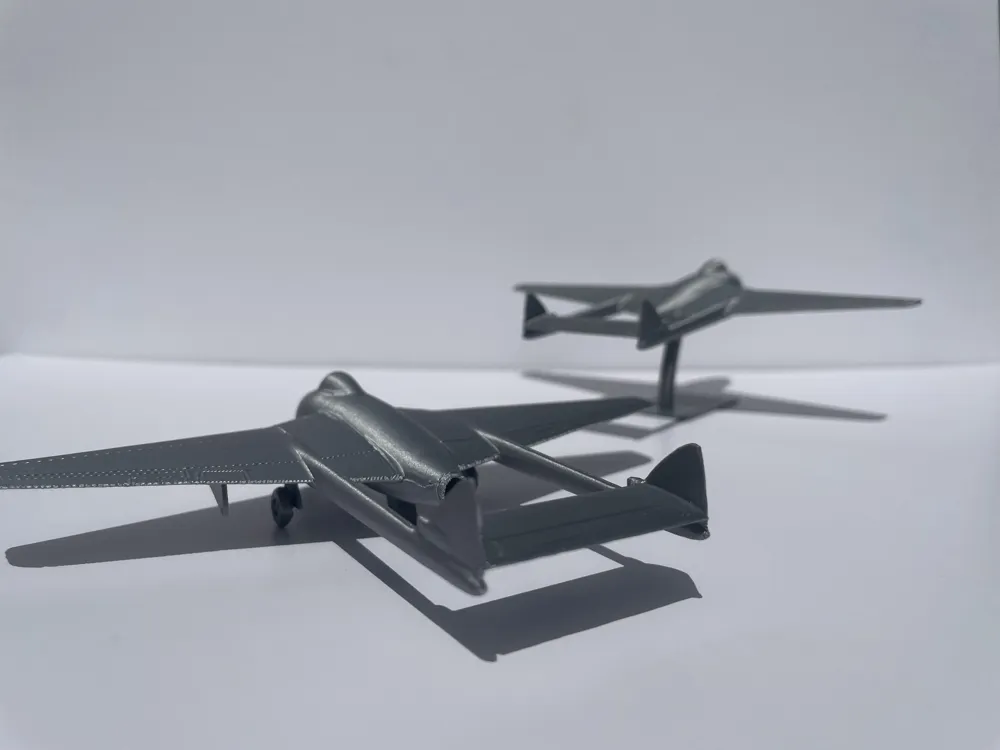
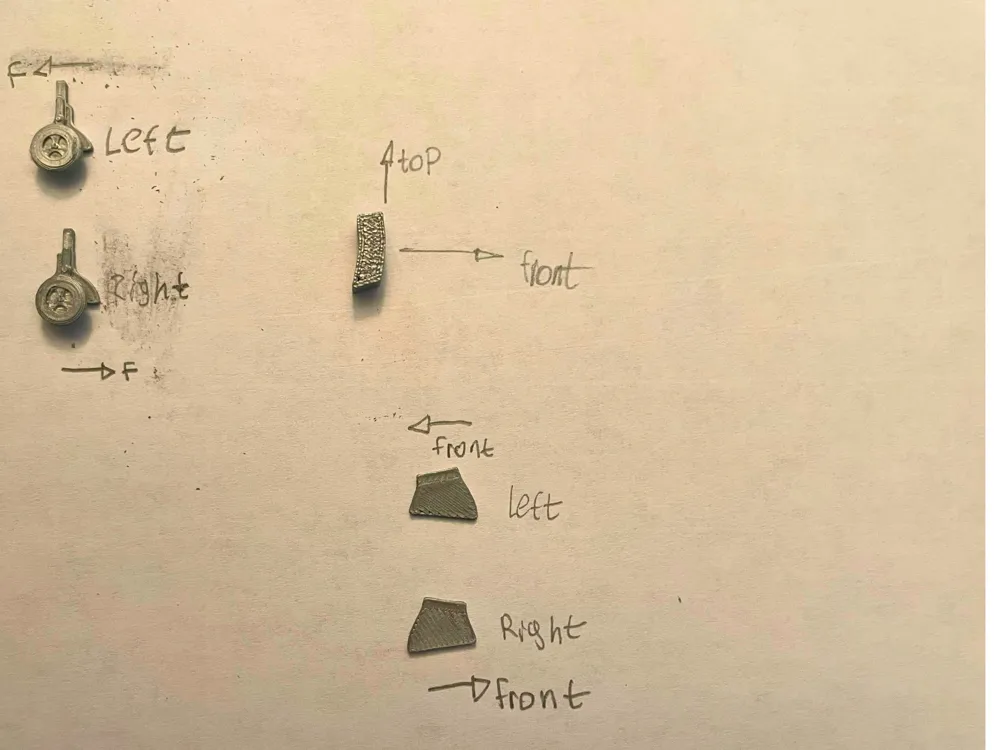
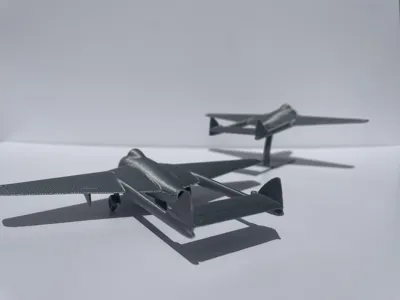
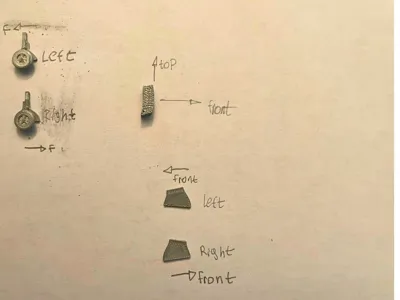
This model features two different display options, with options for a stand display or landing gear display. Both versions are included in the print profile and there is a hole on the underside for either mounting the larger “Flying” display stand, or the support for the “Landed” display option. This plane was modelled in blender, and prints at a 1:72 scale. Refer to the images above, including the sheet depicting part sides and orientations for assembly. Printers and filament can greatly vary, which may cause differences in quality or dimensional inaccuracies, which can result in parts not fitting correctly. To prevent this, ensure this model is printed on a well maintained printer with a clean plate, and dry filament. I recommend that you use a knife or cutters for removing components from supports, exercising caution since some components such as the nose gear can be easily damaged due to careless removal. Sandpaper or glue may also be required, and I only needed to lightly sand the rear of the tails. Enjoy the model :)
Boost Me (for free)
These models are meticulously designed and tested, meaning they take a considerable amount of time to complete. If you enjoyed or appreciated this model, please consider leaving a boost, as it really helps development of future aircraft.
License

You shall not share, sub-license, sell, rent, host, transfer, or distribute in any way the digital or 3D printed versions of this object, nor any other derivative work of this object in its digital or physical format (including - but not limited to - remixes of this object, and hosting on other digital platforms). The objects may not be used without permission in any way whatsoever in which you charge money, or collect fees.


Comment & Rating (3)