
Toyota LSPV Bracket
Print Profile(0)
Description
Summary
Most Toyota mini-trucks have front disk brakes and rear drum brakes. Drum brakes are "self-energizing" meaning that they are designed such that the brake shoes are forced into tighter contact with the drum under load. If you remember your bicycle with caliper brakes, notice how the front brake was stronger than the back one? This is because the front caliper is mounted in front of the fork and the arms are pulled forward under braking, forcing the brake pads to ride up the bevel on the rim, gripping that much tighter.
Disk brakes, on the other hand, move directly towards the brake disk, and are very linear in their braking force. So, on a vehicle with front disk and rear drum brakes, some sort of front/rear brake biasing is needed (less pressure to the rear, more to the front). So the LSPV-BV does this function with the Proportioning Valve component.
On a pickup, the weight on the rear axle can very greatly depending on what's in the bed. So, Toyota added a Load Sensing brake proportioning valve that tries to sense the load on the rear axle and vary the brake bias accordingly. At light loads, the bias is towards the front, to keep the rear wheels from locking. At heavy loads, the bias is moved towards the rear, to spread the braking force more evenly. This sensing is done via a rod attached between the axle and the valve (that is installed on the inside of the frame). As the axle is loaded, the frame and axle get closer together as the springs compress, making the lever move. The LSPV-BV does this function with the Load Sensing component, that is, the sensing lever attached to both the valve and the axle.
The final function of the LSPV-BV is as a Bypass Valve. Toyota uses a front / rear split braking system. What the BV does is to sense the front brake circuit pressure, via an extra brake line that runs from the LSPV-BV, up the frame rail, to the front brake line, connecting at a tee fitting. If the front brake pressure falls too low, the Bypass Valve bypasses the Proportioning Valve and send full brake fluid pressure to the rear brakes to ensure adequate braking in case of front brake loss. This is different than on vehicles that use a diagonal split braking system. In this system, there are two separate brake circuits, one feeding both front brakes and the left rear. Another circuit feeds both fronts and the right rear. If one of those circuits were to fail, you would still have some braking in the front and rear.
One problem encountered when adding suspension lift to the rear axle, is that the valve senses this as a lightly loaded condition, and effectively cuts out the rear brakes. So, to compensate for this, an extension bracket needs to be installed to lift the point of attachment for the arm to compensate for the amount of lift. If you add 2" of lift, you should have a 2" extension bracket. This will move the sensing rod back into the usable range of the proportioning valve
To use:
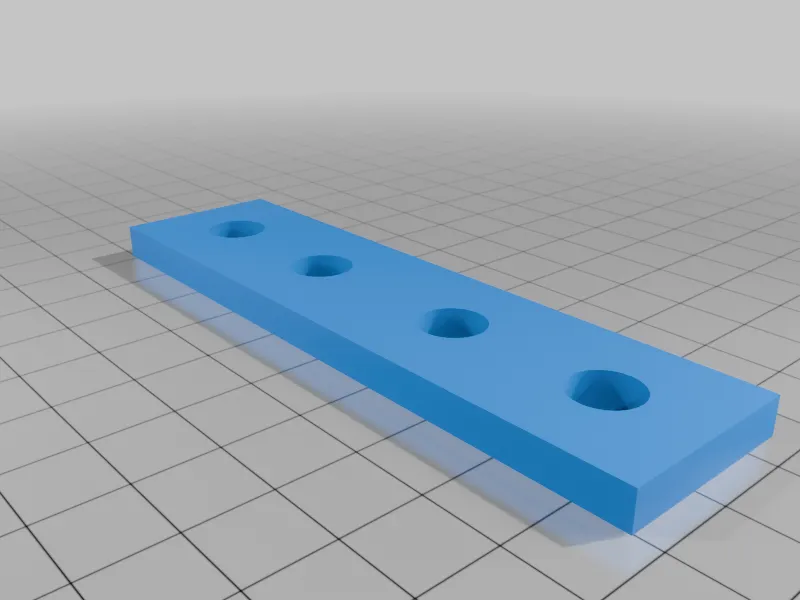
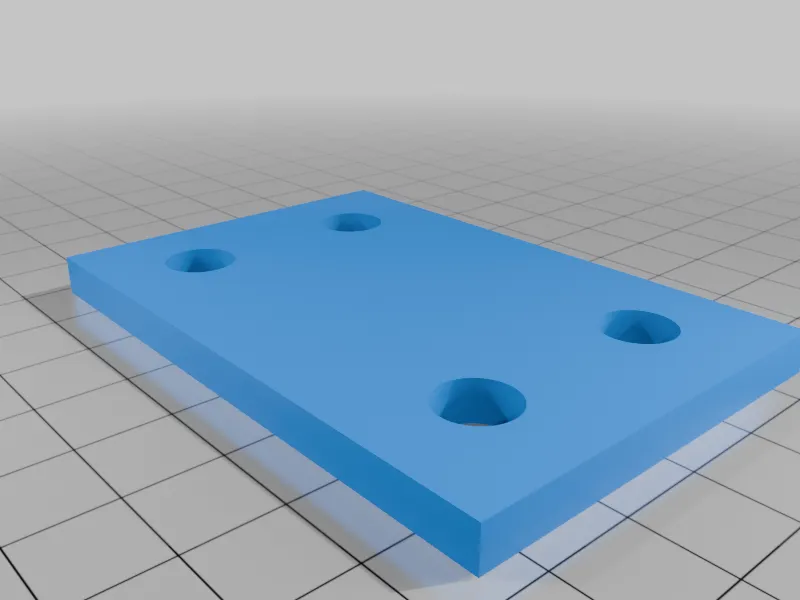
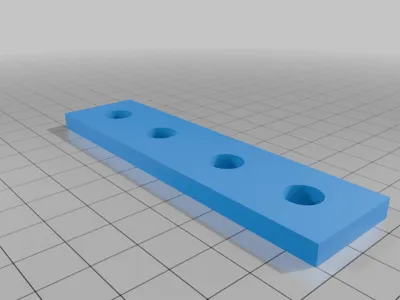
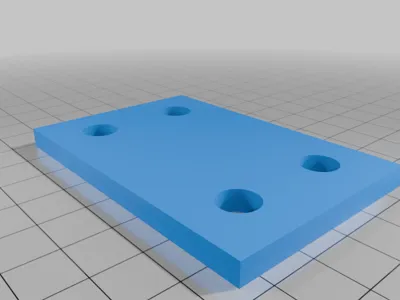
Check your center-center bolt hole spacing and orientation on your vehicle, modify the LSPVbracket.scad file or use the built-in Customizer app.
Several options with this model file:
- 3D print a bracket in a suitable filament and use it directly
- 3D print a bracket and use it as a drilling guide to make one out of metal
- Generate a CAD file, via FreeCAD, and send to a local or on-line machine shop for fabrication
Photos:
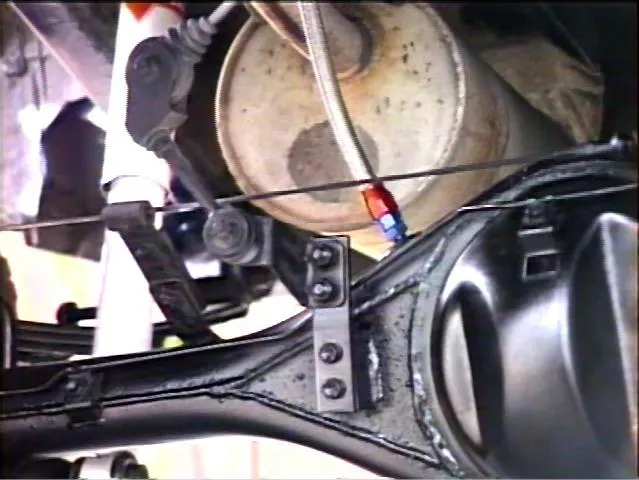
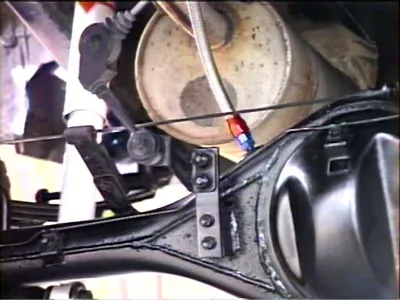
- A leaf spring application
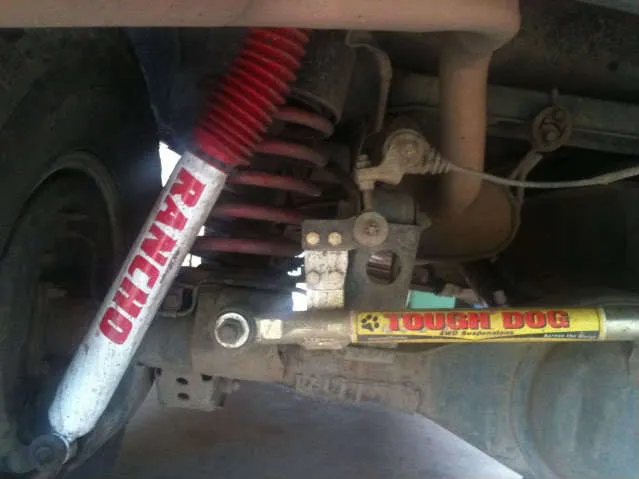
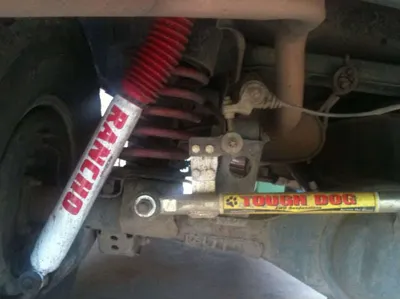
- A coil spring application
More information:
https://www.4crawler.com/4x4/4R_suspension.shtml#ProportioningValve
https://www.4crawler.com/4x4/ForSale/Shackles.shtml#LSPV_Bracket
How I Designed This
I wanted to learn the OpenSCAD Customizer and apply it to a simple part,
License



Comment & Rating (0)