
3DQF AMS Compatible Cardboard Spool Adaptor v16
Print Profile(2)


Description
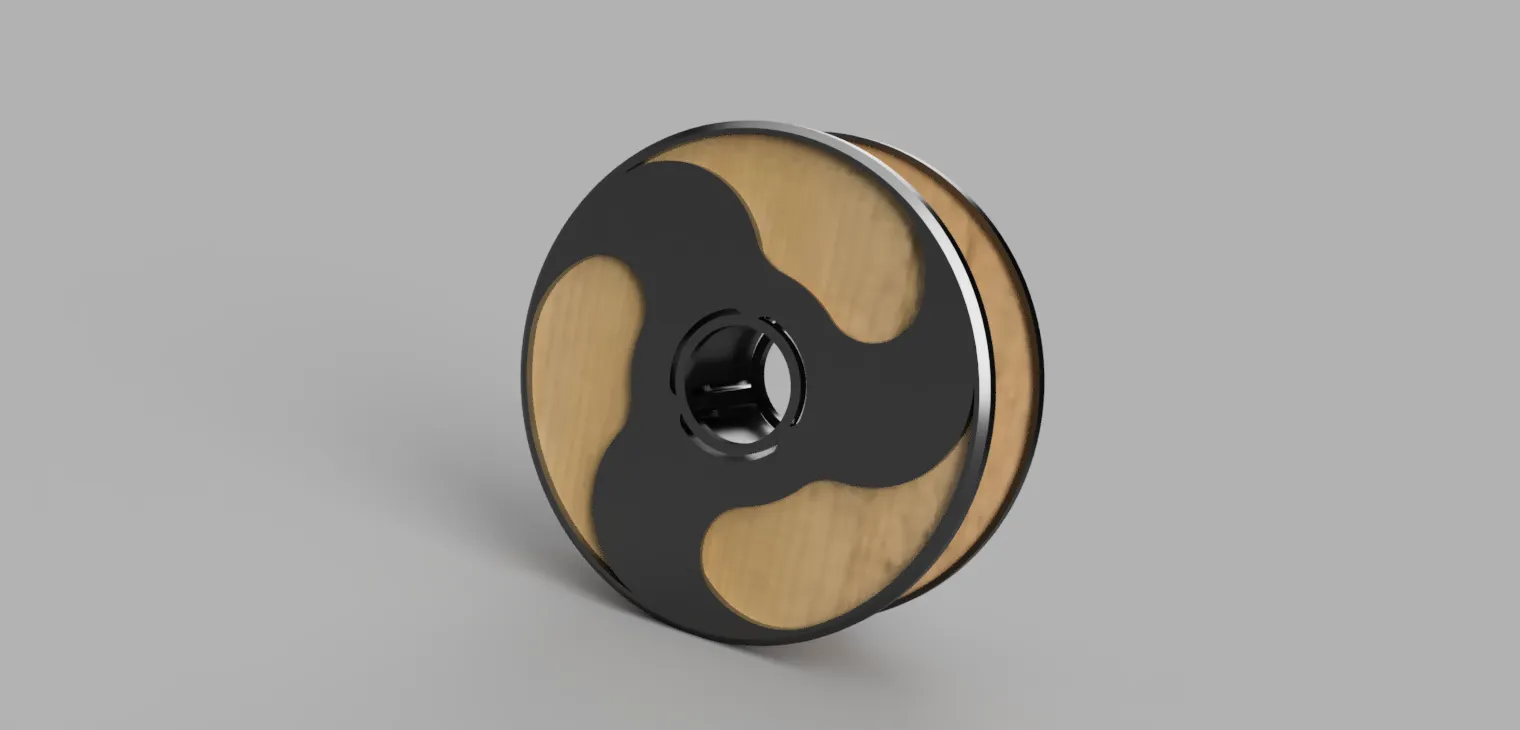
NEW MK12 Version Available
This is the latest "prototype" of our AMS-compatible spool protector. We have been running this design for hundreds of printing hours with no recorded issues. At this stage, we are happy to release the files for testing and feedback on the design. This adaptor is for the MK19 and MK19.1 spool only. Any customers with the older MK18 Spools won't be able to use this version, although we do also have a solution for the MK18 spools.
Understanding Possible Design Weaknesses
As this is a prototype, we still have question marks over a few of the design elements and would be interested in feedback on these and any other issues that you may encounter. We will outline below the two questions we currently haven't answered internally. Although these are our internal thoughts, they are not exclusively the only issues that you may encounter or want to give feedback on.
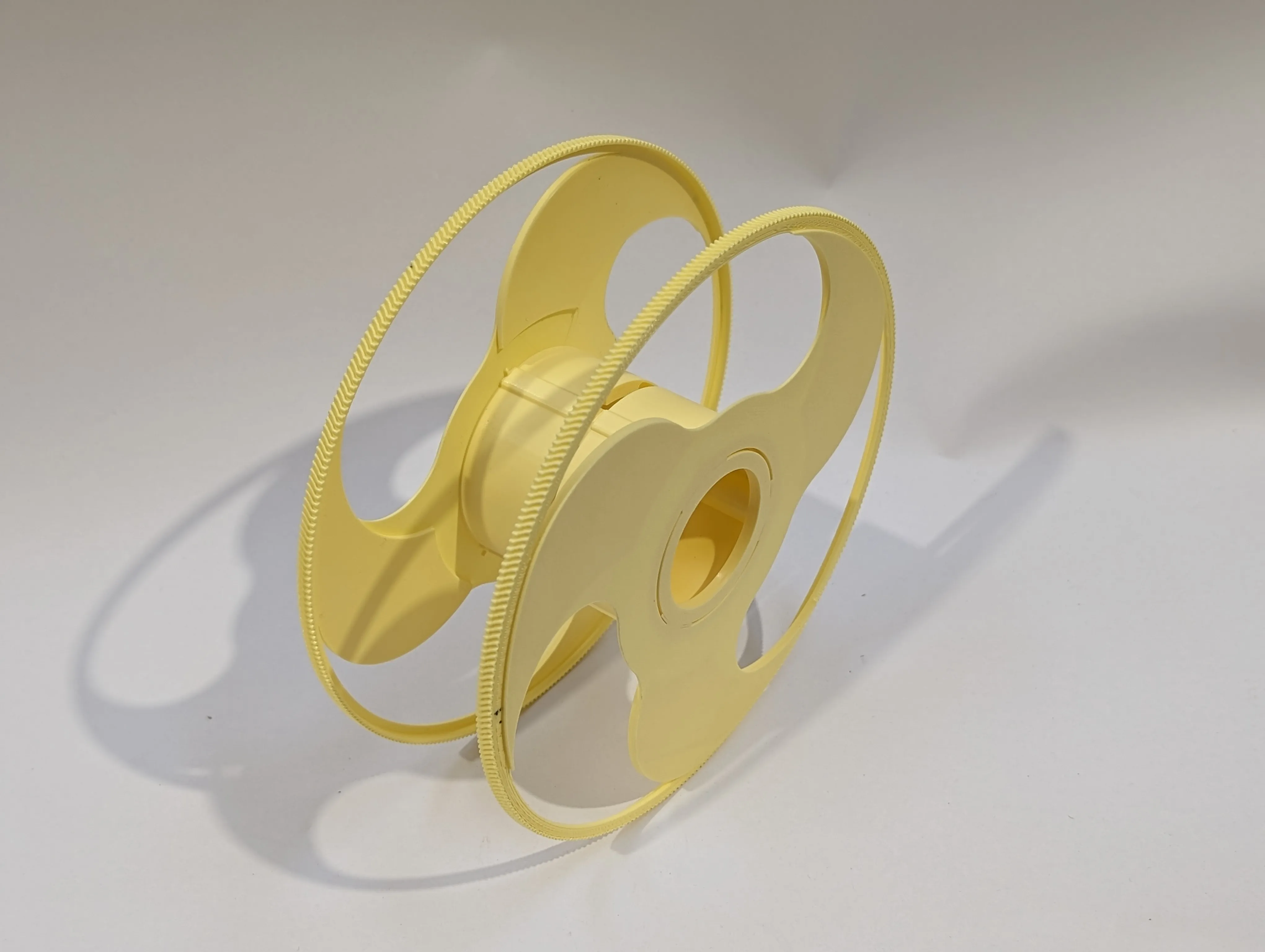
Securing Tabs
We have increased the strength of these over the various variations we have made. The issue with them is they are printed in the wrong orientation to best deal with the load applied to them during assembly. This sideways load lines up with the layer lines, which, as we all know, is the weakest orientation for printed parts. Early designs had a much thinner design in this area resulting in failures. MK6 now has vastly bulked-up tabs and an improved fit inside the Female receptacle. These two tweaks have improved the locking mechanism and reduced the shear load applied to the tabs. We believe that enough work has been done in this area to not cause an issue in the majority of situations. This is still an area of interest though and one area that we have not ruled out for a possible redesign.
Tyre Tread
To improve grip and reliability, we found that adding a thread pattern to the spool flange improved the running of the spool within the AMS system. The main improvements were apparent on the initiation of the wind back routine, which allowed the spool to instantly start moving instead of slipping and starting a wobble. Also, significant gains during the final pullback at the end of the filament retraction cycle gave a very positive pullback with zero slippage as the spool pulls the filament back. The whole wind back operation was also improved, keeping the filament neatly wound to the spool and not allowing the retraction to overtake the spool, causing loops to form.
The main question mark we have about the thread is wear and tear on the rubber rolls. The added traction of the tyre could produce some rubber dust and although we haven't noticed this as an issue, it would be interesting to know your results.
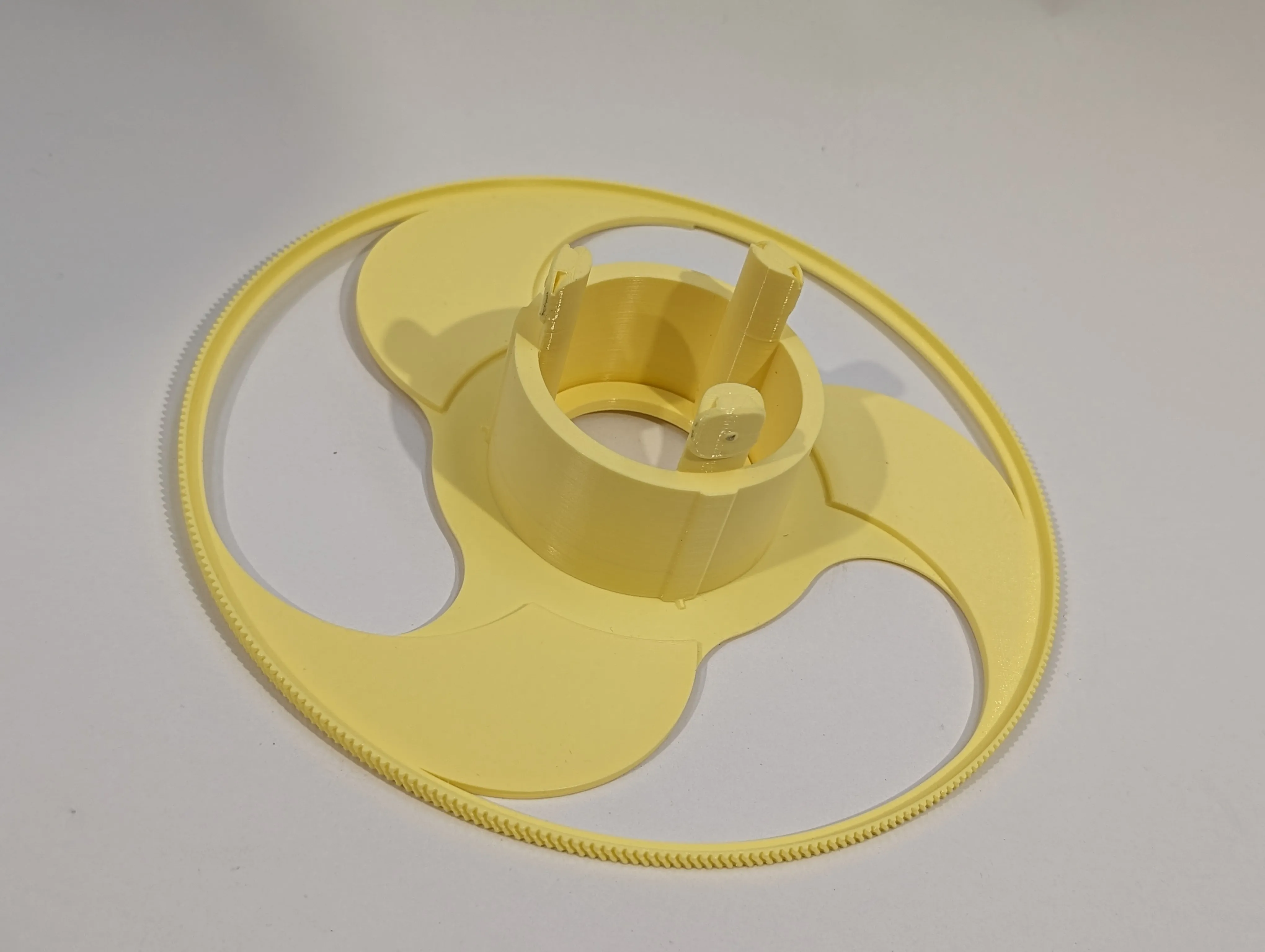
Design Concept
The main aim is to allow our 3DQF spool to work seamlessly in the AMS system; it has to be on par with a Bambu spool. We also have some historical spool designs that the design needs to work with. Initially, when the printer was released in 2022, we changed our spool design from our original design known as the MK18 spool to the new MK19. Although the Mk18 spool works in the Bambu AMS system with our adaptor rings, it requires you to leave the lid of the AMS open due to the diameter of the adaptor rings. The design of the new MK19 spool was finished in early 2023 and started to roll out around May/June of 2023. We produced a printed adaptor that clipped over the outer card flange and ran on the runners inside the AMS. Initially, these worked but over time we found that the design really needed the outer flange to be in good condition, otherwise, the adaptor would be loose and possibly fall off entirely. The fix to this was to tighten the fit of the adaptor, but this then brought its own set of problems.
During the Summer of 2023, we started down the path of changing our MK19 spool or revising the design of it. The solution was to reduce its width from 69mm to 65mm. This modification aimed to give more design freedom inside the AMS for a better adaptor design. In December 2023, this MK19.1 started to flow out of our factory.
Design Challenges
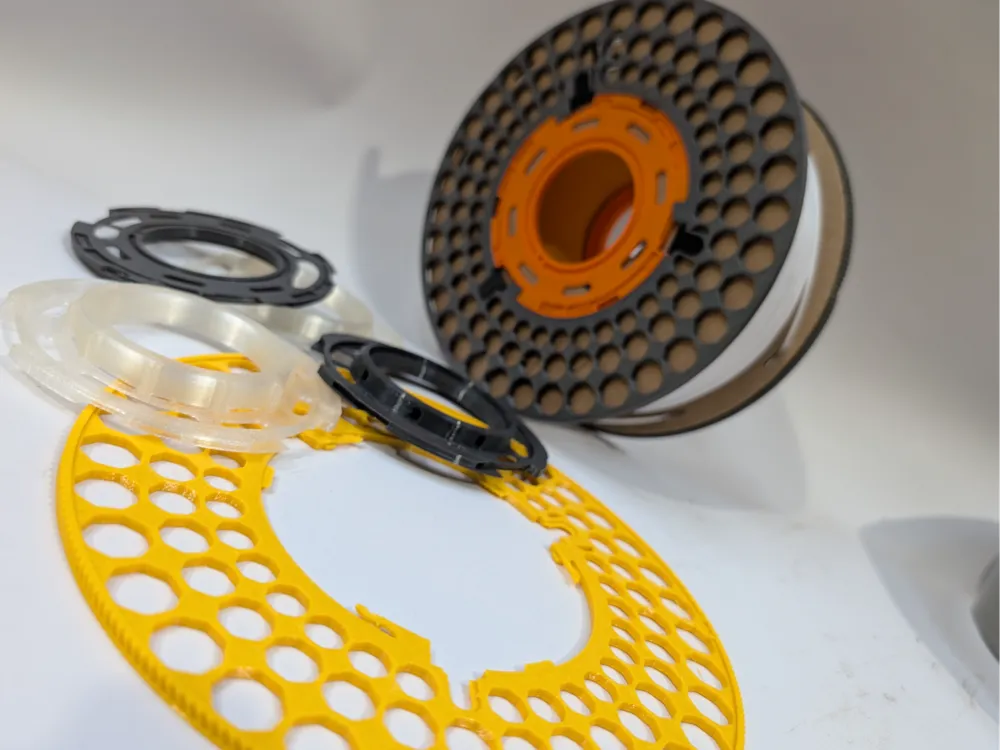
We had to make this adaptor backwards compatible with the MK19 spool and at the same time work with the MK19.1 spool. Trying to help customers understand the difference with such a minor tweak would be problematic with a mix of new and experienced users. Not to mention the frustration of having two spool designs. This did mean that some compromise was needed with the design, namely changing the design so that it needs support. By adding support, we managed to reduce the spools at a critical pinch point. This allowed the adaptors to then work on both the 69mm wide MK19 spool and the new 65mm MK19.1 Spool.
Support Material
Is something with all designs we tried to stay away from, it increases print time, material usage and is a possible reliability issue (although thankfully with the Bambu printers, this is less of an issue these days). As we wanted a one-spool solution that would run both the MK19 & MK19.1, we had no choice but to go with a model that needed support as part of the printing process. Initially, due to the cross-section area, the PLA support wouldn't cleanly release and in the tolerance critical area, it caused more trouble than the relief cut helped with. That was until we tried the PETG interface layer! Goodness, what an amazing feature! Now, although not a simple thing for the average 3d printer, it is for a Bambu with an AMS system. Seeing as 99% of customers are only printing these because they need them for an AMS, it was an easy decision for us to make.
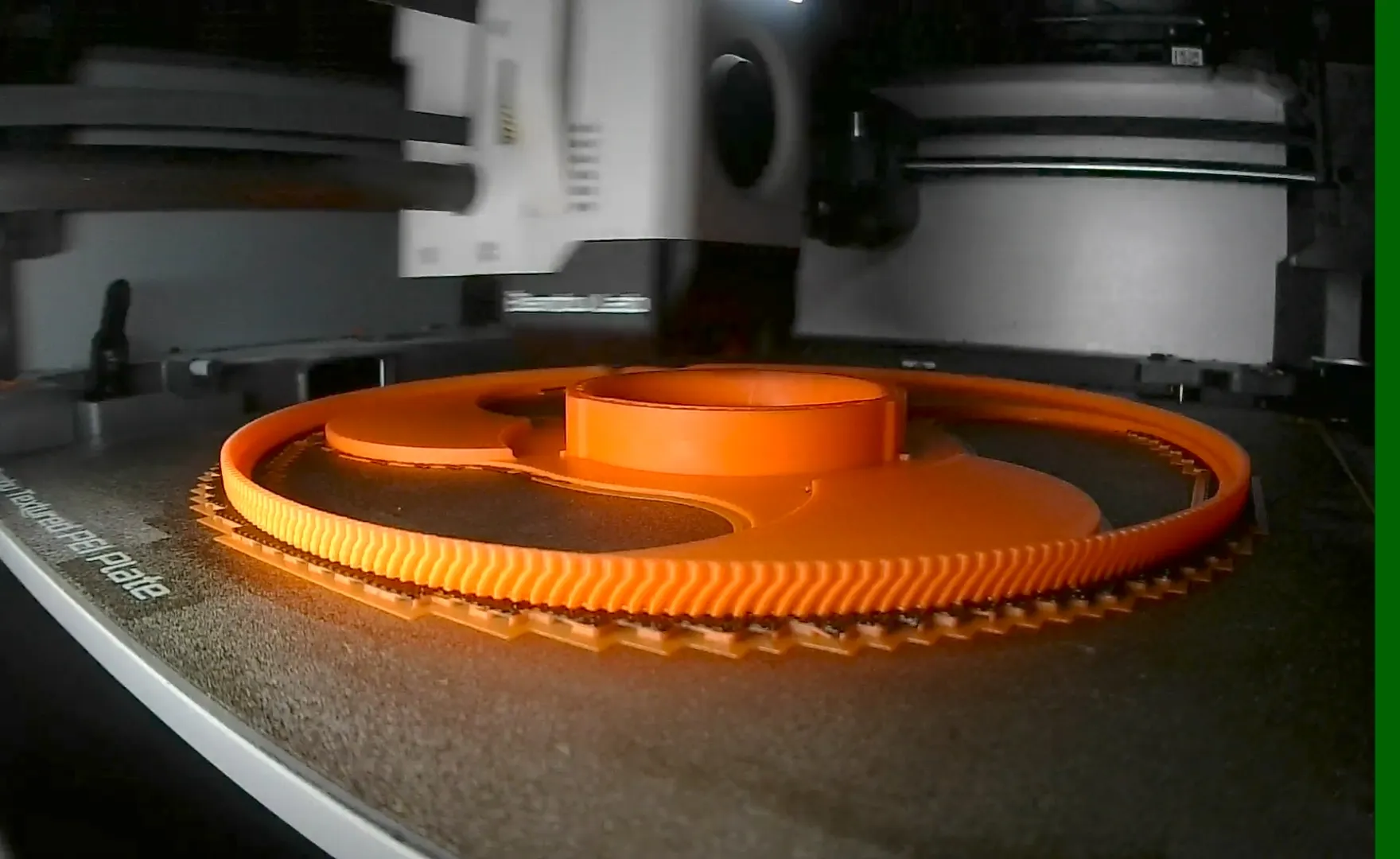
Black interface layer is PETG
Print Requirements
The Set-up below is based on the assumption the body of the spool is printed in PLA, we have not tested the adaptors with PETG or ABS but intend to.
- 4 Perimeter walls
- 30% infill (Gyroid)
- PETG interface layer
- Support touching build base only
MK12 version
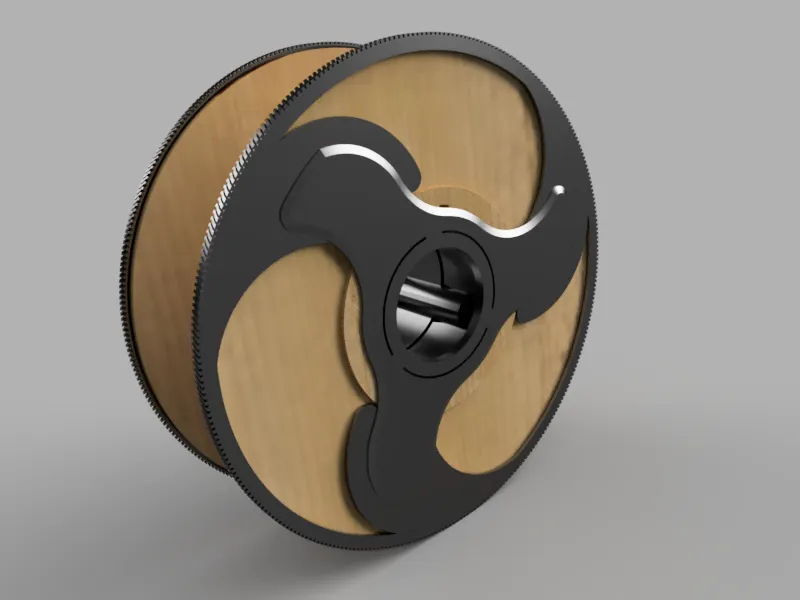
MK12 improvements
- Reduction of width
- Reduction of fins
- Improved internal AMS clearance
- Optimised external diameter
Firstly, thank you for your feedback and for helping us develop a better solution for our spools in the Bambu AMS system. We have taken your feedback and hopefully improved the design. We have made every effort to shrink the dimensions of the adaptor and maximise the available space inside the AMS. Removing all fowling edges and rounding certain areas to allow them to slide past and not get hung up inside the AMS.
Reduction in width
At the very bottom of the hoop the adaptor would come into contact with both the large dividing fins and the small lip on the rollers. reducing the width in this area is the reason for the undercut that requires the support material. MK12 version went further and deeper to gain more clearance in this area. extending up and into the swoop section of the spool.
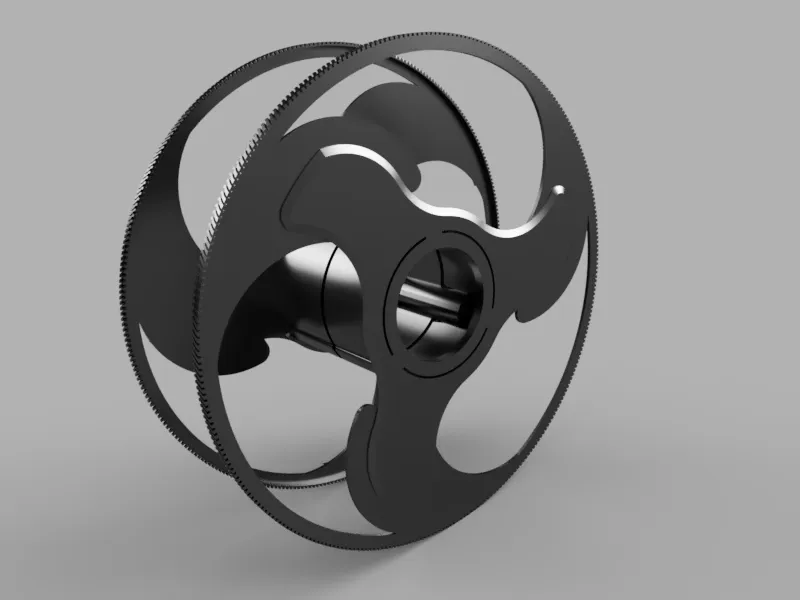
Reduction of fins
As we increased the undercut we found that by reducing the fins we could gain more space as the AMS fins are tapered towards the bottom of the unit. Reducing the fin's ultimate diameter would really help with clearance in this area. The next issue was the step that could still be caught during the rewind process. This has been addressed with a chamfer which in testing has stopped it getting hung up.
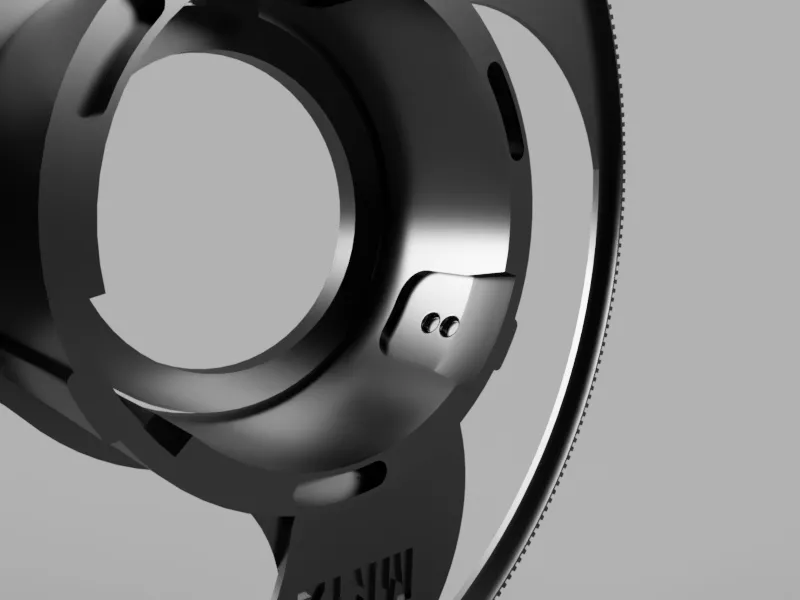
MK12 Conclusion
Let us know your thoughts on this latest design. I am sure more improvements can be made but this is a significant step in the right direction.
New Version 14
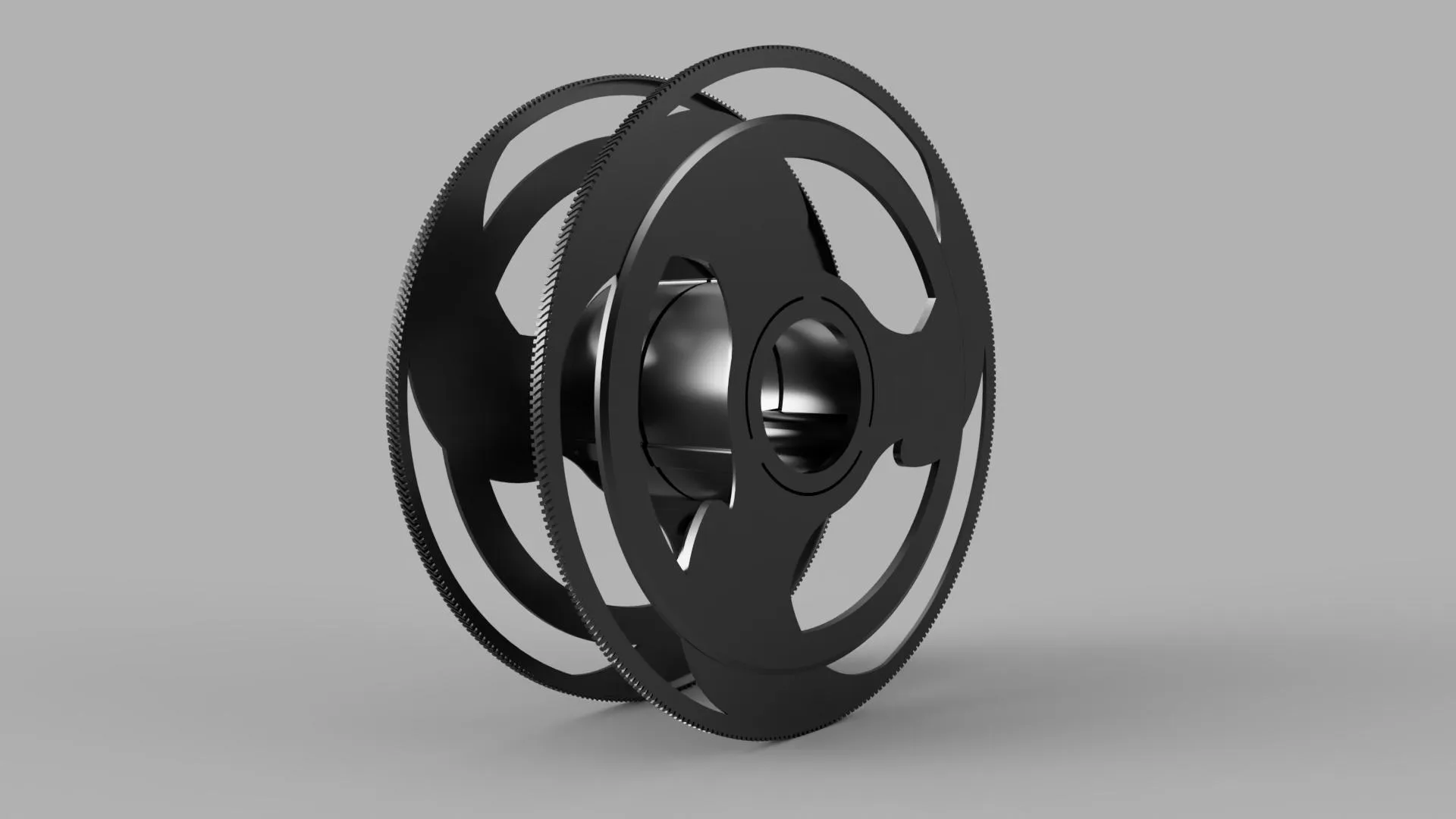
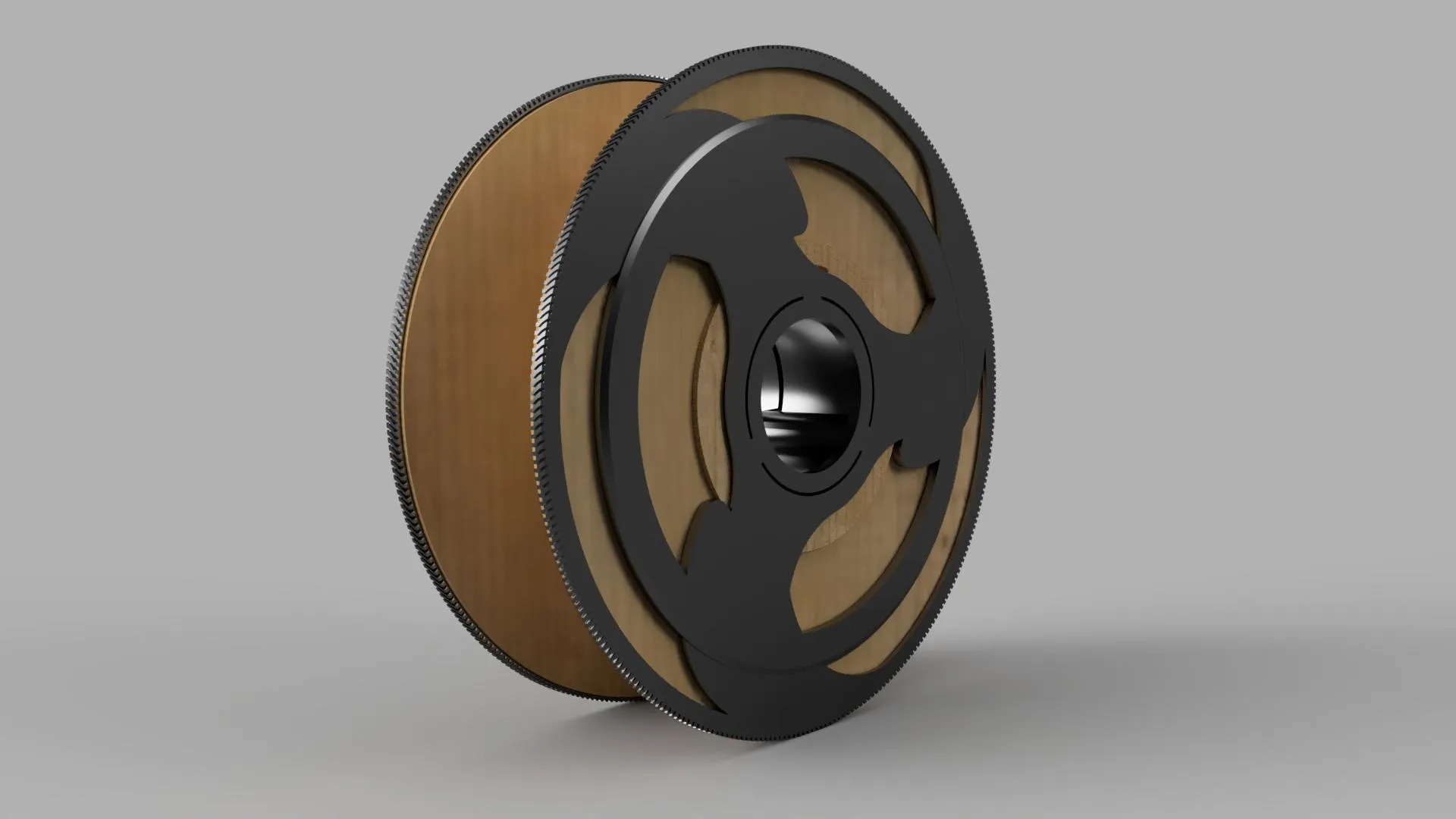
The new version has addressed several small issues that had the potential to still cause some minor problems during loading and unloading.
Firstly we have had a buffer ring to stop any internal hand-ups on the RFID fins and removal of all non-essential unsupported areas to help reduce print time and complexity. PETG is still a requirement for an interface but we also worked on the interface between these two material in the pursuit of optimising the surface finish.
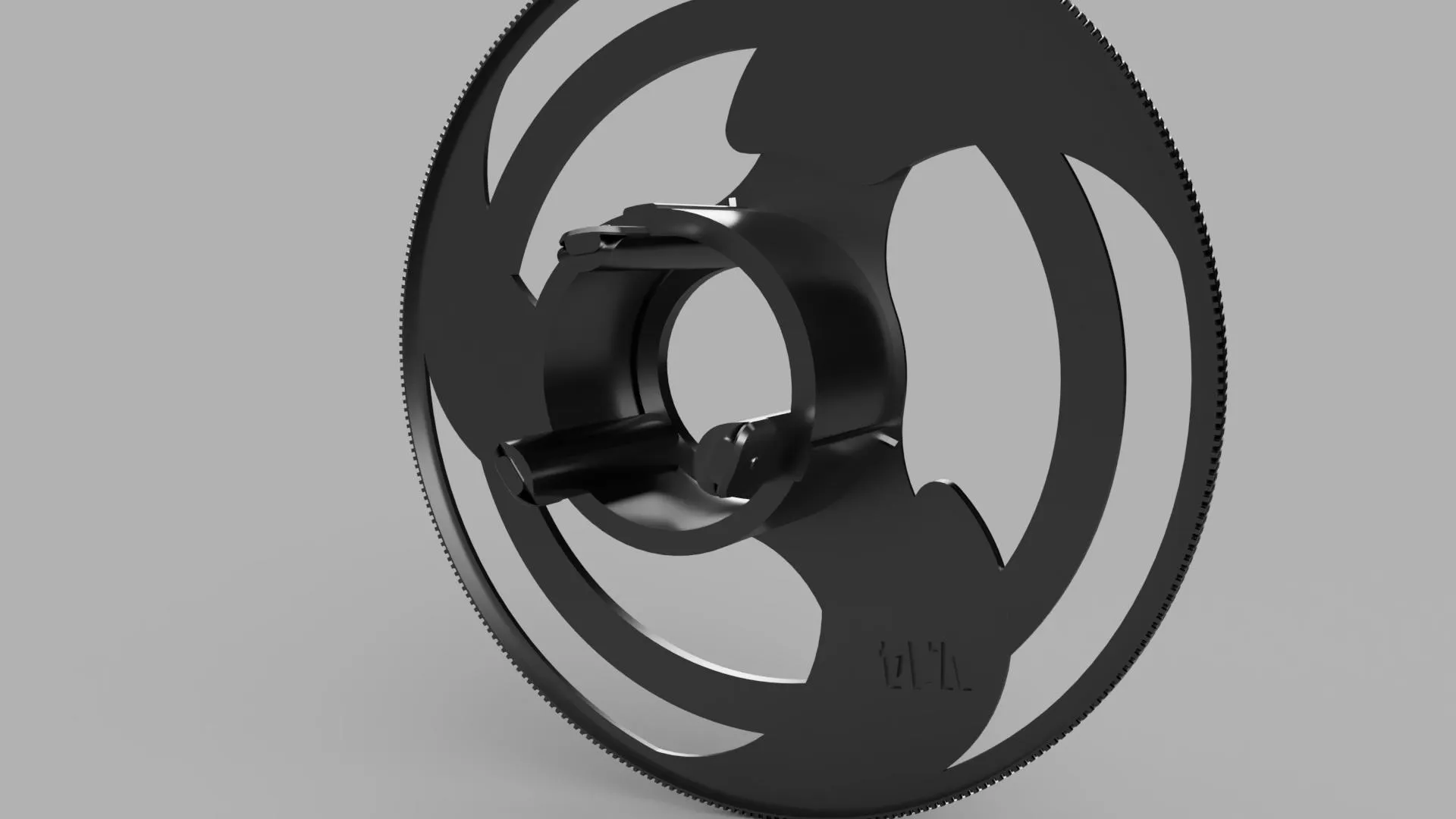
V15 Update
We have now added a feature that allows fitment to the AMS lite system, the inner section has been modified so the three feet on the AMS lite can grip the spool adaptor.
We have also refined the design to allow the possibility of an automated assembly of the spool in our factory. This process would require the fitting of an injection moulded component and although we are not at that stage yet it seemed prudent to make adjustments at this stage to allow for its presence in the future without the need to print new adapters.
-----------------------------------------------------------------------------------------------------------------------------------------------------------------------------
V16 Update
Good afternoon, fellow printers!
We’re excited to share that we’ve finally updated our AMS spool design to something much simpler to print than the original concept. This new design still follows the same guiding principles as the first version — using the centre core of the spool as the reference point, rather than the outer cardboard flanges, which can be damaged in transit.
This new approach puts some of the responsibility on us, as we are now manufacturing the internal insert here at the factory. Currently, these inserts are being fitted by default to PETG spools only, but we’ll soon roll out a request option on the website for them to be added to PLA orders too. If you're placing an order and would like us to include some of the centre inserts, simply leave a note on your order and our team will be happy to add them for you. This option will be added to the website soon.
Printing Guidance
Large Roller Hoops:
Please print these face-down with the outer lip facing up. Use Grid Support for best results.Inner Insert:
No support required.- Locking Key:
No support required.
Fitting Instructions
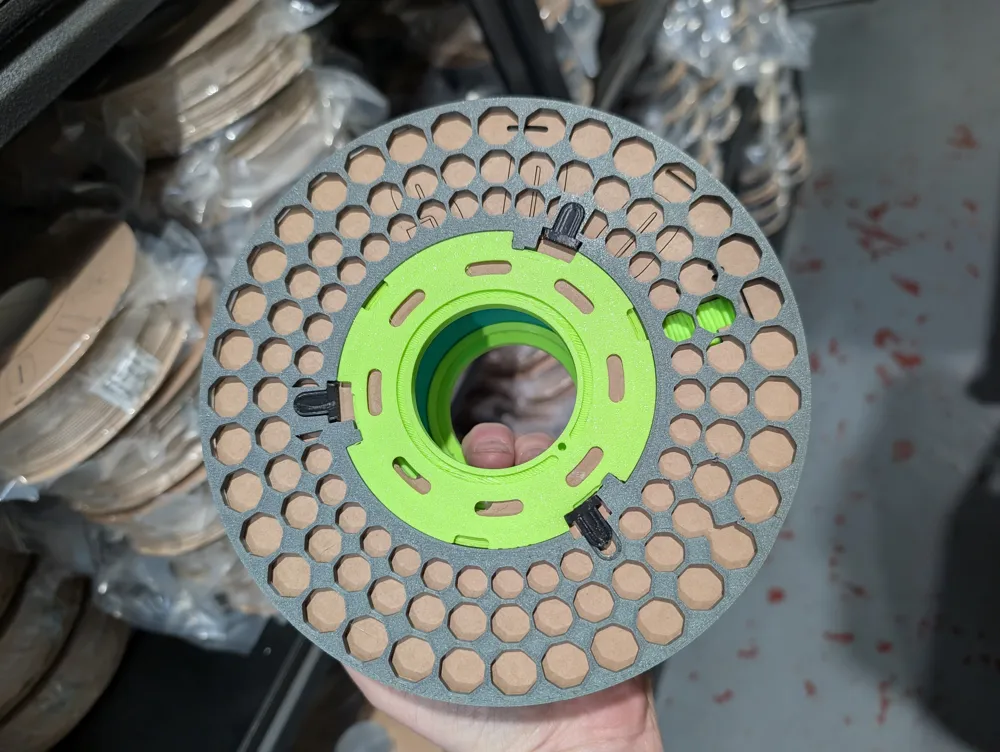
If you're printing all three parts, please note that the inner spool insert is designed to be a snug, press-fit into the centre of the spool. It should hold tightly in place to prevent the core from becoming loose. Inserts fitted at the factory are a slightly different design and are bonded in place — we’re currently testing a few bonding solutions as part of ongoing spool development.
Before fitting the roller hoops, make sure to fit the locking inserts to the large roller hoops. Although this isn’t mandatory when the rings are brand new, it will become important as the parts wear over time to prevent the outer ring from unlocking during spool loading or unloading. The locking key can only be fitted when the roller hoop is detached from the inner insert.
The large roller hoops engage using three tangs that pass through the alignment gates on the inner insert. Once aligned correctly, rotate the hoop anti-clockwise to lock it into place. It may feel firm at first, but you should feel it click securely. You’ll know it’s properly locked when the locking key can slide into its final position.
Unlocking Instructions
Ensure that all locking tabs are in the unlocked position and rotate the locking ring clockwise. The first few attempts may feel tight, but this will ease over time. Rotate the roller ring until the three tangs align with the open locking gates, then remove the hoop and fit it to another spool.
Images to follow.
License



Comment & Rating (52)