
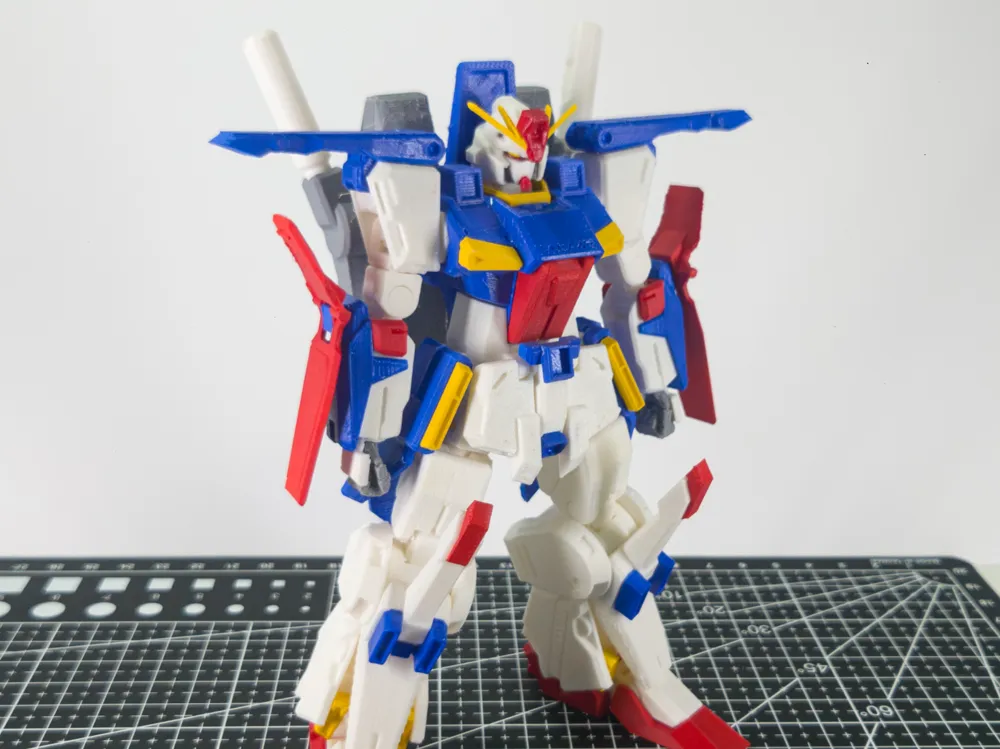
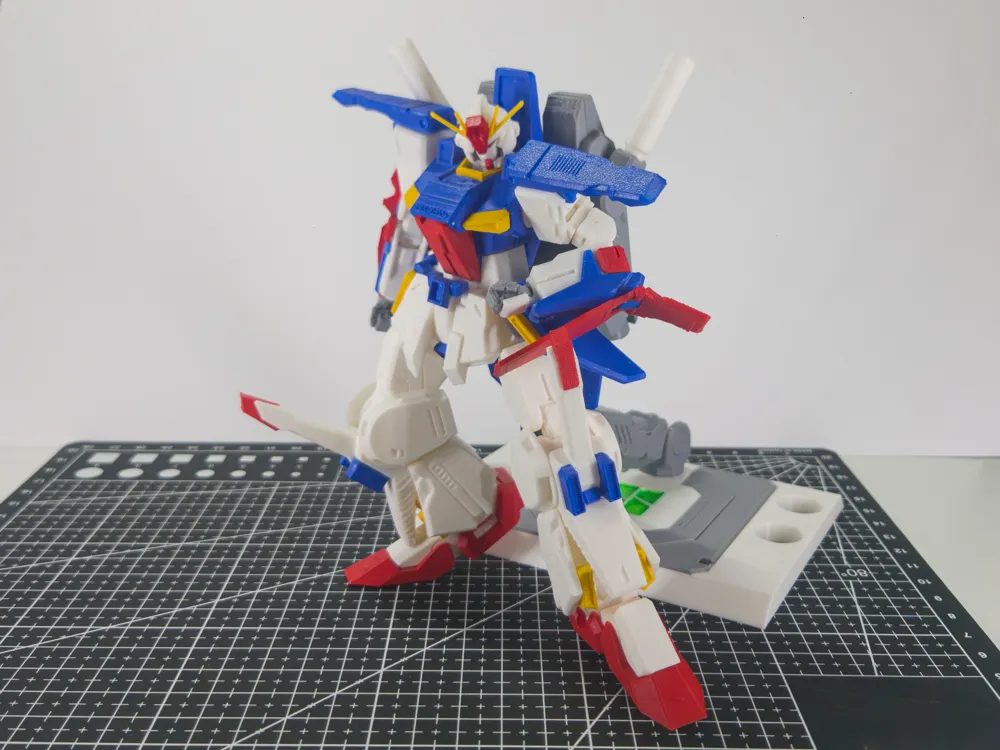
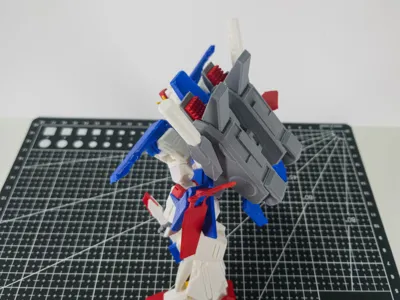
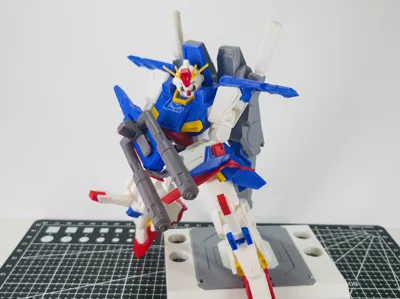
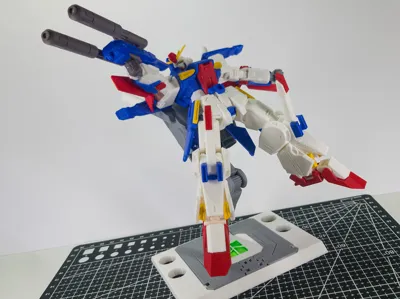
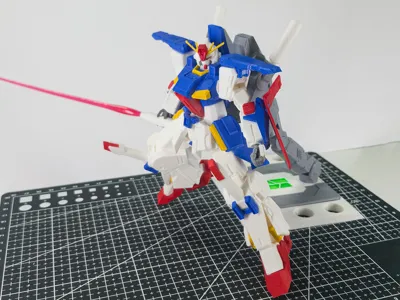
Articulated Figure: 1/144 ZZ Gundam
Print Profile(1)

Description
Features:
NO need AMS, one-piece joints crafted from a single material
Must-Read:
Before printing, you should ensure that Filament 1 does not have excessive extrusion. Due to the large number of parts, it is recommended to print the mini test parts in Plate 1 to check the printer status and see if you are satisfied with the feel. If the joints move flexibly, the subsequent printing will go smoothly; if the joints cannot move, you must adjust the printing settings.
Encounter any problems during printing? Contact me at any time.
——————More Information——————
SPEC:
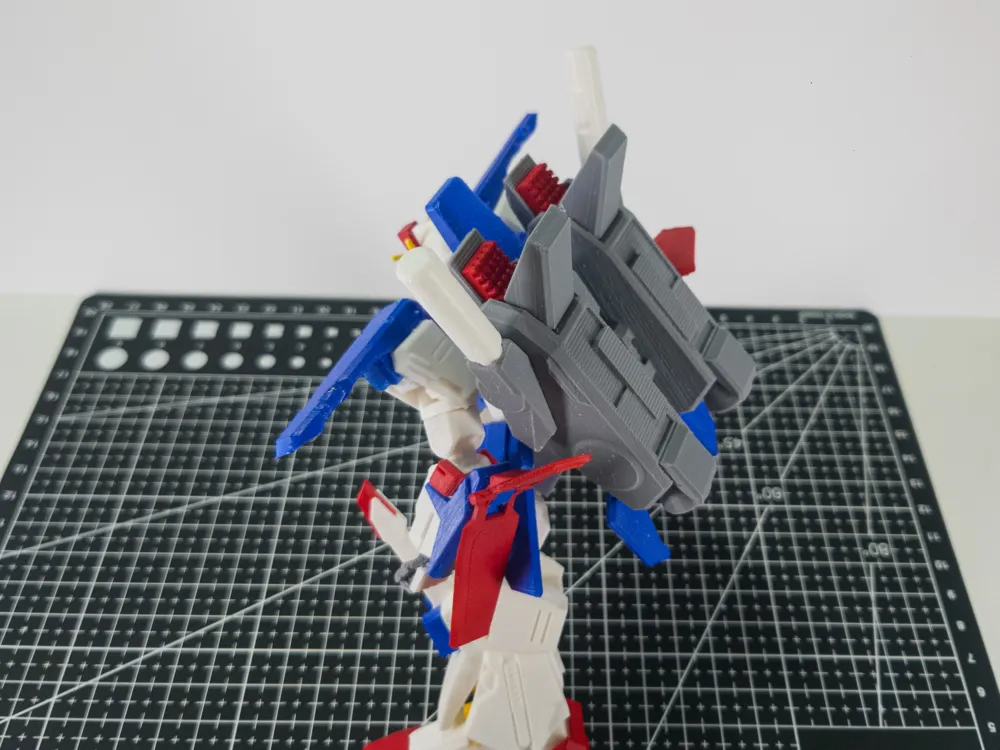
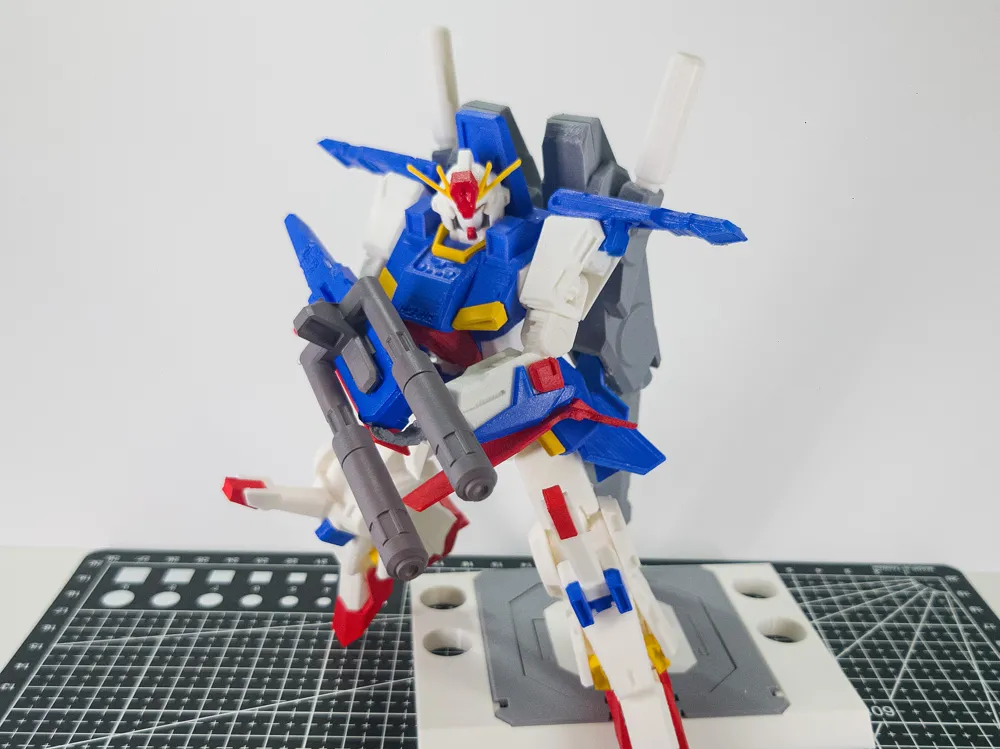
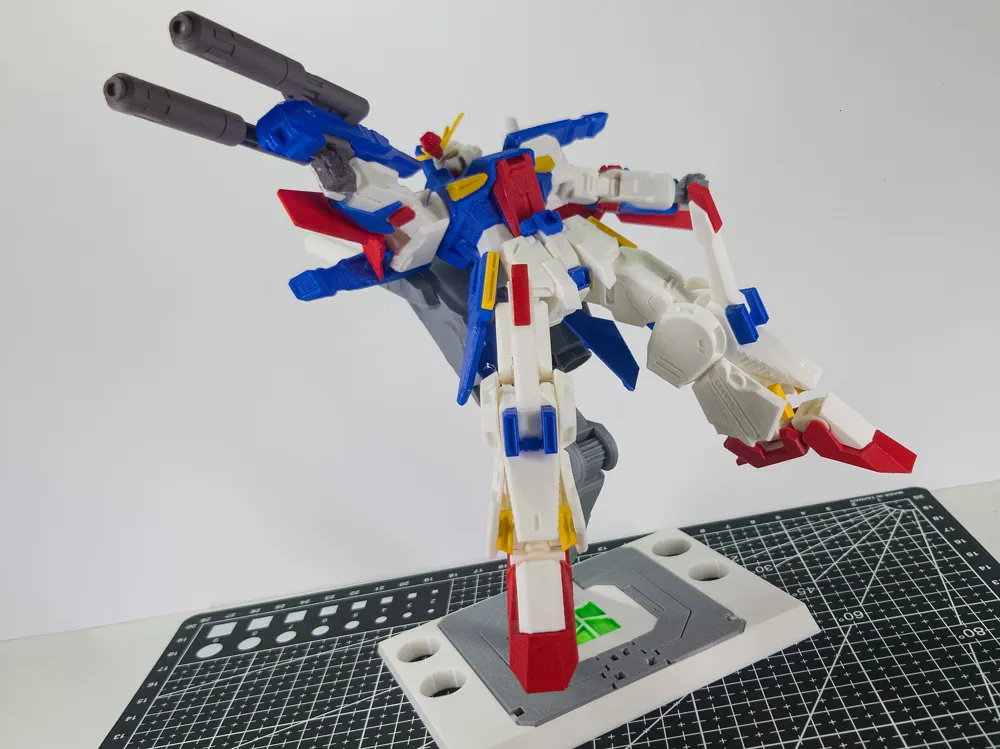
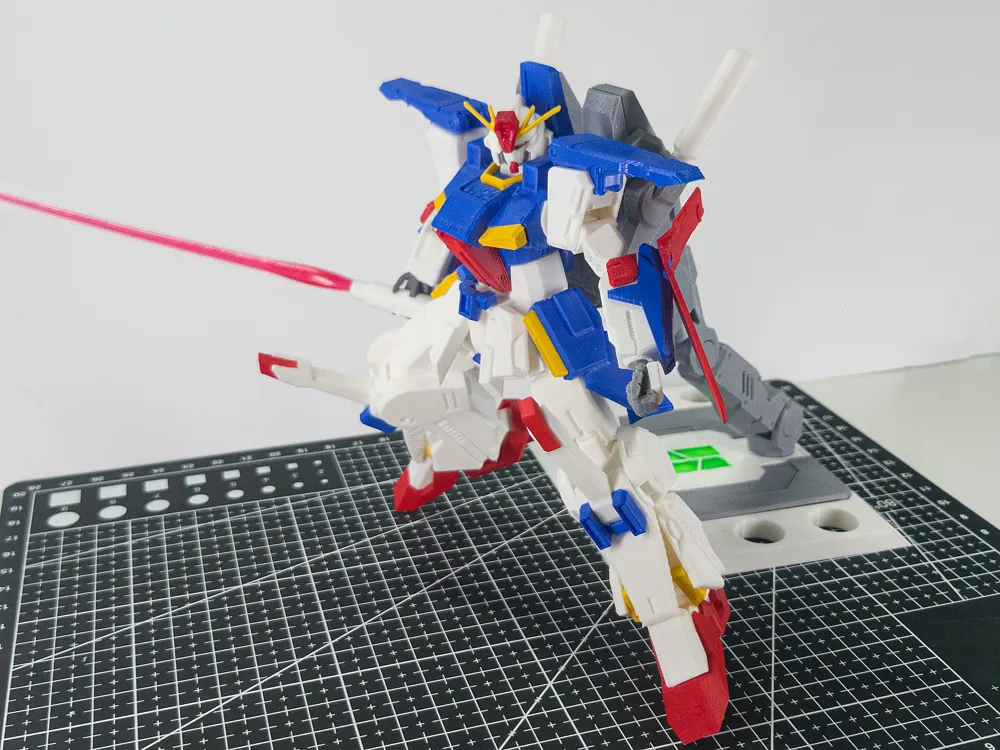
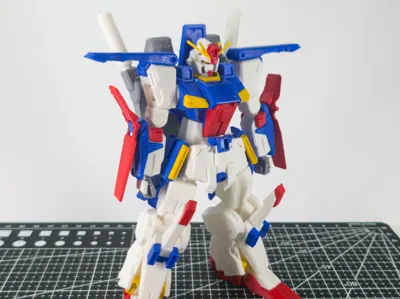
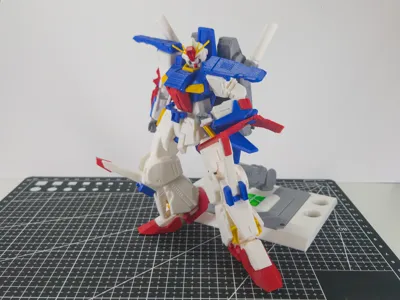
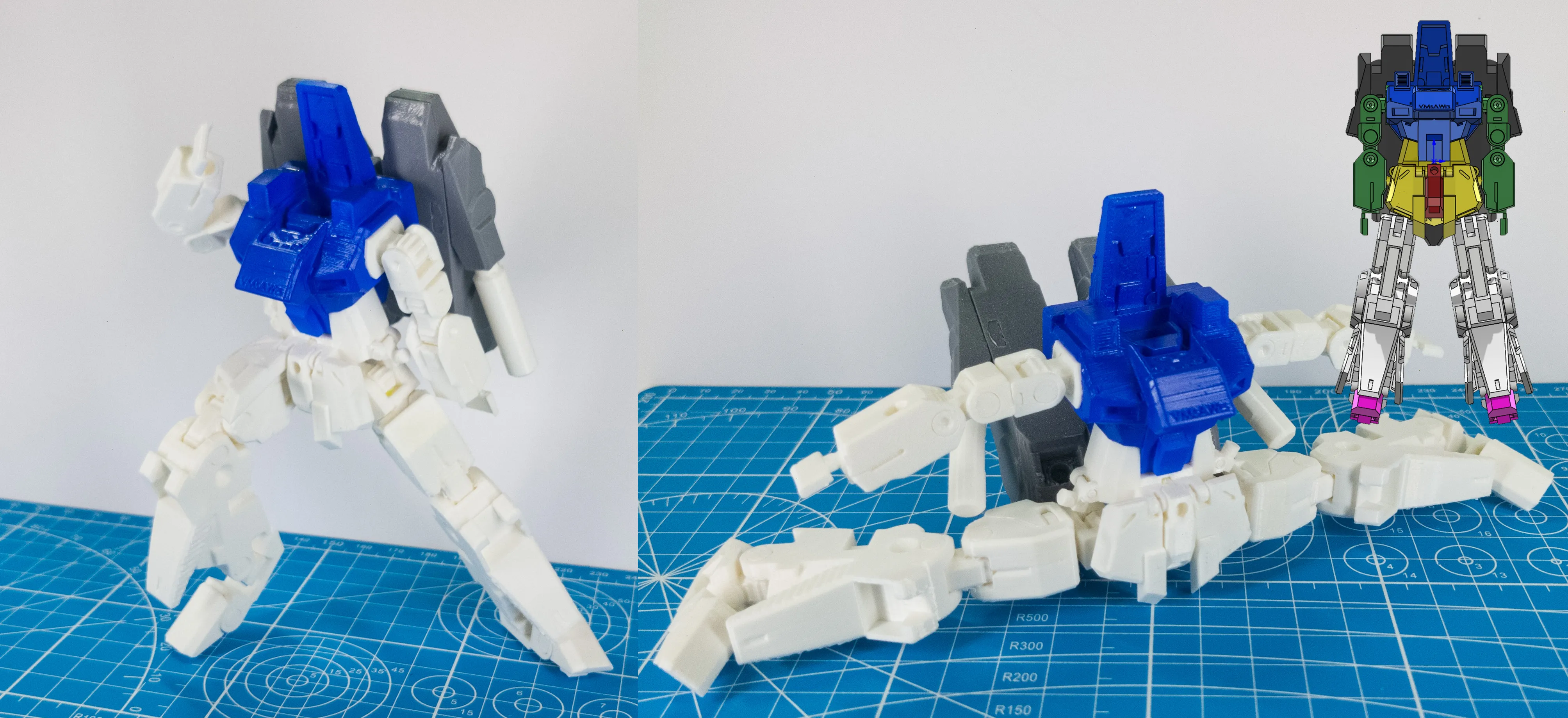
Overall height: 16.6 cm, head height: 14.8cm, body weight: 118g, 45 joints, 2 beam saber, 1 double-beam rifle, 2 missile launcher, 2 Vulcan, 1 head mega cannon.
Color:
The part separation can solve about 90% of the color, Without the eyes,because they are too small.
Design:
Over the past six months, I has gained a preliminary understanding of FDM design and attempted to construct the first complete FDM Mobile Suit. The jointed dragon is a classic that cannot be bypassed, and the one - piece skeleton of RG 15 years ago was also very popular. Combining them might be interesting. So, which MS to choose? 3 requirements: a stocky build to accommodate large joints in a small scale; well-defined edges ; numerous flat surfaces to maximize the bonding area on the hotbed.
Thinking in this way, ZZ is the best choice. Then, based on the following requirements:
① Separate parts according to color as a priority.② Reduce overhangs to lower the support ratio.③ Exaggerate details to adapt to low-precision printing.④ Reduce the number of parts to simplify the assembly process.
Many trade - offs were made, including removing the transformation mechanism and adjusting the design style. Finally, a large amount of personal interpretation was incorporated to complete this model.
The model is closer to the MG1.0. Among them, 8 main parts have 36 joints, achieving the design goal. However, as an open - source project, the joints are not as tight as in the original design. Otherwise, it would lead to a considerable probability of printing failure, which is a pity.
Therefore, this joint system can only meet the basic requirements for posing. Currently, a new framework to solve this problem is under development, but due to design tree issues, it may not be applied to the ZZ.

Documentation (1)
License

You shall not share, sub-license, sell, rent, host, transfer, or distribute in any way the digital or 3D printed versions of this object, nor any other derivative work of this object in its digital or physical format (including - but not limited to - remixes of this object, and hosting on other digital platforms). The objects may not be used without permission in any way whatsoever in which you charge money, or collect fees.


Comment & Rating (148)