
Shaper Origin gridding spindle
Print Profile(4)



Bill of Materials
- 8x100mm tool steel round bar x 1: See description for details
Description
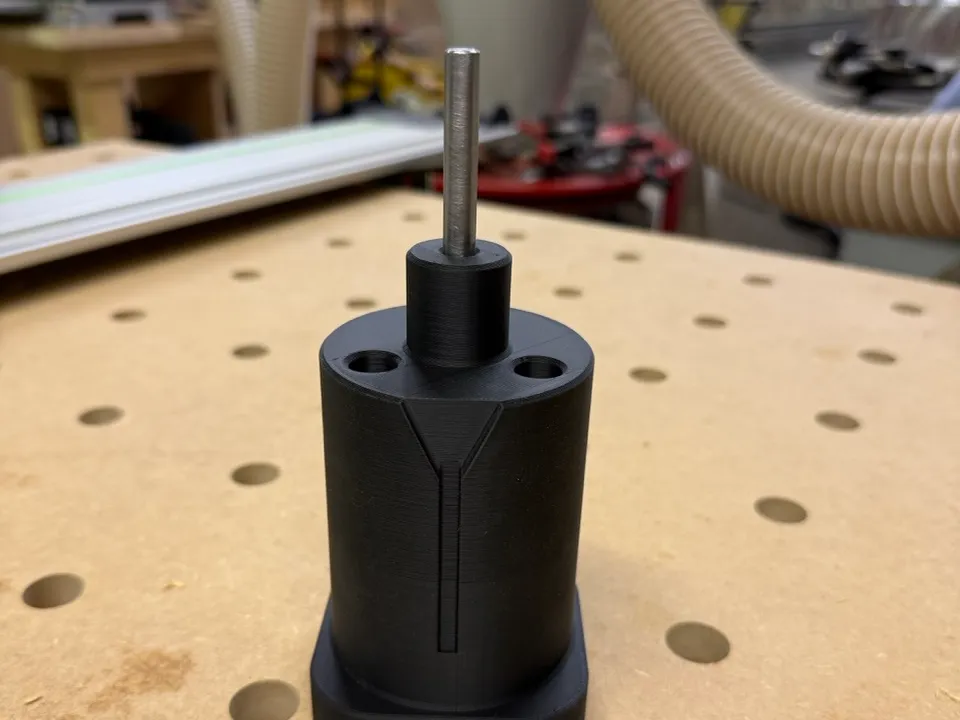
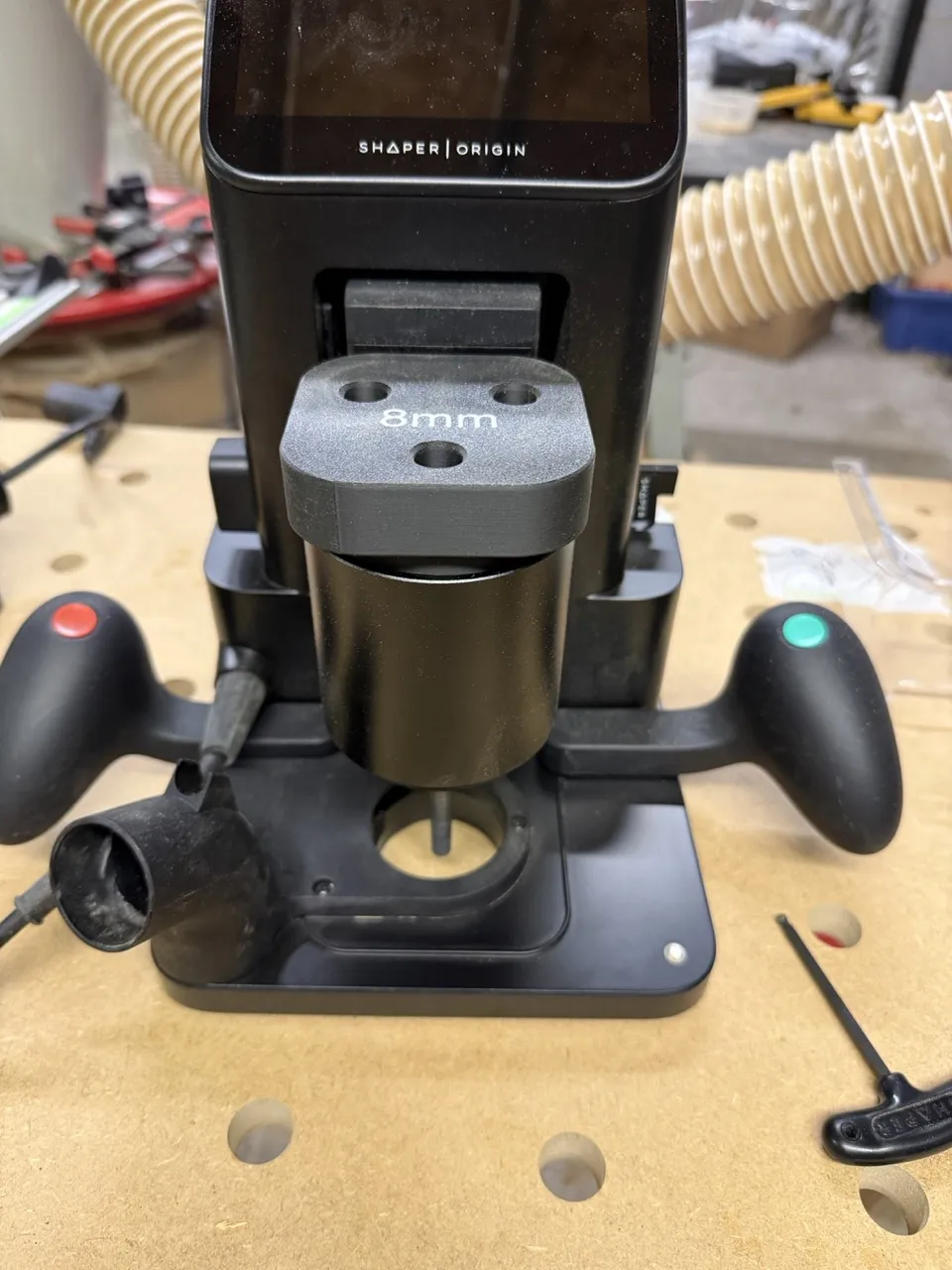
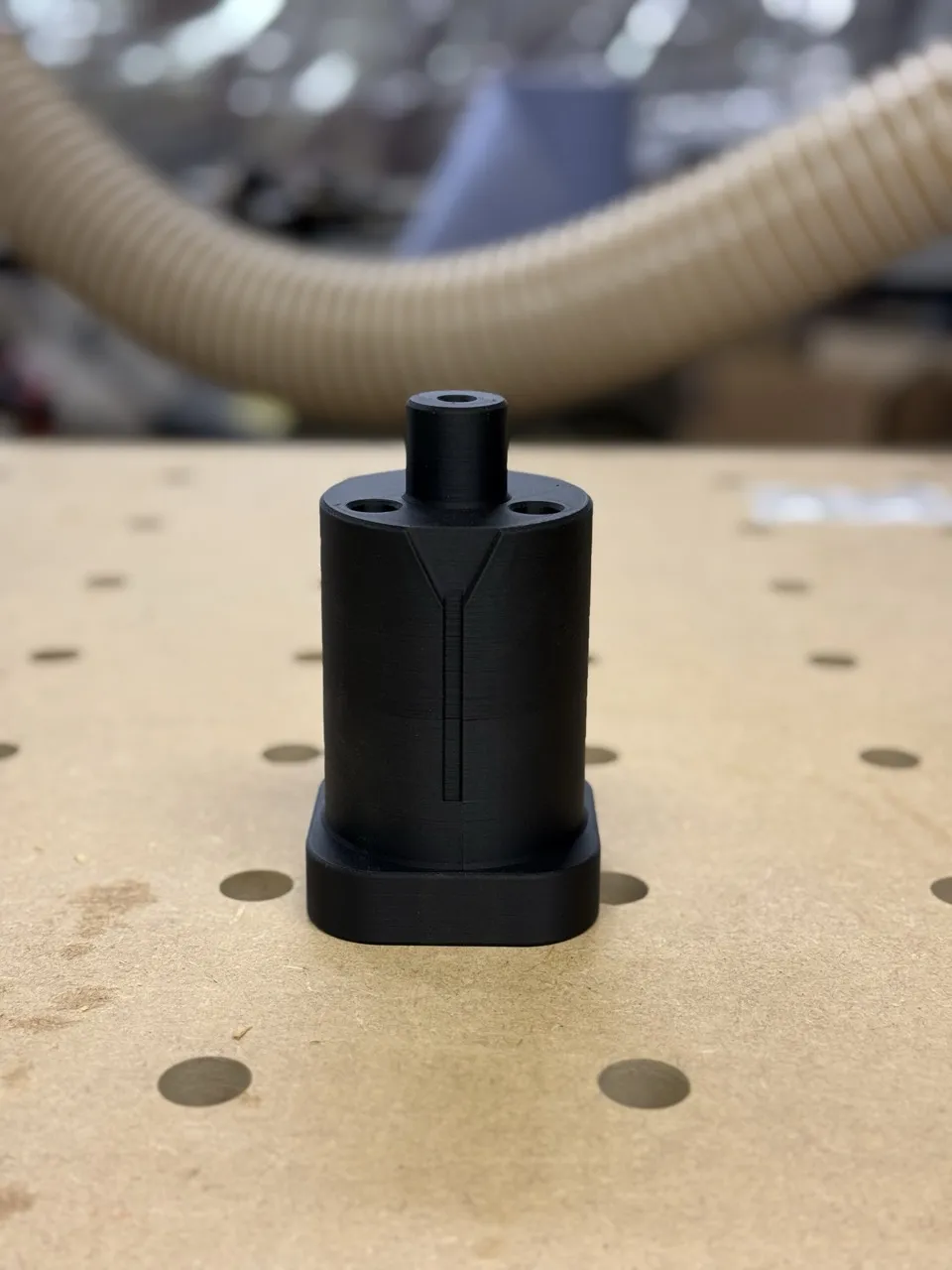
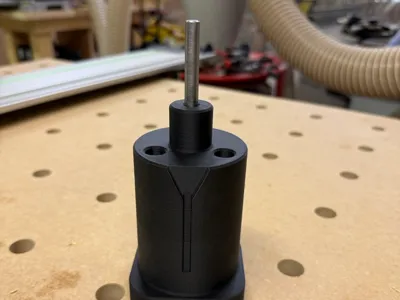
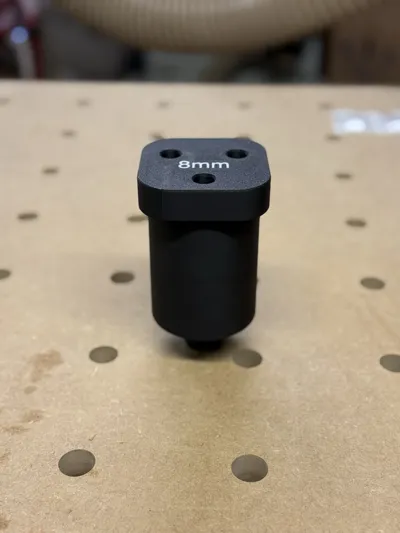
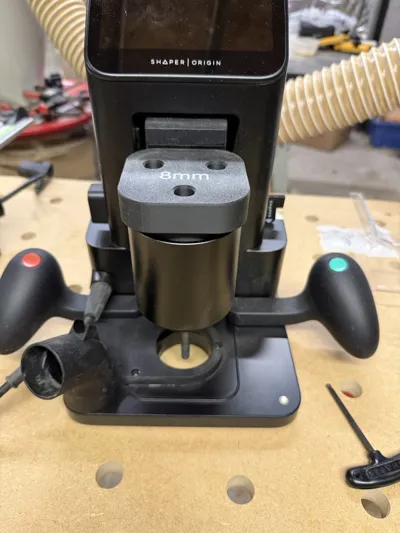
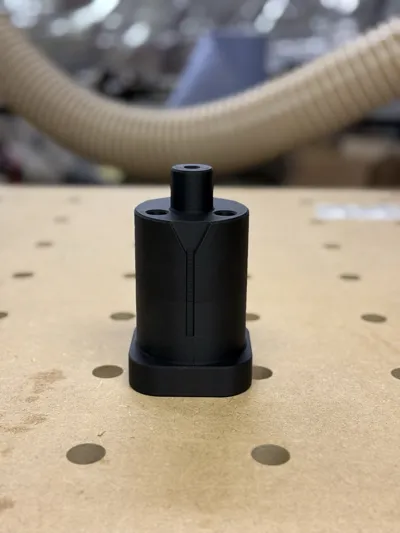
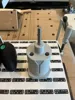
This is a dummy spindle that fits the Shaper Origin handheld CNC machine, to make gridding quicker and more reliable. It's very solid, and holds the shank extremely firmly. I've measured the accuracy and it's at least as good as the SO spindle with a reversed 8mm
There are a few other models around that do this, but none was quite right for me, and they mostly tend to be ¼", which is inconvenient if you're working in metric.
Will use around 330g of filament, but it's extremely rigid. I printed it with PLA Matte Charcoal, which is a good match for the SO colours. For this application PLA is probably better than PETG.
The spindle is designed to take 100mm of 8mm diameter high carbon tool steel AKA silver steel (BS1407 or equivalent). You may need a press or large vice to get it all the way in. If you wanted other dimensions (e.g. 6mm or ¼") you can edit the OpenSCAD file, and regenerate the 3MF. If you don't know OpenSCAD, or get stuck, contact me and I'll make some other variants.
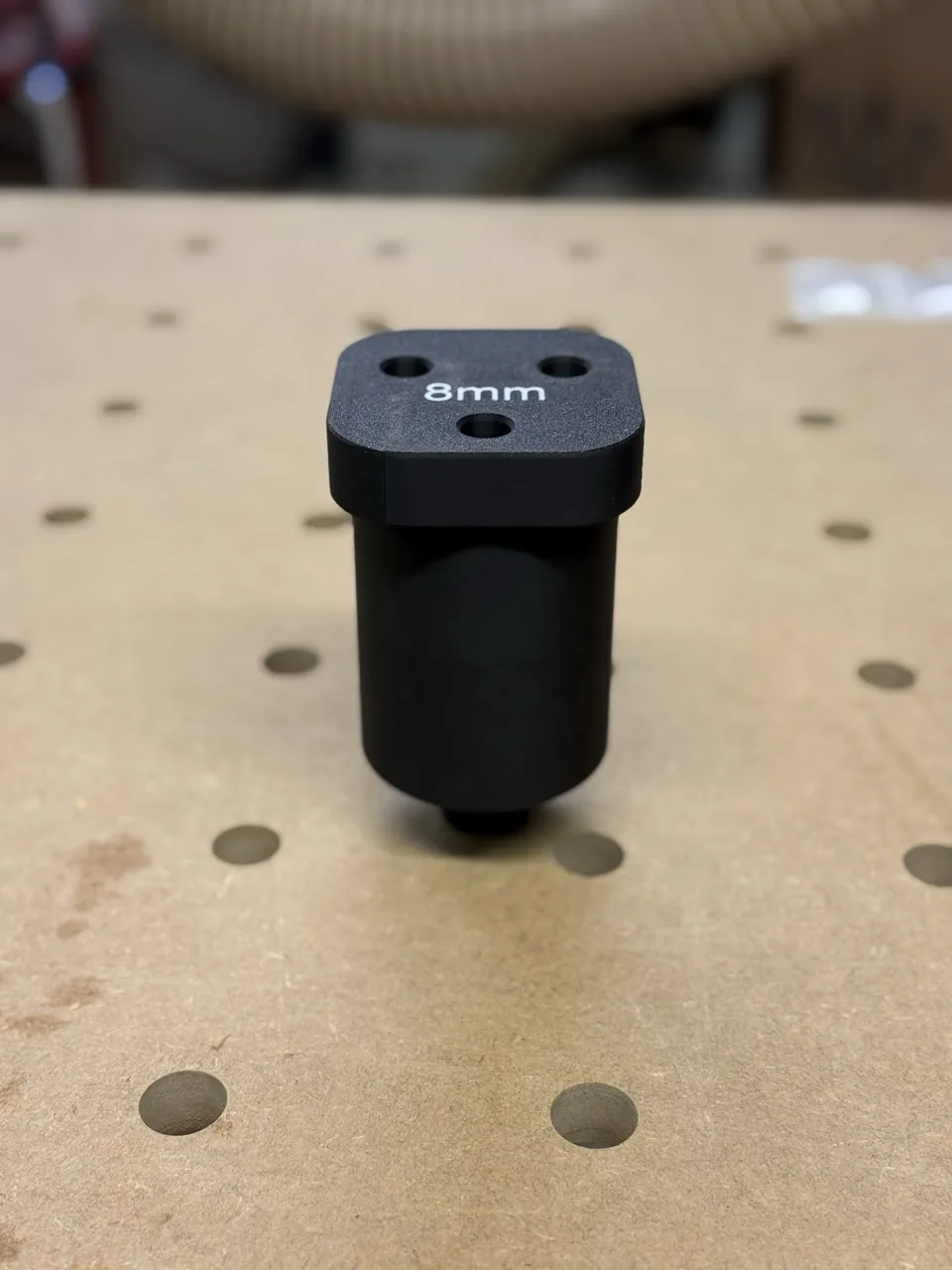
If you don't have an AMS, skip colouring the spindle size, it's mainly there to make it clear which way round it goes.
If you don't want to mess around with tool steel, at a pinch you can get away with hammering in an 8mm HSS drillbit, cutting flutes first. I would use a fresh one though, otherwise the shank might be ridged. I did experiment with it, and it wasn't quite as good, but would definitely work.
License



Comment & Rating (51)