
Super Thin Case for Apple iPhone 16
Print Profile(2)


Description
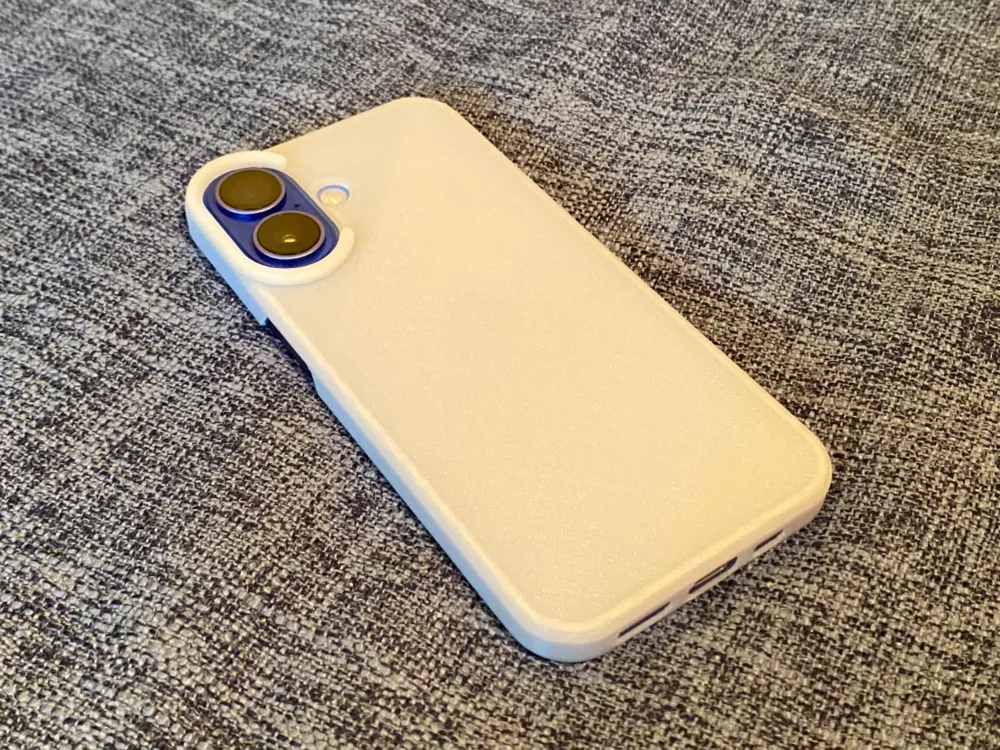
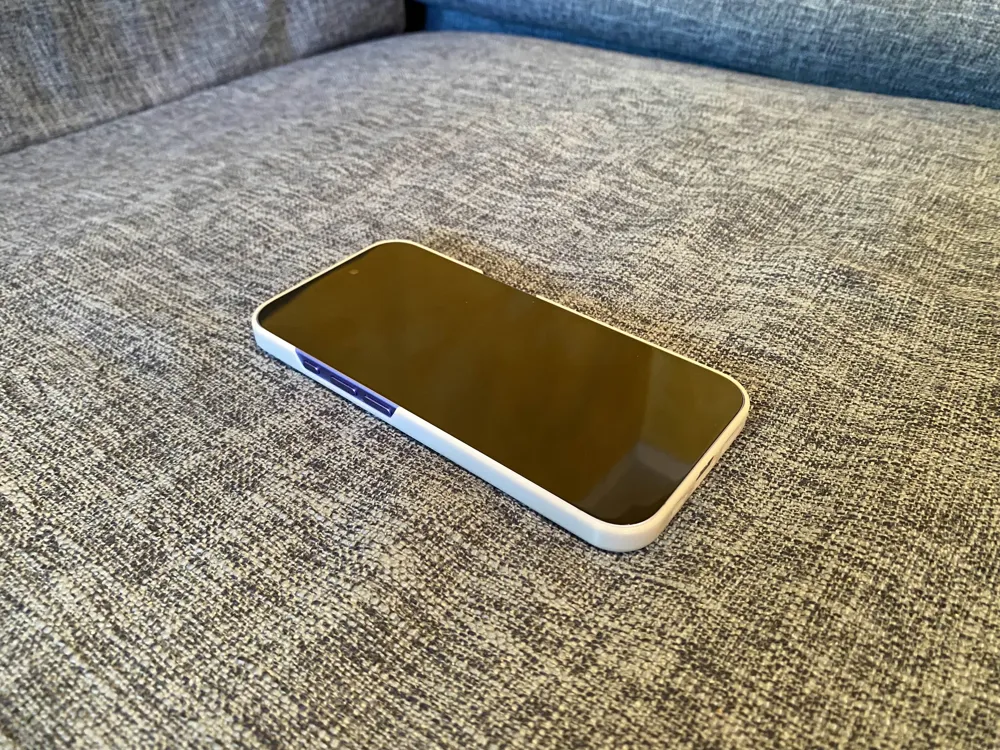
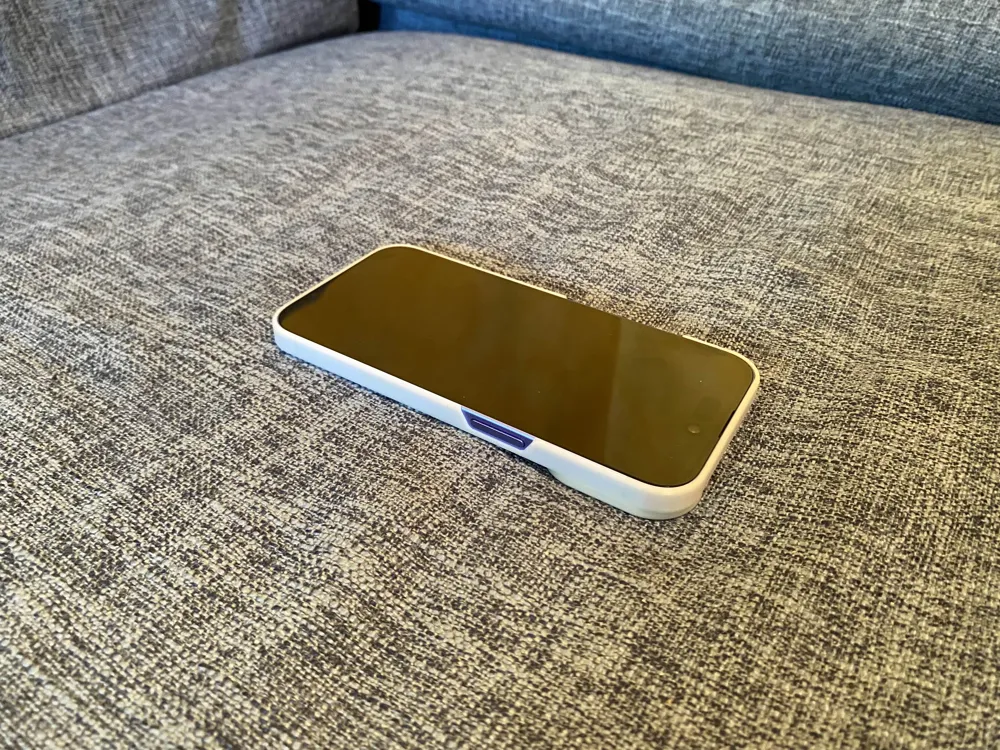
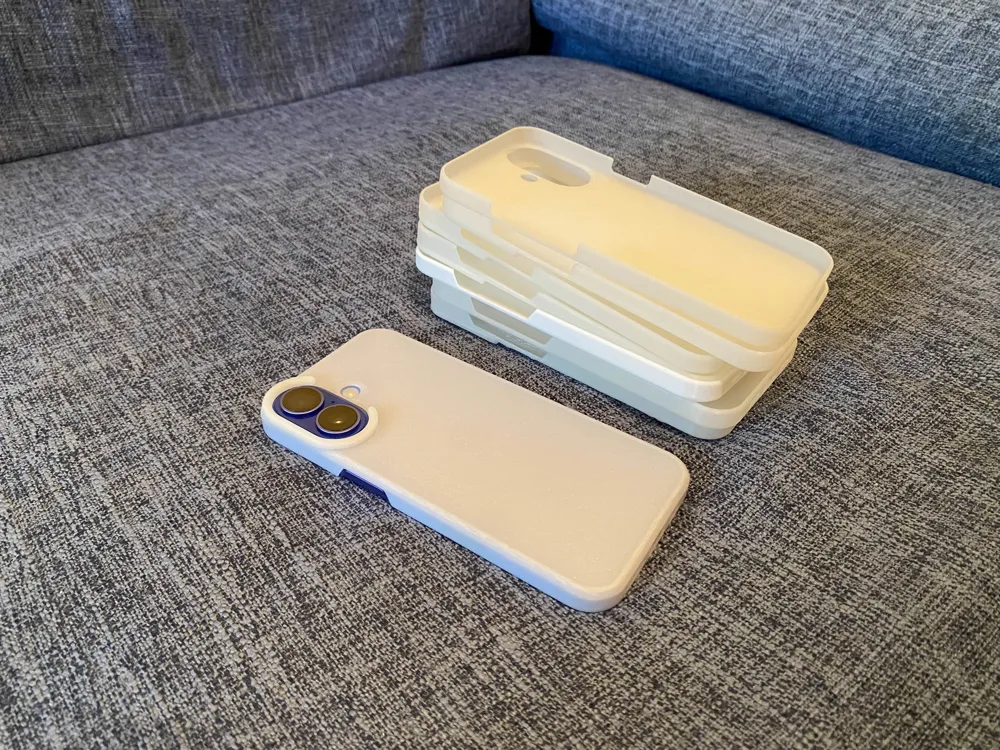
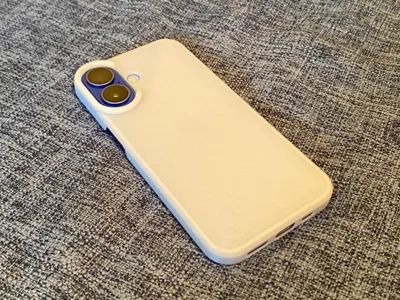
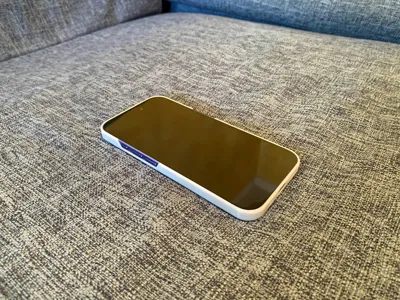
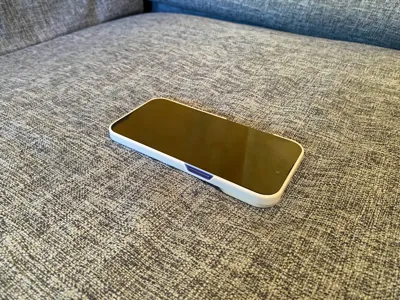
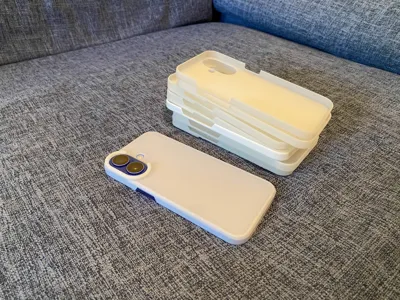
This is a case I made from stratch for my iPhone 16 and it was a real challenge. The problem is mainly because this phone have huge lenses on the back, and they stick out a lot from the rest of the phone. The goal of this project is to have the thinnest case possible and at the same time needs to be still tough enough and durable enough. The case fit needs to be rock solid, I hate feeling the phone moving inside the case. I tried different orientation and different fits (at least 8 printed as you can see from the picture) to finally be happy on the current version, which is the v13. Due to the many bad reviews from the last case I shared on this website, I'm going to answer some questions that can be useful to the community, being still absolutely sure no one will read this anyway.
Does this case have the Camera Control button opening?
No. The new button is useless, it's weird to use and offer nothing more compared to the normal settings available on screen. On top of that it's known to be very fragile and breaks very easily, for this reason I chose to keep it inside the case.
Are the side walls too thin?
Maybe. It depends on what filament you used to print the case. The side walls are 0,8 mm thick which is plenty if you use the right material. Read below about that.
What kind of filament is recommended?
I use Overture PLA glow in the dark filament, white color. This filament has a very nice balance between rigidity and softness, it can keep shapes very well even with thin walls and it can also bend a lot without breaking. If you use Bambulab Basic PLA or Silk PLA you will probably have problem with this case, because those materials are too brittle and they will snap very easily. I recommend to use less fragile materials, glow in the dark PLA works pretty good most of the time.
Is it possible to break the case if I remove the phone?
Yes, it's possible. The goal of this project is to have the thinnest case possible and at the same time needs to be still tough enough and durable enough. I want the case to have a strong grip on the phone when it's on with no loose movement, if it brakes when I take it off I will just print another case, it's super cheap anyway. It's better to have a perfect fit when it's on rather than having a case which can take it on and off multiple times.
How can I join the two parts?
With super glue. You have a groove to use, just to be sure you glued the part in the right place. You can even print the “C” with a different color or material, cusomizing your phone even more.
Why two parts and not one?
I tried every possible combination about orientation, supports, surface quality, etc. The best by far is to use Texture PEI Plate for the bottom of the case (because the texture is grippy, which is useful, and it's also nice to touch) but that prevent me to be able to add an extra thickness, mandatory to protect the lenses, which are by far the element most prone to scratches and dents, because they stand out so much from the back of the phone. For this reason I divided the model in two, using the back of the phone on the plate to get the nice texture, and printing the “C” protection part separately and glue them together later. Other ways of doing this didn't offered good results.
How long will last?
It greatly depends on how you use your phone. My last case lasted at least 6 months, then I dropped the phone and the case did break, saving the phone in the process. Happy about the performance.
Do I have to sand the case?
Yes, it's better for the feeling in you hands. Sand the edges on the back a little bit to make it smoother.
Why the holes around the buttons are open on the top?
It's because it allows a controlled bending of the back of the case to allow the phone to get in it, without breaking the case.
License

You shall not share, sub-license, sell, rent, host, transfer, or distribute in any way the digital or 3D printed versions of this object, nor any other derivative work of this object in its digital or physical format (including - but not limited to - remixes of this object, and hosting on other digital platforms). The objects may not be used without permission in any way whatsoever in which you charge money, or collect fees.


Comment & Rating (44)