
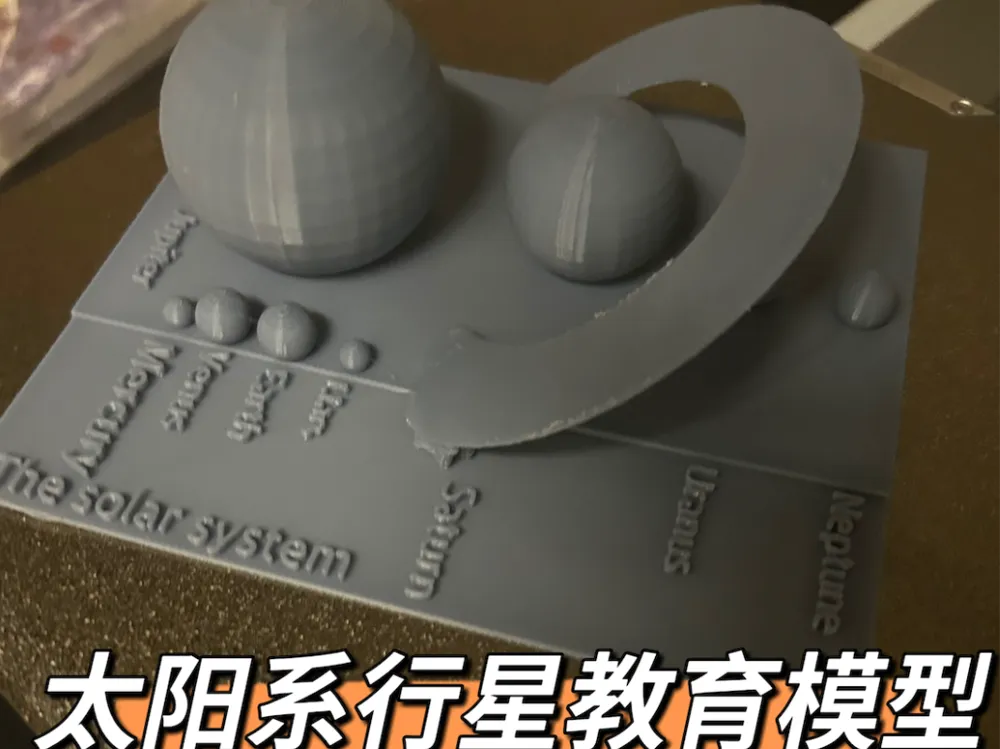
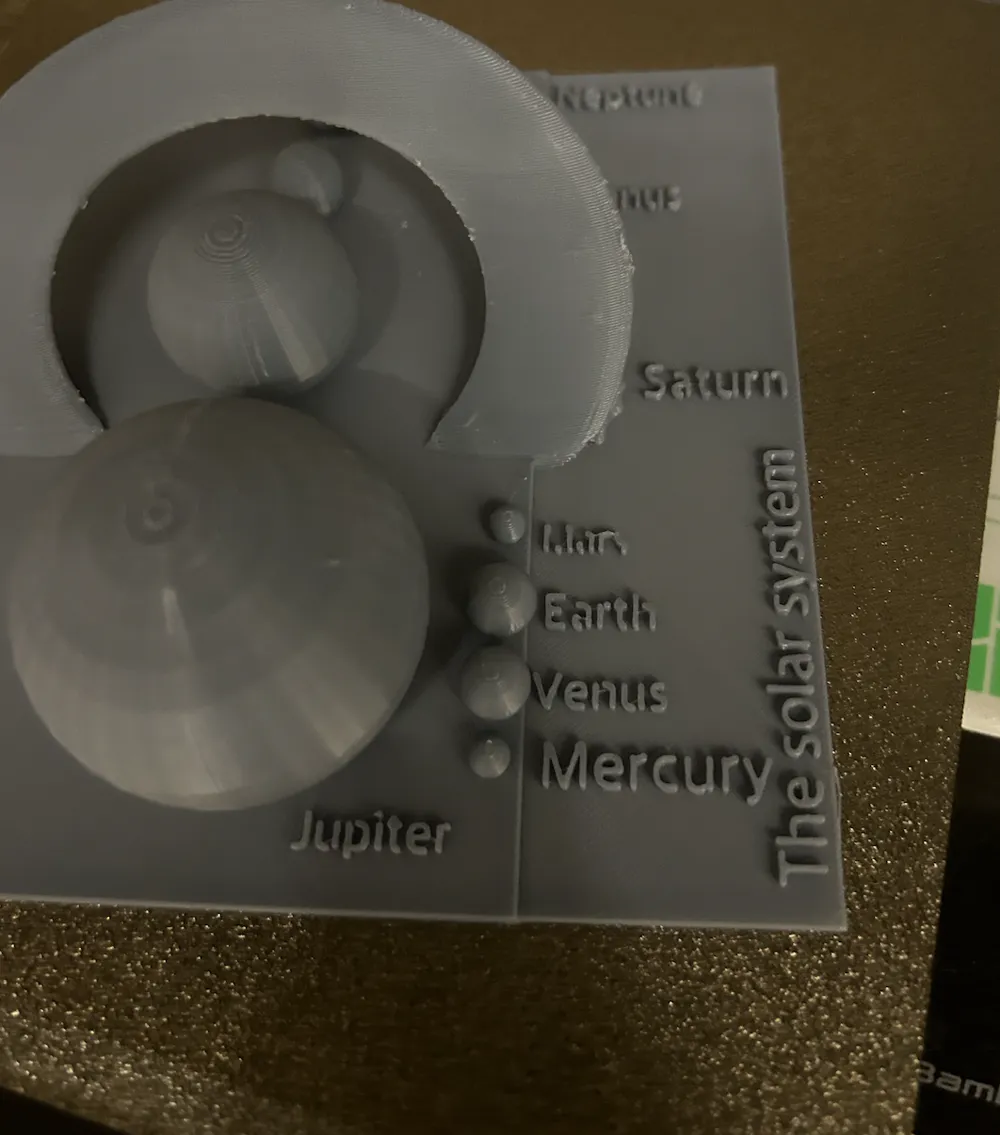
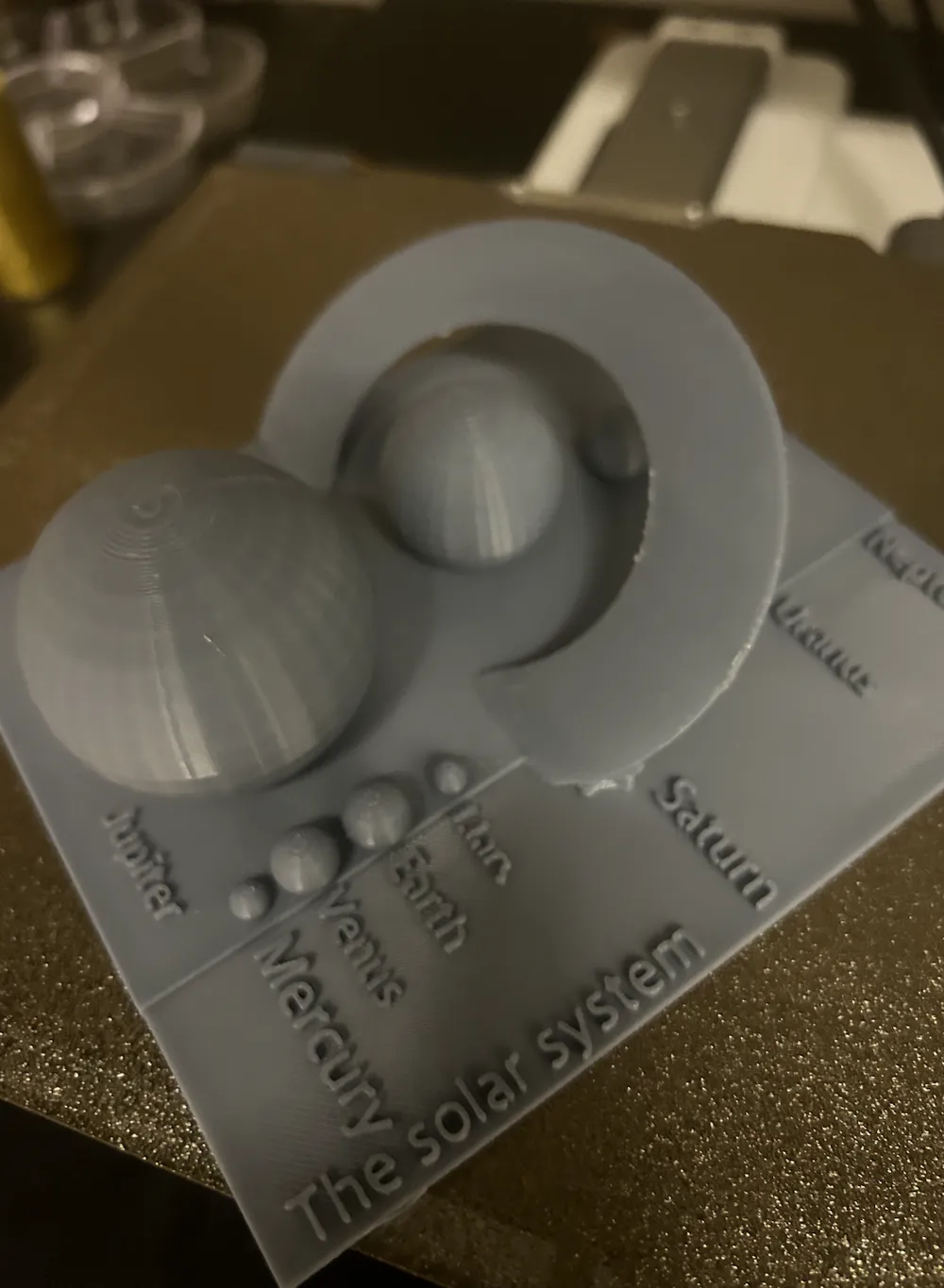
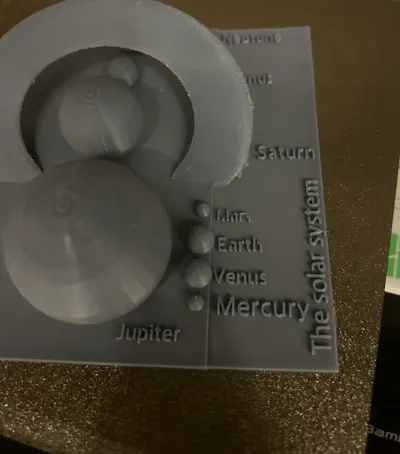
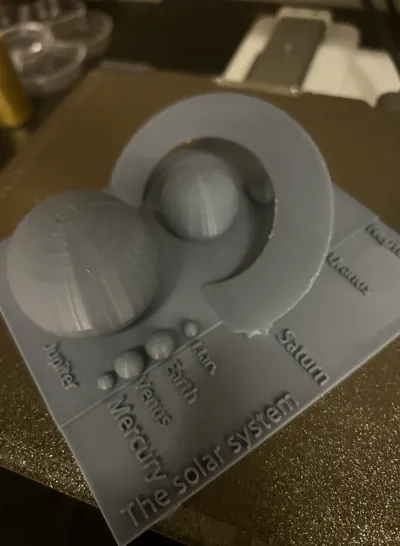
Solar System Planetary Educational Model (Visually Scaled, Approximating Actual Planetary Proportions)
Print Profile(1)

Description
Boost Me (for free)
Your support is deeply appreciated and will inspire me to craft even more exceptional models
This is an educational model of the Solar System planets, suitable for use in elementary and middle school physics, astronomy, and science classes. Due to printer limitations, the model is not proportionally scaled. However, considering educational factors, the model's proportions are slightly deviated from the original, allowing for clearer visualization by students, with a particular focus on recreating Saturn's rings, your support and likes are greatly welcomed, significantly aiding my continued release of these high-quality modelsFor educators, we've prepared supplementary lesson plans:
I. Overview
The **Solar System** comprises eight planets, ordered by their distance from the sun:
Mercury, Venus, Earth, Mars, Jupiter, Saturn, Uranus, Neptune.
Planets are non-luminous celestial bodies orbiting the sun, each exhibiting unique size, composition, temperature, and rotational and orbital characteristics.
II. Introduction to the Eight Planets
1. Mercury
- Location: The planet closest to the sun
- Characteristics:
- Smallest in size, its surface resembles the moon, featuring numerous impact craters
- Lacking an atmosphere, it experiences extreme diurnal temperature variations (approximately 430°C during the day and -180°C at night)
- Orbital period of approximately 88 Earth days, with slow rotation
2. Venus
- Location: The second planet, Earth's "neighbor"
- Characteristics:
- Similar in size to Earth, but possesses a dense atmosphere primarily composed of carbon dioxide
- Surface temperature of approximately 460°C, making it the hottest planet
- Rotates in the opposite direction to other planets, extremely slowly (approximately 243 Earth days)
3. Earth
- Location: The third planet
- Characteristics:
- Currently the only planet confirmed to harbor life
- Possesses an atmosphere, water cycle, and magnetic field—essential conditions for life
- Rotates once approximately every 24 hours, orbiting the sun once approximately every 365 days
4. Mars
- Location: The fourth planet
- Characteristics:
- Reddish surface due to iron oxide content
- Features Olympus Mons (the tallest mountain in the Solar System) and Valles Marineris (the largest canyon in the Solar System)
- Scientists are actively investigating the presence of water or life
5. Jupiter
- Location: The fifth planet, the largest in the Solar System
- Characteristics:
- A gas giant, primarily composed of hydrogen and helium
- Features the Great Red Spot, a massive storm persisting for centuries
- Possesses over 90 moons, the largest being Ganymede
6. Saturn
- Location: The sixth planet
Characteristics:
- The second-largest gas giant
- Most renowned for its iconic rings
🌀 Detailed Explanation of Saturn's Rings:
- Composed of billions of ice particles and rock fragments orbiting Saturn
- The rings span 280,000 kilometers in width, yet their thickness may be only a few tens of meters
- Saturn has over 140 moons, with Titan possessing a substantial atmosphere
7. Uranus
- Location: The seventh planet
- Characteristics:
- Pale blue-green in appearance due to methane gas
- Rotational axis almost parallel to its orbital plane, rotating "on its side"
- Possesses faint rings and 27 known moons
8. Neptune
- Location: The farthest, eighth planet
Characteristics:
- A deep blue gas giant with intense storms ("dark spots") and the fastest recorded wind speeds (exceeding 2000 kilometers per hour)
- Has 14 known moons, the largest being Triton
The last planet to be discovered (1846)
Unauthorized redistribution of my work is strictly prohibited and subject to copyright claims!
License

You shall not share, sub-license, sell, rent, host, transfer, or distribute in any way the digital or 3D printed versions of this object, nor any other derivative work of this object in its digital or physical format (including - but not limited to - remixes of this object, and hosting on other digital platforms). The objects may not be used without permission in any way whatsoever in which you charge money, or collect fees.


Comment & Rating (5)