
Silica Gel Container Drying Spool AMS 2 Pro & HT
Print Profile(5)




Description
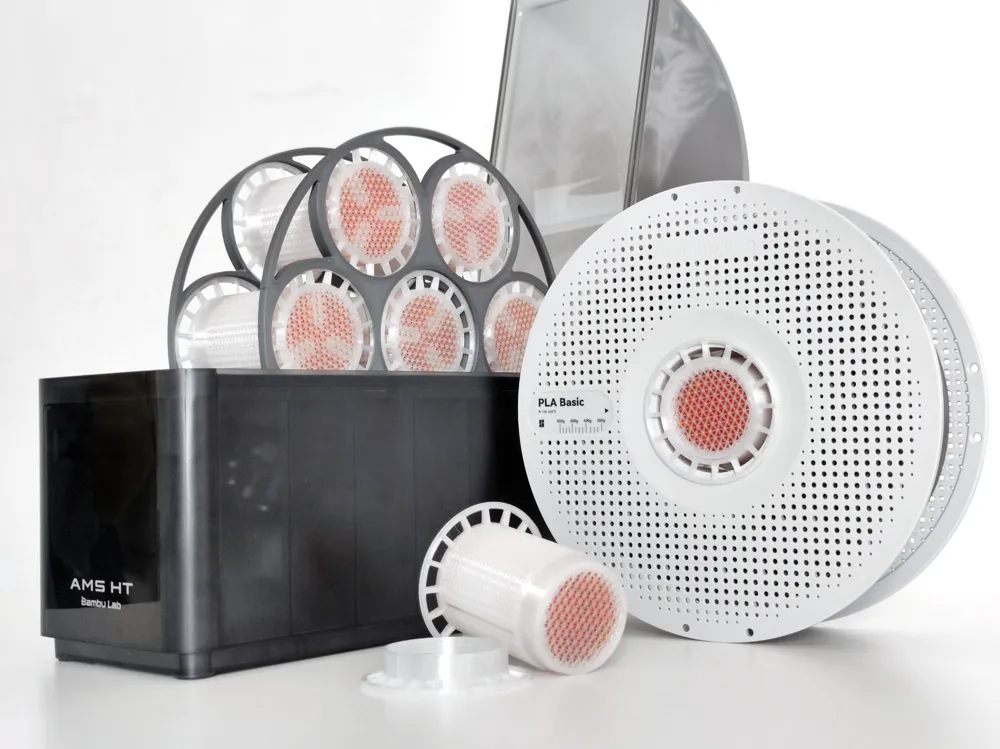


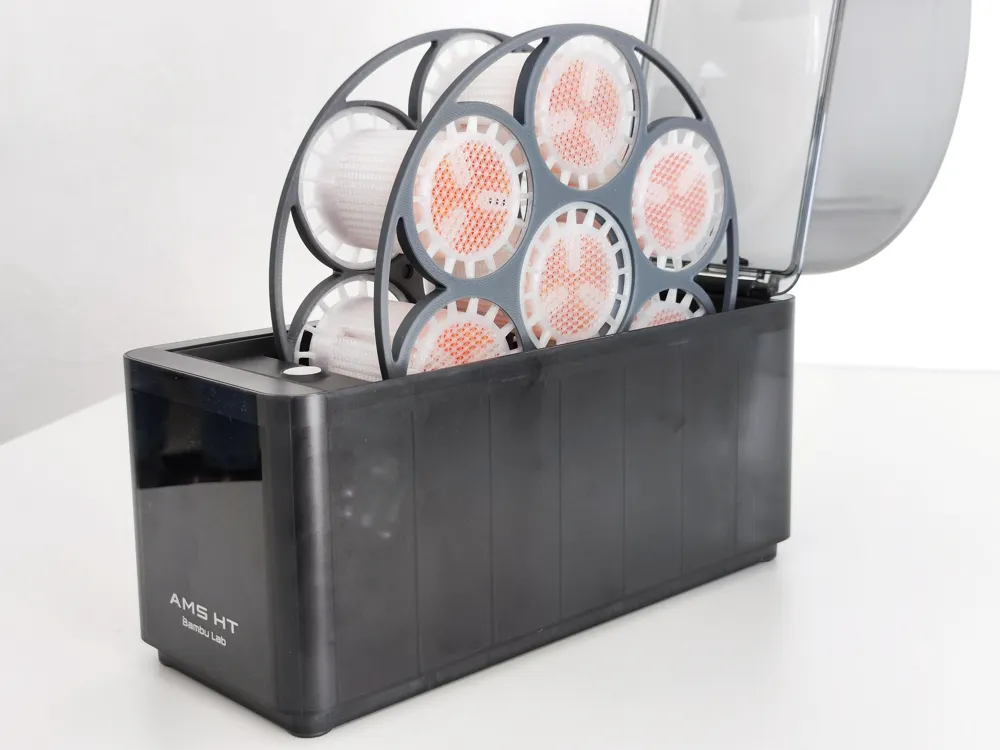
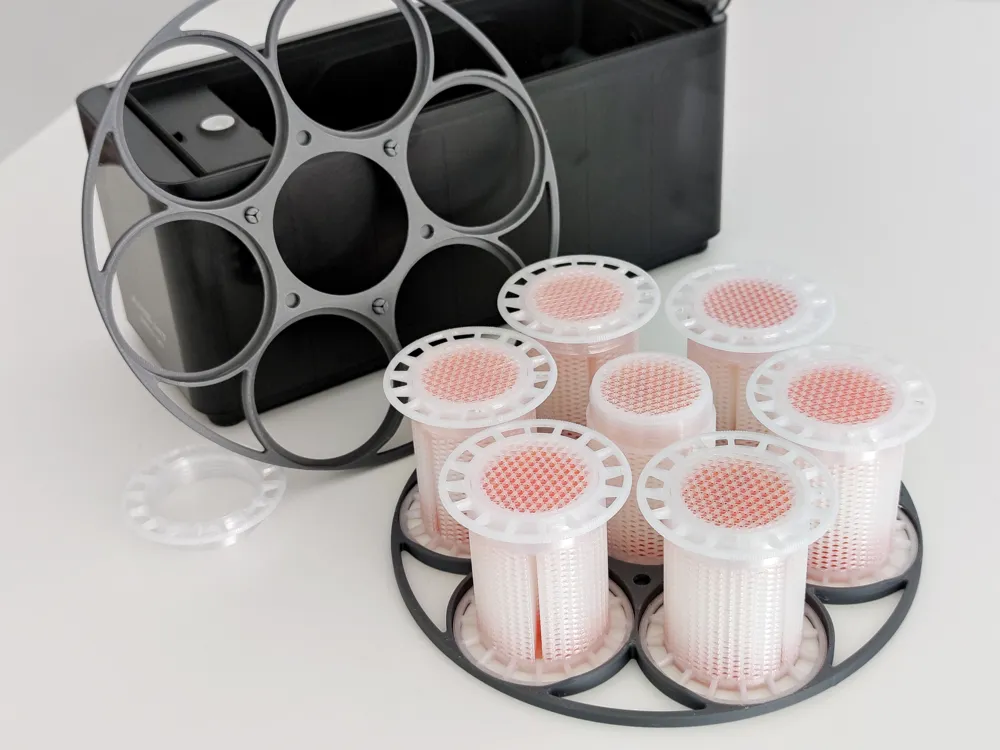
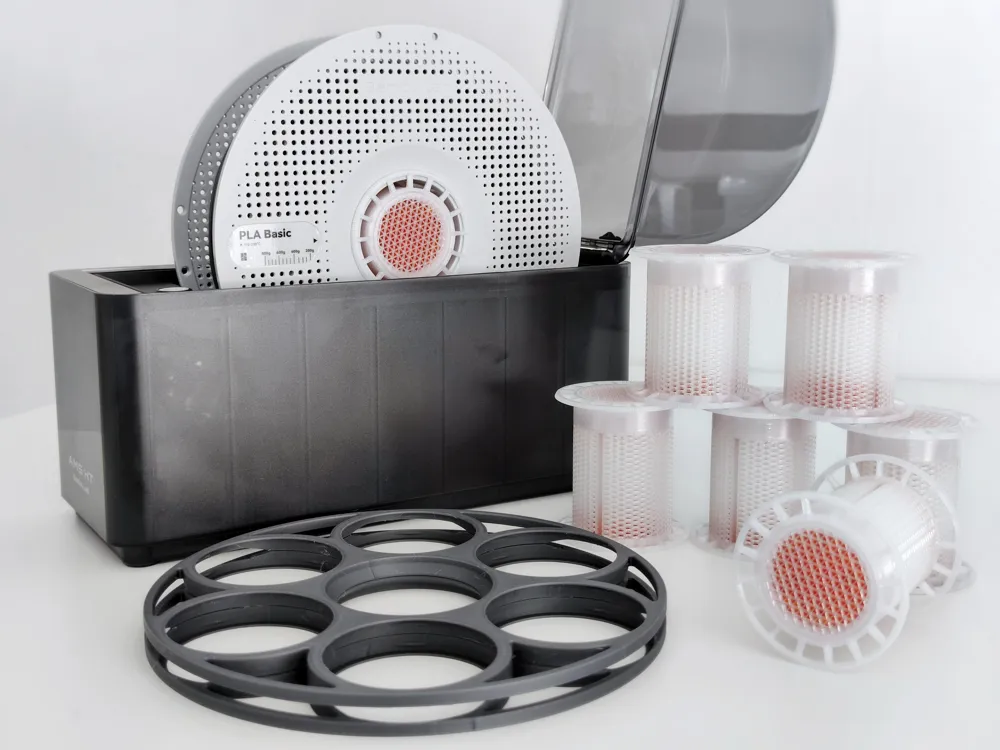
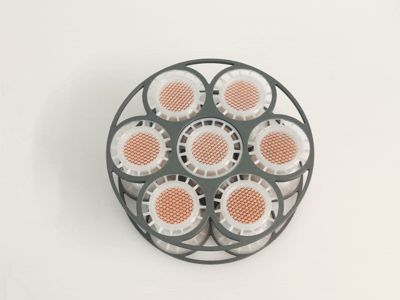
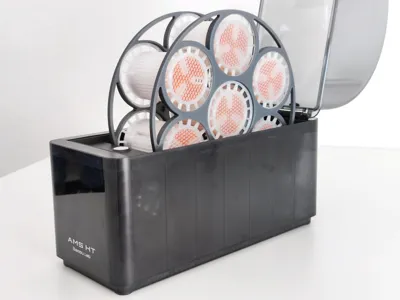
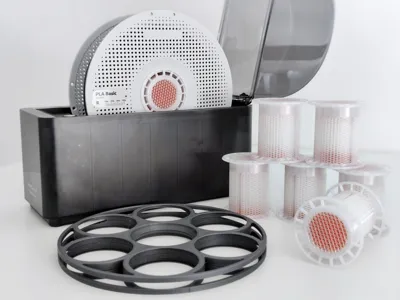
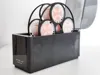
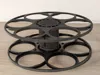
A collapsible spool rack capable of drying up to 7 silica gel containers without the need for emptying. It's been carefully designed to be compatible with the AMS 2 Pro or AMS HT, and can fit the silica gel containers available from the MakerWord link here. This drying spool is also compatible with many other filament dryers, but not compatible with any other desiccant containers.
Main Features
- Dry up to 7 silica gel containers
- Compatible with AMS 2 Pro, AMS HT and many other filament dryers
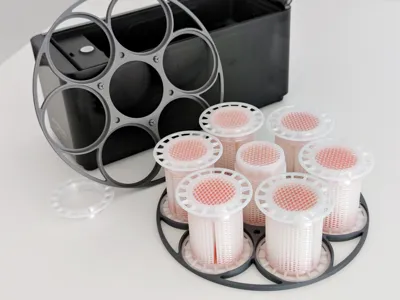
- Fully collapsible clip together spool that's only 14mm thick for easy storage
- Variable width design allowing for silica gel containers for a different width spool to be used
- Easy assembly and disassembly of the drying spool
- Minimal airflow obstruction for each container for effective drying
- Drying efficacy tested design (additional test details to be added)
- 65°C dried containers capable of achieving down to 8% humidity in an empty filament dry box, or 5% humidity when dried at 85°C
Print Guidance
Printing the spool in a temperature resistant material is required to be able to handle filament dryer temperatures without deforming. The material should at least have a HDT (heat deflection temperature) 10°C greater than the drying temperature of the filament dryer. Some filament dryers may not directly measure the maximum temperature within a filament dryer, and may output heat that's greater than the displayed temperature. This can cause materials to deform even if the temperature being measured is lower than the HDT of the spool and containers. Please ensure an adequate material is chosen to suit your filament dryer, and to read “Drying Guidance” for additional details to reduce the risk of printed parts deforming.
Please be aware that different materials can have differing percentage of part shrinkage after printing, so please print both the spool and containers in the same material for consistent fit. Dissimilar materials may result in a looser or tighter fit for the containers. Stiff brittle filaments also shouldn't be used, as the spools need to flex to clip onto the containers.
Choice of materials
- PETG-HF (HDT 69°C)
- PETG Basic (HDT 71°C)
- PETG Translucent (HDT 74°C)
- ABS (HDT 87°C)
- ASA (HDT 100°C) - minimum for AMS HT
- PC (HDT 117°C)
Other suitable materials may also be used aside from the ones listed above. Printing with Bambu Labs filament is recommended for best results. Other filament brands can also be used, but some filament brands may not handle default generic filament profiles, and may result in poor quality prints without filament tuning. If you are having such issues, please tune the filament with appropriate print temperature, volumetric speed, flow dynamics, etc. Having the correct filament tuning is important, as it can affect the strength and quality of the parts.
Please always ensure that the print bed is clean and filament is dry before starting the print. For some filaments, glue may be required to provide adequate bed adhesion. Poor bed adhesion can result in first layer problems or prints lifting. Moisture in filament can cause stringing and defects in the parts, and can also cause issues with parts fitting together.
Printing from the uploaded profiles is recommended. Adjustments to the layer height and seams have been made to improve printability. Please note that the seam on the outer rim has been enlarged on purpose to reduce the chances of the bumps forming at the seam and interfering with the rotation of the spool.
Drying Spool Usage
Please only use the containers from the following link: https://makerworld.com/en/models/1193993
Adding Silica Gel Containers
Please ensure all containers are all the same height before securing into the spool. The center container hole is used to secure the spool halves together whilst the outer containers provide structure to the spool. The outer holes have indented clips to help hold onto the containers for a secure fit and to aid with handling. When drying less than 7 desiccant containers, please ensure the spool is balanced by placing containers opposing one another. After placing the outer desiccant containers onto one side of the spool, the other side can be clipped on top of the containers. Please ensure all the clips holding the containers are fully clipped in place before securing the spool with the center desiccant container. The spool may deform if the containers aren't fully seated. The GIF video in the above model pictures can also be viewed for additional guidance on assembly.
Removing Silica Gel Containers
To remove the desiccant containers from the spool, the center desiccant container has to be removed first before unclipping one side of the spool. Please unclip by starting from the clips on the outer edge of the spool for each desiccant container. Do not forcibly tear off the side of the spool, as it may risk damage. Once one side of the spool has been removed, each individual container can then be removed. The GIF video in the above model pictures can also be viewed for additional guidance on disassembly.
Drying Guidance
Drying with Bambu Labs AMS 2 Pro or AMS HT
The drying spool can be placed into the AMS and dried at the desired temperature. Rotate spool whilst drying should be enabled for a more even drying for all desiccant containers. The AMS measures temperature directly at the heat output, minimising the risk of overshooting temperatures and exceeding the HDT of materials. Drying progress can also be monitored with the AMS internal hygrometer.
Drying with other filament dryers
As some filament dryers may not measure the max temperature within the filament dryer, care should be taken to reduce the risk of deforming the spool and containers from exceeding the material's HDT. Filament dryers that don't directly measure the heat outputted will have a greater risk of overshooting the set temperature on startup before stabilising. Even with a filament dryer set to 70°C, temperatures can overshoot on startup enough to deform ABS. As such, it's recommended to gradually warm up the drying spool by first heating at 50°C for 30 minutes before increasing by 5-10°C every 10 minutes towards the final drying temperature. Rotating the spool during the warmup process will also help even out the temperature on the spool to avoid hotspots.
When drying silica gel that's saturated with moisture, condensation may form inside the filament dryer due to the large amount of moisture being released. Please open the filament dryer briefly to allow for steam to escape, and to prevent large droplets forming which can damage the filament dryer electronics. Leaving the lid of a filament dryer open slightly can help reduce moisture buildup if the filament dryer has inadequate holes for venting. Drying at a lower temperature or preheating the filament dryer can also reduce moisture condensation.
Designer Notes
Updates
- 23/10/2025 - Updated the print profiles with Bambu Studio 2.3.0.70 for printers with high flow nozzles
Boost Me (for free)
If you like my work, Boosts are greatly appreciated. This design alone took me a few weeks of refinement, almost 1kg of filament and 12 printed full prototypes before reaching the final version on MakerWorld. Boosts mean a lot to me as it fuels my passion for 3D printing and allows me to spend time creating highly refined designs for everyone for free.
License

You shall not share, sub-license, sell, rent, host, transfer, or distribute in any way the digital or 3D printed versions of this object, nor any other derivative work of this object in its digital or physical format (including - but not limited to - remixes of this object, and hosting on other digital platforms). The objects may not be used without permission in any way whatsoever in which you charge money, or collect fees.


Comment & Rating (1381)