
Dice and Weighted Dice
Print Profile(2)

Description
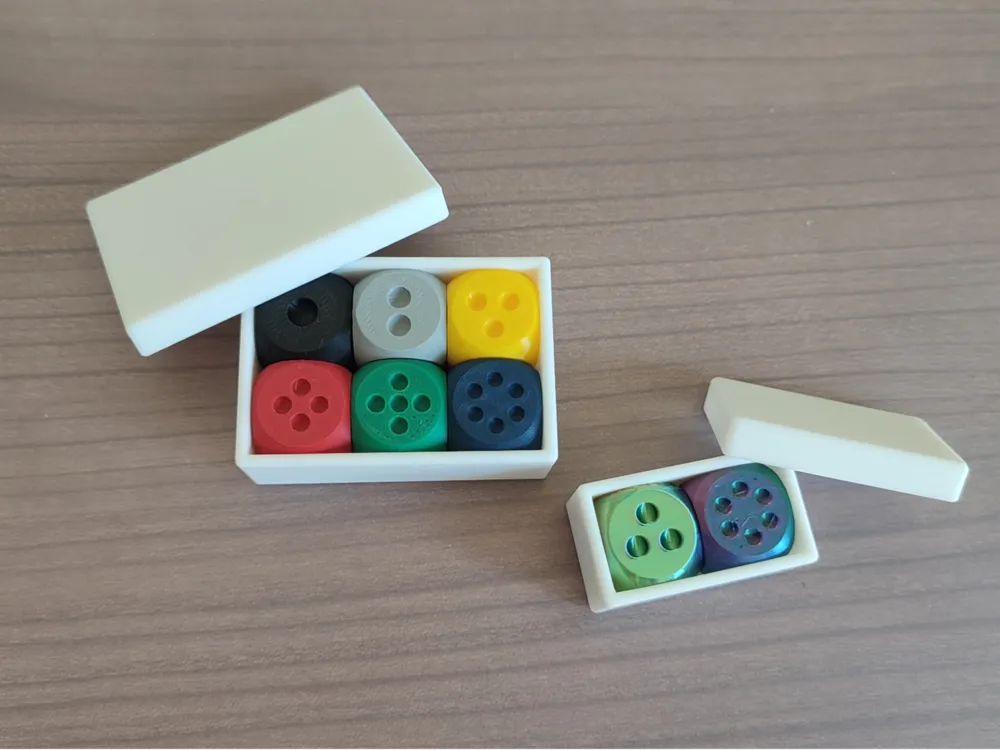
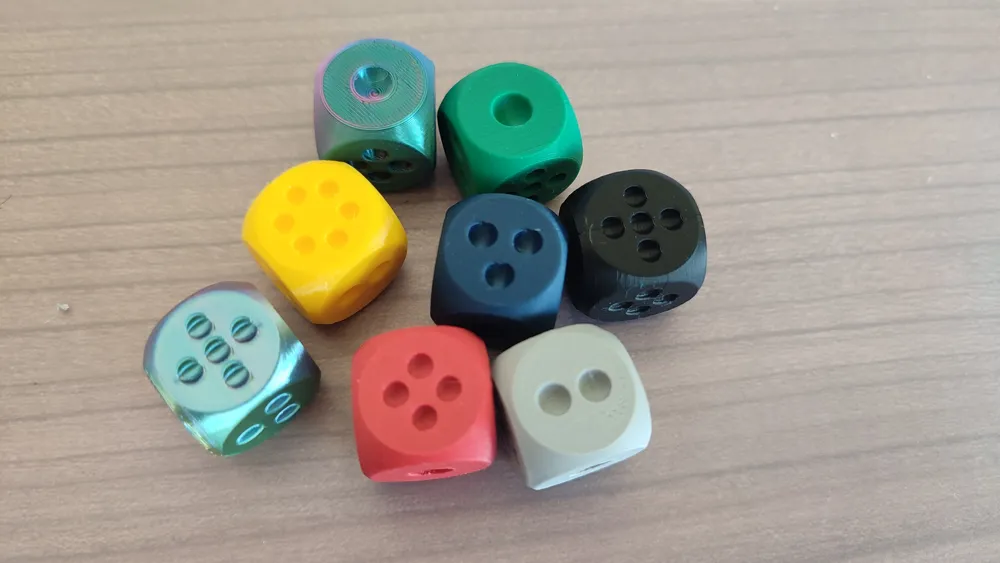
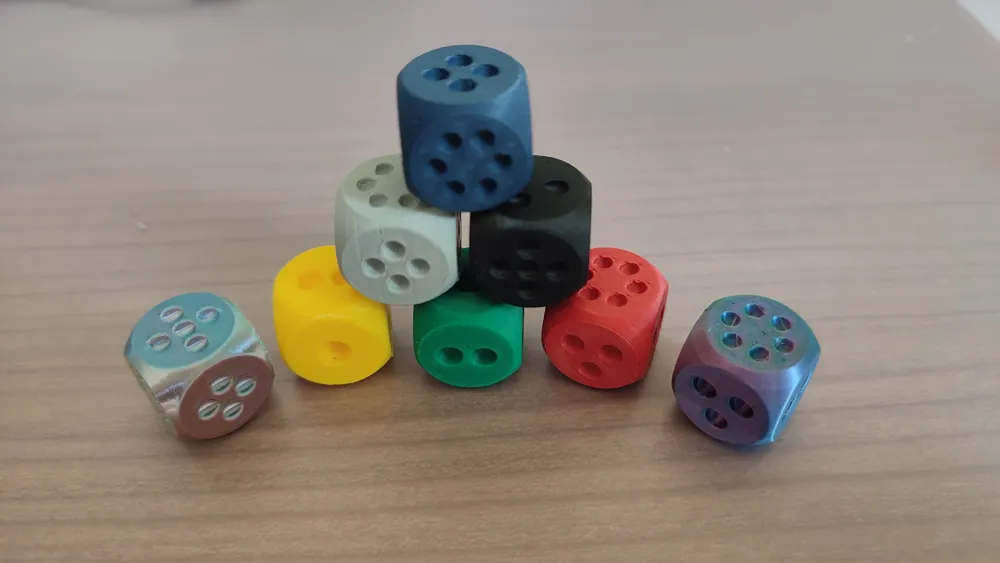
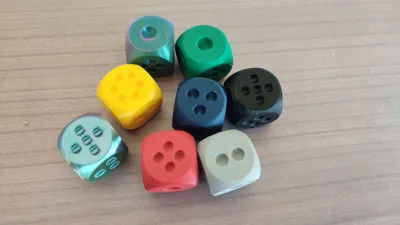
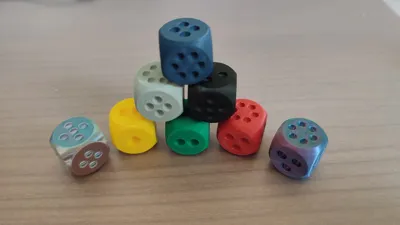
This is a cube—nothing special at first glance. However: The pips are arranged differently, which is a novel approach. Furthermore, the 1, for instance, is larger than the 6, ensuring a consistent material deficit across all sides.
Boost Me (for free)
Boost my model and give the print profiles a positive rating! It would greatly delight me.
This fairly weighted cube, where all sides should be equally probable, can be found on print bed 2.
On print bed 1, the same cube is present, but the infill is set to 100% in the lower third, and 15% above. Consequently, this cube will display a 6 significantly more often than any other number—a 1 is particularly improbable. Nevertheless, this effect is not so pronounced that an unsuspecting player would immediately notice. Naturally, other numbers can also be rolled.
I tossed the cube 600 times using a dice cup. These are the results:
| Roll | 1 | 2 | 3 | 4 | 5 | 6 |
| Count | 29 | 86 | 83 | 78 | 97 | 227 |
| Percentage | 4.83% | 14.33% | 13.83% | 13.00% | 16.16% | 37.83% |
Ideally, the values 2 to 5 should occur with the same probability, but 600 throws are simply insufficient to confirm this. However, it is evident that approximately every third roll is a 6.
On print beds 3 and 4, you will find three cubes each, their center of gravity manipulated to prioritize the values 1, 2, 3, 4, 5, or 6. The settings ensure object-wise printing, limiting filament changes to two. Since few possess more than one AMS, I have distributed the six cubes across two print beds. Print bed 5, however, contains all six weighted cubes. Each has the priority indicated above.
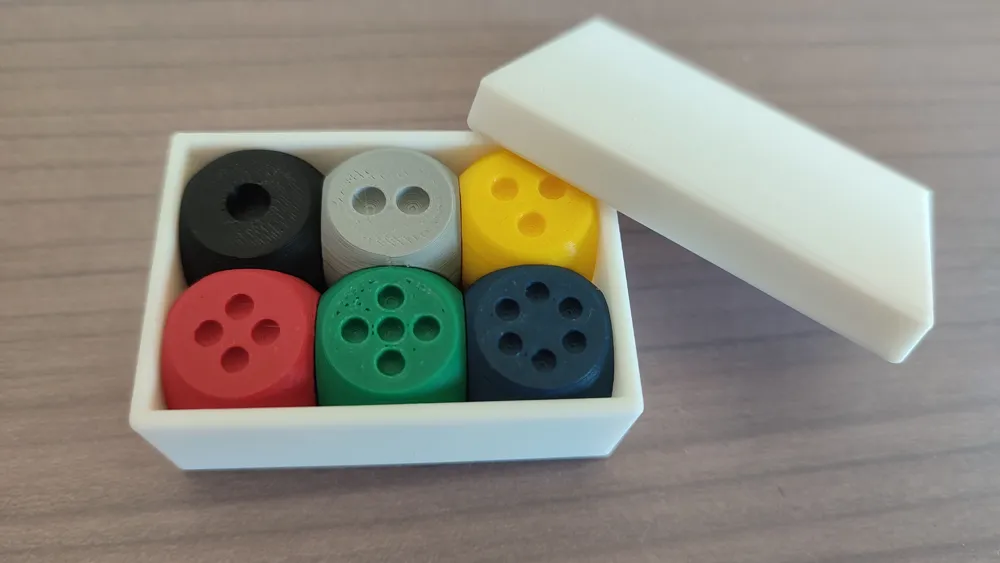
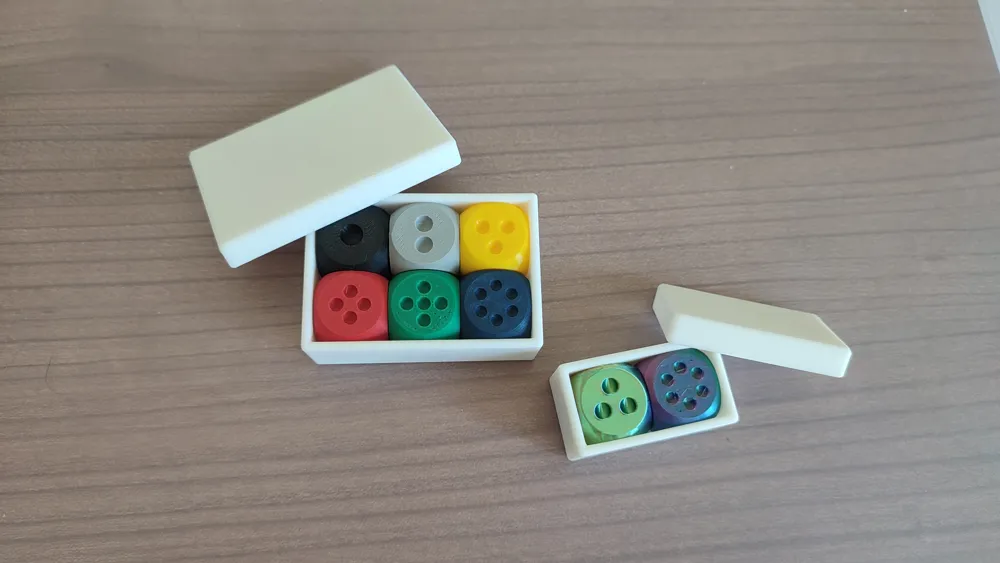
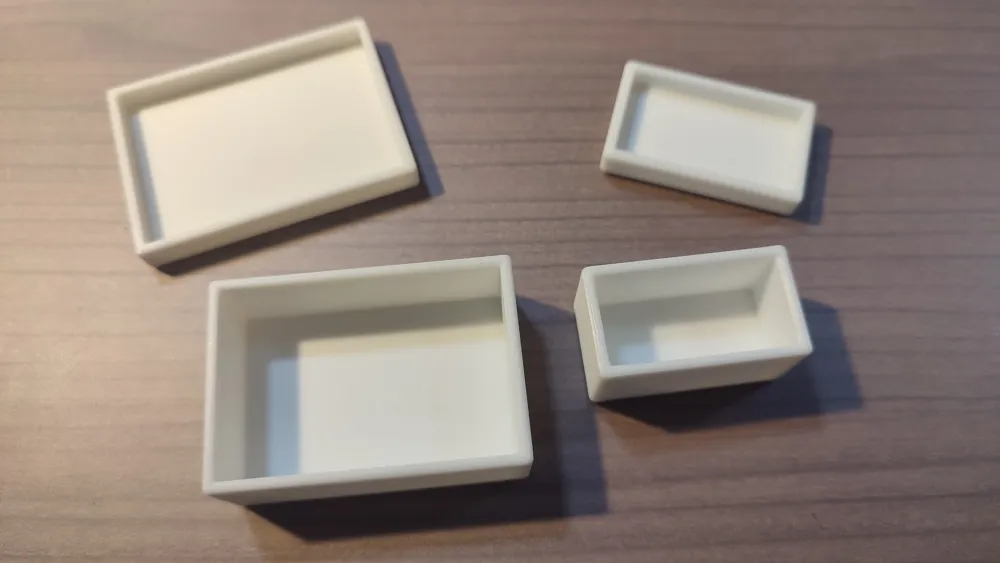
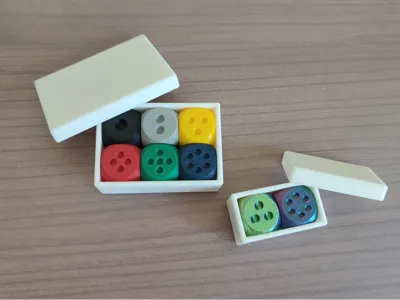
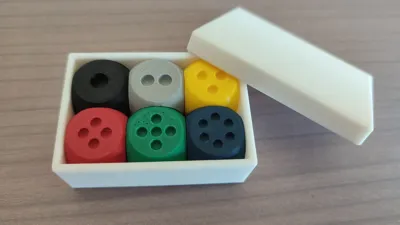
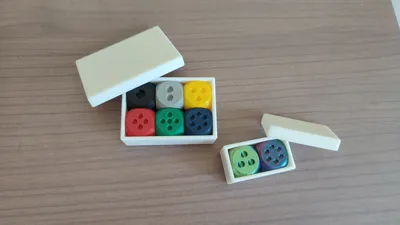
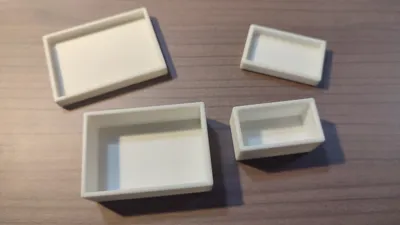
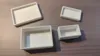
Boxes for the cubes are included in a separate print profile. One box accommodates two cubes (e.g., one standard and one with a priority of 6), the other holds six cubes (e.g., one for each priority from 1 to 6).
The cubes have the standard size of 16mm edge length.
License



Comment & Rating (8)