
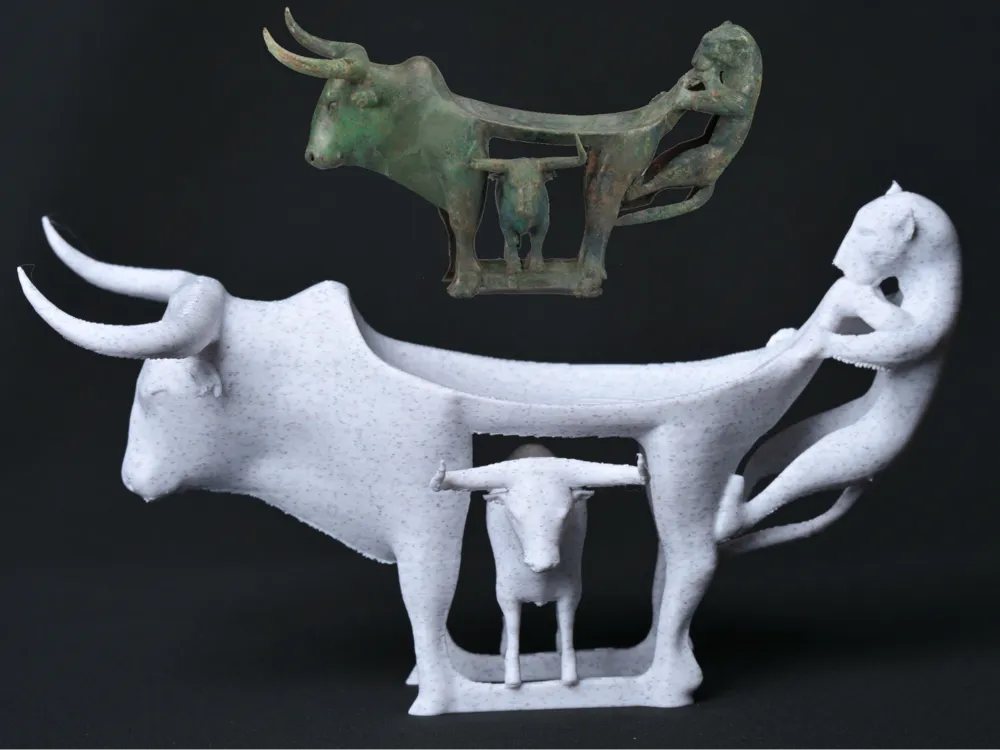
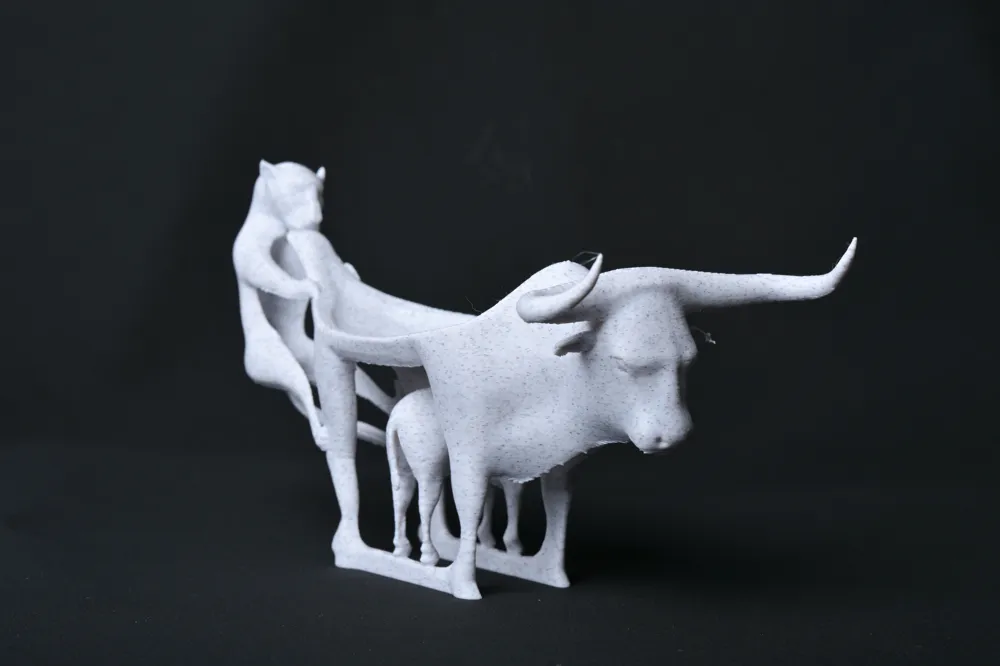
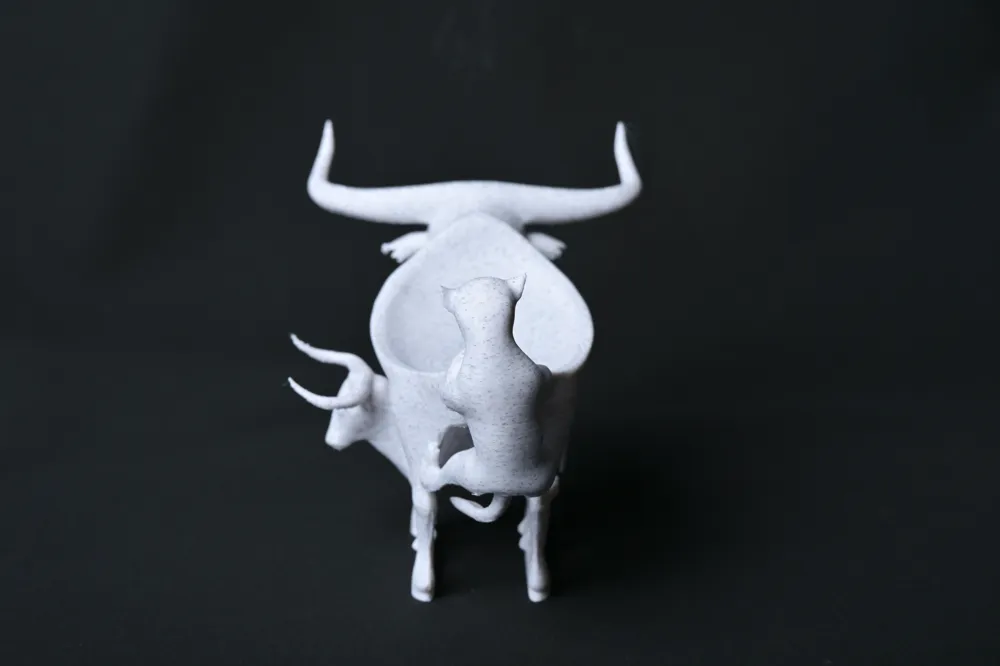
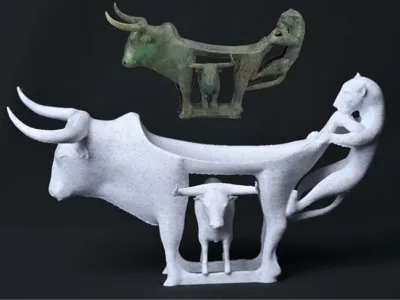
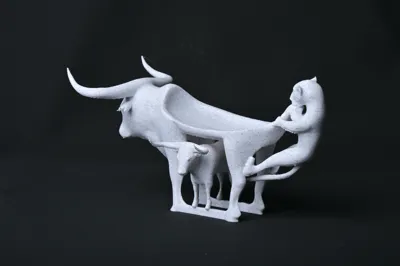
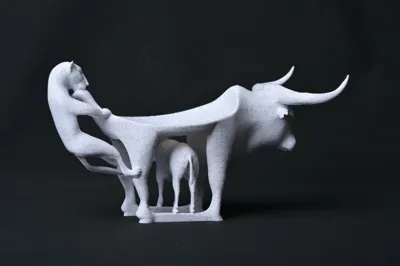
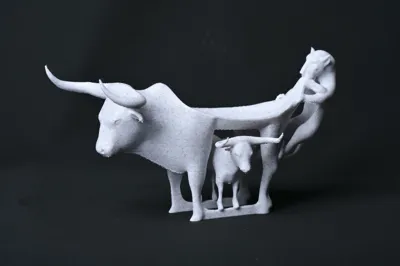
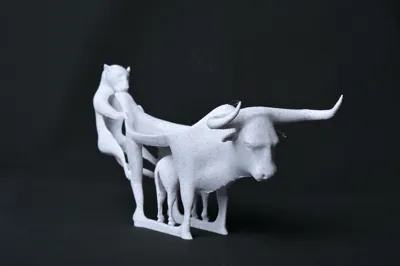
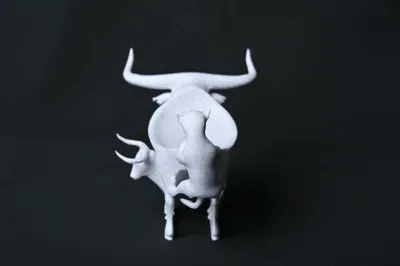
High-precision model of the "Bronze Ox and Tiger Case," a treasure of the Yunnan Provincial Museum (a national first-class relic)
Print Profile(1)

Description
Visited the Yunnan Provincial Museum on May 1st to see this bronze relic and obtained basic data from cultural and creative products. Used ZBrush to replicate it.
Preset length is approximately 16cm
The Bronze Ox and Tiger Case is a masterpiece of Warring States bronze art. Its unique form and profound meaning serve as a testament to the integration of diverse cultures in the ancient Dian Kingdom and an important example of the "multifaceted unity" pattern of Chinese civilization. 3D printing technology can accurately reproduce its artistic and scientific value, providing innovative pathways for cultural relic preservation and dissemination.
I. Basic Information of the Relic
- Name and Era
The Bronze Ox and Tiger Case is an ancient Dian Kingdom bronze ritual vessel from the Warring States period (475-221 BC). Unearthed in 1972 from Tomb No. 24 in the Lijiashahan ancient tomb group in Jiangchuan District, Yuxi City, Yunnan Province, it is now a treasure of the Yunnan Provincial Museum and was designated a national first-class relic in 1995. - Dimensions and Weight
Overall height: 43 cm, length: 76 cm, width: 36 cm, weight: approximately 12.5 kg. - Material and Craftsmanship
Cast in bronze using the piece-mold method, and welded together after casting: the main ox and the tiger at the tail were cast in one piece, while the small ox underneath was cast separately and fixed by welding it to a crossbeam. This demonstrates the superb metallurgical technology and mechanical design of the ancient Dian Kingdom.
II. Form, Structure, and Artistic Characteristics
- Main Components
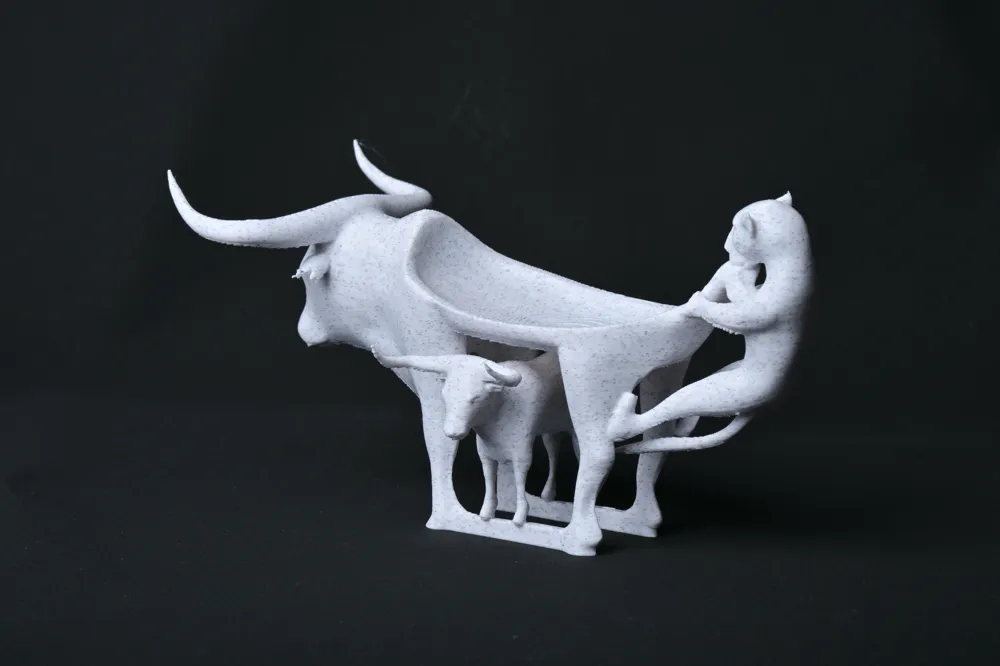
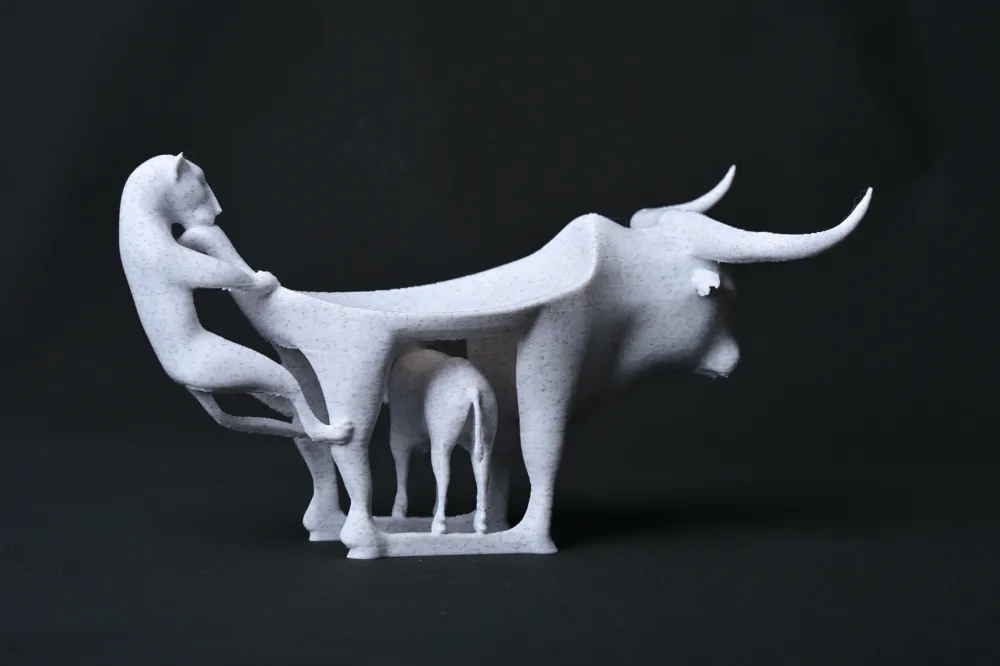
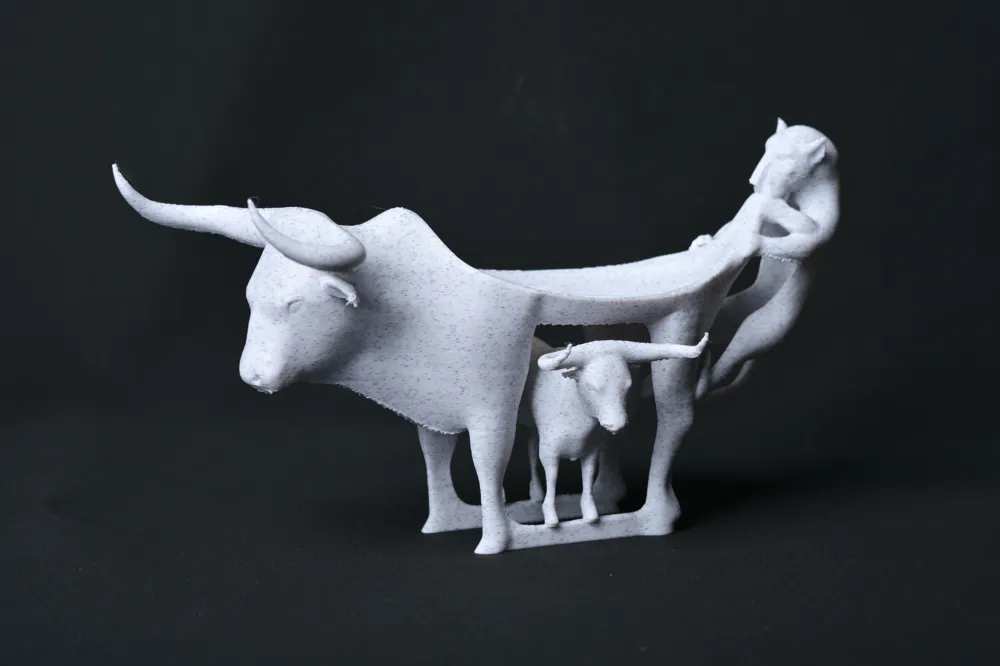
Composed of one large ox, one tiger, and one small ox:- Large Ox: Standing posture, horns extending forward in a flying, upward-curving shape, the back is recessed to form an oval-shaped table (for placing offerings during sacrifices), strong neck muscles, a hump-like protrusion on its back (symbolizing a "sacred ox," a special breed of ox originating from India).
- Tiger: Located at the tail of the large ox, the tiger's mouth is tightly biting the ox's tail, its four limbs grasping the ox's buttocks, in a backward leaning posture balancing the center of gravity, showing dynamic tension.
- Small Ox: Placed horizontally under the large ox, forming a cross structure with the large ox, symbolizing both "rebirth" and enhancing the overall stability through weight distribution.
- Mechanical and Aesthetic Design
- Balance: The forward-leaning horns of the large ox and the backward-leaning tiger at the tail create a front-to-back balance, while the small ox underneath lowers the center of gravity, avoiding top-heaviness.
- Combination of Realism and Symbolism: The scene of the tiger biting the ox reflects the natural world's law of survival of the fittest, while the small ox emerging from under the large ox implies the cycle of "death and rebirth," combining realistic and philosophical connotations.
License

You shall not share, sub-license, sell, rent, host, transfer, or distribute in any way the digital or 3D printed versions of this object, nor any other derivative work of this object in its digital or physical format (including - but not limited to - remixes of this object, and hosting on other digital platforms). The objects may not be used without permission in any way whatsoever in which you charge money, or collect fees.


Comment & Rating (1)