
TABOO – Tackle Box and Organizer - SPILL-PROOF




Print Profile(6)


Description
Boost Me (for free)
Your comments, suggestions and BOOSTS help me improve the models I develop for you. Thanks in advance!
Name:
Taboo, an acronym for Tackle Box/ Organizer\
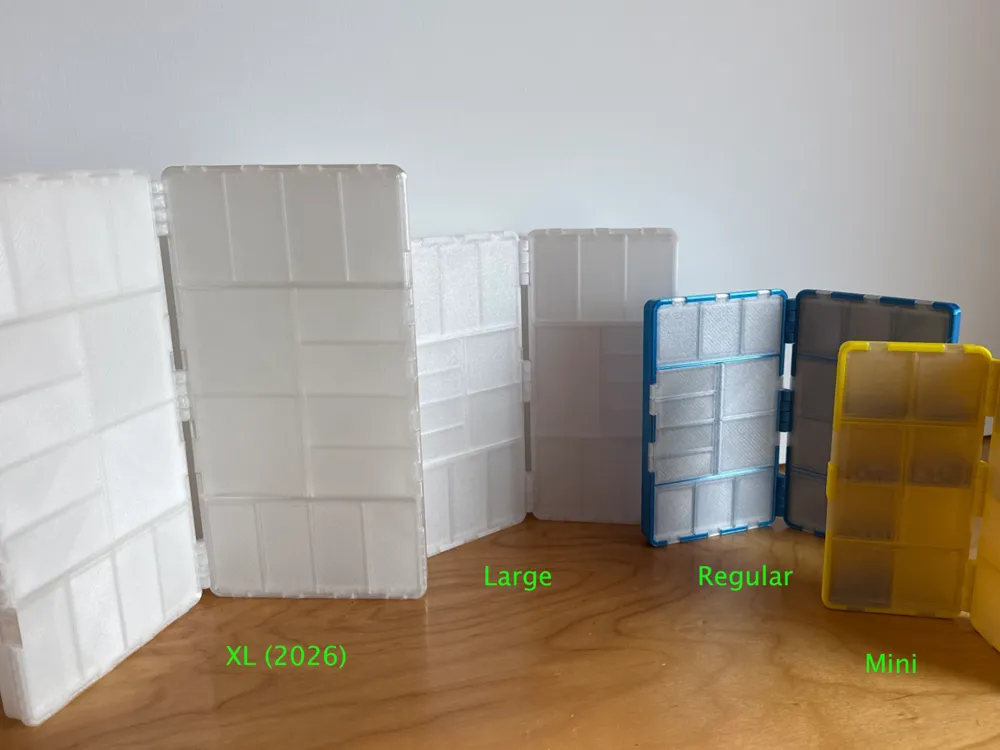
NOW IN XL SIZE! (2026)
What is it
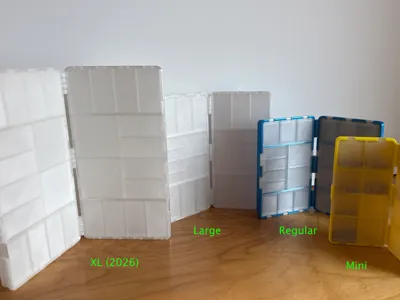
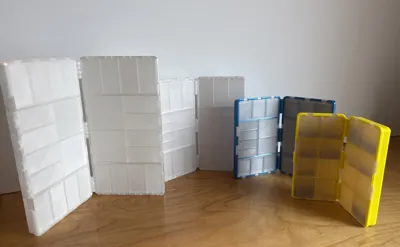
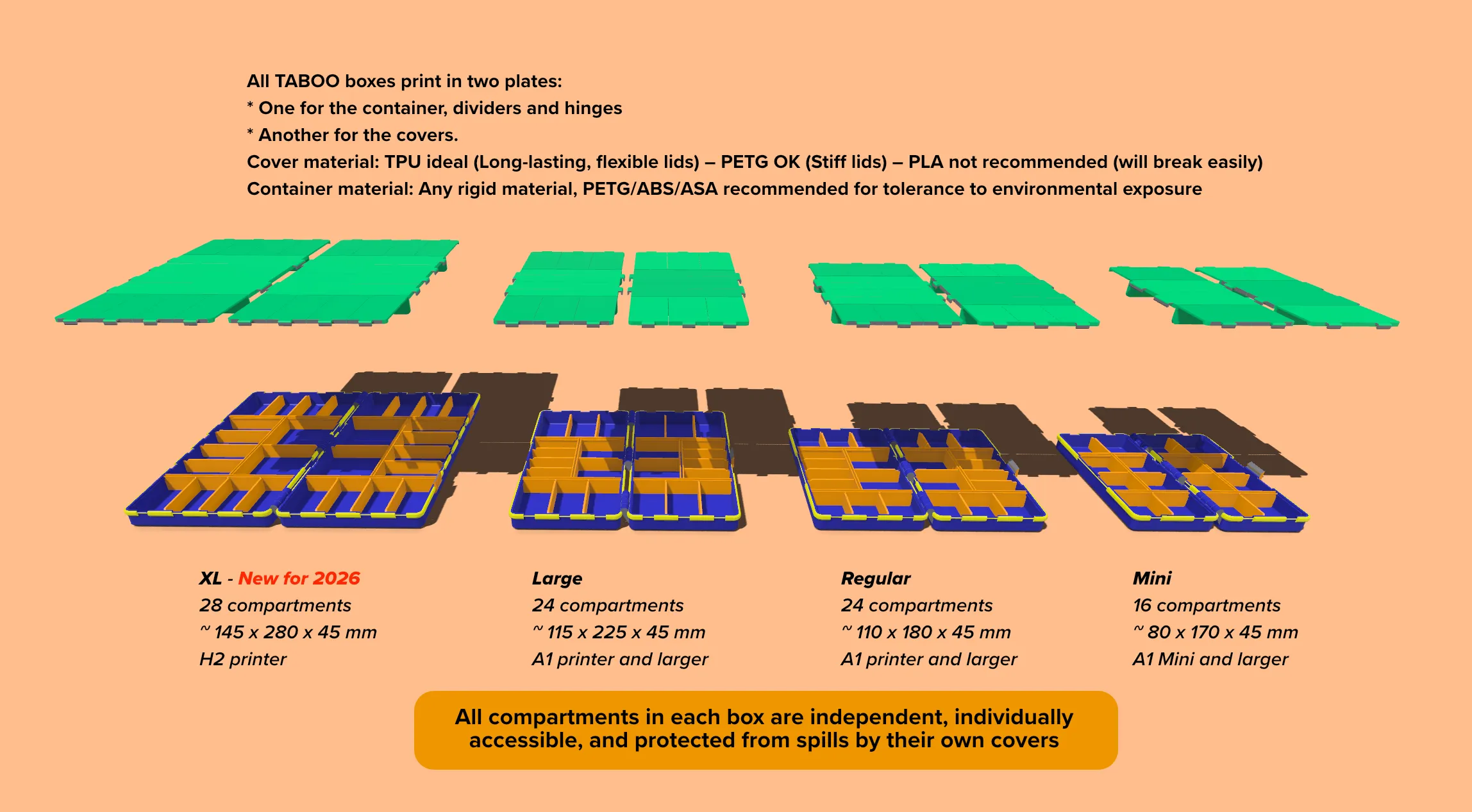
- A set of print-in-place tackle boxes / organizers in FOUR different sizes (For H2, X Series and A1, for MK3S and others, and for Minis.
- Each tackle box has two trays, hinged, printed as a single print-in-place job;
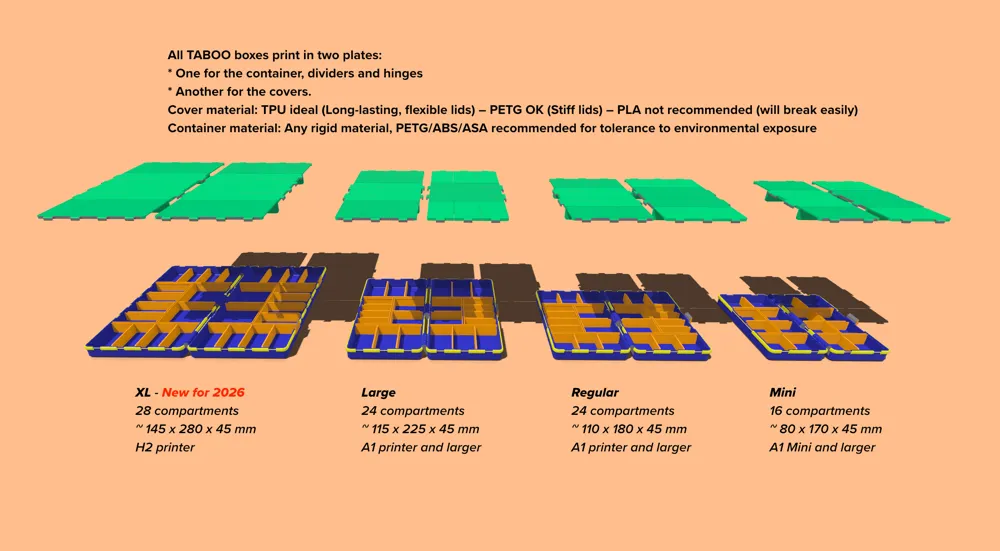
- Each tray is divided into compartments (between 16 and 24 per box);
- Each compartment is individually opened and closed using a latch on the side walls of each tray, with lids that remain opened or closed independently of each other.
Why build it
Many tackle boxes and organizers can help you classify and contain a large number of distinct items… but with a single bump, slip of the hand, or drop can ruin your day, by mixing and/or spilling your items. Taboo does not, because all its compartments open and close independently, and the user rarely has more than one container open and in use..
Use case 1 - Fishing
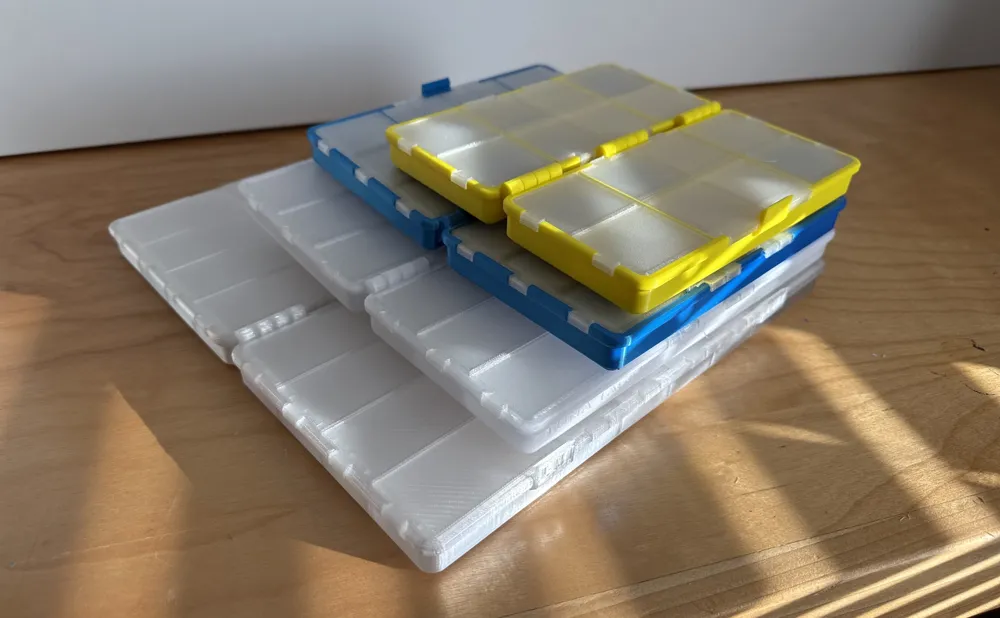
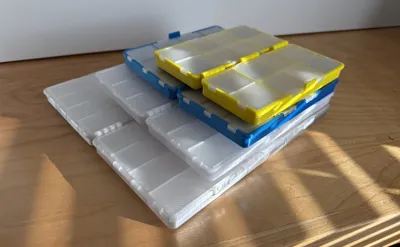
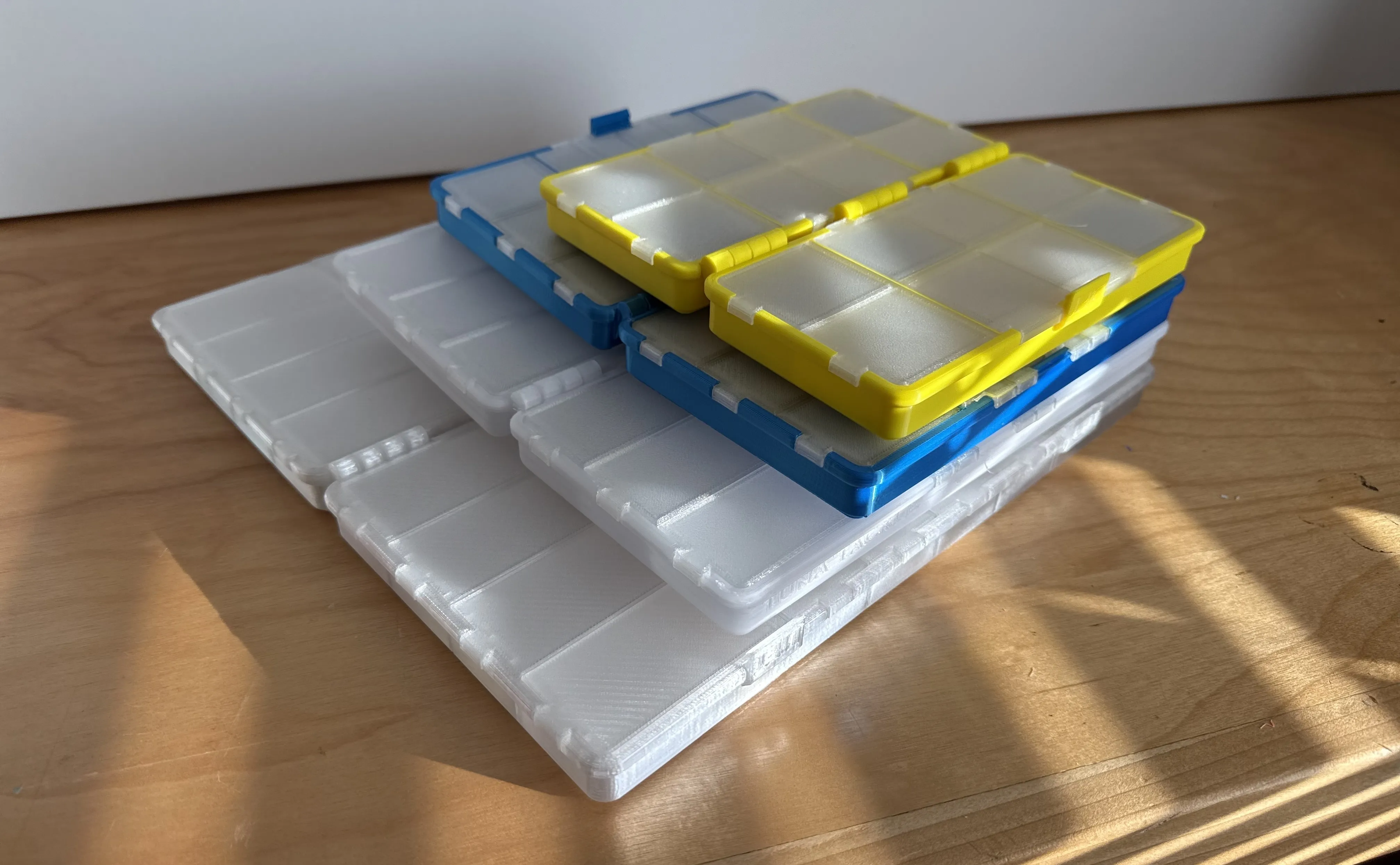
Ocean fishing from a boat, specially in multi-day trips – Taboo boxes have been tested and honed for mode than three years fishing from chartered boats small and large, through hectic activity, crowded decks, challenging weather and constant bumps and slips. It easily fits in an angler’s fishing bag (where space is very limited), while accepting rough handling and withstanding unavoidable accidents.
Use case 2 - Workshop
Storing and retrieving workshop items that come in multiple sizes and varieties – Taboo boxes are not a replacement for a gridfinity tray, but if you are going to be moving around with your items, it may be better: the same reasons that make Taboo a great tackle box make it a great transportable organizer for small items.
Key Feature
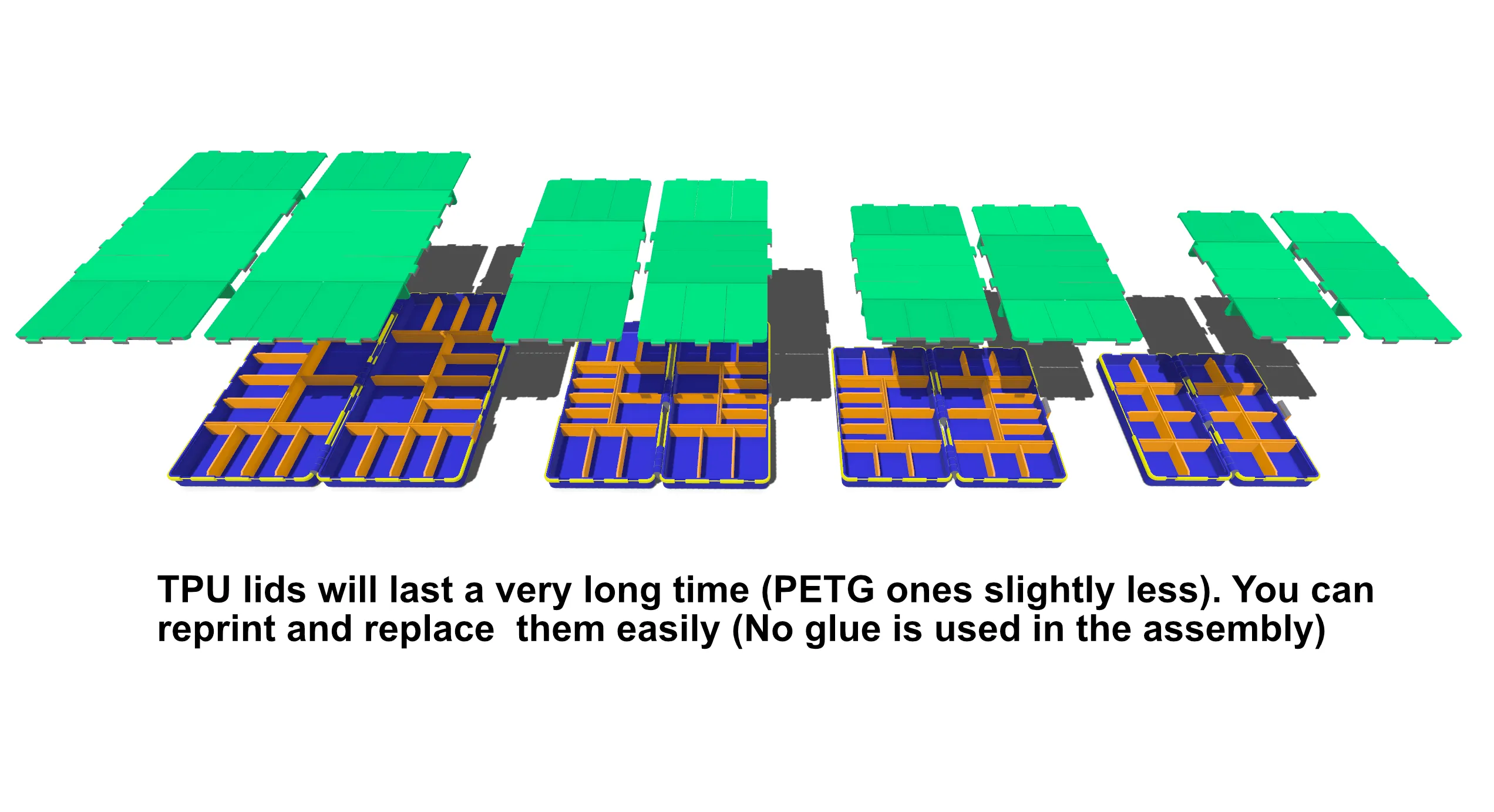
Taboo works well because it uses “living hinges” for its lids, which enclose safe, spill-proof compartments without sacrificing space. Those lids can be printed in TPU for best results, but also PETG and, to a lesser extent, PLA. The key difference between lid filaments is the durability of the lids; however, the lids are very easy to print individually, which makes them easily replaceable, and keep the box useable for years regardless.
Edit – January 2026
The XL box was added very recently compared to the original posting. It is shown in some pictures, but not all. No worries, though: all instructions, recommendations and explanations are identical between sizes, Only dimensions change (Also, the XL box introduces double-latching, a feature requested by /@user_1298228011. The feature will be added to other sizes soon).
Introduction video
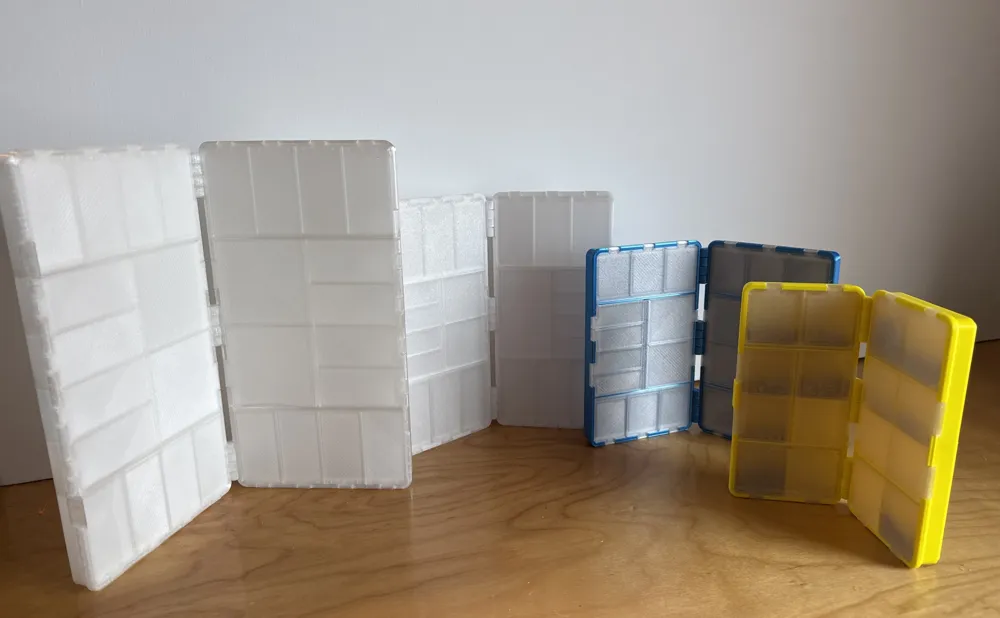
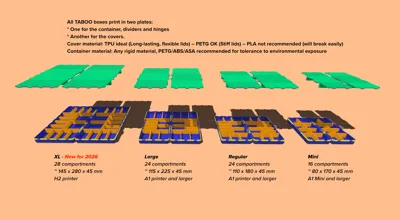
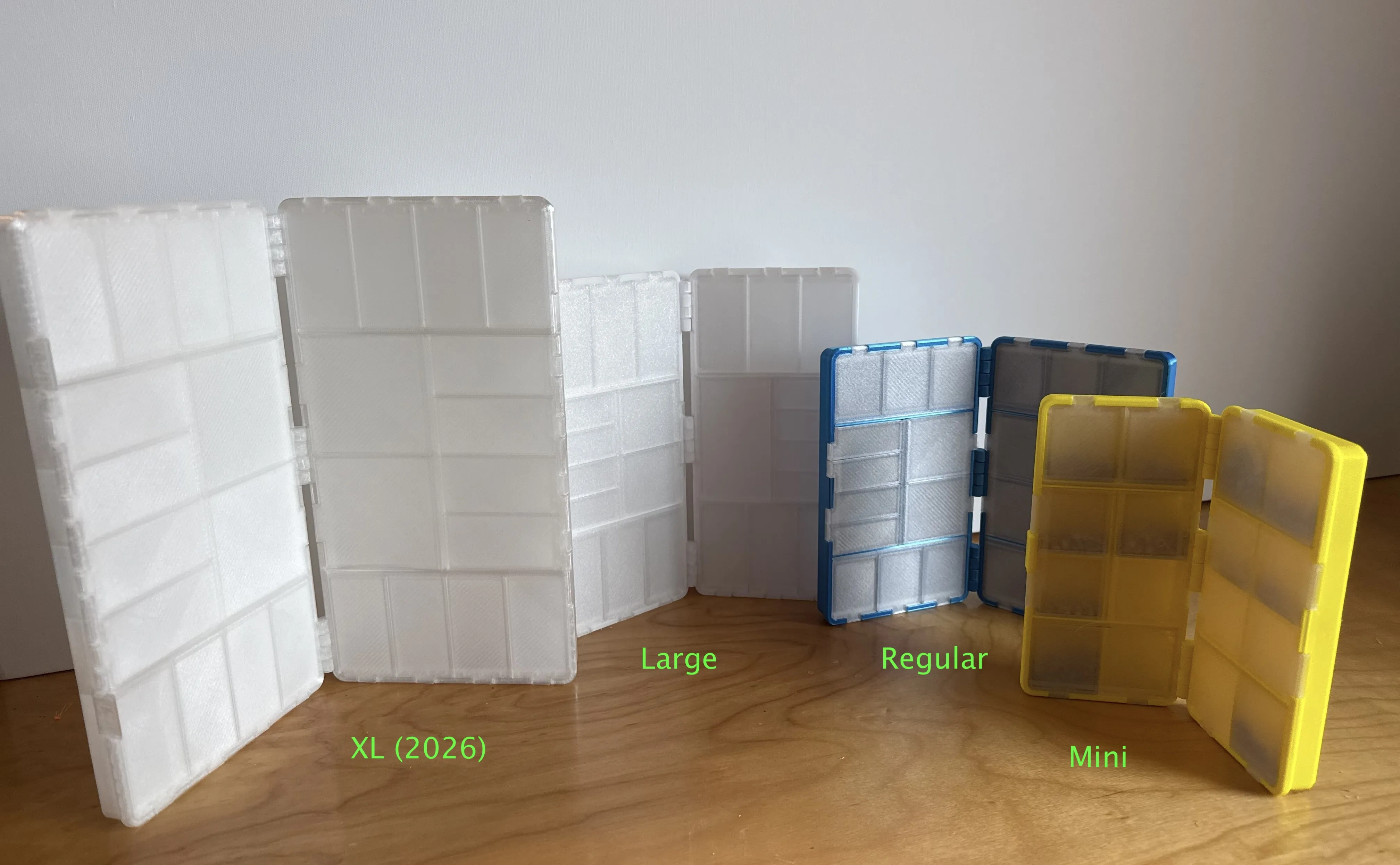
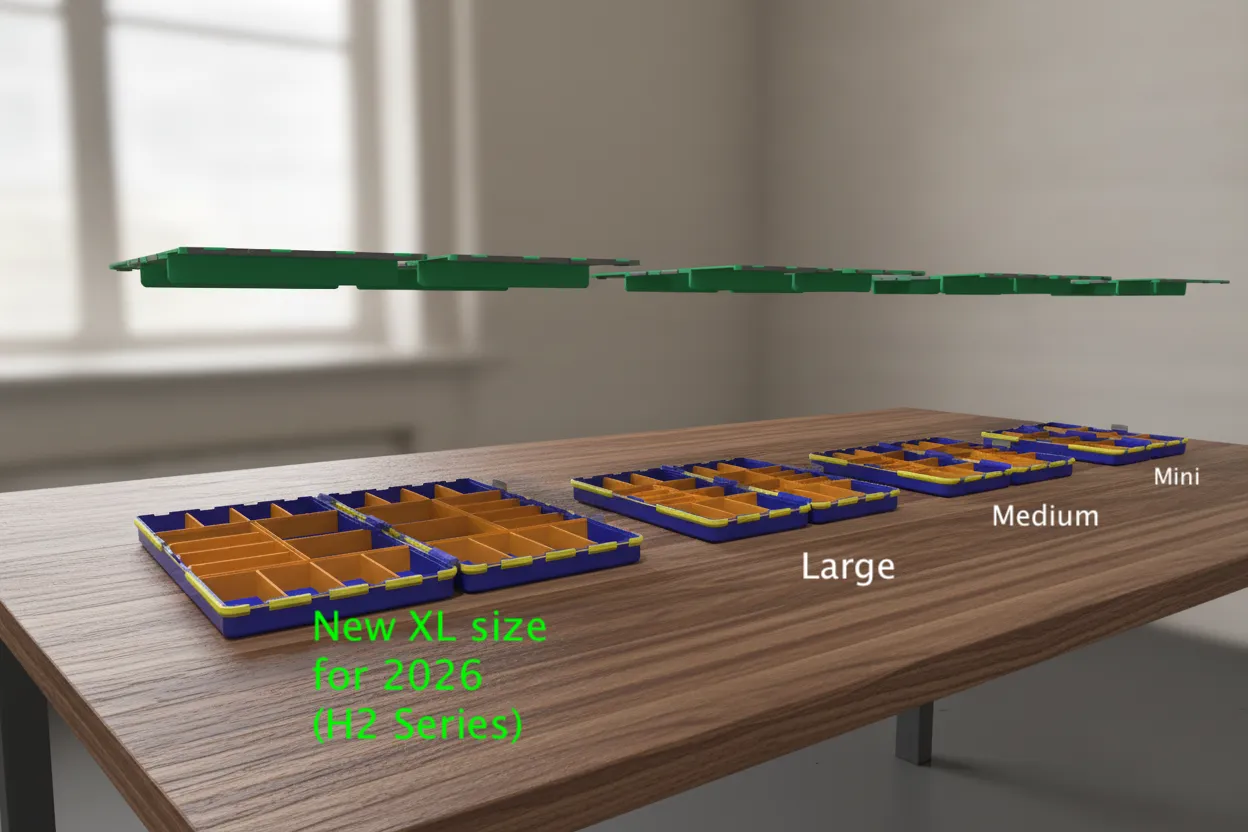
FOUR sizes included in the set, to leverage different printer sizes
The files include FOUR different sizes: Mini (180x180 plate), Regular (200x200), Large (250x250), and XL (320x320), so you can select the size of the box based on your printer volume.
Printing and materials
Each Taboo requires two separate (and very straightforward) print jobs: one for the container (which prints-in-place), and a second one for the lids.
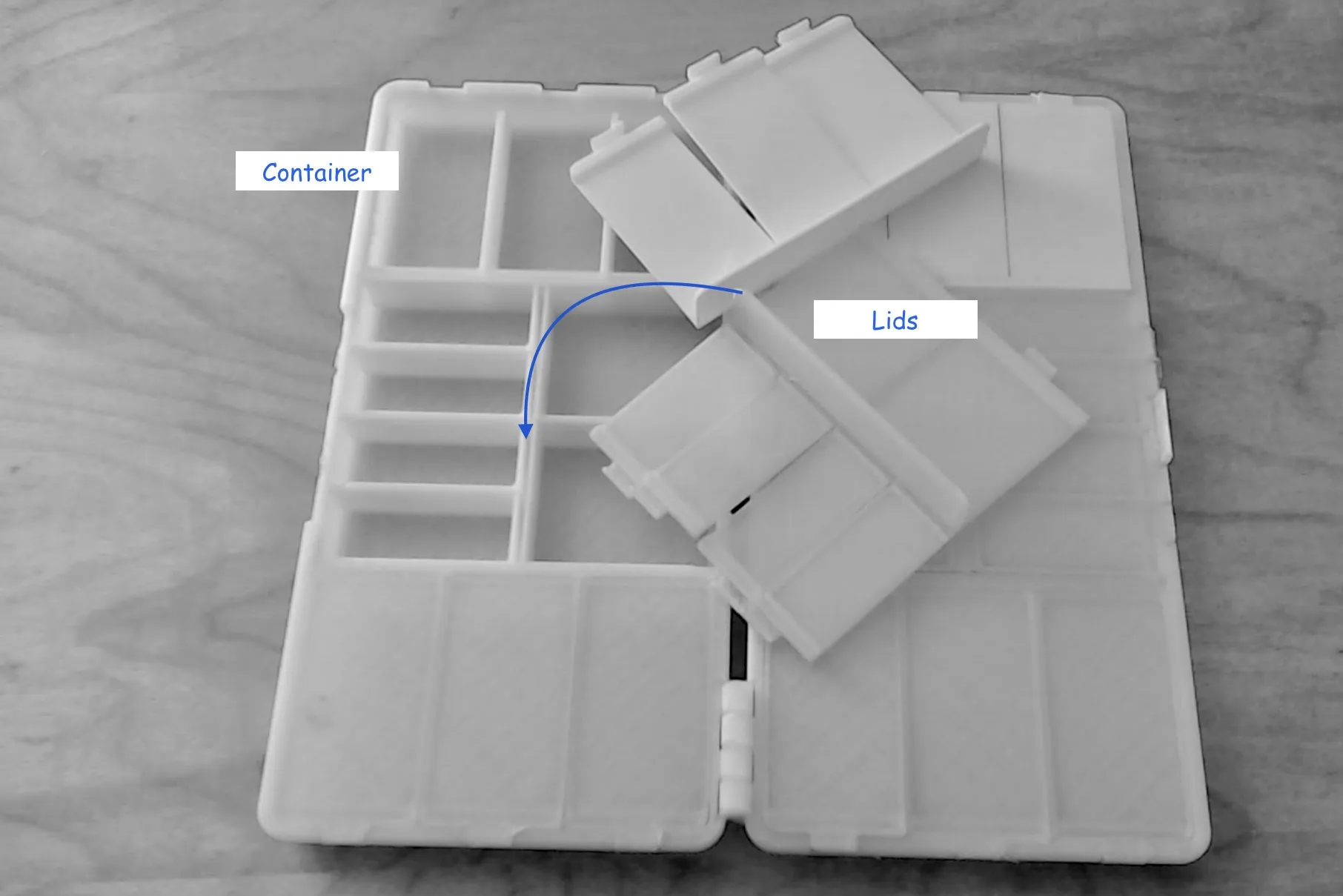
For containers I mostly use ABS, ASA or PETG because I use them outdoors, in challenging conditions, but practically any filaments can be used based on your needs.
For the lids, the ideal filament is TPU, but PETG works well also..
All pieces print well with 0.2 layers using 0.4 nozzles, using 3 layers, with absolutely no supports. For other settings, lids and box have different needs, as follows:
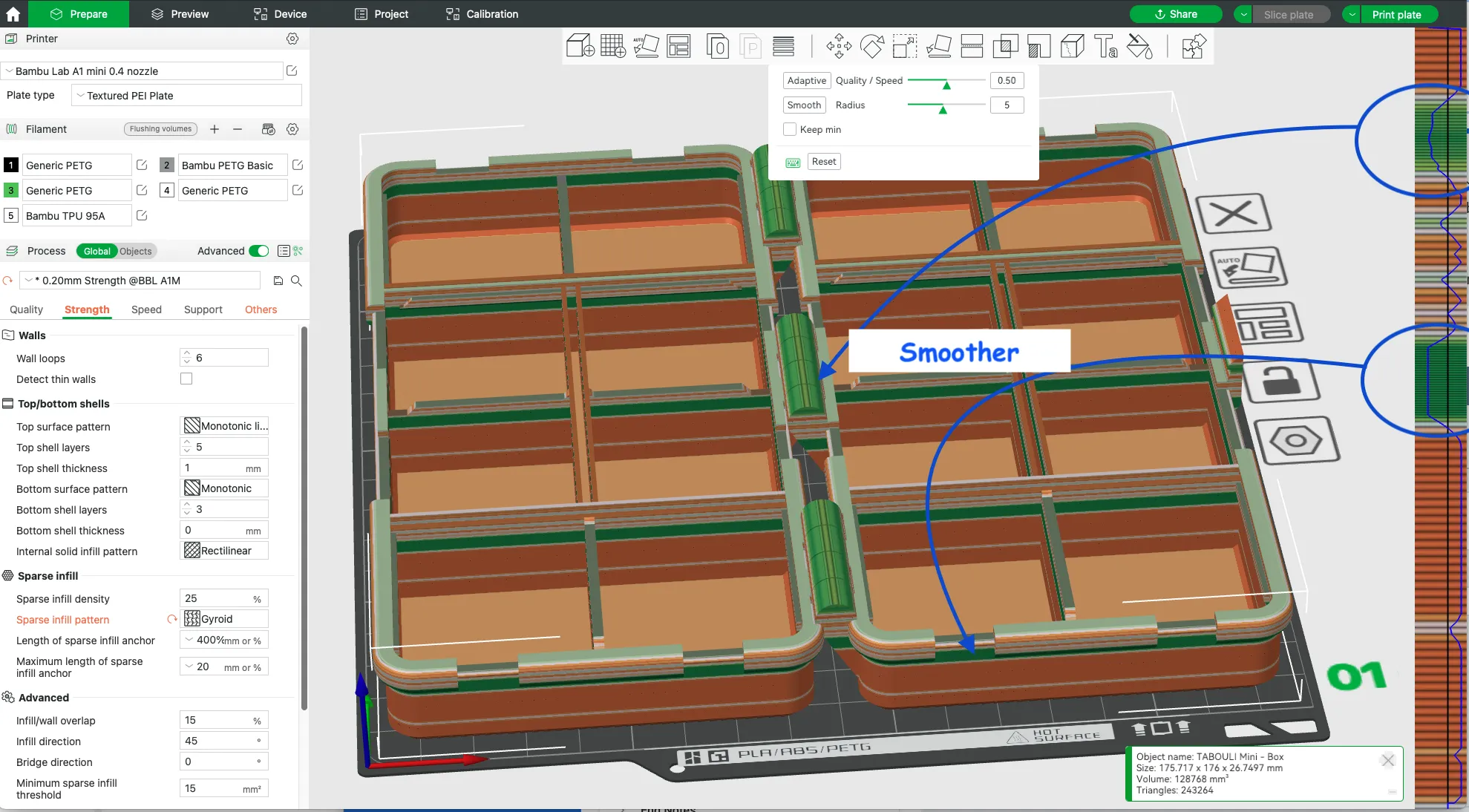
Container:
- Prints-in-place, covering most of the plate for maximum capacity.
- You can use PLA for less demanding uses (not outdoors)
- 20% infill
- Use ABS, ASA, or PETG for rough, outdoor use; in those cases print with Outer brims = ON, to avoid warping (mileage varies)Use adaptive print layers for better results, mostly to improve the tops of the hinges and the side brims. See darker bands on the variable heights snapshot below
Lids:
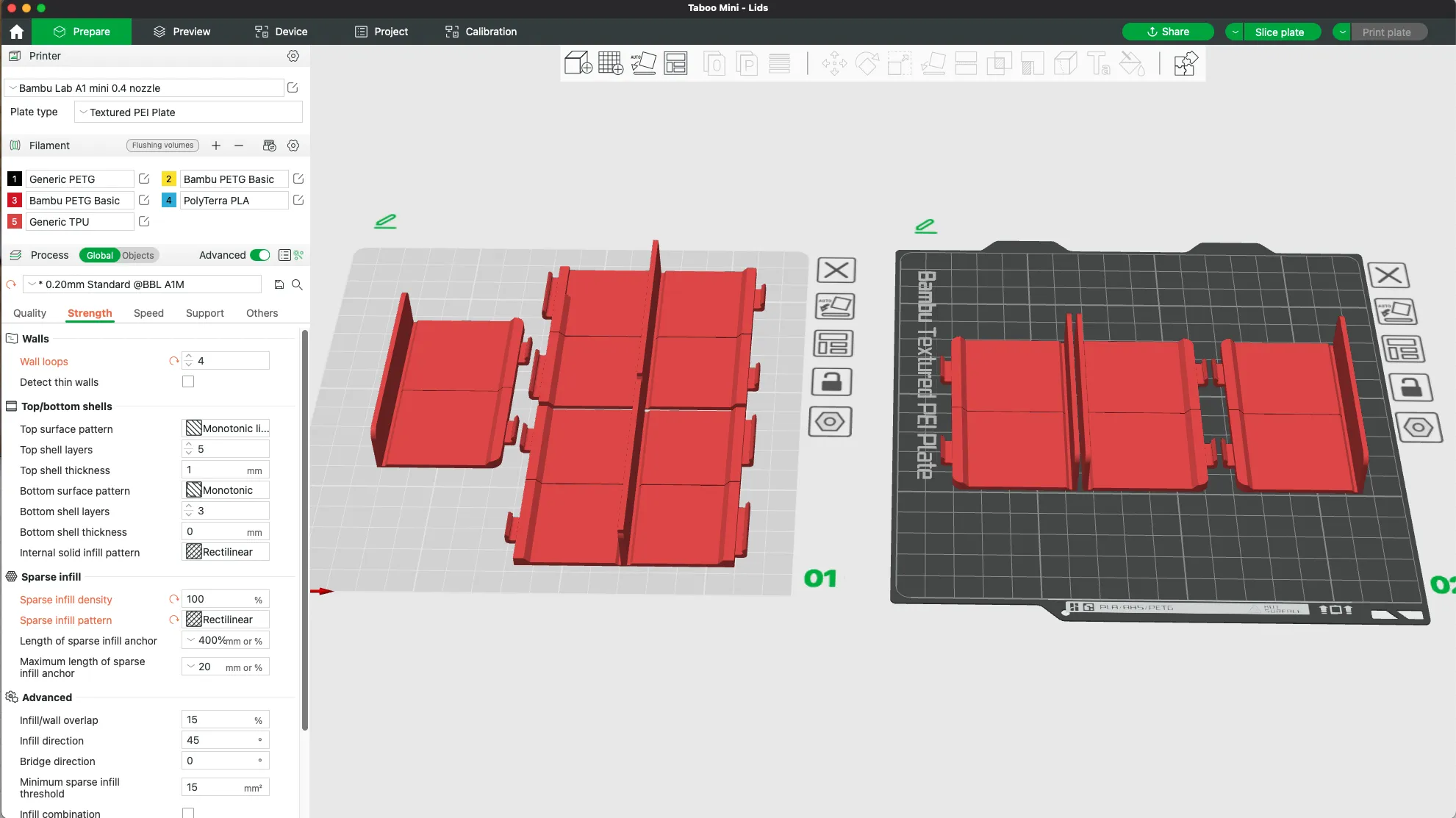
- TPU Shore 95A produces very flexible lids that last forever. I have tried 6 different TPU brands over time, and Overture High Speed TPU is by far the best, with Bambu’s a distant third for this application.
- Alternatively, use PETG for stiffer lids, with hinges that last a shorter time (no big deal, they are a quick re-print). PLA works as well, specially for indoor use.
- 100% infill is recommended
- Translucent filaments are great so that compartment contents show through
- See the video to get a feel for PETG and TPU lids compared.
- Side Note: The A1 Mini is GREAT for printing in TPU 95A from an external spool (See my upload of FRESH - Friction-Reducing Spool Holder model for even better results). If you haven’t tried TPU on your mini yet, using for printing the lids is a great introductory project to do so. For fail safe results just use the “Generic TPU” profile and Overture High Speed TPU (most of the lids you see in the video use the Translucent Clear and Blue version of that filament).
Boost Me (for free)
Your comments, suggestions and BOOSTS help me improve the models I develop for you. Thanks in advance!
License



Comment & Rating (107)