
Pflute in D by pfh (chromatic flute)
Print Profile(1)

Description
About the Original Model:
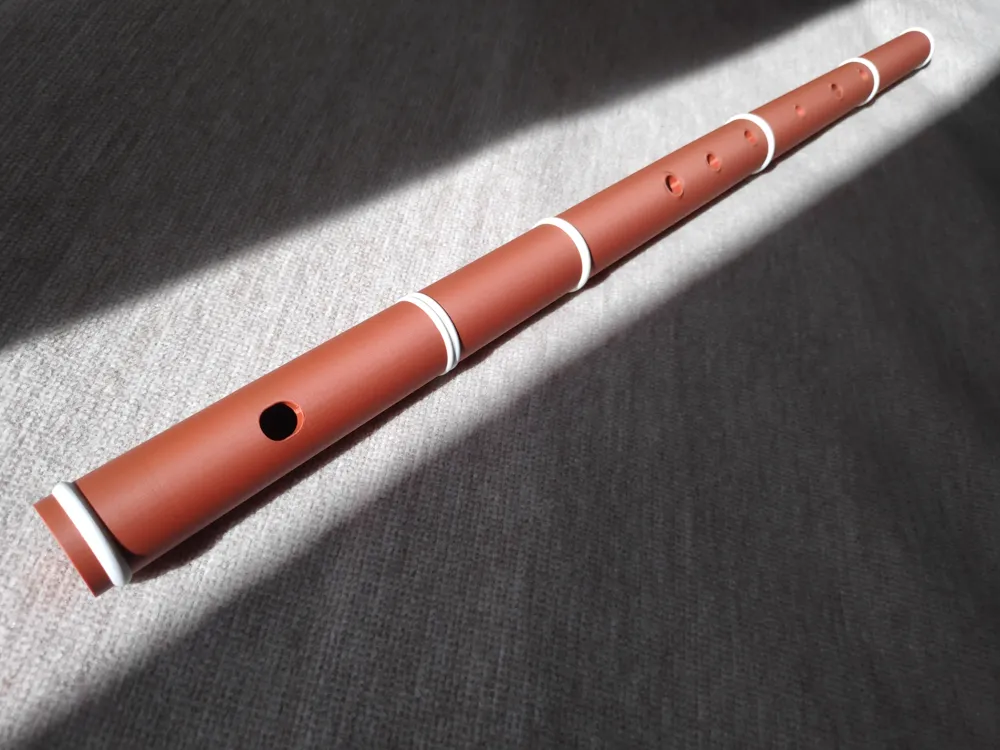
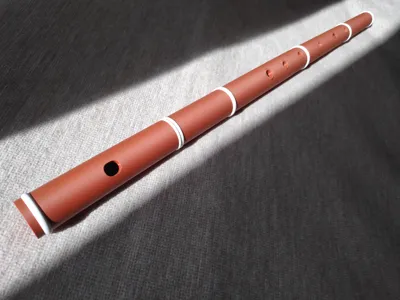
Originally designed by Paul Harrison, the Pflute expands the possibilities of a standard 6-hole flute. It uses recorder-style fingerings, making it almost fully chromatic. While it sacrifices some of the convenience of simpler fingerings, it opens up many new possibilities.
My Remix:
The original model was designed and created with the help of Demakein (huge thanks to the creator himself, Paul Harrison, for helping me troubleshoot it). Instead of relying on the program to "cut" the model into pieces, I took a different approach by manually recreating the masks in FreeCAD.
The changes are as follows:
- Adjusted the length of the parts for a more balanced look
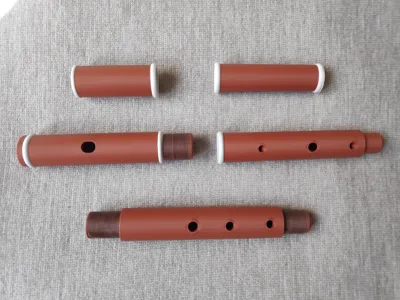
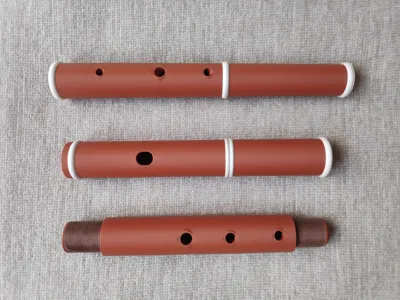
- Extended the sockets for more secure joints (4/5)
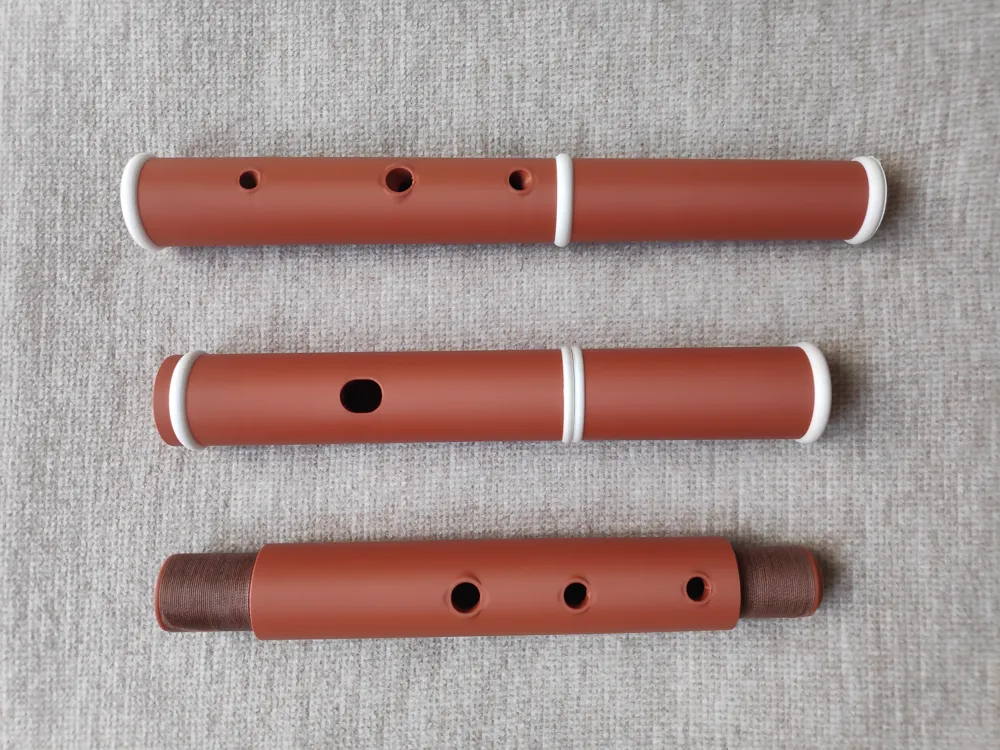
- Inverted one of the sockets to create a somewhat more “traditional” barrel
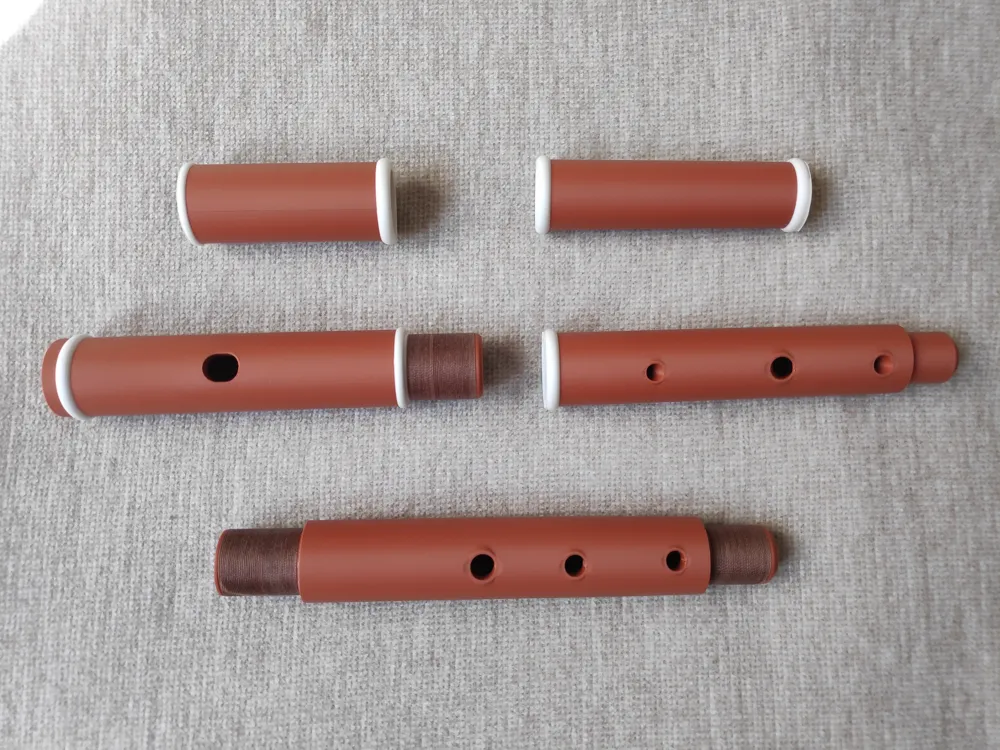
- Designed one of the body sockets to print separately for more convenient printing (thanks to Marat Axianov for the design idea)
- Adapted all sockets to accept Galacer 0.55mm round waxed thread for a secure connection
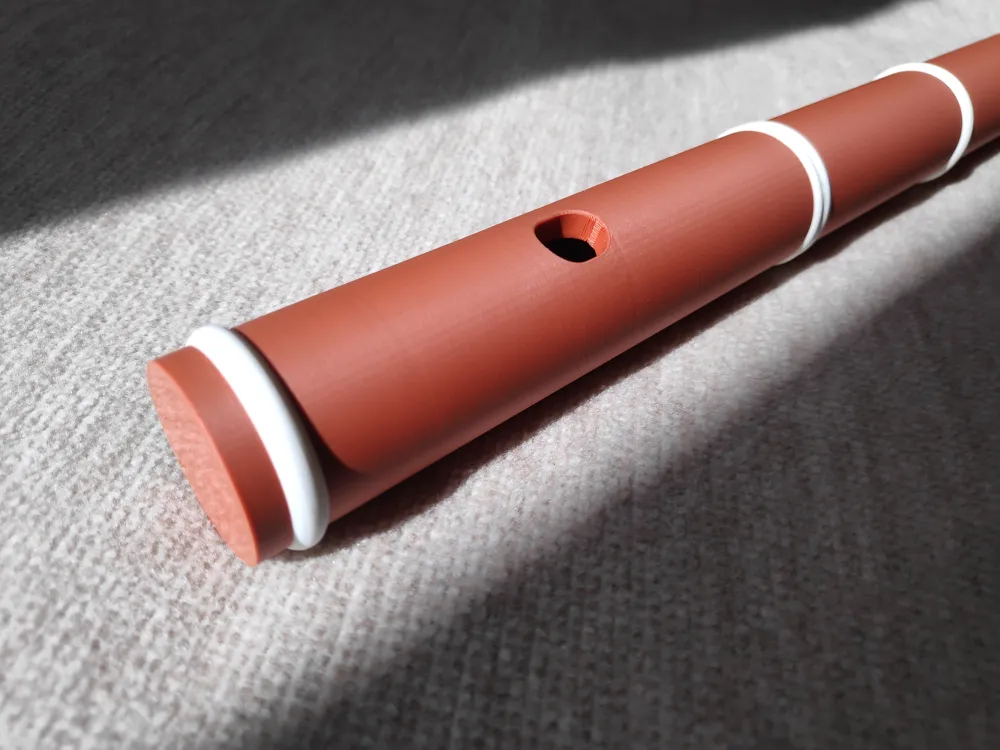
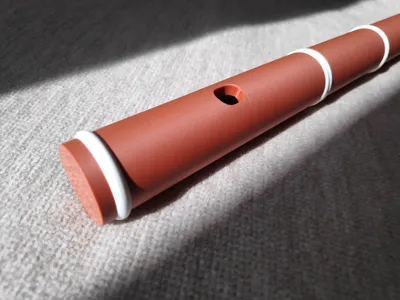
- Added decorative rings
Printing:
I decided to print this Pflute in 6 parts (including the removable socket). I used my usual slightly adjusted high-quality 0.12mm profile. You’ll need a well-calibrated filament, as some tolerances are fairly tight. Additionally:
- Increased wall loops for added rigidity
- Higher infill (60–80%), ideally 100%, to better mimic wood density
- Larger brim for improved adhesion
- Smooth timelapse enabled
- Prime tower volume reduced to a minimum
I prefer printing the flute part-by-part to minimize filament waste.
Post-Processing:
Some post-processing is required, mainly gluing and binding all the tenons.
There are two places that need gluing: the removable socket and the foot part of the Pflute (2 glued joints in total). I use 2-part epoxy, but cyanoacrylate glue should work as well.
The next step is wrapping Galacer waxed thread around the tenons to ensure an airtight assembly and prevent air leakage.
Future Plans:
Modify bore size and fingerholes placement to achieve stronger low notes
Log:
05.05.25: Uploaded first designs
This remix is based on

License



Comment & Rating (9)