
OpenGrid to Gridfinity adapter plate
Print Profile(1)
Description
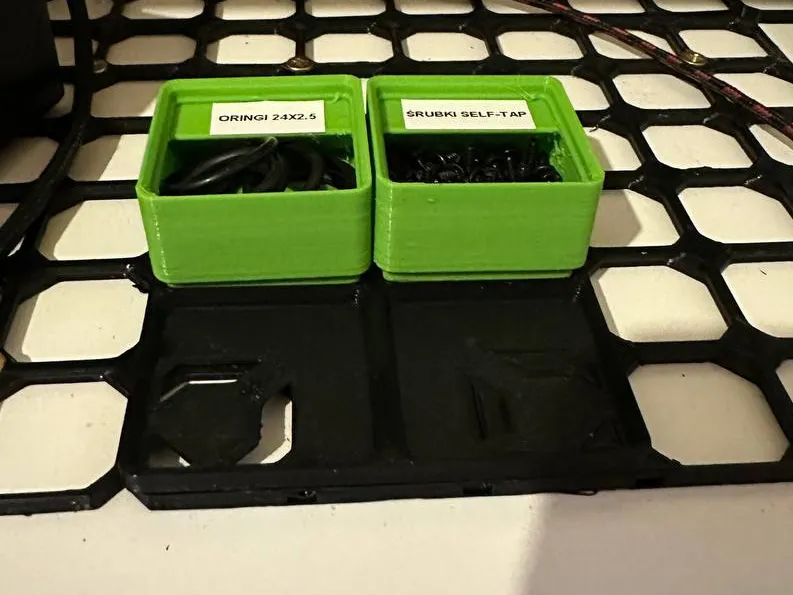
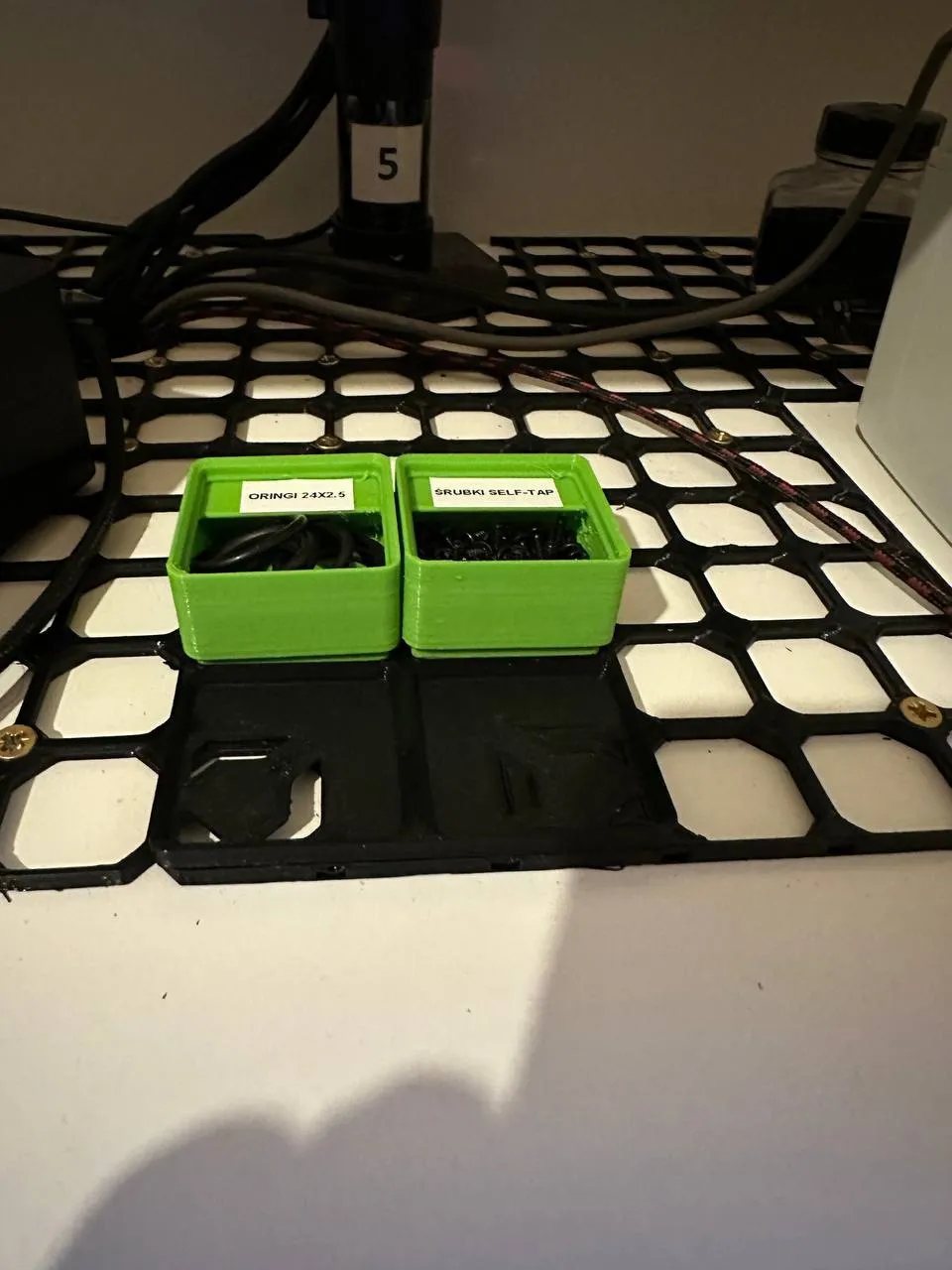
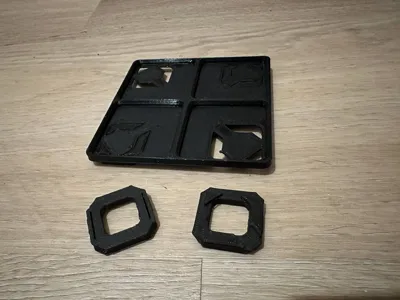
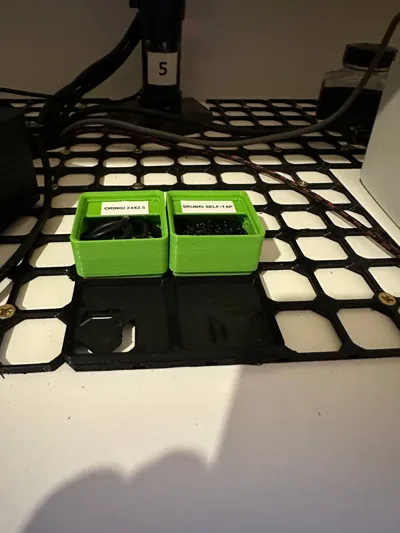
Adapter plate from openGrid to Gridfinity
Important note:
Due to their thickness, snaps can be really hard to press into openGrid. It is advised to use tool you can press onto snap with. Once snaps are in place you can easily put baseplate on and press connection in place.
Removing snaps needs to be done with tool as well - as I checked flat screwdriver used to pry on an angle does it's job.
Snaps were designed for openGrid Lite but they are compatible with regular openGrid baseplate as well.
Print profile
Print profile is based on default BambuLab settings with openGrid's suggested change to set 3 wall loops (perimeters) for better strength.
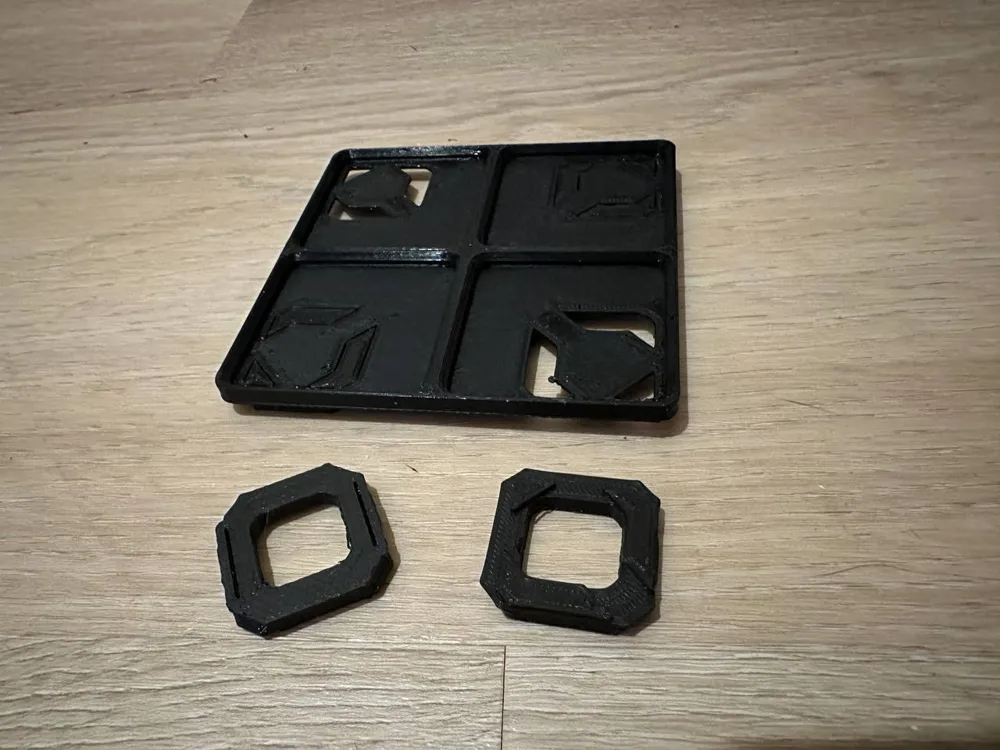
There are 4 plates which each contains:
- 3x3 (openGrid) to 2x2 (Gridfinity) plate + 4 connector snaps
- 3x6 (openGrid) to 2x4 (Gridfinity) plate + 4 connector snaps
- 6x6 (openGrid) to 4x4 (Gridfinity) plate + 4 connector snaps
- 4 connector snaps alone
Origin of the idea
I started my adventure with openGrid few days ago and was wondering how it can be used in my case. From presentation video by David D I knew that this standard is compatible with Gridfinity which I'm already using for other project. So I wanted to use openGrid for on-desk cable and tools organizing. I tried to find adapters whic would allow to create Gridfinity baseplate on existing openGrid backbone. Unfortunately I was not able to find anything of this kind so I decided to create my own.
Solution
Adapter is created by joining regular Gridfinity baseplate with openGrid cover snaps. Connecting them simply together was not great idea as any printing orientation has massive overhangs or bridges to overcome which may not be possible to print properly without supports. Adding supports causes longer print times and higher filament usage which I believe denies idea of simplicity which both original projects share.
Other solution was to print both grid and snap separately and implement connection interface between them which would keep them together. So Gridfinity baseplate has 1mm plane added at the bottom which hides grid underneath and contains holes for snap to connect.
Snaps are stripped from their top face and have all walls extended to the inside. On the top there is connection interface for baseplate. Top of the snap is raised by 0.1mm to allow baseplate to lay on the grid without issues.
Standard (3x3) plate contains connection holes in each corner. Bigger plates have more holes in the middle for additional snaps if you need better connection (especially with 6x6 plate).
Legal note
Model is shared based on Creative Commons - Share Alike license which both Gridfinity and openGrid are released on. openGrid and Gridfinity are existing standards which rights belong to David D and Zack Freedman. Any usage of this model is allowed as long as it doesn't violate original standards' terms of use.
License



Comment & Rating (2)