
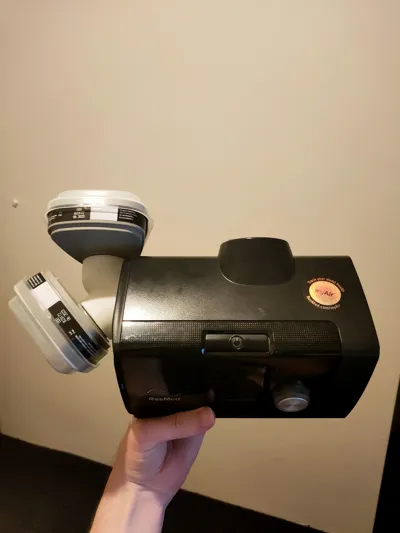
DUAL 3M Filter Adaptor for CPAP
Print Profile(1)

Description
Boost Me (for free)
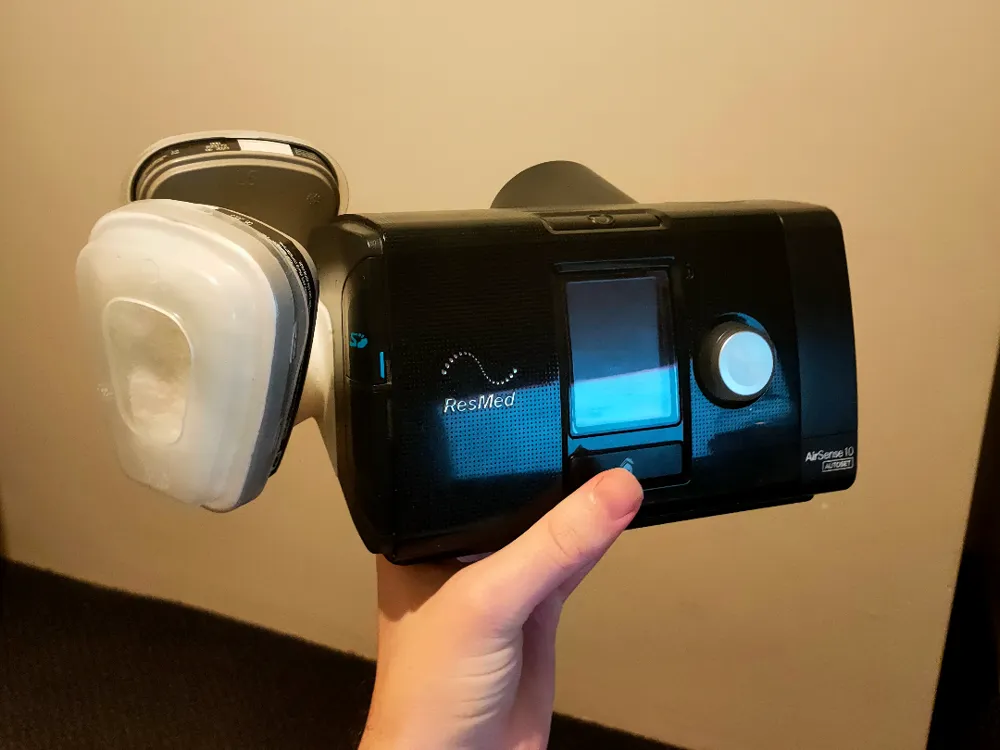
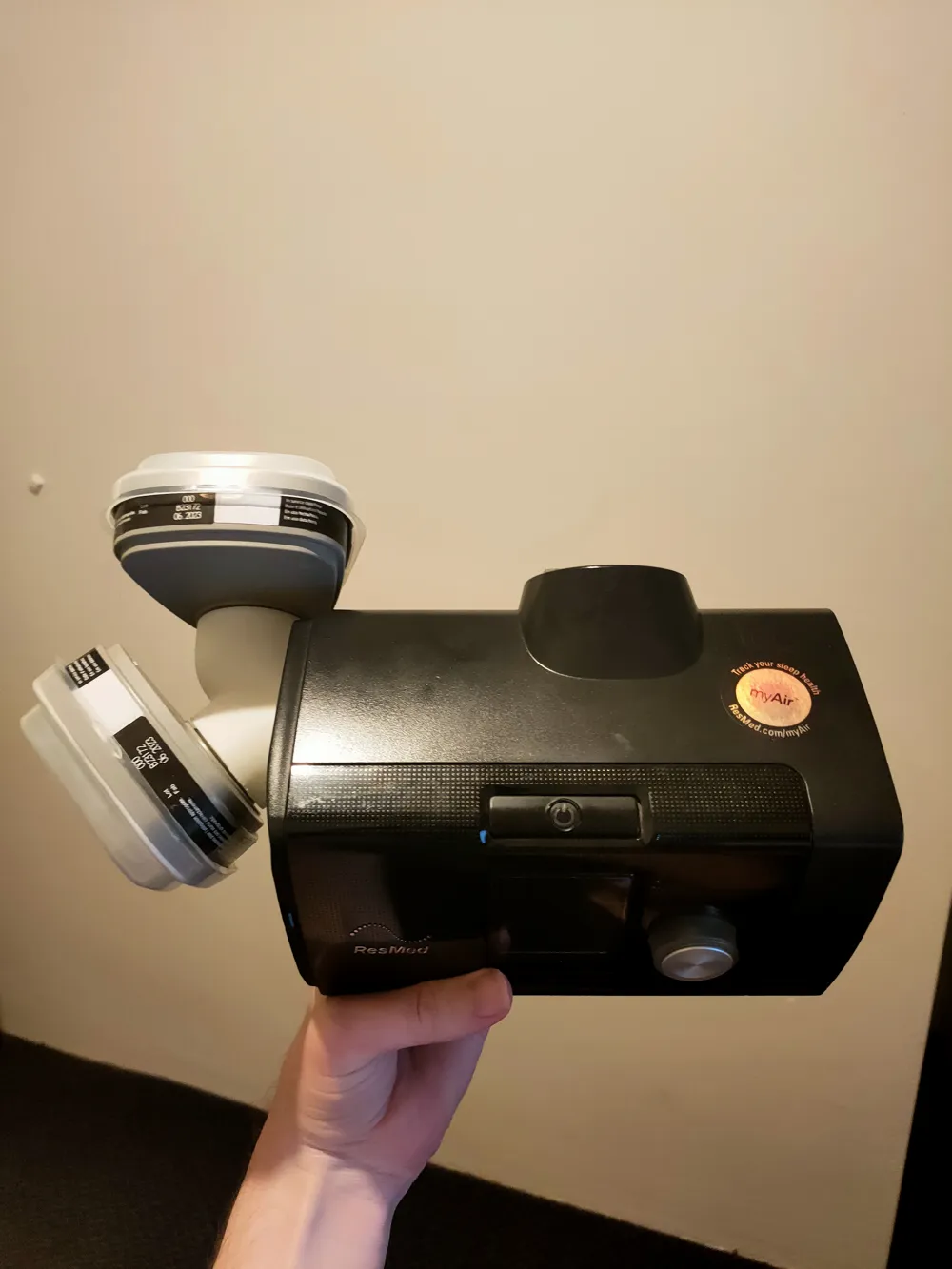
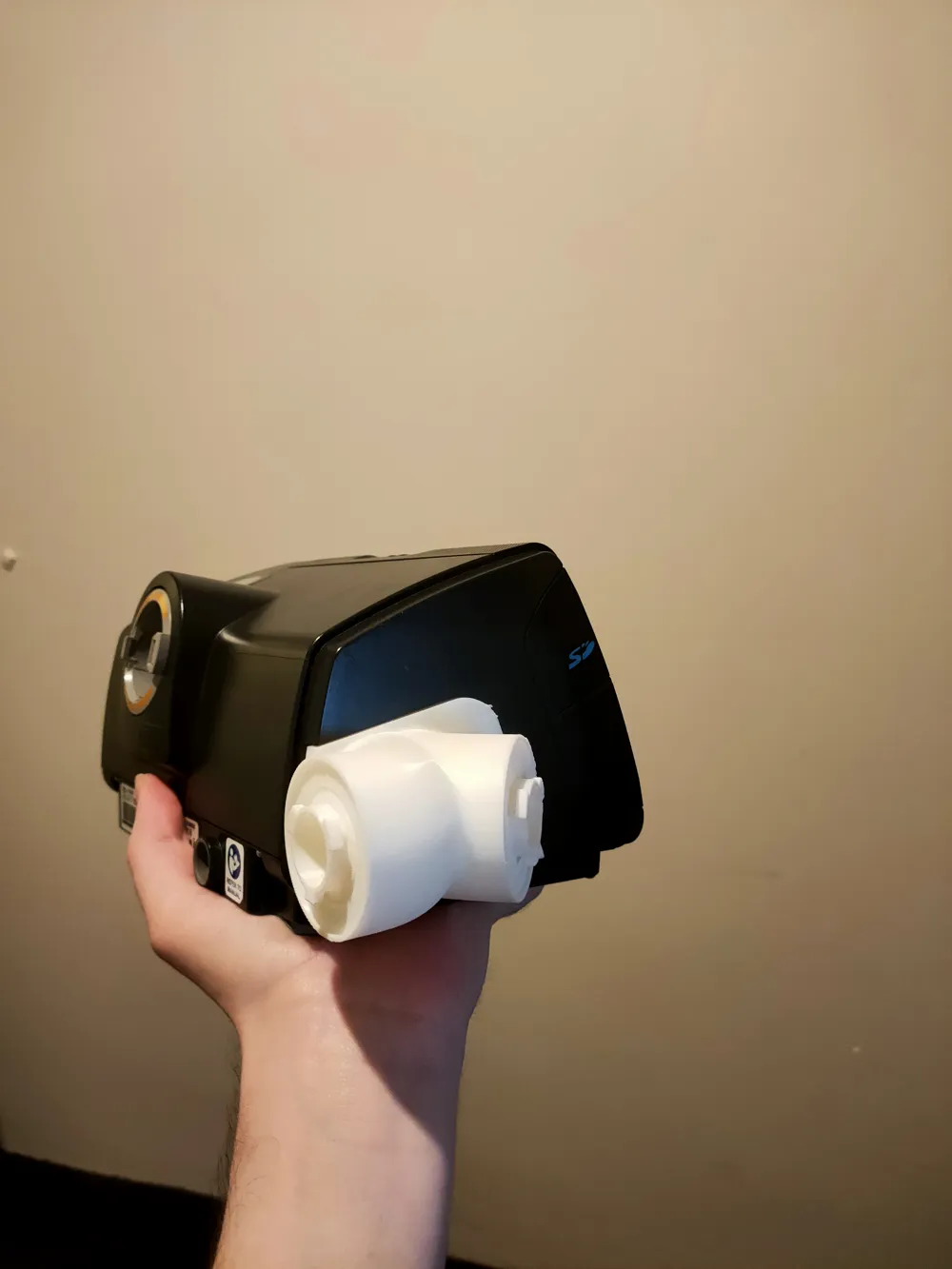
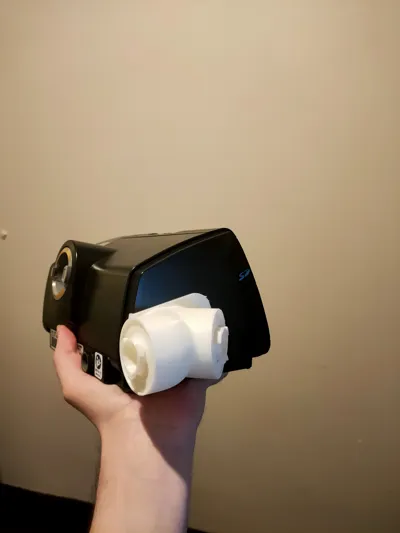
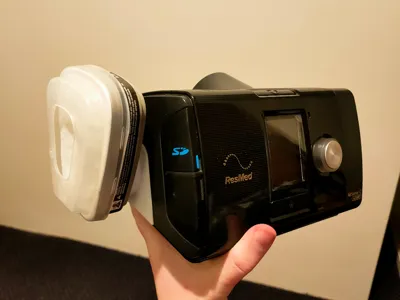
This 3D‑printable adapter allows you to attach TWO standard 3M bayonet filters (e.g. P100, 6000/7000 series) to the outlet of a ResMed AirSense 10 CPAP machine. It fits into the factory inlet (the lid/cap will need to be removed), providing a secure, airtight connection to off‑the‑shelf respirator cartridges for enhanced particle filtration.
Disk-style filters do fit but require the cpap machine to either be on a stand or positioned so that the filters do not touch wherever the cpap is positioned.
Pressure Testing (amp draw at wall - 240v at 15mmH2O pressure)
| Filter used | amp draw at wall |
| stock | 0.10 |
| 2x 6001 | 0.11 |
| 1x 6001 | 0.12 |
| 1x 6001 + n95 pre-filter | 0.13 |
| 2x 6001 + n95 pre-filter | 0.12 |
| 1x 2097 | 0.12 |
| 2x 2097 | 0.11 |
Changelog
Version 1 - Uploaded.
Key Features
- Perfect fit for the ResMed AirSense 10 outlet (22 mm outer diameter interface)
- Dual standard 3M bayonet mounting (26 mm bayonet lugs)
- Orientation: Supplied file has optimum position for minimal supports
⚠️ Disclaimer & Risk Notice
Important: This adapter is not an FDA‑approved medical device. It has not been tested under all possible clinical or home‑use scenarios. By downloading and using this file, you agree that:
- You assume all risk. You are fully responsible for verifying compatibility, fit, and airtightness before using in any therapy.
- No warranties. This design is provided “as‑is,” with no guarantees of performance, safety, or biocompatibility.
- Consult professionals. Always check with your healthcare provider or equipment specialist before modifying medical devices.
- Limited liability. The designer and distributor of this file cannot be held liable for any injury, damage, or loss resulting from its use.
⚠️ Material Risk Notice
- Off-gassing: PLA can slowly release trace VOCs (e.g. lactide, acetaldehyde) at room-temperature airflow.
- Particle shedding: Layer lines and micro-gaps can liberate microplastics into the air stream.
- Non-certified: PLA isn’t biocompatible or medical-grade—unsafe for direct respiratory exposure.
- Moisture sensitivity: Even in dry air, hygroscopic materials (PLA, PETG) can absorb ambient moisture over time.
🔧 Best Practices
- Material choice
- PETG or Taulman T-Glase (PETT) for lower emissions and higher stability.
- Print settings
- Nozzle: 240 °C (PETG) | 250 °C (T-Glase)
- Bed: 80 °C (PETG) | 60 °C (T-Glase)
- Layer height ≤ 0.2 mm for smooth walls.
- Post-process
- Sand internal channels with fine (400–600 grit) paper.
- Coat all airflow surfaces with an FDA-compliant, food-safe epoxy (cure ≥ 24 h).
- Usage
- Treat as temporary until you can switch to true medical-grade silicone or machined PEEK.
- Replace coatings or parts every 6 months, or immediately if surface damage appears.
This remix is based on
License



Comment & Rating (6)