
The Ultimate Aluminum Profile Package - 80/20
Print Profile(1)

Description
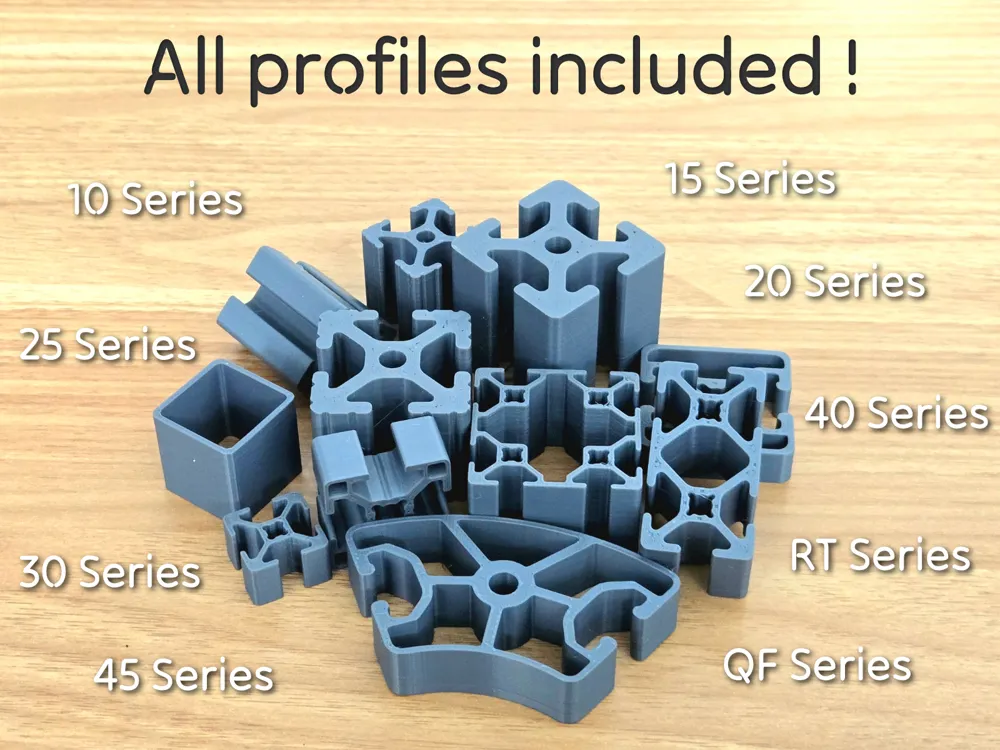
The Ultimate Aluminum Profile Package 🛠️
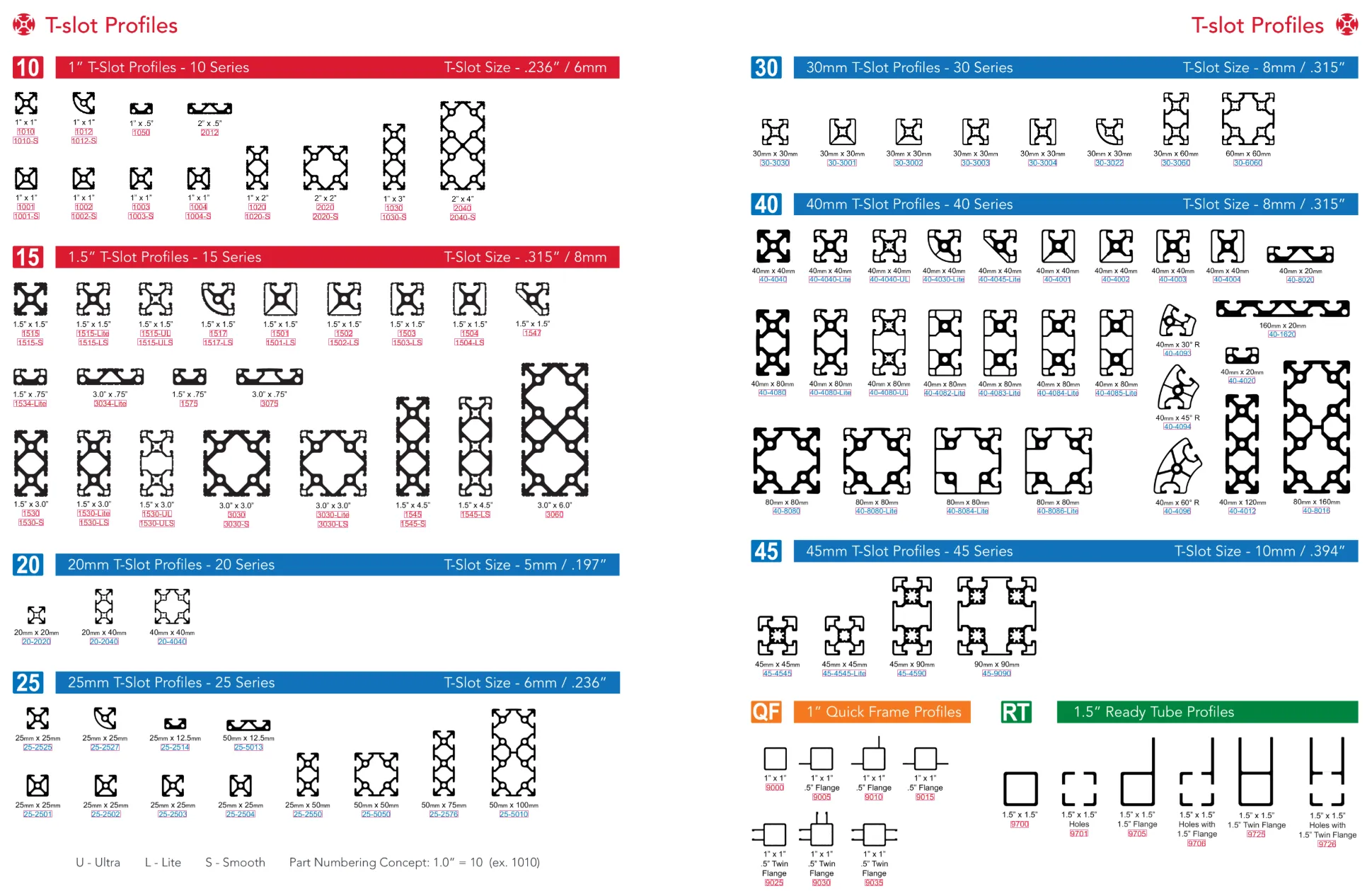
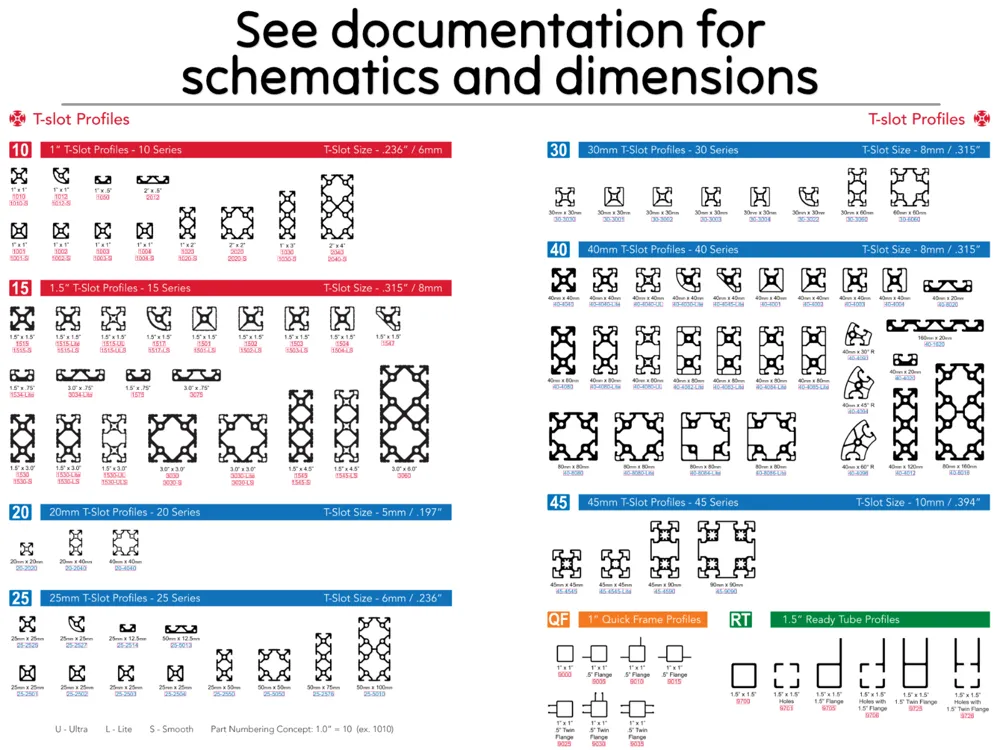
Illustration sourced from this catalog (see section 5. Sources and References)
Tired of hunting down extrusion models one by one?
This is the last aluminum profile pack you'll ever need — organized, standardized, and ready to print.
This is the definitive collection of the most commonly used aluminum extrusion profiles, designed for makers, engineers, and hobbyists alike.
Every file is precisely named and organized by series (imperial and metric), making it easy to find and use exactly what you need.
⚠️ Disclaimer:
These models are intended for visualization and non-structural use only.
They do not replace real aluminum extrusions for mechanical strength, durability, or safety-critical applications.
Table of Contents
- How to Use this Collection
- Available Profiles
- Understanding Profile Nomenclature
- Engineering Recommendations
- Sources and References
1. How to Use this Collection ❔
1.1 Download the STL you need
To do so, use the “Download STL” option from the dropdown menu next to “Open in BambuStudio”.
1.2 Open and scale it to your needs
Open the STL file inside BambuStudio. Then scale it not uniform to the wanted dimension by the Z axis (see picture below).
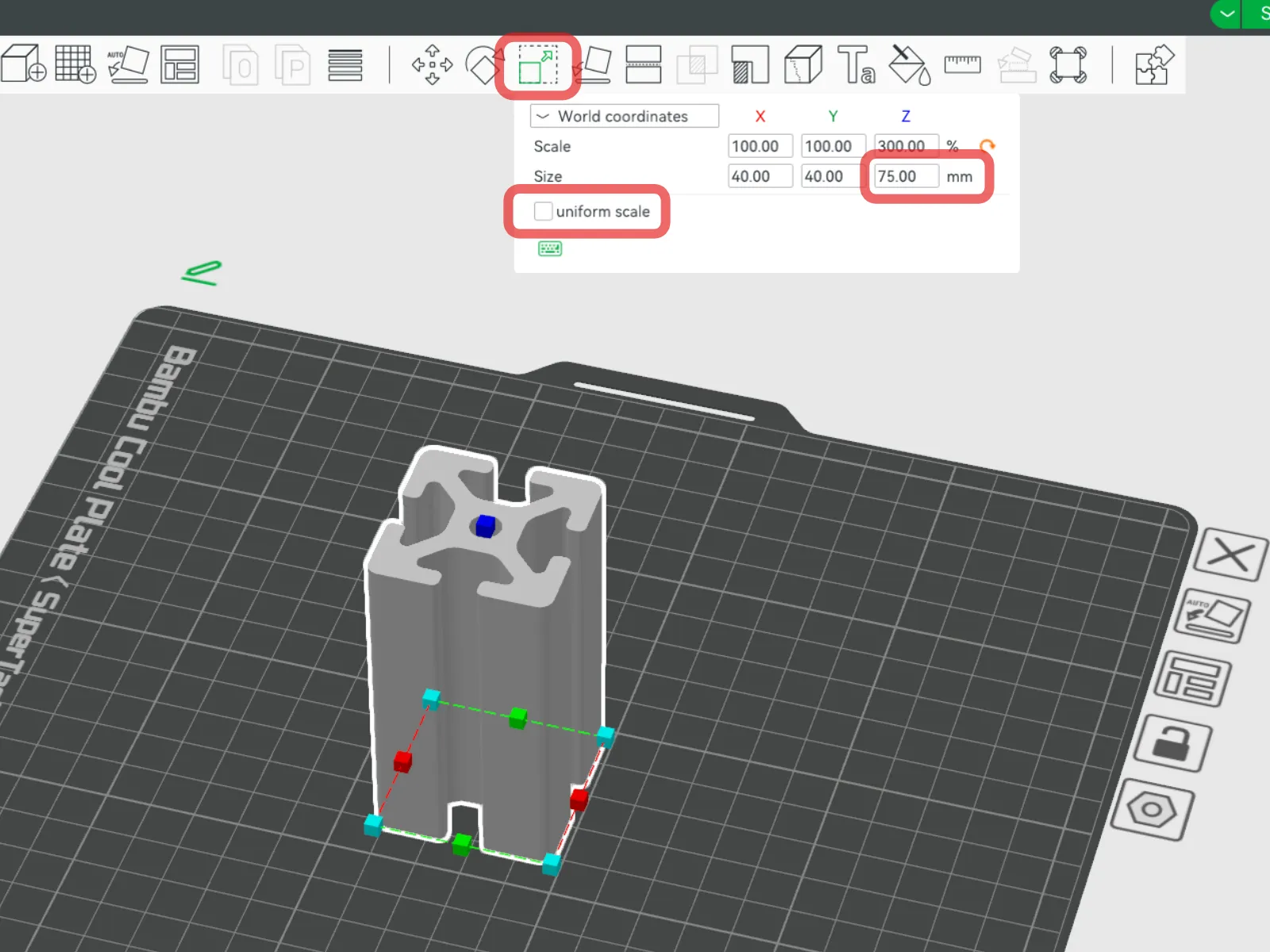
For enhanced strength, you can print the piece from the side
2. Available Profiles 🔎
- Imperial (Inch-Based)
- 10 Series
- 1001 / 1001-S
- 1002 / 1002-S
- 1003 / 1003-S
- 1004 / 1004-S
- 1010 / 1010-S
- 1012 / 1012-S
- 1020 / 1020-S
- 1030 / 1030-S
- 1050
- 2012
- 2020 / 2020-S
- 2040 / 2040-S
- 15 Series
- 1501 / 1501-LS
- 1502 / 1502-LS
- 1503 / 1503-LS
- 1504 / 1504-LS
- 1515 / 1515-LS / 1515-LITE / 1515-UL / 1515-ULS
- 1517 / 1517-LS
- 1530 / 1530-LS / 1530-LITE / 1530-UL / 1530-ULS
- 1534-LITE
- 1545 / 1545-S
- 1547
- 1575
- 3030 / 3030-LS / 3030-S / 3030-LITE
- 3034-LITE
- 3060
- 3075
- QF Series (quick frame)
- 9000
- 9005
- 9010
- 9015
- 9025
- 9030
- 9035
- RT Series (ready tube)
- 9700
- 9705
- 9725
- 10 Series
- Metric (Millimeter-Based)
- 20 Series
- 2020
- 2040
- 4040
- 25 Series
- 2501
- 2502
- 2503
- 2504
- 2514
- 2525
- 2527
- 2550
- 2576
- 5010
- 5013
- 5050
- 30 Series
- 3001
- 3002
- 3003
- 3004
- 3022
- 3030
- 3060
- 6060
- 40 Series
- 4001
- 4002
- 4003
- 4004
- 4012
- 4020
- 4030-LITE
- 4040 / 4040-LITE / 4040-UL
- 4045-LITE
- 4080 / 4080-LITE / 4080-UL
- 4082-LITE
- 4083-LITE
- 4084-LITE
- 4085-LITE
- 4093
- 4094
- 4096
- 8016
- 8020
- 8080
- 45 Series
- 4545 / 4545-LITE
- 4590
- 9090
- 20 Series
3. Understanding Profile Nomenclature 🤓
Each profile name follows a standard industrial convention:
- Series Number: Represents the nominal width of the profile.
(Ex: 15 Series = 1.5 inches wide, 40 Series = 40mm wide) - Profile ID: Unique number for each cross-section design (e.g., 1501, 1530, 4040).
- Suffixes:
- -LS = Light Smooth
- -S = Smooth
- -UL = Ultra-Light
- -ULS = Ultra-Light Smooth
- -LITE = Lightweight variant with reduced material usage
4. Engineering Recommendations 🏗️
Please note:
These profiles are 3D printed replicas of real-world aluminum extrusions.
They are not intended for load-bearing or structural applications.
They are primarily useful for prototyping, visualization, educational models, and lightweight assemblies.
Practical examples of usage:
- 📦 Designing mock-up frames for robots, CNCs, and 3D printers before ordering real extrusions.
- 🛠️ Educational projects to teach modular assembly techniques without the cost of real metal.
- 🎯 Creating jigs, fixtures, or support structures for lightweight tools or accessories.
- 📚 Demonstrating mechanical concepts like modularity, repeatability, and rigidity in classrooms.
- 🎨 Decorative or artistic projects inspired by industrial design.
General Tips:
- Always consider the mechanical limitations of printed parts (layer adhesion, material strength).
- PLA or PETG are suitable for visual models; ABS or Nylon can provide a bit more durability if needed.
- For any significant mechanical application, real aluminum extrusions should be used.
5. Sources and References 🧰
The information provided in this publication (profile series and nomenclature) is based on documentation from leading aluminum extrusion manufacturer 80/20 Inc.:
- You can find the product catalog with documentation (INCLUDING SCHEMATICS AND DIMENSIONS) here → https://catalogs.8020.net/80-20-Catalog-25/2-14/
("The Industrial Erector Set" — Product Catalog and Technical Data) - The 3D models were generated one by one from an Onshape add-on
Feel free to reach out if you have any questions. Enjoy your making journey! 🛠️💬
Boost Me (for free)
If you like this model, a boost is always appreciated ! 😊 Thank you very much !
If you really like what I do, you can also buy me a beer🍺! Happy printing!
License



Comment & Rating (15)