
TF Drag Racer Spiral Tire Core RMRRF
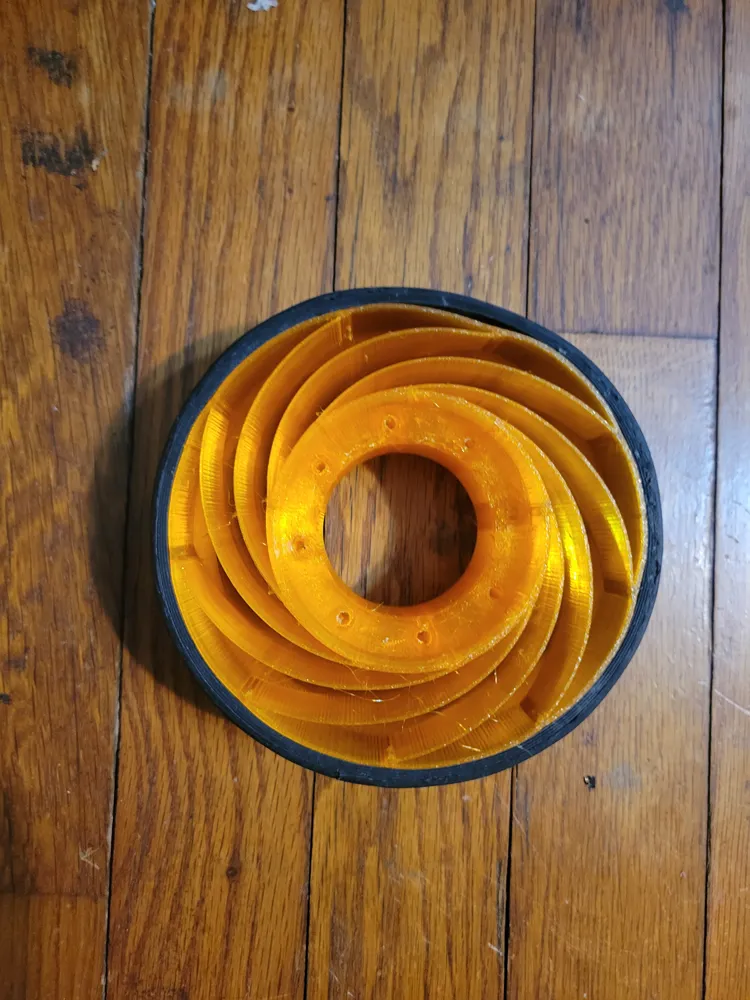
Print Profile(0)
Description
This is a remix of the Tire Core from this model.
Print from 95a TPU. Any softer materials will likely cause the car to squat too much and drag the rear of the car.
This model was designed for a .6mm nozzle but i have printed it with .4mm without issue.
Pint without supports and with 0% infill.
This model is designed to be exactly as thick as it need to be you just need to make sure you have enough walls. if your printing with a .6mm nozzle you only need 3 walls but it really doesn't matter if you set more than three. you could set 5, 10, or even 100 walls and the model will print the exact same way as along as you have the minimum number of walls. My suggestion is that you do not try to figure out what the minimum number is and just plug in 10. That should work for everyone unless you are using a ridiculously tiny nozzle.
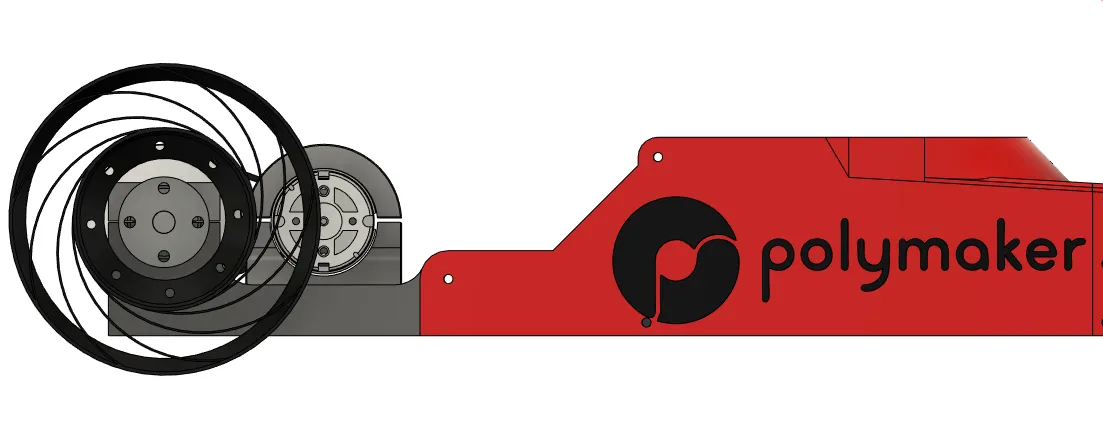
NOTE: these tire cores are directionally dependent. Pretend you are looking at the core mounted to the right side of the vehicle. Now imagine that the tire is spinning clockwise as if propelling the car forward. If the spirals appear to be scooping the air then you have the tire mounted incorrectly and need to flip it around. Mounting the tire incorrectly could cause it to fold in on itself. This image shows the correct orientation.
A little bit of backstory. These drag racers were intended to be accessible. What this means is, the original creator wanted anyone to be able to see one of these cars, buy their first ender 3 3d printer, build one, then show up on race day and compete effectively. That being said, people get competitive and I am no exception. Many of us building these cars are using materials that cannot be printed on a stock ender 3 and are certainly not the type of material that a beginner can use. That is what inspired this design.
95a TPU is about the limit for what you can print on a standard ender 3 without allot of tinkering. But some of us are printing 83a, 75a, or even ultra soft 60a materials. The softness of the materials allows the tires to squat more which gives greater ground contact and more grip. More grip means less slip allowing you to reach top speed in the shortest amount of time. Softer materials also allow the tires to expand which means a larger diameter and greater top speed.
So how do you make a harder material like 95a squat like 60a? You use less of it. Of course there is more to it than that. You can't simply turn down your infill settings and expect everything to work perfectly. That is when the spiral tire core was conceived.
I modeled and printed the first core and when mounted to the car it ran great during bench tests. The goal was to make a soft and flexible tire core and after a few days we began to think we had been too successful. The tire cores were sagging under their own weight and the next time we spun them up the car shook violently. I theorized that on the ground, under the weight of the car, the tires would still perform as designed without shaking the car. Nevertheless, caution got the best of us and we decided not to race these tire cores at MRRF 2023. I still took the tire cores with me to MRRF because I thought they were cool and wanted to show them off. Eventually, I met the team from Offset Maker Lab. After talking with them they agreed to try the experimental tires on their car. I warned them of what we saw and what might happen but they were undeterred.
So how did it do? It performed above expectations. Their car was getting clean hookups and running straight and smooth. I couldn't have been happier with the results and now i am sharing the design with you guys.
See you on race day!
This remix is based on

License



Comment & Rating (0)