
Spectre monotile fridge magnet (low poly)
Print Profile(1)

Bill of Materials




Description
Ready to add some mathematical magic to your everyday life?
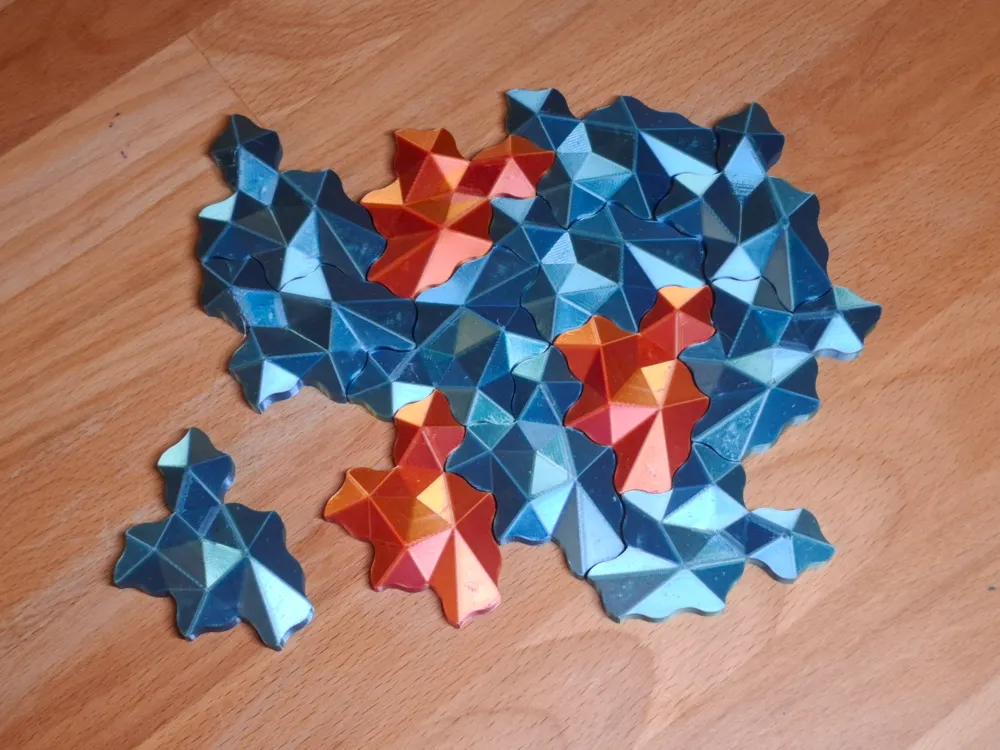
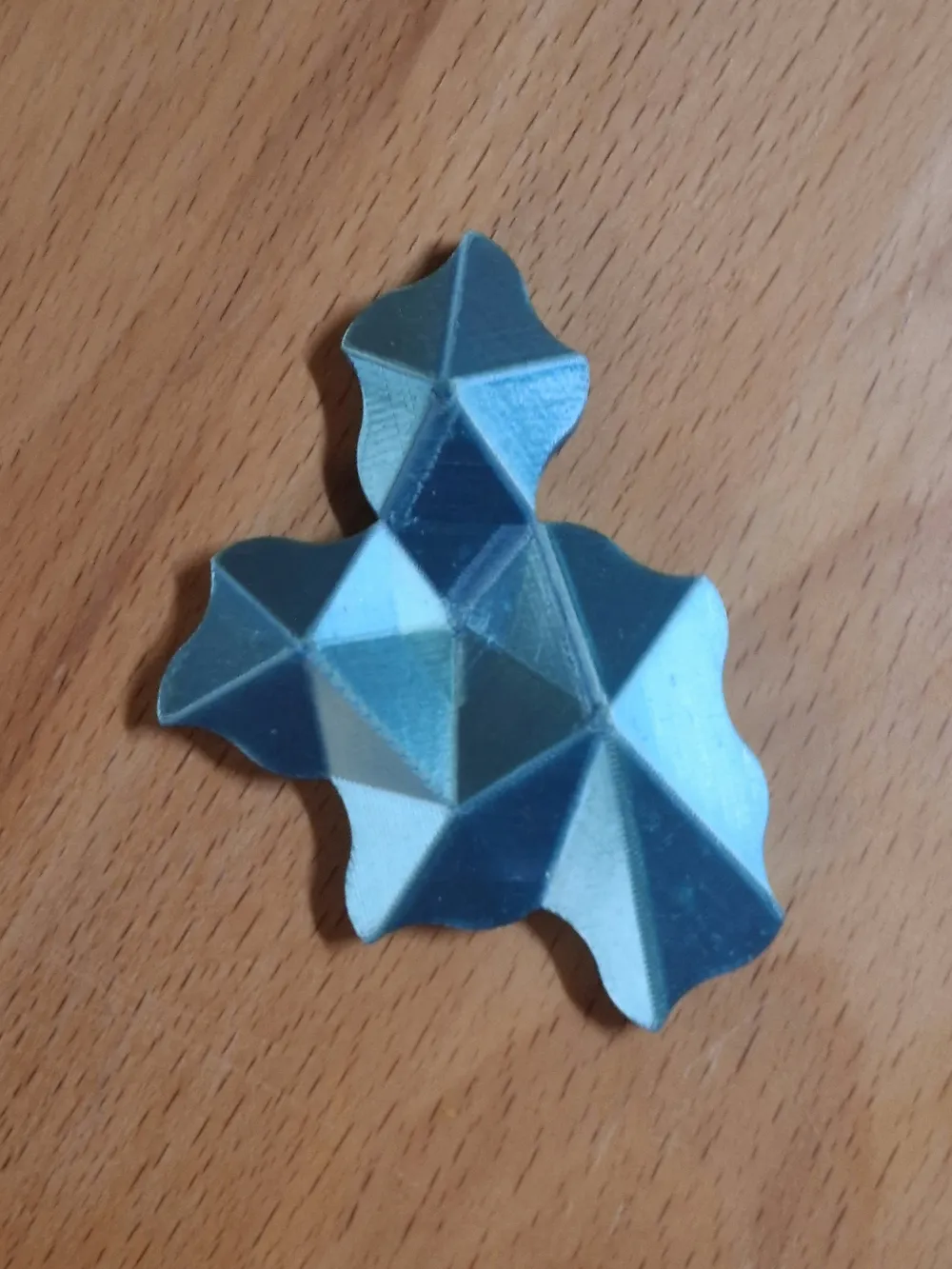
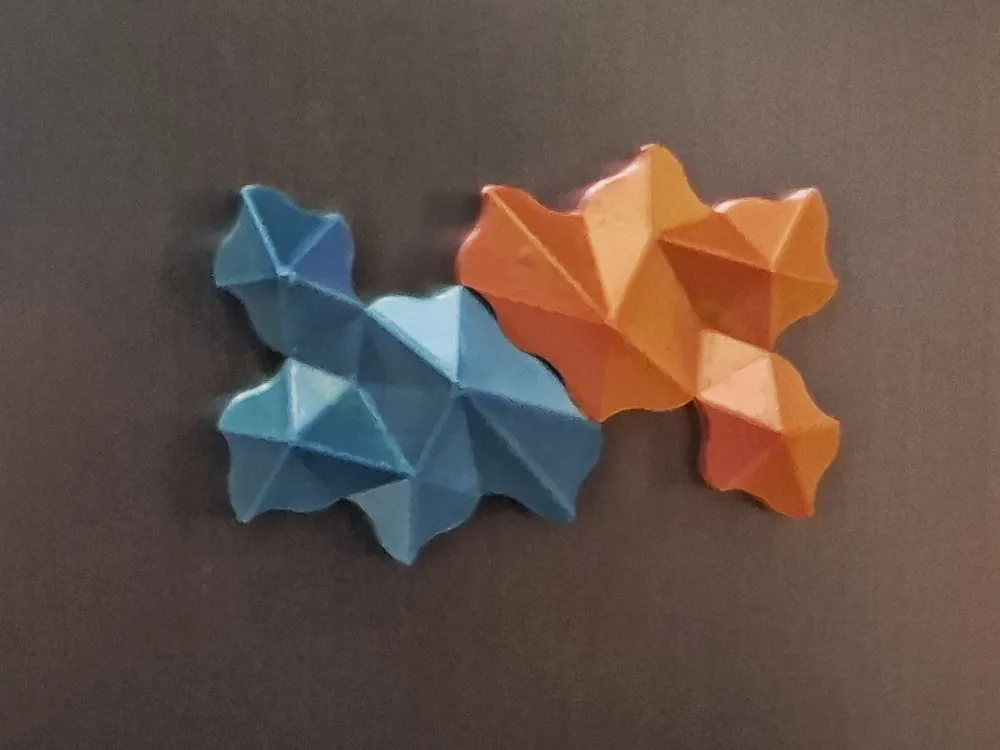
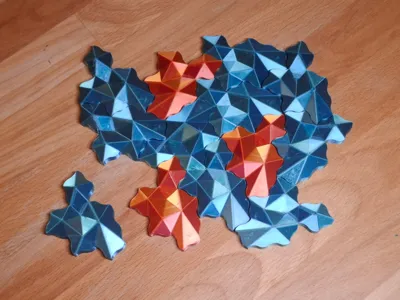
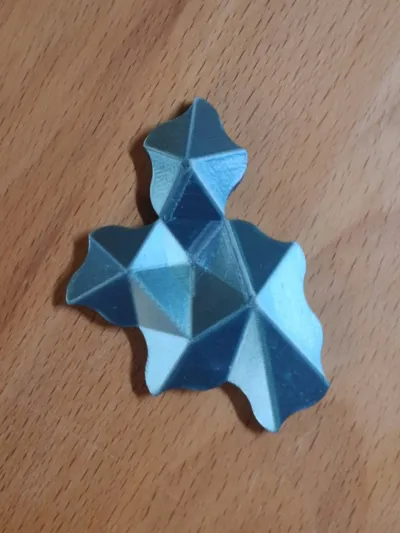
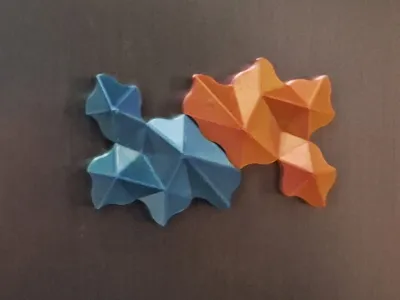
Meet the "Spectre" — a truly special tile that doubles as a fridge magnet! While the Spectre is already fascinating in its own right, I decided to take it up a notch by adding a sleek low-poly design to give it an extra dash of visual appeal. Sure, the Spectre is destined for great things in fields like Material Science and Physics, but I couldn't resist giving it an immediate, everyday purpose — so voilà, a fridge magnet! Stick it on your fridge, admire its mesmerizing geometry, and let it add a touch of brilliance to your kitchen.
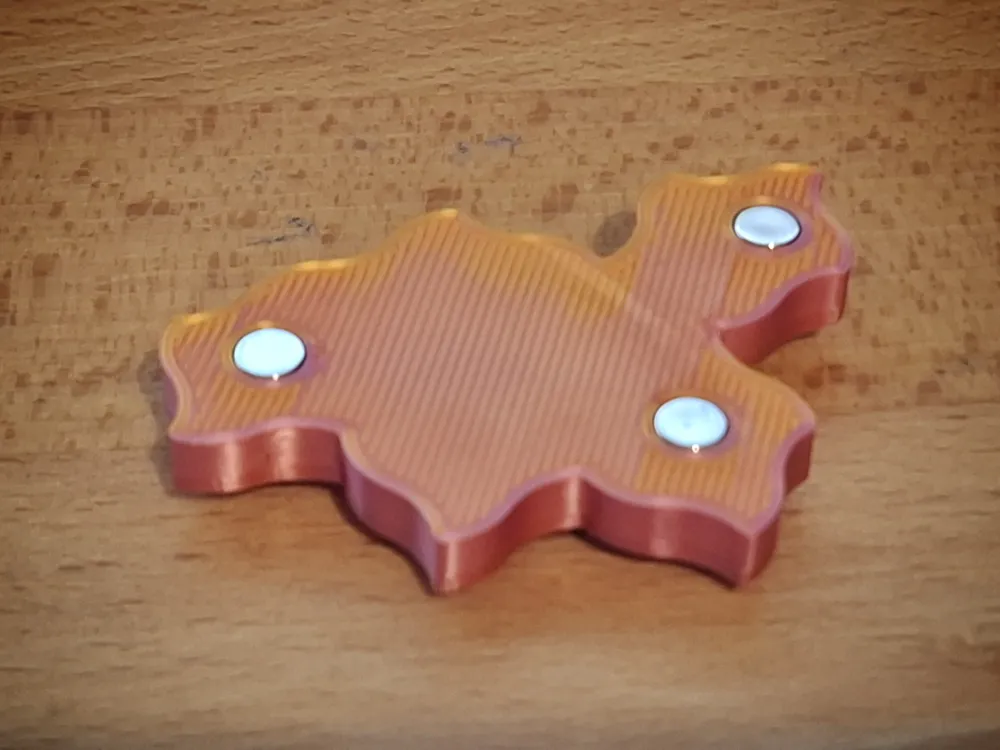
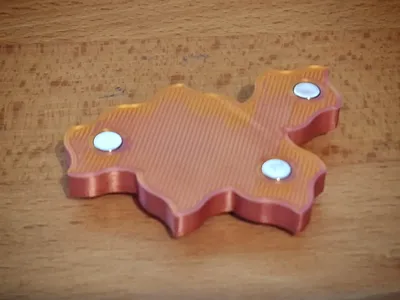
The model features cutouts at the bottom for three 6x3 mm magnets at the bottom. I recommend to glue them into the holes.
So, what weird sort of shape is that Spectre actually?
Some time ago, mathematicians discovered a shape called the "Spectre." It is a type of aperiodic tile, which means it is a single shape that can cover a plane without forming a repeating pattern. This remarkable property solves the "Einstein problem," which asks whether a single shape can enforce non-periodic tiling. The Spectre achieves this without requiring reflections, relying only on translations and rotations, making it a groundbreaking discovery in geometry.
The Spectre is known as a chiral aperiodic monotile. Other examples of aperiodic monotiles include the "Hat" and the "Turtle." However, these shapes require both their original form and their mirror image to create an aperiodic tiling. The Spectre, in contrast, can produce a non-repeating pattern using only one version of the shape, without the need for its mirrored counterpart.
Aperiodic tilings existed before the discovery of the Hat, Turtle, and Spectre. For instance, Roger Penrose introduced tilings that use two shapes, such as kites and darts or rhombi, to cover a plane without repeating patterns. The Spectre builds on this foundation by achieving aperiodicity with just one shape, rather than two.
Although the Spectre's appearance may seem complex at first glance, its construction is surprisingly straightforward. All edges of the basic shape are the same length, and its angles alternate between 90 and 120 degrees. The only exception is one edge, which is twice as long as the others—but this can be thought of as two edges connected at a 180-degree angle, which is equivalent to 2 × 90 degrees.
If the Spectre monotile is used with straight edges and without its mirror image, the resulting pattern would not necessarily be aperiodic. Straight edges alone do not enforce the non-repeating (aperiodic) property. The key to the Spectre's aperiodicity lies in its curved or modified edges, which prevent the tiles from forming a periodic pattern. These modifications act as "matching rules" that enforce aperiodicity.
Without these curved edges, the Spectre could potentially tile the plane periodically, as the constraints that enforce non-periodicity would no longer be present. This is why the curved edges are essential to the Spectre's unique ability to create aperiodic tilings.
Since there are many ways to design such edges, this process creates an entire family of Spectre shapes. The shape I used for this model is actually just one example of this family. Please note: the topological low poly pattern of my model has just added out of visual design reasons and does not add any mathematical properties.
Here are some links that you can check out if you would like to know more about this groundbreaking discovery:
- https://aperiodical.com/2023/05/now-thats-what-i-call-an-aperiodic-monotile/
- https://www.youtube.com/watch?v=IfVwelta1fE
- https://www.youtube.com/watch?v=3CxF-GkkjiU&pp=ygUPc3BlY3RlIG1vbm90aWxl
Boost Me (for free)
License



Comment & Rating (2)