Search models, users, collections, and posts

CPAP 3M filter Adaptor
Print Profile(1)

All
A1
H2D
X1E
X1 Carbon
X1
P1P
A1 mini
P1S
H2D Pro
H2S
P2S
H2C
X2D
A2L

0.2mm layer, 2 walls, 15% infill
Designer
1.1 h
1 plate
5.0(5)

Open in Bambu Studio
Boost
120
344
28
17
250
124
Released 

Description

Boost Me (for free)

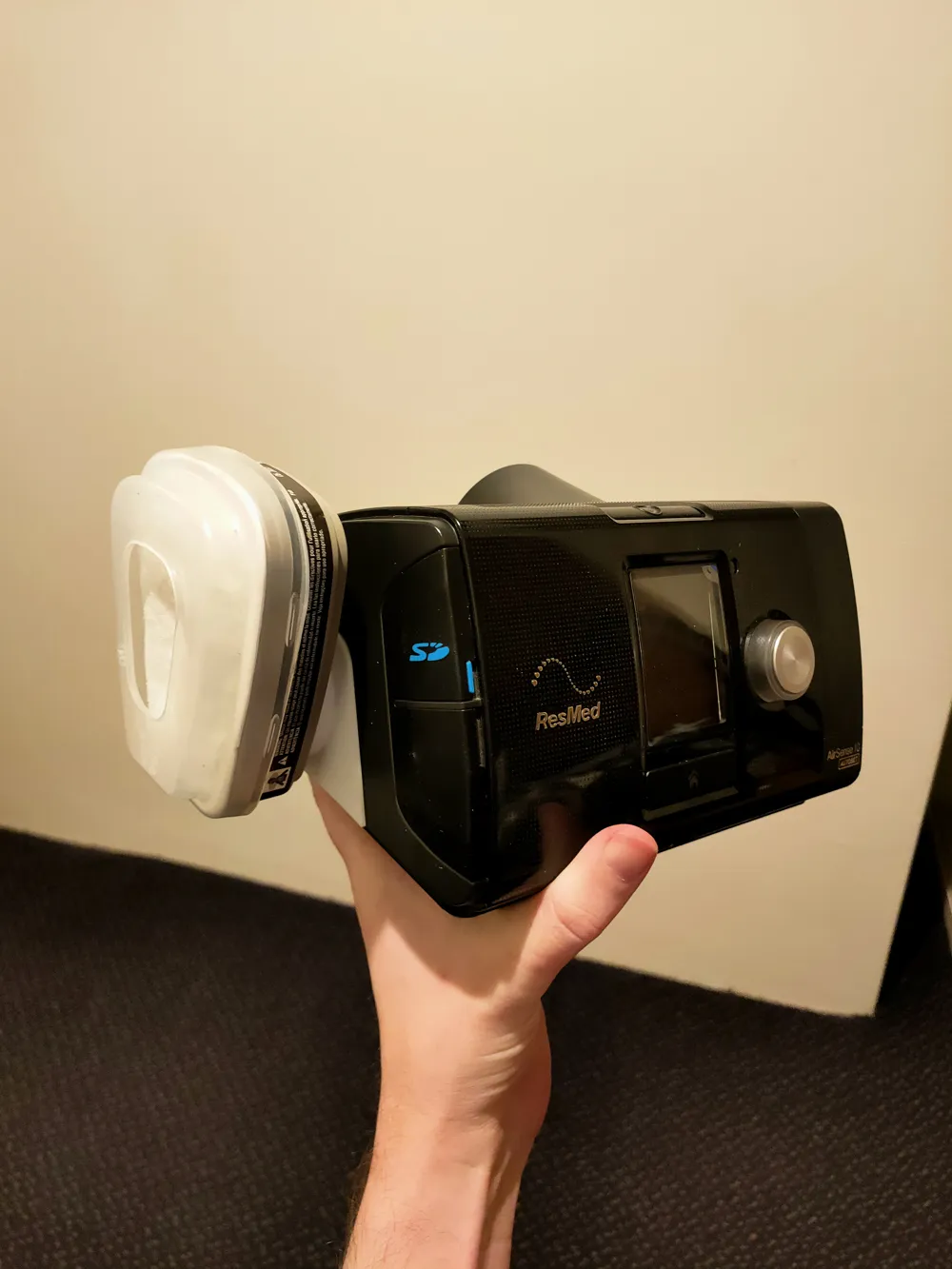
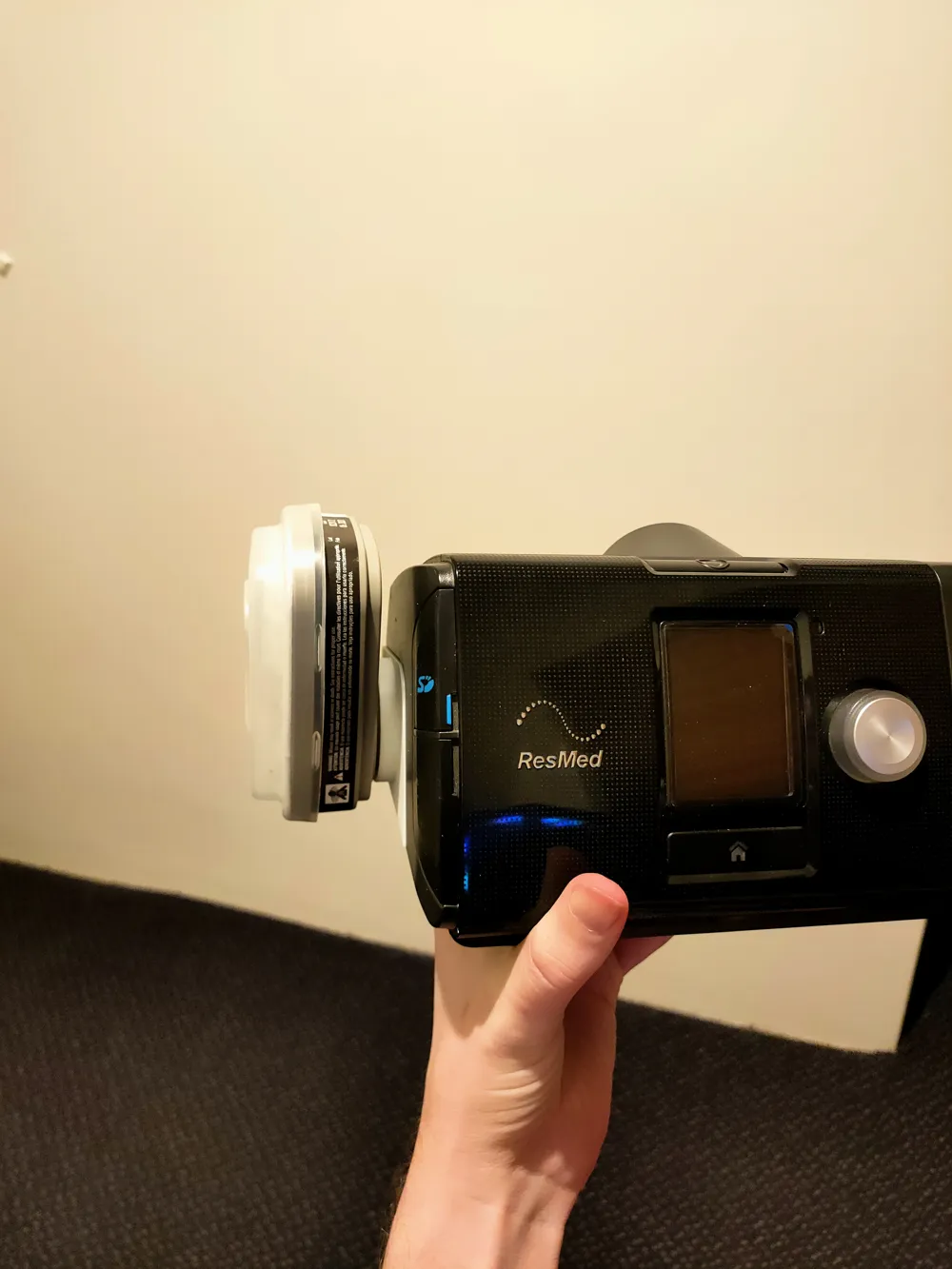
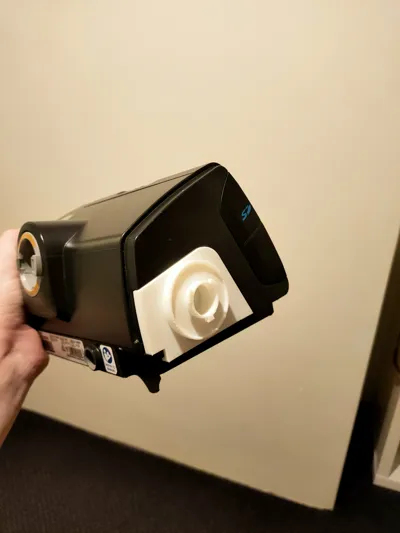
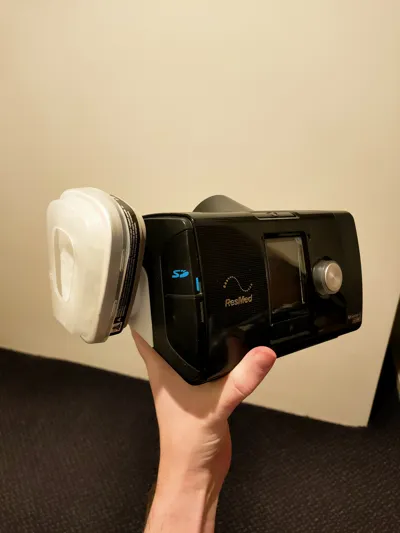
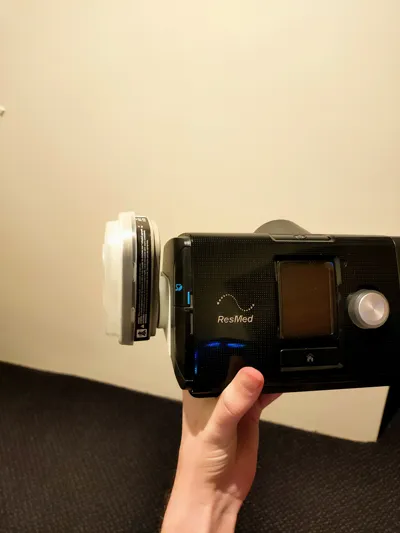
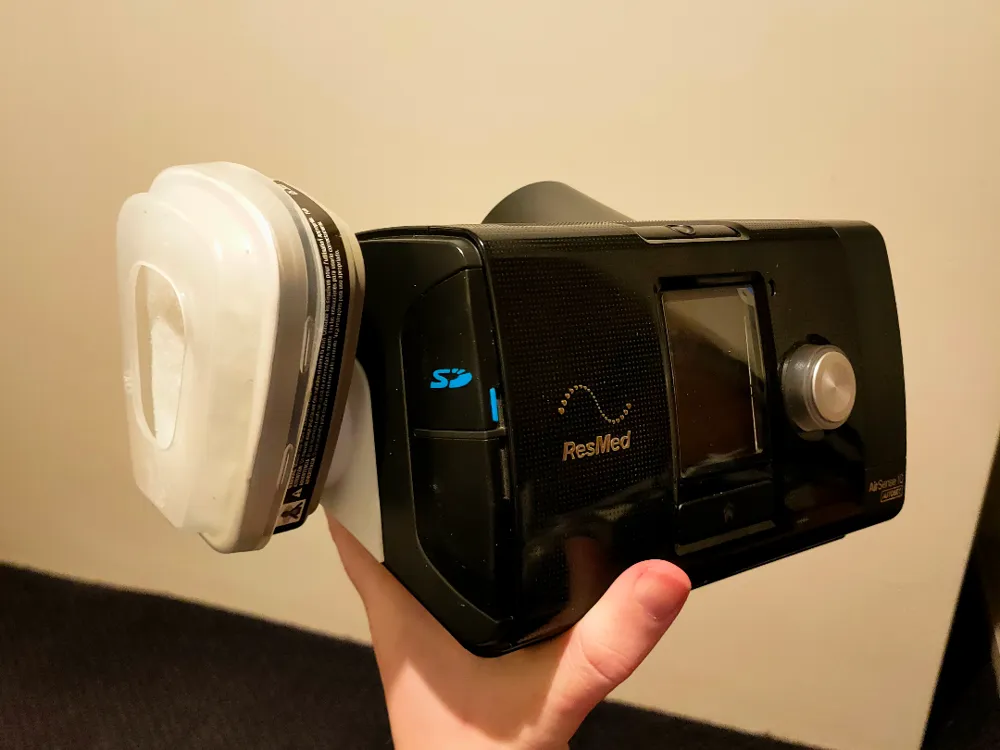
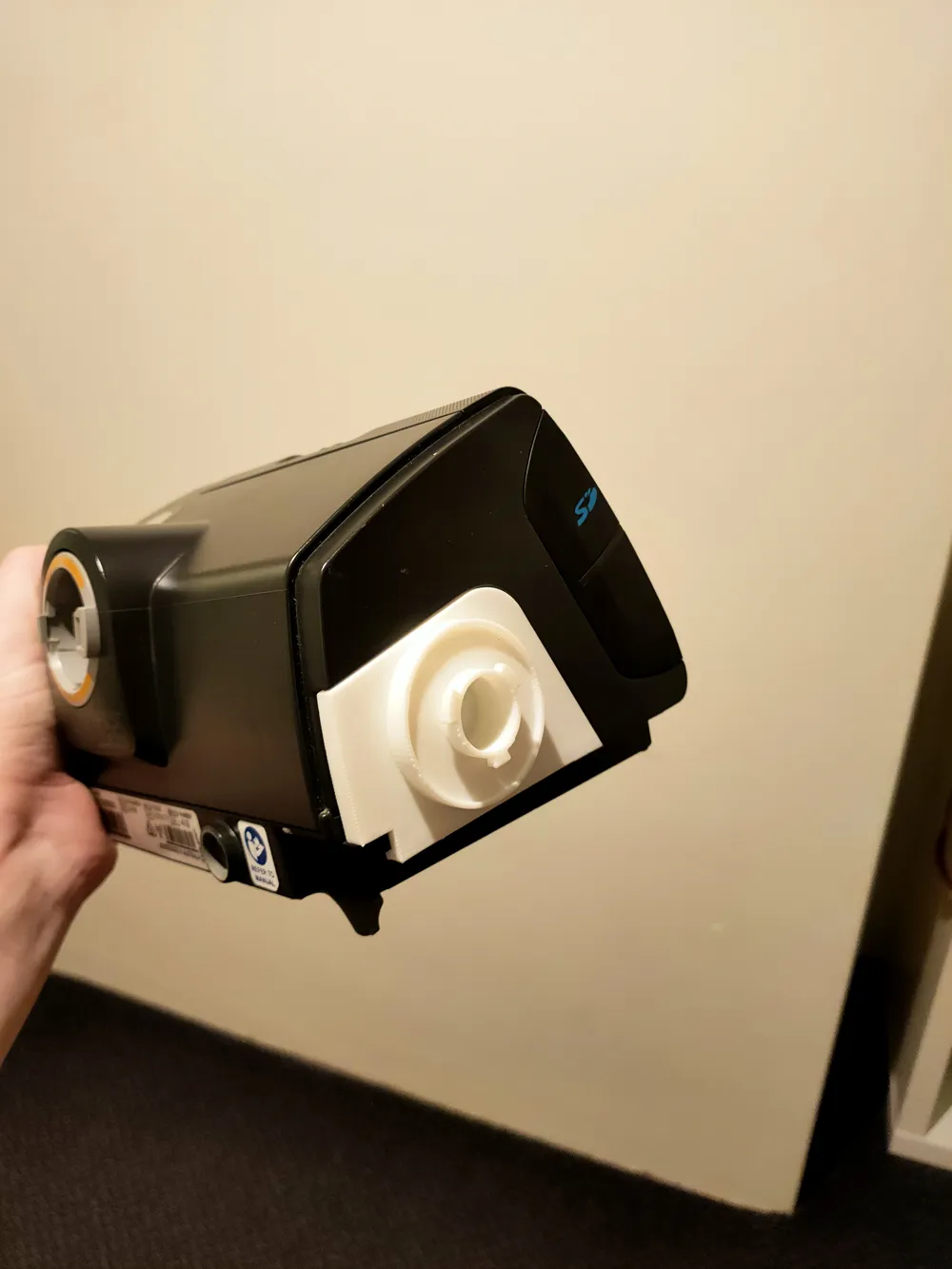
This 3D‑printable adapter allows you to attach standard 3M bayonet filters (e.g. P100, 6000/7000 series) to the outlet of a ResMed AirSense 10 CPAP machine. It fits into the factory inlet (the lid/cap will need to be removed), providing a secure, airtight connection to off‑the‑shelf respirator cartridges for enhanced particle filtration.

Changelog
Version 1 - Uploaded.

Version 2 - Increased pipe internal diameter & created a tapered reducer from 3M fitting to inlet. Testing demonstrated a notable reduction in motor strain.


Key Features

  • Perfect fit for the ResMed AirSense 10 outlet (22 mm outer diameter interface)
  • Standard 3M bayonet mounting (26 mm bayonet lugs)
  • Orientation: Supplied file has optimum position for minimal supports

Installation


Testing & Validation

  • Fit‑check: After installation, run the CPAP at your usual pressure to confirm seal tightness.
  • Compatibility: Tested with ResMed AirSense 10 and 3M 6000‑series P100 filters only.

⚠️ Disclaimer & Risk Notice

Important: This adapter is not an FDA‑approved medical device. It has not been tested under all possible clinical or home‑use scenarios. By downloading and using this file, you agree that:

  1. You assume all risk. You are fully responsible for verifying compatibility, fit, and airtightness before using in any therapy.
  2. No warranties. This design is provided “as‑is,” with no guarantees of performance, safety, or biocompatibility.
  3. Consult professionals. Always check with your healthcare provider or equipment specialist before modifying medical devices.
  4. Limited liability. The designer and distributor of this file cannot be held liable for any injury, damage, or loss resulting from its use.

⚠️ Material Risk Notice

  • Off-gassing: PLA can slowly release trace VOCs (e.g. lactide, acetaldehyde) at room-temperature airflow.
  • Particle shedding: Layer lines and micro-gaps can liberate microplastics into the air stream.
  • Non-certified: PLA isn’t biocompatible or medical-grade—unsafe for direct respiratory exposure.
  • Moisture sensitivity: Even in dry air, hygroscopic materials (PLA, PETG) can absorb ambient moisture over time.

🔧 Best Practices

  1. Material choice
    • PETG or Taulman T-Glase (PETT) for lower emissions and higher stability.
  2. Print settings
    • Nozzle: 240 °C (PETG) | 250 °C (T-Glase)
    • Bed: 80 °C (PETG) | 60 °C (T-Glase)
    • Layer height ≤ 0.2 mm for smooth walls.
  3. Post-process
    • Sand internal channels with fine (400–600 grit) paper.
    • Coat all airflow surfaces with an FDA-compliant, food-safe epoxy (cure ≥ 24 h).
  4. Usage
    • Treat as temporary until you can switch to true medical-grade silicone or machined PEEK.
    • Replace coatings or parts every 6 months, or immediately if surface damage appears.

Comment & Rating (28)

(0/1000)

absolutely fantastic print works great thank you so much
1
Reply
Is the 2097 filter taller than the machine? Is that why you have it at the edge of the table? Thanks
1
Reply
hi yeah just slightly touching the table so moved to the edge same thing with the double filter but they work absolutely brilliant 👏
0
Reply
I have been a CPAP person for over 30 years. I hate the damn things and always wake up coughing.i never get enough air. and the filter sucks. you item has made leaps and bounds. I sleep better. I get cleaner air. you have saved my life. you need to sell these. I will be your guinea pig. it works 100 percent. you are gonna be very rich my friend. sincerely Wayne Greenlee
The designer has replied
designer
6
Reply
You are far too kind! I am disabled myself so I don't have the energy to sell it. This is my gift to you for free 😁
4
Reply
Boosted
You, my friend are a genius.
The designer has replied
designer
3
Reply
many thanks 🙏
1
Reply
Isn't that technically the inlet/intake? What elbow?
The designer has replied
0
Reply
Yes, someone else pointed this out too, I replaced my outlet elbow on my as10 at the same time so it got mixed up...
0
Reply
Replying to @AmosKito :
Please also post the results of the power testing. I bet there's a filter that would be almost the same draw, with x amount better filtration
1
Reply
Replying to @Jbss71 :
Agreed, I'll reply once I've played with a few filters.
0
Reply
thoughts on making the same thing but a splitter? if you connect multiple filters in parallel it will dramatically improve the filter drop and be easier on the motors
The designer has replied
0
Reply
If you have a look on my profile I have done just that 🙂
0
Reply
Replying to @AmosKito :
thanks!
0
Reply
Does this affect the air intake? As in I won’t suffocate myself trying to sleep with this filter on? I don’t understand why they wouldn’t use better filters if our machines can still provide the necessary air flow with them. It’s actually kinda aggravating after spending over $1k on a dang machine. I’m definitely gonna give this a try if the air flow is unaffected cuz those little filters are awful.
The designer has replied
designer
1
Reply
it doesn't affect the output pressure because the machine will compensate. What does happen is the motor draws more power. I do have another model that has dual filters which puts less strain on the motor and the measured results are on that model too.
(Edited)
1
Reply
this is hardcore 😅
The designer has replied
designer
1
Reply
gonna be the only one surviving a chemical plant leak 😂
0
Reply
Love the idea, can’t wait to try it out, thank you for sharing.
The designer has replied
designer
1
Reply
Welcome! Please let me know how it goes!
0
Reply
Why not polypropylene? Also great for no VOC and better heat resistance (for sterilization)? Or perhaps polycarbonate?
(Edited)
The designer has replied
0
Reply
Yes it would have its advantages but it would still give off microplastic particles which can't be avoided with FDM 3d printing. This is why Ive recommended a medical grade coating.
0
Reply
BRILLIANT
0
Reply